
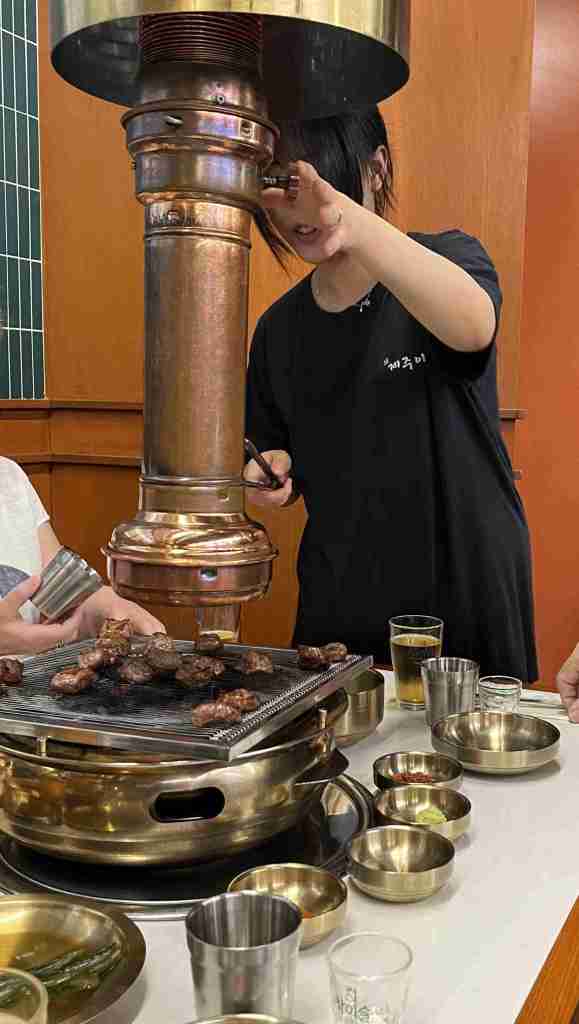
The final cooking happens at the table
Earlier today Poor John and I landed in Korea for a 12-day tour visiting some popular highlights. I plan to tell you more but that will depend on internet availability and how busy James, our tour guide, keeps us.
He certainly got us off to a great start with dinner at a small barbecue restaurant that specialises in meat from Jeju, an island south of mainland Korea. What a winner. The meat was delicious and so were all the sides. I tried a Cass beer, no doubt I’ll try a Kelly down the track.
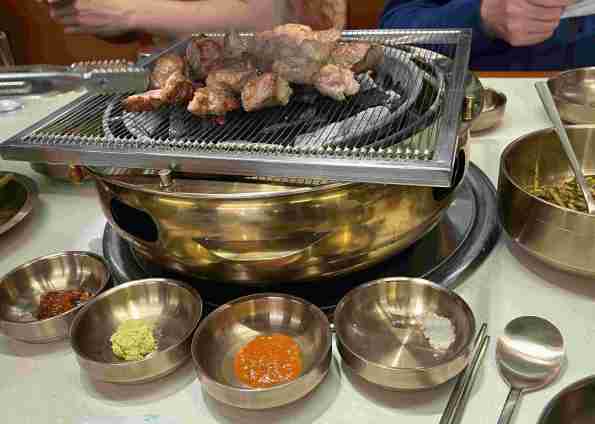
Loads of side salads and sauces really make the barbecue special
It’s a small group—11 tourists and James—with most from Britain. He warned us that tomorrow we can expect to walk 15,000 to 17,000 steps. I need to get to bed.
Of course this means I won’t be around much. I’ll pop in when I can.

Cass and Kelly are popular beers
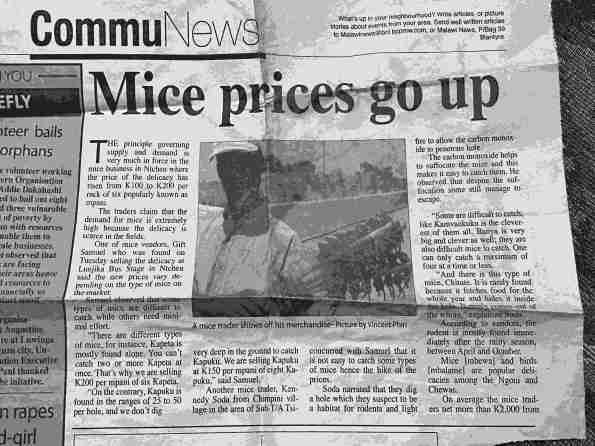
From the Malawi News in September 2009
Not sure what prompted me to dive into an enormous treasure trove of ancient travel brochures, tour guides, city and country maps, and newspaper clippings (all saved to use for future blog posts). Perhaps I thought it was high time to share more of our adventures. Or maybe I was just a bit peckish (Aussie slang for hungry) because near the top of the box, I found an old, snack-related clipping from the Malawi Times.

Travel treasures
Sixteen years ago, we spent almost 11 months on the back of an overland truck travelling south down the west side of the Africa and then north up the east. Along the way, Poor John and I bought local newspapers whenever we could (yes we are news junkies), hence this ancient clipping.
So what does it have to do with snacks? While some of us will opt for dips and chips, Malawians set a higher bar. They’re keen on roasted mice.
Back in 2009, the price of mice-on-a-stick went up, in fact it doubled. The price for a skewer of six roasted mice jumped from 100 to 200 Malawi kwacha (or from 6 to 12 US cents or 8 to 16 Aussie cents per stick).
Malawi’s mouse season is April to October, and some breeds of mice are harder to catch than others. I got a chuckle from some of the wording in the story. One mice trader didn’t say or explain how he caught mice. He ‘narrated’ the technique.
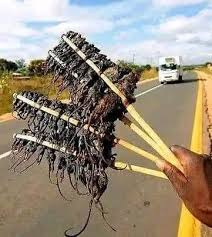
Fancy a roadside snack. Image from the internet
According to Google, mice skewers (called mpani) are still popular in Malawi and are even more expensive today. A skewer of just four mice now costs 200 Malawi kwacha.
What really surprised me was that a 100-gram serving of mice provides about 216 calories, 21 grams of protein, and 11 grams of fat. Nutritionally, it beats an equal portion of lamb shoulder.
Pity this snack has never gained popularity in Australia. Today farmers in Western Australia and South Australia are battling the worst mouse plague they have ever seen.
An estimated 8,000 mice live in every hectare of WA’s northern grain belt, and swarms of them are visible in paddocks and on roads at night. Farmers are trying to get a more potent poison to win the battle.
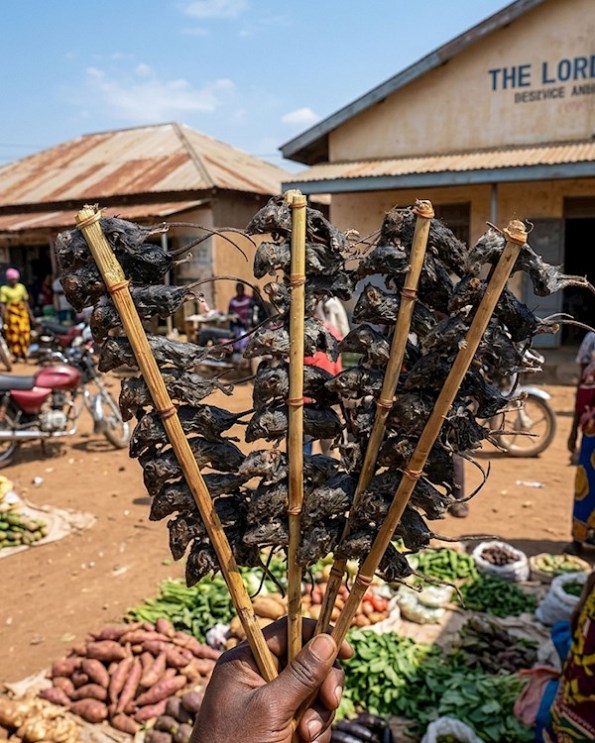
Roasted mice on sticks. Image from the internet
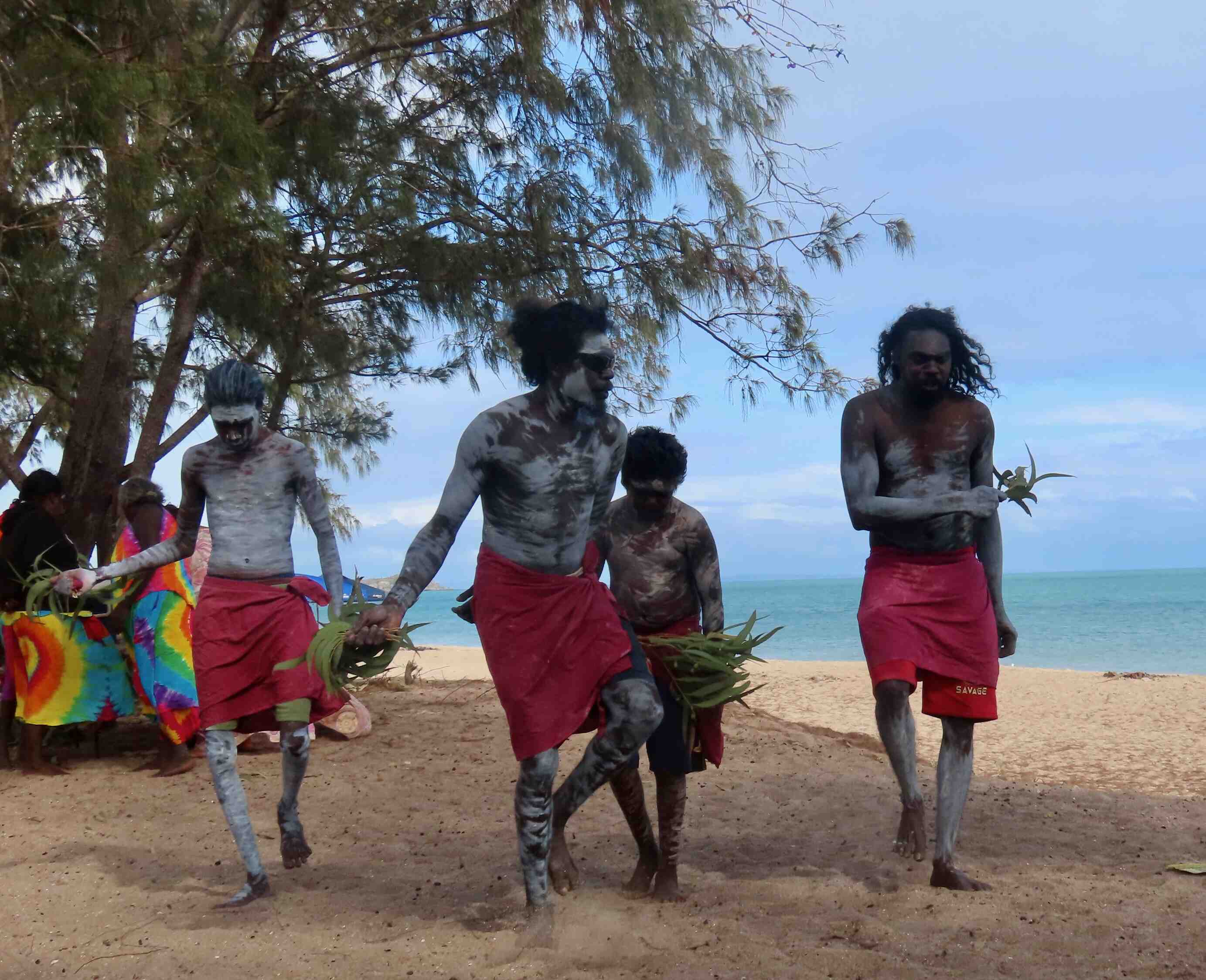
Men dancing the welcome to country story
Poor John and I are on a new adventure. This time it’s a 13-day overland trip in Australia’s remote Arnhem Land. Located in the northeastern corner of the Northern Territory, Arnhem Land covers about 97,000 square kilometres (37,000 square miles) and has an population of about 16,000, of which 12,000 are Aboriginal and Torres Strait Island people.
We started out yesterday in East Arnhem Land in Nhulunbuy, the region’s service hub, which was settled in the early 1970s as a mining town for bauxite.
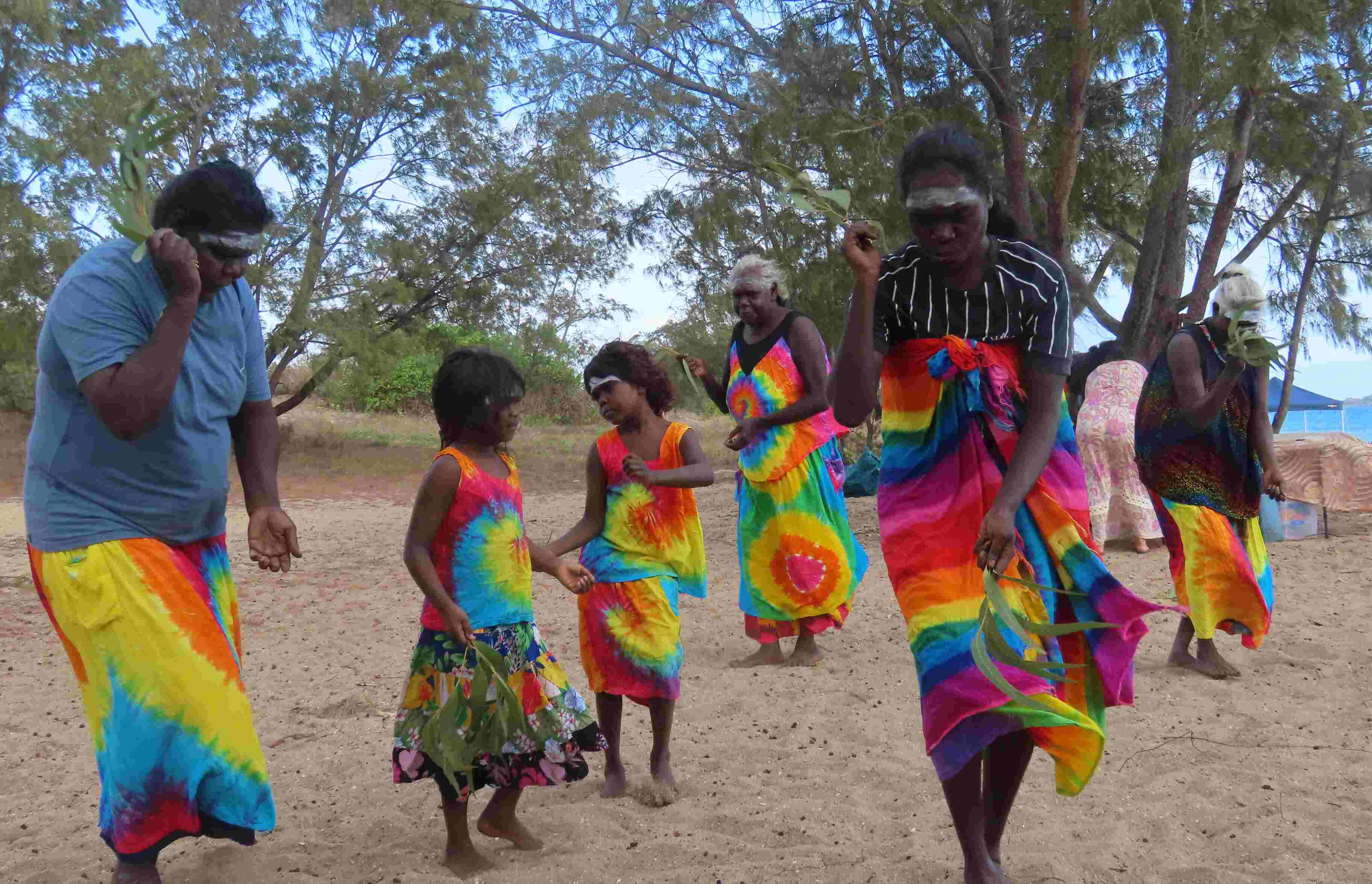
Women and children dancing the welcome to country story
The Yolŋu culture in East Arnhem Land is possibly one of the oldest living cultures on Earth; humans are known to have lived in the region for about 60,000 years. This is also where the oldest-known stone axe of its kind was found. Scholars think it is 35,500 years old.
Today we were welcomed to country with a special ceremony at Wirrwawuy Beach. Then on to the Buku-Larrnggay Mulka Art Centre in Yirrkala. All the pictures here are from the welcome to country ceremony.
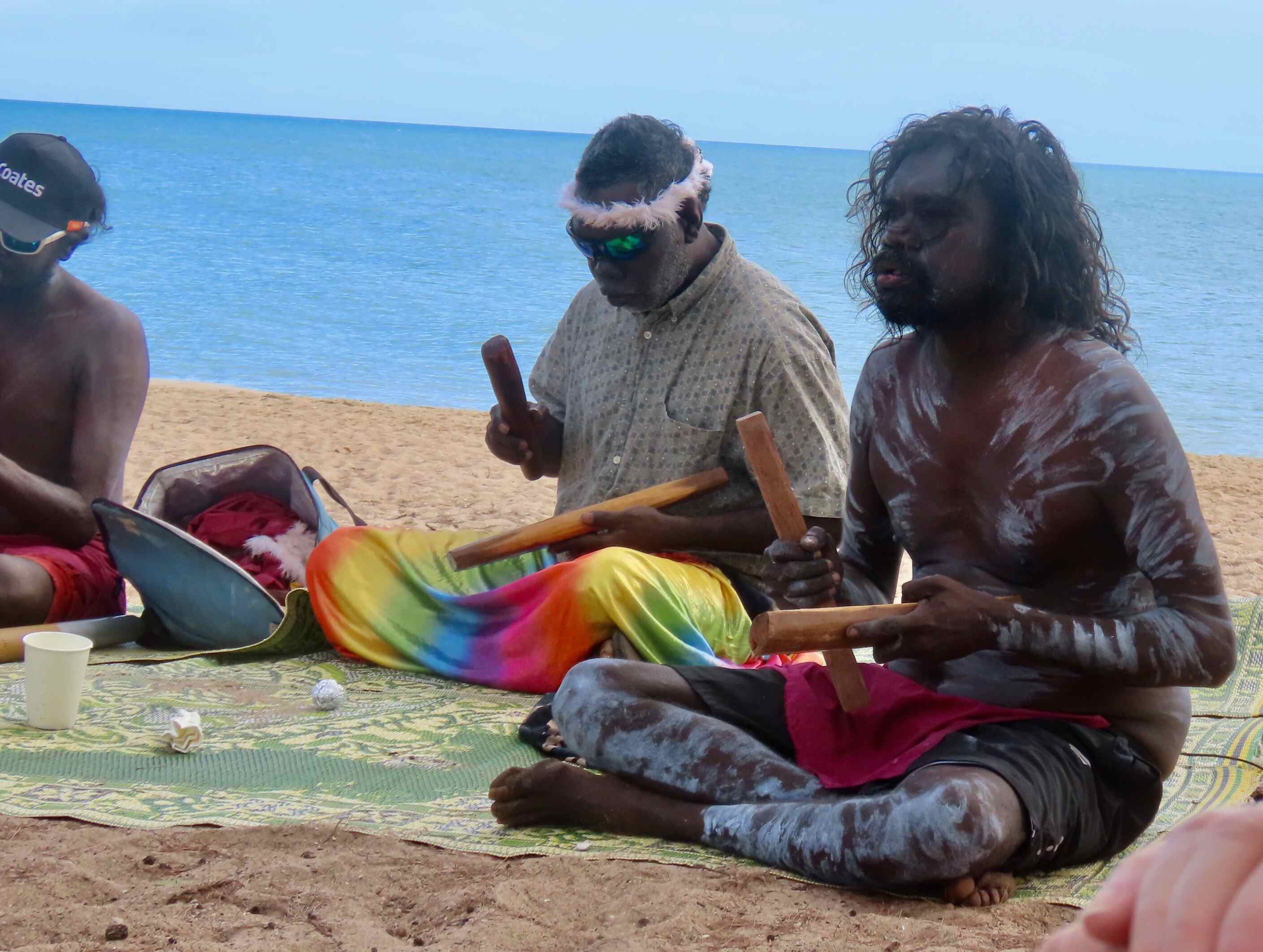
Playing the clap sticks
There’s so much more to share but it will all have to wait until later.
We leave Nhulunbuy early tomorrow morning and are likely to be out of internet range for the next 10-12 days. Have fun without me. I’ll be too busy being a tourist, so won’t have access to or a chance to visit other blogs or reply to comments.
P.S. Plus, I promise to come back and tell more about Antarctica and our trip across the South Atlantic. I’ve been sidetracked these last few months.
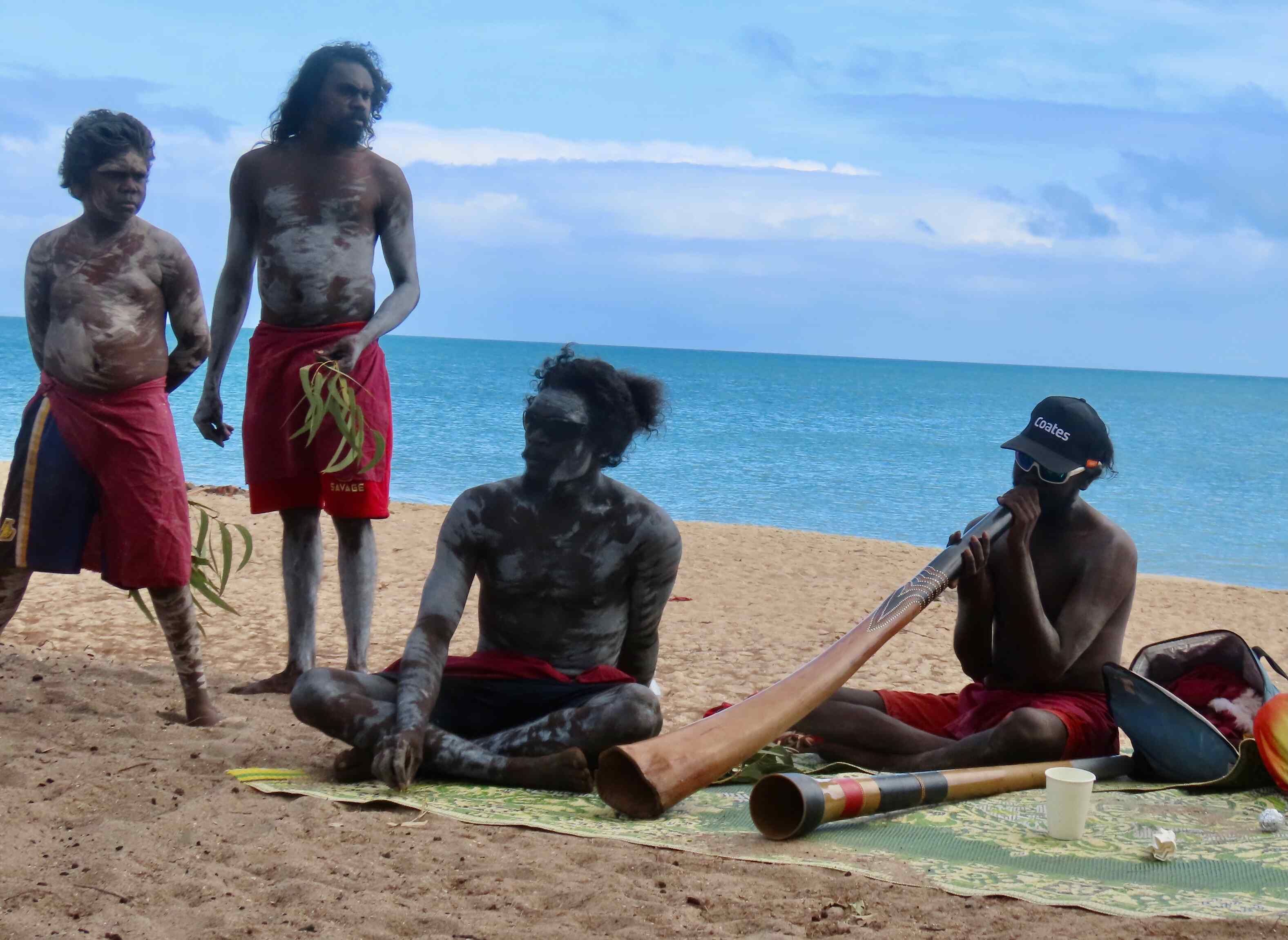
Didgeridoo player and male dancers
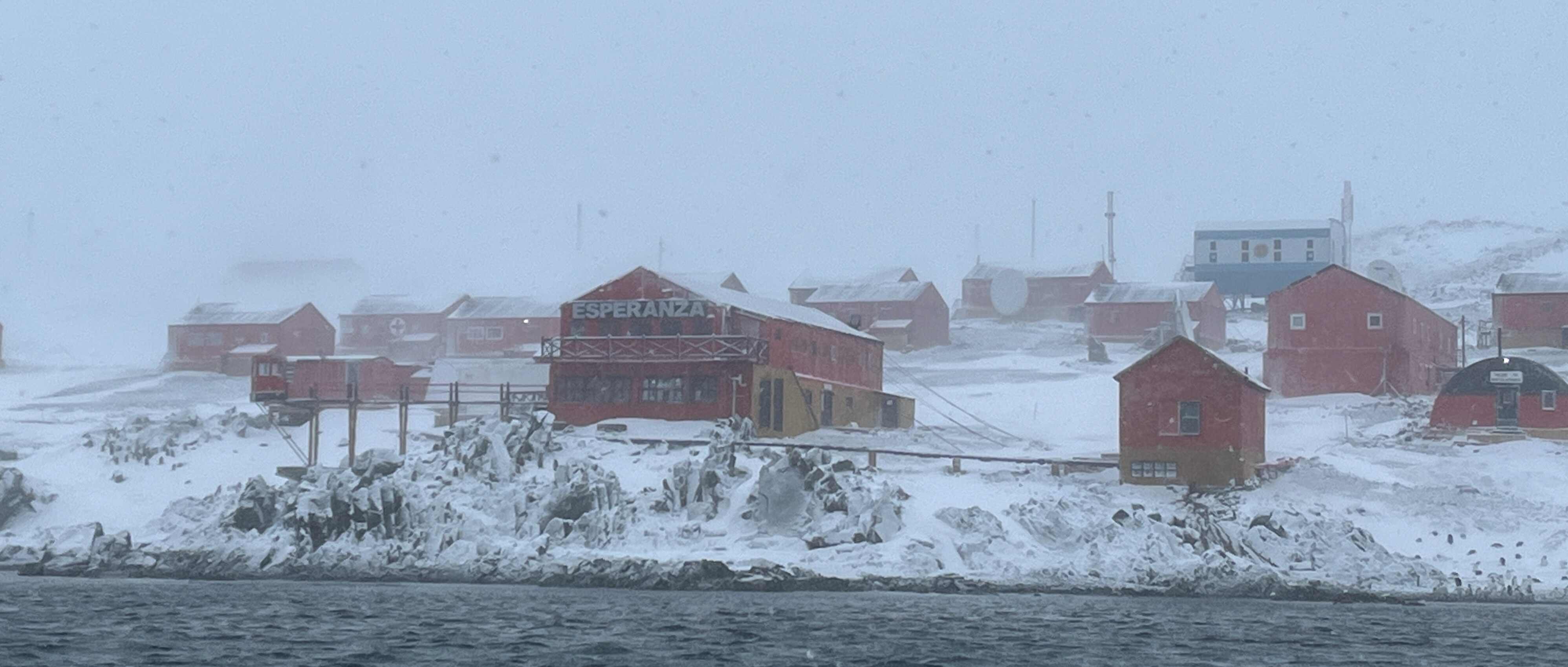
Esperanza Base on a snowy day
As the world’s windiest, coldest, iciest and driest continent, Antarctica gets less than 17 centimetres or about 6.5 inches of precipitation each year.
I reckon about one-third of that fell as snow on our second day in the Antarctic.
We woke to a good covering of snow on the decks, the promise of a zodiac cruise around Hope Bay, and a viewing of Esperanza Base.
Zodiacs were our ferries—they were used to take us ashore for landings and allow us to ‘cruise’ an area when landings weren’t possible. Our ship had 12 Zodiacs stacked in the open at the back (stern) of the ship.
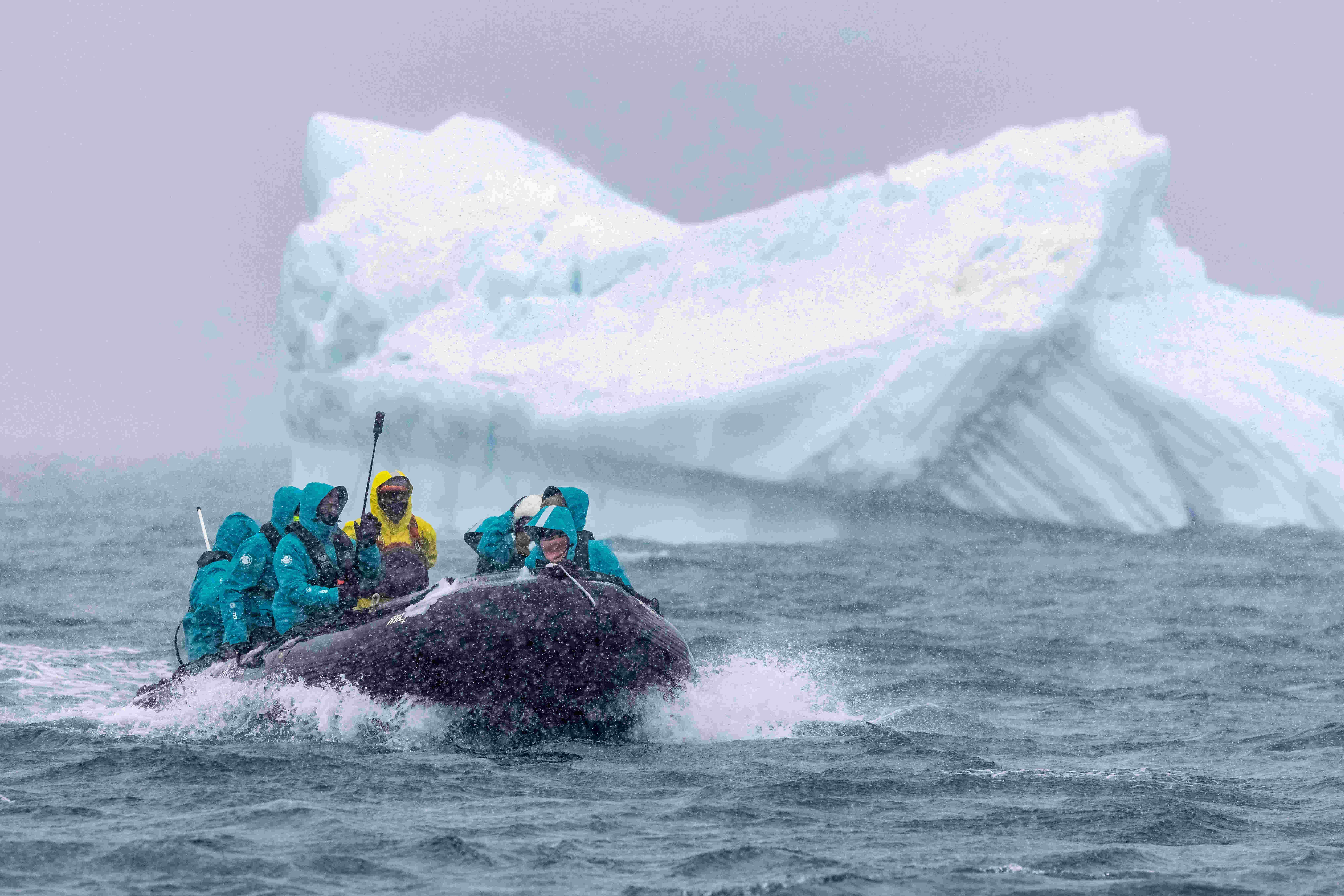
Passing an iceberg on the way to Esperanza Base. Photo by Werner Kruse
This day, I think our Zodiac must have been on top of a stack. It was covered in snow and we soon realised that our waterproof pants weren’t as waterproof as they used to be.
Nevertheless, we made the most of the outing—seeing loads of gentoo penguins (geez they are tough critters) and getting a sense of the difficulties faced by those who live year-round at Esperanza Base.


A bit about Esperanza Base
Esperanza Base is unique. While it is a permanent, all-year-round Argentine research station in Hope Bay, it is also the only civilian settlement on the Antarctic mainland.
It was built in 1953 with the main purpose of giving Argentina a strong claim to Antarctic sovereignty. To that end, and in 1978, Emilio Marcos de Palma Morella was the first person born in the Antarctic (try to remember his name for a trivia night). Back then, his father was head of Argentina’s army detachment at the base. His mother, then seven months pregnant, was airlifted to the base to complete her pregnancy.
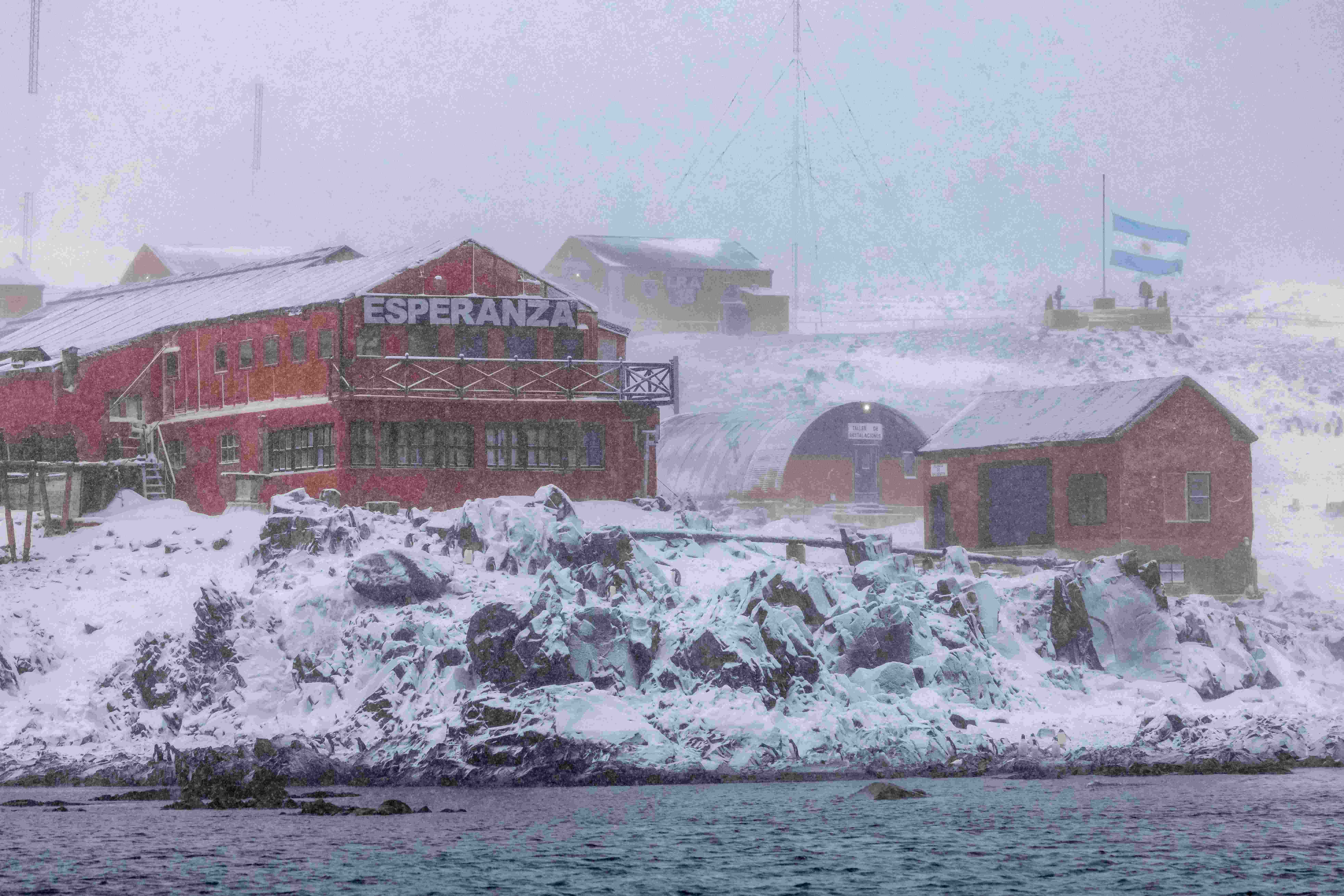
A closer look at Esperanza Base. I wonder where the tourist accommodation is. Photo by Werner Kruse
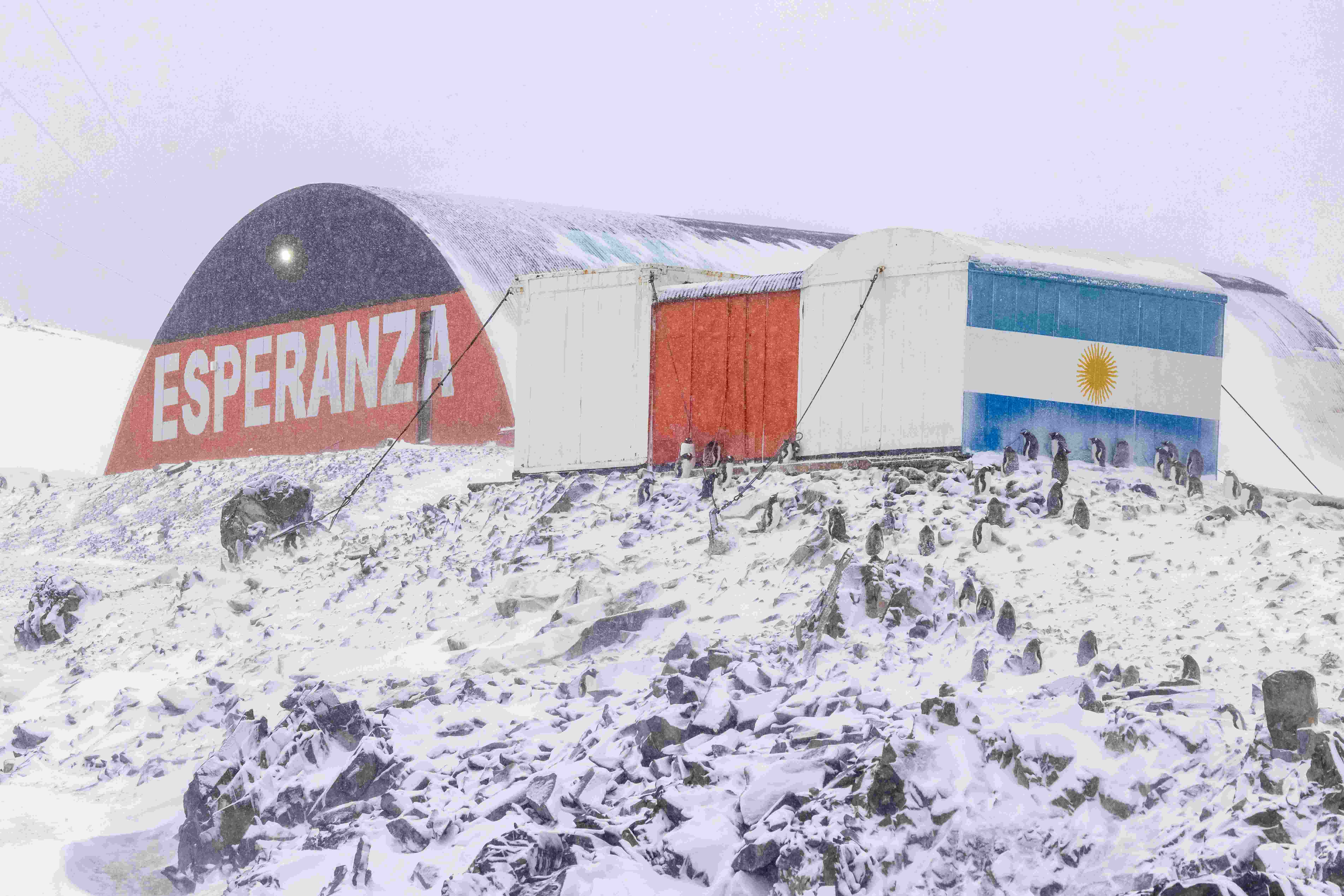
Imagine having penguins in the ‘front yard’. Photo by Werner Kruse
Wow, the extremes people use to prove a point.
These days, the base is home to about 56 inhabitants, including 10 families and two school teachers. A civil registry office records weddings and births (there have been 10 births since Emilio, but no information about how many weddings). There is a Scout troop. I wonder what badges the children can pursue—maybe shovelling snow.
Obviously, we didn’t go ashore (weather too severe), but I’ve read that there is tourist accommodation and about 1100 people visit each year.
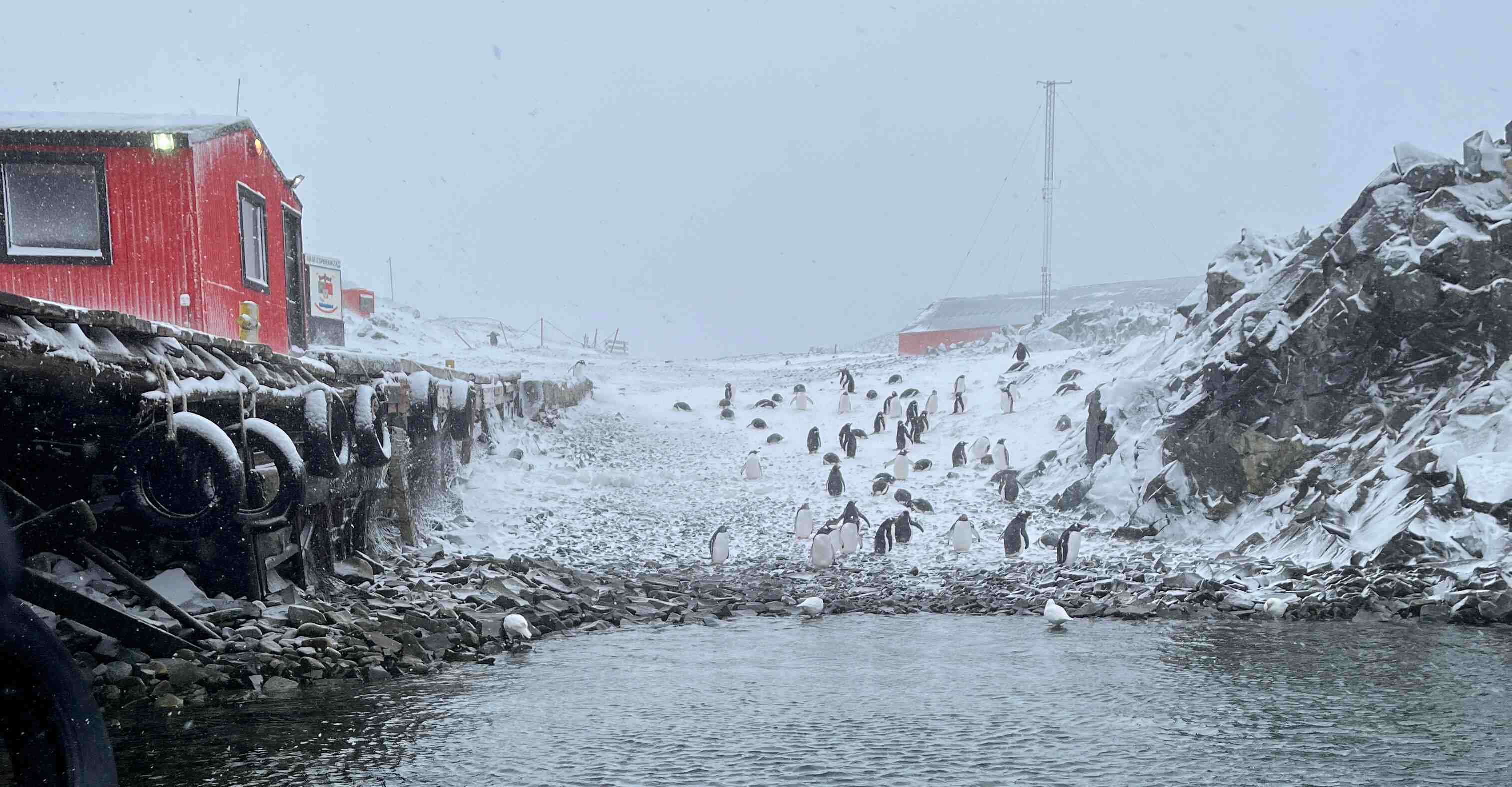
In better weather we might have landed here, amongst the penguins
No doubt thousands of penguins also arrive each year, and the ones who were there when we visited must have been bloody cold.
I was freezing and my underwear was soaked. But I’d do it all again.
P.S. I was grateful for Werner’s (ship photographer) long telephoto lens. I have credited the pics he took.
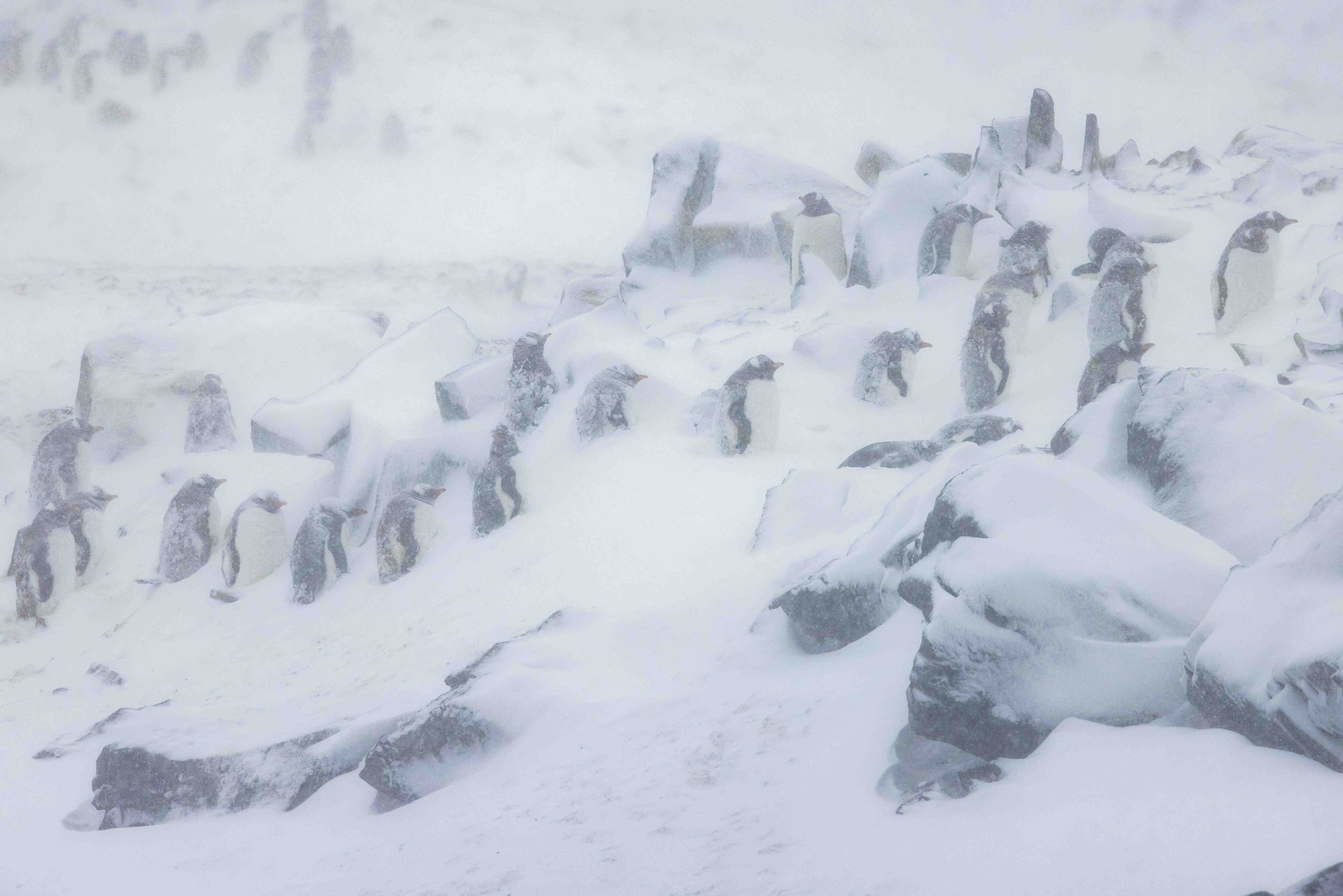
Gentoo penguins braving the snow at Esperanza Base. Photo by Werner Kruse
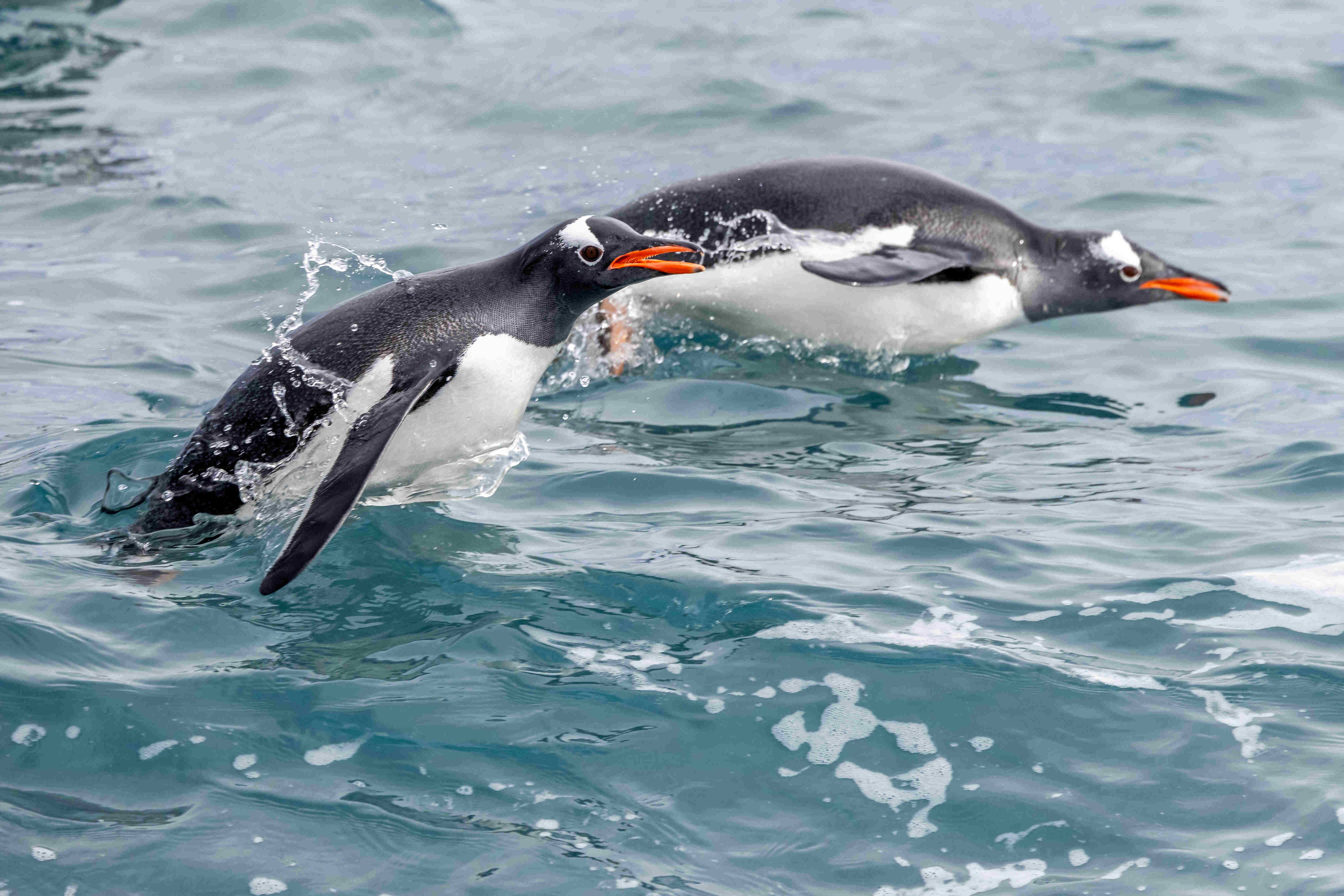
Gentoo penguins heading to shore. Photo by Werner Kruse
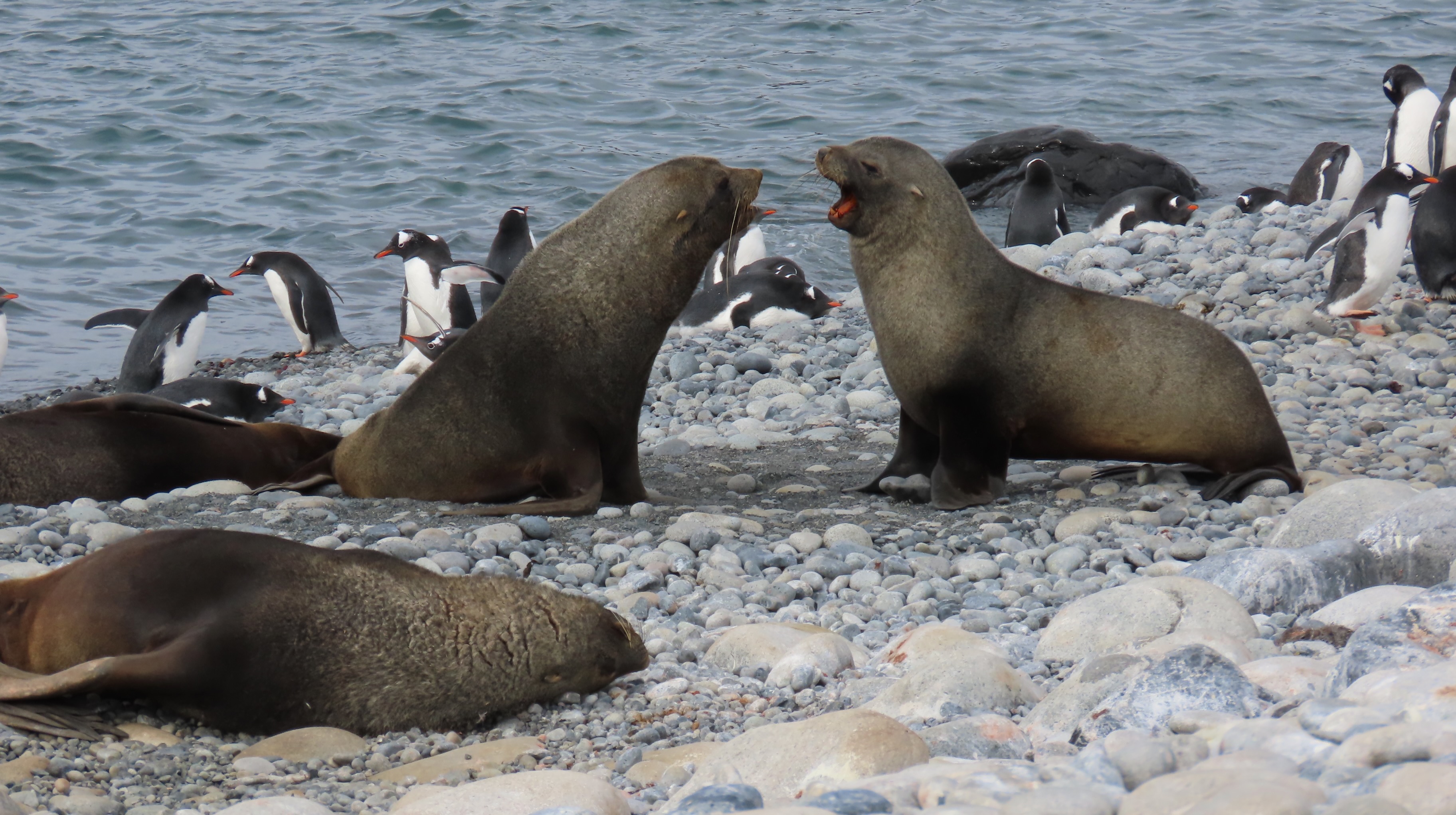
Fur seals find plenty of things to argue about
You might remember that last November our expedition from South Africa to Argentina never made it to the Antarctic. Halfway across the South Atlantic, one of the ship’s two propellers developed a problem that forced us to sail directly to the nearest port.
That was Ushuaia, the southernmost inhabited city on earth and the main gateway to the Antarctic. As an aside, we were told that 600 Antarctic expeditions sail from Ushuaia each year.
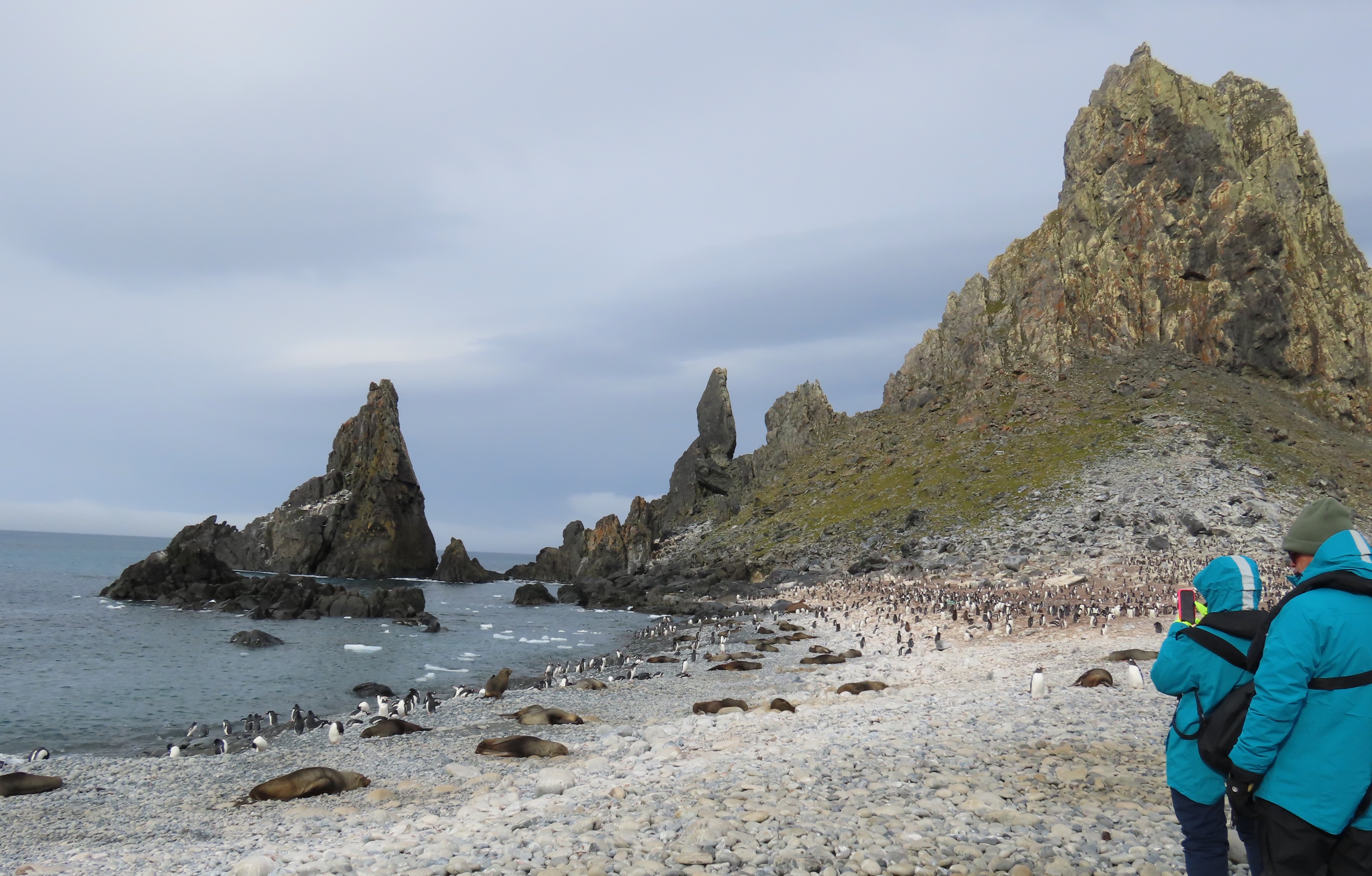
Fort Point, our first landing in Antarctica
But in March, and with many thanks to Swan Hellenic, we repeated the trip in reverse—from Ushuaia to Cape Town—on the SH Diana. And yes, this time we made it to the Antarctic.
Once we cleared the Drake Passage, which was surprisingly calm, we arrived at Fort Point on the edge of Greenwich Island in the South Shetland Islands.
Although the South Shetland Islands are 120 kilometres from the Antarctic Peninsula, they are still considered part of the Antarctic.
This important first stop for us included a landing amongst fur seals, birds and two main kinds of penguins—chinstrap and gentoo—as well as a zodiac cruise.What a great way to start an expedition.
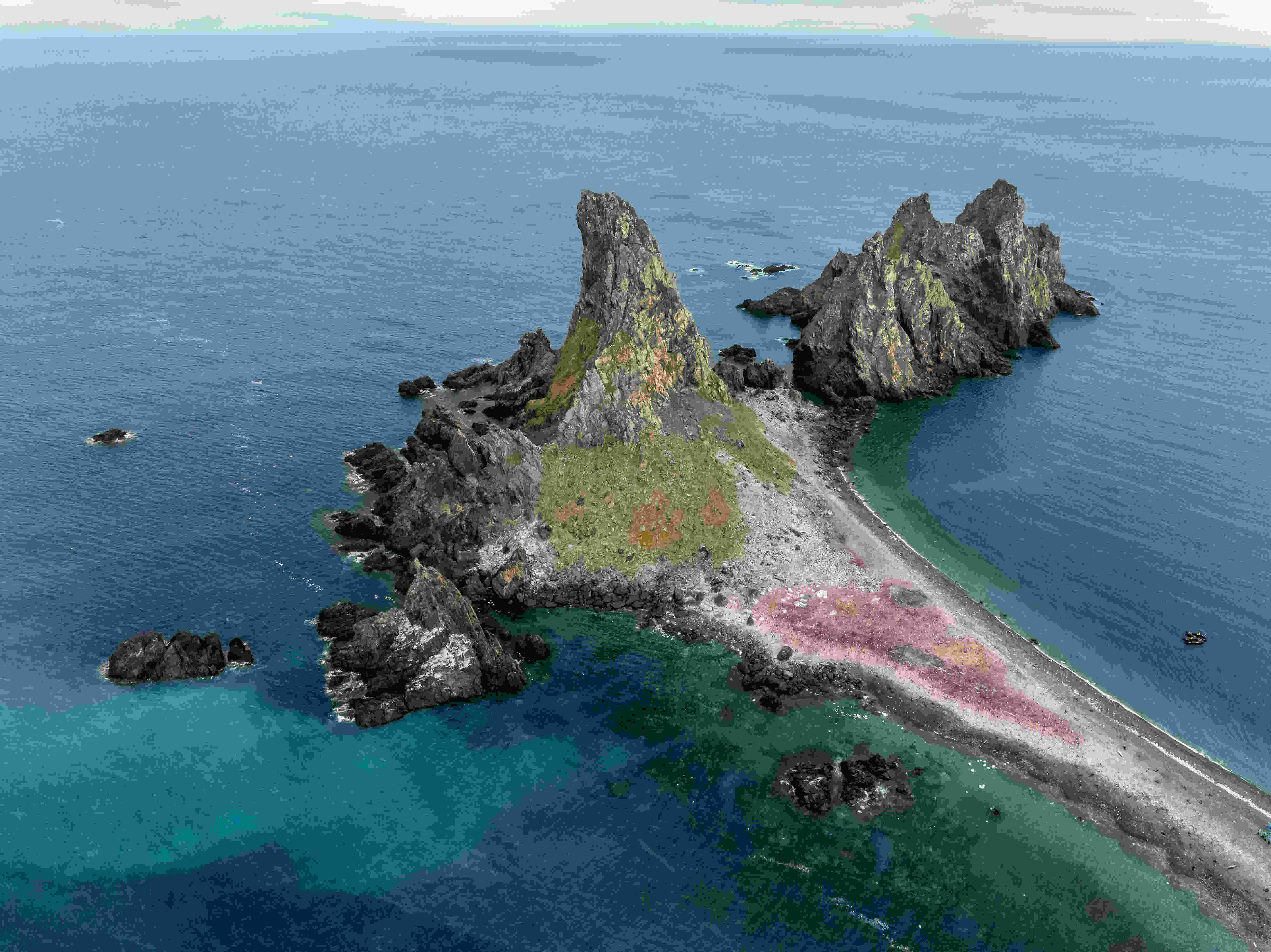
A bird’s eye view of Fort Point. Too high to show us traipsing around. Photo by Werner Kruse
A bit about Fort Point and surrounds
Fort Point is exactly that—an 85-metre-tall rocky point that is linked to Greenwich Island’s southeast coast by a low-lying, 700-metre-long isthmus. The point used to be called Castle Rock.
Greenwich Island, which is 143 square kilometres (55 square miles) in area, has also been called Sartorius Island and Berezina Island. Chile and Ecuador have Antarctic research stations on the northern part of the island.
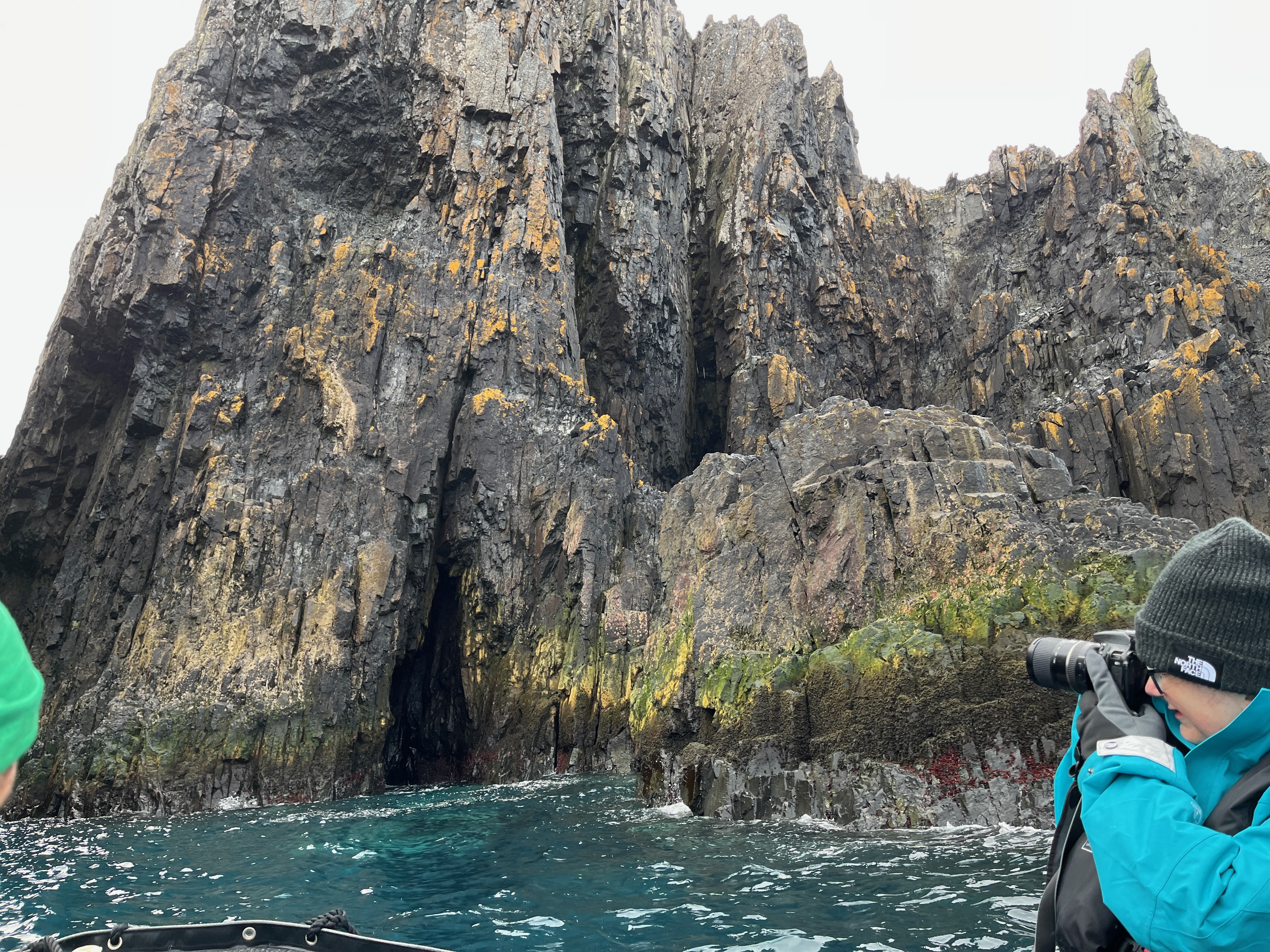
A closer look at spots we can’t reach on foot
The South Shetland Islands were discovered by William Smith in 1819, when he diverted while sailing from Buenos Aries, Argentina, to Valparaiso, Chile. Other mariners and sealers may have seen these islands much earlier, but Smith’s discovery was the first to be well documented.
The South Shetlands stretch across 500 kilometres (270 miles), and include 11 major islands and more than 12 minor ones. The land area measures 3,687 square kilometres (1,424 square miles), of which 80 to 90 percent is permanently glaciated.
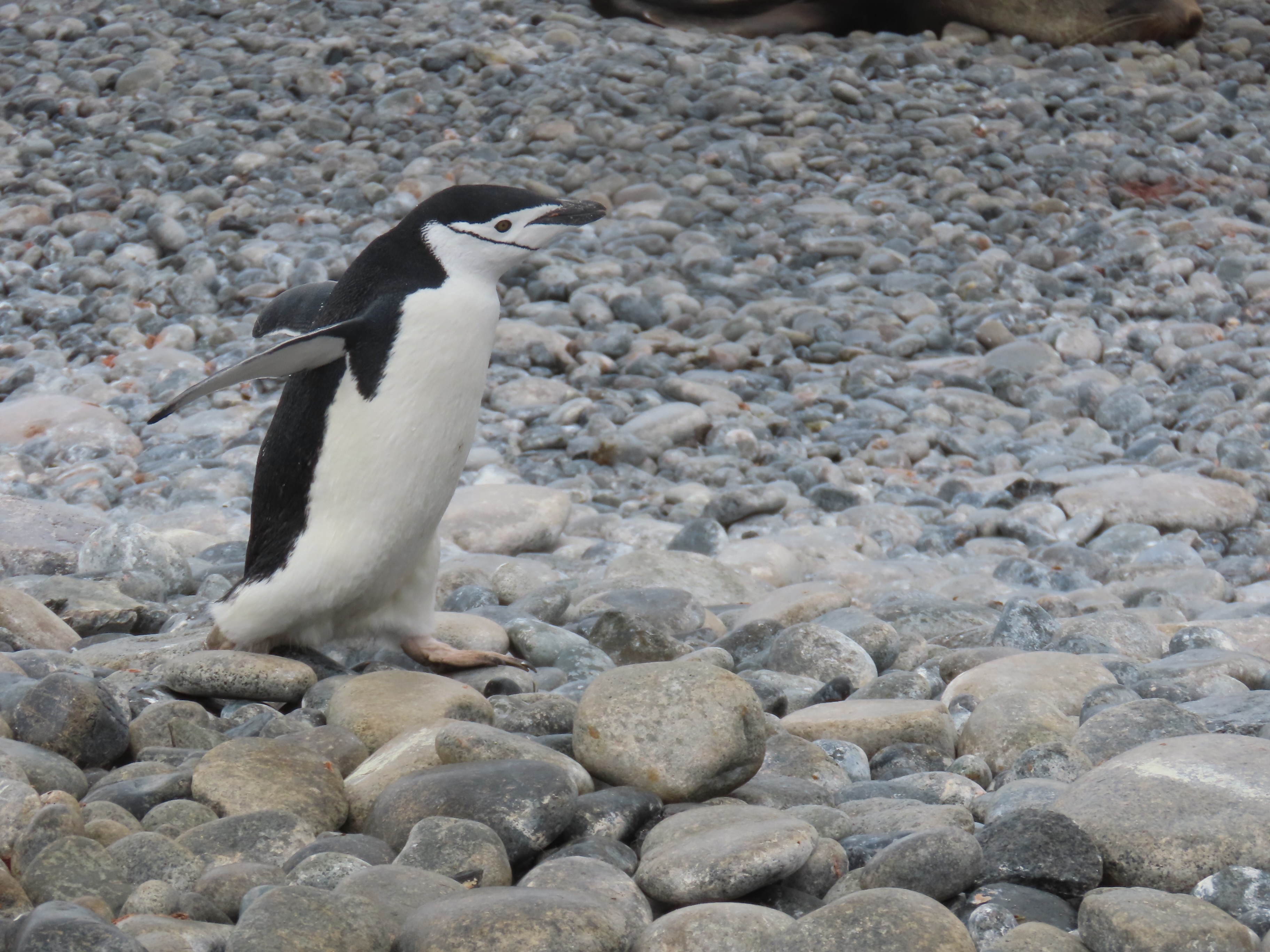
A chinstrap penguin with attitude
King George Island is the largest, with Livingston Island second.
Today 13 countries maintain a total of 19 research stations, with 10 of them open year-round.
P.S. Werner Kruse was the professional photographer on the ship. Not surprisingly, he had a drone and a telephoto lens as long as my arm. I have used some of his pics and given credit.
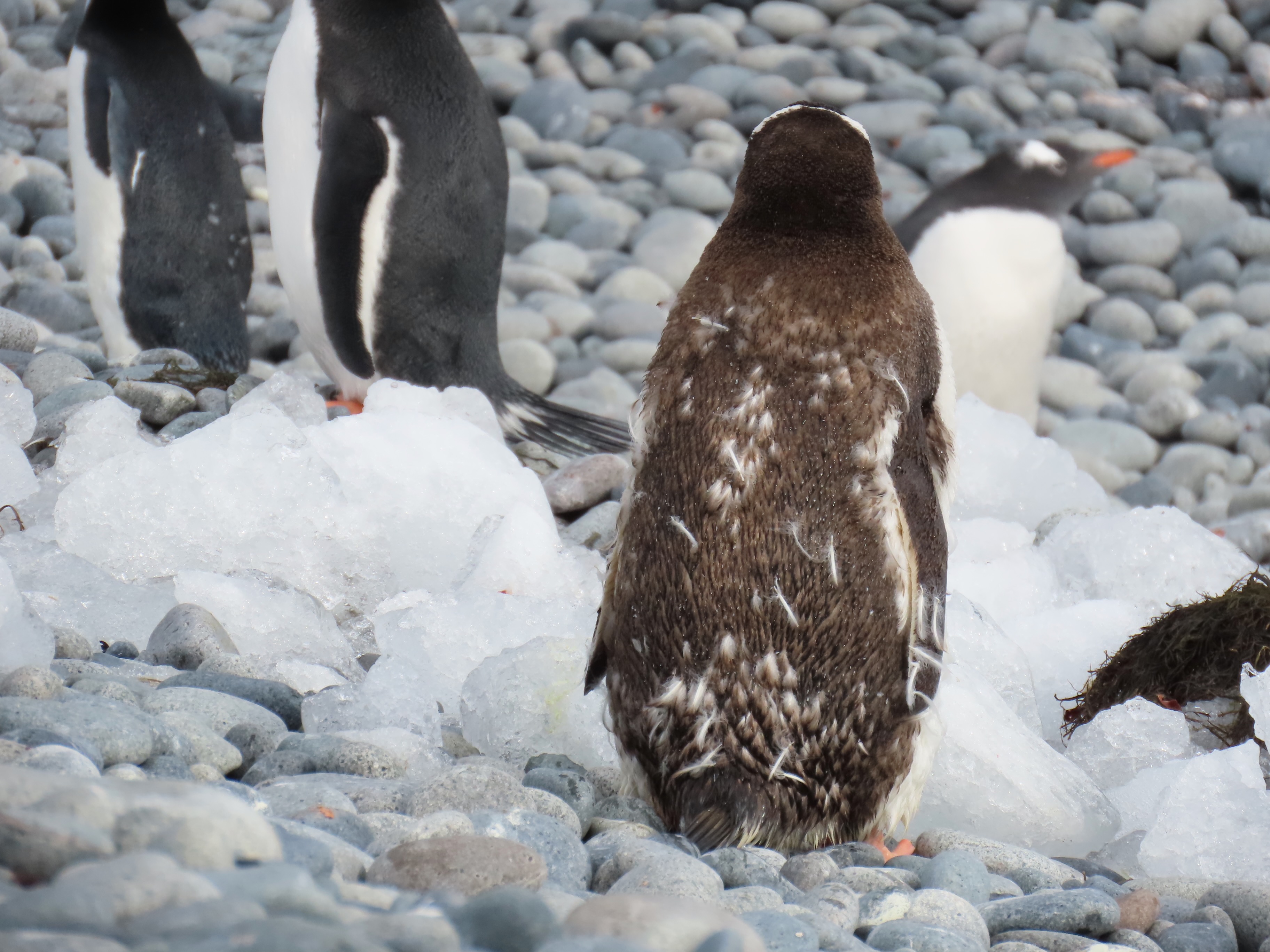
Gentoos come ashore to breed, moult and fledge their young. They look seedy on the way
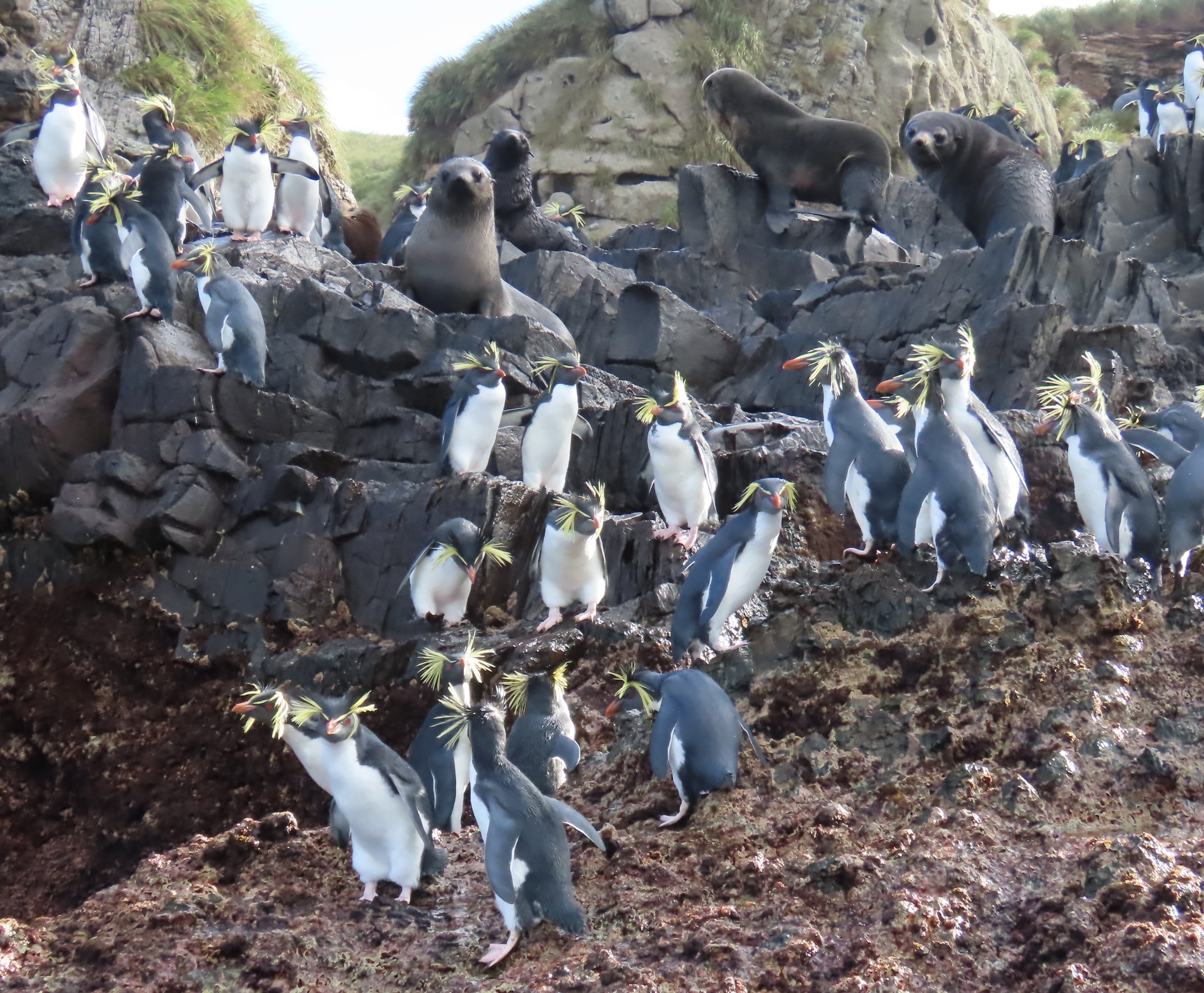
Rockhopper penguins and fur seals on Nightingale Island
Our recent Antarctic expedition was a complete success. We had multiple stops and zodiac cruises in the Antarctic, South Georgia and Tristan da Cunha, as well as a rare, bonus stop at the remote Nightingale Island.
I promise to write about all of them but I’ve had an unexpected, but welcome glitch. We arrived home last Sunday afternoon. Monday the Canberra Hospital called to say there had been a cancellation and could I come in Wednesday morning for a long-awaited foot/toe surgery. Oh yes, because I thought surgery would come around in July or August.
So they knocked me out for a couple of hours on Wednesday and have, I hope, corrected a bad genetic bone structure that I was graced with at birth (thanks mum). The surgery and care have been excellent and the outcome seems positive. Now I’m recovering from an anaesthetic fog and going easy on the pain killers. I get to wear the stylish sandal 24/7 for six weeks.
In the meantime, here are pics of rockhopper penguins and fur seals on Nightingale Island, and my foot. My leg is pink thanks to antiseptics. You don’t want to see the ‘before’ x-rays of the foot.
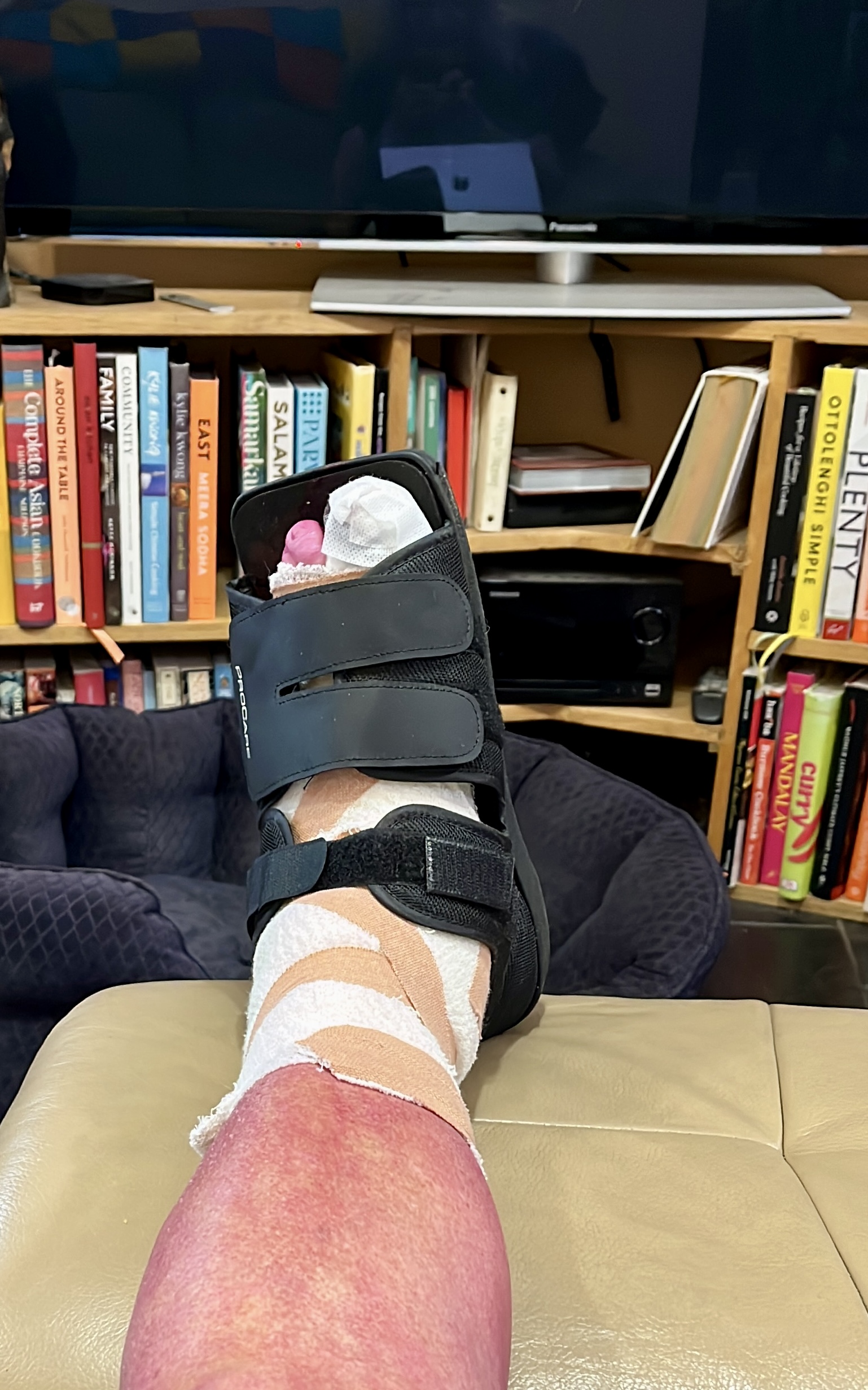
Recovery will be at least six weeks. The cookbooks in the background won’t get much attention any time soon.
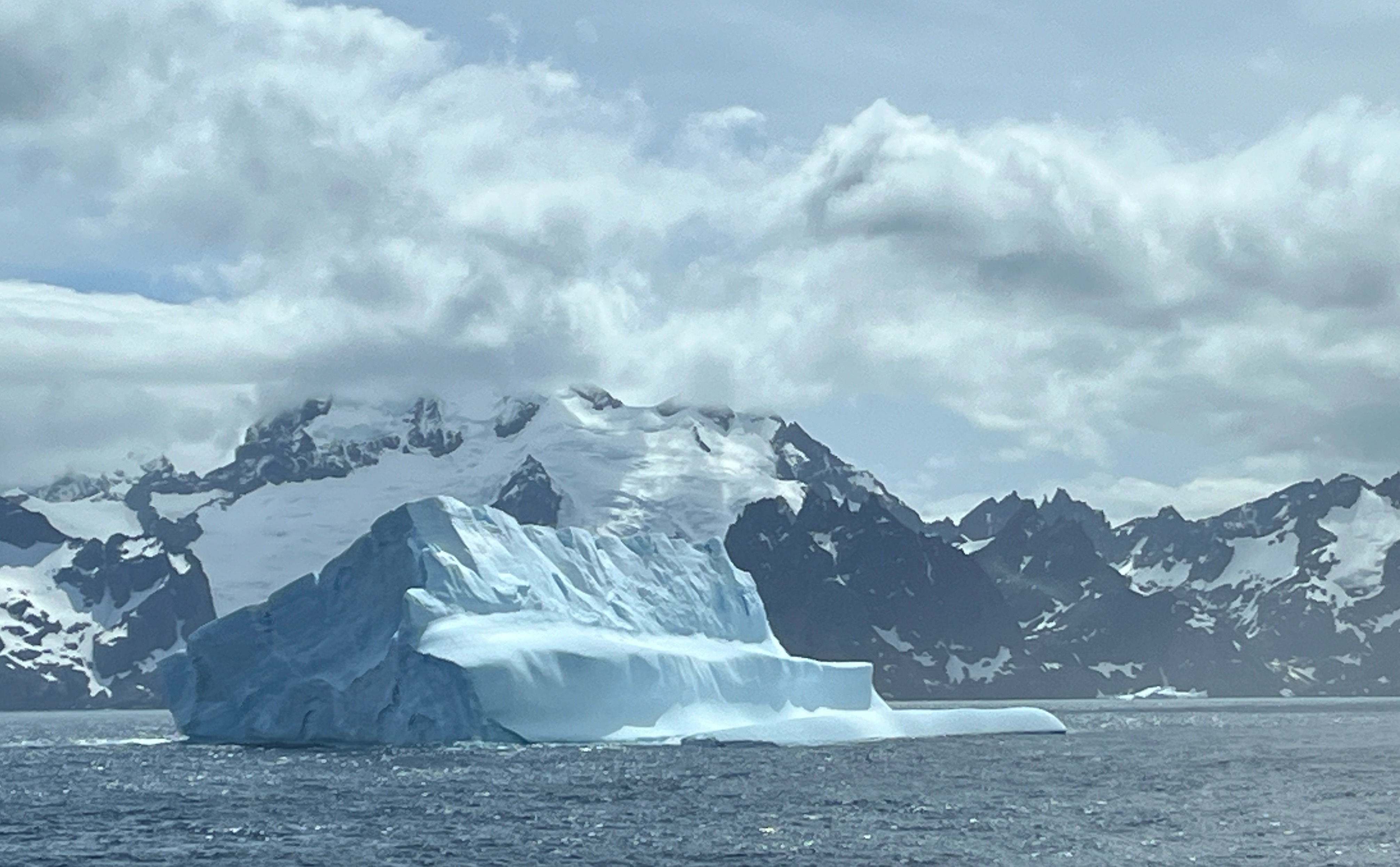
We’ll definitely see loads of icebergs. Maybe even A23A which ran aground near South Georgia.
Oh the joys of being retired and finding someone available to mind the house and dog. As a result, we have been able to rearrange life and get ourselves to South America. Tomorrow (Argentina time) we head out for another expedition to Antarctic.
We’ll be on the same ship we were on last November (the one that didn’t get to Antarctica), and doing the same route but in reverse.
That means we’ll sail out of Ushuaia and head straight to the Antarctic Peninsula. After four days exploring there, it’s on to South Georgia and then another visit to Tristan da Cunha. We’ll finish in Cape Town, South Africa near the end of the month. I won’t have access to the blog until after Tristan da Cunha, but I hope to spend the days at sea bringing together some posts.
We expect plenty of sightings of whales, penguins, seals, birds and more. We might even see Iceberg A23A, the world’s largest iceberg, that recently ran aground near South Georgia.
Our compliments and heartfelt thanks to Swan Hellenic for helping us to join this return expedition. We highly recommend their professionalism, ship, crew and customer service.
P.S. Sorry I won’t be able to follow or comment on blogs until after Tristan da Cunha. Also won’t be able to reply to comments here from later today. Cheers to all.
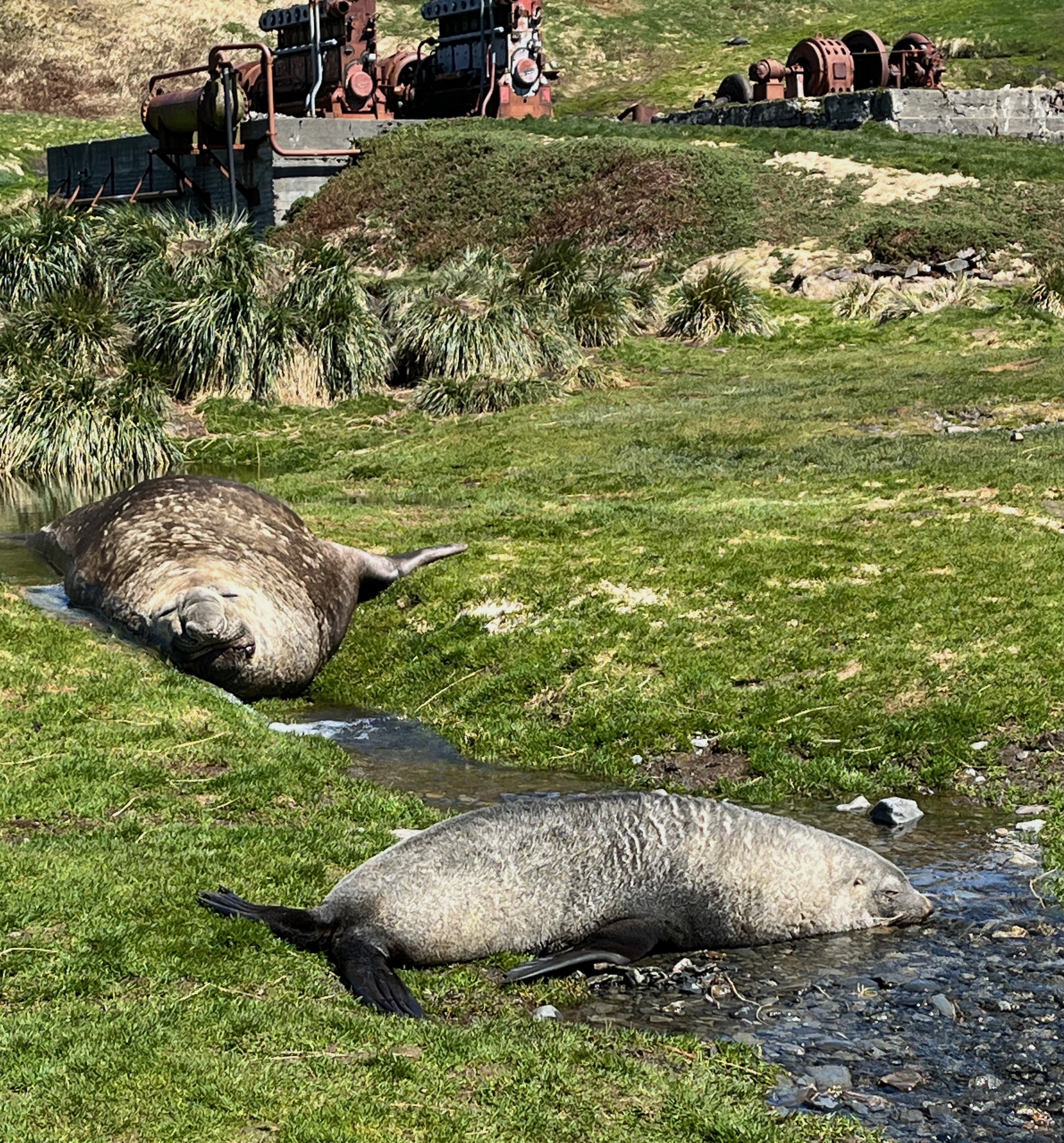
I wonder if these two elephant seals will still be blocking/diverting this small creek
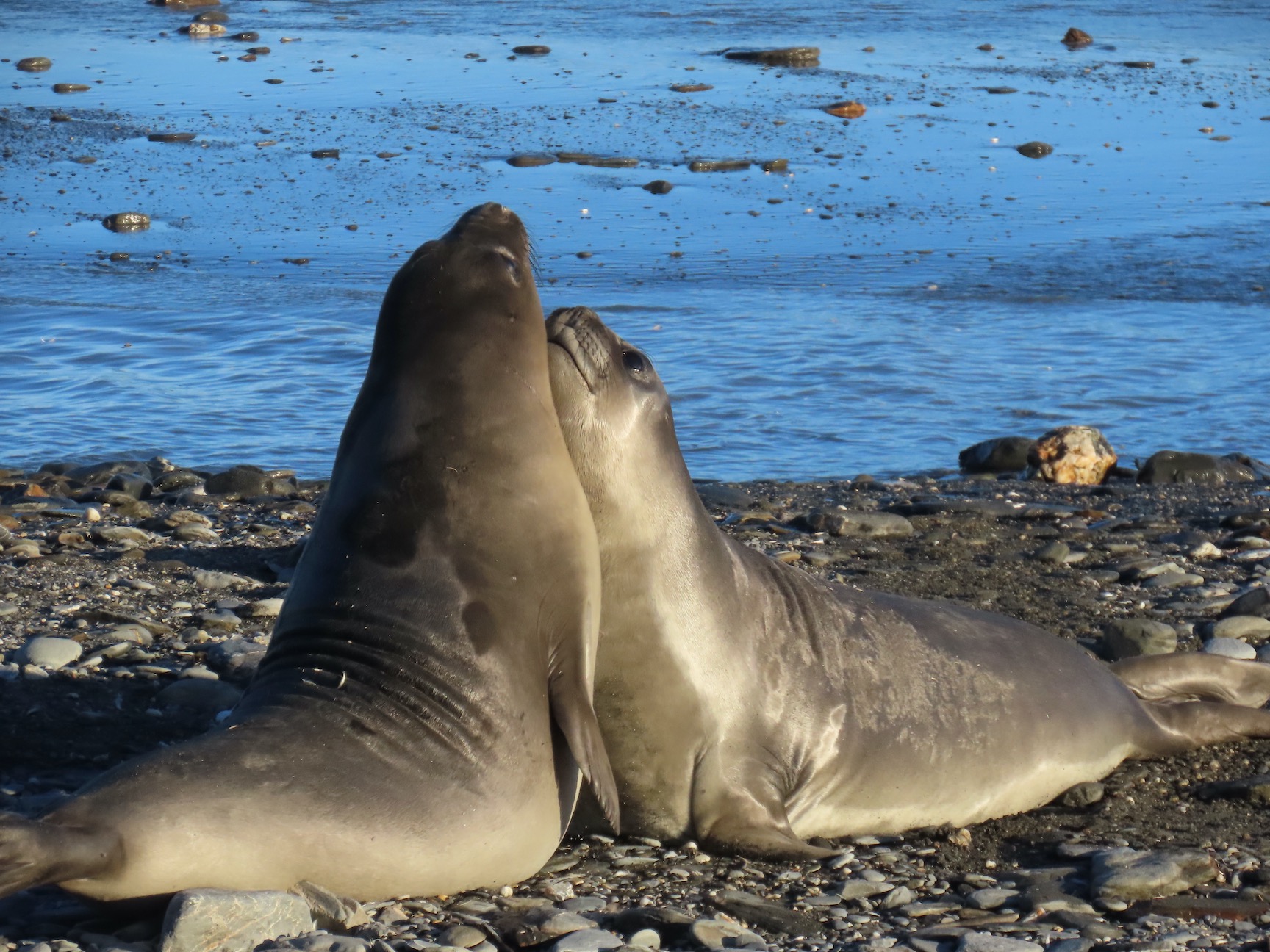
Fur seals getting romantic on South Georgia
Our ship and some of its passengers have unexpectedly become world famous. Yes, we are on that ship. The one with a few passengers on a hunger strike because engine problems mean we miss out on all the days in Antarctica. Bummer.
You can read one of the many newspaper articles about it here. You can check youtube.com as well. Search for hunger strike ship.
Of course, everyone on the ship is disappointed, but by law a faltering ship cannot sail into even more remote waters.
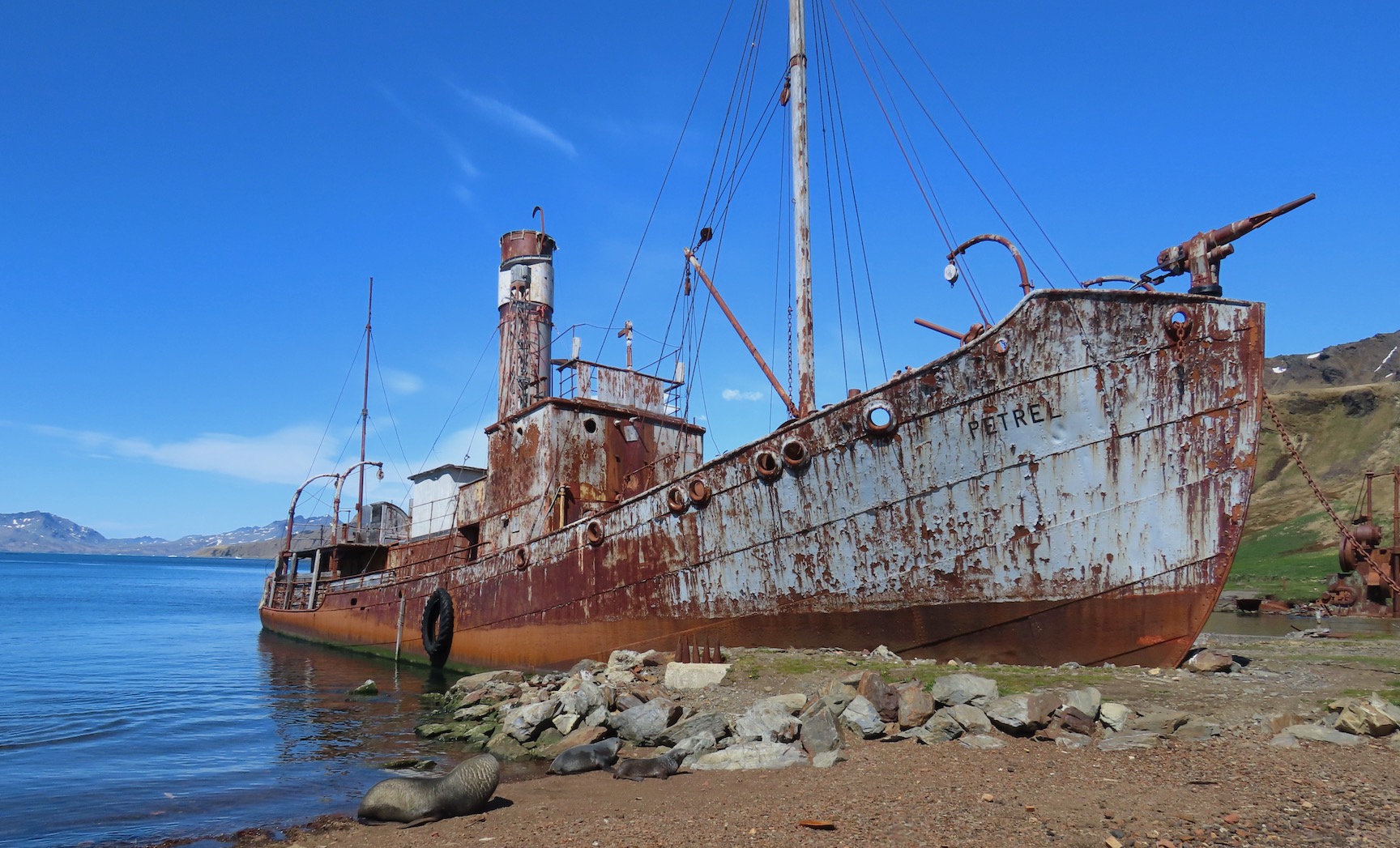
Thank goodness the Petrel is not our ship! Long ago abandoned on South Georgia
Luckily we managed to visit Tristan da Cunha, the most remote inhabited island in the world, and a bit of South Georgia. To soften the blow of the disappointment, we were all given free internet access that allows me to post to the blog. So I’m sharing a few pics now and will write much more later.
P.S. I think it’s down to one hunger striker. Also we have a few journalists on board but everyone is still trying to figure out who posted the initial story in The Times.
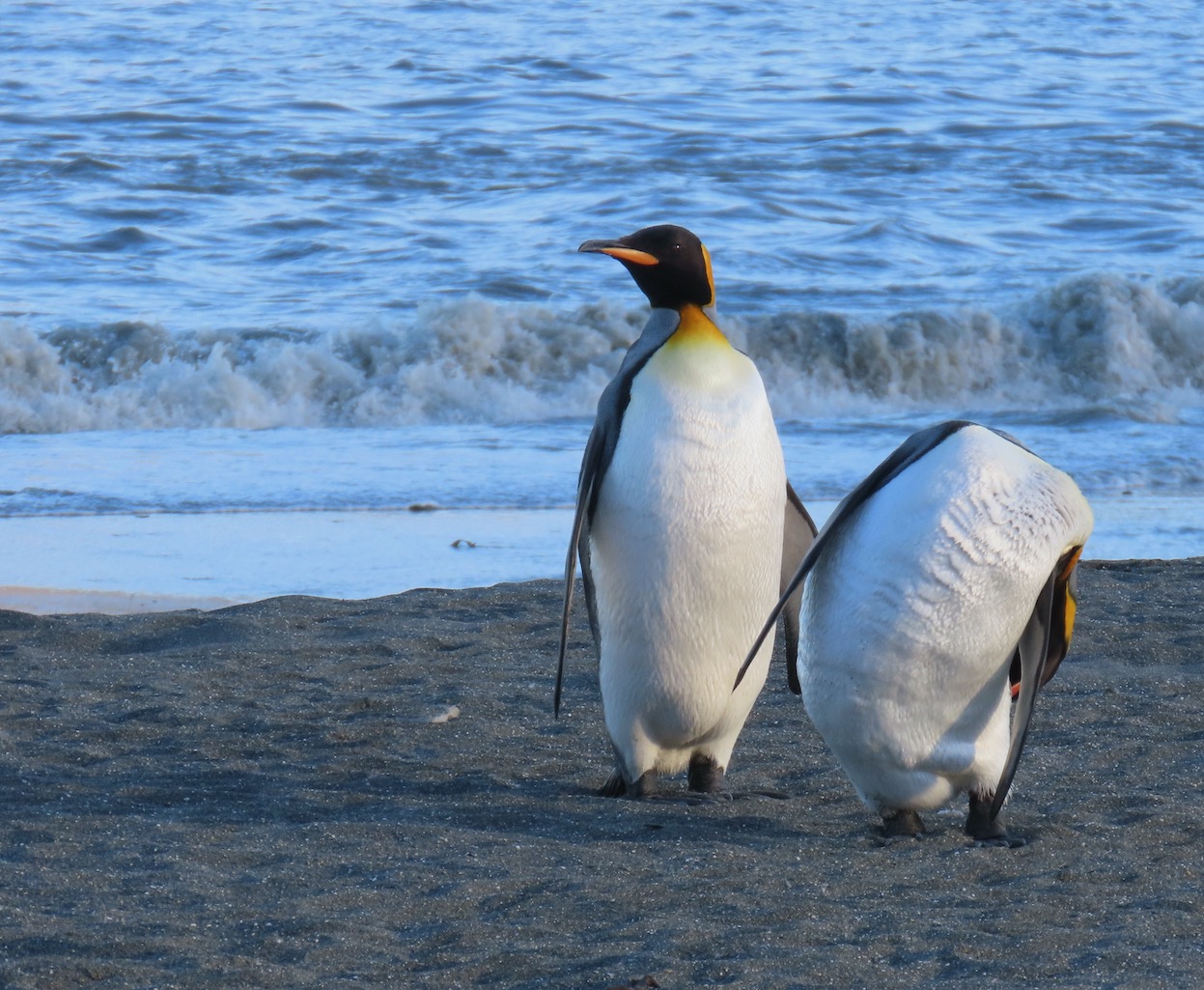
It’s not really a headless king penguin. Just one with an itchy bum

Striking Bird of Paradise flowers we saw today in the Company Gardens in Cape Town
Sorry to have been so quiet on the blog. Lots of reasons, mostly laziness and distractions. Here’s hoping for a change.
Poor John and I spent today exploring in Cape Town, South Africa. Tomorrow we set sail on an expedition ship across the South Atlantic. Stops are Tristan de Cunha, South Georgia, the Antarctic Peninsula, and Ushuaia, Argentina.
We’ve been to the Antarctic and Ushuaia before, but Tristan de Cunha (the most remote island in the world) and South Georgia (home to countless species of wildlife) have been dream destinations for me.
Sadly, internet will be limited (for example, no email) on the ship unless I pay an extra US$500. Even then it is still limited. Not sure blogs and photos can be posted. I’m trying to decide what to do. The family might like to hear from us.
So don’t worry if you don’t hear from me for the next three weeks. Consider your posts liked and commented upon. If I cough up the dollars, you may see more of me. Either way, I plan to get back to blogging in December. So much to tell.
Shown below is the route we take.

Starting in Cape Town, then travelling west to Tristan de Cunha, and then southwest to South Georgia and Antartica, and finally north to Ushuaia
 Where to next?