

On the Eyre Peninsula in South Australia
After months/years of bush camping through Africa and Asia, Poor John and I are finding it doggone easy to do the same in Australia.
We’re on a month-long road trip from Canberra to Perth and back.
We’ve brought plenty of BOOKS, some toiletries, a few changes of clothes and shoes, a tent and groundsheet, two roll mats, two sleeping bags, two pillows, two camping chairs, a 12-litre water thermos, some cooking gear, some dry food staples, a 22-litre Esky/ice chest that holds most of what we need to keep chilled, and a few other bits and pieces. Plus I brought a bag full of food magazines and cookbooks (as reference for my cooking blog), the laptop (seemingly attached to my hip), music, phone and a collection of chargers.
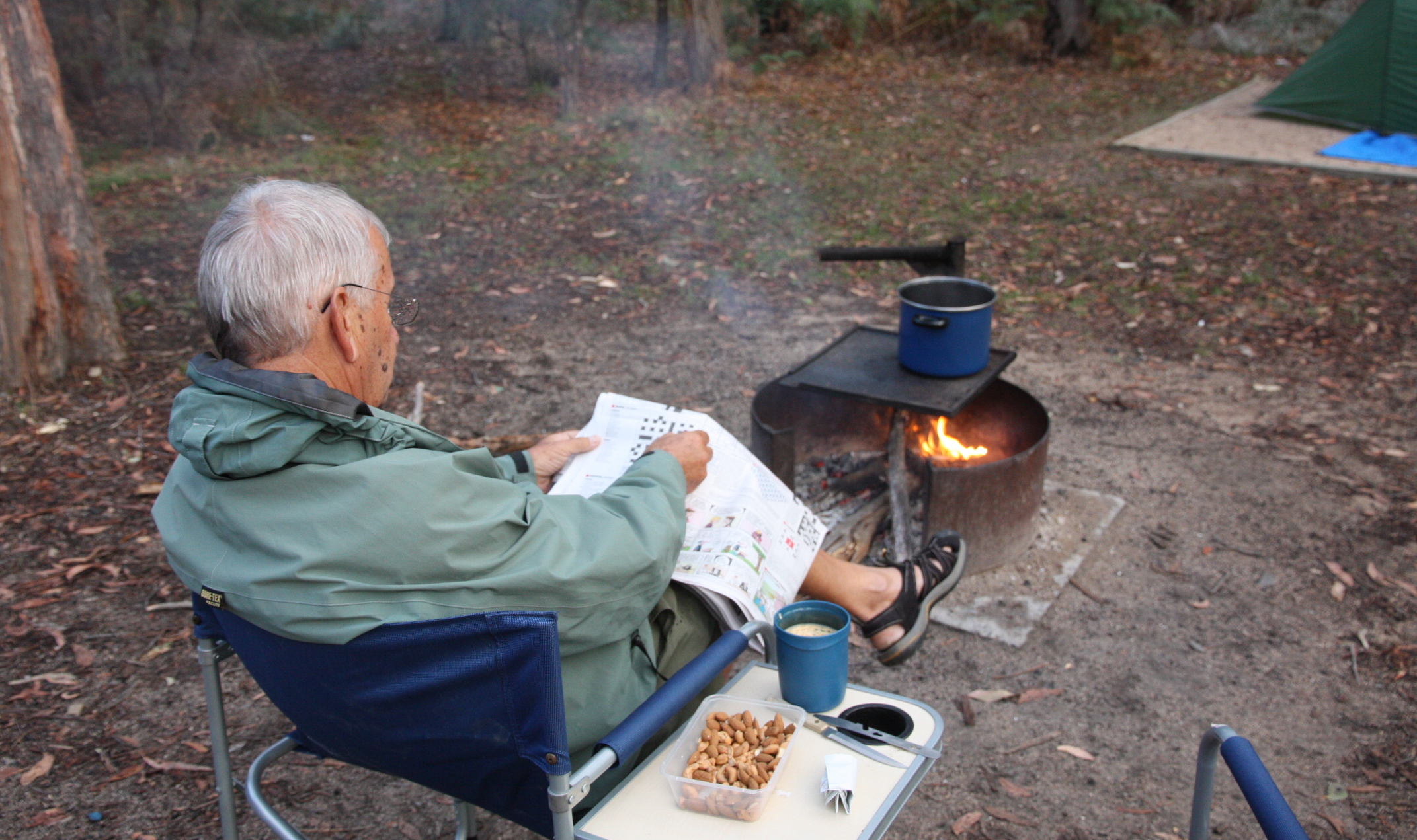
Poor John has quickly resumed his role as fire master (although sometimes he has to haul out the little gas camp stove), and I’m back to cooking. There are friends out there who would be thrilled to know that I haven’t yet cooked with chickpeas/garbanzos or lentils, but I brought three tins of them, so the opportunity is looming.
We’ve found some wonderfully scenic places to camp and/or have meals, and I was rather pleased to make rolled omelettes one day when we stopped for a late breakfast.
In the Grampians in Victoria
Poor John is especially pleased that he has managed to buy a newspaper almost every day. He reckons life would be perfect if it was still cricket season and the matches were being broadcast on the radio.
So far the only hiccups have been rain (twice), the mosquitos in Seymour and the outrageous amounts of money that get charged for petrol in the Outback—$2.04 a litre on the Nullabor Plain!
Oh, and I’m not very happy with my new camping pillow. It’s a good brand, but disappointing—hard and lumpy. I might as well lay my head on my shoes or a rock.

A quick meal before crossing into South Australia and having to ditch all our fresh fruit and veg. Eat it or toss it!

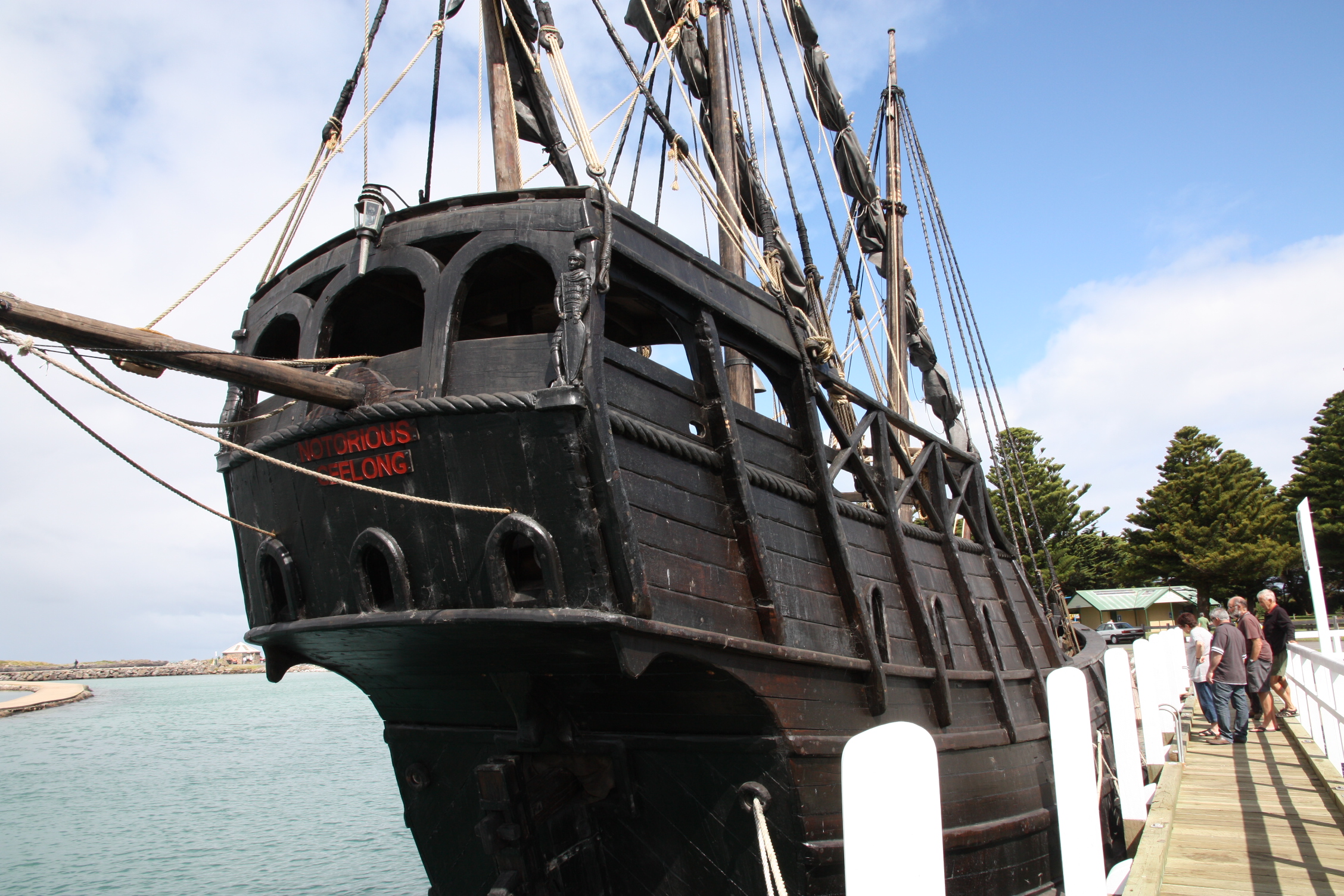
The Notorious
I’ve already mentioned our raid on the veggie garden in Port Fairy, but we also managed to do a bit of sightseeing.
The highlight was seeing the Notorious, a re-creation of a 15th century Spanish or Portuguese caravel.
Inspired by the legendary Mahogany Ship, the Notorious was researched, designed and created single-handedly by Graeme Wylie. Wylie, an amateur boat builder, used traditional techniques where possible.
The caravel is made entirely of reclaimed timber—mostly Monterey cypress, which was sourced from parks, farms and homesteads in southwestern Victoria. The keel and rudder are made of ironbark, reclaimed from the Warrnambool breakwater.
The exterior of the timber has been treated as in the 1500s, with a mixture of Stockholm tar, linseed oil, pitch and pure turpentine.
The Notorious was launched in February 2011 at Martin’s Point, Port Fairy, Victoria.
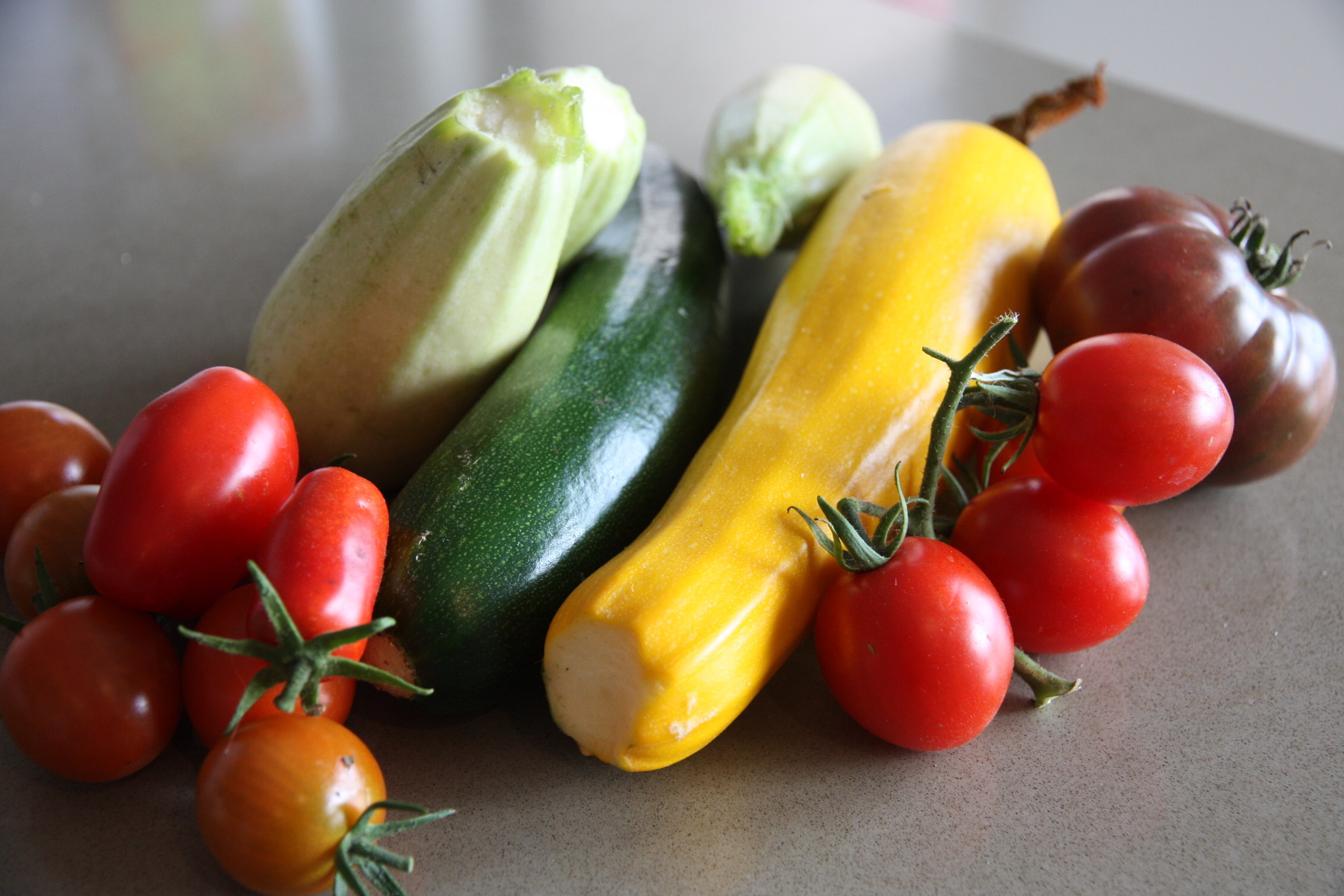
A small sample of the 'stolen' produce
Tent travellers always welcome a night or two in a real bed, and we got exactly that—and much more—when we visited Jan and Russ in Warrnambool, Victoria.
Besides great company and a comfy bed, we enjoyed covert operations, sensational food, and plentiful and delicious wine.
Jan, Russ and I are dab hands in the kitchen. Poor John is the clean-up crew. He wields a mean mop and wet dish towel, but you’re never likely to see him hovering over a hot stove.
We had an amazing and varied meal on our first night, but were in for even more delicacies on the next.
Prior to our arrival, Jan cruised through her cookbooks for a likely page-32 recipe. She found a winner, but it called for action. After a quick sightseeing stop at Tower Hill, we headed to Port Fairy to raid Jan’s son’s veggie garden (covert operations), then Basalt Cafe for lunch, then the fishmonger’s and grocer’s for more supplies, and finally home to cook.
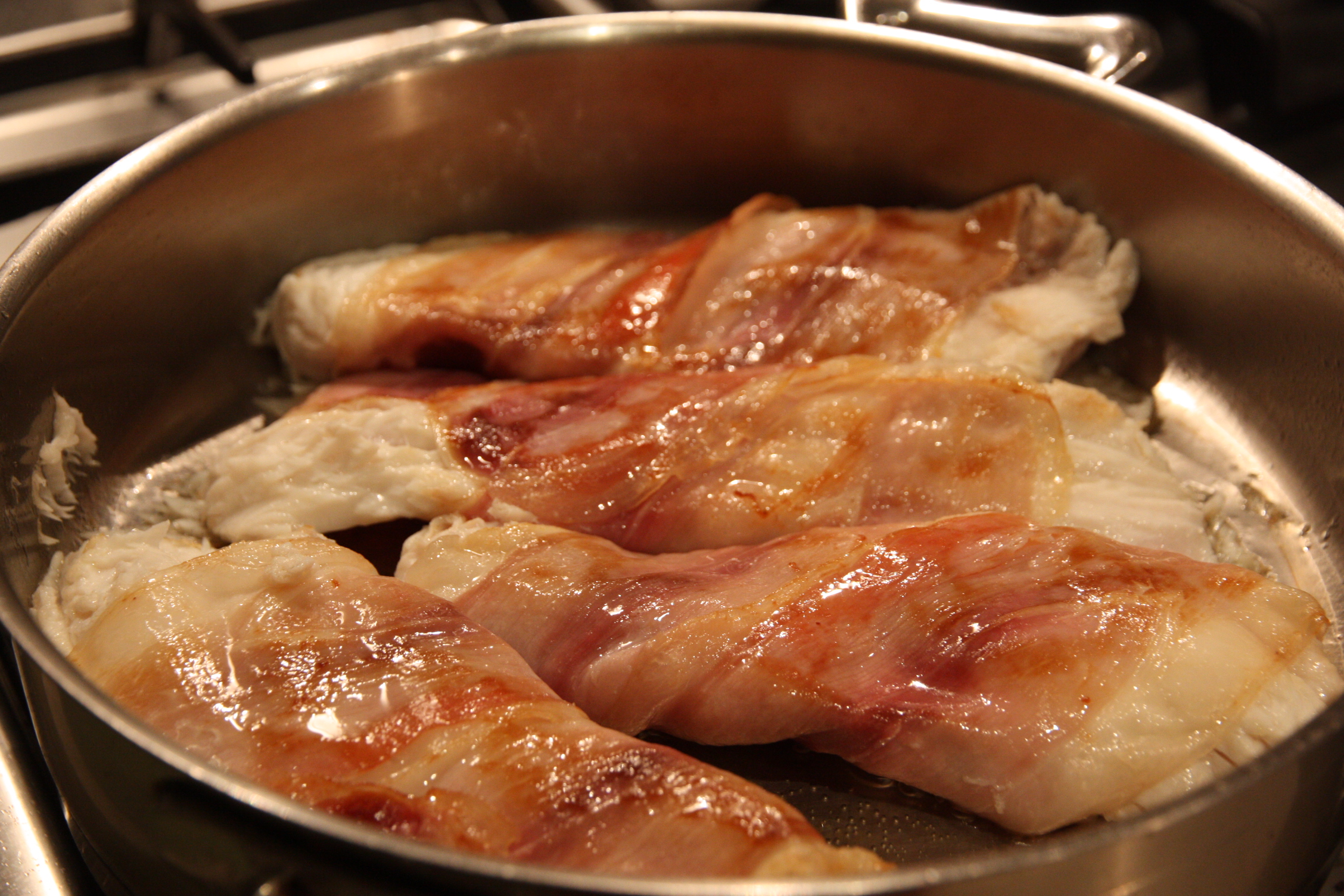
The fish cooking
Poor John was reading and Jan was recovering from surgery, so Russ and I were able to control operations. You can see more details of this outstanding recipe here, but I got a kick out of Jan’s photos of me trying to get a decent photo of the finished dish. The things we do!
The next day we resumed our travels to Perth—this time via the Grampians.
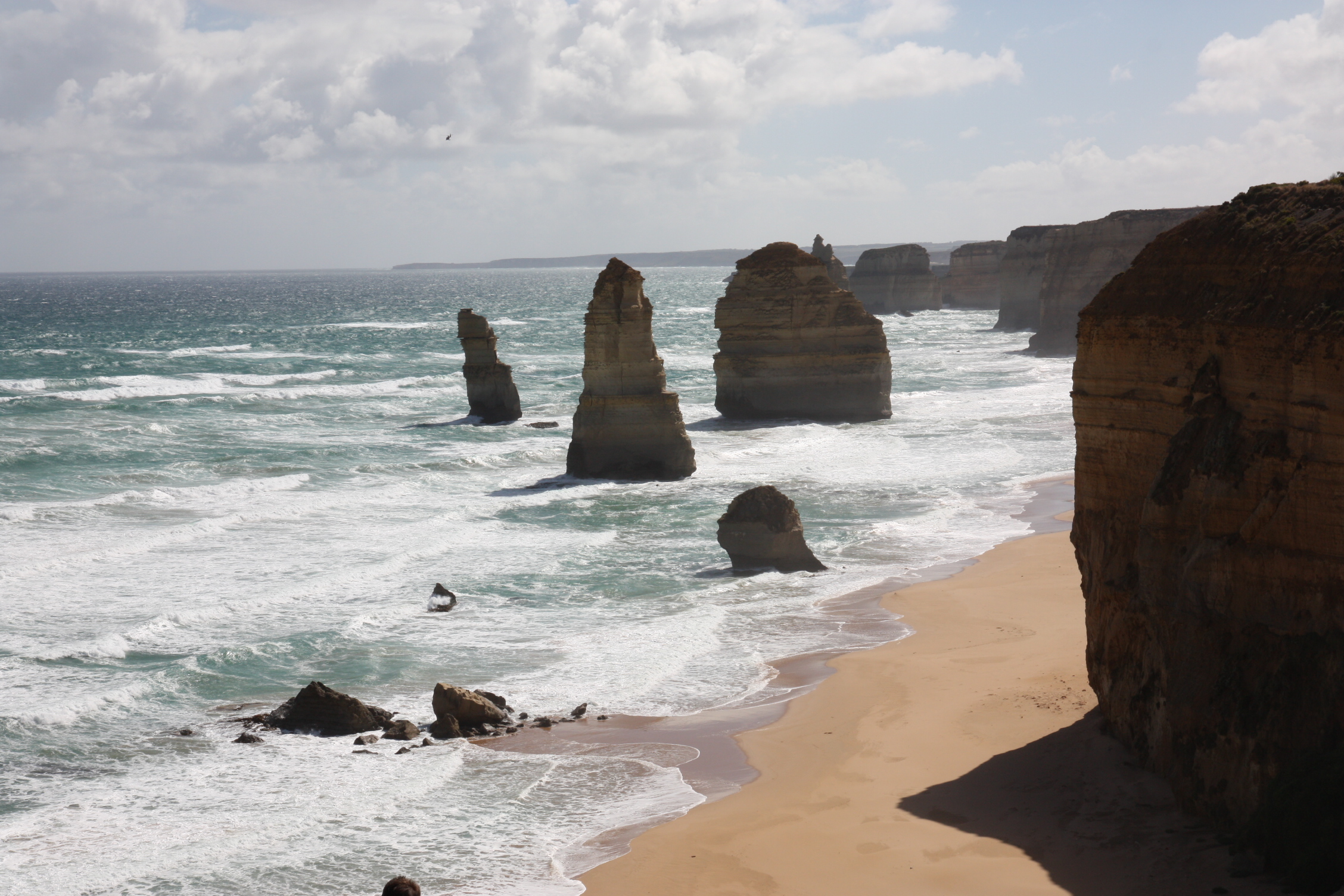
You can't see Twelve Apostles. Some have collapsed and some are farther down the coastline.
Our next stop was the Great Ocean Road—the world’s largest war memorial and also one of the greatest scenic roads.
Started in 1919, the road was built by 3000 returned servicemen to honour fellow soldiers who were killed in World War I.
An advance survey team battled through dense wilderness at about three kilometres a month. Construction was done by hand; using explosives, pick and shovel, wheel barrows and some small machinery. The work was often dangerous. Several workers were killed on the job; the final sections along steep coastal mountains were the most difficult. The complete road was opened in 1932, although some sections opened in 1922.
The road runs for 243 kilometres (151 miles), between the Victorian towns of Torquay to Warrnambool.
It’s an important tourist destination—with spectacular scenery. Thousands of people cruise along the coastline each day to see rainforests, koalas, Bass Strait, the Southern Ocean, beaches and the incredible limestone and sandstone formations of the Twelve Apostles, London Arch/Bridge, Loch Ard Gorge and The Grotto.

The Great Ocean Walk opened in 2004. It’s a string of connected walking trails that runs for 104 kilometres that follow the coastline from Apollo Bay to the Twelve Apostles. In 2011, the road was added to the Australian National Heritage List.
I’ve traveled the Great Ocean Road many times in the past, so we did only a small section on this trip. We joined it at about Wattle Hill and finished at Warrnambool.
The winds were fierce and the seas were rough, although you can’t really tell from the photos. But when you see it like this, you can understand how the area is also called Shipwreck Coast.
We made two scenery stops on this trip—at the Twelve Apostles and London Bridge.
I had to get a pic of London Bridge. Poor John and I and our daughters, along with my mother, were there in January 1990—just two days before the bridge collapsed, leaving two tourists stranded.
I can still hear my mum saying, after she heard news of the collapse, ‘Peggy, I don’t know why you insist on taking me to these places.’
Be sure to check out What’s cooking on page 32.

Australia has some fabulous sunrises and sunsets, and our first sunrise after setting out on the road to Perth was spectacular.
We camped in Seymour, New South Wales—which seems to be the mosquito capital of the entire nation—in a rest area right beside the highway.
The blood suckers savaged me, through two layers of clothing, until I managed to find the bug repellent. Then road trains (double and triple-length trucks) and cars thundered by all night. Foolishly, I put my roll mat on a bit of a slope, so slid up and down through the tent. All in all, I didn’t get much sleep. In fact I was quite happy to crawl out of it in the morning.
And this is what I saw. Made it all worth it. The day was filled with wonderful scenery, so here’s another view.
Be sure to check out What’s cooking on page 32.
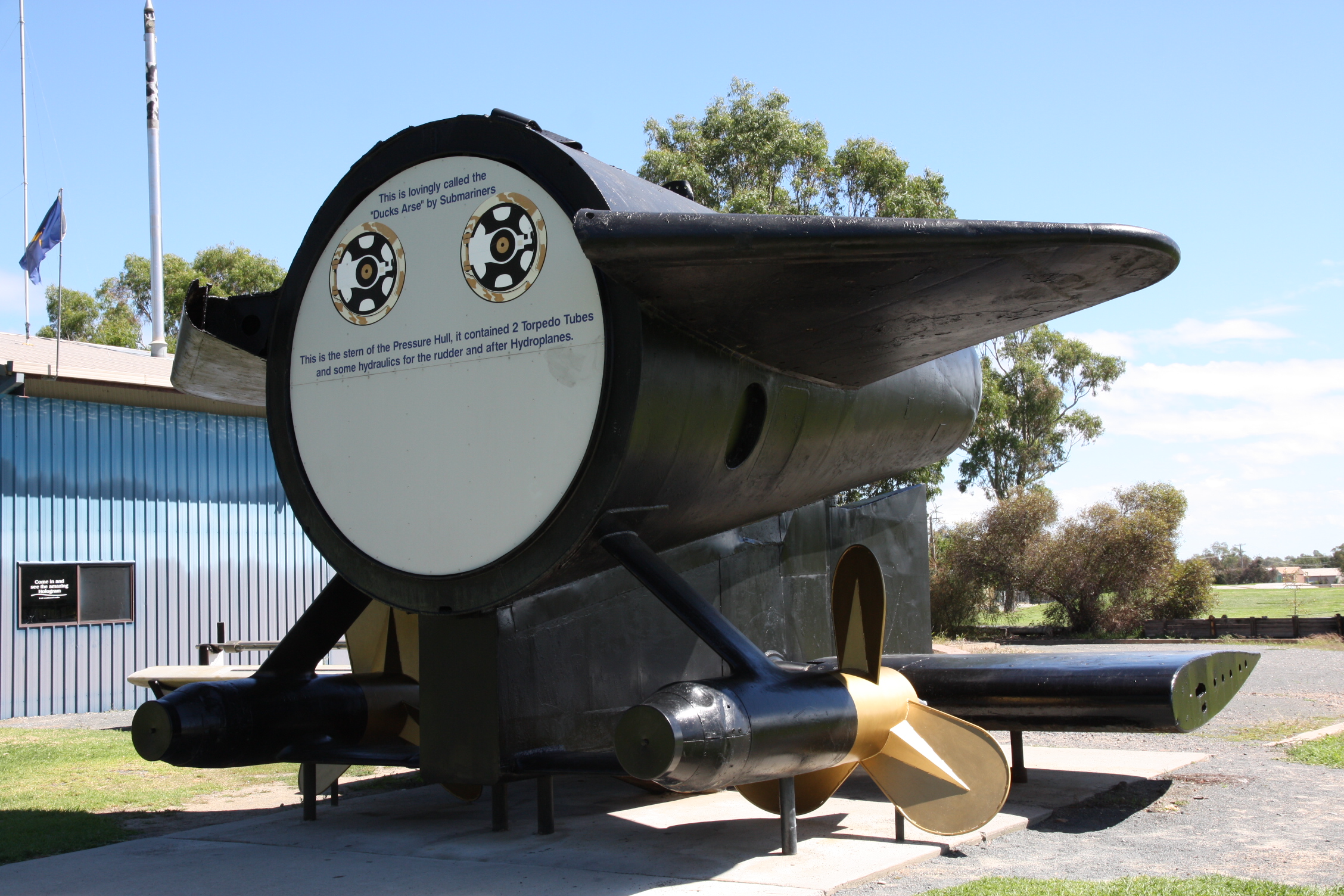
Fin of the HMAS Otway
Holbrook in New South Wales was our first touristic stop on our Canberra to Perth expedition.
It’s on the Hume Highway and about 300 kilometres west of Canberra.
Our daughters, various exchange student and I have stopped here several times in recent years. But as we rolled into this small inland town, Poor John admitted that he’d never seen the submarine parked in Germanton Park, near the middle of town.
It’s not a whole submarine, but the outside skin (above the waterline) of the HMAS Otway, an Oberon-class submarine that was decommissioned by the Royal Australian Navy in 1995.

HMAS Otway
The Navy gifted the sub’s fin to the town. This gesture led Holbrook to embark on a fundraising campaign to buy the whole boat to honour its namesake, Lt Norman Douglas Holbrook, a decorated wartime submarine captain and winner of a Victoria Cross. Fundraising fell short, but negotiations with a Sydney scrap yard led to the partial purchase. This submarine installation was dedicated in 1997.
Holbrook is also famous for its single set of traffic lights. These are the only such lights remaining on the highway between Sydney and Melbourne, but they won’t last long. Later this year, the diversion of the Hume Highway around Holbrook will be completed.
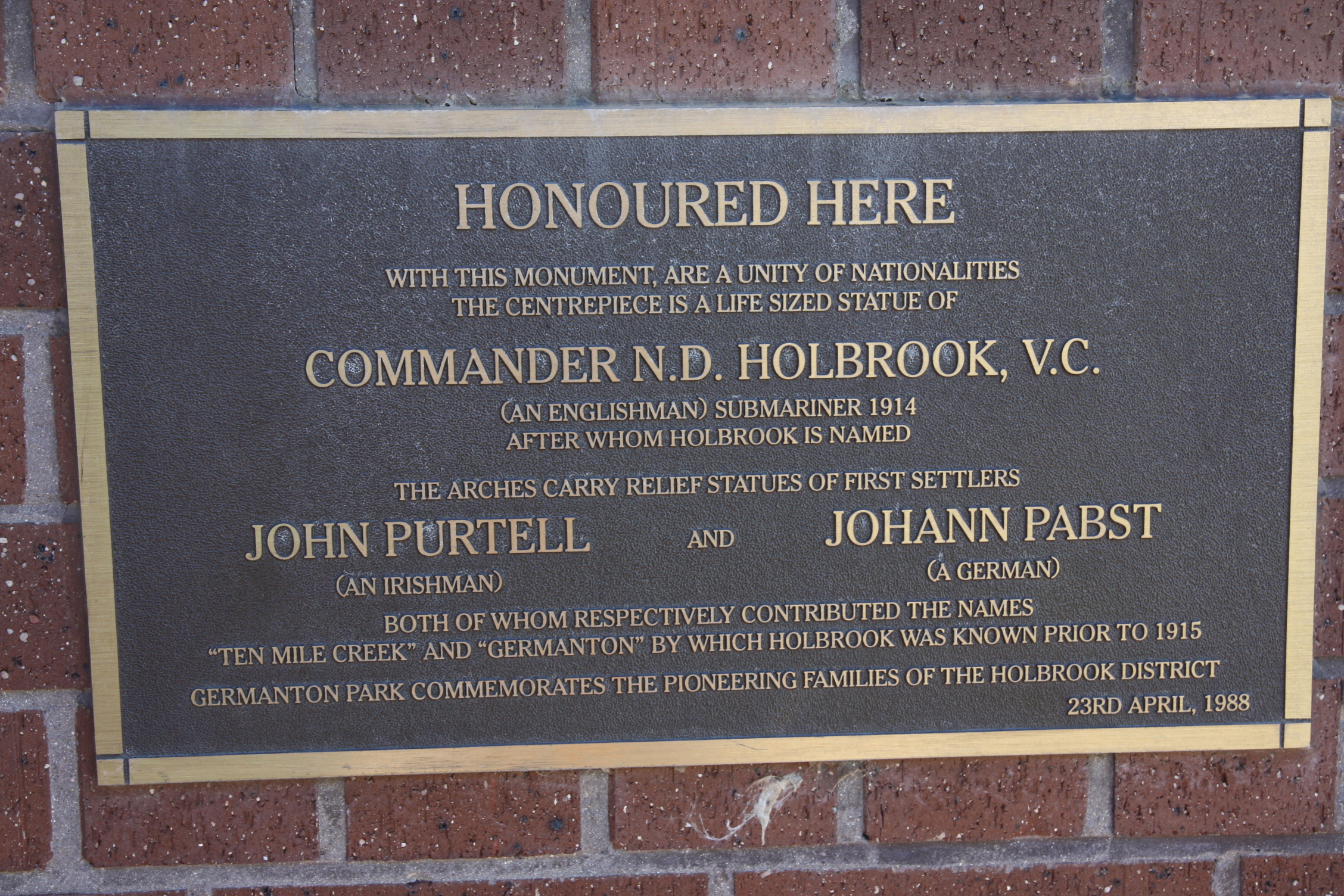
Commemorative plaque
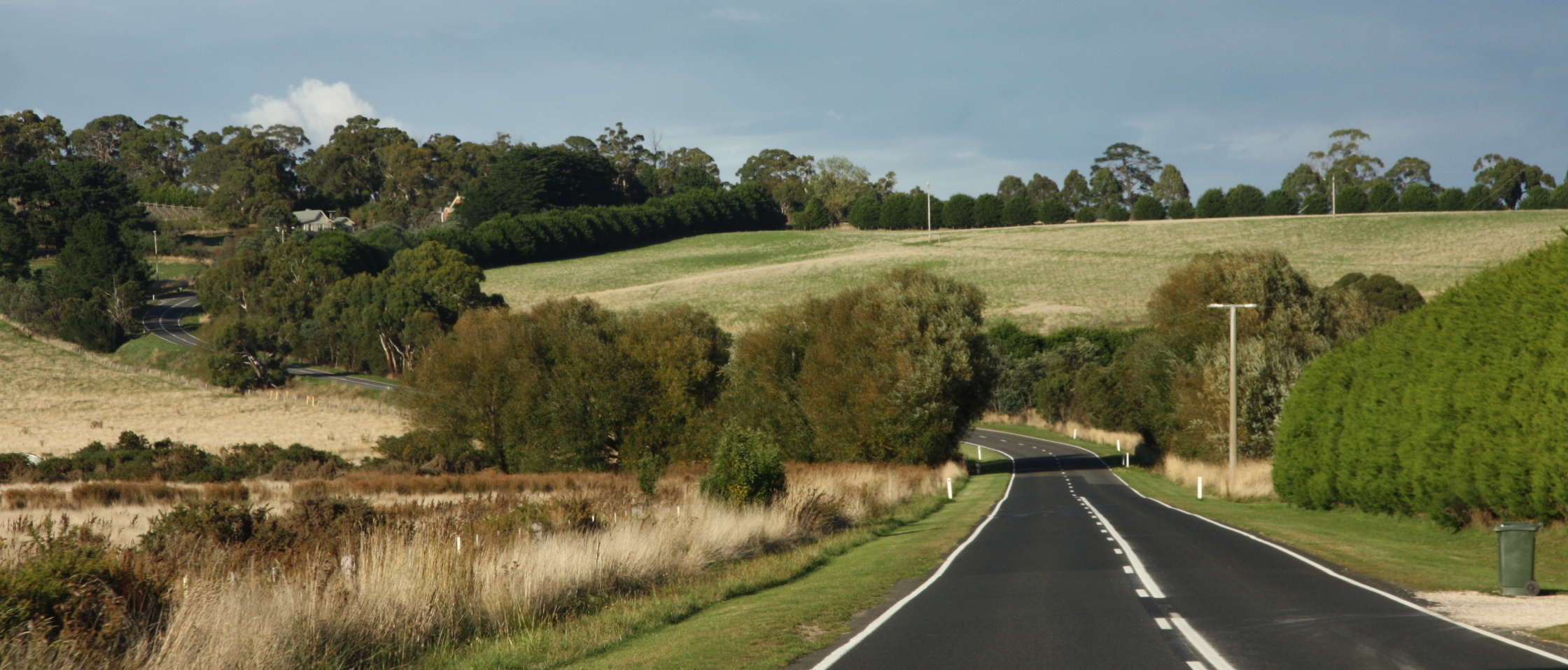
Thought you might like to join us on our latest road trip, which began Tuesday.
This time we’re driving from Canberra to Perth and back. With side trips, we reckon we’ll cover about 10,000 kilometres over about a month. I’ll keep track and let you know.
These pics are from the first 24 hours. The countryside doesn’t usually look so lush. Australia has had plentiful rain in the last two years—after 10 years of drought—and the landscape is magnificent.
Come back soon to see maps and more trip details. Plus you can check out some of the recipes that are being made along the way.
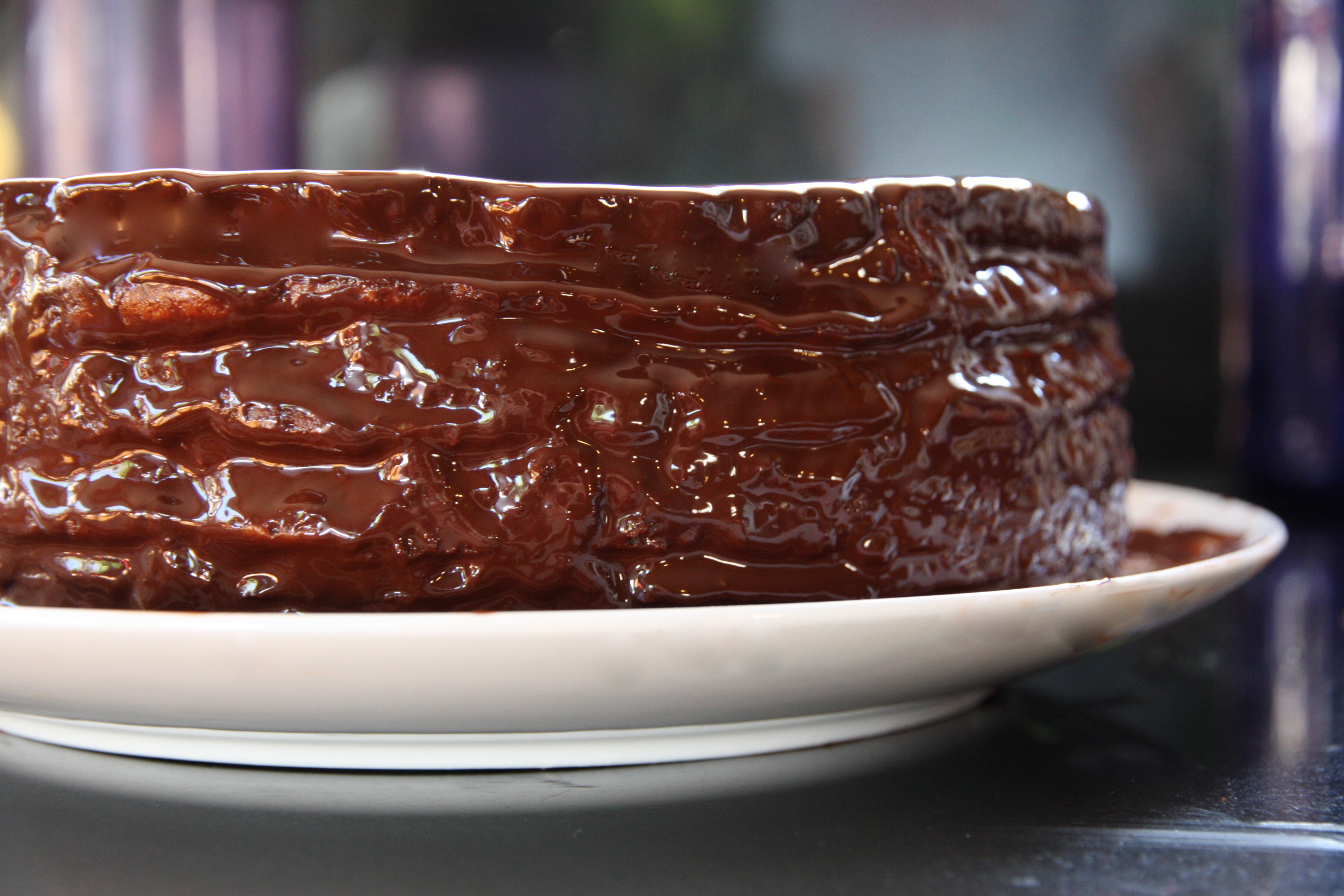
I’ve started a second blog. This one’s about food. Lots of food—on pages 32, 132, 232 or beyond—in my huge collection of cookbooks.
Check it out if you have the time or the interest. Today’s post is for a fancy-schmancy chocolate cake.
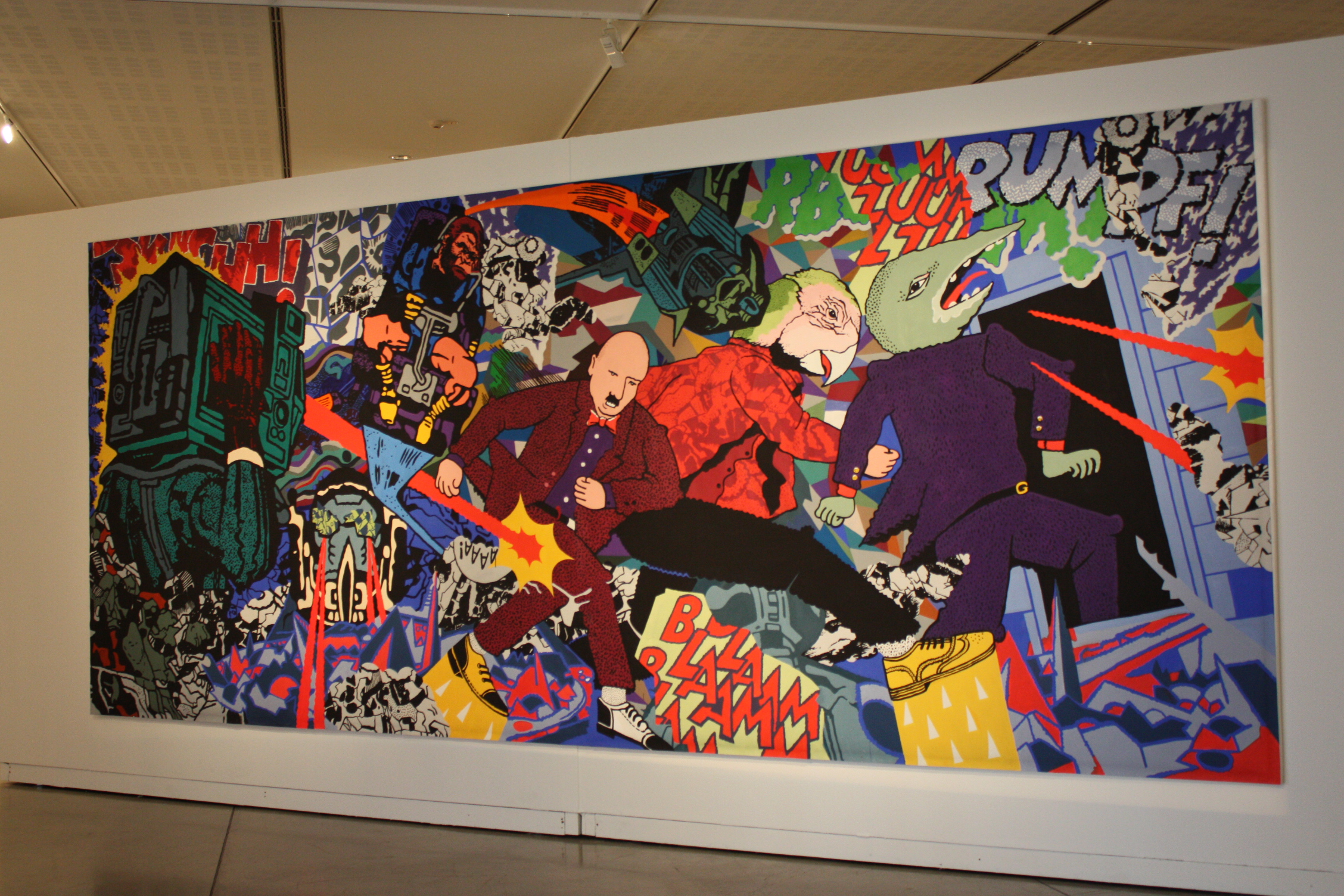
X-ray man machine pointing a ray-gum at the amphibians, a painted poster by Jumbo
Located on the intersection of the Mitchell, Newell and Golden Highway, Dubbo has a population of about 32,000 and the huge tourist drawcard of the open-range Taronga Western Plains Zoo.
Our 12-day road trip from Darwin to Sydney didn’t give us enough time to see the zoo (I promise to go back soon and share it with you.)
But we did get a chance to look around the town.
Poor John and I headed straight for the Western Plains Cultural Centre—which was a lot farther away than the city map indicated—to see the local museum, as well as exhibitions from the National Gallery and the National Archives.
Space Invaders is part of the gallery’s collection of Australian stencils, posters, zines, paste-ups, stickers and street art. It’s been touring Australia for the last year and the Dubbo exhibit closes tomorrow. 😦
I hadn’t realised that the gallery has a large travelling exhibition program. It’s been sharing artworks with galleries, museums, schools and libraries in remote, regional and metropolitan areas.
They reckon that 9 million people have visited a travelling exhibit since they began in 1982.
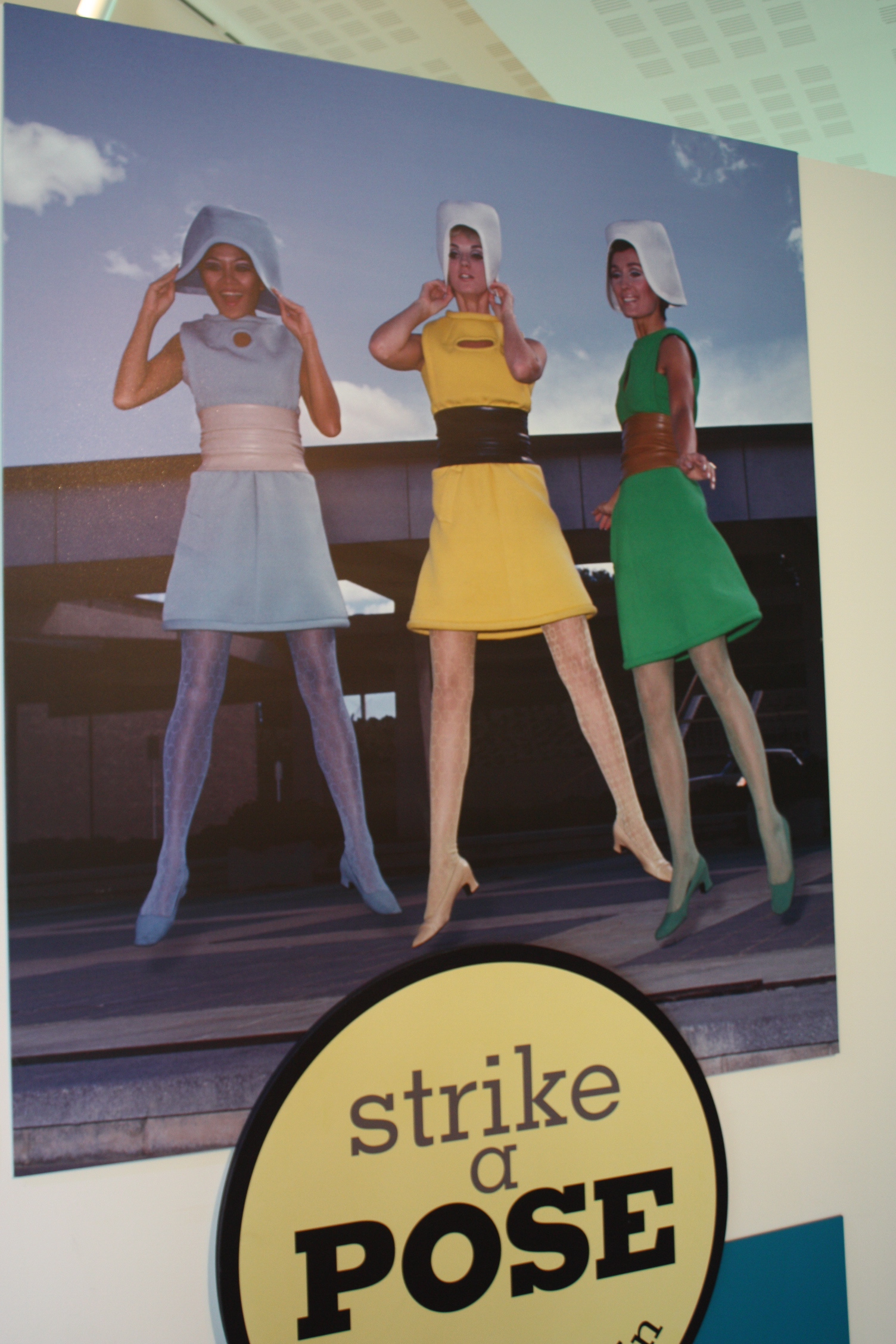
Strike a Pose poster
With fashion icon and broadcaster Lee Lin Chin as guest curator, the Strike a Pose exhibition celebrated Australia’s emerging fashion industry, along with its personalities, trends and influences.
It featured 89 images taken by Australian Government photographers during the 1960s and 70s. Many images are drawn from the collection of the Australian News and Information Bureau, which took images to promote Australian industry and lifestyle overseas.
The centre also houses a local museum with memorabilia from the Dubbo region.
In the museum, I got a kick out of seeing Jackie, a famous embroidered tablecloth. It belonged to Ethel Steadman, a clairvoyant fruiterer. ‘A clairvoyant fruiterer’ you ask?
Apparently ‘Steadie’ told fortunes in the back room of her Talbragar Street milk bar. Jackie, her favourite embroidery, was always on the fortune-telling table.
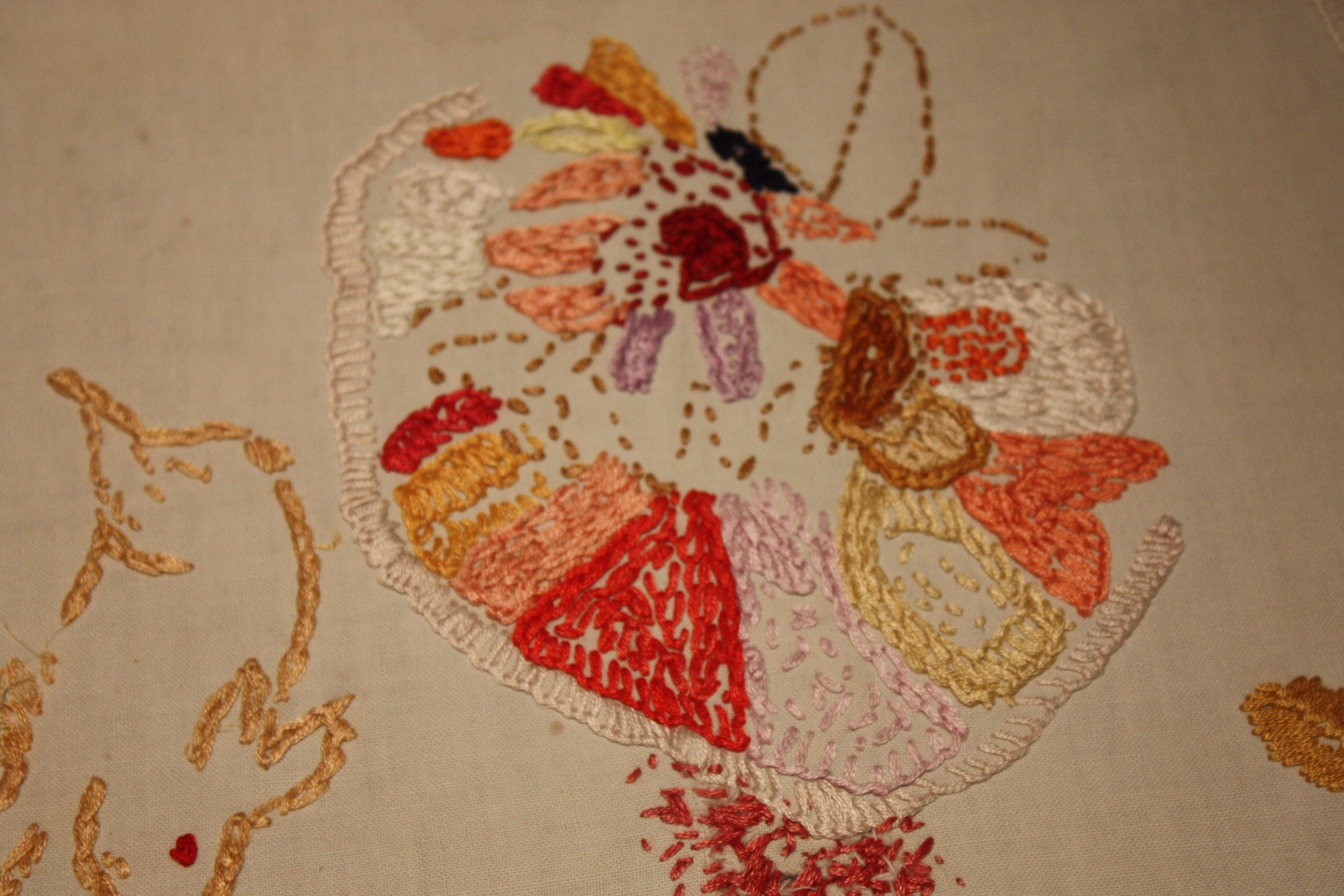
A close-up of Jackie, the embroidery
She was a station cook before meeting her first husband, Mr Steadman. They bought the fruit shop on Talbragar Street after ‘the spirits’ told her it would be ‘a gold mine’.
People believed her predictions. She claimed that Queen Victoria’s spirit told her that a new queen, named Elizabeth, would visit Dubbo. She predicted the Dubbo flood of 1955 and where a young girl’s body would be found. Fortunately, Dubbo residents are still waiting for the earthquake she predicted. Steadie died in 1977 at the age of 97.
The museum had lots of other local items, such as a few pieces of ancient farm equipment and many memories from the Great War. I especially loved a very stylish pair of black shoes.


Driving home from Louie and Doug’s wedding on Saturday night, we were reminded that the Enlighten exhibition was on as part of the annual Canberra Festival. We couldn’t see the lights from where we were, but the roadblocks that diverted us were a good enough signal that something was up. So we promised ourselves to return on Sunday, the display’s last night.
Enlighten debuted in 2011 and was back, this year, by popular demand. We saw it then and were mightily impressed (I’ll see if I have photos from that affair, and post some later if I do). There was no way we were going to miss this new one.
Both years, Enlighten has included a variety of ticketed activities, plus the fabulous free light show, that involves illuminating the facades of some of the capital’s landmark buildings.
The Electric Canvas is the creative genius behind the large-scale architectural displays. Five Canberra artists—Josh Dykgraff, Nicola Dickson, Paul Summerfield, Julie Ryder and Racket—designed this year’s motifs, which are their interpretations of what’s inside these iconic buildings.
This year, the lights were splashed on the
Museum of Australian Democracy at Old Parliament House
National Library
Questacon—the National Science and Technology Centre
National Portrait Gallery
National Gallery.
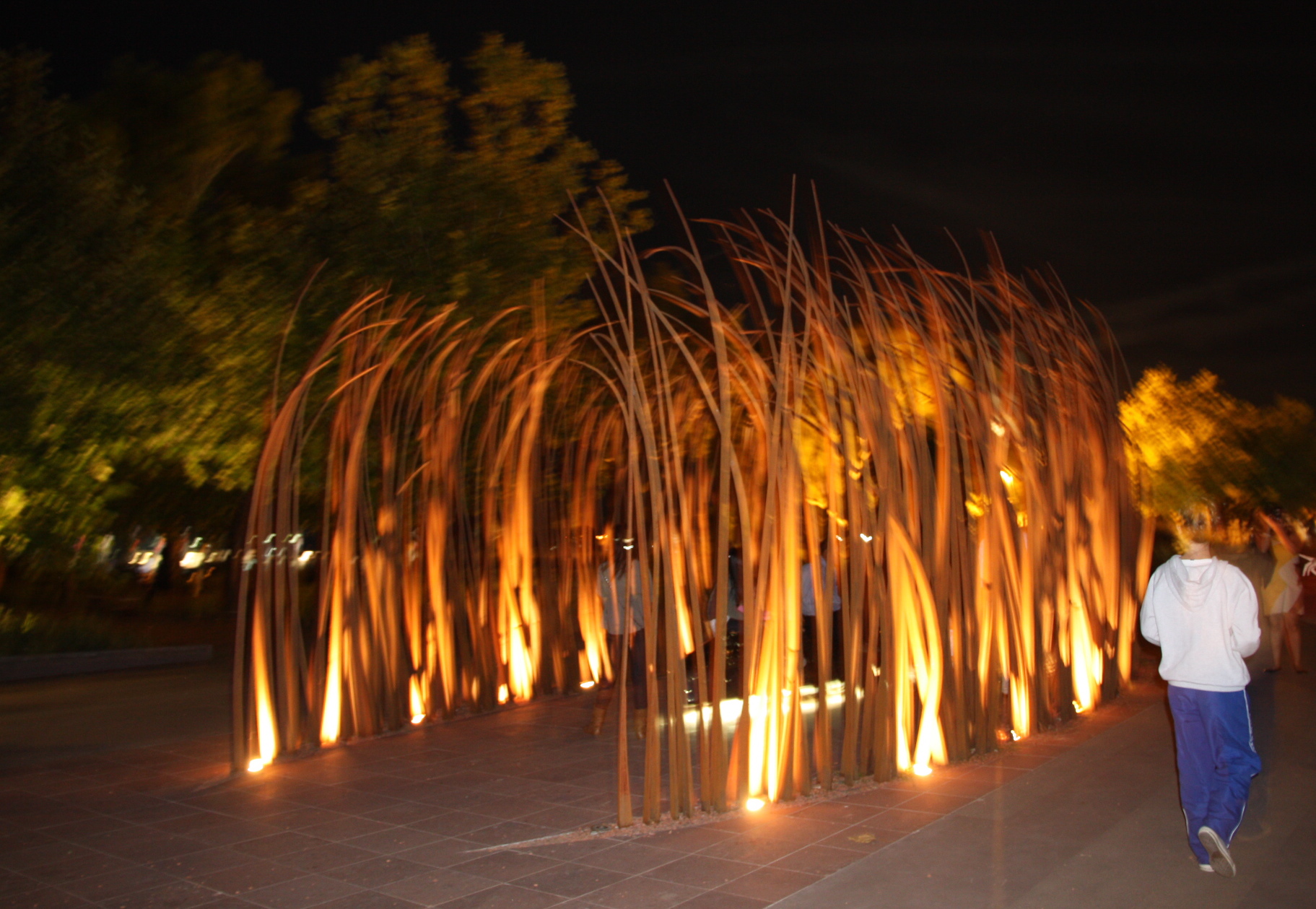
A sculpture on the walkway between the National Library and the National Portrait Gallery
We visited them all and hung around to admire all the many images. I forgot to count exactly how many there were, but several venues had more than 12. Click on the locations listed above to see that venue’s showcase.
I’m already looking forward to next year’s Enlighten and the Canberra Festival when the city will be celebrating its 100th birthday. You should think about spending time in Canberra next March.
 Where to next?