
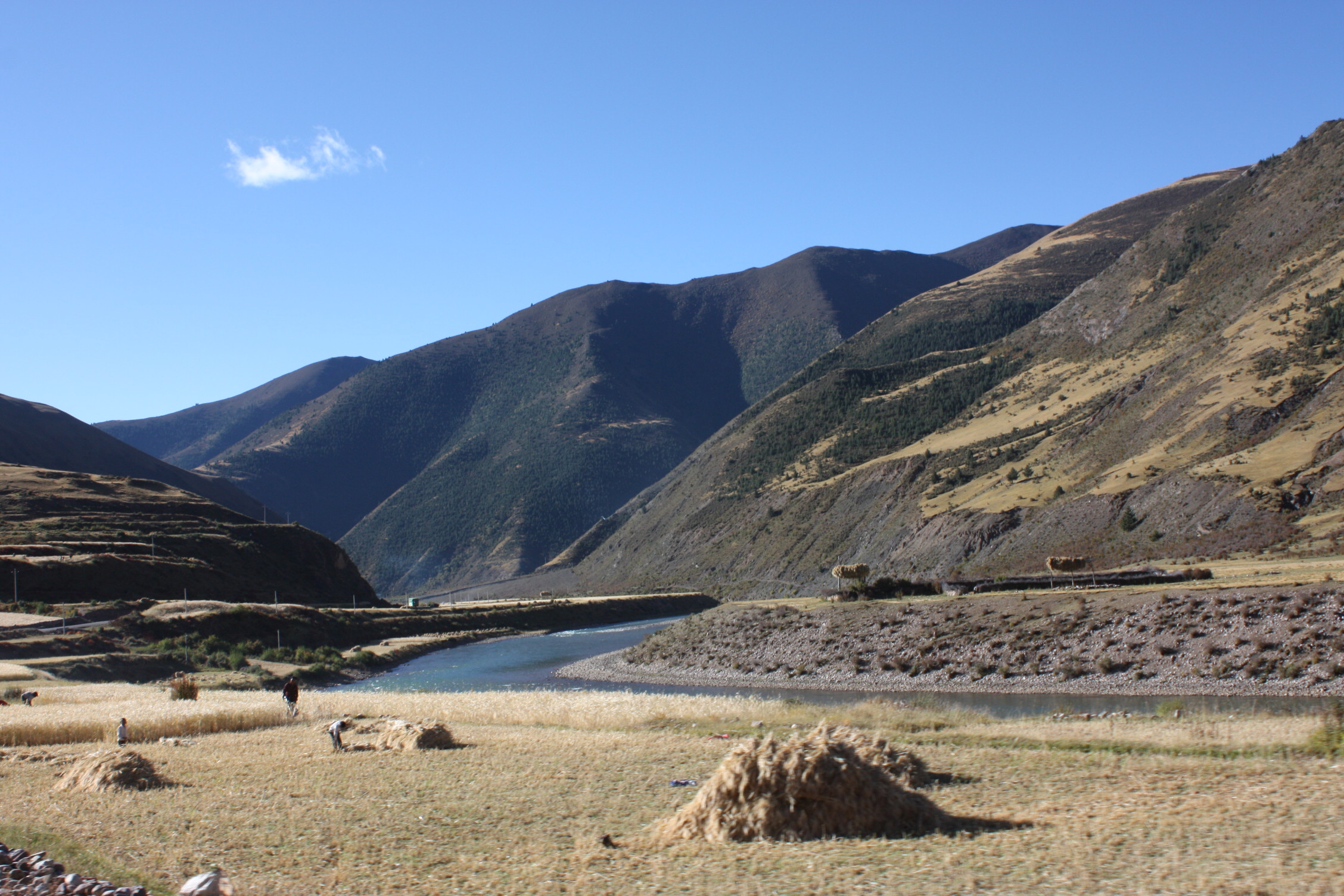
Haystacks don't stay on the ground for long in Tibet.
You’d think something as simple as a haystack wouldn’t really catch my attention, but I’m from Nebraska—farm country—and was completely spellbound by the haystacks of the Southern Himalayas—especially because they weren’t simple.
As a Midwesterner, I’m very familiar with real haystacks—they get piled up on the ground or bundled or rolled into bales. But Tibet (and all these photos were taken east of Lhasa) is totally different. And I think I understand why.
Nebraska gets snow, but Tibet gets SNOW. Lots of snow. Serious snow. Deep snow. Unimaginable snow—unless you are from the other places that get unimaginable snow, such as Alaska or Siberia.
Haystacks in these parts can’t lie around on the ground. No, a creative approach is needed. They have to be suspended on poles or hung in trees or perched on rooftops.
These photos were taken, on two consecutive days, toward the end of September and show some of the many ways the Tibetans store their hay for winter. I just wish I could have met and talked to someone who could have explained the processes and tactics used. Without that, my comments are pure, but logical, speculation.
I’d love to hear from you if you have a better idea or actually know more.
In the meantime, enjoy the photos.
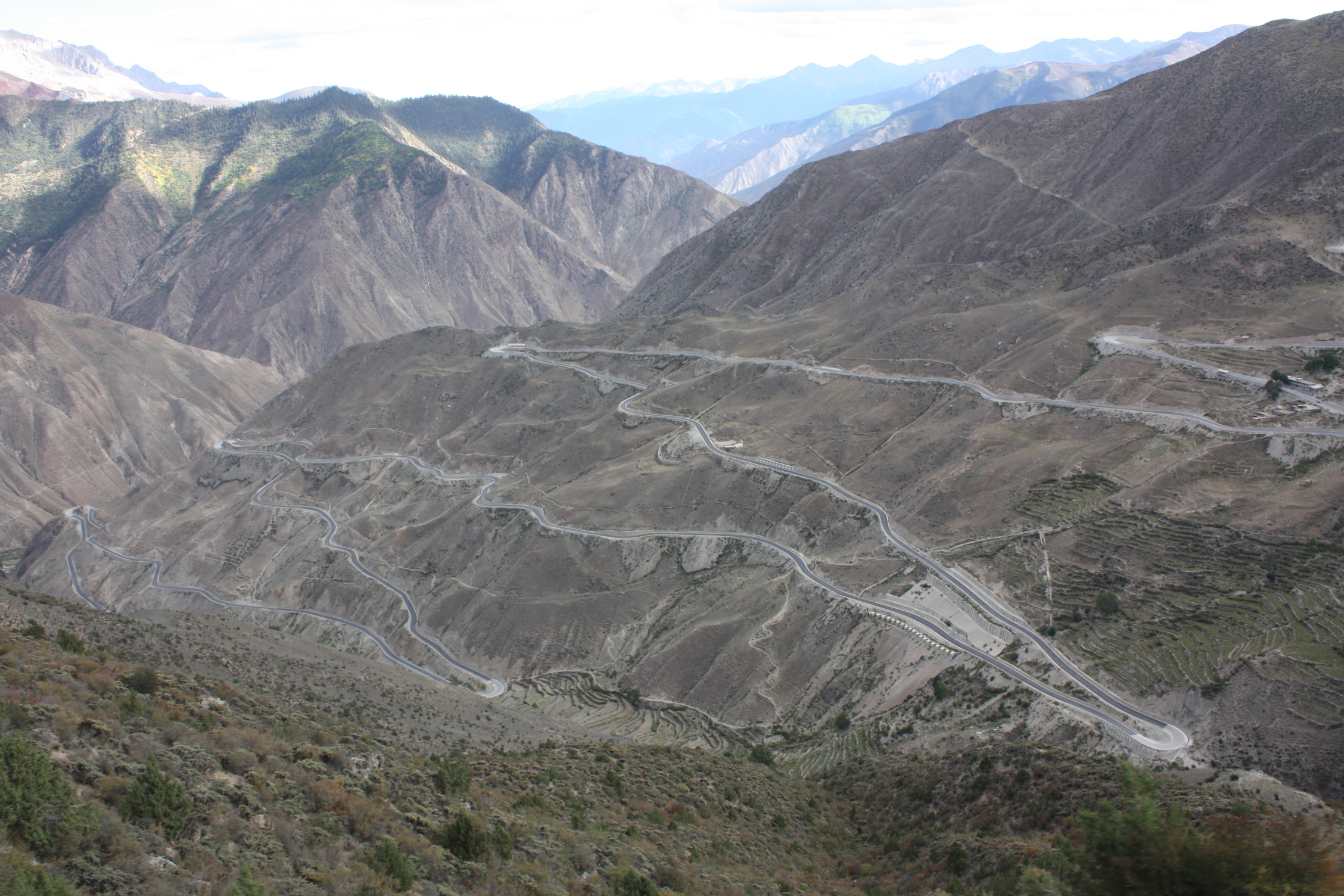
Switchbacks—the way through the Himalayas.
This is a final splash of Himalayan scenery. No doubt, I will come across more than I absolutely have to share, but this should suffice for the moment. Take note of the long shots that show just a handful of the many switchbacks we covered to work our way up and down and through the mountains. Plenty of high passes, steep drops and heart-stopping edges. Also note where the two rivers meet. The chocolate one is the Mekong, which is called the Lanchang (will confirm the spelling) in China.
Would I do it again—you bet!
Coming soon—more Himalayan entries covering villages, construction, crops and haystacks. Yes, haystacks. Who knew they deserved an entry!
And I promise to get to the other things I’ve promised. Wonderful to have more regular internet connections.
Getting on the truck in a few minutes to head to Kuala Lumpur. Back tonight.

By now you’ve figured out that I thoroughly loved our long drive through the Southern Himalayas. Every curve, every straight, every bend, every mountain, every outcrop brought a new view and more colour and texture. The photos only just begin to show the beauty of this amazing and photogenic part of the world. I took a lot of photos and I’m glad I did, because they help me to relive and share this incredible terrain.
I plan to keep posting more scenery photos from this amazing drive. Then I’ll post some pics of the daily life we saw along the way. That was equally fascinating and inspiring too. Stay tuned. I need to buy a new adaptor so I can stayed charged up. Who knew Malaysia used an English plug?
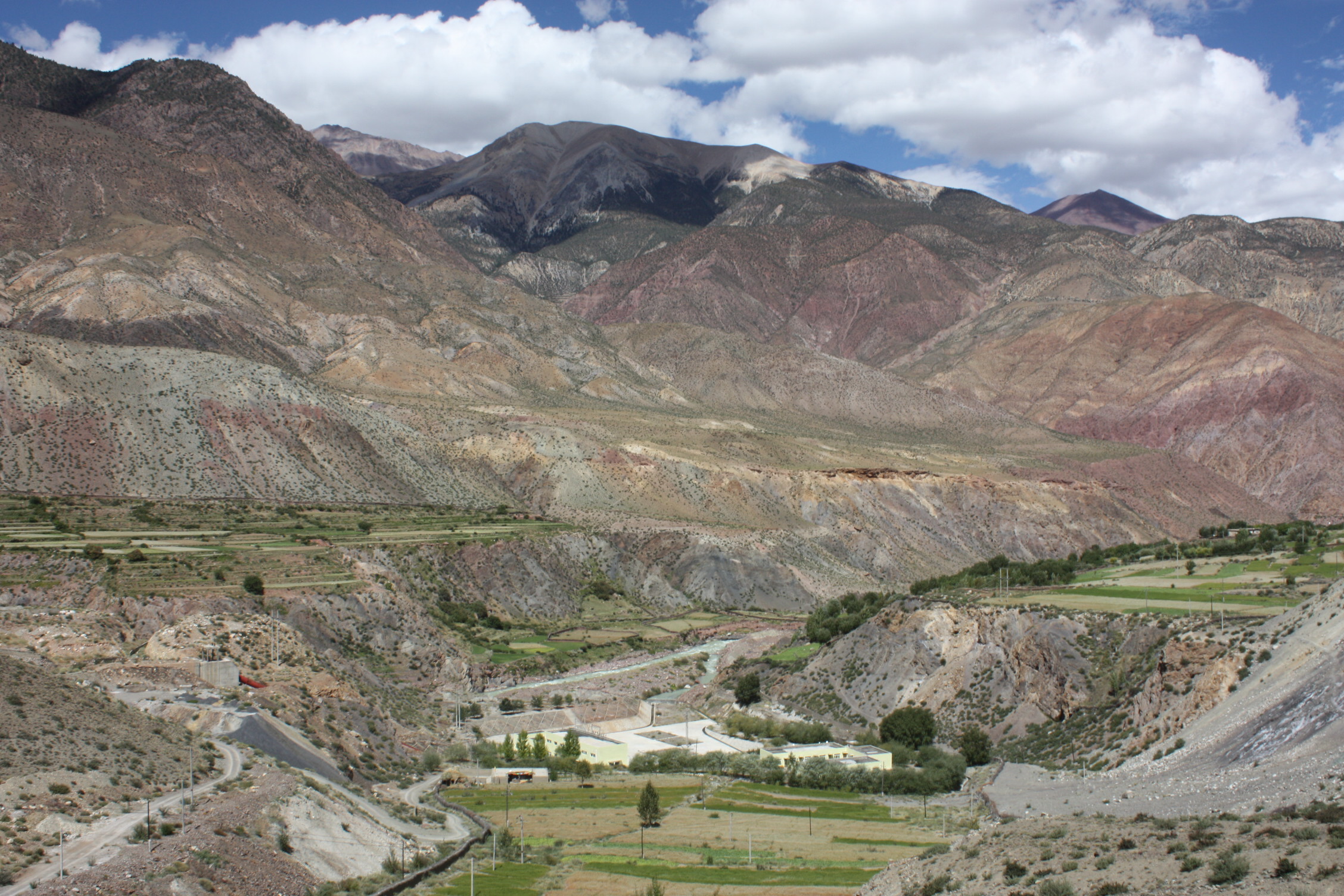
Sorry, but I can’t help myself. These photos are all taken on a single day in the Himalayas. As we drove from Lhasa in Tibet to Lijiang in China.
The scenery was spectacular—the plants and trees, the rocks and mountains, the sky and clouds, the waterways and animals—and I fear that these photos hardly do it all justice. I feel so privileged to have travelled this route.
Off to Malaysia in just a few hours and no internet for about two days. See you when I get back. 🙂
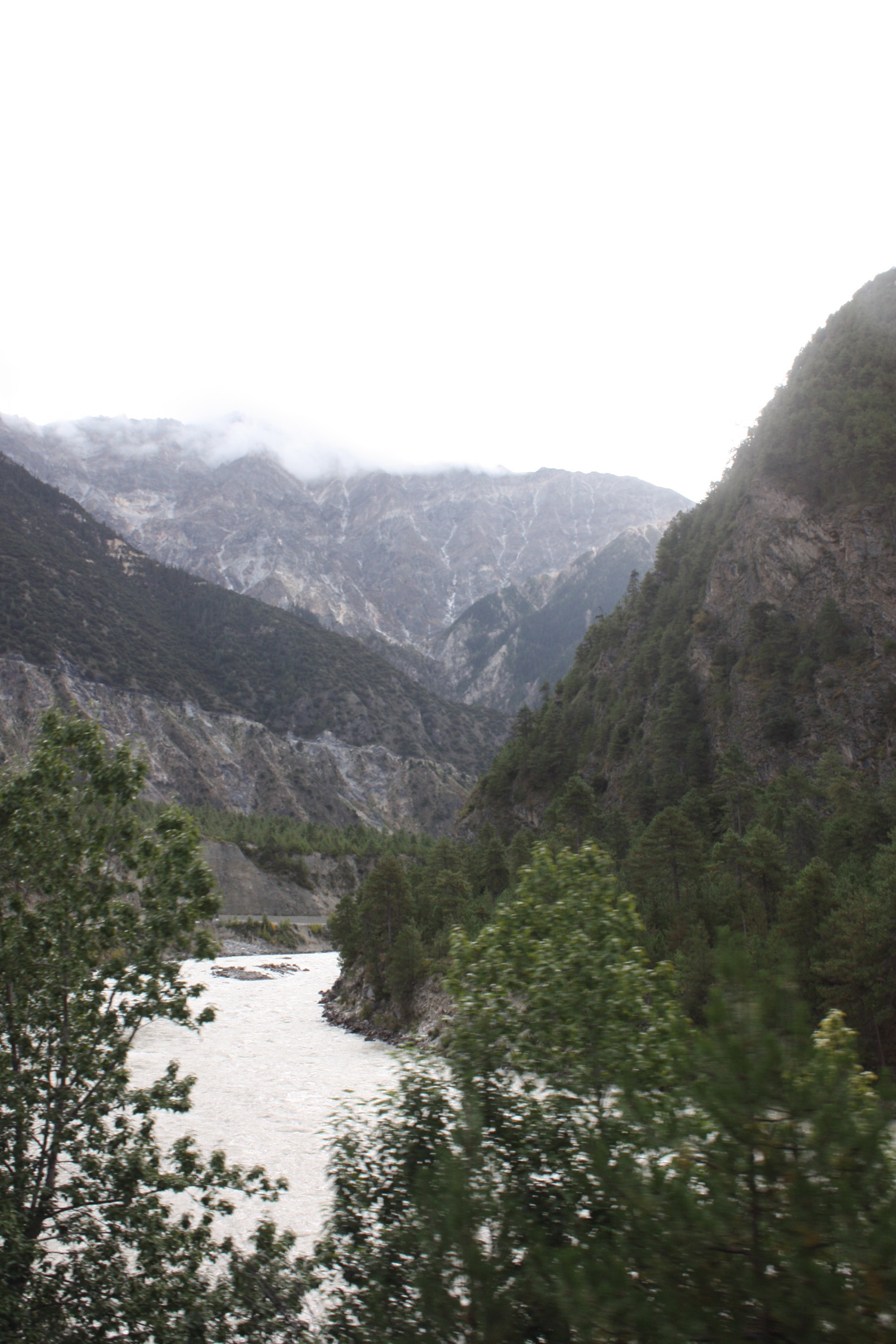
Whatever the right name is—the southern Himalayas are spectacular.
We spent about a week driving from Lhasa, Tibet, to Lijiang, China, and I have to admit that the journey delivered some of the most fantastic scenery I have seen in my life.
It wasn’t really ranges of snow-capped peaks or heart-stopping views, but mile and mile after mile was filled with colour and light. I’m not sure that any of the photos really depict all the beauty we saw, but I’m going share some anyway.
I took 800 pictures in one day, and that was just for starters.
I’ve found it hard to put my finger on an exact nickname for this road, and I plan to do more research when I have a good and ongoing connection at home. But I have seen it referred to as the Yunnan–Tibet iIghway, the Southern Himalayan HIghway, the Southern Silk Road and the Ancient Tea-Horse Road. Each name may be right—or wrong.
So the files aren’t too large, I will post photos in at least three batches. I apologise in advance if the sheer magnificence of what we saw doesn’t come through. Could you try to crawl in behind my mind’s eye?
Here’s a starter pack of 12. I’ve noticed this batch focuses on green and water and trees and rock. but it’s all still beautiful.
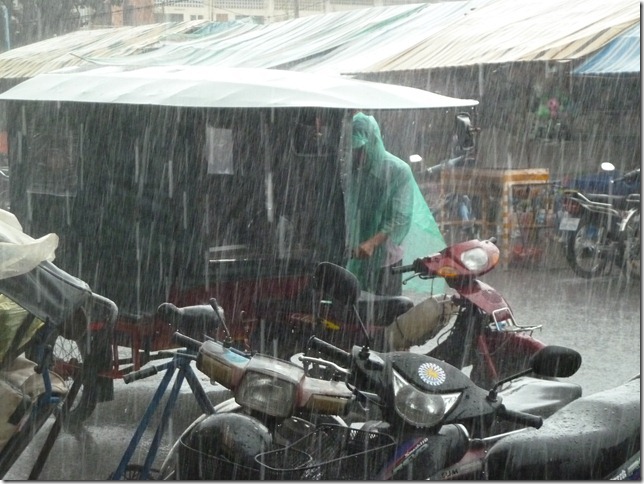
Southeast Asia can have serious rain. Keep your passport dry. Photo courtesy of Ian Webb.
Your passport and your money are the two most important things you’ll take on an overseas trip.
Other things are useful but, seriously, almost everything else can be replaced easily. Credit cards, for instance. If they are lost or stolen, you can cancel them and keep travelling. In case you didn’t know, they don’t always work—and let me tell you that MasterCard is much LESS likely to work than Visa, but that’s another long story.
But your passport and money are your lifelines.
So here are a few tips on looking after your passport (I’ll cover money in a different post):
• When possible, leave your passport in the truck safe or a hotel safe. Don’t leave it in your room, tent, hostel unless you are there too. If you carry it with you, put it in a secure pocket. I carry mine in a back hip pocket that has a velcro tab. My merino tops are long enough to cover the opening, and my backpack usually covers it too.
• Regardless of where your passport is, carry photocopies of it with you—not the whole thing, just pages with personal details. In some countries, is also a good idea to have a photocopy of the relevant visa too.
• Email yourself a copy of your passport’s main page, as well as copies of your birth certificate or any other paper work that confirms your identify and nationality. You can also carry these on a laptop, but laptops get stolen, lost or die, while emails (such as hotmail) are out there all the time. I’ve also carried this info on a thumb drive that I have worn around my neck.
• Keep your passport dry, especially if it’s Australian, although other nationalities may be affected too. Pop it in a zip-lock bag or some similar plastic covering. The colours on the new Aussie passports run—BIG TIME. Last year, Poor John and I got caught in a downpour in Indonesia. We had our passports in our pockets (and in a plastic sleeve provided by the Australian Government). His new passport bled all over his main page and passport photo, my old passport was fine. And here’s the really annoying rub—the Passport Office made him PAY to get a new passport. Oh, pleeze! Hey people, make a better passport. If you can incorporate a bazillion security measures in the damn thing, the least you can do is make the ink stable.
• Take along a mitt full of photographs of yourself. These are great when you need to have photos to apply for visas. Money-saving tip: the photographic place in Canberra wanted about $30 for 16 photos. That’s downright robbery. We took digital photos of each other and got them printed off at the local Dick Smith’s (an electronics/gadget place) for 9 cents each. It was a bit fiddly to cut them down to size, but 40 photos for less than $4 was worth it.
• If you travel a lot, consider buying a super-size passport. Mine cost double the price, but it has double the pages. My last normal-size passport was used up within two years. There is an exception for those who hold USA passports. Last I knew, you could still get more pages added to your passport, and I think your embassies will do this for free.
P.S. In addition to my passport and money, there is one other essential for me. I’m a buxom gal, and it’s hard to find bras in my size. I’ve brought four, but have only used two, so I have two back-ups, or should I say hold-ups, in reserve. 🙂
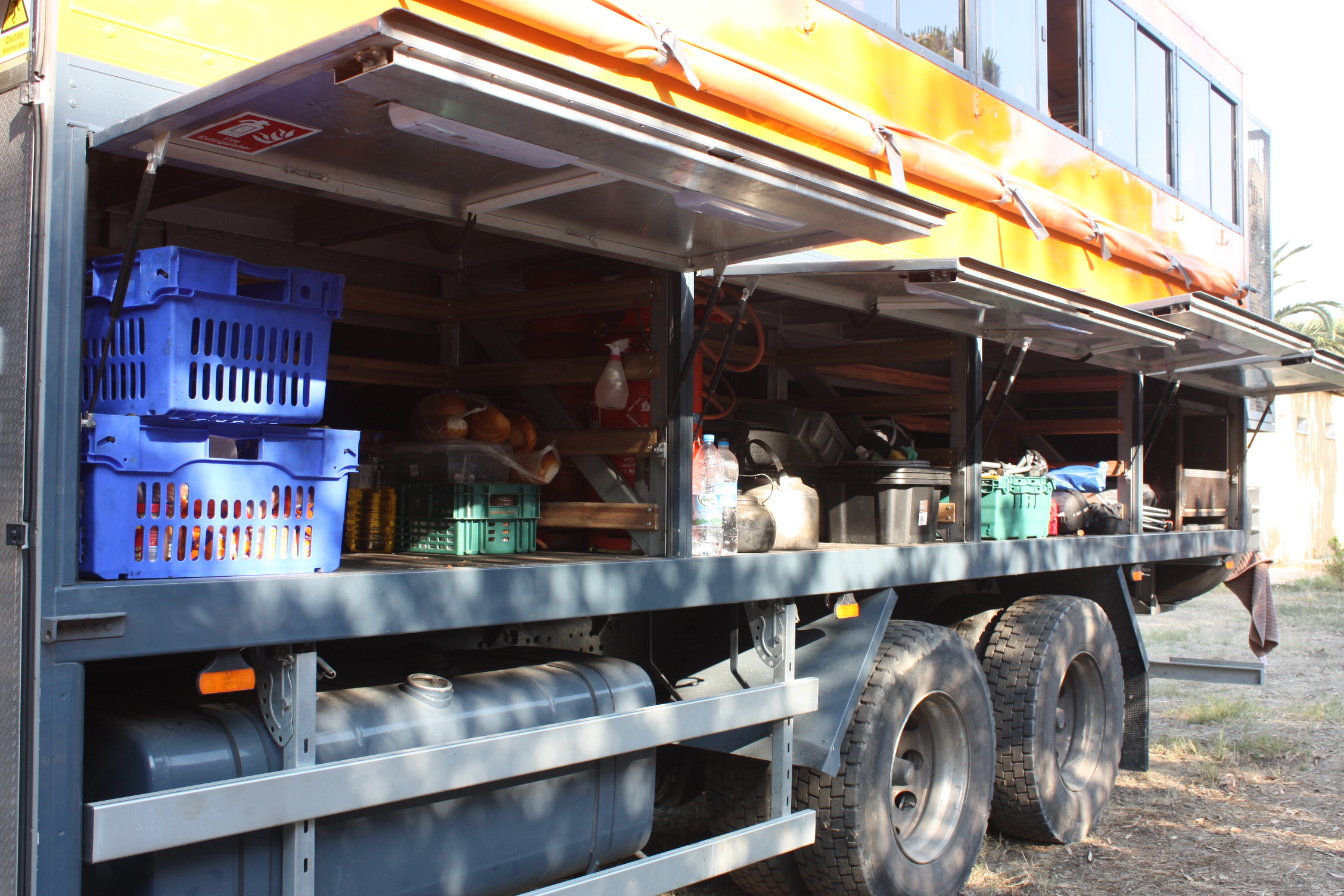
The 500-litre water tank is that big grey box on the lower left.
Water is always an issue when you’re travelling. For starters, it tastes different—sometimes better than home and often worse.
On an overland trip, the greater concern is whether it’s safe to drink.
The truck on this trip can carry up to 500 litres of water in a special tank. We fill up from a variety of sources, including from village wells, petrol stations, and creeks and streams. Whenever there has been a concern about water quality or cleanliness, Lu has to sterilise it. To be honest, I haven’t noticed whether she uses a liquid or tablets. Either way, it works.
Overall, the water has been tasty and quite good in terms of quality. For the most part, Poor John and I have used truck water all the time. Many of our fellow travellers prefer to buy bottled water, but we reckon that drinking the local water gives us a leg-up on fighting off illness. So we buy bottled water only when we are away from the truck or, as happened once, when the truck water was accidentally contaminated.
This is the way we look at it. If we ever have food or drink from a restaurant, cafe or street stall, there’s a very good chance that we will consume water that hasn’t been fully boiled or purified. So by drinking the truck water, we are adjusting to what is available locally. It’s been a good approach, as we have never had tummy issues from food or drink.
We used the same tactic in Africa.
I remember once in a petrol station in Angola when a local used sign language—I still wonder how I figured out what he was trying to tell me—made it clear that the water we were using to fill the jerry cans wasn’t safe to drink. I passed this on to everyone, but most filled their water bottles anyway. Within a day, it was obvious that the water was not good unless boiled or used for washing up only, so everyone ditched what they had taken. The lessons we learn along the way.
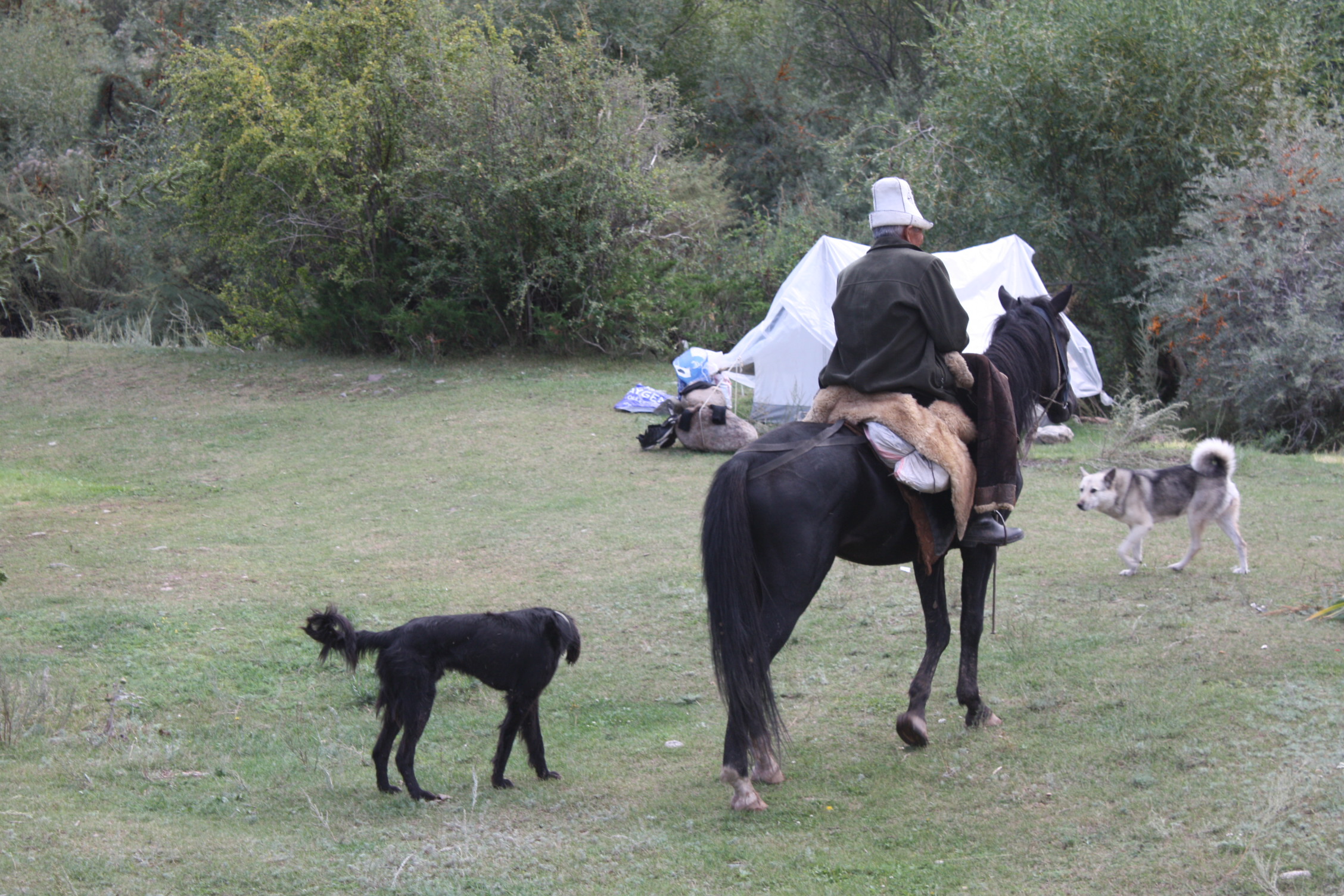
Dogs are everywhere in Central Asia.
I love dogs, but I’m very wary of them when I travel in developing countries. I usually don’t pet them or feed them. I won’t pick them up and I don’t call them to me.
Why?
Because in 1986, I was bitten by a dog that later became rabid.
It was a provoked bite.
This happened when we were living in Burma and the dog belonged to a friend who was on holiday. The dog (Botcha) was being looked after by the household servants. Yes, everyone had servants in Burma—even servants had servants. I said I’d be a back-up for the dog, and was surprised early one Saturday by my friend’s cook (Rose) who called to say the dog had been bitten by a Bad Dog.
I rushed over to find Botcha lying in a lounge chair, looking ever so relaxed. On questioning Rose, I discovered that Botcha had been bitten by a Bad Mad Dog.
Rabies!
It turned out this rabid dog had bitten quite a few dogs and all but Botcha had been destroyed. The Bad Mad Dog had also bitten the wash nanny’s three-year-old.
I won’t go into all the details.
The short version is that I hauled the child off to get the first of a long series of rabies injections. I also got the vet to come give Botcha a booster rabies vaccination (that’s when he bit me), and we locked him up for observation.
Twelve days later Botcha went crazy. In the end, the head vet from the zoo came with a dart gun and an elephant gun (in case he missed with the dart), and Botcha was destroyed.
That’s also the day that I, along with several others, began the course of anti-rabies injections. Luckily, they were the then new French injections in the bum, rather than the old ones in the stomach.
In 2009, before we left for Africa, I was tested for rabies immunity (which only buys me time if I should ever be bitten by another rabid animal) and I tested eight times over the recommended level.
That said, I still tell difficult clients that I was bitten by a rabid dog in 1986 and had all the injections and that, while I have been fine ever since, I keep a list of people I’d like to bite.
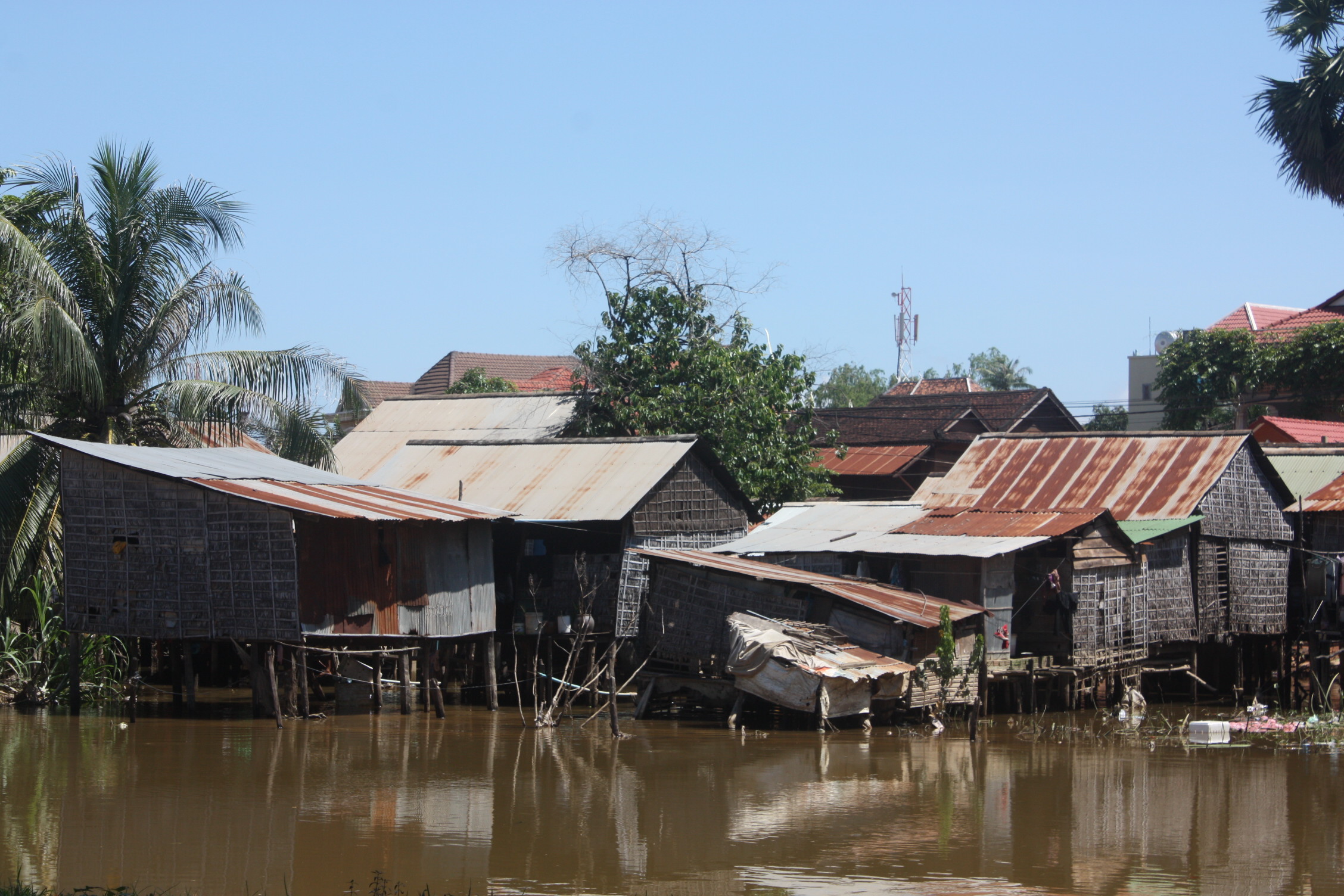
Water—the breeding ground for mosquitos.
In the western world, malaria is something we hear about but rarely encounter—in much of the developing world, it’s a deadly reality.
In the mid-1970s, when I first travelled in Africa, I was told that 1 in 10 travellers would get malaria regardless of what prophylactic they took. It seemed an odd statistic but, in my experience, it’s been pretty much accurate ever since.
Nine of us travelled north to south through The Sudan in 1977 and one (not me) got malaria. I can’t even remember what prophylactic I took, or if I took any, but I’ve always been obsessive about using bug repellent. Maybe that helped.
In the 1980s, we lived in Burma. None of the family took prophylactics, but we used plenty of powerful bug repellent and were vigilant about spraying any standing water near the house. The kids always slept under mosquito nets. None of us got malaria, but a friend did and he took at least three weeks to recover enough to fly home to Australia. Another friend’s son spent many weeks in the jungle. He got cerebral malaria and died within hours of becoming sick.
A couple of years ago, we did a Trans-Africa trip (10+ months and 43,000 kilometres). Twenty-eight of us started the trip and, with various comings and goings, a total of 38 people did some of the trip. Four got malaria. Two weren’t taking any prophylactic (a fellow who was only doing the first 13 weeks and the driver, who lived in Africa and got malaria often). Of the other two, one was taking doxycycline (also known as doxy and the most common option) and the other was taking malarone (the most expensive option).
We took doxy and, in addition to protecting us from malaria, we think its antibiotic properties may have helped to keep us well during the trip. But you can’t take malaria prophylactics forever.
For this trip, the Travel Doctor in Australia said that unless we spent most of our time in remote areas in southeast Asia, we were most likely okay without taking doxy. We’ve used a lot of bug repellent and, on the few nights we were in remote areas, we also covered up with long pants and long-sleeved shirts. Some of the places we’ve stayed have provided mosquito nets and that’s a big bonus.
So far so good. I hope I can still say that in a few weeks time because, in reality, mosquitos ignore lots of repellents and can bite through clothes. If you travel in malaria country, use common sense and seek a doctor’s advice on what you should do.
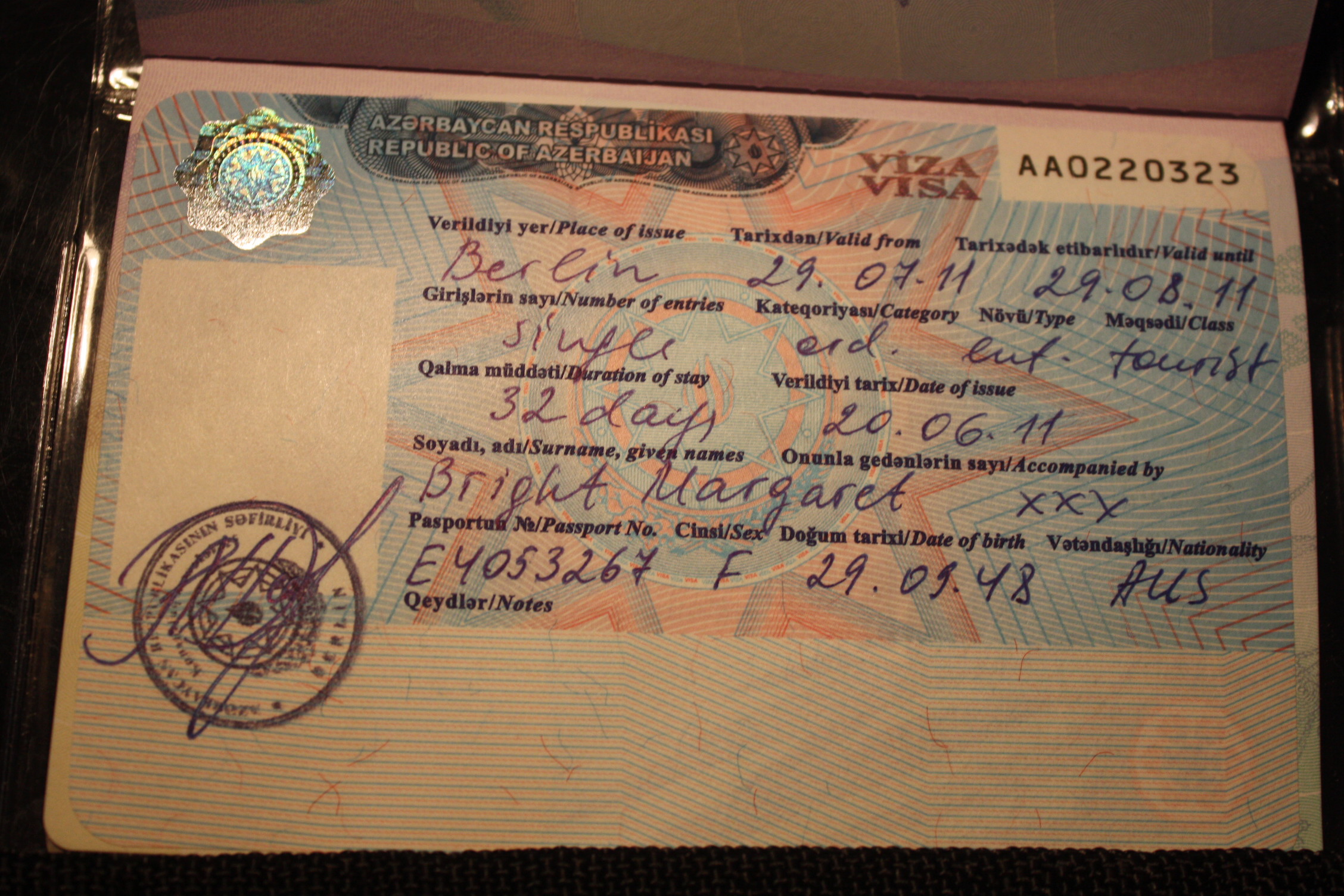
Azerbaijan—the most expensive visa.
You can’t just drive from London to Sydney without having a mitt full of visas in your passport. The challenges for everyone were the visas for Azerbaijan, Turkmenistan, Uzbekistan, Kazakhstan and Kyrgyzstan. Almost all other visas can be acquired along the way.
About half of our fellow passengers are from the UK or Ireland, so they got their challenging visas through London. Some took them to the relevant embassy in person, some had friends do it for them, some posted theirs and some used an agency.
None of these countries have embassies in Australia. We looked into using an agency, but the cost seemed high for the services offered and the number of visas we needed, so we decided to take ourselves to Germany six weeks before the trip began, and pursue the visas in Frankfurt and Berlin.
Now you might think that’s not a cost-effective approach compared to using an agency, but we had lots of friends and past exchange students we wanted to catch up with, so it was a mixed trip—with lots of pleasure and a little bit of business.
We started in Frankfurt on a Monday morning in mid-May. Kyrgyzstan was first and easiest. After pressing the security button to be let in, we met with the consul who issued our visas on the spot—for about 50 euros each. Uzbekistan took a week, Turkmenistan took three days, I can’t remember for Kazakhstan, and Azerbaijan took two weeks (although there was a dearer express service).
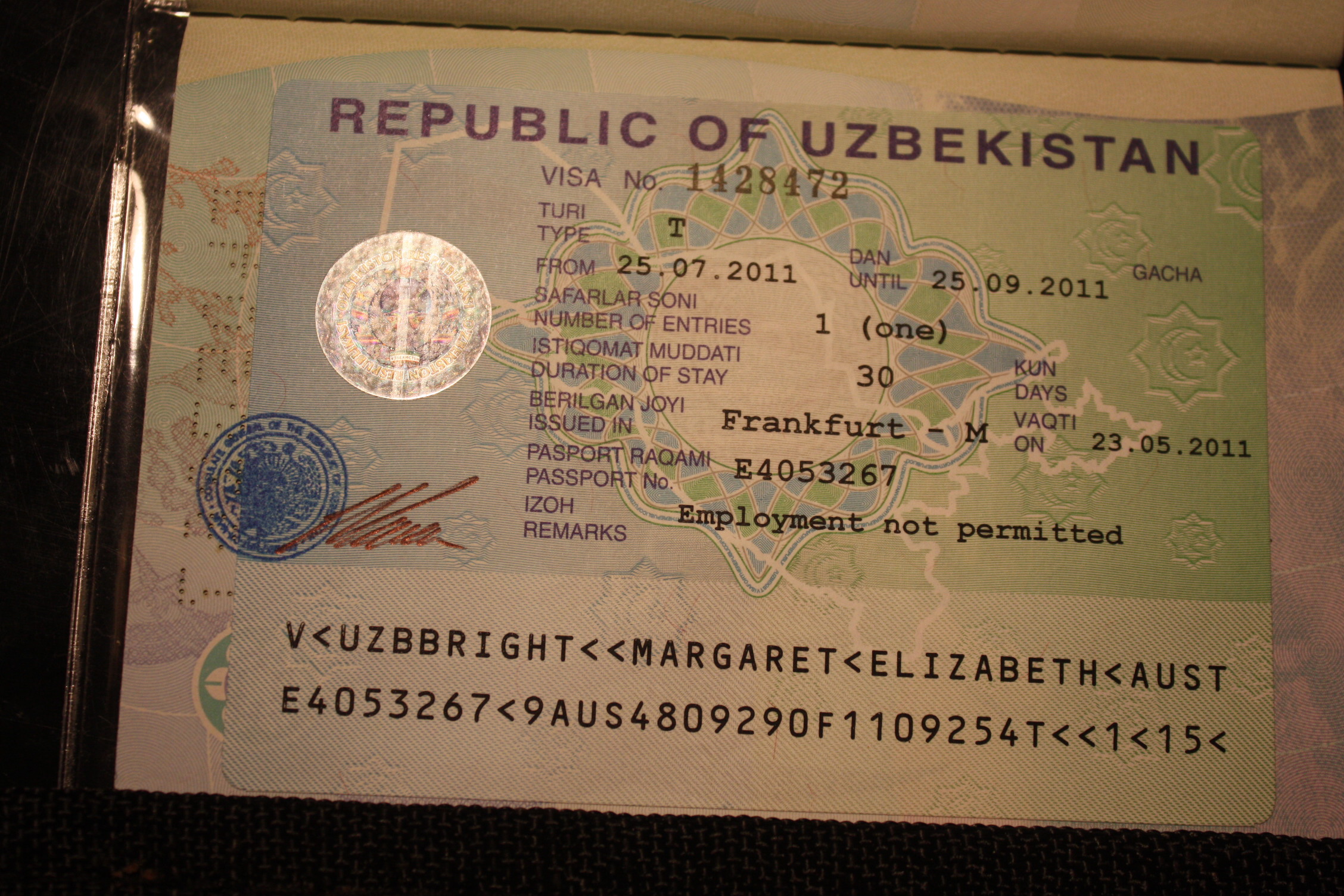
Uzbekistan's visa.
Now don’t go asking me how much each visa cost. Frankly, I don’t remember and I didn’t save receipts. Over the course of the trip, a few have been free—Armenia and Thailand, for example. Some have cost as little as US$20. Azerbaijan was the most expensive at almost 100 euros—because of new rules, we were obliged to use an agency to get that visa (service fee almost 30 euros each).
Some nationalities have to get more visas upfront—namely they couldn’t get a visa at the border, while others of us could. For example, our two south African travellers had to get visas in advance for Hungary, Romania and Bulgaria. The rest of us just got stamped in at the border.
Some nationalities pay more for visas than others. That usually depends on how much your country makes residents of that country pay for a visa. You know, tit for tat. If you are really concerned about price, check the embassy website in the country in which you plan to apply. And note that an embassy often will not accept a cash payment—must be one way to keep their fingers out of the till. In these cases, you need to bank the fee into their account and bring the receipt back to the embassy. And be prepared to have their bank branch be located no where near the embassy itself. And be prepared too, for the cagey and cheeky banks that charge 5 euros per person for the privilege of making a deposit in someone else’s account.
https://leggypeggy.wordpress.com/2011/05/27/another-visa-in-the-passport-uzbekistan/
Before we left Australia
We got four visas in Australia—China, Laos, Vietnam and Cambodia. We didn’t have to—they are all freely available at the borders, but those countries have embassies in Canberra where we live, so we got them out of the way. At one border, it actually caused a problem. We were leaving Laos, but they wanted to know where Canberra was and why our visa came from a different place than the others and blah, blah, blah. In the end they had to call head office, and the woman there told them to stop be ridiculous—or words to that effect.
It was like being Svetlana all over again. Remember her?
https://leggypeggy.wordpress.com/2011/08/26/my-name-is-peggy%E2%80%94or-maybe-it-isnt/
 Where to next?