
Not your typical beehives or tombs
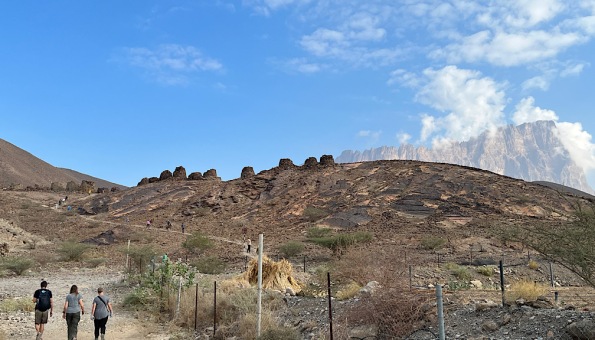
Appraching the tombs with Jabal al Misht in background
Cemeteries always make for an interesting stop on an overland trip, but the beehive tombs in Oman set a whole new benchmark for fascinating.
Together the three archaeological sites of Bat, Al-Khutm and Al-Ayn form the world’s most complete and best preserved collection of settlements and cemeteries (also called necropolises) from the 3rd millennium BCE.
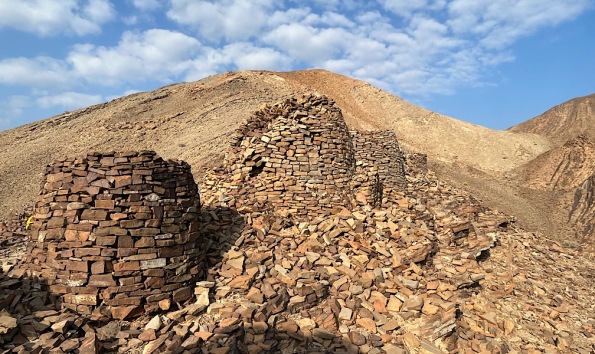
They are so important that UNESCO designated them as a World Heritage Site in 1988.
We were lucky enough to visit the tombs at Al-Ayn. While it is the smallest of the three necropolises, it is the most accessible and most scenic, and in the best condition.
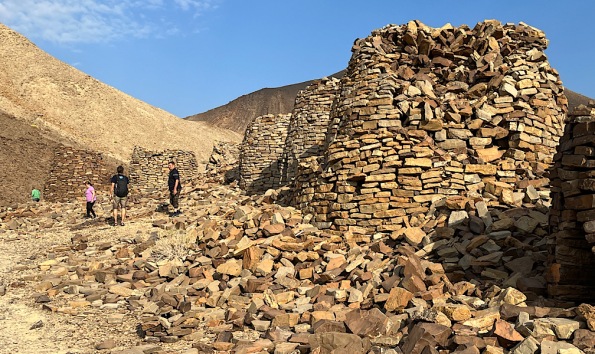
Plenty of stuff as building materials
That, in itself, is remarkable. Since being designated world heritage, the sites have not been restored or had any other type of conservation. Their isolation has been their only protection. One of the greatest dangers comes from locals who take pieces to use as building material.
Al-Ayn has 21 ‘beehives’ with 19 still standing. These structures are strung out on a hill near Jabal al Misht (Comb Mountain).
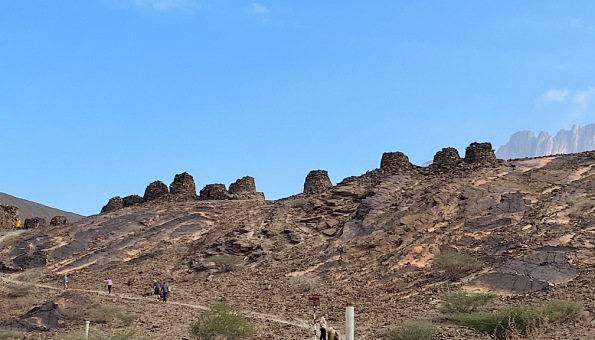
String of tombs at Al Ayn, Jamal al Misht in the background
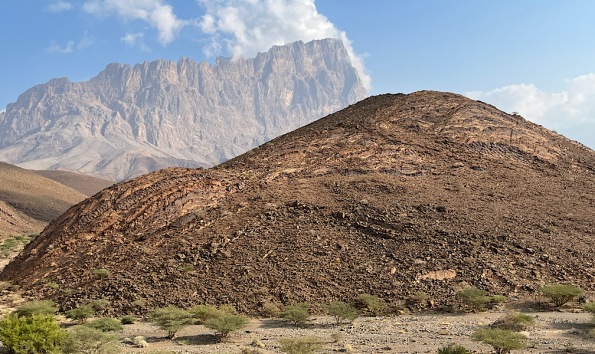
Jabal al Misht in the distance
I say structures because it is assumed they are tombs. No remains of animals or humans have ever been found in any of the ‘tombs’.
I’ve found websites that say you can enter some of the monuments, but I never noticed any openings. However the surrounding landscapes are breathtaking.
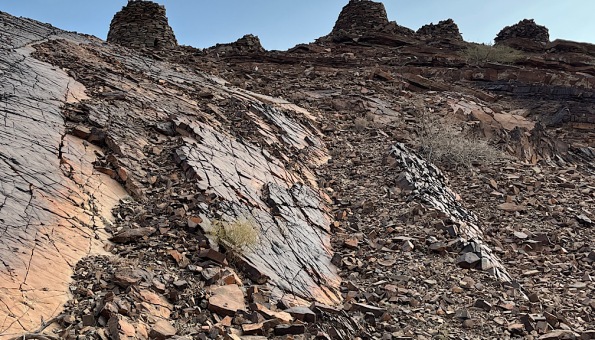
Looking up at tombs
We could see the row of beehives from quite a distance and the walk up to them wasn’t too steep. On the way, we crossed what is probably a dry river bed. Note to self: don’t visit in the rainy season.
Once there we scrambled around the uneven rocks and enjoyed the views. Highly recommended and free!
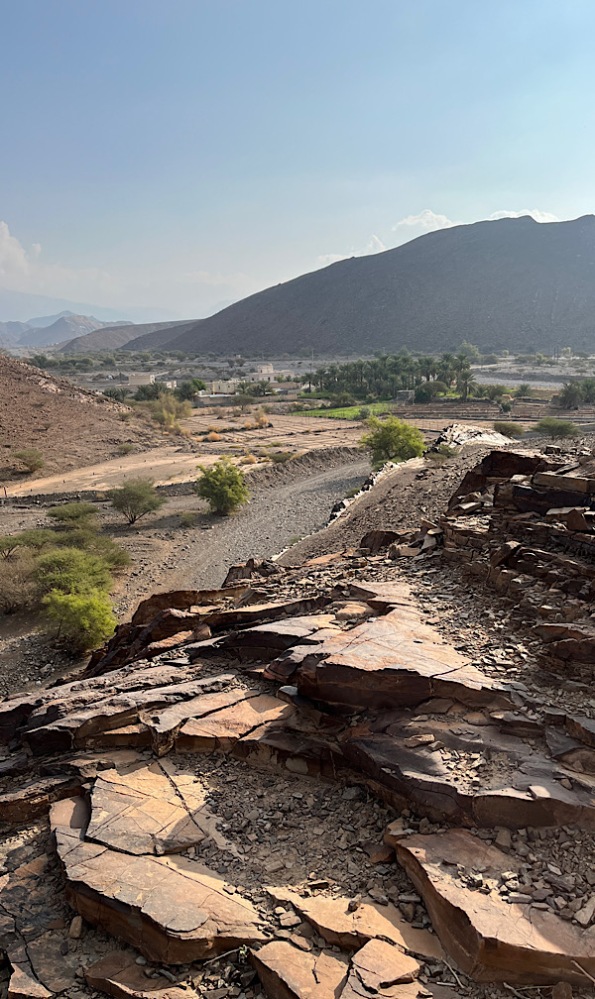
Looking out over the countryside
 Where to next?
Amazing! Thank you so much for sharing this with us!
LikeLiked by 2 people
You are most welcome.
LikeLike
How very interesting. I had no idea such a tomb existed. The photos are incredible. 👀🍃
LikeLiked by 1 person
They were totally new to me too.
LikeLiked by 1 person
I think I’ll just keep saying wow as I follow your journey. I didn’t see the internet cafe around the corner? It is certainly nothing like I imagined. So thanks for the photos which are spectacular.
LikeLiked by 1 person
Oman is so full of surprises.
LikeLike
They look a lot like the Beehive Huts in West Kerry, in Ireland although they look a lot bigger
LikeLiked by 1 person
Oh wow, interesting to know there is something similar.
LikeLike
Those views are stunning! I have read about these “tombs” before. Curious structures.
LikeLiked by 1 person
Very curious.
LikeLiked by 1 person
That lovely scenery still surprises me. As for the structures, if they have found no bones, artifacts, or remains, is there a reason why they are called tombs? I am sitting pondering what else they could have been used for. 🙂
Best wishes, Pete.
LikeLiked by 1 person
It is puzzling that they are assumed to be tombs. Maybe memorials?
LikeLiked by 1 person
So interesting, thanks for sharing 🙂
LikeLiked by 1 person
You are most welcome.
LikeLiked by 1 person
Fascinating, Peggy. Reminds me of our trip up the Nile last March and the fact that so much was going on 5000 years ago. It’s interesting that no human remains have ever been found there, however. Even grave robbers in Egypt left behind clues of the tombs use. Maybe they were used for something else…
LikeLiked by 1 person
Sadly, we will never confirm their original use.
LikeLike
We saw these tombs there . Thanks for sharing this idea Anita
LikeLiked by 1 person
Glad you have seen them too.
LikeLiked by 1 person
How fascinating!
LikeLiked by 1 person
That’s what we thought.
LikeLike
Peggy, I suspect there are many archaeological sites that have only been preserved by their isolation. Interesting that these are called tombs, but no remains have been found. I can believe that they were robbed of burial goods, but bones disappearing seems strange. Anyway, they’re very interesting structures. ~James
LikeLiked by 1 person
Isolation sure does foster preservation. The absence of remains certainly raises doubt as to whether they were tombs.
LikeLiked by 1 person
Wow! This looks amazing and also surprising. I’ve had friends visiting Oman but didn’t really know what it looked like over there. Thanks 🙏
LikeLiked by 1 person
I have more to tell about Oman, but I might slip in another country first.
LikeLike
Oh Peggy!! This is a wonderful post. These historical sites unlock the mysteries of the past, provide tangible evidence of ancient civilizations and offer insights into their culture, technology, and way of life. I am thrilled to be tagging along on your adventures.
LikeLiked by 1 person
I’m so pleased you have decided to come along.
LikeLiked by 1 person
Quite an archaeology lesson I for one am very glad to receive! Without sharing travellers like you to shine light on our ignorance the latter would sadly remain . . . SO interesting!
LikeLiked by 1 person
I learn so much too. Doing the blog forces me to find out more.
LikeLiked by 1 person
Yes, cemeteries are also high on the list when travelling. Yes, I can see that locals would carry some of those tomb rocks for use in constructions. They would make a nice garden bed with the petunias spilling over.
LikeLiked by 1 person
Gerard, methinks you might be a ‘bad’ influence on the locals. hahaha
LikeLike
Fascinating. Your photos are fantastic also. I hadn’t heard of these beehive structures, so I was very enthusiastic reading about them.
I was a great cemetery visitor in the past. You can envision so much about the country’s past and the lives of those who lived in the area.
Interesting that they’ve never found any animal or human remains in them.
I also wonder if these structures could possibly be some sort of long-term grain storage structures in that having no doors would deter animals. Perhaps they might have removed the top rocks to access the contents. Anyway, that’s just a theory.
Thanks for sharing, Peggy. 🙂
LikeLiked by 1 person
Grain storage is certainly a possibility. Some ‘tombs’ had small entrances that could easily be blocked up.
LikeLiked by 1 person
Fantastic!!!
LikeLiked by 1 person
Thanks Anna!
LikeLike
I am glad its not just me who finds cemetries interesting. Beehive stone structures can also be found in the west of Ireland. Monks used to live in them.
LikeLiked by 1 person
How fascinating. These were probably too small for a residence.
LikeLiked by 1 person
Another fascinating story about Oman; I would not have thought of beehive tombs. We humans sure like to build stuff!
Alison
LikeLiked by 1 person
Oh that made me laugh. We do love to build stuff.
LikeLiked by 1 person
I have read lots of Travel posts on Oman lately. It seems like it’s getting more popular. Thank for showing these Beehive tombs. Very interesting I want to go see them now.
LikeLiked by 1 person
Good to know Oman is getting exposure. Well worth a visit.
LikeLiked by 1 person
I looked it up yesterday. Just flights are so expensive they eat up all my vacation budget so Oman is out of reach for now. But your have stirred my interest and added it to my list.
LikeLiked by 1 person
I think Oman will keep its charm, so it gives you time to save.
LikeLike
Fascinating! I want to go.
Tony
https://www.breadtagsagas.com/
LikeLiked by 1 person
Oman really is a treasure trove of things to see.
LikeLike
Peggy, your blog post beautifully captures the mystique and historical significance of the beehive tombs in Oman, offering readers a vivid journey through time. The way you intertwine the sites’ UNESCO heritage status with your personal exploration of Al-Ayn provides a rich, layered narrative that’s both educational and engaging. Your emphasis on the preservation and untouched beauty of these ancient structures, despite the challenges they face, adds a poignant note to your account. Moreover, your practical advice for future visitors, paired with your awe-inspiring descriptions of the landscape, truly makes this a must-read for anyone interested in history, archaeology, or travel. Your passion for uncovering and sharing the world’s wonders shines brightly here.
LikeLiked by 1 person
Oh my goodness, Michael, what a lovely comment. I’ve neglected the blog just recently and your encouraging words are inspiring me to get back to business.
LikeLiked by 1 person
wonderful…looking forward to new postings. Always interesting and informative, Peggy.
LikeLiked by 1 person
This is absolutely fascinating, Peggy. Such a mystery here! One more reason I’d love to have a time machine just to witness how such monuments come into being…
LikeLiked by 2 people
Oh yes, what we could all do with a time machine.
LikeLike