

Potsie (in his Dame Edna apron) and me in his old kitchen in Dallas
A little time out from travels to tell you about my very dear friend, Potsie. Pots and I met more than 10 years ago in the community boards of a food website called Recipezaar.
We hit it off instantly and spent many years running amok on the community boards and the website’s contests and adventures. We were also co-hosts (with three others—Stella Mae, Rinshinomori and Celticevergreen) on the Asian Forum there.
He calls me his Mommie Dearest (ala Joan Crawford because I ‘adopted’ him for a cooking game) and I’ve called him all sorts of ‘witty’ names, but I think he most enjoys his alter ego as Dame Edna.
Potsie lives in Dallas Texas, and Poor John and I have visited him there several times. In fact, we fly to the USA though Dallas now, instead of Los Angeles.
If you follow this blog, you will know I am in China and will soon be travelling west to St Petersburg Russia on the Trans-Mongolian Railway.
Let me tell you now that I will be worried sick for every minute of that journey—and here’s why. Facebook doesn’t work in China. In fact, no international social media outlets work here. So my network of communication is faltering.

Yep, he’s a dog lover
But Recipezaar friends have let me know that Potsie has had a stroke or something equivalent. His left side is immobile and his speech is slurred. He’s in hospital and tests are to be done. That’s about all I know for now.
Potsie’s dear friend, James, is doing his best to look after Potsie’s place and dogs, be of comfort and prepare for Potsie’s return home. His real mother, Bobbie, is on deck too.
In all honesty, Potsie isn’t religious, but I know he believes in the interconnectedness of people and the world.
So in a push to help make Pots well again as soon as possible, I’m asking everyone to make a gesture of solidarity.
Please do something that sits well with your personality and your view of the world—send good wishes, channel the vibe, say a prayer, shed a tear, smile at a stranger, open a door for someone, give a beggar a dollar, send someone a card, read a book, bake bread, buy an apron, call your mum, hug your children, kiss your spouse, count your blessings.
Seriously, I think even the list of suggestions might even bring a smile to Potsie’s face.
I’ll keep you posted when I know something.
Go on, mate, get well! We’re all cheering you on! Thanks James for being there for Pots. And I almost forgot to mention that Potsie (and my sister, Susan) were the ones to start calling my off-sider Poor John.
P.S. Our beloved Recipezaar has changed hands and names, and is no longer the community we cherished. If it still was, the members would be doing a cook-a-thon and signing up to make and review one of his recipes to cheer him up. So if you’re looking for a sensational recipe, check out Potsie’s Mexican Rice or one of his other gems.
P.P.S. I forgot to add that we board the train in about 12 hours time. I’m likely to be completely out of touch for 36 hours after that.
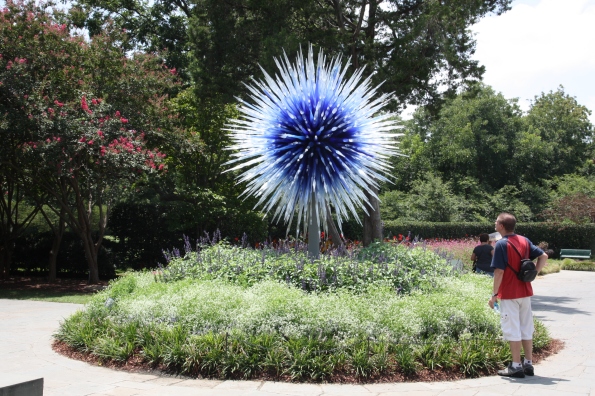
Potsie admires a Chihuly glass star burst at the Dallas Arboretum

Northern Lights in Alaska 2016

Poor John and I are sitting in Sydney Airport. In less than an hour we’ll be on the way to Shanghai, China.
Over the next six weeks we’ll be in Xian and Beijing, then on the Trans-Mongolian Railway. That 19-day train ride will include stays in Ulan Bator, Mongolia, as well three stays in Russia—Irkutsz, Moscow and St Petersburg.
Then we stop in Sweden before 10 days in glorious Iceland. The saying goes that Iceland is green and Greenland is ice.
We’ll be staying with special friends and hope to see the Northern Lights. We saw them a in Alaska early last year and all the pics are from that trip.
I’ll post as often as I can, but no guarantees. Internet connections are likely to be rare.
Apologies in advance if you don’t see much of me on your blogs.


Wind Riders by Roger Buckman
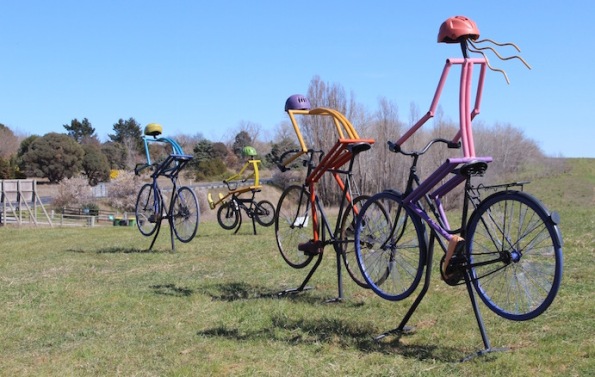
A closer look at Wind Riders
Now in its 5th year, Sculpture in the Paddock is a popular event in Yass in New South Wales, and not far from Canberra. I’ve been able to go most of those years and I figured it was about time for me to share some of the amazing artworks on display this year.
Sculpture in the Paddock is staged in the beautiful surrounds of the National Trust property ‘Cooma Cottage’, once home of the famous Australian-born colonial explorer Hamilton Hume. The show closes this Sunday, but is open all of the next three days from 10am to 4pm.

Rhythms of My Heart by Naomi Royds
I’m predicting my favourite, the whimsical Wind Riders by Roger Buckman, will take out the People’s Choice award. I’ll let you know. It’s a collection of five cyclists. They’re all wearing real shoes and the spokes are fitted with plastic blades that let the wheels turn with the wind.
Robert Barnstone won the main prize with his work Cleft. As it turned out, I missed getting a photo of it. It’s low-slung and, while it was very interesting to walk around, it was hard to capture in a pic.

Moulds by Brian Evans
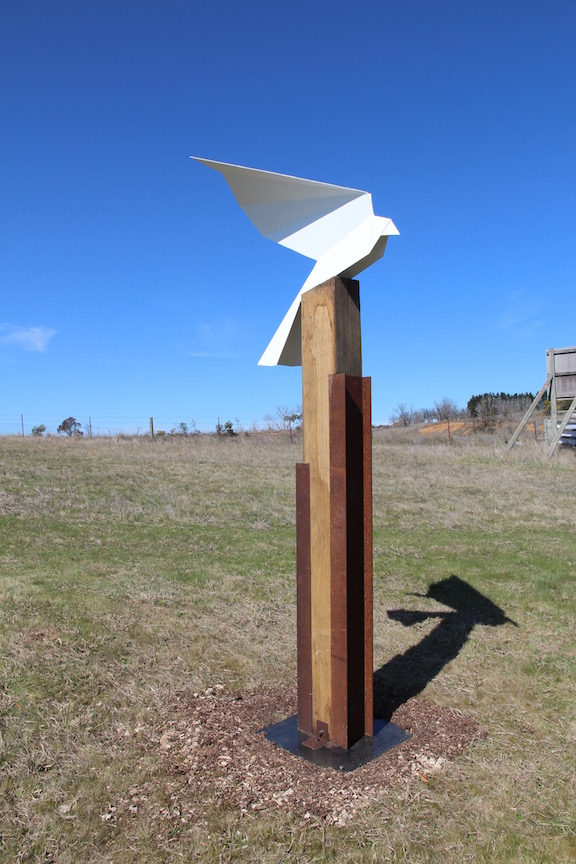
Genessee II by Rhonda Castle
Other winners were:
Naomi Royds, Rhythms of My Heart, based on the graphics put out by EKG machines, Yass Soldiers Club Encouragement Award; Brian Evans, Mould, a two-sided, two-faced sculpture, ANU School of Art Prize; and Rhonda Castle, Genessee II, a white bird, Tuggeranong Arts Centre Prize.
There are 31 sculptures in all, employing all sorts of materials. One even features used pet food cans. Another three that I quite liked are shown below. Do you have a favourite here?
Hope you enjoy the photos and if you’re anywhere near Yass, do try to visit.
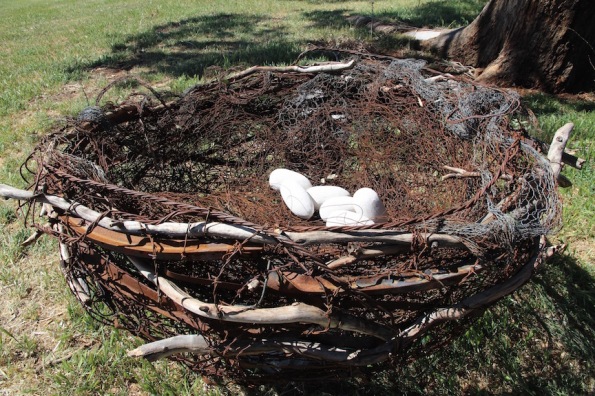
Bird’s Nest by Leanne Kelly
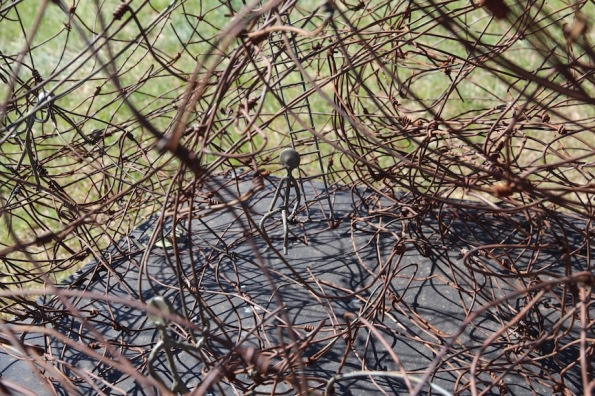
Life Wasn’t Meant to Be Easy by Roger Buckman
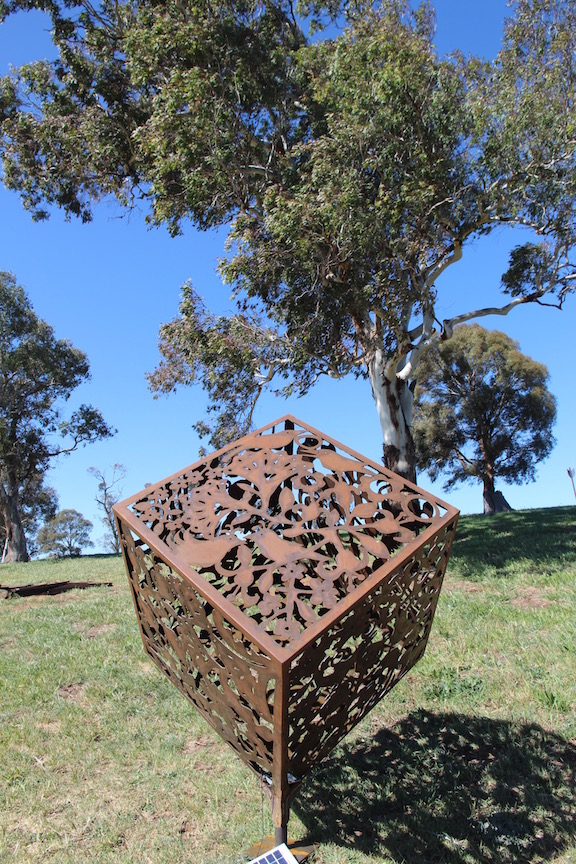
Magpie, Warble and Song by Heidi McGrath
It is with great pleasure that I introduce a blog post by one of our daughters, Petra. When she was telling me about this experience, she said ‘I kept thinking Mum would love this for her blog’, so I twisted her arm and got her to write it up for all of you. She says she’s honoured to contribute. On the contrary, I am honoured to have her share. The pics and videos have been taken by Petra.
—————————
It’s Petra here—Peggy’s daughter. Mum has given me the immense honour of writing a contribution to her blog after I shared a recent experience I had living in Vietnam.
I’m living in Ho Chi Minh City, at the start of a three-year posting in the Australian Consulate. My first few months here are entirely devoted to intense Vietnamese language training, two hours in the morning and two hours in the afternoon, one-on-one, every weekday.
Yesterday I arrived at my afternoon class, and my tutor enthusiastically bounced into the room. ‘We’re going on an excursion today’, he said with excitement. He explained we would be visiting a well-known Vietnamese musician, specialising in traditional music from the many ethnic minorities in this country. I have a little experience with Vietnamese music, although mostly involving crooners from the 1970s. But this was my first introduction to traditional music. Needless to say I was excited.
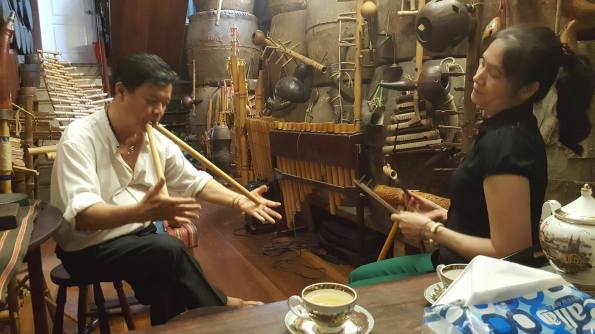
A music concert in Vietnam
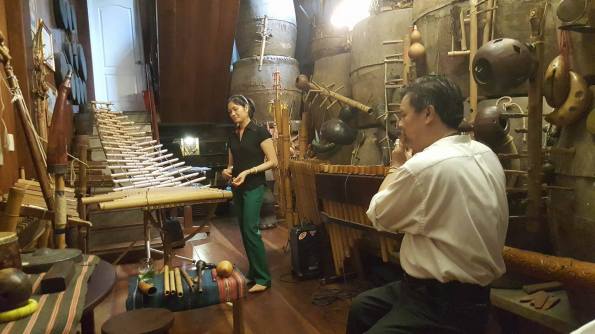
My two tutors and I jumped in a taxi and drove to the other side of town. When we arrived, Duc Dau (Vietnamese spelling is Đức Dậu if you want to find more videos) and his wife, Thu Hien, greeted me warmly. When I walked into their home, I was met with the incredible sight of 30 large drums (bigger than beer kegs), made with 300-year-old elephant skin, lining the walls. Not to mention countless other instruments I had never seen before.
We removed our shoes, as is custom, and sat down at a small table for tea and moon cake.
And then our private concert began. Together Anh Duc Dau and Thus Hien played at least two dozen different instruments. Some were percussion, some were horns, some were like xylophones and, of course, a leaf played like a kazoo.
My favourite one was an instrument, which can be used for courting a potential lover, called a dan k’ni. The player holds the main part of the instrument and places a guitar pick-sized piece of bamboo, connected to the instrument by a string, behind their teeth. They then play the string with a bow, while mouthing sweet nothings through the bamboo piece in their mouth. The words come through the string—you may have seen similar musical speaking done on a didgeridoo. As in my video, it can also be played by two people together.
Music in Vietnam
Duc Dau and his wife play in a band with his six siblings and a growing number of nieces and nephews. They have toured the USA. A few years ago they accompanied one of Australia’s most accomplished pianists, whose name neither of us could remember, during a tour to Vietnam.
As much as anything I was proud to be able to carry on a limited conversation in Vietnamese about their music, home and Vietnam. I was largely able to understand what they were saying too, despite the occasional smiling and nodding. Fortunately during most conversation lapses, Duc Dau would pull out another instrument to demonstrate.
Before we bid our farewells, Duc Dau dashed upstairs to get a copy of a magazine he and he wife were featured in. I had thought they just wanted to show me some more photos of their home, but instead they both signed it and gave it to me to keep.
Warm hospitality like theirs is not uncommon in Vietnam, however I don’t expect to get a live, private musical performance everywhere I go.
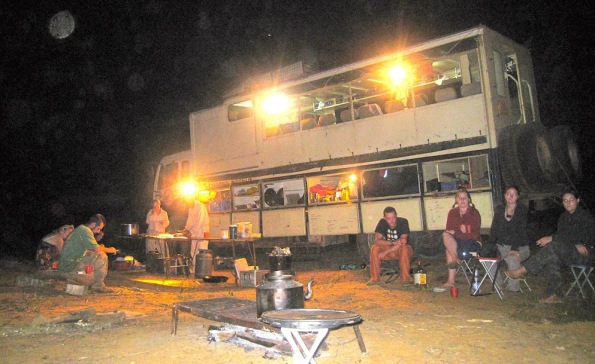
Set up for cooking. Notice the tarpaulin rolled up along the length of the truck
Overland truck trips are all about teamwork (even dysfunctional teamwork) and one of the first things our driver did was get us to form cook groups. Hey we had to eat, and the trip fare included two meals a day when on the road and camping.
Our 43-week African trip started with 28 people, including the driver and his sidekick. Obviously, those last two weren’t going to cook after a day on the road, so we organised ourselves into six groups of four leaving two others to unload tents and start the cooking fires each day. Six groups meant cooking once every six days. The ‘tent bitches’ were on every day.
Chris and Gary, our driver and his sidekick, urged everyone to have at least one decent cook in every group. Duh, that made sense.
We paired up with Martin and Gwynne, a great couple from the USA, who visited us recently in Australia (click through and scroll down for a pic of them). I was the designated ‘decent’ cook and it helped that for many years I have preferred to cook from scratch. My cooking blog is evidence of that.

Poor John carrying a tub of water
How most cook days played out
On any given day, the relevant cook group usually shopped for food at lunchtime or just before stopping to camp.
In West Africa, our daily budget (for two meals) was $1.80 per person—or just over $50 for the entire group. Don’t forget that we started out with loads of basic dry goods (read about those here). And seriously, $50 goes a long way in those parts.
When we stopped to camp, the tent bitches would get the tents, tables and chairs out, and get the fire going.
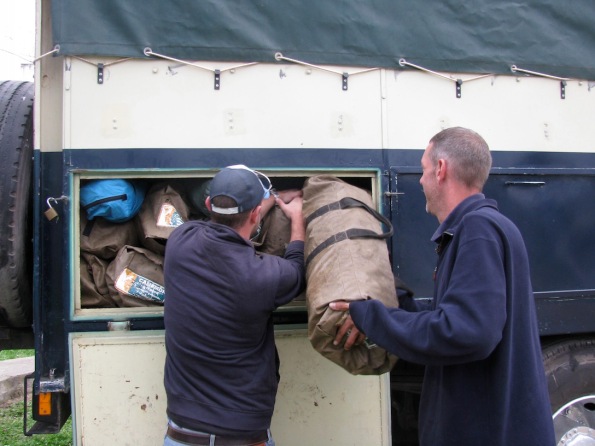
Rob and Martin stow tents
The giant kettle went on first because everyone was hanging out for a hot drink. That might sound odd in Africa, but our trip started in March, which is still winter in Morocco. Later on, even on the hottest days, a sugary tea was a great way to rehydrate.
Then the big jobs began. Virtually all the food purchased in markets had to be washed first. We also had to fill and set out bowls that would be used to wash and disinfect hands (nail brushes included), and more bowls that would be used to wash and disinfect dirty dishes, cutlery, and pots and pans.
Sometimes running water was a hike from where we were cooking, but we took advantage of taps whenever they were available because the truck carried only 400 litres of fresh water.


It took time for all of us to figure out just how much food to buy for 28 people and to gauge just how long it might take to chop and cook everything. Having a group of four helped a lot. I had a slight advantage because we lived in Burma for several years in the 1980s and we often entertained large groups.
After dinner, the cook group washed the pots and pans, and packed them away. Diners did their own dishes. After everything was cleaned up it was quite common for people to sit around the fire chatting.
The same cook group organised breakfast the next morning. Leftovers were served too, if there were any and if they could be safely kept overnight. We had no refrigeration—only a large esky (ice chest).
Oh, and if you’re wondering how I managed to cook with dried chickpeas all the time. On our cook days, I’d start them soaking in the morning. I found a way to wedge two water jugs upright in the food storage area.
By the way, we cooked in all sorts of places—at a simple homestay in Morocco, a palatial home in Rwanda, on the shores of the Atlantic and Indian oceans, in the desert, on a construction site, in a mining camp and more. I’ll write more about some of those later.
Some other cook group memories
Before the trip began I asked the driver (in a private Facebook message) if there would be decent knives on the truck. My thinking was to bring a couple of my own if necessary. He replied publicly saying something like Yes, Peggy, there will be plenty of good knives on the truck. No wonder I was regarded with some suspicion at first.
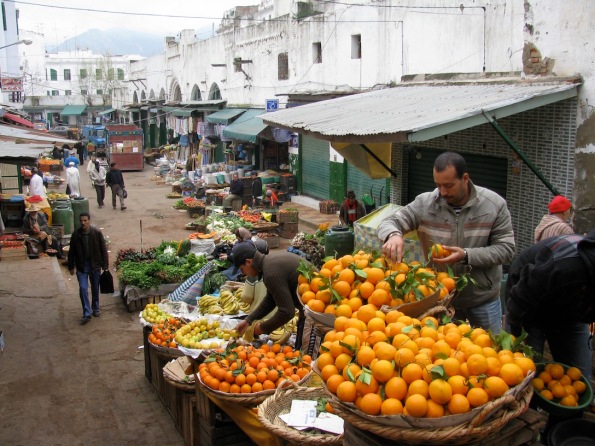
Our first shop in Tetouan, Morocco


I’ll always remember our first shop in Morocco. Tetouan has a large market with an abundance of fresh food. I found I was able to use smatterings of Arabic and French to buy wonderful ingredients at way less than a tourist price. Thank goodness for Attiya in Cairo who taught me all the foods in Arabic.
The biggest headache for most groups was catering for the fussy eaters. I didn’t at all mind cooking for vegetarians. That was easy. But in addition to a couple of vegetarians, we had seven who didn’t like fish, another seven who wouldn’t eat mushrooms, one who didn’t eat chicken, and one who complained about onions and garlic. Geez! More about that later. Oh, and for some outlandish reason, everyone ate tinned tuna!
For the first couple of months, our cook night seemed to come around when it was raining—sometimes pouring. We had a tarpaulin that could be stretched out over the cook tables, but they didn’t do much in torrential rain. In Togo we stood in ankle-deep water to cook.
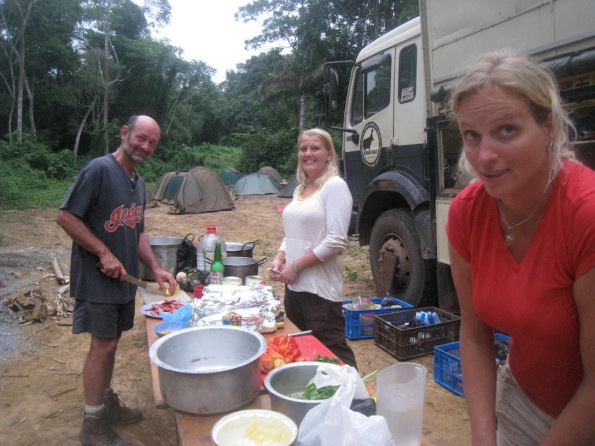
John, Lena and Tamara help on pizza night
One big win came after a very long day. Our group bought 28 baguettes and 56 eggs at lunchtime with a plan to make egg salad sandwiches for dinner. There was a truck excursion to a waterfall and we were quite late getting back to camp. Gwynne and I dreaded the prospect of then having to boil eggs. But as it happened, one of us dropped an egg and we discovered that all 56 eggs were already hard-boiled. Whew!
As passengers left, cook groups reshaped and went from four to three. Martin and Gwynne started a new group, and one gal asked to join us. Much to my amusement, she sacked us a couple of months later because we cooked with too much garlic and way too many onions.
By the time we got to Ethiopia, we were cooking in pairs. After a few mornings in a row, when the fellow who was supposed to start the fire slept in way too late, Poor John and I resigned from official cooking. Given that we got up early anyway, we offered instead to get the fire going every morning and also get breakfast laid out for everyone. The normal cook group would do the after-breakfast clean and pack. That offer was accepted and we did that routine through Ethiopia and The Sudan.
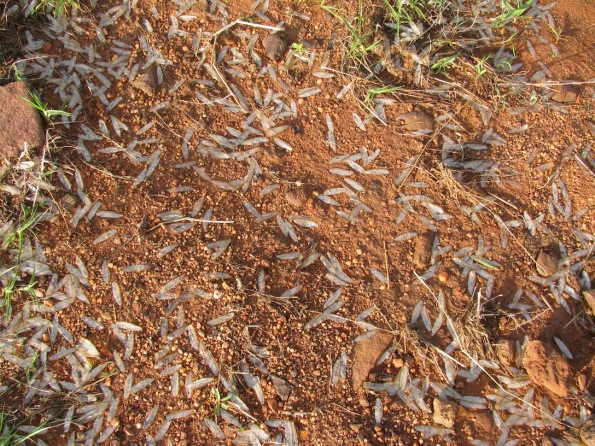
Flying ant wings everywhere
The best and the worst
We didn’t cook on the worst night, but we all suffered and it wasn’t the food. We’d had a fabulous day seeing hippos up close in Cameroon. That night we unwittingly camped at the scene of the annual mating ritual of flying ants. Egads, there were ants everywhere. The males die after mating and the females shed their wings. What a mess to clean up.
But the best night also came in Cameroon. It was Poor John’s birthday. It was a bush camp, and Gwynne and Martin’s cook group decided to make pizzas—not the easiest thing to do on a campfire.
Lots of people pitched in to help and the food was sensational. To top it off, we did a variety show with everyone contributing an act. I can’t remember them all, but there were dances, a puppet show, comedy acts and more. Poor John recited the Australian bush poem Bluey Brink and I recited these Sudanese poems.
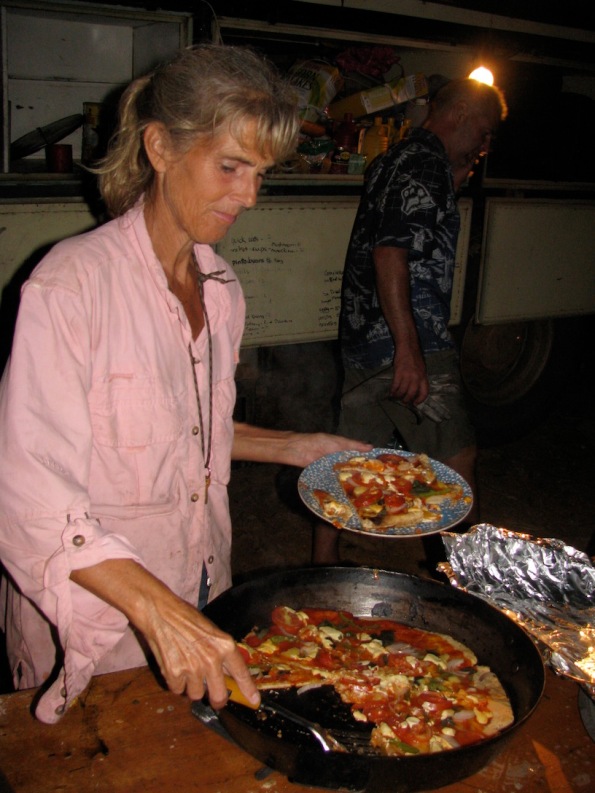
Gwynne serving pizza
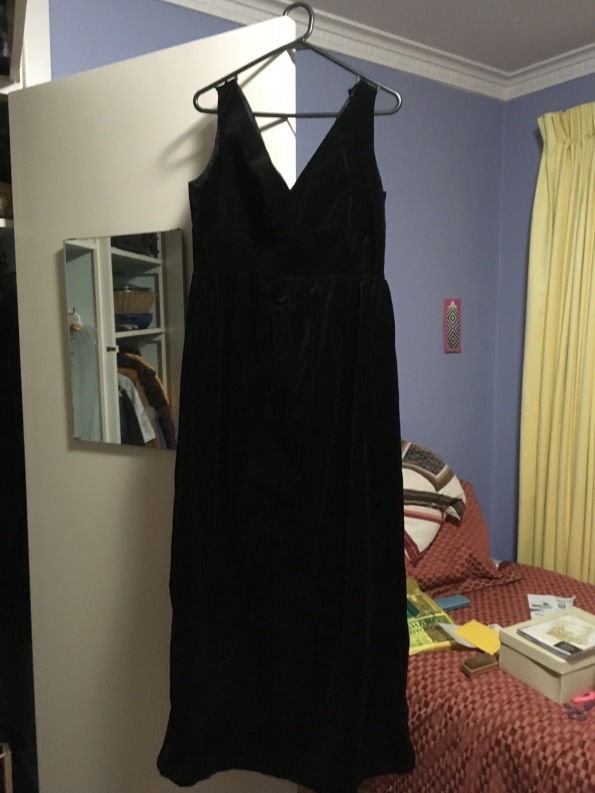
Followers of this blog might remember my references to a low-cut dress that I wore to a formal dance about 50 years ago. I’ve often promised to tell the story of that night and another relevant night about a year later.
Earlier today I found that black velvet dress folded up and stuffed into the back of an upper cupboard. I tried it on and it only-just doesn’t zip up in the back. So middle-age spread isn’t too drastic. But the attempted try-on confirmed that the bras of today are up to the challenge of this low-cut dress. I have a whole drawer full of bras that could do the job now.
So on to the story of 1967
In the late 1960s, I was in university and a member of a sorority (those women’s organisations that are very popular in the USA). I thoroughly enjoyed my time in the sorority, but the annual formal did nothing for my confidence.
Luckily, I have no memory of my first Cotillion (the name of the annual dance), but sadly my memories of the second dance will never be obliterated.
So let me set the scene
On the first year, I noticed that many of my sorority sisters wore formal dresses with plunging necklines. I hope no one takes offence, but most of them were rather flat-chested and hardly did their dresses justice.
So enter Peggy the next year. I’m rather busty and thought I might be able to do a low-cut dress some justice. So I made one.
Cripes, dress patterns never really quite show you how the end result will look. This turned out more plunging than I expected, but totally fine by today’s standards. Back then, I was faced with the challenge of holding up my boobs with a ‘strapless’ and ‘industrial-strength’ padded white bra.
I now know that black duct tape can work miracles in these situations, but that was not a known option back in 1967.
So picture this
I have a white padded strapless bra. It’s showing above the top of the dress, so I chop off the exposed white bits before I head to the dance. But over time, the bra creeps up. I look down and see white fluff inching its way to visibility.
Not to worry. I run down to reception to borrow a pair of scissors to trim off more of the bra. And push the fluff back into place. You can see how black duct tape would have saved me a lot of grief.
Then back up to dinner (and later the dance). Can you guess what they served for dinner?
I sure didn’t see spaghetti and crusty rolls coming! But there they were. I couldn’t afford to lean forward and expose the white bra and fluff, so I sat bolt upright as I twirled my spaghetti on my fork.
About 10 minutes in to this fiasco, my date (yeah, we had to invite a date) said Look down. My velvet chest was blanketed in bread crumbs. I nearly choked. Okay, Peggy, be nonchalant. Don’t raise your hands to brush off the crumbs. Just tilt your head a bit forward and blow them off. Of course, that manoeuvre sent them airborne across the table.
Time for another quick trip to reception to trim off yet more of the padded bra.
No wonder the hotel reception people kept asking if I was OK. Perhaps they thought every time I asked to borrow scissors might be my last request.
Of course reception was on ground floor and the dance was on the mezzanine. The hotel didn’t have a lift between those floors. So every time I started up the stairs there would be a couple of guys at the top calling out She’s coming up the stairs again! Followed by a stampede to the top of the stairs.
Still I’ve forgotten a lot about that night. I can’t remember the name of my date; couldn’t even pick him out of a police line-up. I don’t remember what band played or what we had for dessert.
A year later
But I will never forget what happened about a year later. That’s when I stopped in Lincoln, Nebraska, to visit my friend, Linda. I was wearing a ratty old track suit. Linda introduced me to her new boyfriend, Bill. He jumped up to shake hands and say hello. Then he said, ‘Oh hey, I know you. Didn’t you wear a low-cut black dress at the Chi Omega Cotillion?’
I almost fainted. All I could say was, wow you recognise my face!
P.S. Maybe someday I’ll tell the story of wearing a slightly low-cut t-shirt to the local pizza place when I was asking for prize donations for the school trivia night.

Sagrada Familia dominates the cityscape in Barcelona
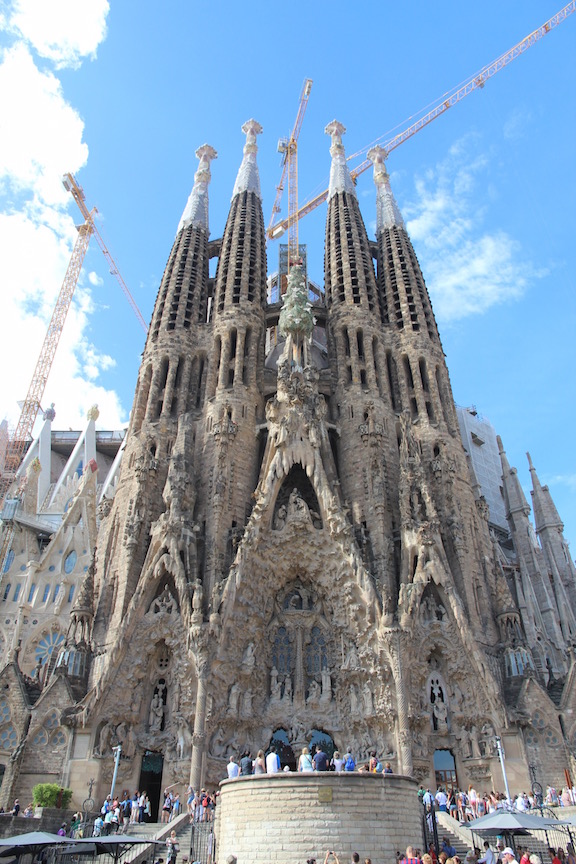
The sweeping Sagrada Familia
The last month has brought disaster, destruction and death across the world.
Mother Nature has unleashed her fury in North America, savaging Mexico, Texas, the Caribbean and Florida. More than 90 have died from the earthquake near Mexico, In the US and Caribbean, the death toll currently stands at less than 50, but hundreds are missing and islands such as Barbuda have been pretty much destroyed. More than five million Floridians were ordered to evacuate. Some have been able to return home, only to find ruin, mud and no power.
Asia is in worse shape with more than 1200 dead because of floods in India, Nepal and Bangladesh. The rains started a month ago and have affected more than 41 million people. Villages across the three countries remain submerged. News coverage has been limited. And the poor Rohingya are desperately fleeing dangerous Myanmar to drenched Bangladesh.
Twelve days ago Terry, a dear online friend, lost his battle with cancer. Check out his website for his inspirational cancer journey!
Last Friday, Connie Johnson died in Canberra after a lengthy battle with her cancers. Many of you would never have heard of our Connie, but she will be remembered by many across Australia. Along with a group of like-minded volunteers, Connie and her brother, actor Samuel Johnson, have raised almost $6 million towards cancer research. You can read a bit more about Connie and Love Your Sister here and here.
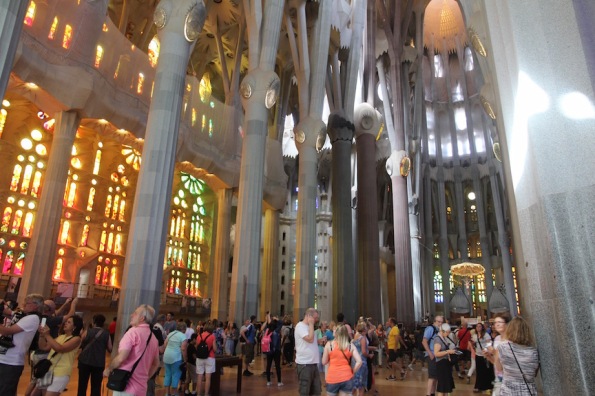
The interior is bathed in light. The 12-sided columns are made of porphyry, an igneous rock
And less than four weeks ago there was the horrendous terrorist attack in Barcelona, Spain.
That’s where I’m going today. Poor John and I were in Barcelona just two years ago. We walked down the famous Las Ramblas (site of that ruthless terrorist attack) several times and enjoyed touring the amazing market there.
We also visited Barcelona’s magnificent basilica—the Basílica i Temple Expiatori de la Sagrada Família, or more simply known as the Sagrada Família.
I bring this up now because the terrorists who carried out the drive-by slaughter on Las Ramblas had planned to set off a bomb at the Sagrada Família. That plan changed after the bomb they were building went off prematurely—in the home in which they were building it.
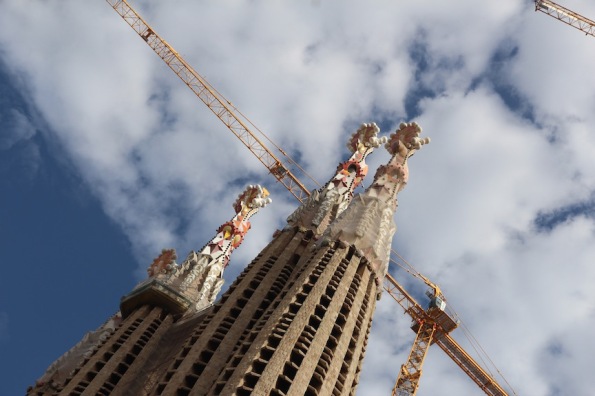
When complete, the Sagrada Familia will have 18 towers
It’s incredible to think the basilica might have been bombed.
Sagrada Familia has been under construction for 135 years. When you’re inside, it’s easy to think it’s completed, but outside the ongoing construction is completely obvious.
Over the next decade or so, six new spires will be added to this amazing Roman Catholic basilica, bringing the total to 18 and finishing—at long last—the work begun by Catalan architect Antoni Gaudí in the late 19th century.
Construction on Sagrada Familia started in 1882 under architect Francisco Paula de Villar. He resigned the next year and Gaudi took over as chief architect, transforming the project with his architectural and engineering style, combining Gothic and curvilinear Art Nouveau forms. Gaudí envisioned a soaring visual narrative of Christ’s life.

Construction on the Sagrada Familia began in 1882
But even then Gaudi realised the massive project would not be completed in his lifetime. So for more than 12 years prior to his death at age 73, he rendered his plans as three-dimensional models rather than as conventional drawings. Though many were destroyed by vandals during the Spanish Civil War, those geometric models have been vital to Gaudí’s successors.
That’s a good thing because over the years, the construction has been interrupted by the Spanish Civil War and a chronic lack of funds. It helps that Gaudi wasn’t really concerned about the slow progress of the basilica’s construction. He is said to have remarked, “My client [God] is not in a hurry.’
It’s impossible to say how much money has been spent on the prolonged construction over the years. Today the annual budget is reportedly $27 million, paid for partially by visitor entrance fees and private donations.
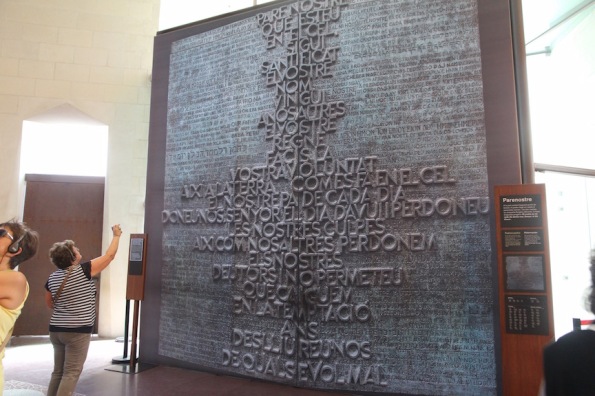
The centre of this door has the entire Paternoster in Catalan. The two sides have the phrase ‘Give us this day our daily bread’ in 50 languages
Speaking of visitor entrance fees, we should have booked online. Instead one morning, we stood in line for about 90 minutes to buy entrance tickets for a visiting slot that would come up after lunch. That worked out okay because we strolled around the local area and grabbed some lunch while we waited for our turn.
We returned to circle the building and then stand in the queue. It gave us a great chance to observe the intricate exterior and ongoing construction. Our best views were of the main facade (depicting the nativity) and the towers and cranes hovering overhead.
I wish I had read more about the exterior before visiting because I would have been looking for certain sculptures I’ve read about since then. That said, I might have looked in vain because building works obscured some of the facade.
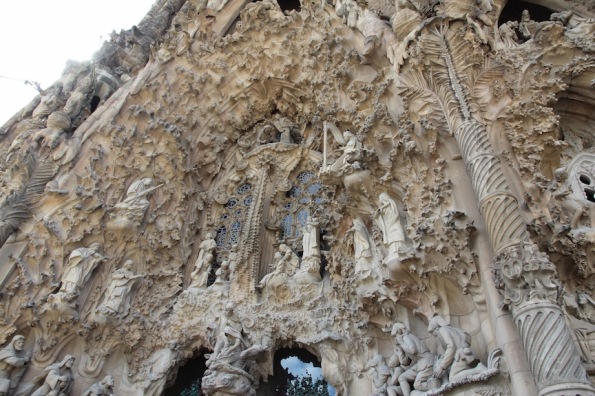
The ornate Nativity Façade


It is worth mentioning that when complete, the basilica will have three ornate façades—Nativity, the Passion and Glory.
Nativity, also called the birth of Christ, was completed in the 1930s. I’ve read that Gaudi originally intended for this façade to be multi-coloured with every statue and figure to be painted. I’m not sure my eyes could have coped with that!
Gaudi wanted Passion, also called the suffering way, to be austere and harsh so it would strike fear into the onlooker. Spires for this façade were completed in 1976 and work on the sculptures began in 1987.
Glory is to be the largest and most striking of the façades. Work on it began in 2002 and is likely to take another decade to complete.
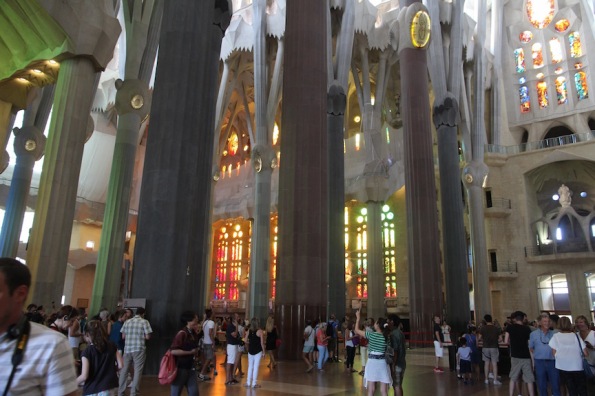
It’s easy to see how 6500 could attend the basilica’s consecration in 2010
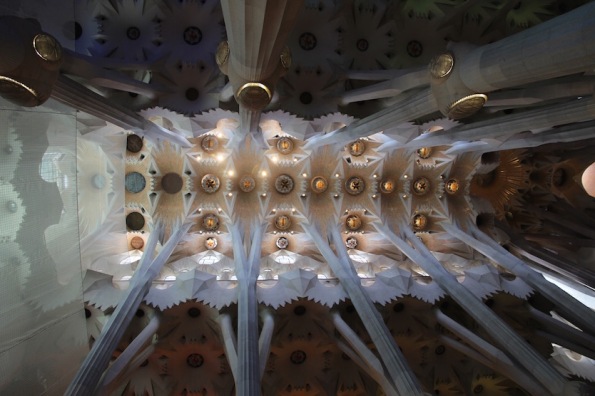
Looking up in the Sagrada Familia
But let’s go inside the enormous space that is filled with columns representing trees and stained glass windows that allow colourful light to flood in. I can’t find a count on either, but there are four kinds of columns—six-sided ones made of sandstone, eight-sided ones made of granite, 10-sided ones made of basalt and 12-sides ones made of porphyry.
With the apse capped by a hyperboloid vault that reaches 75 metres (250 feet), you feel as if you are walking through an ancient fantasy forest.
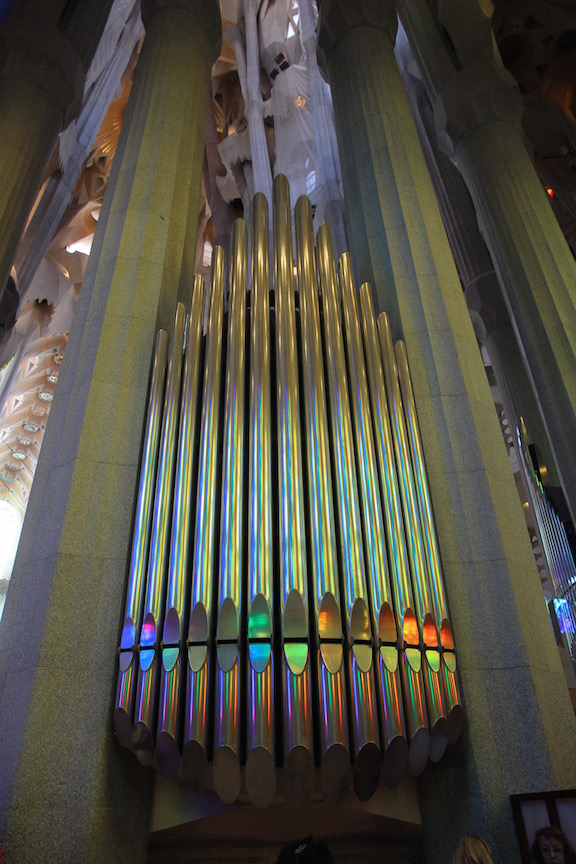
Just a few of the organ’s 1492 pipes
The main nave was covered and an organ installed in mid-2010, allowing the still-unfinished building to be used for religious services. Pope Benedict XVI consecrated the church that year in front of a congregation of 6500, with another 50,000 watching the Mass from outside where more than 100 bishops and 300 priests were on hand to offer Holy Communion.
And just a quick comment about the organ. It currently has 1492 pipes. There are plans to add additional organs (to accommodate acoustics) with a total of 8000 pipes.
I could go on and on and on about Sagrada Familia’s beauty and intricacy, but I’ll let the pics do the work and urge you to search online for more information.
This post got so long, that I’ll do a separate post on Gaudi himself. I’ll be heading back to African posts soon. I’ve been held up a bit by cataract surgery. My vision is rather wonky until my eyes settle enough and I can get new glasses.

A new approach to the crucifix
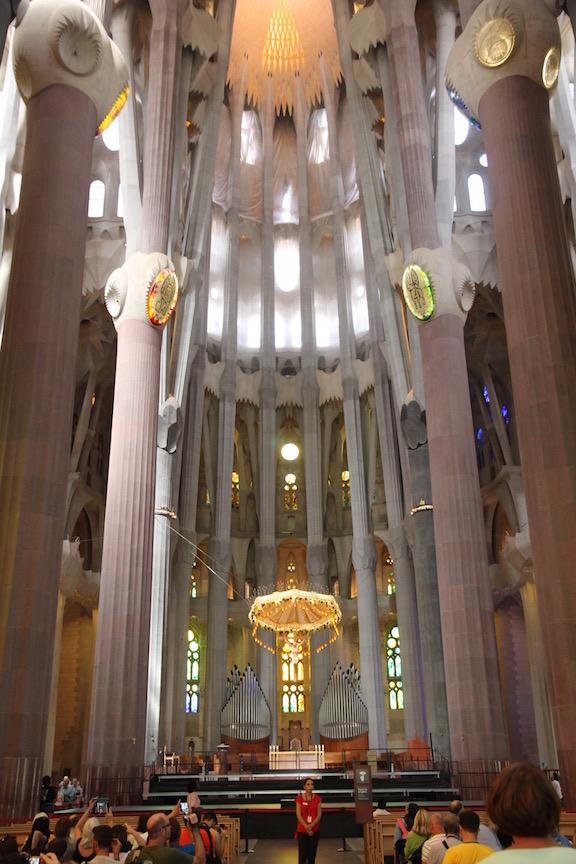
A distant view of the altar, crucifix and some of the organ pipes
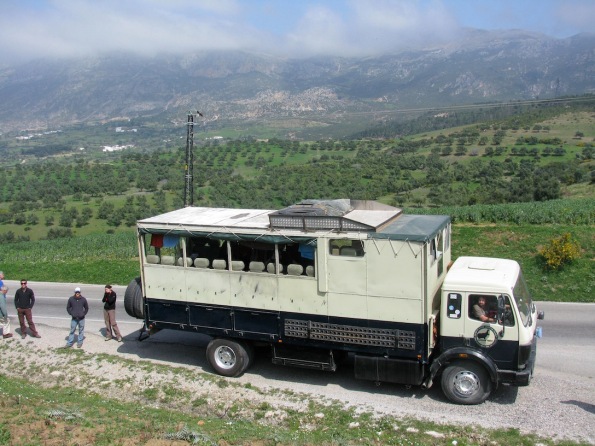
Our home for 43 weeks. You can see under-floor compartments, the wood tray and sandmats
Poor John and I have been on multiple overland journeys since 2009, starting with an epic 43-week expedition through Africa.
I’ve introduced that trip in my two previous posts. Now it’s time to introduce the beast that took us most of the way—our truck with no name.
Our driver, Chris (yes he has a name), said he objected to having a named truck, so it remained ‘the truck’ until we left it behind in Nairobi. It was to be retired and sold.
Looking back, I can honestly say it was my favourite truck of all our overland vehicles, and that mostly had to do with its brilliant layout.
But before I go into detail about how it was set up, I have to say that Chris hated that truck because it was a Mercedes and not a Scania. He never got over that, but he dealt with it.
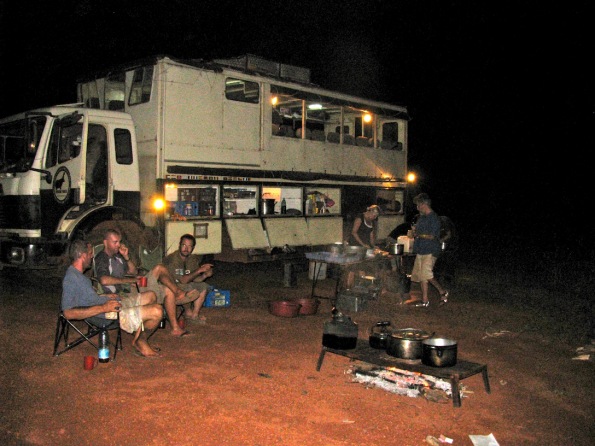
Most of the underfloor compartments open for cooking
So on to the Mercedes, which was built around 1994 and so about 15 years old when we set out. Chris thought it might have started life as a beverage delivery truck, but it was converted to an overlander in Tanzania. It was 2-wheel drive, but 4 would have been better. More about that in another post.
The mundane specs are that it was 11 metres long and just under 4 metres tall, which included the wood rack on top (that got knocked off by a low-hanging branch in Nigeria). It was set up to carry 2000 litres of diesel and 400 litres of water (in 20 jerry cans). Accessing water was a big issue on this trip, especially in West Africa, and deserves its own post.
There were no side windows—only tarpaulins on each side that were held down by bungee cords. At the front, there was also an overhead viewing space covered by another tarpaulin. All the side tarpaulins stayed down when the weather was cold or rainy, but otherwise they stayed up until we camped for the night.
The cab was separate and seated two, with a small space behind the seats for a person to lie down. The back had seats for 28 with two people per bench. We were 28 people in all so there were only ever two vacant seats for the first couple of months.
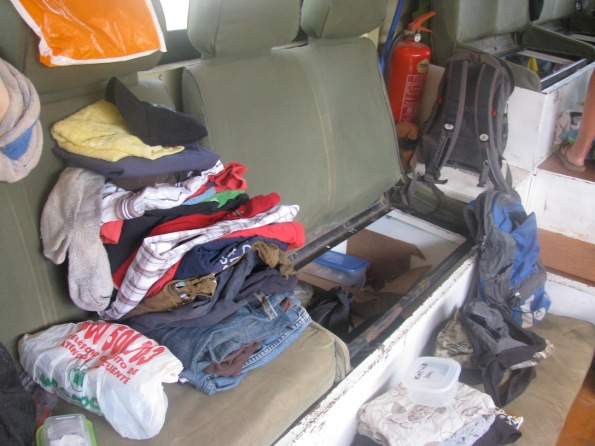
Bench seat is up to reveal a storage space
Now this is where the truck’s layout starts to come in to play. The seat of each bench could be removed to expose a compartment where two people could store their day-to-day possessions. There was a separate, large compartment where everyone’s tents and sleeping mats were stored.
But of course, what is virtually a year’s worth of stuff isn’t going to fit in such a small compartment, so our main bags were stored under the floor. Now the amazing thing here was that our bags could be accessed from drop-down doors on either side of the truck or by lifting the floorboards inside truck.
Food supplies were stored the same way—accessible from the outside and from under the floorboards. This was so useful because the truck was so wide that some foodstuffs couldn’t be easily reached from the outside.


There were outside compartments that housed the cookware, dishes and cutlery. There was only one way to store this gear (or it wouldn’t fit) and at one campsite we had a competition to see which team could put everything away the fastest.
Sandmats were stored on the outside of the truck. These were critical for helping us to get out of our many times of being struck.
I won’t say where Trevor, the safe, was located. He’s shy like that. But two other aspects come to mind. There was a shelf that ran down each side of the truck where we stored books and snacks. I have a funny story for later when some shoes fell off the shelf. There was also a charging station (that didn’t always work) and a button to communicate with the cab (that conked out early on). Mostly we had to open a front window and bang on the roof of the cab.
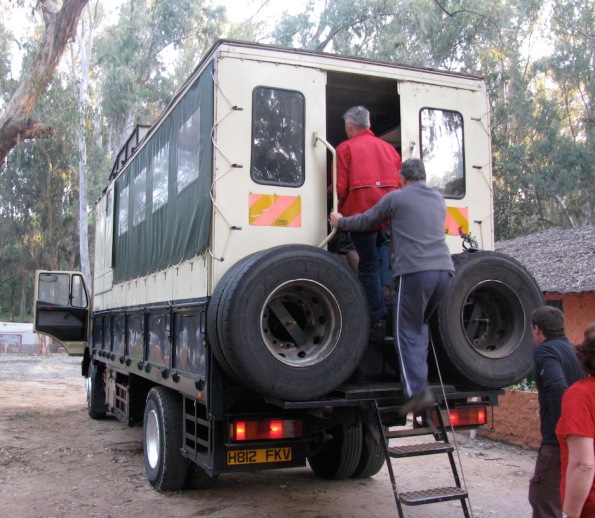
All aboard. You can see more of the storage compartment down the side
It was also the only truck that had it’s entrance at the back, which also meant we had two windows at the back. That’s something I’ve really missed on every other overland vehicle. You see something go by and look back, but then can’t see anything if there aren’t any rear windows.
Now that I’ve mentioned the back, I should explain that the stairs had to be pulled up when the truck was moving.
And a last comment about security. Tarpaulins aren’t all that secure. When we stopped for lunch or for other reasons, we took it in turns (in pairs) to mind the truck.
I realise I’ve only scratched the surface here, so feel free to ask as many questions as you like.
Next African instalment will be about cook groups, but first a bit from Barcelona, the scene of that horrible attack.
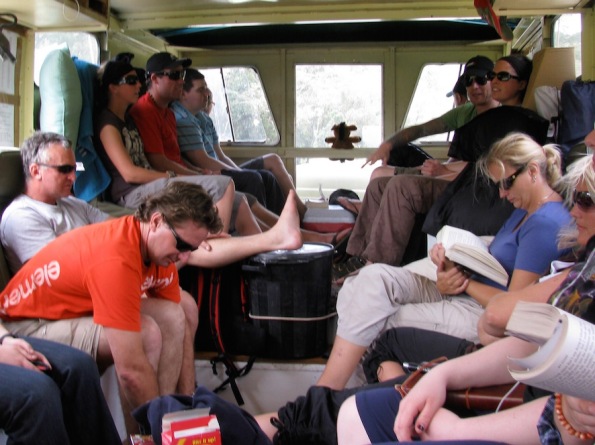
The stuffed animal at the window was our mascot.
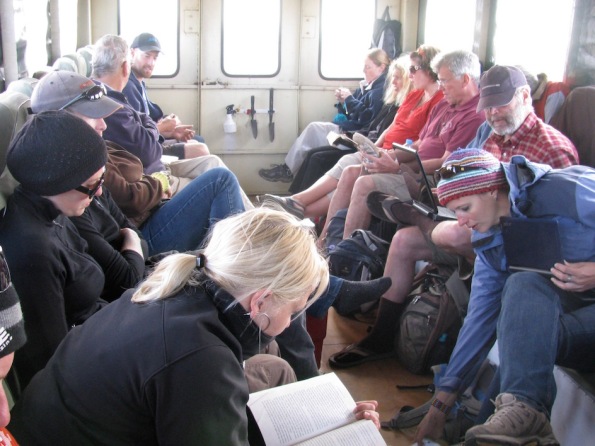
We spent a lot of time reading
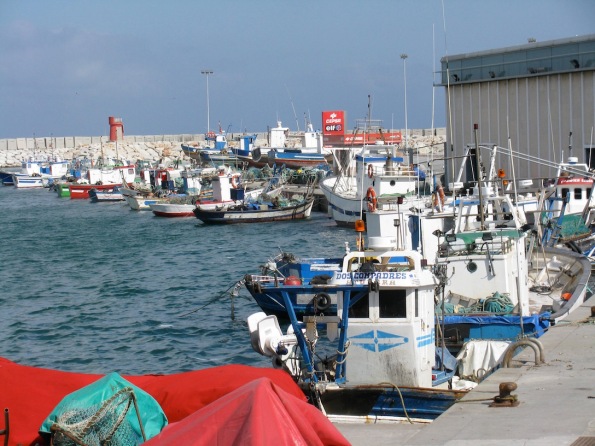
A last look at the small fishing boats in Gibraltar
After several days of camping in southern Spain (see my previous post) it was time to collect the last of our fellow travellers—they were arriving on a flight from London to Gibraltar. Suddenly we were a group of 28 strangers on the road to Algeciras, Spain, which is where the ferry would depart for Africa.
We had a good chance to explore Algeciras. It’s a picturesque town with a fabulous and colourful market, a beautiful town square and some amusing advertising signs—Mona Lisa in curlers. We didn’t make big purchases in Algeciras (really just lunch).
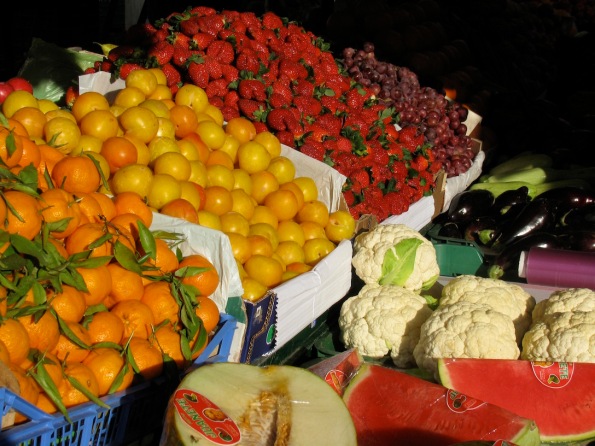
Colourful bounty in the Algeciras market


Our main shopping spree was going to be a three-hour ferry ride away in Ceuta, on the other side of the Strait of Gibraltar. Interestingly enough, even though Ceuta is on the African continent, it is considered to be part of Spain. Go figure.
The Ceuta shopping was incredible because a warehouse there was geared up for bulk buyers. It may be a shopper’s paradise, but it must have its thieving side. I’d never before seen a vehicle chained to a building.
Most of us headed in to the warehouse. As would become the norm, as least two people stayed behind to guard the truck. Then we proceeded to buy mega quantities of milk, cereal, oil, flour, sugar, spices, peanut butter, jam, pasta, tinned sausages. tinned tuna (geez we got sick of tuna), tinned tomato paste, tinned corn, pulses, oats and so much more that I can’t even remember.
I love chickpeas and figured they’d be a great way to ensure at least a bit of protein on our days to cook. So I convinced Chris, the driver, to let me buy something like 20 kilos of dried chickpeas. I used them often over the next months, but only later discovered that Chris hated them. Got to give him credit—he ate them anyway.
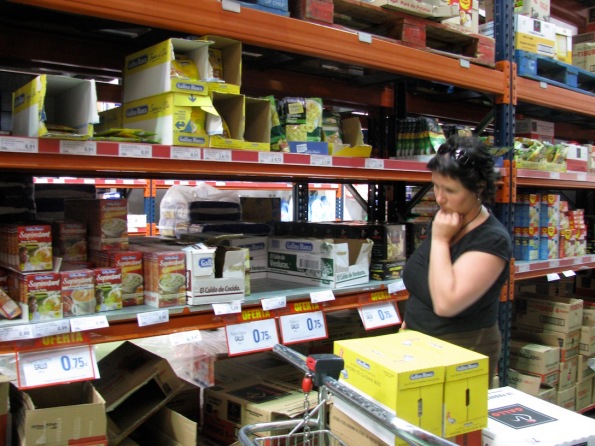
Heather considers what to buy in the huge warehouse in Ceuta
That shopping extravaganza cost about 3000 euros (if I remember rightly) and proved to be ten times more valuable as we travelled down the west side of Africa. Much of that part of the continent doesn’t (at least didn’t then) have supermarkets. Sometimes even the local markets had only limited supplies. I remember a small town in northern Angola that had no shops and only a small market that sold mostly popcorn, peanuts, oranges, soft drinks and beer.
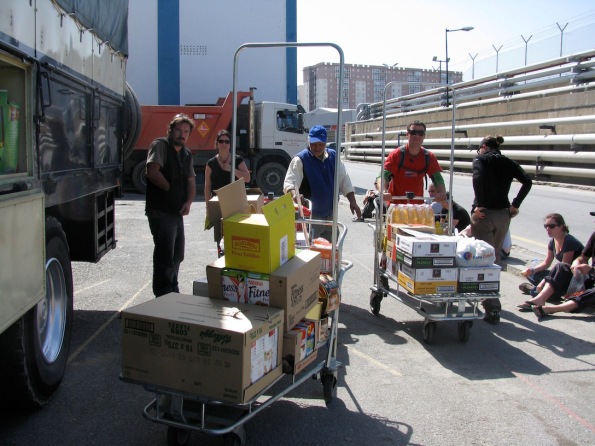
It took multiple trolleys to get everything to the truck


In Ceuta, once the trolleys were wheeled to the truck and everything was packed away, we headed to a petrol station to load up on diesel. It was a picturesque stop, but it took a very, very long time to pump 1500 litres. In the pic at the bottom, you can see the cost for the first 990 litres.
Then it was off to the border with Morocco and the city of Tétouan where my cook group would have its first foray into the local markets in Africa.
My next instalment will be a general introduction to the truck itself. I intended to do that today, but the pics of Algeciras and shopping won out.
Also there won’t be a continuous stream of African posts. I’ll need to mix in posts on Europe, India, Asia and the Americas.
But first a bit about the money.
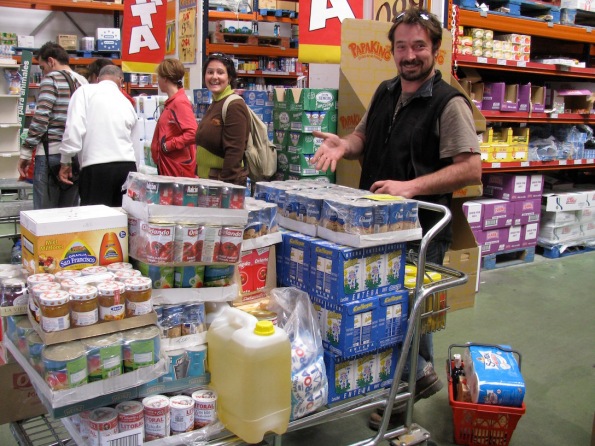
Chris, our driver, with one of many trolleys of supplies
Trip costs and managing the money
Our trip took 43 weeks to go from Gibraltar to Istanbul. We actually arrived in Istanbul on time, even though along the way that seemed most unlikely.
This was eight years ago, and I no longer remember exactly how much the main trip cost. I think it was around $13,000–$14,000 (perhaps more) Australian dollars for both of us. Then there was the local payment of US$3600 for the both of us. The main payment was sent to the company office in the UK and the local payment was given to Chris, our driver.
So what was covered? The ride (43,000 kilometres), the driver (who had done it before and knew his stuff), two meals a day (usually breakfast and dinner) cooked by the passengers, fuel and camping gear such as tents (I loved my tent).
So what wasn’t covered? Visas, airfares, hotels or hostels (there were a few exceptions), insurance, drinks, lunches and other meals out, tips, guides and excursions (some were as cheap as $2 and one was $500).

Banking is less straightforward in Africa. So the local payment was used for the everyday expenses such as that big shop in Ceuta, the fuel, campground fees, daily shops in markets, tyres (wait until you hear about the tyres), truck maintenance (remember my mention of George the radiator), bribes (yep, there were bribes) and much more.
For the year, Poor John and I took a credit card, about US$10,000 in cash and some euros. About a third of our cash was carried in a nifty belt I bought that was a mix of fabric and leather. A zipper ran down the middle of the inside of the belt and we folded $100 bills lengthwise and slipped them inside.
No one, and I mean no one, would have ever realised this belt was a gold mine. It worked really well until I lost 10 kilos and ran out of space to punch new holes in the belt. That didn’t matter too much because by the time I had lost most of the weight, we had spent quite a bit of the money and I could retire the belt. 🙂
The truck also had a hidden safe (called Trevor) and everyone stored money and valuables in the safe. Trevor had multiple keys and we took turns being responsible for them—couples couldn’t hold keys at the same time. No one ever had money or valuables go missing.

Our first camp in Africa
And some last comments about credit cards and the money.
First off, we didn’t run out of money. We hardly ever used the credit card until late in the trip. For some reason, the west side of Africa preferred Visa over MasterCard. We had only MasterCard. We applied for Visa before departure, but the bank mistakenly sent us another set of MasterCards. Ugh!
About the time we were travelling in 2009, we saw an article that said 1/3 of the US dollars in circulation outside the USA were counterfeit. Not surprisingly, we were told to bring only unmarked, crisp bills (no folds or tears) with dates of 2006 or later. I suspect these rules have been updated to specify much newer bills only.
Overall, we found that it was cheaper to travel than to stay at home. It helped that our daughters and one of their friends moved home to look after the house, garden and dogs.


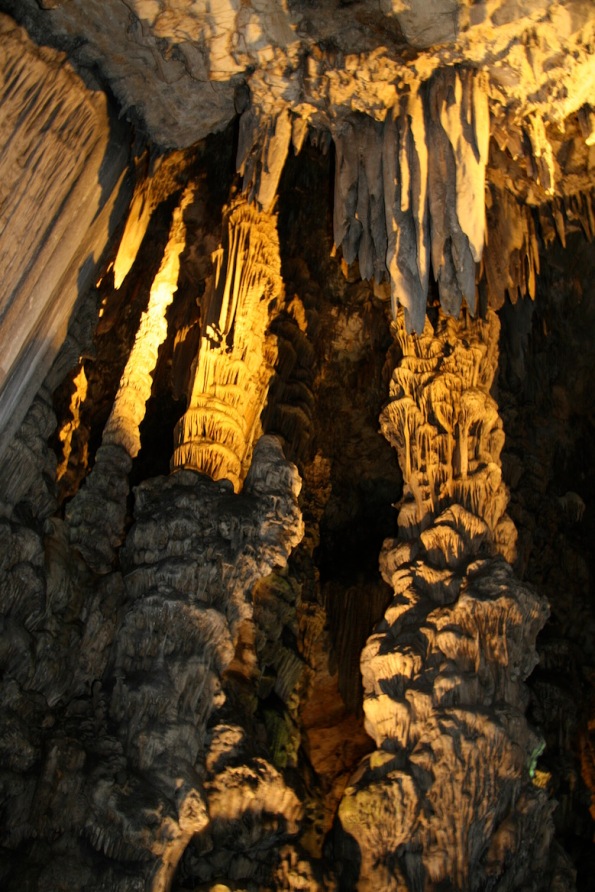
Looking up in St Michael’s Cave. It’s one of 150 caves in Gibraltar Rock
Back in 1973, Poor John travelled down the middle of Africa—on the back of an ancient Bedford truck. He remembers bouncing across 2000 kilometres of unsealed, corrugated road surfaces from Algeria to Kenya, which was where he could take a much-needed shower and collect mail before heading on to South Africa.
In 1977, I travelled down the east side of the continent, spending a lot of time traversing The Sudan from the top to the bottom. My travels were by train, ferry, car (Peugeots), camel (just a short stint), airplane and bus (it broke an axle).
After we married in 1980, we agreed it would be good to do an African overland journey again—together.
We never thought it would take 29 years to happen. But there were kids, jobs and much more. For example, Poor John’s Aunt Esther came to live with us early in the year 2000 when she was still 89. Plus, we had exchange students (more than 20) and dogs (not quite so many).
Soon after the internet was widely available (in the mid-1990s), I started researching the prospect of doing a longish overland journey in Africa. By the time we booked, more than 10 years later, there were two companies providing lengthy Trans-Africa trips—African Trails and Oasis Overland.
We signed up for the African Trails option. It would start in Gibraltar (although we camped first in Spain) and take us across the Mediterranean Sea (by ferry) to Africa then down the west side of the continent to South Africa. We’d do a U-turn there and head up the east side, finishing in Istanbul, Turkey. It would be 30 countries in 43 weeks.
It was never going to be easy, but it was always going to be fascinating.
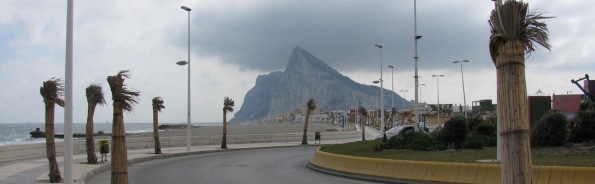
Rock of Gibraltar from a distance
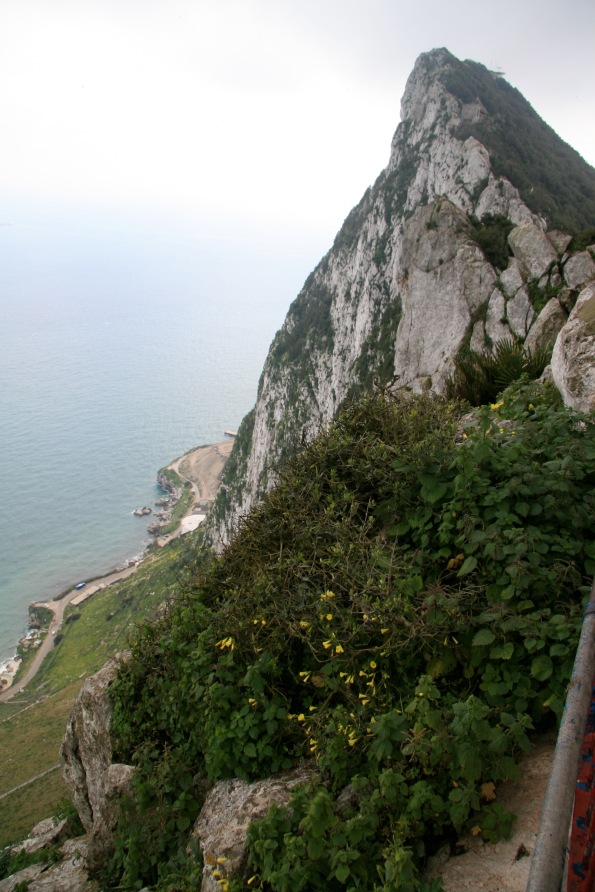
Rock of Gibraltar up closer
Even today, the Af Trails website says ‘We go through areas where no tourists go, the roads can be bad, food can be limited to what we have stocked on the truck, campsites are few and basic, visas can be hard to get, and communication to the outside world limited or unavailable at times.
‘We guarantee: we’ll break down, that we will have to wait somewhere we don’t really want to be for visas, spare parts or just for someone to open a closed road, and we’ll have to dig the truck out of mud and sand.’ It goes on to recommend not to book flights home until the trip is finished.
The website also reminds prospective travellers that they need to ‘be prepared to work as part of a team and to share with the others on the trip.’ There will be cooking over open fires, collecting firewood, washing in rivers, pitching tents (sometimes in the rain), sleeping under the stars, meeting unforgettable people, and seeing unimaginable and far-flung sights.
Guess what? It was all true.
Just reading the website advice reminds me of cooking a meal in Togo while standing in ankle-deep water in the pouring rain, pushing the truck out of sand again and again, sitting in Cameroon waiting for visas to Gabon, taking way too many cold showers, shopping in amazing markets, and oh-so much more.
It’s time to re-live those memories, so I’ll be writing more about our African adventures. These posts will be mixed up with our other—more recent travels.
Today I’ll start with Gibraltar, which isn’t Africa, but was where the trip began.
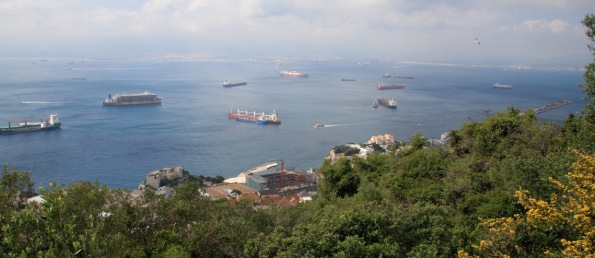
Overlooking Gibraltar Harbour
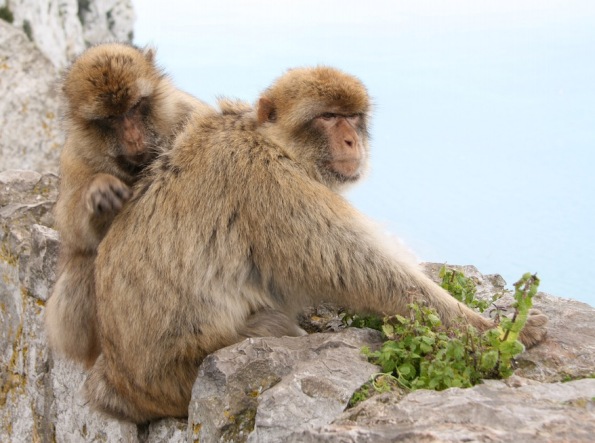
Barbary macaques grooming one another
We arrived a few days early and joined some fellow travellers at a campground in La Linea de la Conceptión, Spain (just metres from Gibraltar). That meant we had plenty of time to explore the British territory, and for me to catch up with Jane, who’d been an ‘imaginary’ online friend for many years.
Jane very kindly gave us a tour of her Gibraltar and showed us the wonderful sights. We had the chance to drive up the Rock for the view, meet plenty of the Barbary macaques that swarm over the Rock, and visit St Michael’s Cave, a network of limestone caves nestled within the Rock.
We also learned how to put up our tent, bought a couple of pillows to sleep on at night and sit on during the day, and discovered that at least two of our fellow travellers would be at one another’s throats about half of the trip,
On the official start day, we picked up the last of our fellow travellers, who had flown in to Gibraltar from London. The landing strip in Gibraltar goes across the main road, so all traffic gets stopped when a plane comes in.
So now we were 28 people in a truck built to hold 30. Ages ranged from 18 to 61 (Poor John was the oldest). Half the group was Australian or New Zealander, and the rest were a mix of Americans, British, South Africans and a Norwegian. There would be nationality changes along the way, but that’s enough of an intro for now.
The next African instalment will be to introduce the truck—which remained unnamed—and detail what we stocked up on at the beginning. The radiator got a name—George—but mostly because it was an ongoing problem.
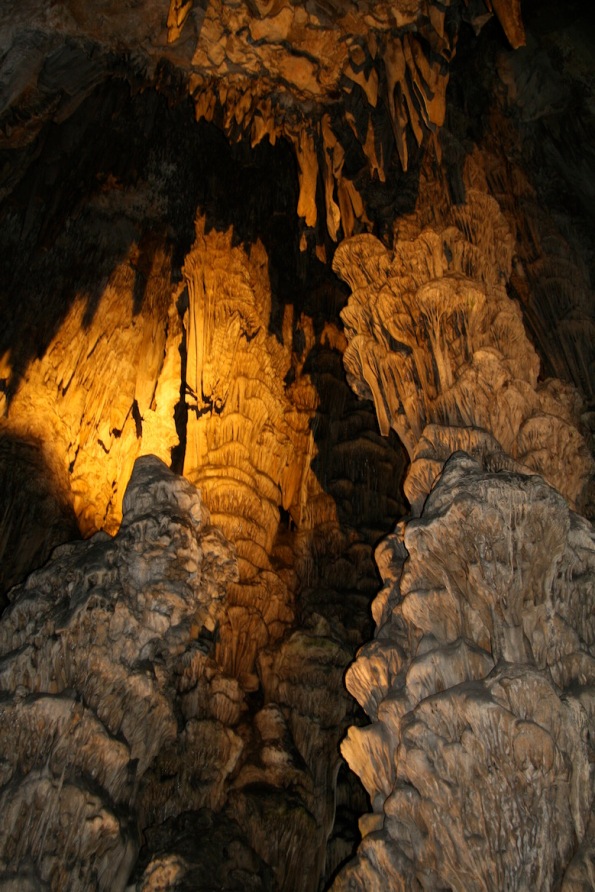
More of St Michael’s Cave
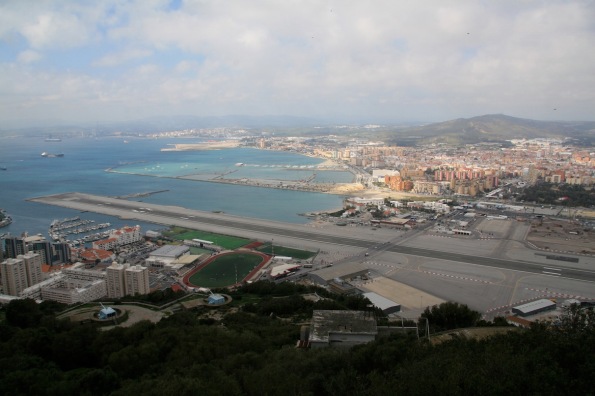
Can you see how the runway goes across the main road?

