
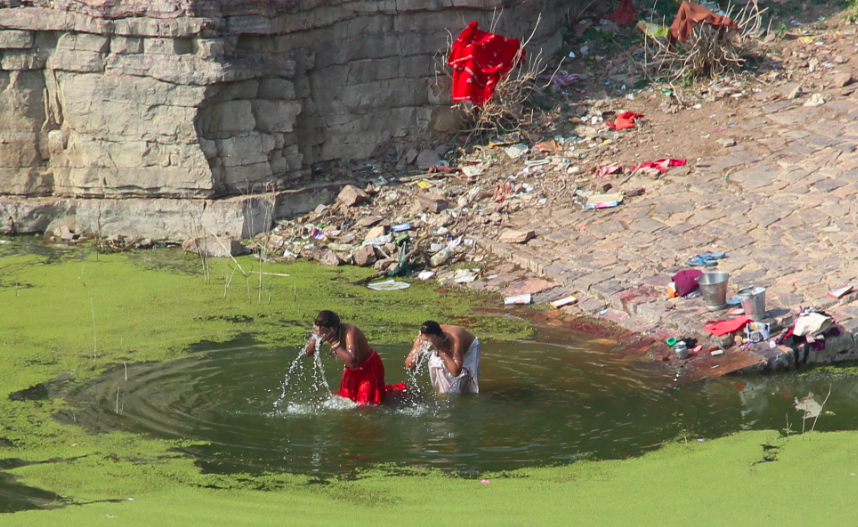
Doing laundry and a bath, Indian style
I love overland travel, but there are some drawbacks. As far as I’m concerned, the biggest pain is hand-washing.
Geez, I hate doing laundry. But I also hate being gouged. When someone wants to charge me 50 cents to do a crappy job of washing my socks or a pair of undies, I decide that I might as well do my own crappy job for free.

Laundry drying on a rooftop
So I’ve done laundry all through India. Luckily there was a scrub brush on the van, so I was able to give the really, really dirty parts some tough love. Not that it made much difference.
I laid Poor John’s super grubby camping pants on the bathroom floor and tackled them with the scrub brush. The backs of the legs, from the calf down, were probably the filthiest I’d ever seen. The scrubbing did not make one grain-of-dirt difference. When he put them on after they had dried, they looked as if they hadn’t been touched with a brush, let alone soap and water.
ARRRRRRRRRRGGGGGGGH

Laundry at the caretaker’s place in a mosque. The woman (in green) on the right is in the midst of praying
These pants might get washed at home—or thrown away. As Poor John graciously said, Things aren’t meant to last forever.
If you follow this blog, you probably already know how much I detest hand-washing and how bad I am at it. The episode in Burkina Faso is a good example.
But I still love laundry—I mean I love looking at laundry. Surely there’s a need in the world for a book of 1000 clotheslines you must see before you die.
And I must remember to share the delightful article in the Sydney Morning Herald, discussing the merits of a well-hung clothesline.
For now I’m sharing some of my Indian laundry shots. Just wish I snapped more pics of clothes drying on bushes, lawns, trees and rooftops.
Laundry does have some positives aspects. We were invited to a wedding while I was hanging out laundry on the rooftop of a hostel.


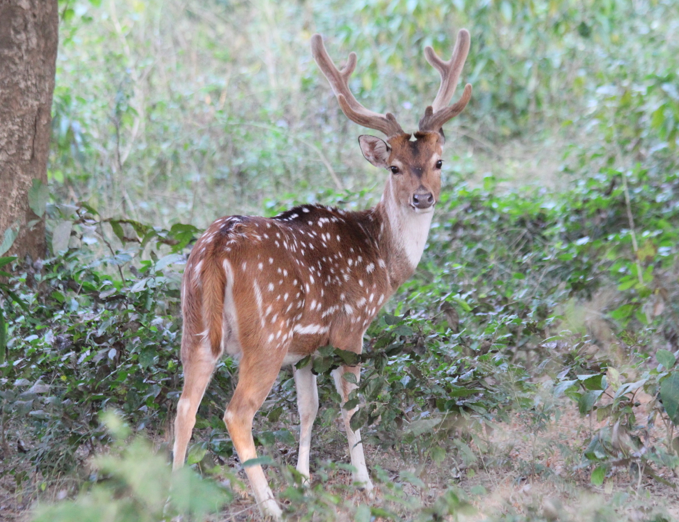
A chital pauses to inspect us
I can confirm that the spotted deer—or chital—is the most commonly found deer in India. We saw them almost everywhere. Even in national parks where we saw nothing else, we still saw spotted deer.
But I’m not complaining. Chital (as spotted deer are known in India) are gorgeous examples of the deer family, and a constant reminder that India’s countryside is alive with animals other than stray cows.
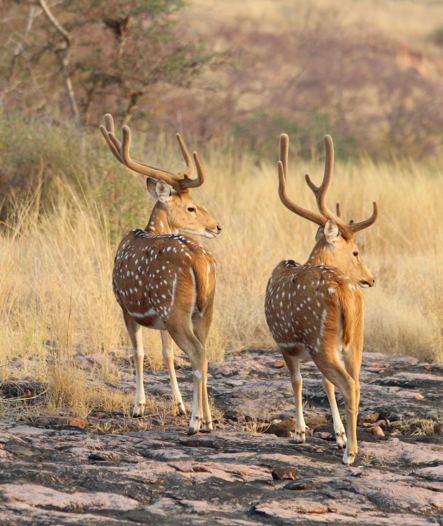
A couple of bachelors showing off their downy antlers
Chital live in herds of 10 to 30 females with a few stags. They are equally comfortable living in the extremes of dense jungle and open grasslands. The pics are an indication of their varied landscapes.
Bachelor herds are also common, and the display of antlers is quite impressive. Apparently males eat their antlers after shedding them. Most of the males we saw had abundant down on their antlers, which they must rub off before doing ‘battle’ in the mating season.
Most of chital we saw were living near to grey langur monkeys. Chital and monkeys cooperate in their efforts to stay out of the mouths of their main predators—tigers, leopards, wild dogs and jackals.
While the chital’s favourite food is grass, they are also fond of the half-eaten food langurs drop to them.
Chital are quite skittish and are sometimes frightened by the sound of a leaf falling. Anand and Deepti explained that chital have a good flight tactic. When they start to flee from perceived danger, their tail pops straight up, showing a flash of bright white. The tail remains up—as almost a signal to the predator—until the chital reaches dense bush. The deer bounds into the bush and drops the tail immediately, leaving the pursuer wondering where the tail went.
Even though they only have one fawn per year, chital numbers are healthy. Pench National Park, where we saw our first chital, has more than 15,000. I was surprised to learn that chital were introduced to Australia, especially Queensland, more than 200 years ago. Maybe I’d better go have a look.


Sambar deer showing off her satellite-dish ears
Sambar deer may have an acute sense of smell and ears like satellite dishes, but these don’t always keep them from being a tiger’s first menu choice.
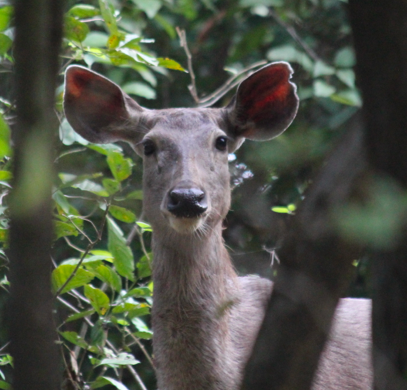
Who has big ears?
This species of deer often signs its own death sentence. Unlike the spotted deer, which shouts out a quick alarm and flees at the first sign of a predator, the sambar stands and watches, giving alarm calls until the danger passes. It’s that failure to run that makes the sambar so desirable to the tiger—and such an easy target.
Everyone on a safari drive listens intently for a sambar deer’s alarm call. Repeated calls are a sure sign that a tiger, or other predator, is about, and all the Gypsies (4WDs) in a park will race toward the sound in the hopes of a spotting a tiger.
Apparently dholes (wild dogs) and leopards aren’t all that interested in sambar, unless the deer is young or injured.
With the sambar being so popular with tigers, it’s lucky the deer is large and their population is healthy. Sambar deer are not endangered. In fact, they are the most widely spread deer species in the world, occurring in most Asian countries. We saw them in every national park we visited, and often standing along the roadside outside parks.
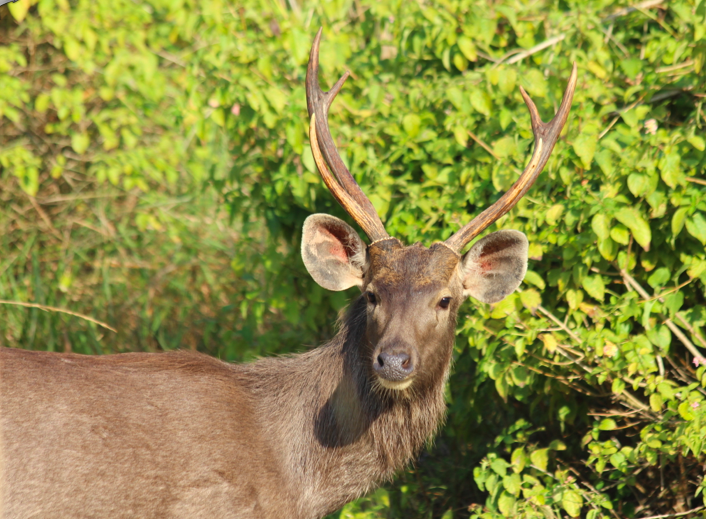
A sambar in his woodland element
They prefer to live in woodlands near water and, depending on the local habitat, will munch their way through grasses, fruit, shrubs, trees and water plants.
Adult males can measure up to 1.5 metres in height at the shoulder and can weigh up to 350 kilograms. Some have even reached 550 kilos. Of the cervid species, only the moose and the elk grow larger. It takes a tiger four days to polish off a large male sambar.

The gypsies rush to follow a sambar alarm. We did see a tiger here—but only a glimpse through the brush.
As with all deer, sambar lose their antlers every year. In case you didn’t know, that’s one of the main differences between deer and antelope—deer lose their antlers annually and antelope don’t.
The breeding season is during November and December, but we saw plenty of young, which indicates breeding may go on for a lot of the year. Gestation is six months, so maybe the little ones we saw were only six months old.
Assuming a tiger doesn’t get one, a sambar can live 16 to 20 years. Males tend to be solitary except during the rutting season. Surprise! And females live in small herds.
I love the sambar. They look so gentle and exude so much dignity.


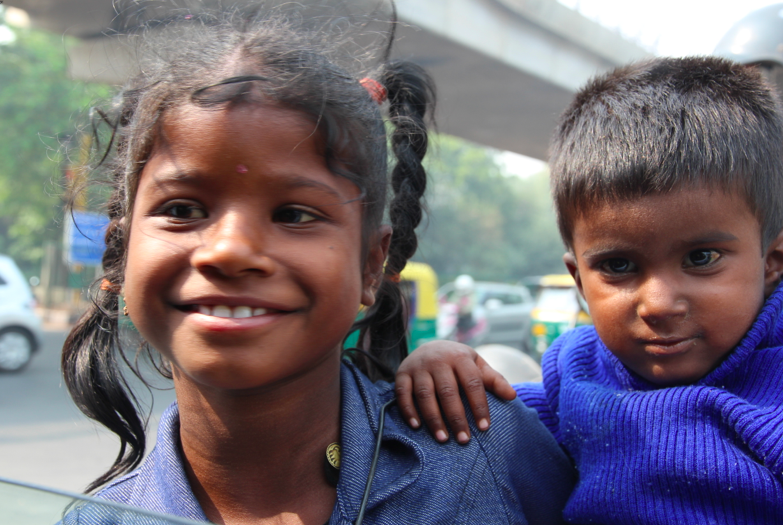
This young lady got 10 rupees for doing a cartwheel. She put her brother down first
India has no shortage of beggars, but I haven’t seen all that many buskers (street performers, especially musicians).
I’ve written before about my donation policy. I’ll always give to buskers, unless someone is so bad that they shouldn’t be encouraged, but I almost never give to beggars.
This topic comes up after several encounters over the last few days.
There weren’t any beggars in the national parks and villages. But now that we’re in bigger cities, the hands out, asking for handouts, have been common.
Three days ago in the touristy hill station of Mussoorie, a well-dressed woman and boy in school uniform walked toward me on the street. As she passed, she pleadingly stuck out her hand on the off chance I might put something in it.
That’s not a professional beggar so much as an opportunist. But how do people learn such behaviour? They learn it because someone has put money in that randomly outstretched hand.
A group of children swarmed around me the other morning in a Jain temple. Their hands were out and they tugged on my clothes and arms. I spoke to them in English, at length. I won’t give you money just for asking. Do something to entertain me—a headstand, a dance, a song, anything. On my second day in India we were stopped at a traffic light and a little girl did a cartwheel. I quite willingly gave her 10 rupees. And finally I said. You haven’t understood a word I’ve said. Go to school. Learn English. Begging is not a good career move.
Or maybe it is. Anand and Deepti said these days beggars are rejecting donations of less than 10 rupees. They also said many beggars in India are becoming quite rich. I already suspected that. When I lived in Egypt in the 1970s, one of the Cairo’s well-known beggars died in the street. He had about $25,000 hidden in his clothing.
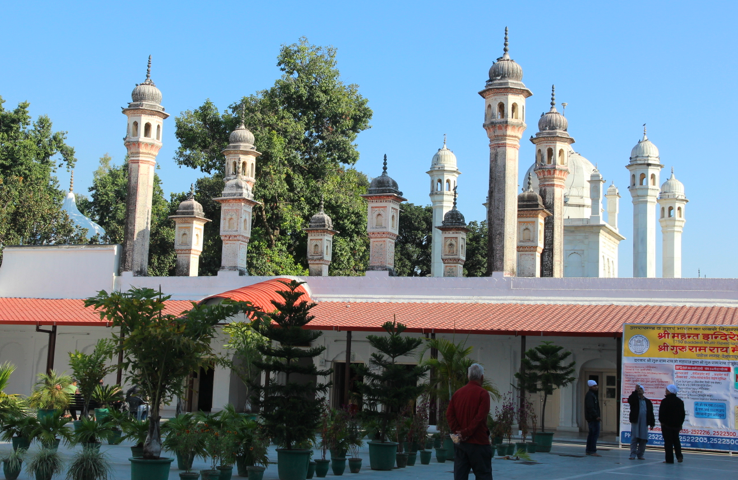
Strolling through the temple grounds before the kids swarm
Anyway, the children ran off when three women, who had been sitting nearby, called to them. They all left the temple together from a side entrance. Ten minutes later when we left by the front entrance, the same kids were there, badgering me again—hoping that persistence would pay off. It didn’t.
But the recent begging has reminded me of a sign I saw a few years back in Lalibela, Ethiopia. It was stuck on the side of a box in a restaurant. I can’t remember the exact words, but basically it said don’t give money or things to beggars, and especially don’t give anything to children. We know who needs help in this town. If you want to make a donation, put it in this box. So I did.
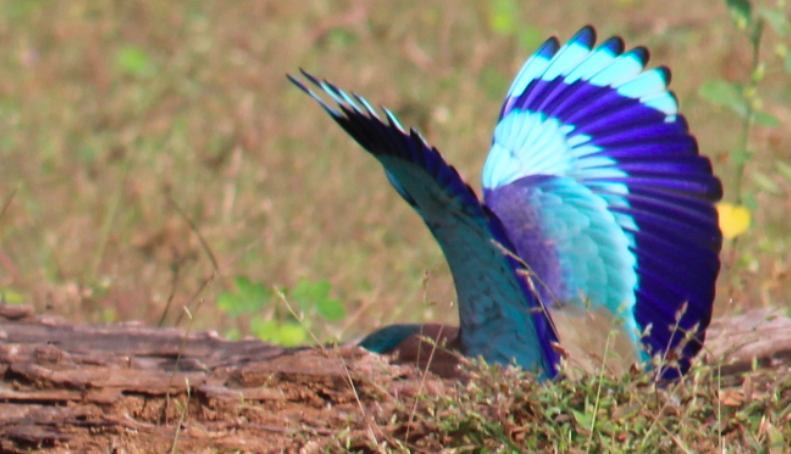
Our first kill—an Indian roller swooping on a frog

Pench’s beautiful scenery
In just four weeks, we’ve visited seven of India’s many animal reserves and Pench National Park in Madhya Pradesh—the first one we went to—has remained unanimously at the top of our favourites list.
Named after the river that flows through the park, Pench has been a national park since 1983 and a tiger reserve area since 1992. Two years ago, it won the country’s Best Management Award for parks, and it’s easy to see why.

Our very first ride in a Gypsy
Everything ran on time, the guides and drivers were knowledgeable and enthusiastic, the gypsies (4WD-drive vehicles) were well maintained, the visitors’ centre was informative and the wildlife was abundant.
Even though we didn’t see a single tiger or leopard at Pench, the park rewarded us with wonderful and up-close sightings of dholes (wild dogs), chital (spotted deer), sambar deer, rhesus macaque and grey langur monkeys, guar (bison), wild boars, jackals, birds galore, gorgeous landscapes and our first ‘kill’ of the trip. We saw an Indian roller swoop down and grab an unsuspecting frog for lunch.
No other park—with perhaps the exception of Keoladeo with all its birdlife—gave us so many sightings and so much variety.
We had four safari drives in Pench, and it was always going to be a tough act to follow. Trust me, we gave all the other parks a decent chance, but only a couple came close.


I promise to give you a rundown on each of them, so you know how each fared. The following list on national parks will gain links as each post is completed—Kanha, Panna, Ranthambore, Keoladeo, Corbett and Rajaji,
For the most part, the lesser-known parks gave us the most satisfying experiences, so popularity has nothing to do with results.
But back to Pench. One of the park’s biggest claims to fame is that it served as the inspiration and setting for Rudyard Kipling’s most famous work, The Jungle Book, a collection of stories including ones about Mowgli. Kanha National Park likes to say it was the inspiration, but Pench has the honour. Although, when Kipling was alive, the two parks were joined, so perhaps they can share.


Pench spreads over 750 square kilometres, including the park itself, the Mowgli Sanctuary and a largish buffer zone. The park claims to have 44 species of mammals, almost 300 of birds and 50 each of butterflies and fish.
It’s also where we saw fine examples of teak, saja (crocodile bark) and Indian ghost trees. Interestingly, there is a worm that attacks the teak trees in Pench—we didn’t see this much elsewhere. The worm doesn’t kill the tree, but it chomps its way through the leaves.
Next time I get to India, Pench National Park will be at the top of my to-do list. I’m guessing the BBC liked it too. They used the park for the 2008 documentary wildlife series, Tiger: spy in the jungle, narrated by Sir David Attenborough.
P.S. I’ll do separate posts on the various mammals, so am using just a few pics of each here. Here are links now to the gaur, jackals, wild dogs and sambar deer.
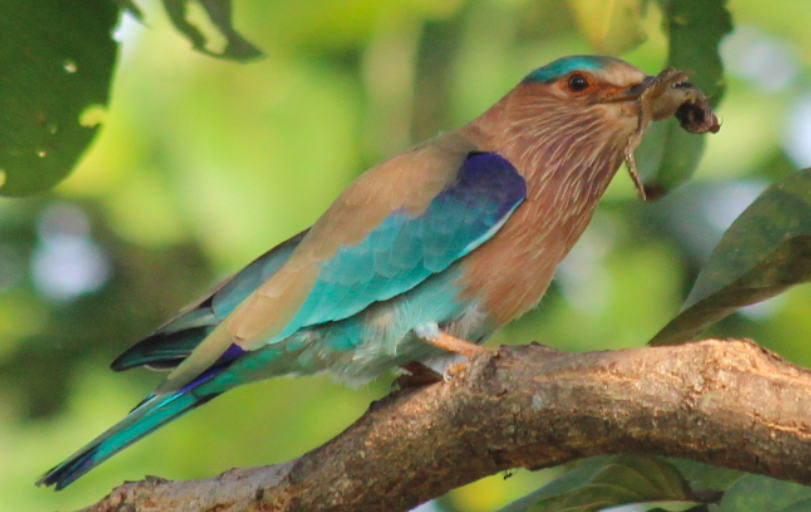
Indian roller with his frog for lunch
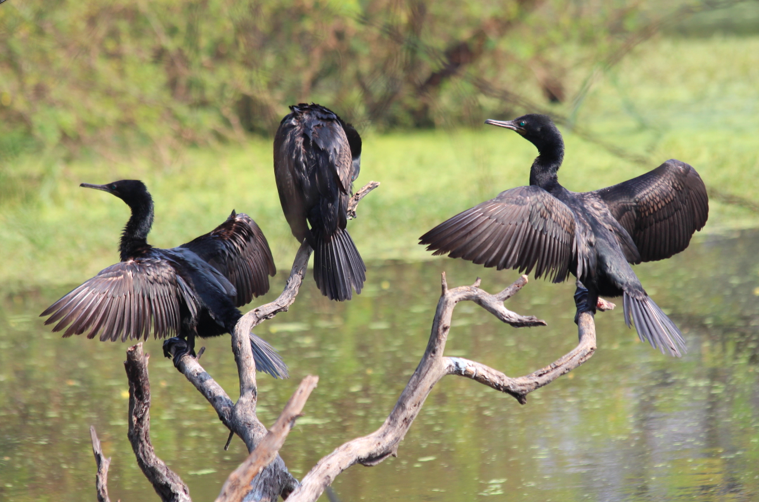
Two cormorants drying their wings and a third just sitting there being lazy
Squeamish about snakes? There’s a pic of one snake and two lizards in the mosaic at the very bottom of this post. When it comes to wetlands, India is blessed. Almost every region of the country has at least one sort of wetland, and we were lucky enough to visit the famous Keoladeo National Park near Bharatpur. I’ve added some details at the bottom about the park and wetlands in general, but first a rundown on our two days—one on bicycles and one on foot—of exploring and twitching (birdwatching) in Keoladeo.
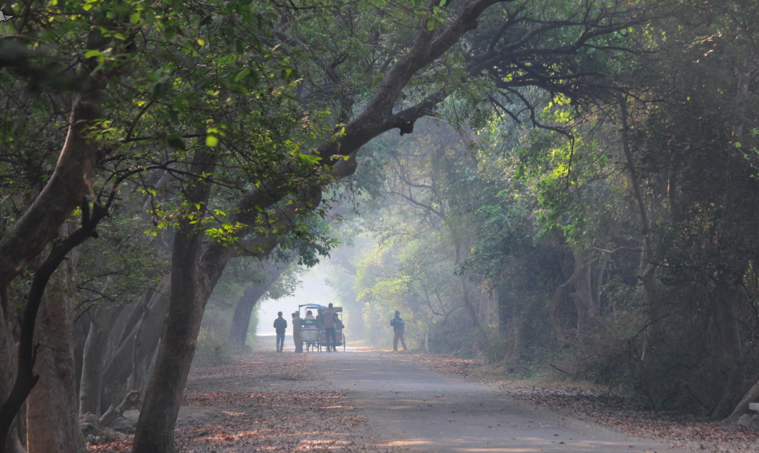
Keoladeo in the morning mist
Enjoying the wildlife of Keoladeo I never thought much about birds (except chickens and Thanksgiving turkey) until I moved to Australia in the early 1980s. I was gobsmacked by the colour, abundance and noises of the birds there—from rosellas to cockatoos to emus to kookaburras to galahs to budgies and more.
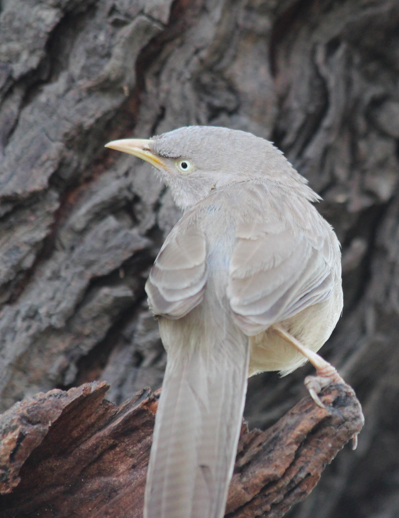
Jungle babbler
My enthusiasm for watching these amazing collections of feathers—as well as the birds I encountered on overland trips in Africa, South America, across Asia and now on the Indian subcontinent—has certainly turned me into at least a novice twitcher. So our visit to Keoladeo was a huge bonus. I’d never heard of the place until I got to India, and then I learned that many ornithologists, twitchers and naturalists consider it to be the best bird sanctuary in the world. The park stretches over 29 square kilometres and a bike is a great way to explore. That said, it’s not necessarily a comfortable way. We took quite a bit of time choosing bikes that we thought were the right size—with a bit of adjustment—for each of us, only to learn that the park had no spanners (wrenches) so it was impossible to adjust any bike to our heights. Even worse, most of the seats tilted up rather than down. Ouch! But we couldn’t complain about the price. Poor John took the el cheapo model that cost him 42 cents for the day. The rest of us got expensive numbers that cost 67 cents. We could have taken rickshaws for a rock-bottom hourly rate, but we reckoned that after days of sitting in the van, it was nice to stretch our legs and get some real exercise. Even with bikes, we made slow progress through the park, stopping every few metres to look at yet another bird nesting, hunting, eating, sunning or flying. It was amazing to see so many species living together—often in the same tree.
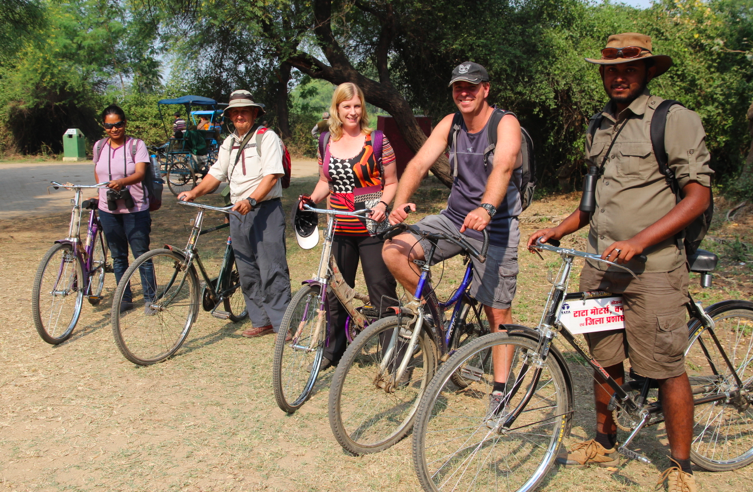
On our bikes with Deepti, Poor John, Renae, Gary and Anand

A pair of Sarus Cranes stroll through Keoladeo
Deepti’s keen eyes spotted a pair of Sarus cranes in the distance. Although we knew we were lucky to see them at all, we wished we’d been able to catch them performing one of their showy dances that involves bowing, leaping and prancing with outspread wings. At 1.6 metres high, Sarus cranes are the world’s tallest flying birds. They are also the park’s official emblem.


But Keoladeo’s flashiest birds have to be the metre-tall painted storks. These non-migratory birds love company and usually live in large colonies near water. We saw hundreds, if not thousands, of them. In fact, we saw so many, I decided they deserved their own post. Breeding along with the painted storks, and often in the same trees, are herons, cormorants and spoonbills. I especially loved seeing cormorants and darters (also known as snakebirds) drying their wings after their fishing expeditions. I will never be able to list all the different water and land birds we saw over the two days we spent in Keoladeo. They included all the ones mentioned above plus warblers, babblers, eagles, falcons, egrets, spoonbills, ibises, bulbuls, chats, hornbills, wagtails, flycatchers, Indian rollers, kingfishers, coucals and crows. Pics are of ones I was able to photograph clearly.


Our second day in the park was even more ‘productive’ than the first. Bikes get you around fast, but sometimes too fast. You notice more when you walk. And, as Poor John will confirm, you are better able to ‘sneak up’ on birds and animals when you aren’t riding an el cheapo bike that squeaks with every turn of the pedal. That said, his squeaky bike couldn’t drown out the sound of catfish splashing around loudly in the swamps and ponds. Keoladeo is home to numerous species of fish, snakes, turtles, amphibians, mammals and invertebrates (we saw so many bugs and butterflies when we were on foot, that I’ve done a separate post on them).


While we never saw any of the many species of native cat living in Keoladeo, we did encounter spotted deer (chital), blue bull (nilgai), jackals, monkeys and feral cattle. Poor John got caught in the midst of a mini cattle stampede. A lot of people were milling around at the end of a long path, including some over enthusiastic photographers (no not me) who may have spooked the cattle. Suddenly they bolted around Poor John and into a nearby pond. Fortunately their spatial awareness was as good as most motorists’ and they managed to avoid knocking him over. In addition to enjoying all the wildlife, we stopped by the small temple, after which the park is named, and the Salim Ali Visitor Interpretation Centre. Dr Ali first set foot on the Keoladeo wetlands in 1935. He promptly became its guardian angel and was instrumental in ensuring that it was designated a national park. The centre is well set out and informative, and certainly a fitting tribute to a man who was obsessed with birds and this wilderness haven.
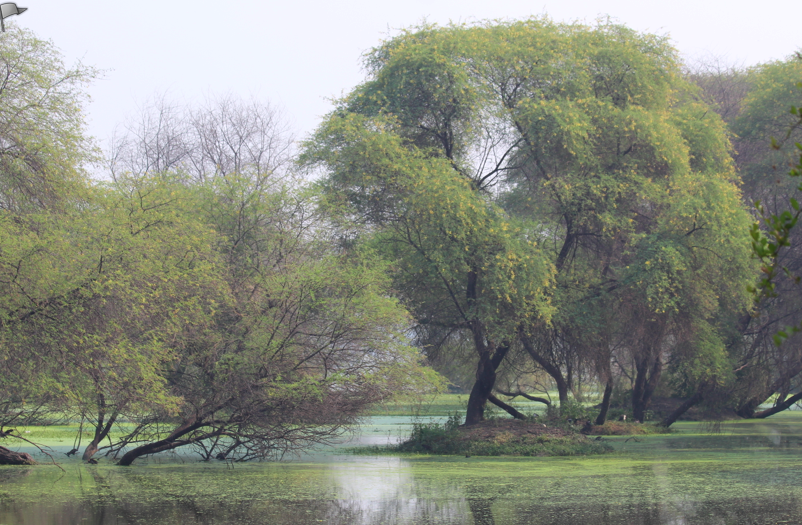
Keoladeo wetlands a haven for resident and migratory birds
A bit about Keoladeo Keoladeo, a bird sanctuary, is an official Ramsar site or ‘wetland of international importance’. India is party to the intergovernmental treaty—Convention on Wetlands—signed in Ramsar Iran in 1971. Wetlands are the kidneys of the earth, absorbing chemicals, filtering pollutants and sediments, and cleansing million of litres of life-bearing water. They are a source of medicines, food, fuel and building materials. Above all, they provide a home for thousands of species of birds, mammals and other animals, and plants. More than 40 per cent of endangered species depend on wetlands to live.


There are more than 1500 Ramsar sites worldwide, and participating countries commit themselves to actions that recognise the planet needs wetlands not only for their species richness, but also because they are vital to sustaining the water systems that support human life. Keoladeo has been important to India since long before Ramsar, but not always for conservation reasons. Around 1850, the park’s natural depression was converted into a site for deer shooting parties. Fifty years later, work began to transform it into a duck-shooting reserve. Dykes were constructed to increase the area’s water-holding capacity, and the reserve was flooded for the first time in 1901. The newly created wetland also helped to protect Bharatpur from annual flooding.


The water brought the birds and the birds brought the hunters. A couple of shocking statistics stand out on the concrete pillars that recount past hunting expeditions. Those were times when more than 4000 birds were shot in a single day. The most disturbing tally was from 12 November 1938, when the then Governor General of India, His Excellency the Viceroy Lord Linlithgow, and his party bagged 4273 birds using just 39 guns. Luckily Keoladeo Ghana (as it was then known) was declared a bird sanctuary in 1956. For another decade, the Maharaja of Bharatpur retained hunting rights for himself, his guests and a few state guests. But for the most part, the guns were abandoned. The last leopard was shot in 1965. Several other official designations were made over the years, until 1981 when Keoladeo became a national park and a Ramsar site. Four years later, UNESCO recognised it as a World Heritage site.
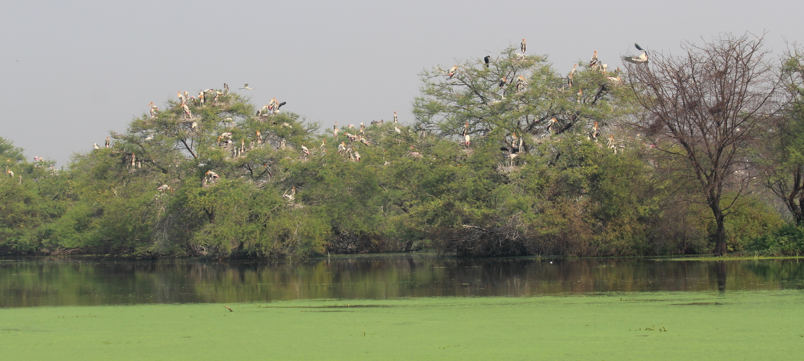
About 130 species of bird use Keoladeo as their breeding ground
Today the park draws visitors from all over the world. Things are pretty quiet, tourist-wise, during the monsoon months of June to September. Throughout the monsoon, the insects, plants and fish prosper and multiply (up to 65 million fish fry and fingerlings per year) in preparation for the deluge of visitors who start to arrive in mid-September. That’s when all kinds of two-legged guests turn up—from tour groups to migratory birds that are often escaping harsh winters in Tibet, Siberia, Europe and China. Birds numbers reach a peak in December–January. While the park has some water year-round—thanks to the Gambhir and Banganga Rivers, Ajan Reservoir and Ghana Canal—levels subside drastically and birds begin to depart in March–April.


More than 370 species of bird have been sighted in Keoladeo, including five critically endangered, two endangered and six vulnerable species. About 230 non-migratory species remaining resident year-round. Up to 130 species use Keoladeo as a breeding ground and it is not unusual to see as many as 17 species and as many as 100 nests sharing the same tree. But the park isn’t just about birds It’s mosaic of dry grasslands, woodlands, swamps and wetlands also supports 45 species of fish, 13 of snakes, seven each of amphibians and turtles, five of lizards and 27 of mammals. In addition, there are almost 400 floral species, as well as countless butterflies and other invertebrates, which provide plenty of food for the birds and other residents.



 Hello, called out a male voice.
I looked up from hanging out laundry on the roof of our hostel in Bharatpur. There he was on the next-door roof only a metre away.
Hello, I replied. He motioned me to approach. I waved, smiled, helloed again and hung up one of Poor John’s shirts. Hello, he called, come, come, he insisted.
Turns out he wants to invite us to his sister’s wedding that night. But we are six people and these are the best clothes we have, I said, pointing to my camping pants and merino top. This news didn’t faze him in the slightest.
Fortunately, Anand appeared on the roof and chatted with the fellow in Hindi. Soon it was all settled—we were going to a wedding.
As the day progressed, the neighbour on the other side of the hostel invited us to his daughter’s wedding. Two weddings in one night, and we look like a bunch of hillbillies! But I guess we were lucky to be limited to only two.
The months that follow Diwali are considered auspicious for marriage, and across India there are hundreds of weddings every night of the week until January. Perhaps it’s also auspicious to have a few foreigners among the guests.
Of course, weddings aren’t limited to a single night. Festivities spread over most of a week. They begin with female friends and family members singing for the couple, followed the next day with the women having their hands and feet decorated with red–orange henna dye.

Henna on hands
Day three is set aside for the bride and groom’s skin treatment of turmeric, sandalwood and oil. This is supposed to give them a radiant glow, which I suppose is confirmed by the photos.
The next day is for worshipping in the temple. There’s another round of worshipping on day five, which is also the day of the actual wedding and reception.
During the afternoon of ‘our’ weddings, three groups of women went by on their way to temple. I might not have noticed except that an enthusiastic band of musicians accompanied each group.
Come evening, there was some disagreement as to which wedding we’d attend first. The second invitation was from a good friend of the hostel owner, whereas the first was from someone not so well known.

Sugary sweets in sugary syrup
The better-known neighbour took precedence, and soon we were on our way to a very large and lavish affair. We snaked through traffic, and past three or four other weddings that were in progress. Huge floodlit, decorated entryways make it easy to spot a wedding venue.
As we approached our event, we passed a groom on horseback (a groom normally arrives on a white mare) and it was only later that we were told that he had nothing to do with the wedding we were attending.
Once inside we discovered that weddings are not about the religious ceremony—that happens later in the night after all the guests have gone home. We’d been invited to the reception and gift-giving.
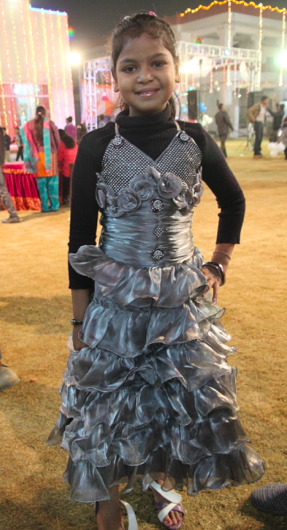
Silver party dress
And what a shindig it was! Music, flashing lights, crowds of all ages and food, food and more food. We added our cash gift to the collection table and made a circuit of the buffet—the array of food was ginormous.
I photographed many wedding guests. One young fellow popped up in almost every pic, and we later learned that he was the bride’s little brother.
But we foreigners were certainly the most popular photo subjects. I’m sure our faces appear on countless Facebook pages. We had to leave before the bride and groom ever appeared, so in future they’ll probably always wonder who we were.
After a quick phone call to the bride’s brother (remember him from the rooftop?), we were on our way to the next event.
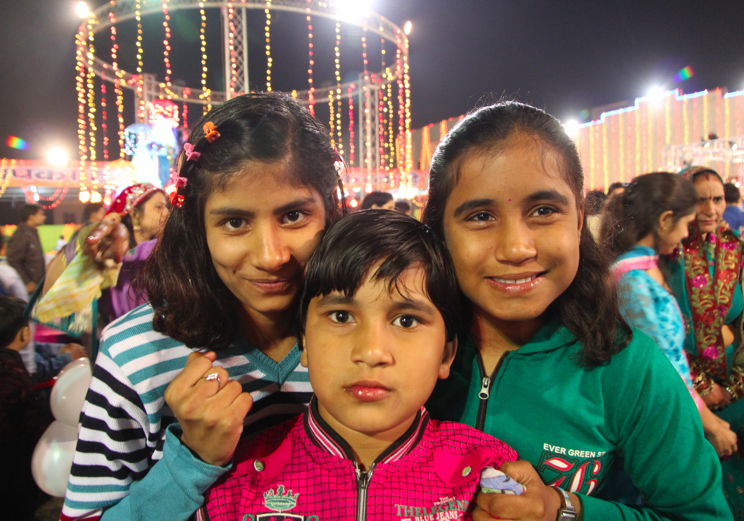
A young crowd of guests
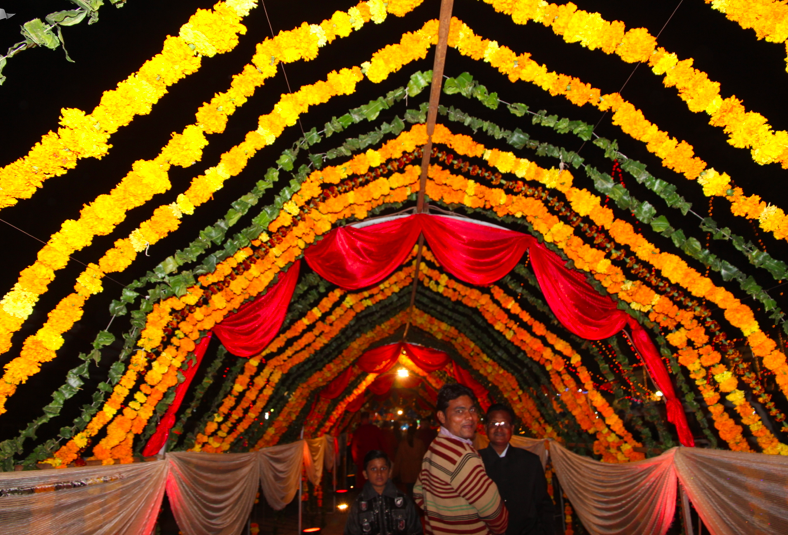
Enter in style
This wedding was much more low-key and running on schedule. The bride and groom were already there and the centre of attention. Most of the food was gone, but dosas (a flat bread) were constantly being made.
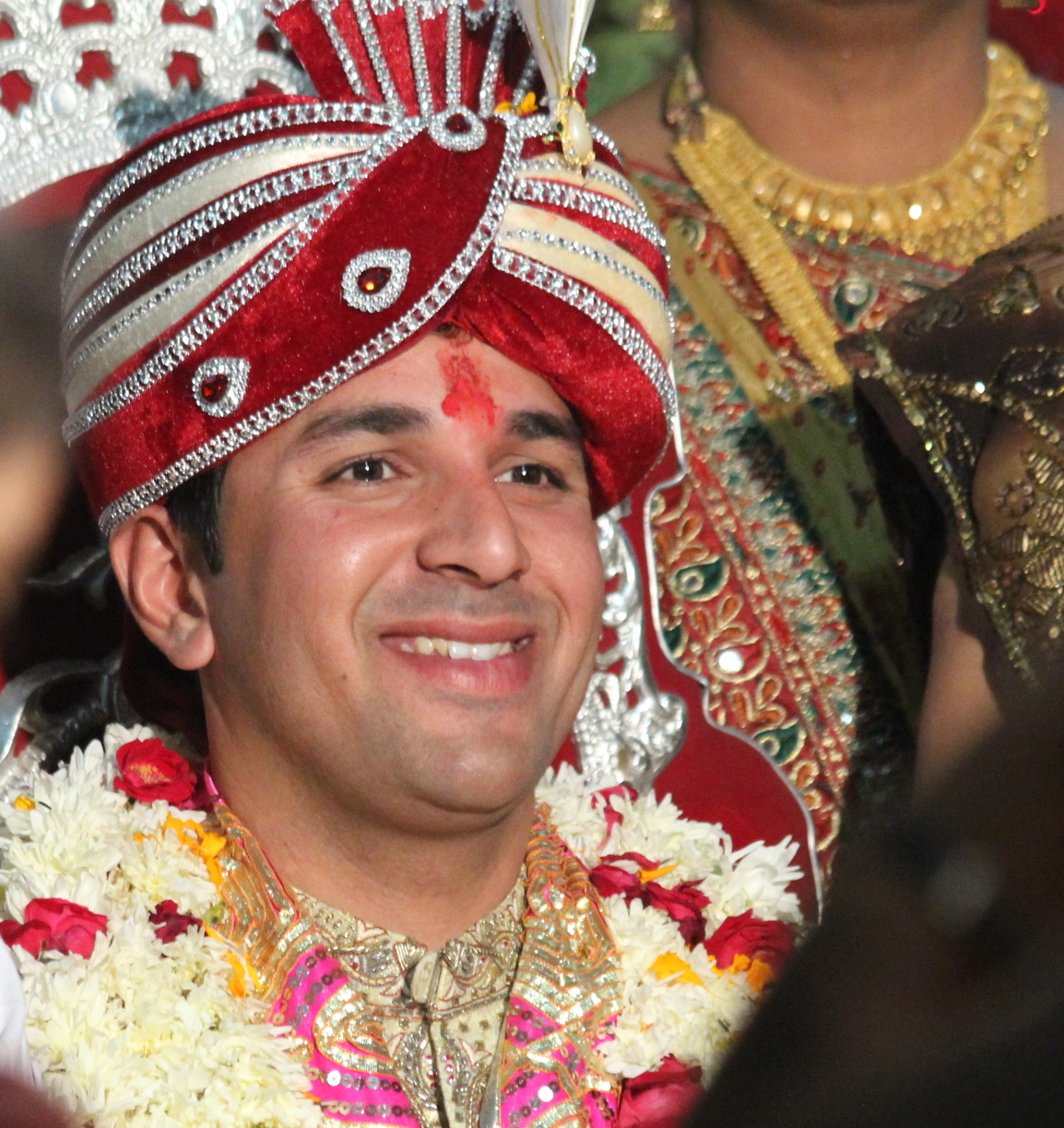
The bride looked gorgeous, nervous, shy and pleased—all at the same time. He looked dumbfounded, but then broke into smiles as he relaxed amidst the sea of well-wishers.
Frankly, I preferred the second wedding to the first. It was more intimate and probably more in keeping with tradition. Deepti said most weddings are simpler affairs, held in the bride’s home.
But I’m not sure sure how many weddings occur in the home. Everywhere we’ve gone in India —and we’ve covered almost 4000 kilometres since Diwali early in November—we’ve seen elaborate wedding venues being set up or knocked down.
But I digress. Deepti went on to explain that the day after a wedding reception is a family event. The couple go to the groom’s home for a welcoming ceremony, followed by a trip to the temple. Finally they return to the groom’s home where the bride cooks (especially sweets) for everyone. Deepti said, Can you cook? is a common pre-marriage question.

An arm full of bangles
Ultimately, the couple must register their marriage with the government, but that can happen later.
In the past, honeymoons were not all that common, but Deepti says that’s changing.
As we’ve continued our travels, Deepti has pointed out many honeymoon couples. How can you tell? She laughed and said, That’s easy! The silly smiles, nose rings and bangles up her arms are obvious signs.
A gentle man’s funeral
But on to the funeral, which wasn’t in India.
When I have an internet connection, which hasn’t been all that often, I try to check the online edition of the Canberra Times. That’s how I learned Lindsay Mitchell had died in November.
I never ‘knew’ Mr Mitchell, but he washed car windscreens (including mine) for many years at the corner of Northbourne Avenue and Barry Drive.
He was thin and scruffy and, like lots of people, I had always assumed he was a drug addict who worked to support his habit. How wrong I was. He was on methadone and spent a lot of the money he earned helping others, especially homeless young people.
The Canberra Times wrote two articles—one about his life (including a tribute from the city’s Chief Minister) and another about his funeral. Both made it clear he was a gentleman and a gentle man.
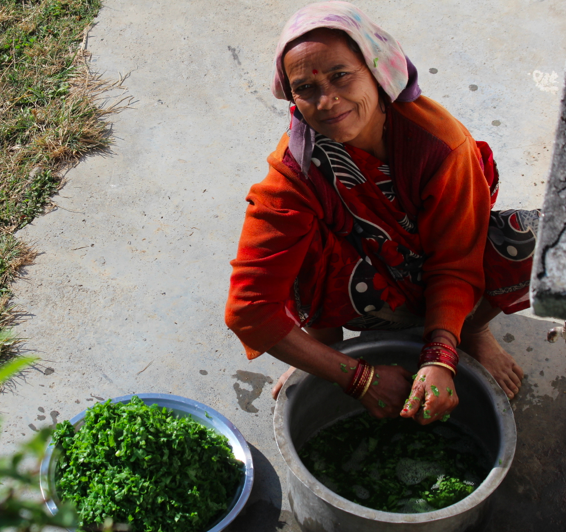
Who knew radish tops could be sautéed with salt and oil?
Deepti and Anand take birdwatching very seriously, especially Deepti. And they definitely know the birds of India.

Grey bush chat
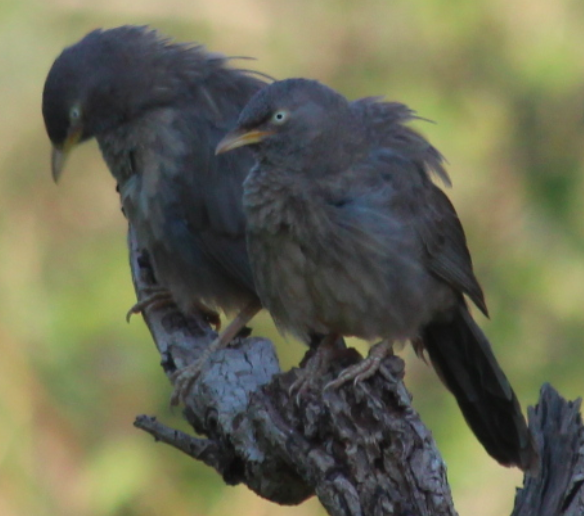
Jungle babblers
A speck flits across the sky and they chime, in unison, Oh there goes a white-throated kingfisher.
Where, where, I cry, scanning the skies. There, there, they say, pointing somewhere in the distance, Can’t you see it. Oh, it’s gone now.
Geez, I love twitching, but I’m still not very good at spotting birds unless they land in front of me.
So the bird quiz they dreamt up for us was always going to be a challenge. We were in staying at Camp Milieu, about a 30-minute drive from the Jim Corbett National Park in Uttarakhand.
Camp Milieu is surrounded by rolling hills and very popular with twitching photographers from all around India. In fact, they were having a gathering at the camp for the few days we were there.
But our quiz adventure had nothing to do with the professional twitchers. We were divided into two teams—Renae and Gary and Poor John and me.—with Anand helping us and Deepti helping the others.
We set out on a four-kilometre walk, with cameras, notebooks and pens, two books on the birds of the Indian Subcontinent, and a challenge to spot and identify 30 different species of bird.
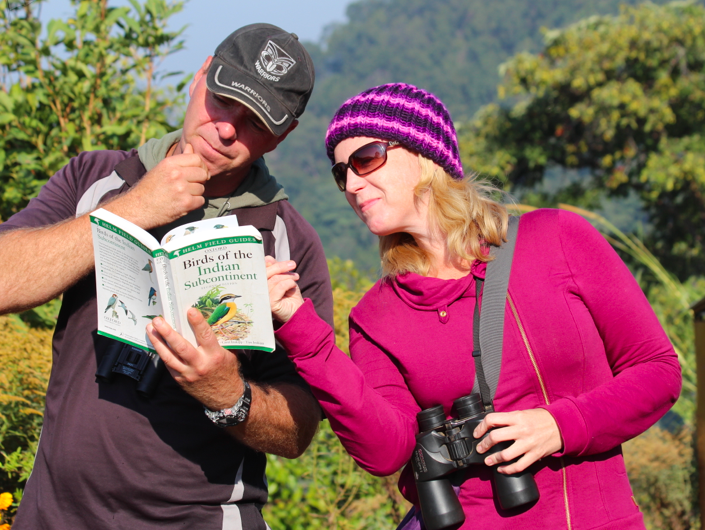
Gary and Renae consult the bird book
Renae and Gary shot to an immediate lead, seeing birds I didn’t know existed, and stayed ahead for the rest of the walk. I did manage to photograph two species—the grey bush chat and a pair of jungle babblers.

A small field of turmeric
Neither team made it to 30 species. Renae and Gary got halfway, and Poor John and I only got 10.
But we had our own kind of victory.
In addition to the bird watching, we walked through a small village and I had the good fortune to see turmeric growing for the first time ever. Other crops that I noticed included peas, onions, lychees, limes, chillies, eggplants and two kinds of tubers. A field had been turned over and was ready for planting.
At the same little farm, we saw a woman washing a large pan of radish tops. Who knew you could sauté white radish (daikon) tops with a bit of oil and salt? The man of the house was sorting and cleaning a kind of yam.
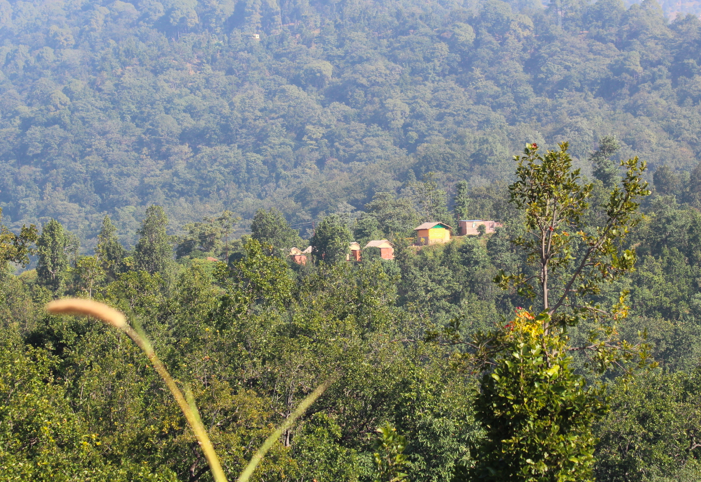
Looking back at Camp Milieu in the distance
A big spread of mustard seeds was drying on a cloth on the pavement. I never knew that yellow and black mustard seeds grow on the same plant, which means what we buy in the shops have been sorted by colour. Anand reckons there is very little difference in taste, and said that many families just used them mixed. As an aside, we’ve cooked with them often on this trip—mixed with cumin seeds.
A little farther on, we saw a family making optimum use of their roof. Dad was reading the paper, mum was preparing food, clothes were drying and the satellite dish was at the ready for TV later that night.
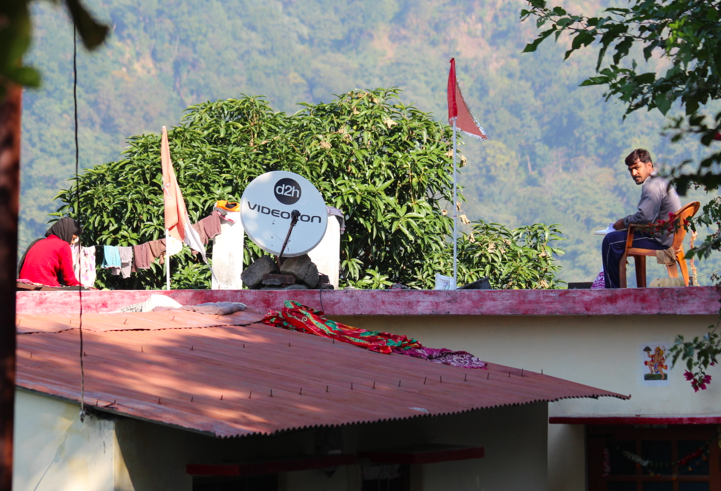
A well-used rooftop. Mum on the far left cooking and dad reading on the right
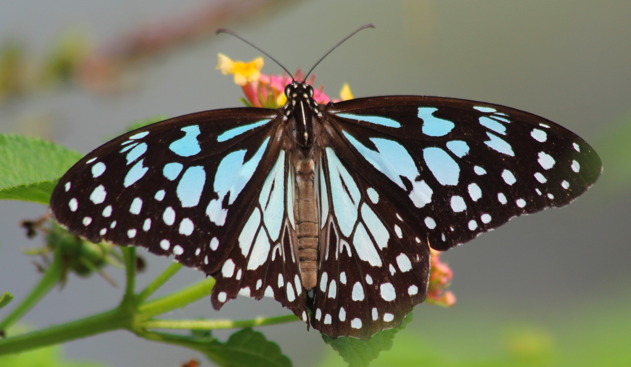
Blue tiger
We spent about five hours walking the main and minor tracks through Bharatpur’s Keoladeo National Park, which gave me a great opportunity to view the many species of butterflies and bugs populating the park.
No wonder birds flock here in the hundreds of thousands—every corner of the park offers up feasts of invertebrates and other delicacies such as fish, frogs and lizards.
With the exception of the baronet, all the ones pictured here were seen in Keoladeo National Park in the space of about an hour. A few days later, Deepti and I poured over a book of Indian butterflies and managed to accurately (we hope) identify all but two.
So far I haven’t been able to find out how many species of butterfly India has, but they are fluttering about everywhere we go.


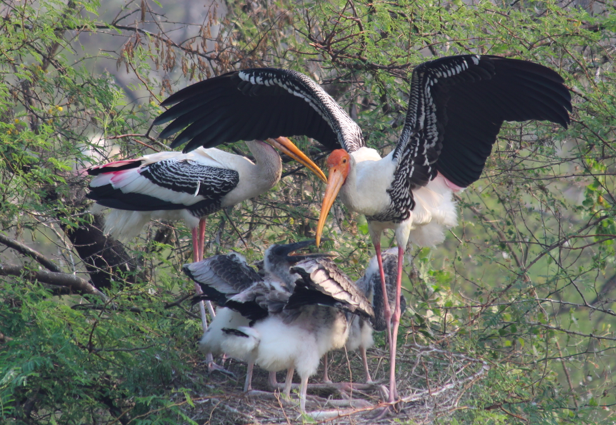
A painted stork protecting its young from the midday sun
Keoladeo National Park is a popular home for the tropical bird, the painted stork. Hundreds of pairs nest, breed and rear their young within the park, and we were lucky enough to see them close-up over the two days we spent visiting the park.
Although mostly white in colour, painted storks live up to their name with black markings on their wings and chest, pink on their lower backs and legs, yellow beaks and orange heads. Young ones don’t get adult colourings until they’re three years old.
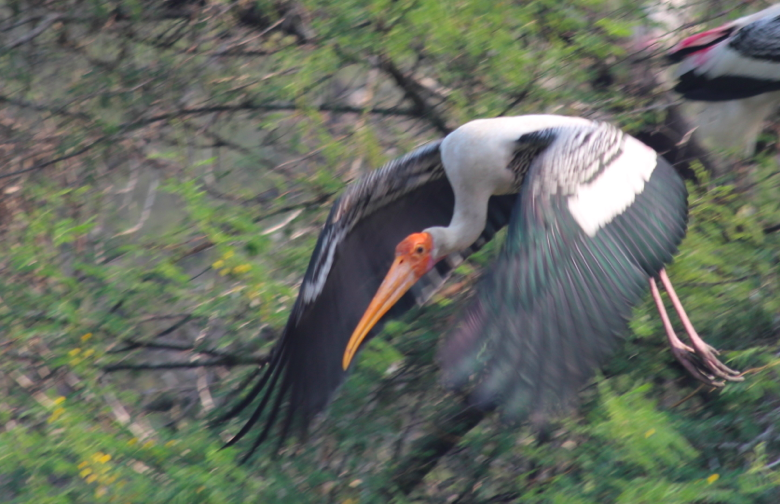
Painted stork taking off
These storks, which are about a metre tall, breed and nest from mid-August to February (and sometimes later), and both parents sit on the clutch of two to five eggs. Incubation lasts about a month, and I’m guessing the many of the chicks we saw were a couple of months old.
Crows are the most common predators for eggs and young chicks, while black kites go for larger chicks. I was amused to read that young chicks, when threatened, disgorge food and feign death by crumpling on to the nest floor. Tigers, leopards, hyenas and other largish carnivores find the adults quite tasty.
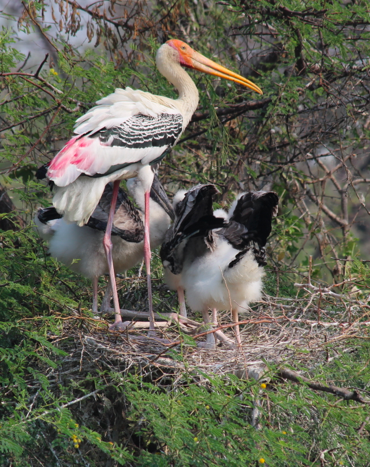
Painted stork with chicks
Chicks are exceptionally noisy, and we heard them before we saw them. They use loud, hoarse calls to let their folks know they are plenty hungry. Mum and dad gather fish (a painted stork’s favourite food), which they later regurgitate for the chicks. Parents are obviously quite protective of their young. We saw them standing with wings outstretched to shield the little ones from the heat of the day.
As an aside, chicks ‘lose’ their voices at the age of 18 months and ever-after communicate by clattering their bills or hissing or bowing to each other or spreading the wings.
Painted storks happily share their habitat with other waterbirds, and we saw storks, herons, cormorants and spoonbills sharing the same tree.
After seeing so many storks in one place, I was surprised and pleased to read that they are a protected species in India.
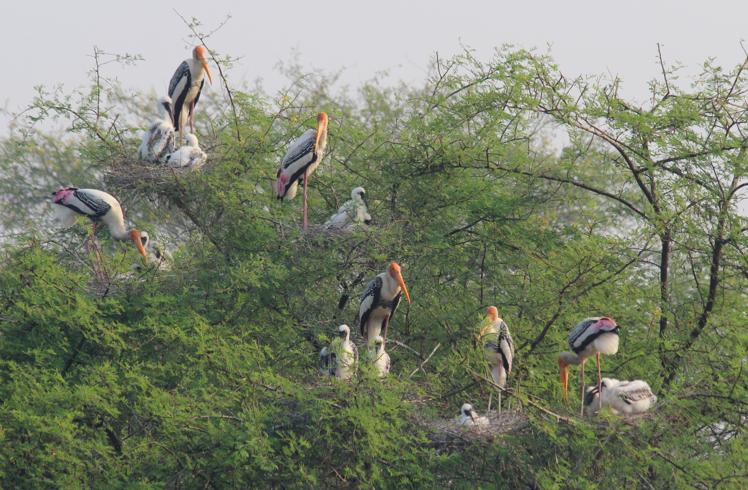
Colony of painted storks in Keoladeo
 Where to next?