

Yorkshire puddings
I just wrote about our breakfast in Bogotá, and it reminded me that I’m way behind on recounting some of the meals we’ve had on our recent travels.
I cooked most of a dinner at my sister Susan’s in Oklahoma and have already posted the brownie recipe on What’s Cooking on Page 32 (more to come from that night).
Also cooked a page-32 feast at my friend Carol’s place in Nebraska. Have posted the lime cheesecake recipe and have lots more page-32 choices to go.
But I’m talking about food I haven’t cooked—food made for us or food we bought. So I’ll do a few posts about some of these.
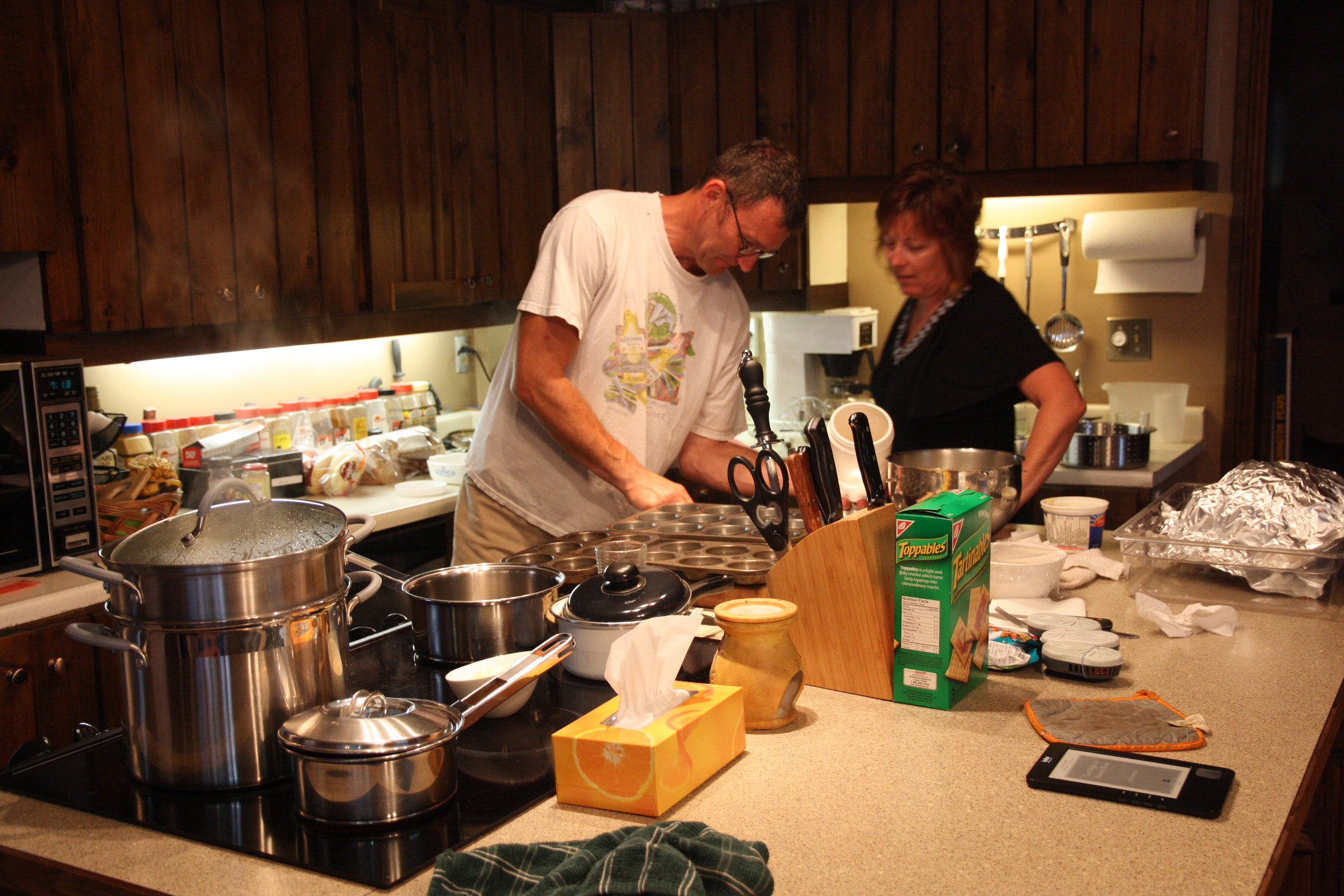
Wayne and Leslie in the kitchen
I’ll start with the Yorkshire puddings Wayne made.
Wayne and Leslie were our second stop in Canada (outside Toronto) and we started our stay with them with a trip to a play.
The next night was set aside for food, food and food. Leslie and Wayne are caterers (I know how to pick good friends). I first met Leslie about six years ago on RecipeZaar.com (now called Food.com).
As part of their wonderful and generous hospitality, they invited over a few Zaar friends in Ontario so we could meet in person, gossip, laugh and eat too much. Oh boy, did we eat too much. Lesley (yes there were two, but with different spellings) brought two starters—hummus and toasted pita chips plus tomato, basil and bocconcini on skewers—which we demolished. Then on to prime rib, an array of salads, those amazing Yorkshire puddings and dessert.

Butter tart
Wayne and Leslie really wouldn’t let anyone help, but I still managed to barge into the kitchen and snap a few pics.
We finished off the meal with the dessert brought by Marg—sensational butter tarts. These bite-size gems are like little pecan pies but without the nuts. Marg brought ones laced with raisins. Butter tarts are a Canadian icon and I have to learn to make them when I get home!
Thanks to everyone for a fantastic evening in every way. We had another Zaar lunch the next day with a different group. We had an afternoon of laughs, gossip and food (in a Toronto restaurant).
Stay tuned for an item on that event and check out the one on Wayne making poutine—another Canadian classic.
And if anyone in Ontario is looking for a caterer, check out Wayne and Leslie’s business, Charcoal Gourmet, on 905-983-9056.

Marg, Leslie, Peggy, Lesley

Breakfast at Hostal Campobello
Thanks Hostal Campobello for putting a smile back on my face.
After my Vegemite was unceremoniously confiscated by security in the Denver airport, I decided to be grumpy about whatever came my way for breakfast. I knew the hostel in Bogotá provided the meal, but what would it be and how crabby could I be?
Hostal Campobello came through in many ways.
For starters, Poor John and I arrived late at night. The house—the hostel is in a large house—was dark, but we were expected and welcomed when we rang the doorbell.
The day before, Myriam, the owner, sent an email that reconfirmed our reservation, explained how to get a taxi and how much it should cost, and provided directions, in Spanish, on how to get to her place. Too easy.

Breakfast terrace and kitchen through doorway
The room was spotless, the bed was comfy and the wifi worked. Then came morning and breakfast. Plenty of fruit, plenty of bread (three varieties) and plenty of Colombian coffee. A great start to the day—never mind the absence of Vegemite.
Plus Myriam was full of advice on things to do and see and how to get there. She even supplied a map and loaned us a travel guide to Colombia.
So if you’re ever in Bogotá, consider staying at Hostal Campobello. Poor John chose it and we both recommend it. There are more pics and details on their website. They also have another hostel in Popayán, in southern Colombia.

Poor John a few days before the crime. Photo by my cousin, Colleen
I cracked an emotional this morning—that’s Aussie slang for having a temper tantrum. It wasn’t a big one, but Poor John and the fellow in the airport knew I wasn’t happy.
Earlier in the morning, we were packing our gear to head from Denver Colorado to Bogota Colombia in South America. At the last minute, I asked Poor John to pack the Vegemite in his bag—after all he had been carrying it most of the time anyway.
Vegemite is an Australia icon. It’s also one of those love-it-or-hate-it foods. I happen to love it. It’s a savoury breakfast spread/paste, made from yeast extract and tasting quite salty. It looks gross—like black–brown shoe polish—but you only need the slightest little bit to transform a piece of toast. I love it spread ever-so-thinly on toast with sliced tomato and cheese. Poor John likes it okay, but nowhere near as much as me.
So what was the problem today? Poor John packed my precious Vegemite—the jar that we had already carried for seven weeks—in his carry-on pack.
My heart sank when they pulled him over at security. I just knew it was the Vegemite. I hadn’t noticed that he packed it in carry-on, but I still knew it was doomed.
The security guy didn’t know what Vegemite was—it’s not a gel or a liquid I said—but he sure wasn’t going to let it through. He was nice about it, even apologetic. He said we could take the bag back and check it in, but that’s not an option if you’ll miss your flight. I could tell he felt bad, but I figured some of his concern was directed at the fellow (Poor John) I clearly wanted to throttle.
It was only after I stamped away from the counter that I thought to ask if he’d have let peanut butter through. Vegemite is the same principle. Does anyone know if peanut butter gets allowed through?
Anyway, I begged the guy not to destroy it. ‘It’s precious stuff. Ask around and give it to someone who’s been to Australia,’ I said. But he assured me it would go in the bin. What a heartbreaking waste.
I was pretty dark for the next couple of hours. Good grief, Poor John is a seasoned traveller and surely knew better than to pack it in carry-on.
I’m mostly over it now—this public whinge (complaint) sure helps. But four months without Vegemite will be quite depressing. I took one jar through Asia (seven months) and three jars to Africa (one year). In our last little bit of travel in Africa, I gave the limited remains of the third jar to a group of young Aussie backpackers. They were over the moon and I felt like a fairy godmother.
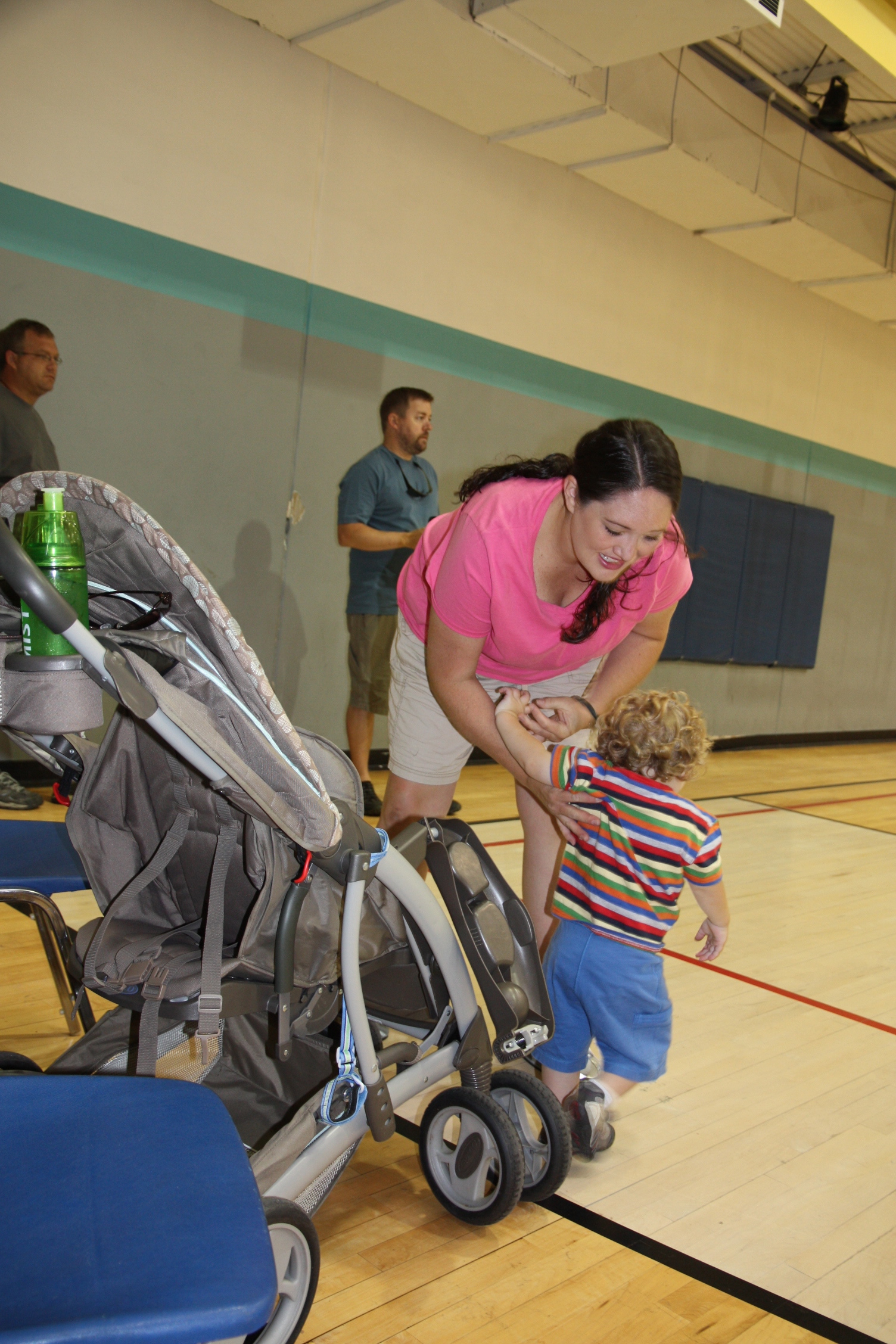
Katie catches Charlie in mid-flight
I can’t leave the USA (we fly to South America tomorrow) without introducing my great-nephew, Charlie. I’m talking about the little Charlie, because there’s a big Charlie too, who is my nephew.
Little Charlie is the second son of my niece, Katie. He’s a live-wire to say the least and might as well be named Houdini. He’s into everything, impossible to contain, fast on his feet, an accomplished climber, a pretty good shot when he throws and a quick learner. Katie is doing a fantastic job as Superwoman—and comes close to corralling and keeping up with him.
At the moment, she is living with her mother, who happens to be my sister, Susan.
Katie’s husband, George, is with the US Army in Afghanistan until the end of the year. So Katie is doing an amazing job of managing two energetic sons. Her older boy, Georgie, is six now and quite grown up! He’s having lots of fun playing soccer and basketball, and is turning into a good cook too. He sure helped me a lot—and Charlie horned in too.
Little Charlie is about 16 months old now. Several months ago, when Charlie began to walk, Susan and Katie bought every baby gate sold in Oklahoma. The contents of the house are now surrounded by them.

A selection of baby gates and barriers
They are at the top and bottom of stairs, around the entertainment centre, around computers, blocking off rooms full of temptation and danger. At last count there are five gated areas (Susan calls them ‘safe zones’), six doorway gates and three portable ones to place as needed. The night we arrived, Katie was cutting out a new barrier from a sort of stiff foam. Charlie had figured out that he could climb up and slip through the railings on the stairs.
All that said, the kid has cute in trumps!
Susan posted this story on her Facebook page the other day. A young, childless married woman at Soccer City—during Georgie’s class—observed baby Charlie. ‘He is just adorable,’ she said. A few minutes later she added, ‘Don’t get me wrong, but he is great birth control.’

Jean enjoying the drive!
I can’t resist posting this photo of my cousin, Jean.
When we caught up with Jean and her husband, Wayne, in Omaha for a family wedding, they were chasing a ride-on lawnmower (not literally) that they had ordered about two weeks earlier.
Every time Wayne called, he got the same run-around—it would be in any day now! He finally said to forget it—if it wasn’t in by Tuesday. Then he was going to take his business elsewhere.
We drove back to their place in Minnesota on Monday, and Wayne got the verdict on Tuesday—still no mower. So off we went shopping. The saleman showed them a great used model that only had 396 hours on it. Wayne and Jean had a few spins around the carpark. I never knew a ride-on mower could be so much fun.
I can see this thing providing hours of entertainment, assuming they don’t fight too much over who gets to mow.

Don’t miss Fisherman’s Wharf in Victoria on Vancouver Island.
We almost did because there aren’t many obvious signs pointing to the area—in fact, we saw signs only after we’d been there.
But we were lucky enough to have had dinner with Elyse, a fellow traveller in Africa in 2009. She said the wharf was fun to see and a perfect place for lunch.
So after spending the morning exploring the Royal British Columbia Museum, we took a break and got our hands stamped so we could get back in. Then we headed straight past the ferries and kept walking along the shore for about 20 minutes.
Oh wow, then we came upon it—the Float Home Village!
Float homes you ask? They look exactly like a houseboat. The difference is they don’t have a motor. But they still have a lot going for them—for starters they are colourful, welcoming, unique and quirky!

A trio of float homes
The village has 33 homes. There’s a mix of working people and retirees, and residents range in age from 1 to 70-something.
Lots of homes had signs explaining the benefits of float-home living, such as the ever-changing scenery, access to harbor events, climate and family-friendly community.
Resident have formed an official community association that is active in charity fundraising, environmental projects and other community events.
Several float homes were for sale with prices ranging from $189,000 to $349,000. People aren’t allowed to rent out their float home, but they can have roommates or a caretaker for up to six months if they are away.
Maybe I can talk Poor John into returning one day as caretakers for a few months. He might be tempted. There’s a great ice cream shop and the popular Barb’s Place Fish ‘n Ships!
He could even shop at the secondhand book stall. Check out the recipe I saw there for bear stew.

A visitor adds some chew to the gum wall
Having just written about the spines of cacti, I thought it was worth mentioning the other sticky find we made.
I’m talking about Seattle’s gum wall—considered to be the world’s second germiest tourist destination (the Blarney Stone is No. 1). My cousin, Colleen, took us there as part of a tour of the remarkable Pike Place Market.
Officially known as the Market Theatre Gum Wall, this landmark is covered in used chewing gum—lots and lots of it. The 15-foot-high wall extends for 50 feet and some parts are several inches deep in gum! Some people even create artworks out of their old chews.

Dripping good fun
The gum-sticking tradition began almost 20 years ago when patrons at Seattle’s Theatre Sports stuck gum to the wall and added coins to the blobs. Theater workers scraped the gum away twice, but eventually gave up after market officials decided the gooey wall made for a good tourist attraction.
Seattle’s ghost tour starts by the gum wall and apparently it’s a popular spot for wedding photographs. A scene in the movie, Love Happens, was shot there.
This isn’t the only unusual wall we have seen on our travels. Check out our trips to the John Lennon Wall and love locks of Prague.
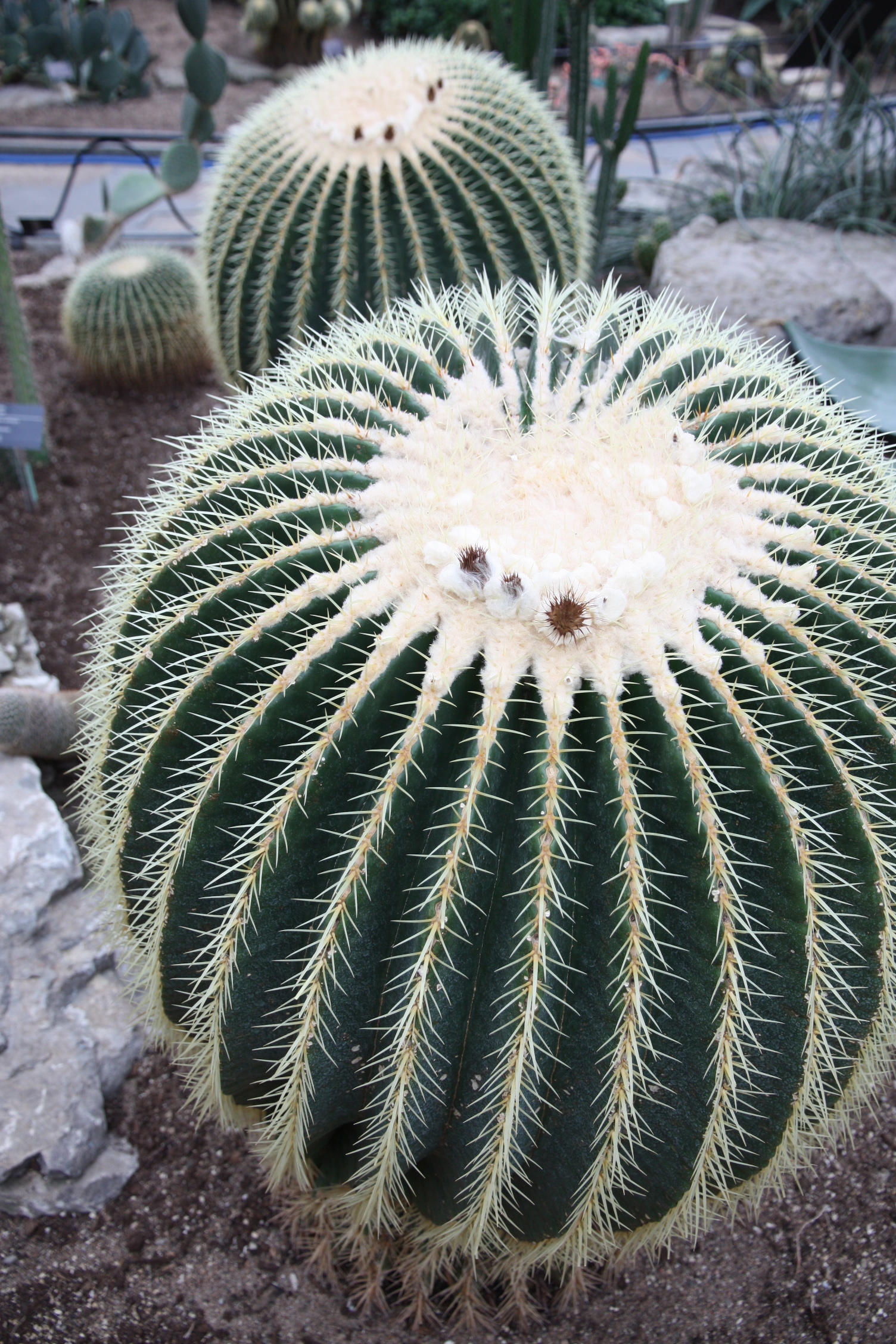
Golden Barrel Cactus
I like cacti, but that’s probably because of a story my mother used to tell when I was a child.
Her father had a swag of siblings and most all of them moved to California at a young age, but he stayed in the Midwest. One year, he decided to take the family west for a visit. On the way they stopped often to look at the scenery. At one spot in the desert, grandpa wanted to take a picture of my mother and her sister, my Aunt Peggy.
The girls posed and—just like in the movies—grandpa kept telling them to back up until he could get them framed right in the viewfinder. Of course, he had to stop cold when my mother backed into a small but deadly cactus and ended up with a bum full of spines.
Oh the screams, and the rest of the night was spent lying on her stomach while grandma extracted the hundreds of spines with a pair of tweezers.
I heard the story plenty of times before I ever saw a real cactus, and it always reminded me of the cartoon about Wile E. Coyote and The Road Runner.
So you can imagine how much I enjoyed visiting the cactus house at the Montreal Botanic Garden. Here are some of the beauties we saw. Sorry I don’t know the names of all of them. Let me know if you do.
You can also check out my posts on the garden in general and its Japanese-themed garden. Or check out the sticky stuff at Seattle’s gum wall.

Japanese Garden
I have already written about the Montreal Botanic Garden in general and now I’d like to introduce its exquisite Japanese garden. Opened in June 1988, this show-stopping area combines stone, water and plants to create an environment that is both serene and sophisticated.
Ken Nakajima designed the 2.5-hectare garden and carefully specified the placement of every stone, flower, tree, shrub and water feature. There are peonies, rhododendrons, irises, crab apples and many perennials. A large stone sculpture sits at the edge of a small lake stocked with the colourful carp, called koi.
There is also a cultural pavilion, designed by architect Hisato Hiraoka, with exhibition halls that have displays on bonsai and penjing, artwork, the tea ritual and other aspects of Japanese life.
We saw an elegant wedding gown created by businesswoman Keiko Ichihara and made out of Mino paper. Ms Ichihara is trying to preserve traditional Japanese paper craft by developing innovative ways to use it.
I plan to post items about the cactus, bromeliad and begonia areas of the botanic garden, so come back for more.
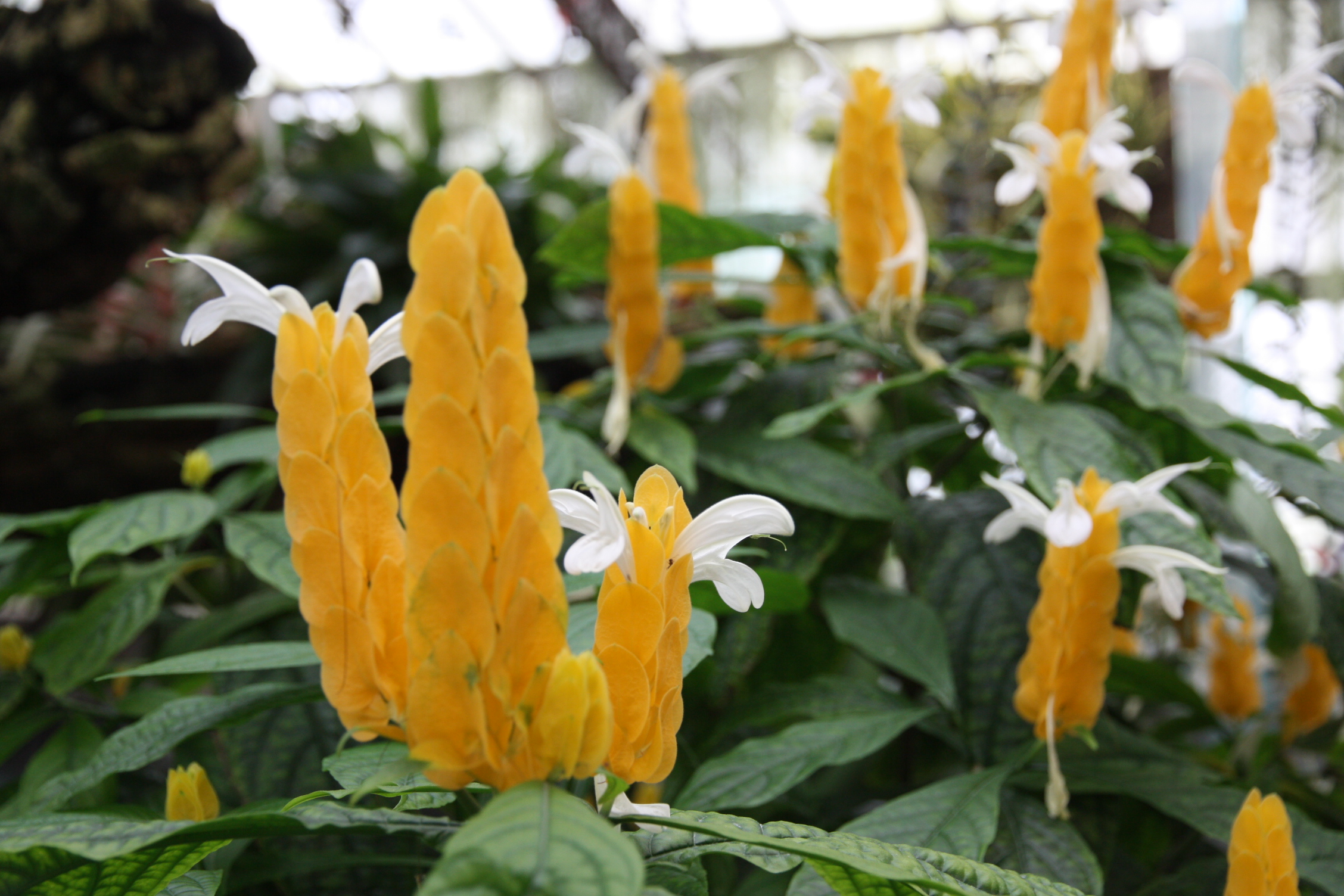
Lollypop plants that come from Brazil, Ecuador and Peru
We’ve been skipping around North America, so I reckon it’s okay if the blog skips around a bit too. I just have to jump in and do thing because, frankly, the photos of the Montreal Botanic Gardens have been burning a proverbial hole in my brain.
These gardens are sensational and an absolute must-see if you are ever in Montreal. We spent most of a day there and it was the first touristic thing we did in the city—unless you count the bus rides we took to get there, which were entertaining in their own right.
Brenda, an online Food.com friend of many years, welcomed us to the gardens, which are on the east side of town. She and her husband, Lee, have annual memberships and go often, and it’s easy to see why. Not only did Brenda ‘lure’ us there, but she cagily managed to buy our admission tickets too. That woman is quick, good-hearted, gracious and very generous.
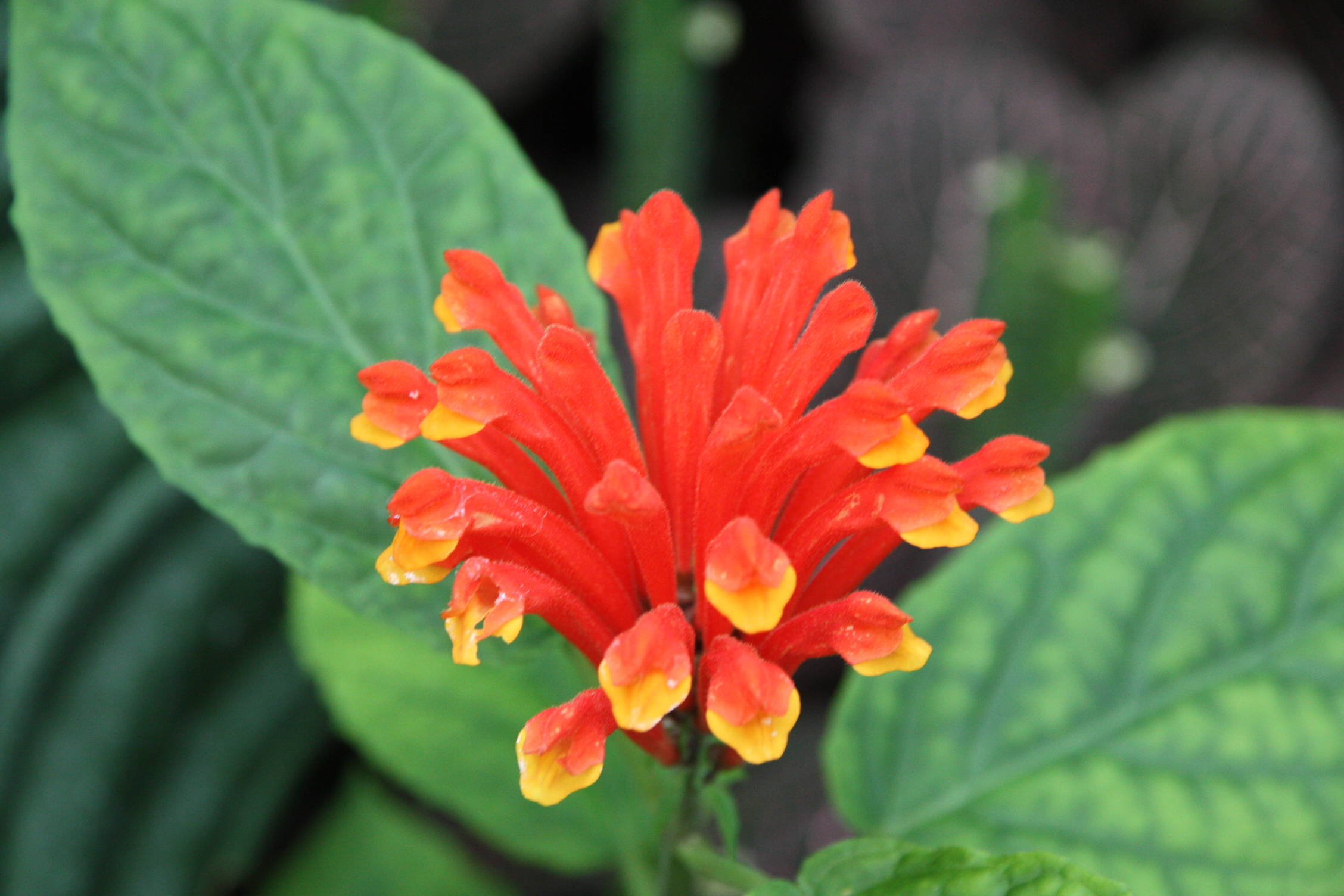
Costa Rican skullcap
The garden was founded in 1931 in the midst of the Depression by then Mayor Camillian Houde. Henry Teuscher designed the grounds and Lucien F. Kéroack, architect, designed the art deco administration building.
The garden spreads over 190 acres (75 hectares). There are 30 outdoor gardens—each with a theme—and numerous greenhouses including 10 for exhibits, and another 45-plus for plant collection, research and propagation.
With such diverse responsibilities, display areas and almost 22,000 plant species and cultivars, the garden is considered one of the most important botanical gardens in the world. Four years ago it was also designated as a National Historic Site of Canada.

A penjing display
Garden staff strive to educate the public in general and students of horticulture in particular, as well as to conserve endangered plant species. The grounds are also home to a botanical research institution, to the Société d’astronomie de Montréal and to the Montreal Insectarium.
Even in winter, when the outdoor gardens are bare or covered with snow, the greenhouses remain open to visitors. Each year, there is also an indoor Butterflies Go Free exhibit that runs from February to April.
In summer, there are more than 100 employees working in the gardens as well as scores of volunteers. There’s no shortage of work, especially when you realise that another name for the Chinese Garden is the Garden of Weedlessness.
By the way, the garden is so huge and with so many themes that I will post separate items on Japanese, cactus and bromeliad gardens—and maybe begonias and simply beautiful leaves too. Stay tuned—so many pics to share.
Sorry for when I don’t know the exact names of everything. I photographed plaques when I saw them and have provided the names I know. Contributions and corrections are most welcome. Garden lovers may also like to see my posts from Adelaide, Dallas and Georgia. And if you’re hungry, check out Cooking on Page 32.
Thanks again Brenda for a fantastic outing!
 Where to next?