

Spanky’s pants
Who knew so many famous people came from Dallas? Here are a few:
• George McFarland, Spanky of Spanky and Our Gang
• Bette Graham, inventor of liquid paper
• Nieman and Marcus, creators of the famed department store
• Clyde, outlaw of Bonnie and Clyde
• Lance Armstrong, cyclist of Tour de France fame
• Norah Jones, singer and musician
• Jessica Simpson, starlet
and so many more.
I learned all this at the Old Red Museum of Dallas County History and Culture. This magnificent red sandstone building was built in 1892 and used as the county’s courthouse until 1966. It’s undergone many transformations over the years and is now on the National Register of Historic Buildings.
Two standout ‘exhibits’ for me were the famous neon Pegasus and the stunning Grand Staircase.
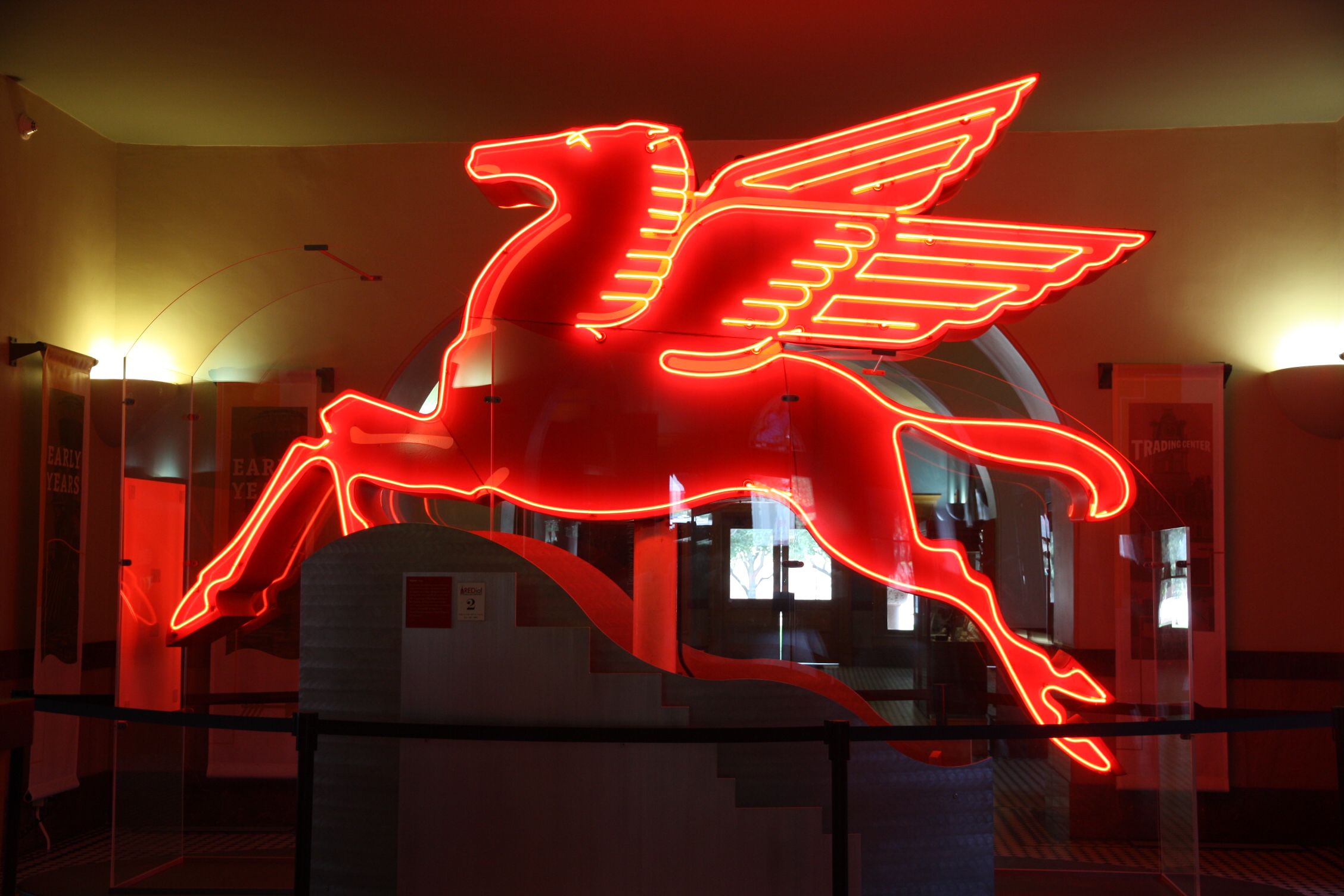
Pegasus
Pegasus was originally built for the 1939 World’s Fair in New York City. Before being salvaged and installed at the Old Red Museum, Pegasus was seen cantering, glowing and rotating over the Casa Linda Mobil Gas Station, east of downtown Dallas.
Part of the intricate cast-iron staircase was removed in 1920 to make room for additional courthouse offices, but it has been restored to its original 1892 appearance.
I was also fascinated to learn about Quanah Parker, son of Peta Nocona, Comanche chief, and Cynthia Ann Parker, a European American, who was kidnapped at the age of nine and assimilated into the tribe. Quanah, who died in 1911, was also a chief and led his people on the reservation. He became a wealthy rancher and influential in Comanche and European American society.
There was one other unexpected bonus on our visit. By arriving before noon, we paid only $5 each for admission.
We started our latest travels—about time, I hear you say—with a couple of days visiting a dear friend in Texas. Visiting means sightseeing too, and today’s trip to the Dallas Arboretum was a standout.
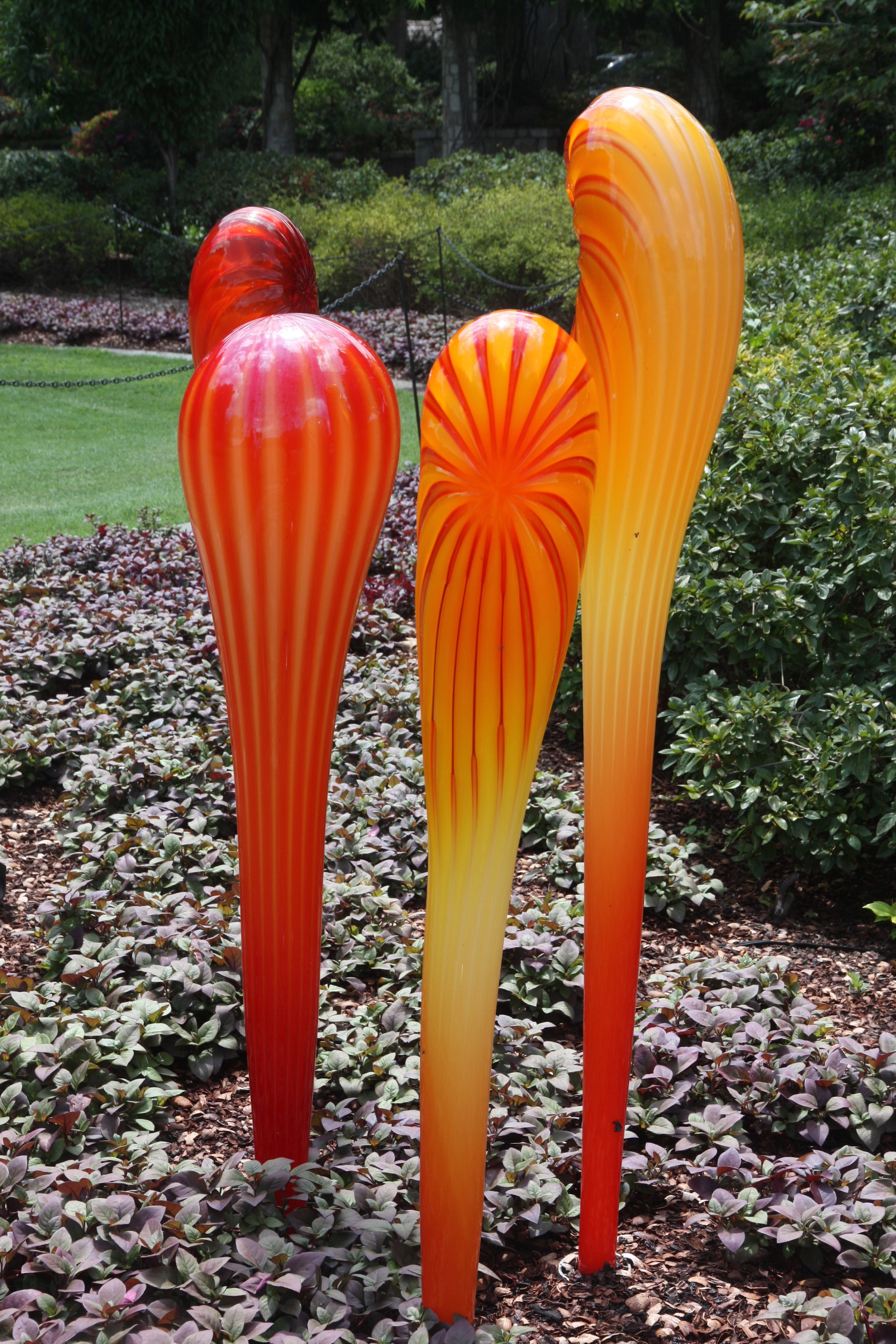
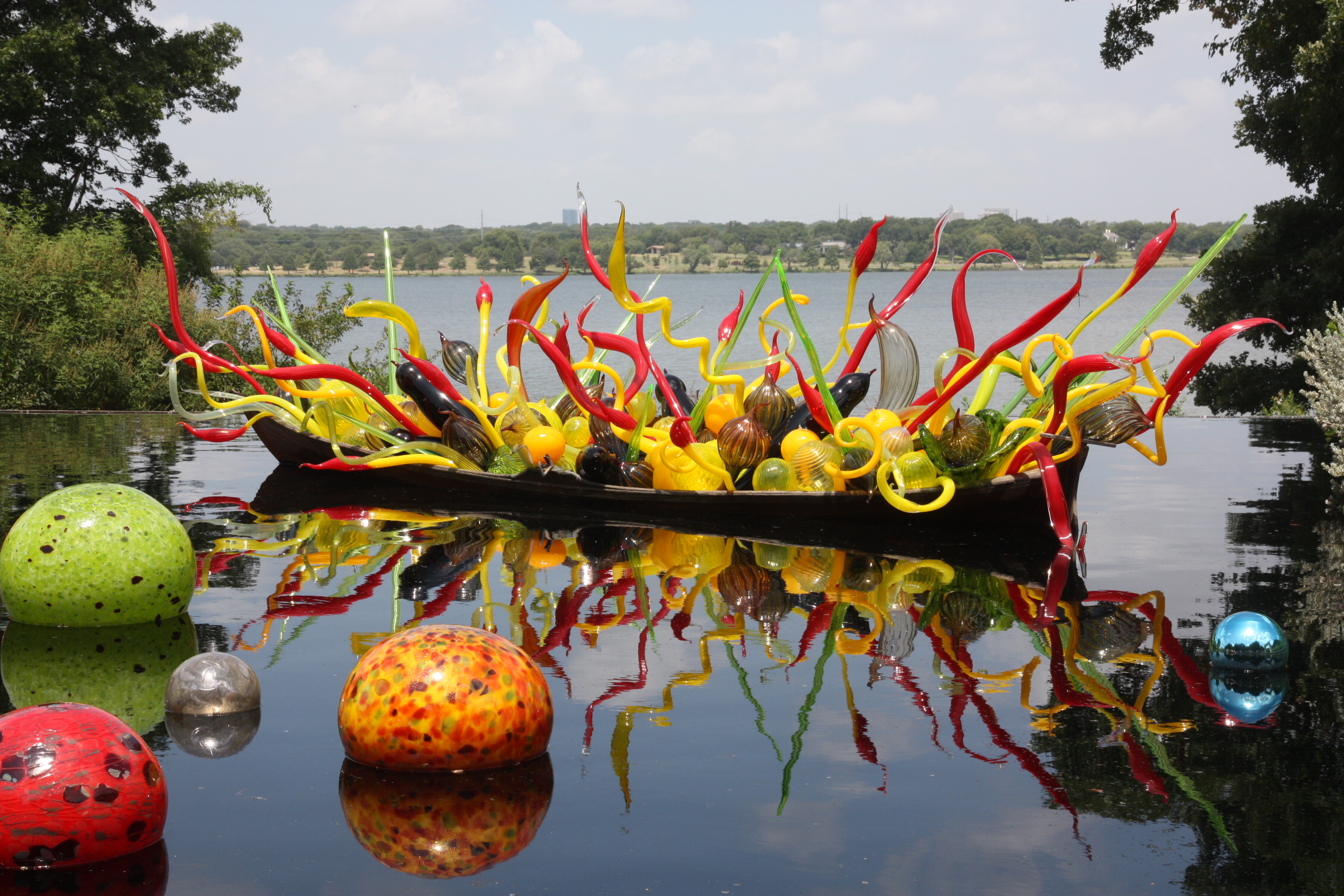
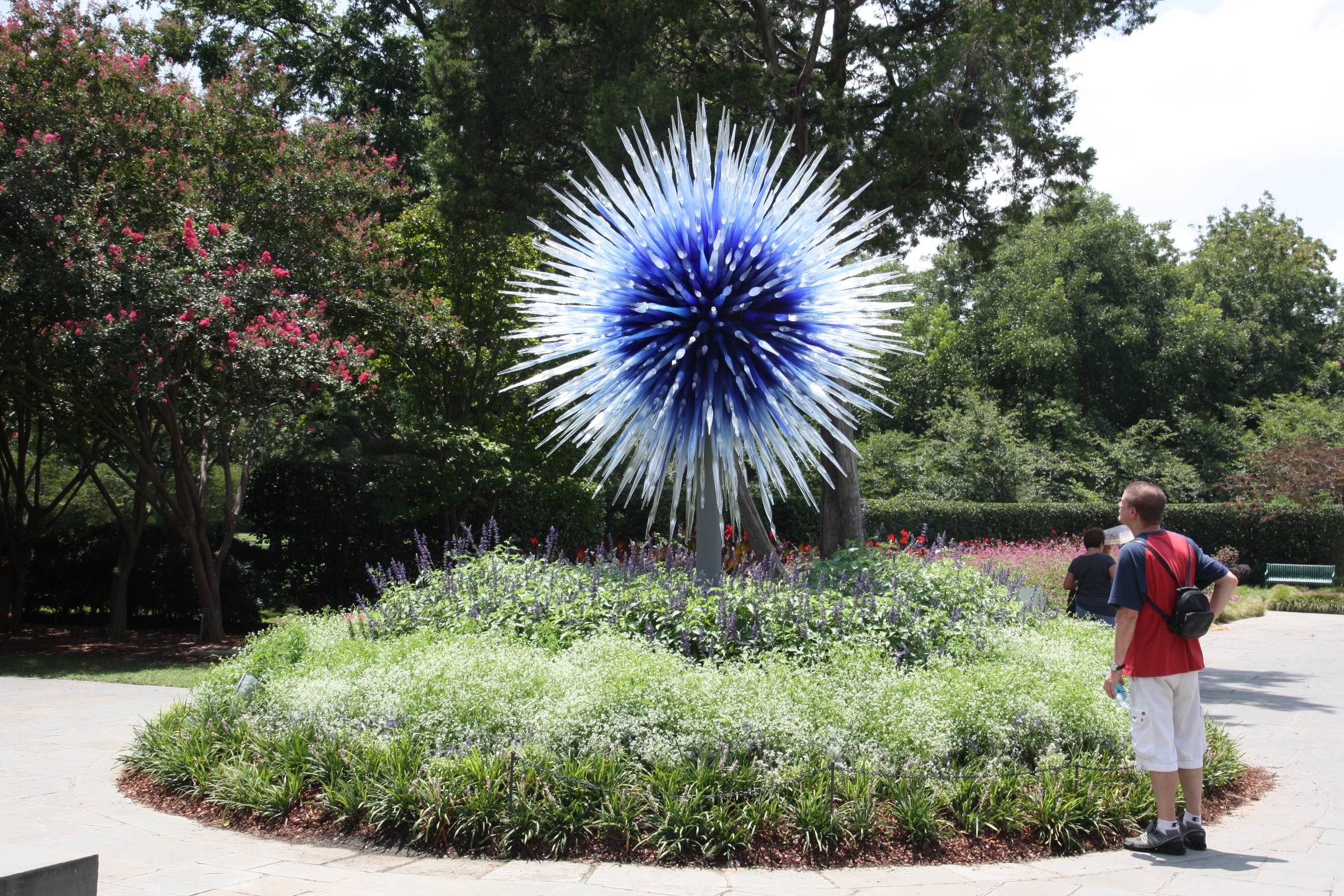
The main attraction (aside from entertaining bus rides) was the huge outdoor display of iconic works by Dale Chihuly, an American glass sculptor and entrepreneur.
The 14 large and dramatic works—many with multiple components—were spread across the arboretum’s 66-acres of beautifully planted gardens. It was a lot of fun to turn a corner or pass through a gate and be greeted by breathtaking colour and movement.
We’ve admired (lusted after) Chihuly’s work twice before in Canberra, in 1999 and 2008. As an aside, the 1999 exhibit ended in tears when 10 of 40 pieces displayed outdoors in the National Gallery’s Sculpture Garden were stolen and later found smashed. Pieces displayed indoors were fine.
Chihuly, who turned 70 last year, earned degrees in interior design and sculpture from the Universities of Washington and Wisconsin–Madison, respectively. In1968, he went on to study glass in Venice on a Fulbright Fellowship. A few years later he founded the Pilchuck Glass School in Washington state.
In 1976, he lost the sight in his left eye after a head-on car accident in England. He continued to blow glass until 1979 when a dislocated shoulder left him unable to hold the glass blowing pipe. That’s when he started hiring others to do the work, leaving him to create and be ‘more choreographer than dancer, more supervisor than participant, more director than actor’. His team approach involves master glassblowers and assistants, who often work at lightning speed.
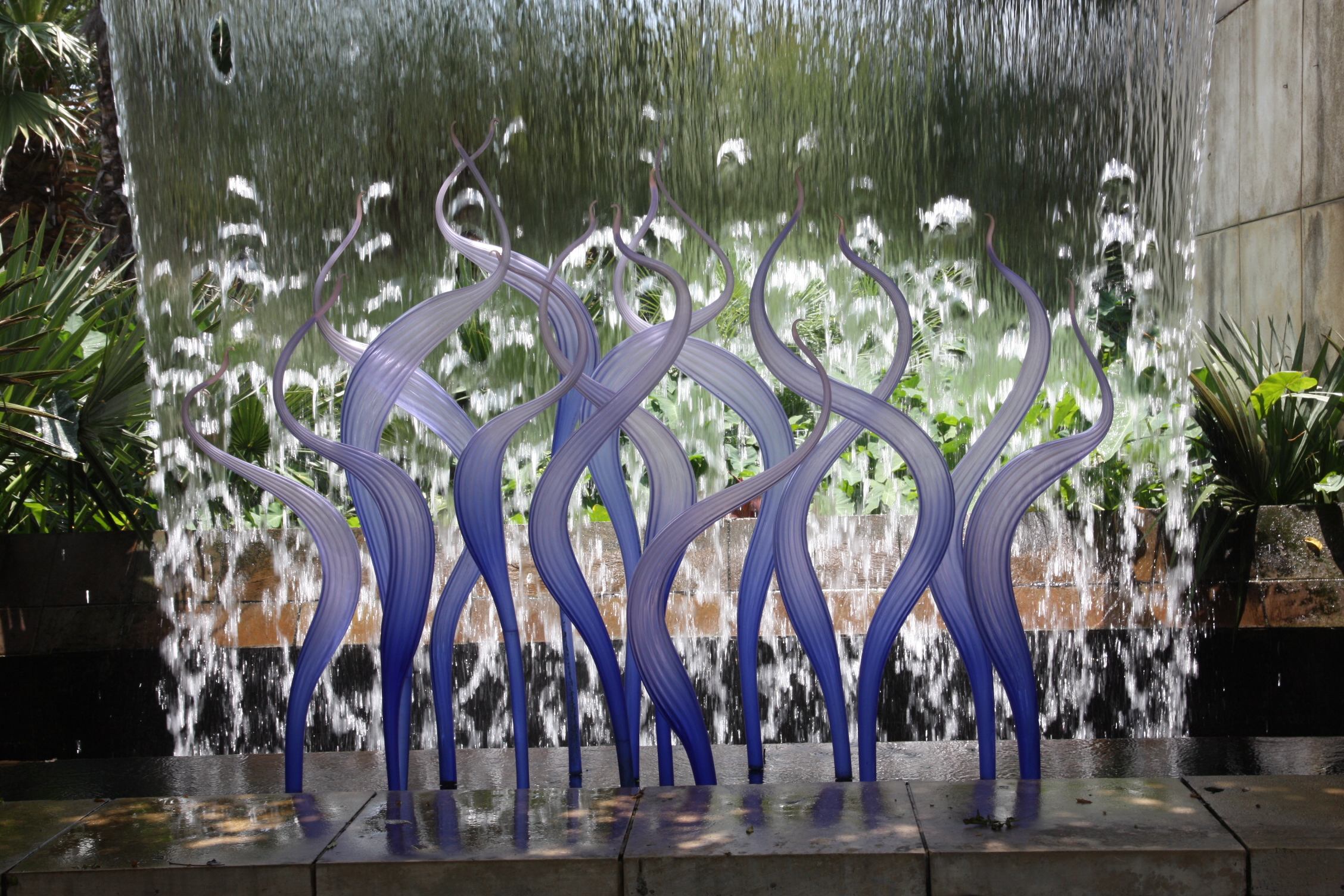
One of three sculptures—all with waterfall backgrounds—made especially for Dallas.
We watched most of a rather-longer-than-it needed-to-be video about his work and those who work with him. Chihuly uses a vast array of colours and applies them to a variety of shapes—icicles, suns, stars, chandeliers, floats, belugas, towers, crystals, reeds and other plant forms.
According to the video, Chihuly designs and directs the creation and installation of key parts of a display, but allows his main glassblower a lot of free-rein.
Individual sculptures can include thousands of pieces. I get the impression that the team makes tens of thousands of items for a display, but not all will be used in any one exhibit. Especially for the outdoor exhibits, Chihuly likes to let the form of the sculpture be guided by its surrounding plants, trees, water features and other elements. Part of the video showed him chucking huge pieces of glass into a river and then floating these downstream to where they were ‘herded’ into a final form.
We were amazed to see how durable each item is. In fact, a couple of volunteers told us of a recent hailstorm that hit the arboretum. Only one of the massive sculptures was damaged.
The glass artworks will remain on display through 5 November 2012. There are also night shows on Tuesdays, Wednesdays and Thursdays with spectacular lighting and slightly higher ticket prices. Pity we aren’t staying long enough to see that too.

Today three of us got in for less than $40, and we spent about four hours exploring the lovely gardens and displays. At the very end, we had a free tram ride through the main paths of the arboretum. The volunteer driver shared plenty of insider nuggets of information about the arboretum itself. Note to Australians—the Dallas Arboretum is what we in Australia would call a botanic gardens.
Chihuly’s largest permanent exhibit is in the Oklahoma City Museum of Art. Even though I’m heading to Oklahoma tomorrow, I’ll miss seeing it. But next month I hope to see the three pieces held by institutions in Omaha Nebraska. I’ll post photos if I can take any.
The pluses of buses
Public transport is a great way to get around Dallas. All-day tickets are $4 and it’s easy to look up routes on the internet.
But the best thing is watching the other characters who ride the bus. Soon after we boarded, two guys and a gal got on. They had no shortage of tattoos and piercings, but the woman was missing quite a few front teeth. One can only wonder how that happened. Didn’t stop her from sharing big smiles.
The conversation was amusing.
The short guy and the gal cuddled up opposite us. He explained to the tall guy that he wasn’t available this afternoon because he had to see his probation officer. No detail as to why, so I assume they all knew.
Tall guy mentioned Amanda, and snaggletooth flared with a ‘don’t mention that B***H in front of me.’ ‘Who Amanda?’ said tall guy with a huge, innocent grin. That stirred her up. After tall guy said Amanda a few more times and smirked smugly, short guy asked tall guy why they hadn’t yet met his new ‘lady’. ‘We promise we won’t think less of you after we meet her. Not like with Charity.’
So on and on and round and round it went. Needless to say, they weren’t on their way to the arboretum. By the way, I changed Amanda’s name to protect the innocent.
The bus ride home was only half as entertaining.
Balingup scarecrows
Balingup is a dynamic Western Australian community with lots happening—at least it seemed that way when we stopped.
By car, the village is only 2 1/2 hours south of Perth and so a perfect place to have a ‘driver reviver’ stop if you are travelling to the famous Margaret River region.
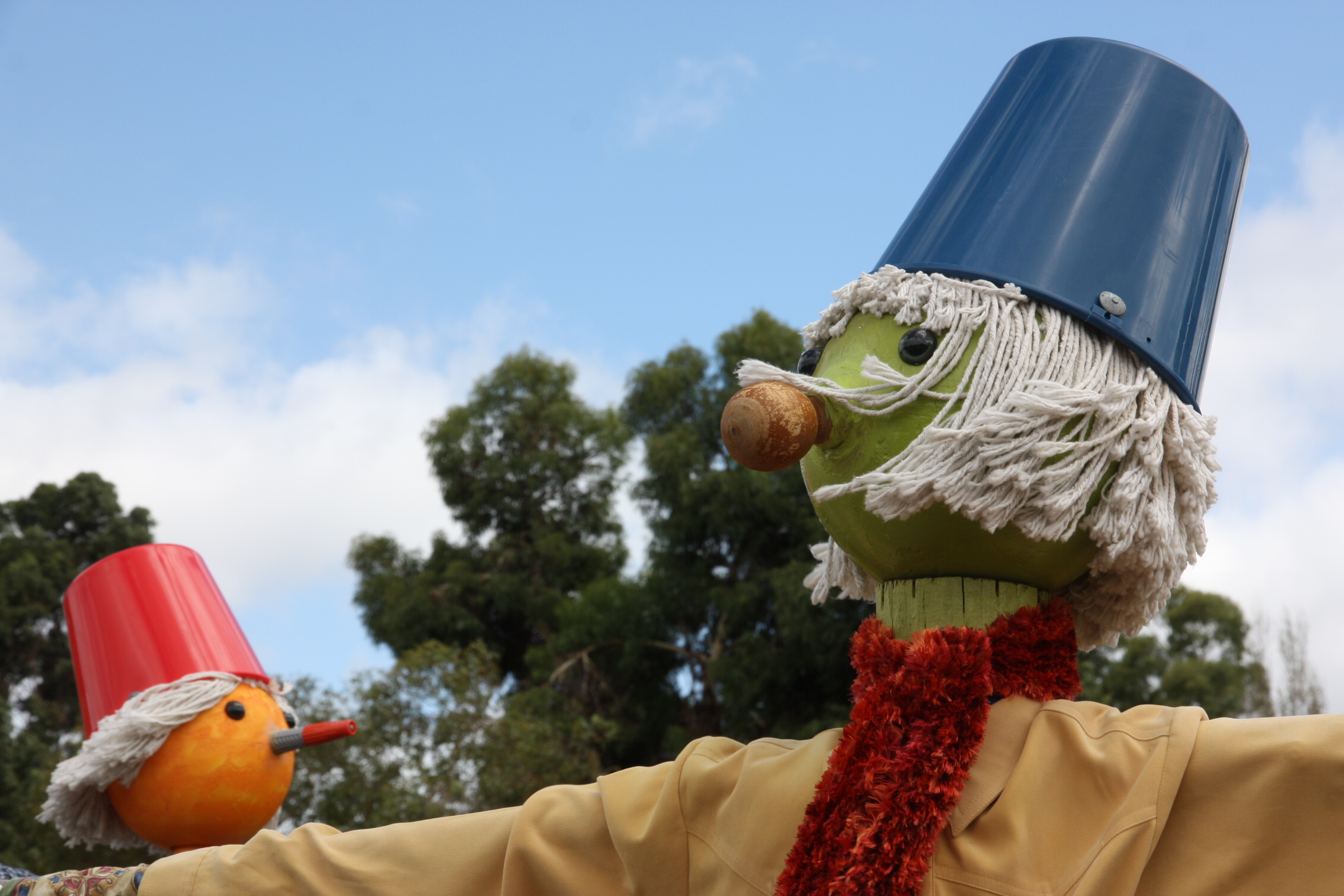
The colourful and cheeky scarecrows caught our attention first. We had to stop to inspect.
These whimsical creations were scattered along both sides of the main road, and promoted the coming Small Farm Field Day.
This annual event has been going since 1991. There’s a new theme every year and always a scarecrow competition. More importantly, it’s an opportunity for people from small local farms and cottage industries to exhibit and sell their produce. About 300 stalls squeeze into the local sports oval, and are host to more than 10,000 visitors each year.
Taste of Balingup
The village has other annual events such as the Medieval Carnivale every August.
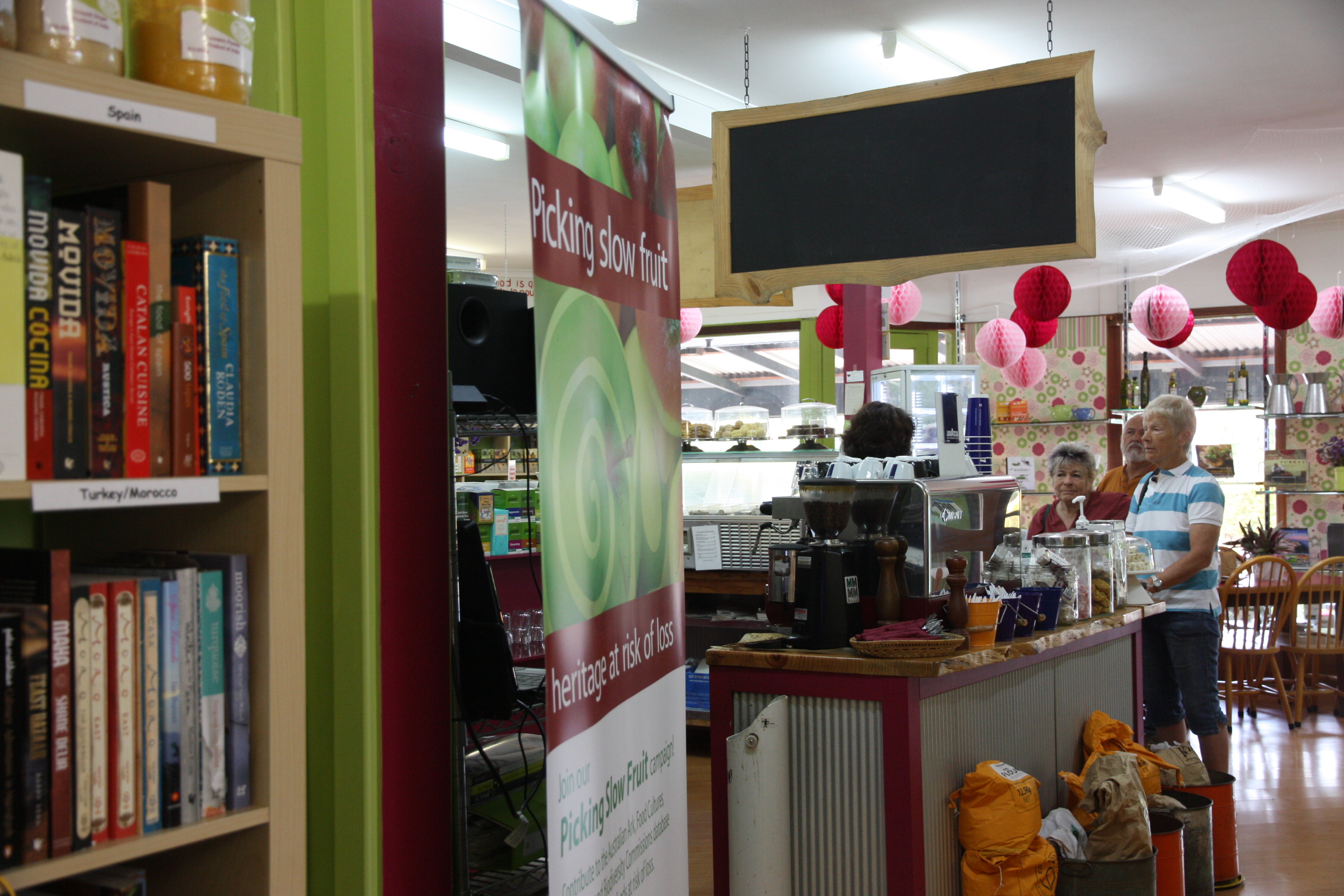
After ogling the scarecrows and popping into the tourist office, we made an assault on the local deli, Taste of Balingup.
I was in heaven, starting with their impressive range of gourmet produce and wall of fantastic cookbooks. If I go that way again, I’ll sign up for one of their monthly cooking workshops.
While Poor John and Kate enjoyed some lunch goodies, we had a chat with the owner/manager. We were sad to hear there had been a recent break-in, with money taken and unnecessary damage done to the place.
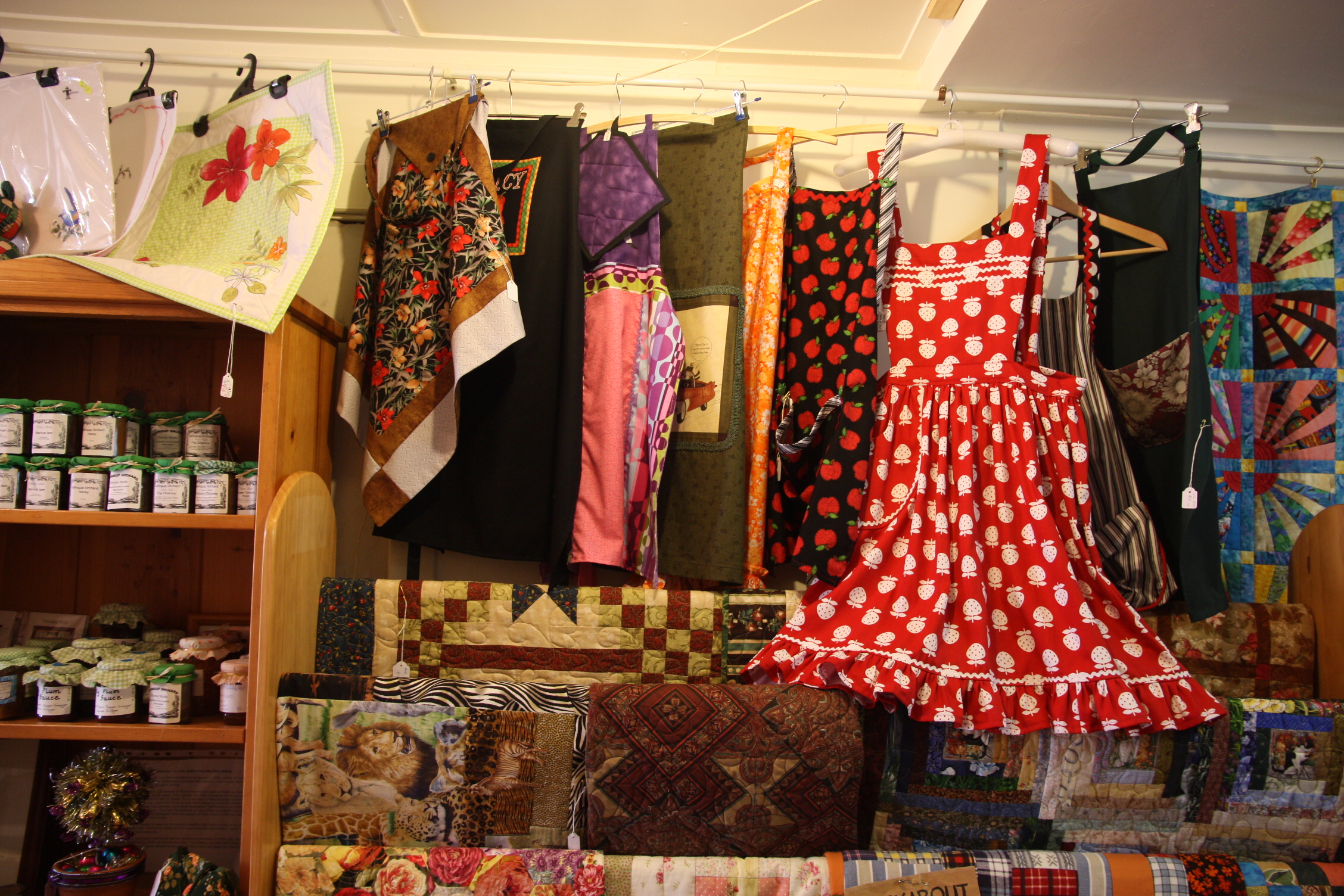
The Village Pedlars was another colourful stop. What a lovely range of handmade gifts and fresh produce on display. Some of the aprons were real showstoppers.
Gorgeous aprons at the Village Pedlars
We popped into the Tinderbox too, which has a range of herbal products. Have to confess I couldn’t stay long because the scents were too strong for me.
Our last stop was at the Old Cheese Factory on the outskirts of town. It’s Western Australia’s largest art and craft centre, with lots of pottery, timber furniture and second-hand goods.
Okay, I admit it. I bought two cookbooks there—at rock-bottom prices—that will feature in What’s cooking on page 32.

The Abbey Church
New Norcia was a delightful and unexpected side trip in Western Australia. We would probably never have gone there except that Kate, the friend we stayed with in Perth, has strong ties to New Norcia and goes there quite often.
It’s only two hours north of Perth and, on the way, we had lovely stops at the Coorinja Winery and another village, Toodyay.
Two Spanish Benedictines—Rosendo Salvado and Joseph Serra—established New Norcia in 1846 as a way to minister to the local Aborigines. They named it after a town in Italy, the birthplace of St Benedict.
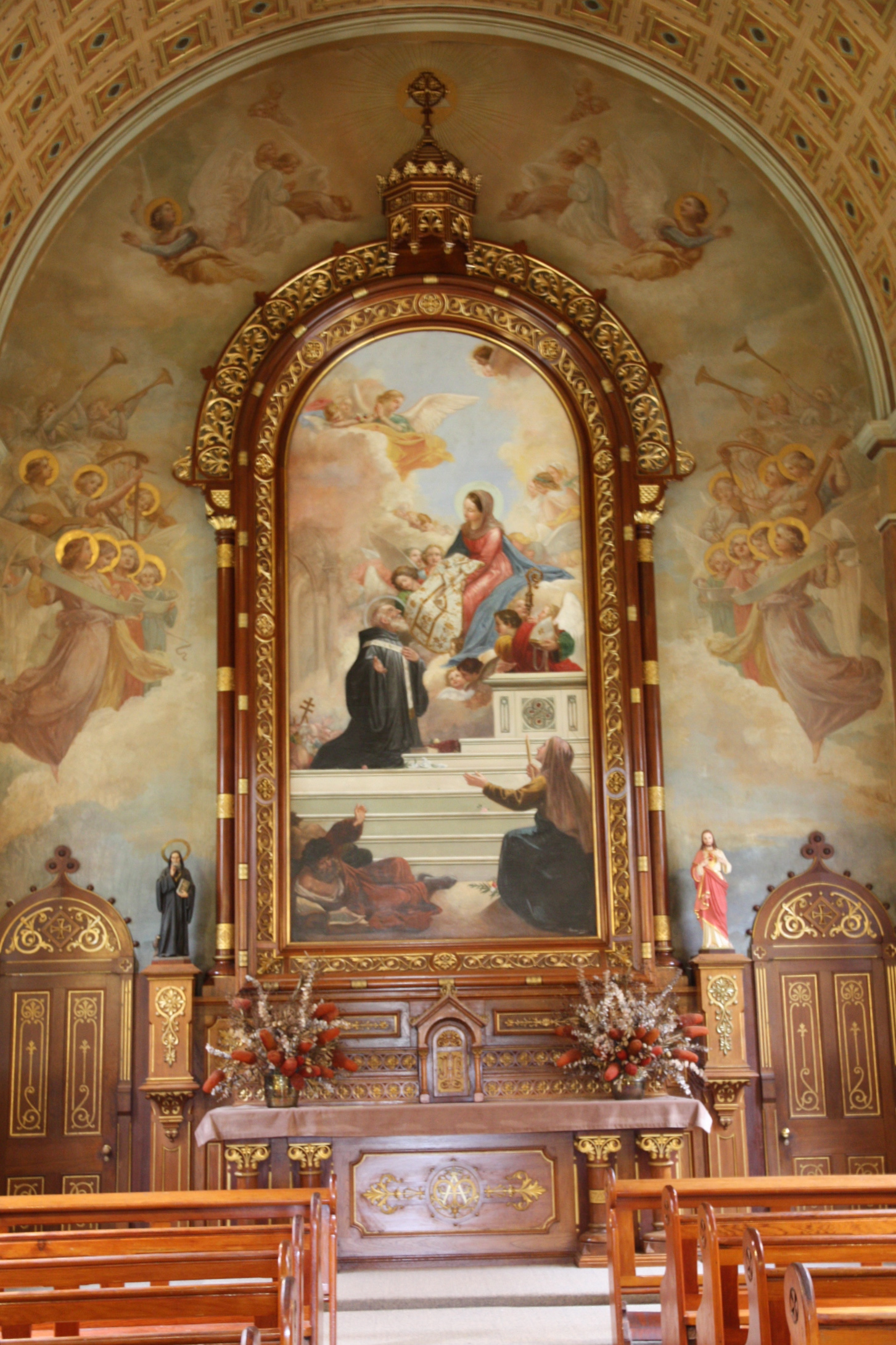
A New Norcia chapel
Today New Norcia is Australia’s only monastic town and, as such, a popular tourist destination. It’s brimming with history and well worth a detour from Perth.
We had the good fortune to be shown around by one of New Norcia’s long-term residents, Dom Christopher. He has a huge passion and vast knowledge for his home. He’s also an active curator of the community’s impressive museum and art gallery (just one photo because they aren’t really allowed).
Dom Christopher, walked and talked us through New Norcia’s vast grounds and many buildings, including the gallery, education centre, convent, chapels, conference centre, former boarding schools, orphanages and more.
New Norcia is also capitalising on its culinary history. The bakery, built in 1886, is still producing breads, nutcakes and biscotti. The community also produces olive oil, wines, port and beer. We learned that New Norcia’s last Spanish Benedictine monk died just two years ago, at age 99, and was making bread and olive oil virtually until his end.
We were interested to hear that ghosts live in New Norcia. Not surprising, given that the cemetery is in the centre of town. We didn’t see any and, as far as we know, none came home in the car with us.

Michael Wood takes care of one of our purchases.
There’s plenty to do around Perth, and one of our first outings beyond the city limits was to travel north to Toodyay and New Norcia.
But we got side-tracked by the Coorinja Winery, a few kilometres south of Toodyay and beside Harper Brook.
Kate spotted the sign first, so we turned back only to discover that it isn’t open on a Sunday. Dang! But just as we were about to drive away, a pickup turned in and drove up to the house. Okay, we thought, let’s see if we are welcome.
Turns out, Michael Wood, the manager, had stopped by to see his mum. He was most happy to open, share some of the winery’s history and, more importantly, share some fine samples.
We, in turn, were most happy to spend more than a few dollars on Coorinja’s delicious white port, ginger wine, marsala and dry sherry.
Coorinja, which in an Aboriginal word for the place of seven springs, specialises in fortified wines. It was established in the 1880s, and has operated continuously since then. The Wood family has had it since 1919. It’s a tiered three-storied building built of stone and brick.
Michael was happy to let me take too many photos.
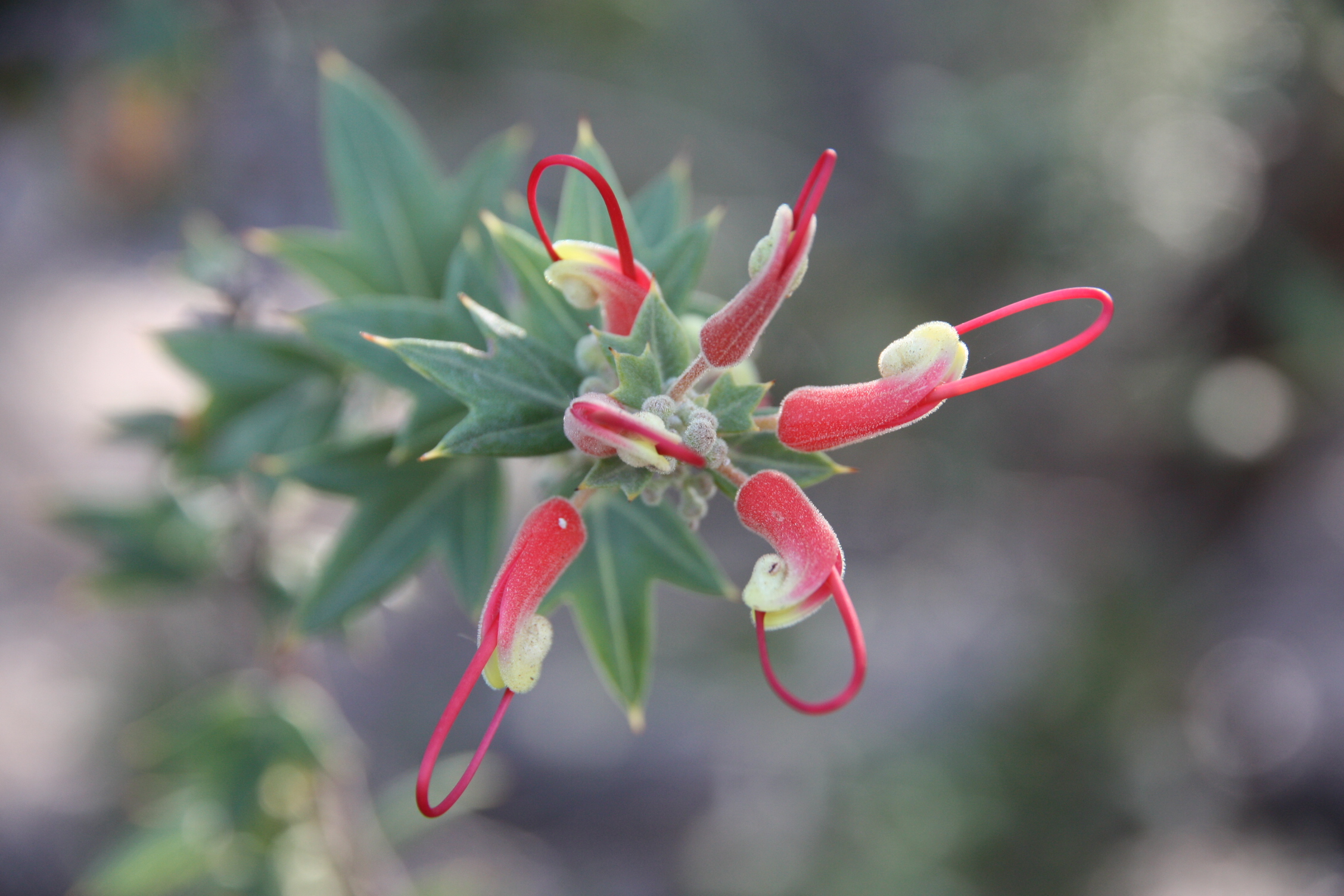
A delicate grevillea
We had a brief cruise through Kings Parks and Botanic Gardens on the first day we were in Perth, and saw that it’s as beautiful as ever.
But so many people recommended that we take a stroll along the new-to-us Lotterywest Federation Walkway, that we set aside most of an afternoon to do exactly that. And we’re glad we did.
The walkway, which opened in 2003, has a combination of on-ground pathways and long expanses of elevated sections. The showpiece is a spectacular 52-metre-long glass and steel arched bridge that rises 16 metres above the gardens.
It takes about 40 minutes (unless you’re stopping every five steps to photograph the flowers or the views) to walk the 620 metres of path. As you may have guessed, we took much longer.
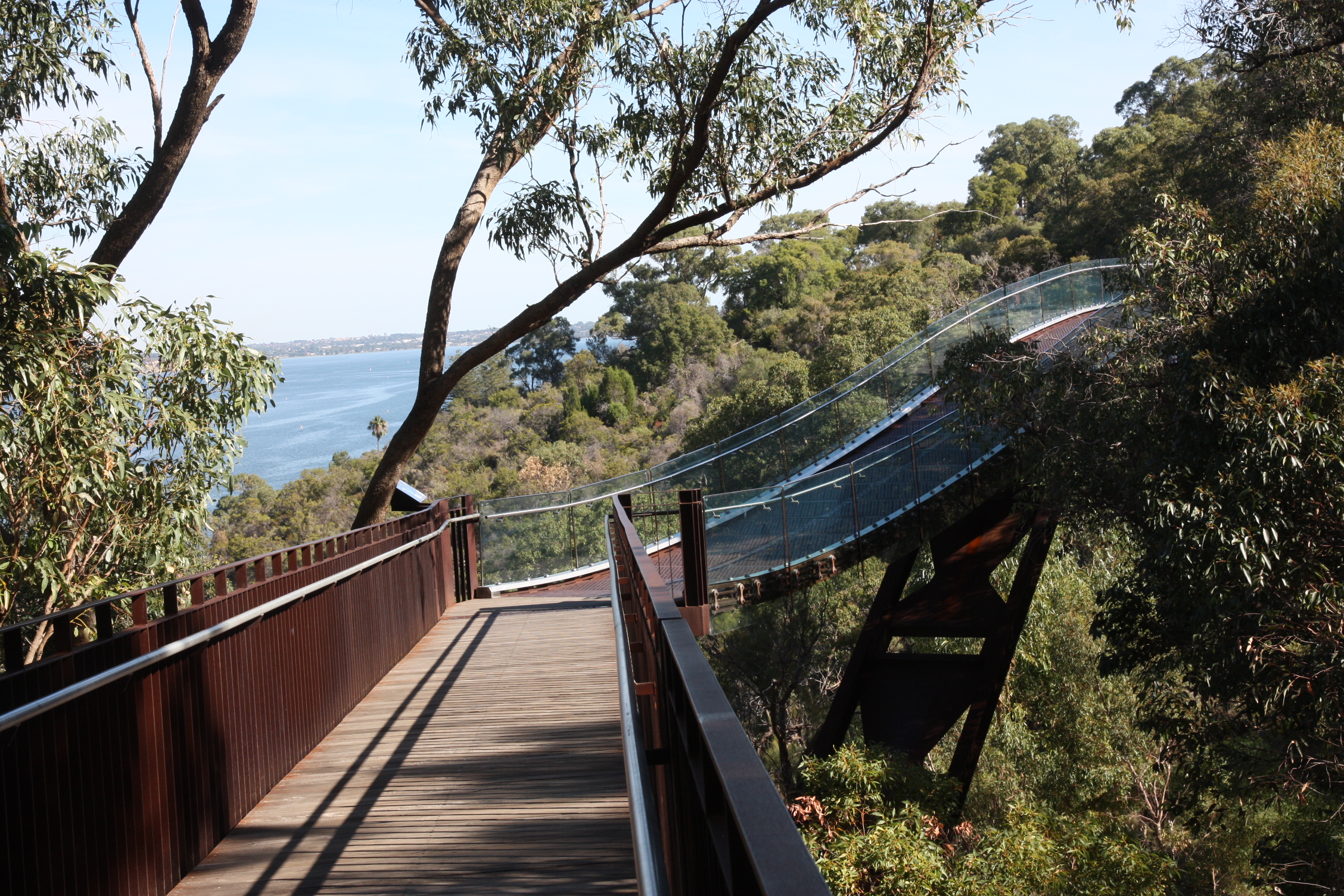
The start of the glass and metal arched bridge
While there are plenty of great views of Perth City, the Swan and Canning Rivers and the Mount Eliza escarpment, I’m partial to the native plants.
So for me, the grevilleas and their closely-related hakeas were a highlight. Grevilleas are evergreen flowering plants in the protea family Proteaceae. They are native to Australia, New Guinea, New Caledonia and Sulawesi (Indonesia).
Aboriginals favoured the sweet nectar in grevilleas. It was the original bush lolly (sweet) and could be shaken into the hand or mixed with water and carried in a coolamon (a shallow carrier). Today Coolamon is also the name of a winery. How appropriate.
I also liked the information boards, especially the one describing the six seasons of the Nyoongar people—first rains, second rains, wildflower season, first summer, second summer and autumn season.

Some of the offerings at Freo Markets
If you ever visit Fremantle, a mere 30 minutes south of Perth by car, you’d better go on a Friday, Saturday or Sunday.
These are the days the iconic Fremantle Markets are open, and they are very much worth seeing.
In fact, we’re lucky this Western Australian institution has survived. Built in 1897, it served as a wholesale food and produce market until the 1950s, when Perth Markets took it over. The original verandahs were demolished then, and the former main market areas were used as a packing and distribution centre for the next 20 years.
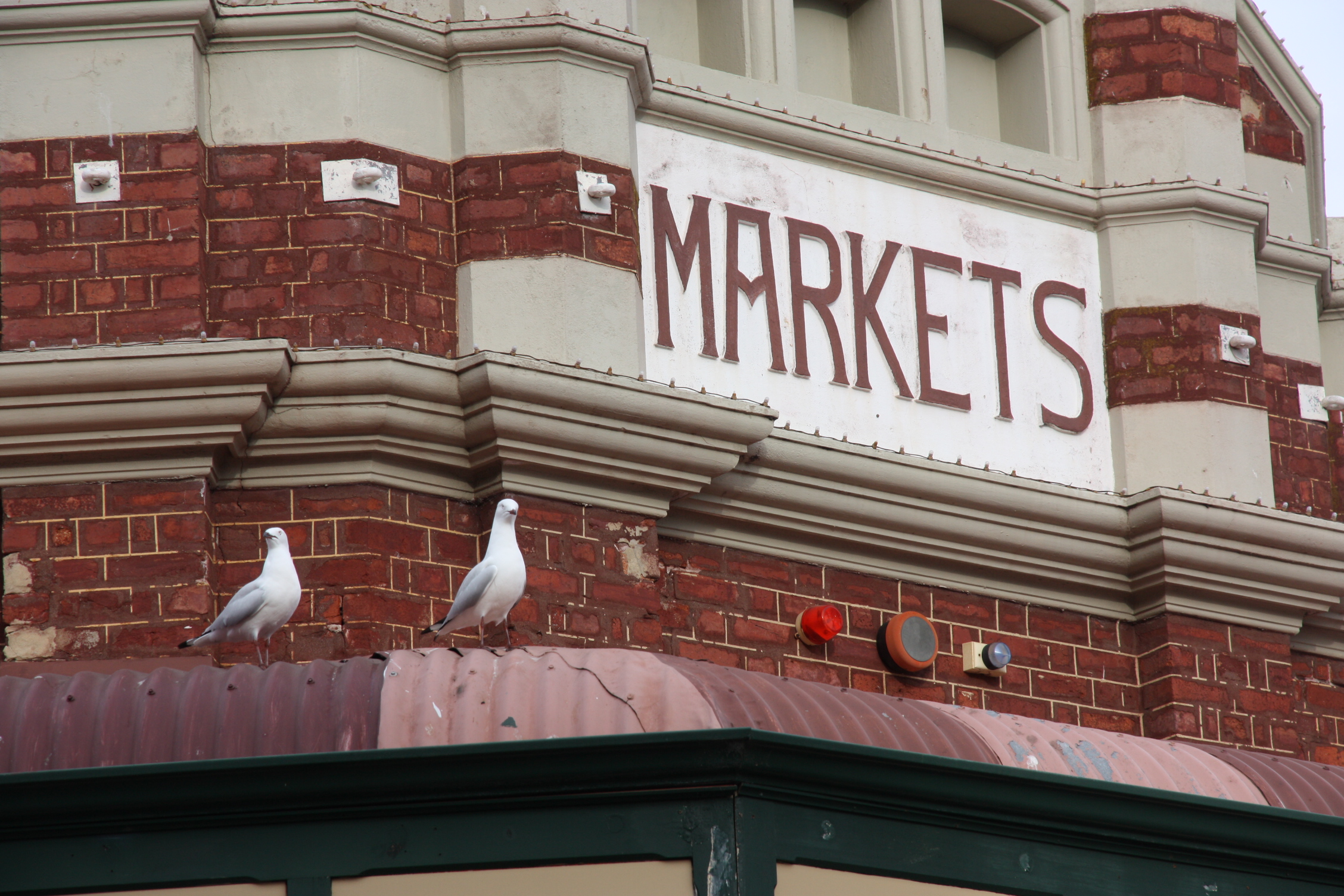
Fremantle Markets
After standing vacant for a few years, the buildings were restored in 1975 by the Fremantle City Council with money from the National Estate grants program.
A makeshift area known as Farmer’s Lane was established then to house temporary fruit and vegetable markets. This was damaged by fire in 1992. That prompted the building of a new food area, The Yard, which open in 1993. That same year the entire marketplace was added to the Register of Heritage Places.
Today there are more than 150 specialty shops. Craftspeople, fashion designers and other merchants trade in the historic main hall, while fresh food producers, vegetable growers and food retailers are situated in The Yard.
I loved it all and found it hard to resist buying up big. That said, I spent most of my time in the food areas. Prices were reasonable, quality was excellent and the variety was impressive.

Roa’s painting of a numbat
But there was another treat outside. The notorious Belgian graffiti and street artist, Roa, was in Perth recently for an exhibition of his work at the Form Gallery.
Roa, who is from Ghent, usually works with a spray can. He travels widely and his ‘trademark’ is to paint an animal on a building in a city he visits.
Apparently, he visited Perth not long before we were there and this time he left a giant numbat (an endangered Australian native) on a wall opposite a side entrance to The Yard.
From now on, I’m going to cross my fingers and hope that I manage to see a numbat in the wild. Don’t like my chances but will keep you posted.
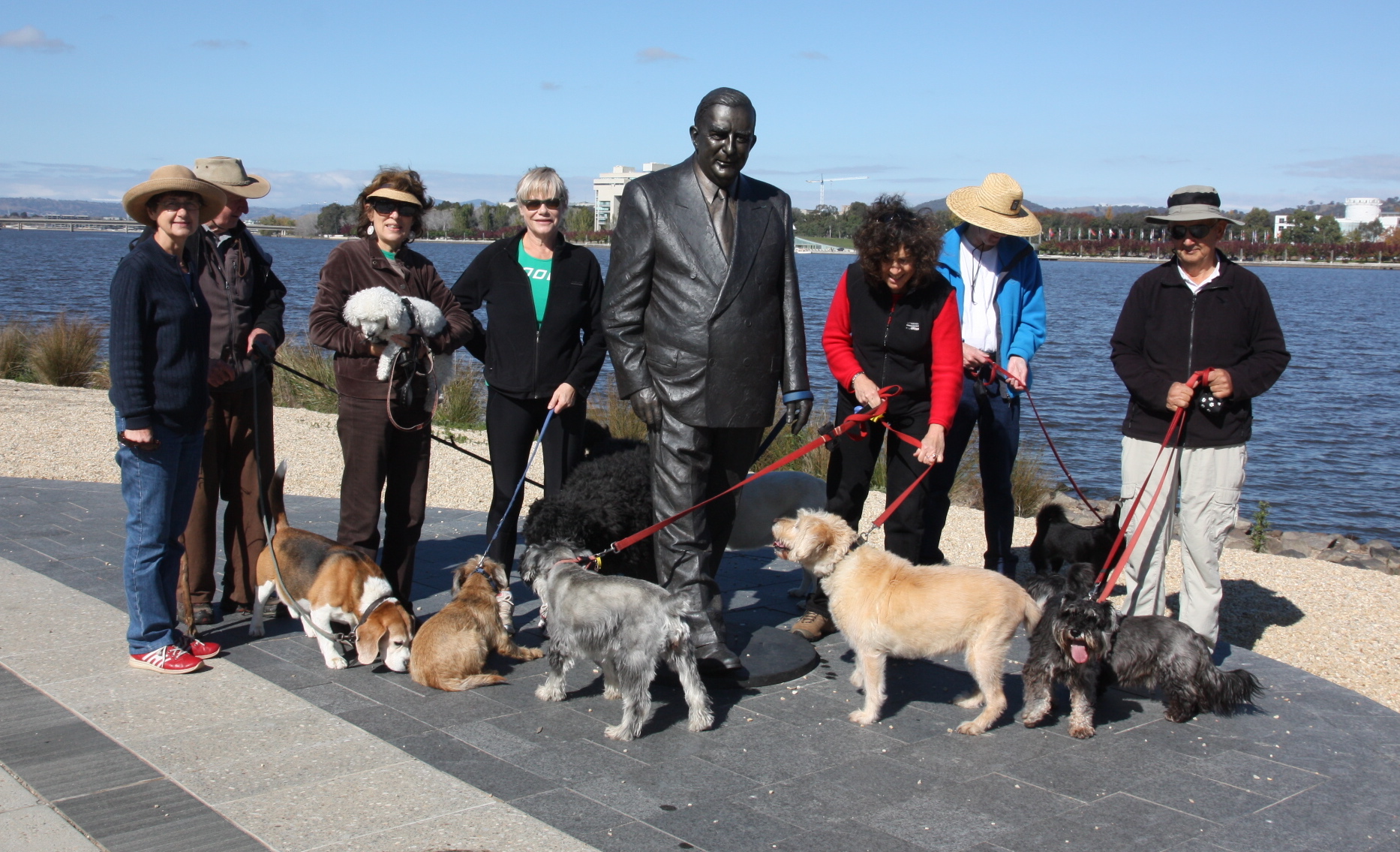
The entourage
Earlier this month, Automattic announced its second-ever Worldwide WP 5k event, in which their employees from around the globe will walk/run five kilometres on the same day.
That day just happens to be today, Sunday, 29 April, and they invited WordPress users to come along too.
The deal is to do the five kilometres—any way you like—and blog about it.
Poor John and I do 5k walks several times a week, so I figured I’d have to increase the degree of difficulty a bit to make it special.
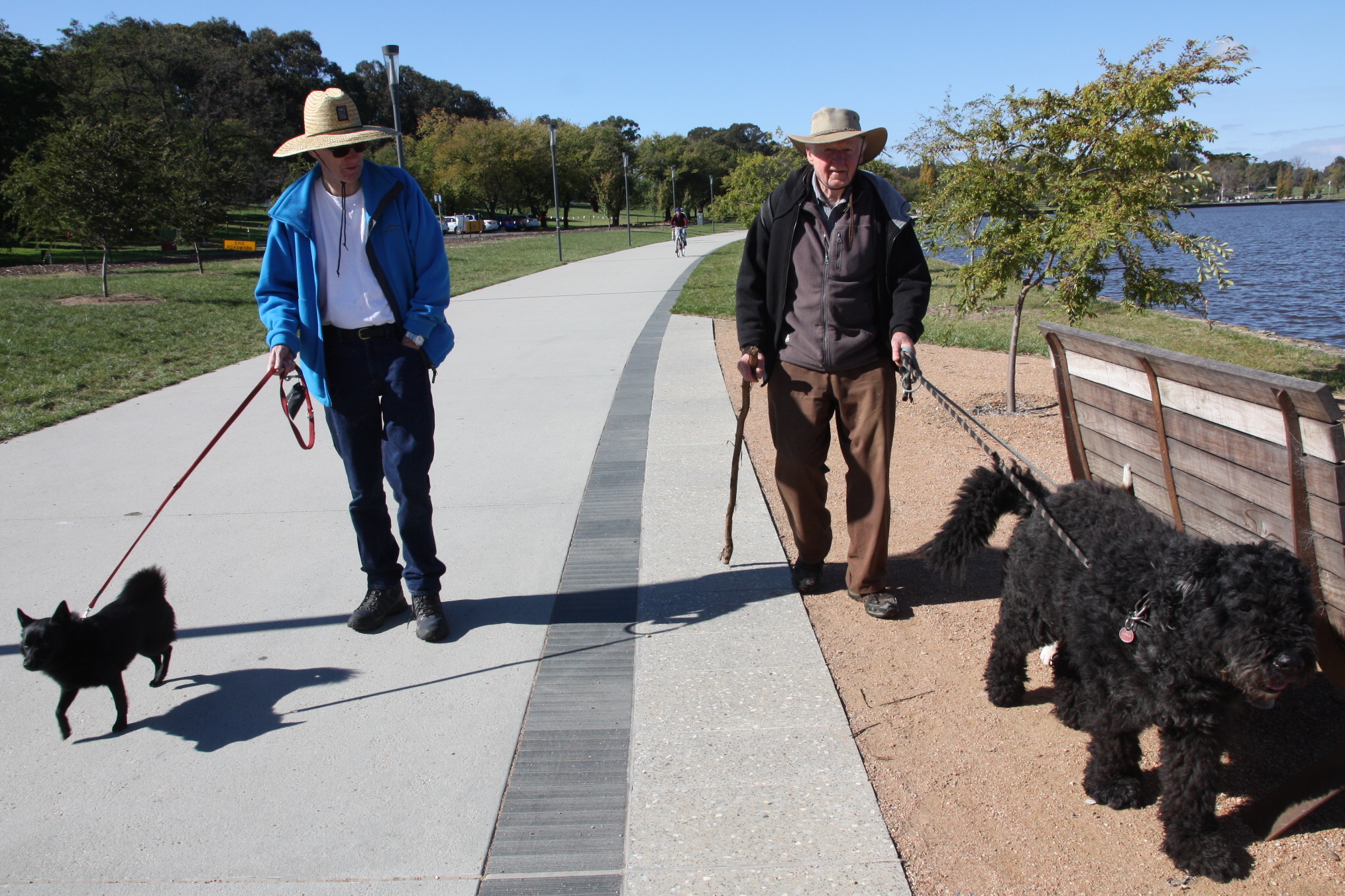
Graham and John (not Poor) with the two Belgians. Arty is a Belgian barge dog and big Louie is a Belgian bouvier.
Aggie, whose picture graces this blog’s banner, whispered in my ear and suggested a dog walk with all his friends.
How could I refuse a request from one who lives beyond the Rainbow Bridge?
Chiyo, our remaining mutt, was delighted. So I got on the horn and consulted with the minders of Louie, Bailey, Scout, Poppy, Arty, Zara, Maggie, Tash and Merlin. Yep, they were all keen to come too.
I checked with Elisabeth to see if Eduardo was interested. He’s a no-nonsense kind of cat, but Elisabeth was pretty sure it would end in tears, probably for one of the dogs.
We didn’t even have to think about where to walk. Lake Burley Griffin is the centrepiece of Canberra, Australia’s national capital. This manmade lake was created in the mid-1960s by damming the Molonglo River.
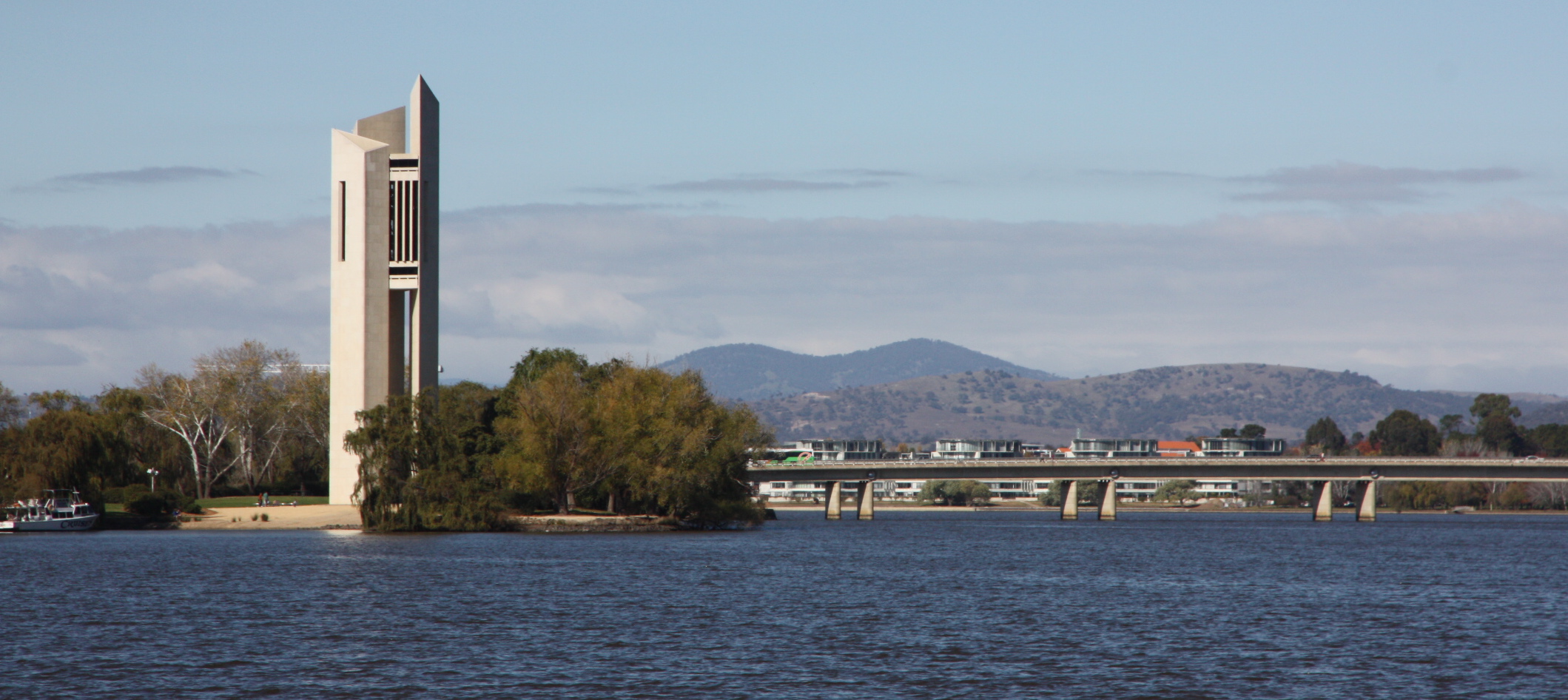
Aspen Island and the National Carillon—a present from the British government to Australia on the 50th anniversary of Canberra’s creation. Kings Avenue Bridge is on the right. The Carillon has 55 bells that chime the quarter hours and play a tune on the hours. There are regular concerts, and we can hear the Carillon from our house.
The then Prime Minister, Robert Menzies, was committed to having the lake and instrumental in making sure it happened.
The lake is about 28 kilometres around but the circuit around the middle, and between the Kings Avenue and Commonwealth Avenue Bridges, is exactly five kilometres, and a very popular place for walkers, joggers, cyclists and more.

Great day for a 5k walk. Regatta Point Tourist Centre in the background
So eight ‘parents’ and 10 dogs gathered at Blundell’s Cottage, which is near the Carillon. After each pooch got a bit of Smacko, we set off westward along the RG Menzies Walk.
As an aside, every deceased past prime minister has a suburb in Canberra named after him—every one but Menzies because he insisted he did not want one. No suburb, no street, no park.
But he never mentioned a walkway, so some clever-clogs thought of naming the path along the north shore of the lake the RG Menzies Walk, to highlight Menzies’ own commitment to seeing the lake become reality. The story goes that during the planning stages of the lake and when Menzies was overseas, someone cut funding for the project. Menzies had a fit when he found out and reinstated the money.
Our entourage drew a lot of wide-eyed stares and comments, and Merlin’s high-pitched yapping turned plenty of heads—we should have had a ‘no we’re not torturing him’ sign. He has a special collar that dispenses a shot of citronella when he barks but, guess what. No battery!
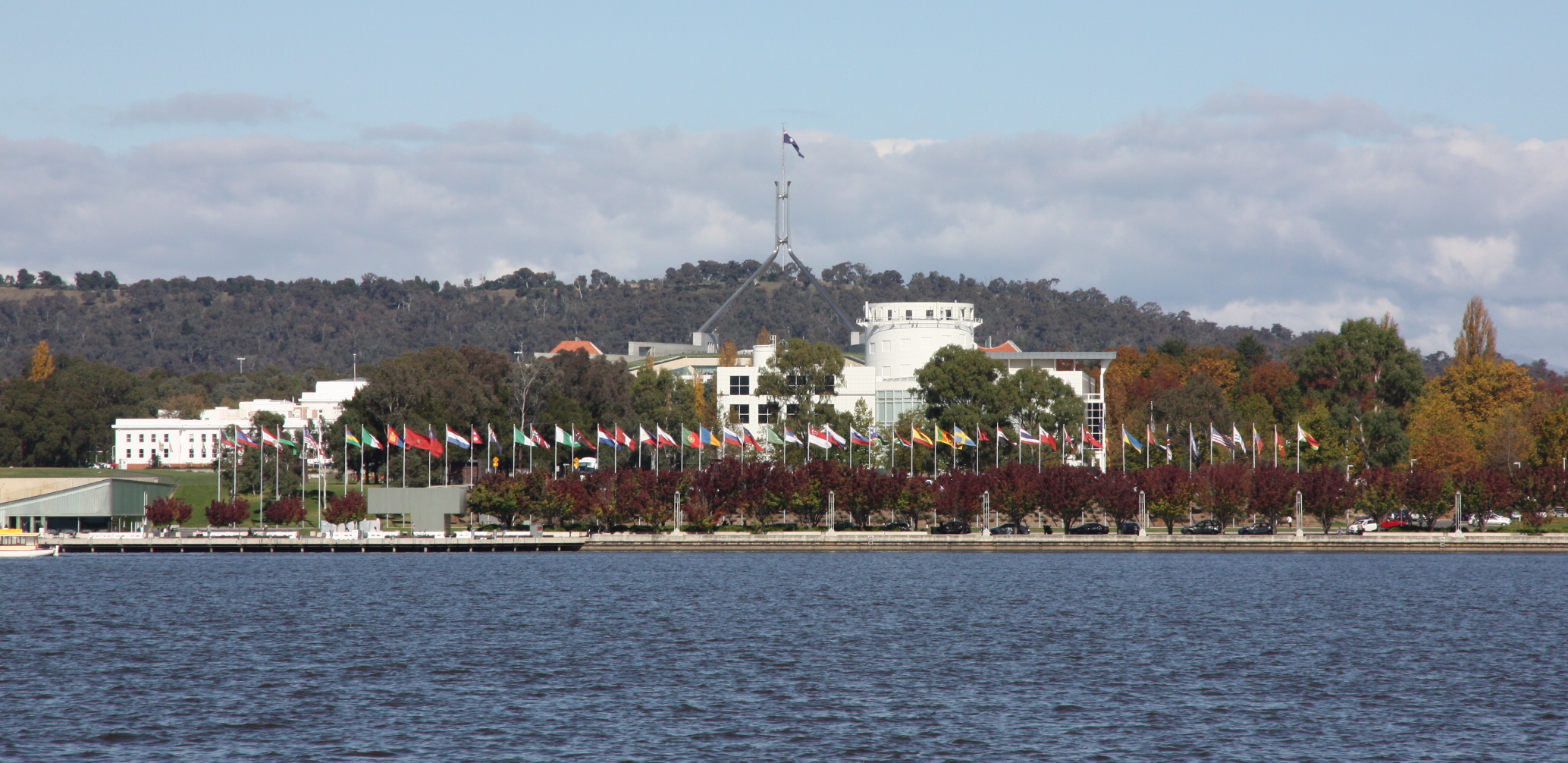
Half of the International Flag Display on the southern shore of Lake Burley Griffin. There are about 95 flags, from the countries with diplomatic representation in Australia. The display was launched in 1999. Questacon, the Science and Technology Centre, is in the background.
Obviously with all the people and other dogs to greet, cyclists and Segwayers to avoid, scents and bums to sniff, poops to clean up and pee-mails to leave, we were all strung out for most of the walk.
We did, however, manage to gather by the statue of RG Menzies himself, out for a stroll but without a pooch. So we looped Maggie’s lead over his hand and got a group shot of the mayhem. I’m missing because I’m the photographer.
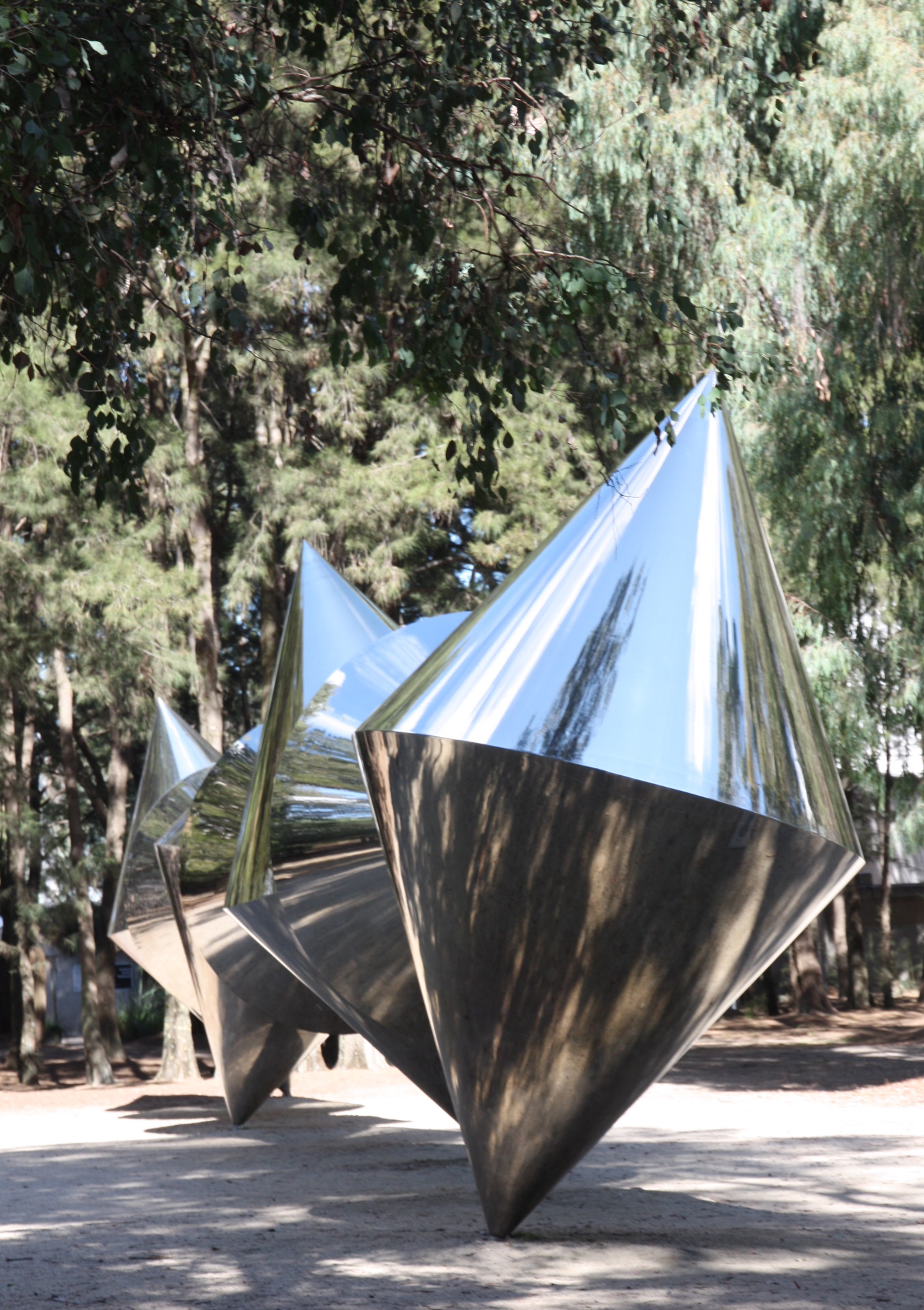
Some of us did a short side trip into the Sculpture Garden at the Australian National Gallery
All in all, the outing was a complete success. It was a glorious autumn day—a light breeze, about 18°C and beautifully sunny—and a whole lot better than blustery Wednesday when we did the same walk.
Nobody bit or was bitten. Nobody chased the swans. Poppy, who is ancient and diabetic, made it all the way. Merlin stopped barking. Louie, Bailey, Tash and Maggie drank water out of a plastic bag. Chiyo resisted lunging at all the other dogs we encountered. So everyone earned another round of Smackos. Plus John (not Poor) found $1 on the ground and I found an unopened water bottle.
Hope everyone enjoys the scenes of our walk and the lake. If you aren’t Australian, did you know our swans are black?
So thank you Automattic for instigating such a worthwhile outing. Same time, next year?
P.S. For anyone who is hungry after all this exercise, check out what’s cooking on page 32.
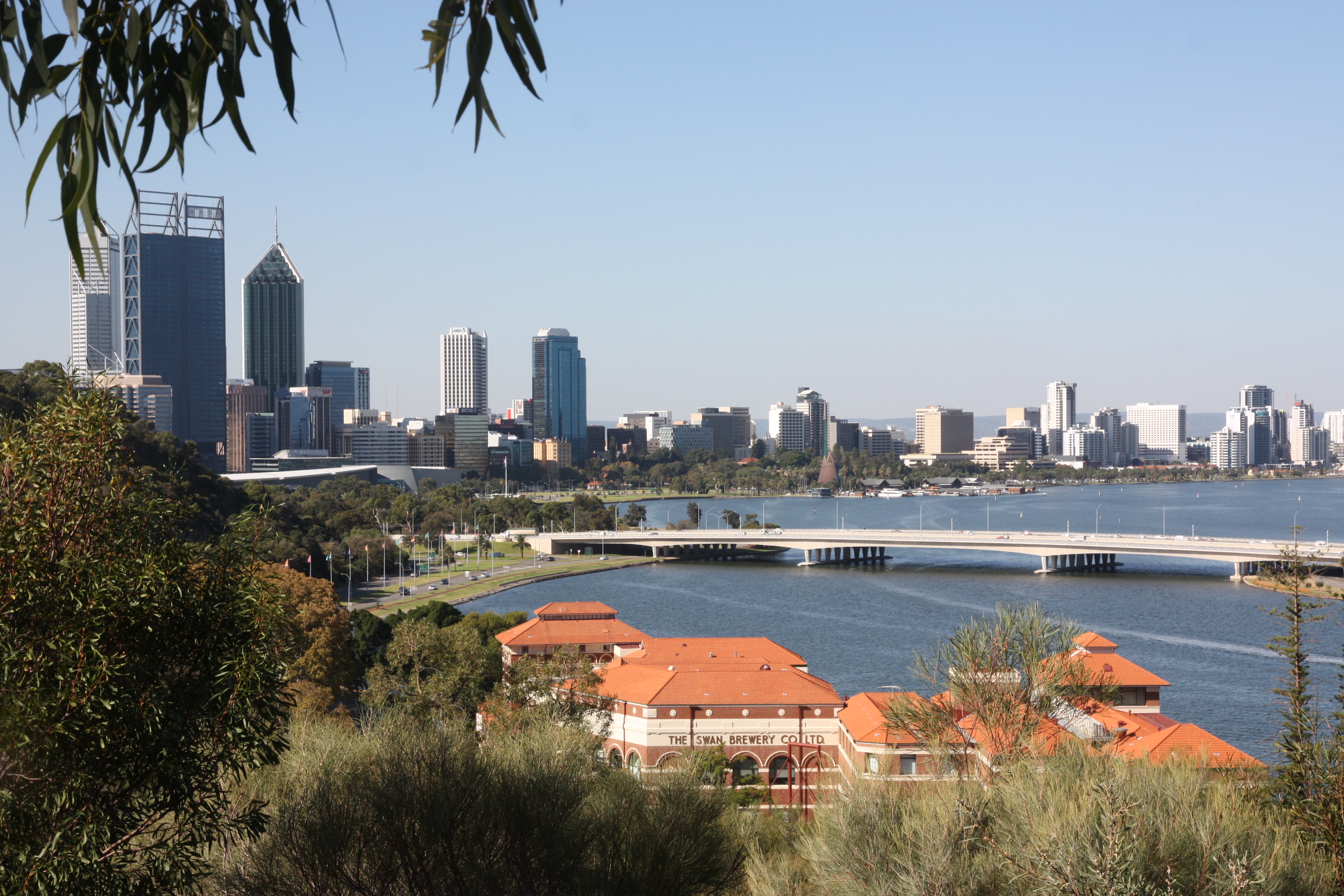
The mighty Swan River, viewed from Kings Park
Kings Park was one of our first stops in Perth.
This spectacular landscape—located less than 2 kilometres from the city’s central business district—overlooks the Swan River and the Darling Range beyond.
More than 6 million people visit the park each year to enjoy a picnic, an event or simply a walk through its extensive collection of Western Australia flora.
In fact, two-thirds of the park—it’s more than 400 hectares in size and its full name is Kings Park and Botanic Gardens—is natural bushland. It claims to have 319 species of native plants and 80 bird species.
Aboriginal people have visited this area for thousands of years, and it remains an important ceremonial and cultural place for them.
More than one-third of the area was set aside as public parkland in the early 1830s. It was formally declared 40 years later, and enlarged over time. In 1901, its name was changed from Perth Park to Kings Park, to mark the accession of King Edward VII to the British throne.

The Cenotaph
According to the information sheets, Kings Park and Botanic Garden has more memorials, statues and honour avenues than any other park in Australia.
The Cenotaph has centre stage. This 18-metre obelisk honours all Western Australians who died in the service of their country. There are 7000 names from World War I alone.
I was especially touched to see the plaques placed in front of the park’s large trees. Each plaque—usually one per tree—names and remembers a fallen soldier.
I plan to do two more posts about Kings Park—on the many grevilleas and the metal walkway. If you ever come to Western Australia, you must see this park.
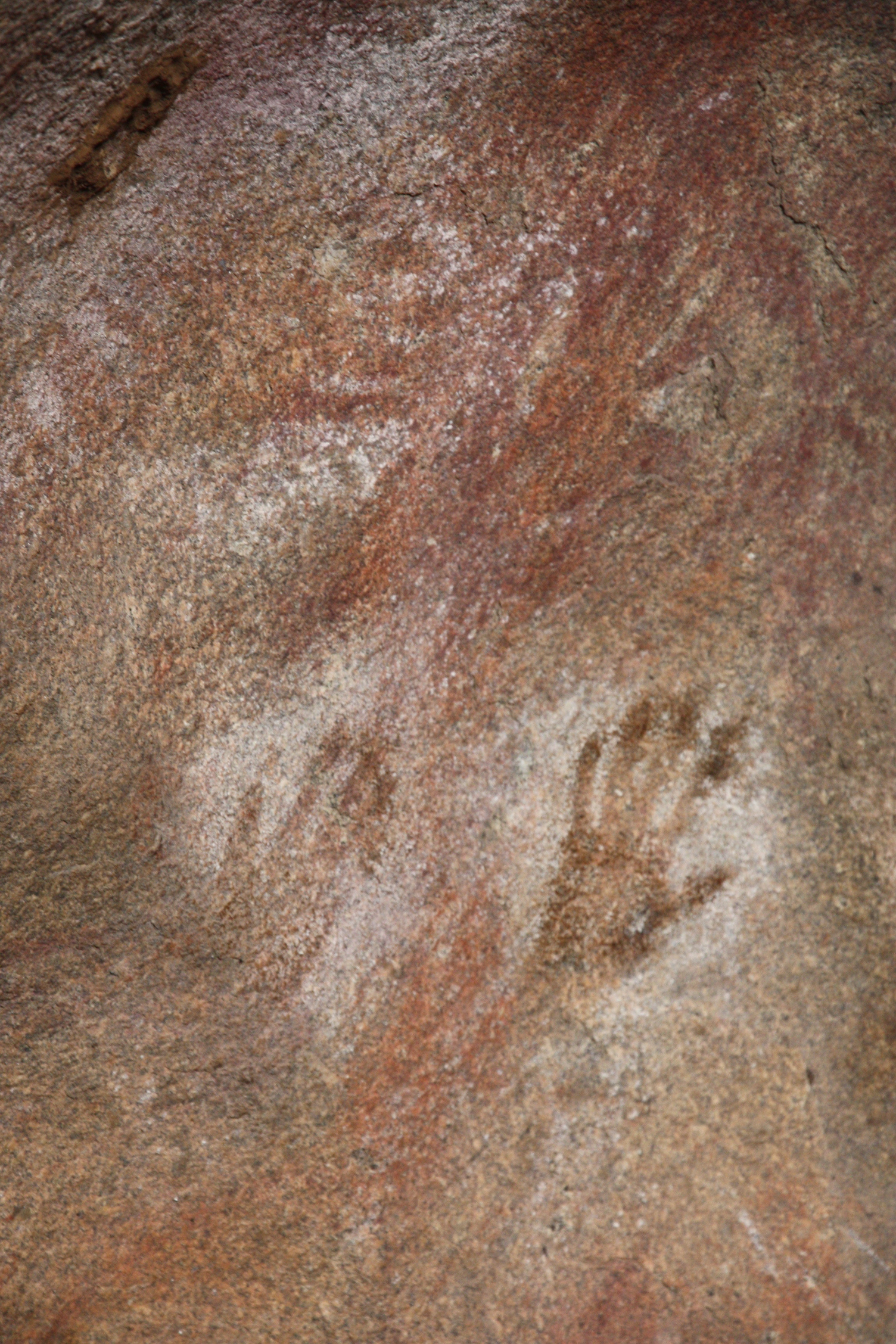
Hand stencils in Mulka's Cave
Having made an early start to climb Hyden Rock and see the sun rise, we had plenty of time to drive on another 19 kilometres to see The Humps.
This massive monolith (which includes Mulka’s Cave) rises almost 100 metres above the surrounding plains and is thought to be about 2700 million years old.
It is one of four major rock ‘islands’ in the Hyden area. The others being Hyden Rock (which includes Wave Rock), King Rock and Graham Rock. All of these are ‘inselbergs’ or island mounts. Because they are blocks of granite, with few open fractures, they have withstood the weathering effects of wind and water, and now tower above the more erosion-prone landscape around them.
Mulka’s Cave, at the base of The Humps, is a significant site for Aboriginals. It contains the largest collection of Aboriginal paintings in southwest Western Australia. Seven colours were used in the artworks, and more than two-thirds of the 452 paintings are hand stencils. Interestingly, left hands outnumber right hands in a ratio of 3:2.
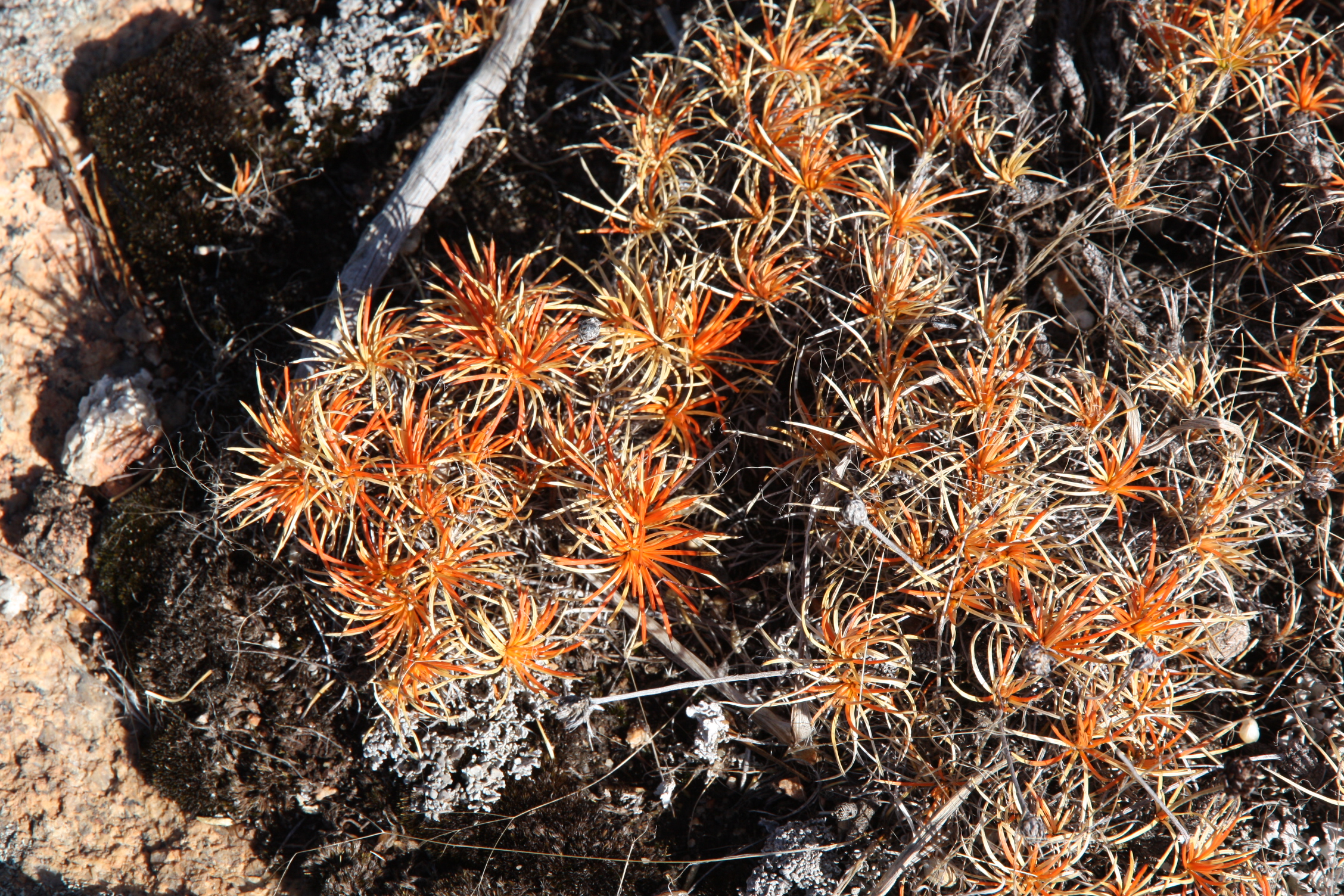
The sign said this plant eats insects. Looks tame
The Humps Reserve is also an important sanctuary for plant and animal species. A survey in 2004 recorded 247 species of plants in the granite outcrop alone.
Science shows that The Humps was covered in rainforest for many millions of years. Two species, Eucalyptus caesia and Granitites intragendus are leftover from that time. Moisture-rich niches on the rock have allowed both species to adapt and survive in what is otherwise a harsh and dry climate. DNA testing shows that the nearest relatives of The Humps’ Granitites are in Australia’s tropical north.
We spent more than hour exploring Mulka’s Cave and The Humps. There is a well-marked trail to the summit with great views of the surrounding wheat fields. Then we were off to Perth—only four hours away and 10 days after we set out from home.
 Where to next?