
A monster on the road
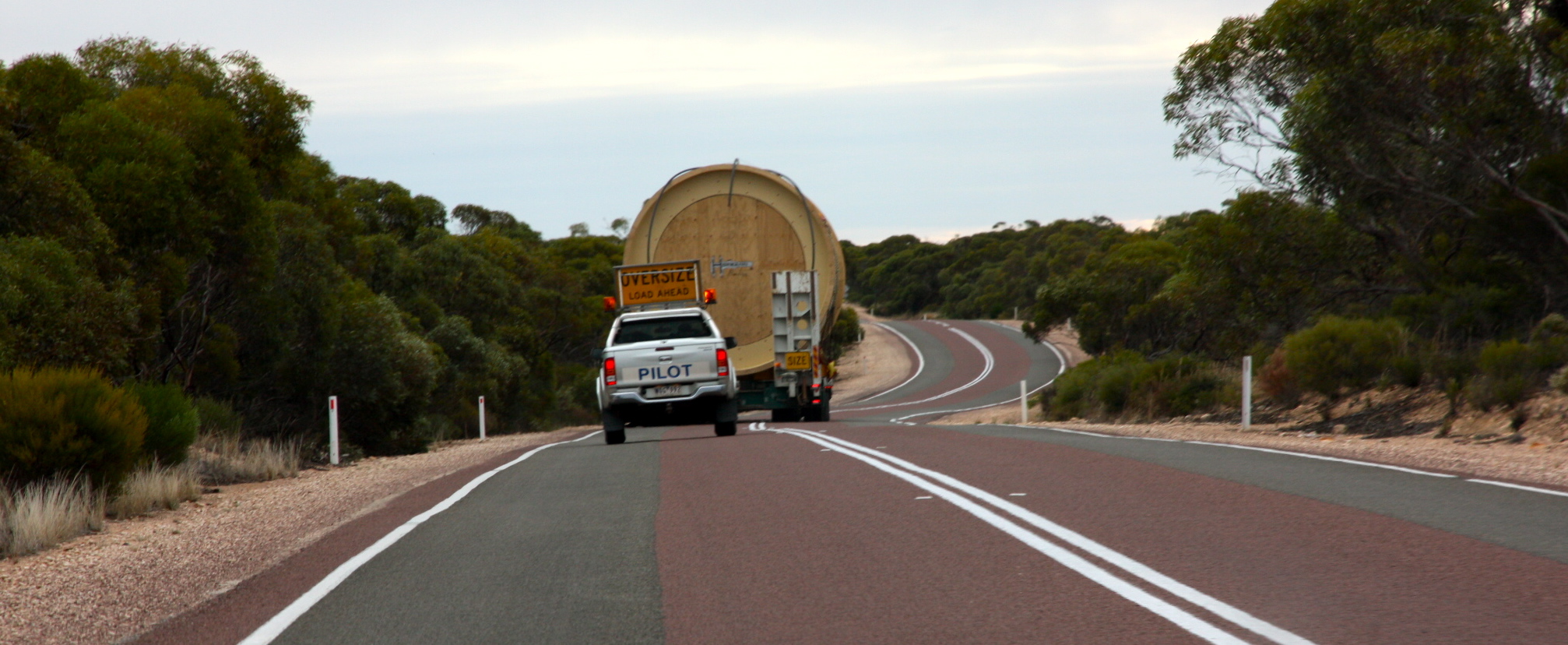
Not long after we saw the Big Galah in Kimba, South Australia, we encountered the biggest semi-trailer rig I’ve ever seen. In fact, there were two of them, but we didn’t realise that until the next day.
Each semi was hauling a huge piece of pipe, probably bound for one of the mines in Western Australia. The load was so wide that the semi ran down the middle of the road, meaning on-coming traffic had to pull off to the shoulder when it went by.
Poor John thought the rig shouldn’t be allowed on the road but, good grief, how else were they going to move that equipment?
Passing was a challenge, but not impossible.
The driver of the ‘pilot’ vehicle (there was also a lead vehicle driving about a kilometre in front of the big rig) had a great system for letting me know when it was safe to pass.
Obviously, he was in radio contact with the lead vehicle, so could ‘see’ what might lie ahead.
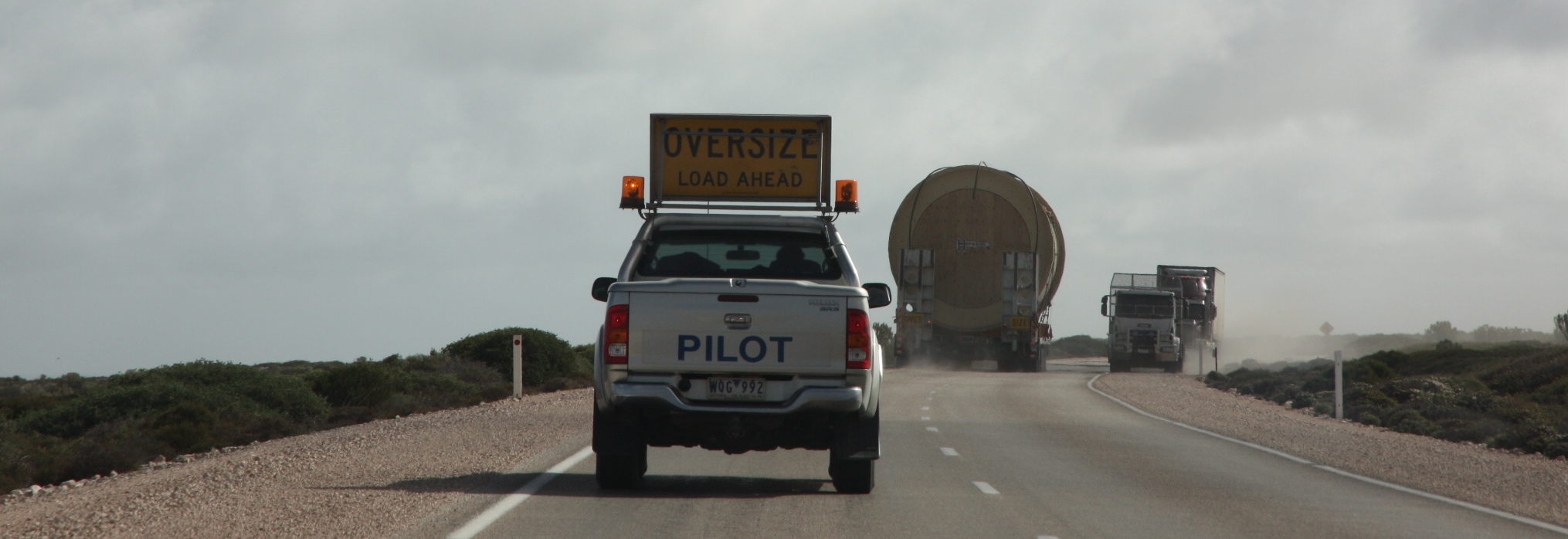
The first time I edged out to see around the pipe, the ‘pilot’ vehicle edged out in front of me. The second time I tried it, he did the same, so I realised he was making it clear that I was not to pass.
After a couple of kilometres, he suddenly put on his right turn indicator and I knew immediately that it was his way of signalling an all-clear ahead. I edged out and he waved me on, so I went like the clappers past him and the big fella.
It’s good that I figured out his signal so quickly because I reckon I passed these rigs about six times over two days. Poor John passed them a couple of times too.
We saw the last of them just after the Western Australian border when we decided to head down a dirt/gravel road to Hyden and the Wave Rock.
A couple of days later, we read in the newspaper that drivers for accompanying vehicles earn A$91 an hour. I wonder what the rig drivers get?
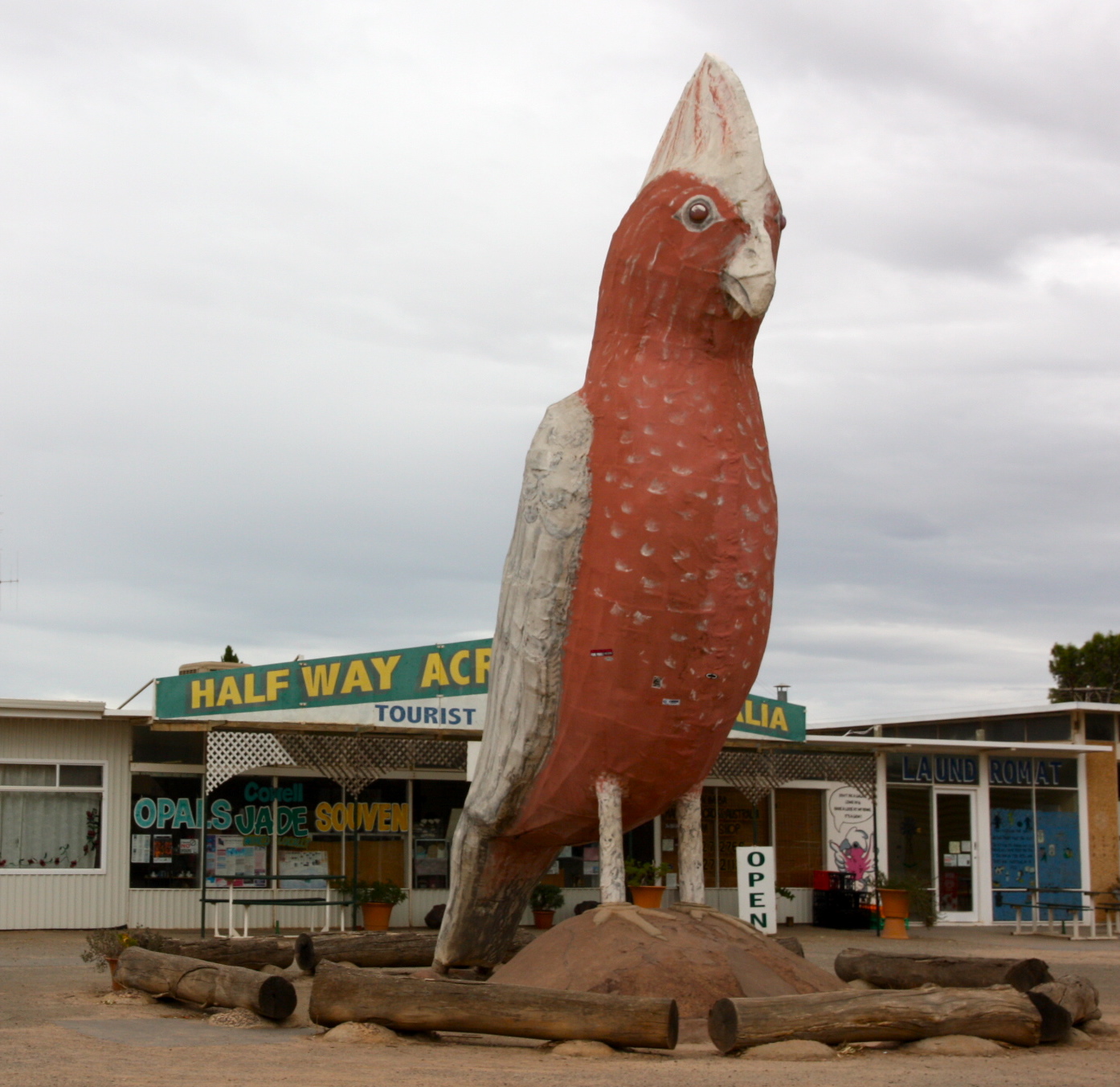
The Big Galah at Kimba, South Australia
Australia is huge, so maybe that explains why Australians are obsessed with big things. In fact, there are about 150 big things scattered across the country.
I’ve seen quite a few such as the Big Merino in Goulburn, the Big Banana in Coffs Harbour, the Big Bench in Broken Hill, the Big Lobster in Kingston and the Giant Murray Cod in Swan Hill. Now I’ve met another one that I never knew existed—the Big Galah.
Galahs are a gorgeous pink, white and grey variety of parrot that is native to Australia. They’re about 35 centimetres (14 inches) long and weigh 270–350 grams (9–12 ounces).
This bird is 8 metres (26 feet) tall and weighs about 2.3 tonnes. He was built in the early 1990s by Robert Venning, and is made from fibreglass over a steel frame. He lives in front of the Half Way Across Australia gem shop in Kimba, South Australia.
And why did I refer to him as a ‘silly galah’. It’s Australian slang for a foolish person—as in ‘don’t be a silly galah’.
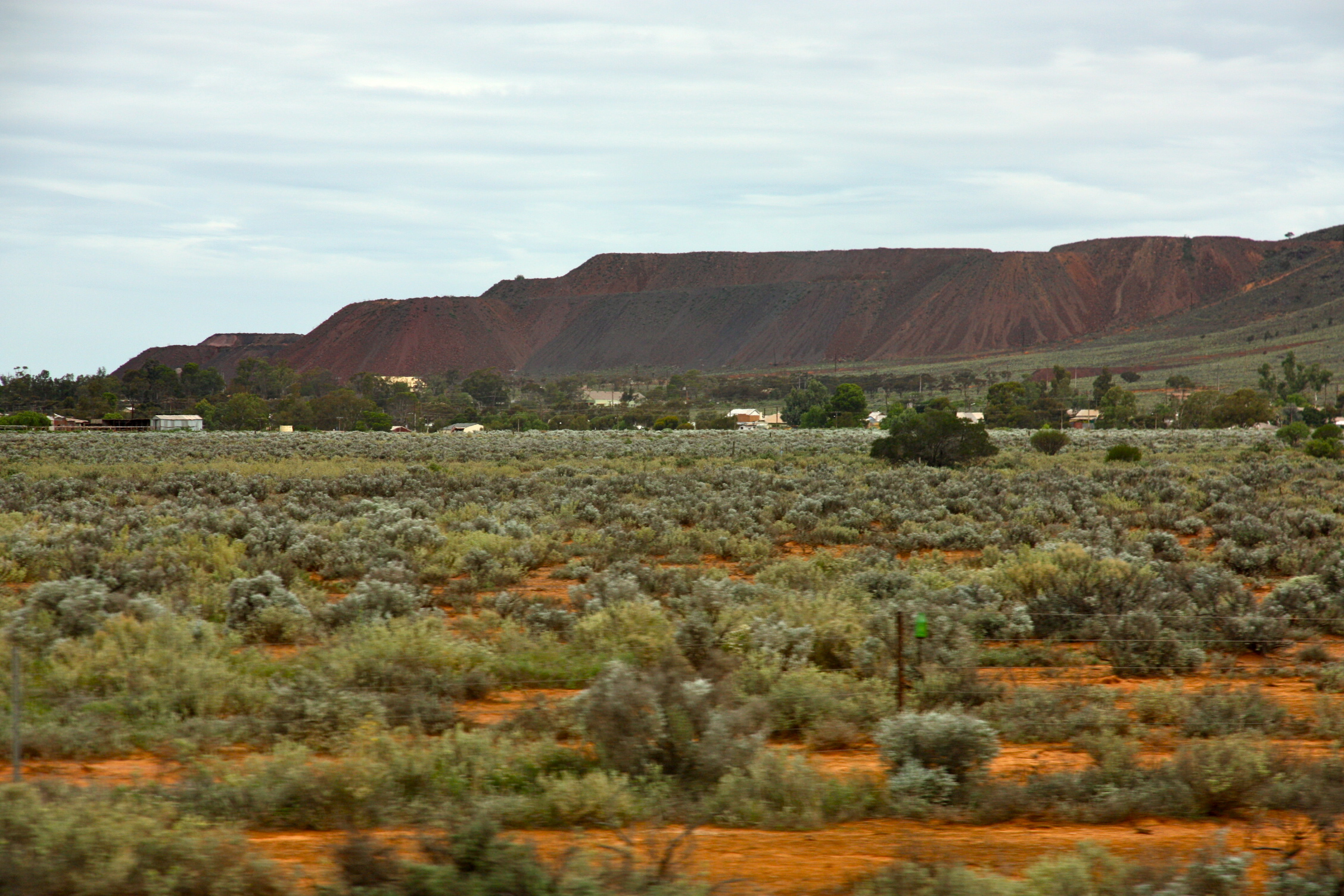
Coming in to Iron Knob
We headed out of Adelaide* and drove north along Spencer Gulf.
There are no pics of this stretch. I took quite a few, but decided it was such a flat and featureless vista that I wouldn’t bore you with any.
As an aside, this should be called Spencer’s Gulf. Unfortunately, and quite a few years ago, Australia ditched the apostrophe and sometimes the accompanying ‘s’ in all its place names. I think this is a crime against grammar and, if I ever become the Wizard of Oz, I will undo this outrage! Rant over.
At the top/north end of Spencer Gulf, we reached Port Augusta and turned left into my new unknown territory. I flew to Perth (about 25 years ago), but have never driven west of Port Augusta. So from here on, all of this Canberra-to-Perth road trip is new to me.
On this ‘new’ stretch of road, our first major stop was at Iron Knob (still in South Australia and about four hours from Adelaide). Poor John saw it from a long way off, because he knew what to look for.
Iron ore was originally mined here for use as flux in the copper-smelting industry. The ore was of such high quality that it started an iron smelting industry as well. Not surprisingly, Iron Knob is considered the birthplace of Australia’s steel industry.

Quarrying for iron at the town ended in the mid-1990s. Even though the mine is closed, the town remains active.
We pulled off the main road for a quick visit. I was surprised to find that emus are a big threat here, with warning signs about every 50 metres and on both sides of the street.
I was also pleased to see that a kids’ camp has opened at Iron Knob. The camp includes a flying-fox run that was being used the day we were there. I think the run is overseen by the local police because all the adult organisers/participants were in uniform.
It was fun to see the cop at the bottom of the run in action. He had to make sure the flying-foxer was ‘stopped’ before they shot off the end of the run. I bet he needed a few beers and a long nap at the end of his day.
Was also amused that the toilets are provided for ‘Knobbettes’ and ‘Knobbies’. Kitsch at its best.
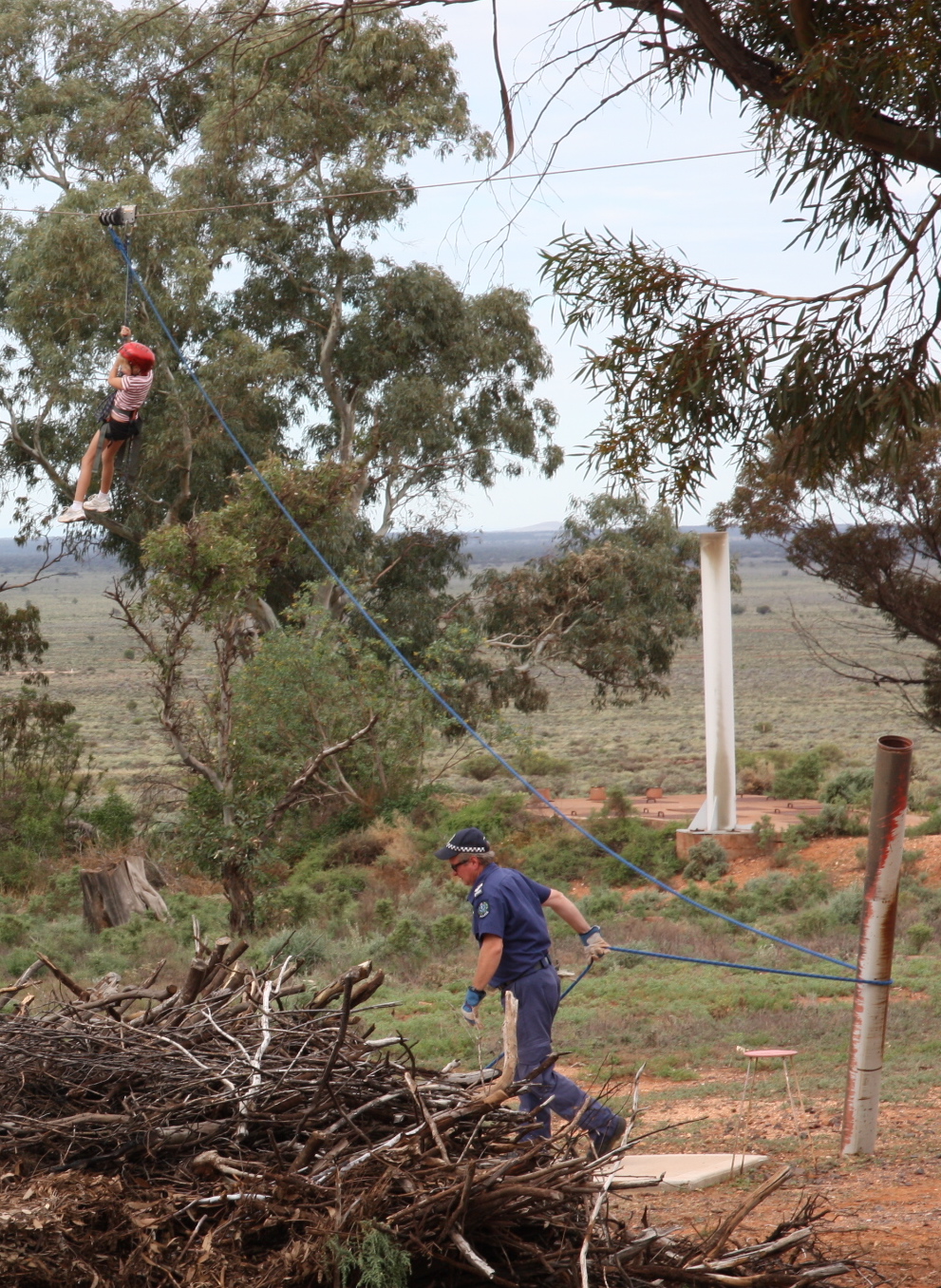
Stopping the 'flying fox'
* P.S. Colour me red. We stayed in Adelaide for three days, but I took very few pics, aside from the ones of our walk in the hills. Adelaide is Poor John’s hometown and we go there often enough that I forgot to record it as a tourist destination. I promise to do so the next time.

Great advice and wonderful truth in advertising
A few people have asked why we’re crazy enough to be doing this Canberra-to-Perth jaunt. I reckon we’re not crazy enough.
We saw this caravan on the road out of Adelaide and I think their slogan sums up our thoughts rather well. And it applies to our Aussie and our international travels.
If you agree, come join us on one of our outings.
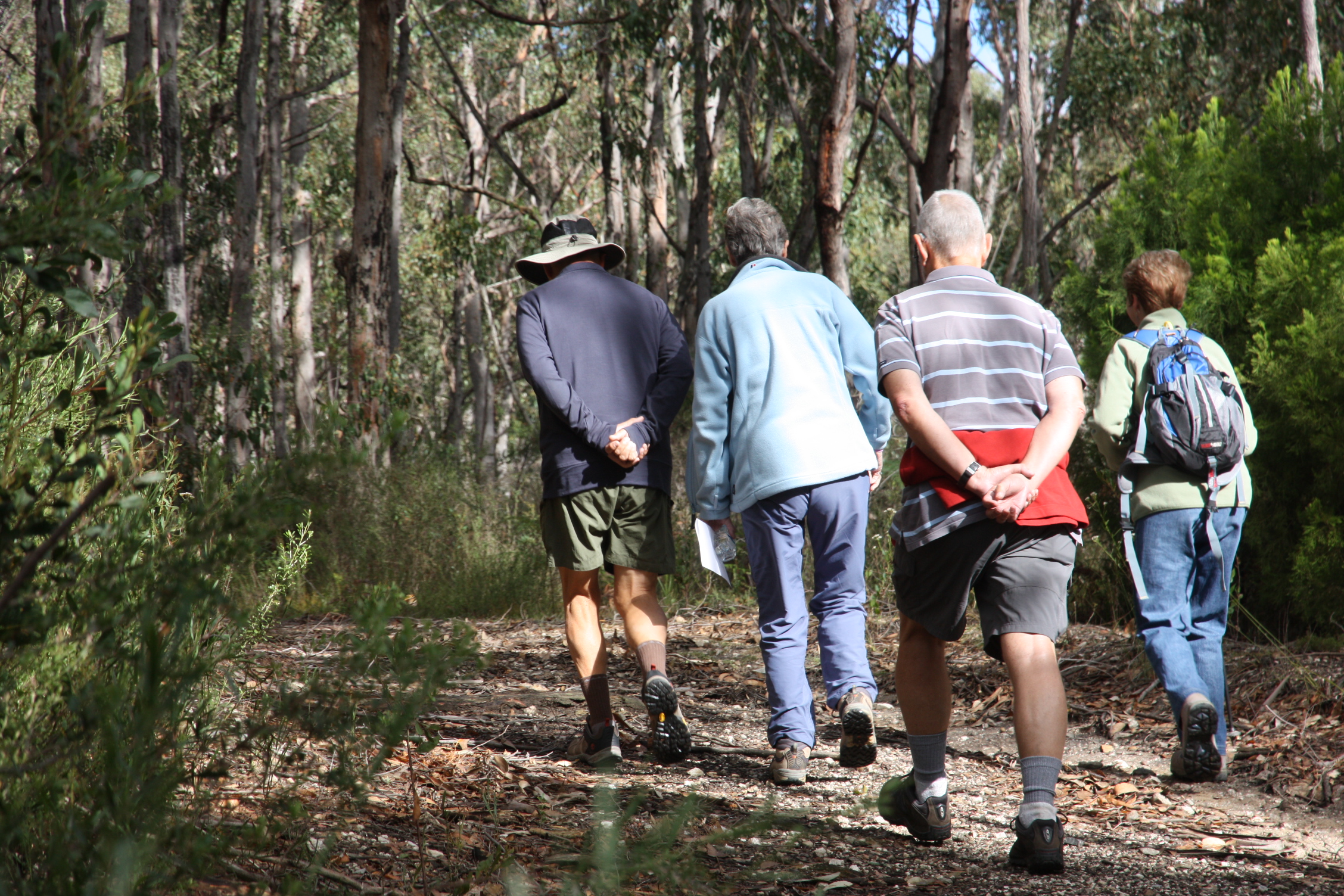
From left, Poor John, Charlotte (relative by marriage), David and Margaret, who is a not related to the Brights.
If you’ve followed this blog for a while, you’ll know that Poor John walks along with his hands behind his back. Here’s just a bit of evidence.
There was a lot of joking and ribbing about this on the trip from London to Sydney. Norm finally decided that the stance actually helped to propel a person up a hill.
But I know better. The stance has nothing to do with physics or propulsion. It has to do with genetics. It runs in the Poor John family.
You doubt me?
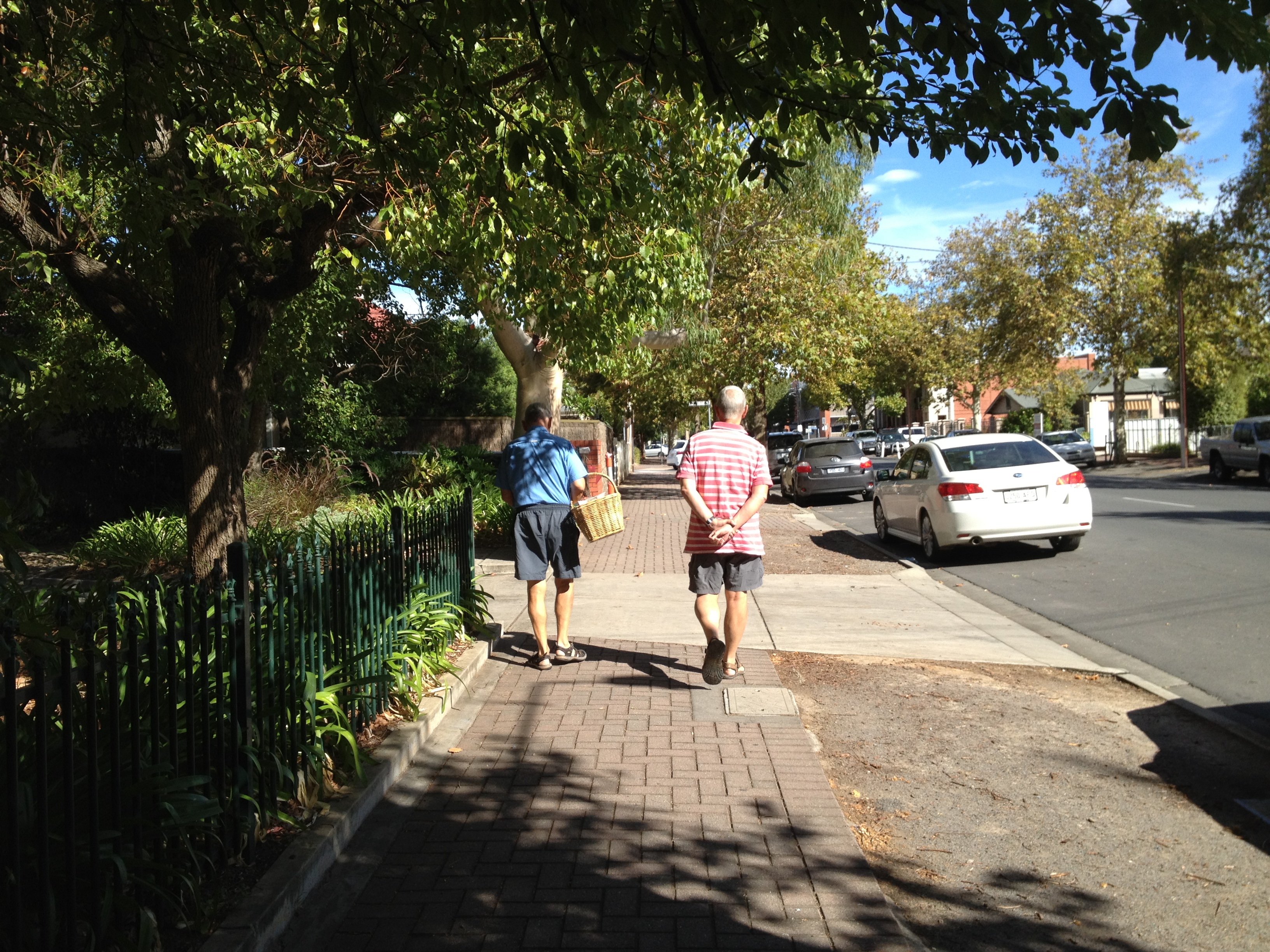
Here are two pictures of Poor John with his brother, David. In the first one, at the top right, they both have their hands clasped behind their backs.
In the second pic, here on the left, Poor John is carrying a wicker shopping basket so can’t fold his hands behind his back, but empty-handed David can!
Our children have it too.
Daniel and Libby, one of our daughters, travelled to Turkey, Lebanon and Norway earlier this year. Libby did a little travel blog and even posted a picture of herself—in Byblos—using the folded-hand stance.
The condition is not only genetic—it’s also catching.
In the pic below is our friend, Kate, following Poor John out to the lighthouse by the junction of the Indian and Great Southern Oceans. She has quickly succumbed to his folded-hand stance. Oh people, be careful or Poor John will take over the earth.

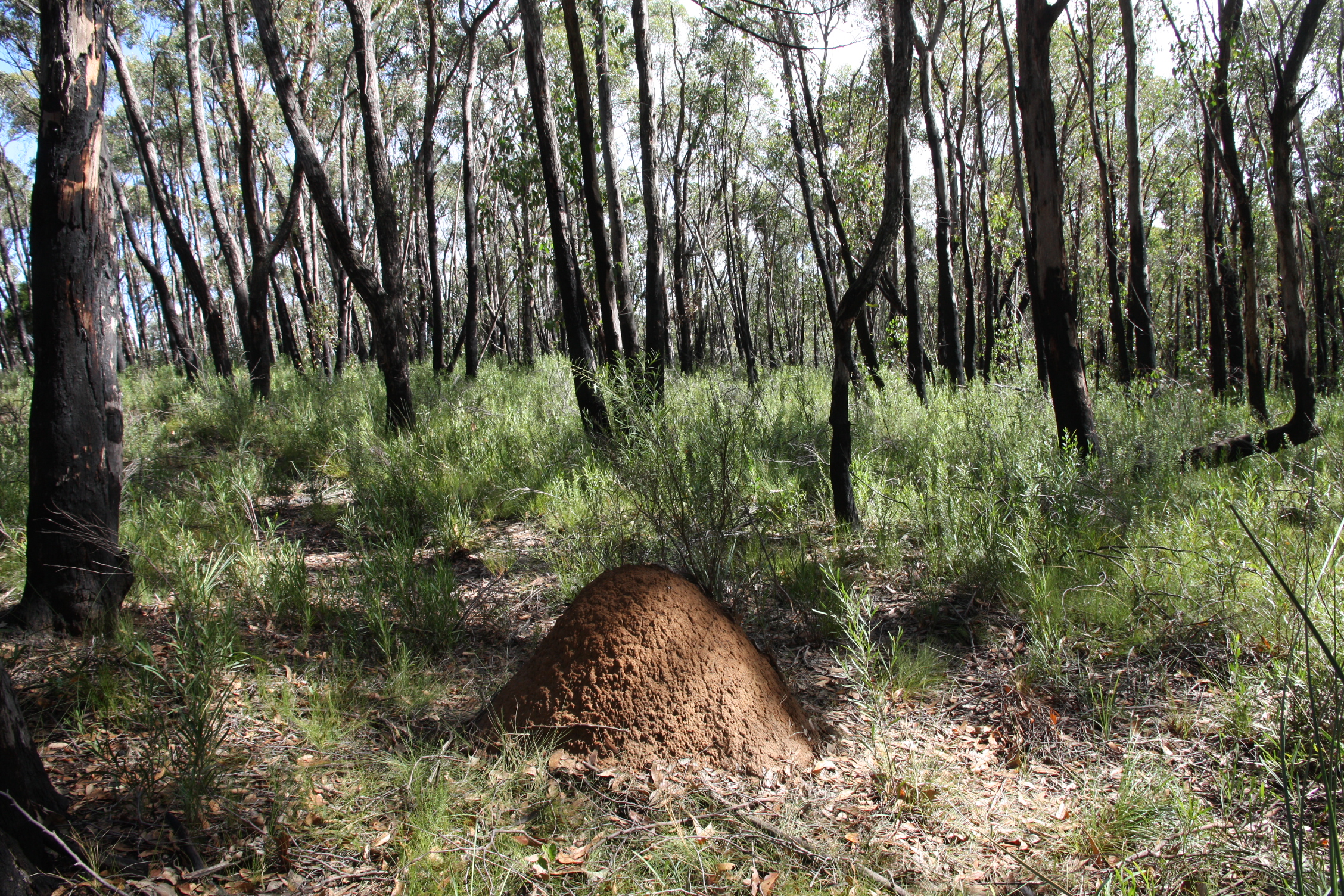
An anthill makes a statement in the Mark Oliphant Conservation Park.
The next stop on our Canberra to Perth adventure was Adelaide, South Australia.
This is Poor John’s hometown and a place we both enjoy. There’s the added bonus that his brother and sister-in-law, David and Charlotte, still live there, which meant we could crawl out of our tent and sleep in a real bed. 🙂
We were also invited to join them on their monthly bush walk with a group of their friends.
What a great idea! Members of the group take turns choosing, planning and leading a walk. Every walk is different—it might be a tour of Adelaide artworks, a weekend-long tramp in Kangaroo Island or anything in between. I think repeats can come around every few years.
The walk we joined was organised by Bryce and Margaret, who set it in the 190-hectare Mark Oliphant Conservation Park in the Adelaide Hills.
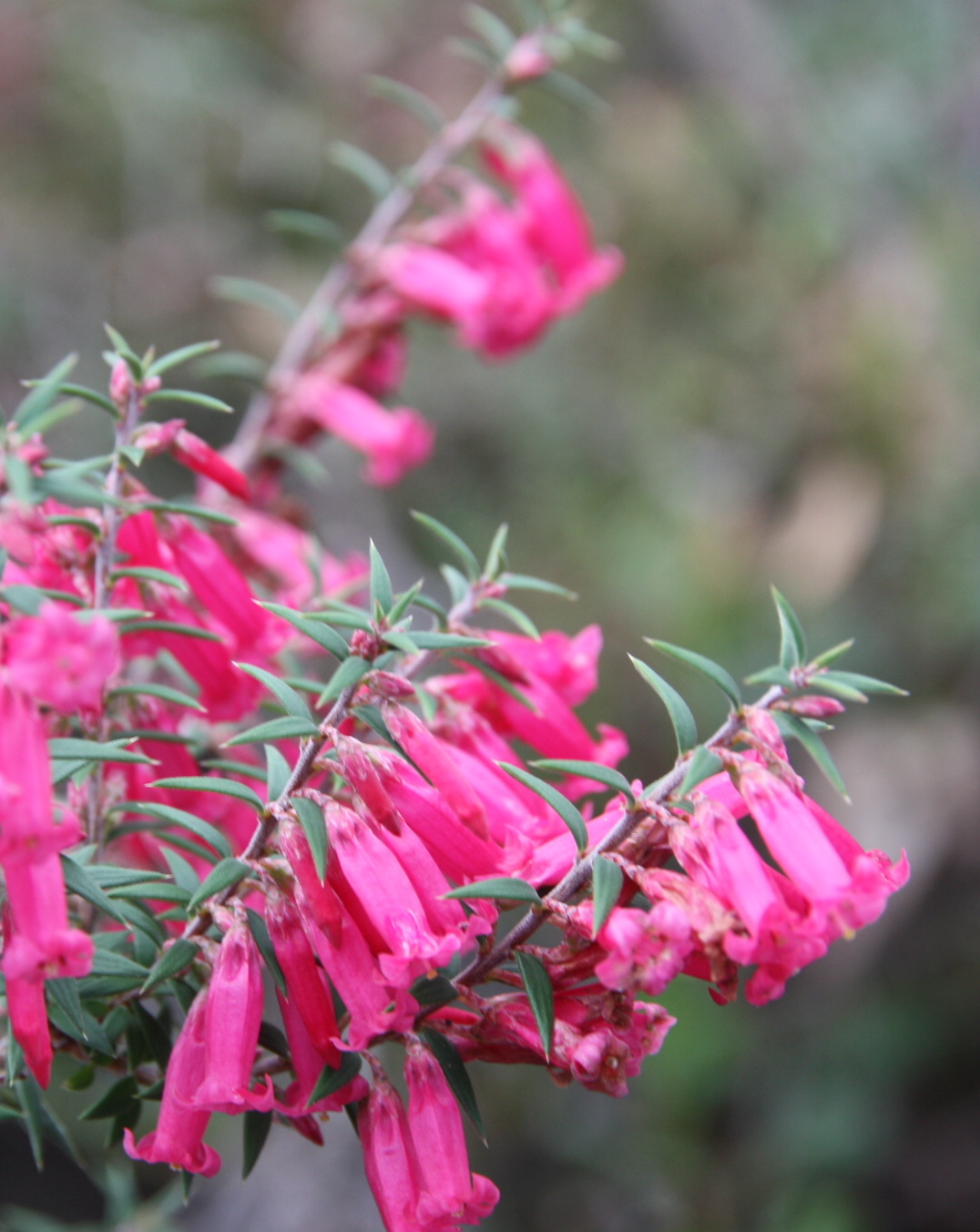
It was a great choice. I’d never walked in the Adelaide Hills before and enjoyed ambling through a forest landscape of primarily messmate and brown stringybark gum trees—don’t ask me to tell you which is which!
I especially loved snapping pics of a lot of plants unknown to me. I’ve read that severe bush fires that swept through the park in 1980 and 1995, but other than some blackened trucks, the flora seems to have recovered.
Our not-too-strenuous walk lasted a couple of hours and included a mix of up and downhill stretches. The walk wrapped up with a picnic lunch near the carpark.
Thanks Margaret and Bryce for organising such a great outing. And thanks also for helping to identify many of the plants, the tips regarding camping on the road to Perth and the delicious date slice recipe. Yummo!
Here’s the recipe:
250 g butter
250 g chopped dates
1/2 cup sugar
5 dried apricots, chopped and soaked in a tiny bit of hot water
1 packet Marie biscuits or other neutral biscuit (about 200 g)
small amount of coconut—to sprinkle—or not
1 egg
vanilla (up to 1 tsp)
Mix dates, butter, sugar and apricots in saucepan and heat.
Beat egg and vanilla together and mix into date mix.
Roughly break up biscuits and mix in.
Grease a Swiss roll tin (and cover with coconut), put mixture into tin, sprinkle with coconut (or not) and flatten evenly with wet hands.
Refrigerate and cut into squares. Can store in deep freeze.
If you are interested in recipes and cooking, please check out my food blog.
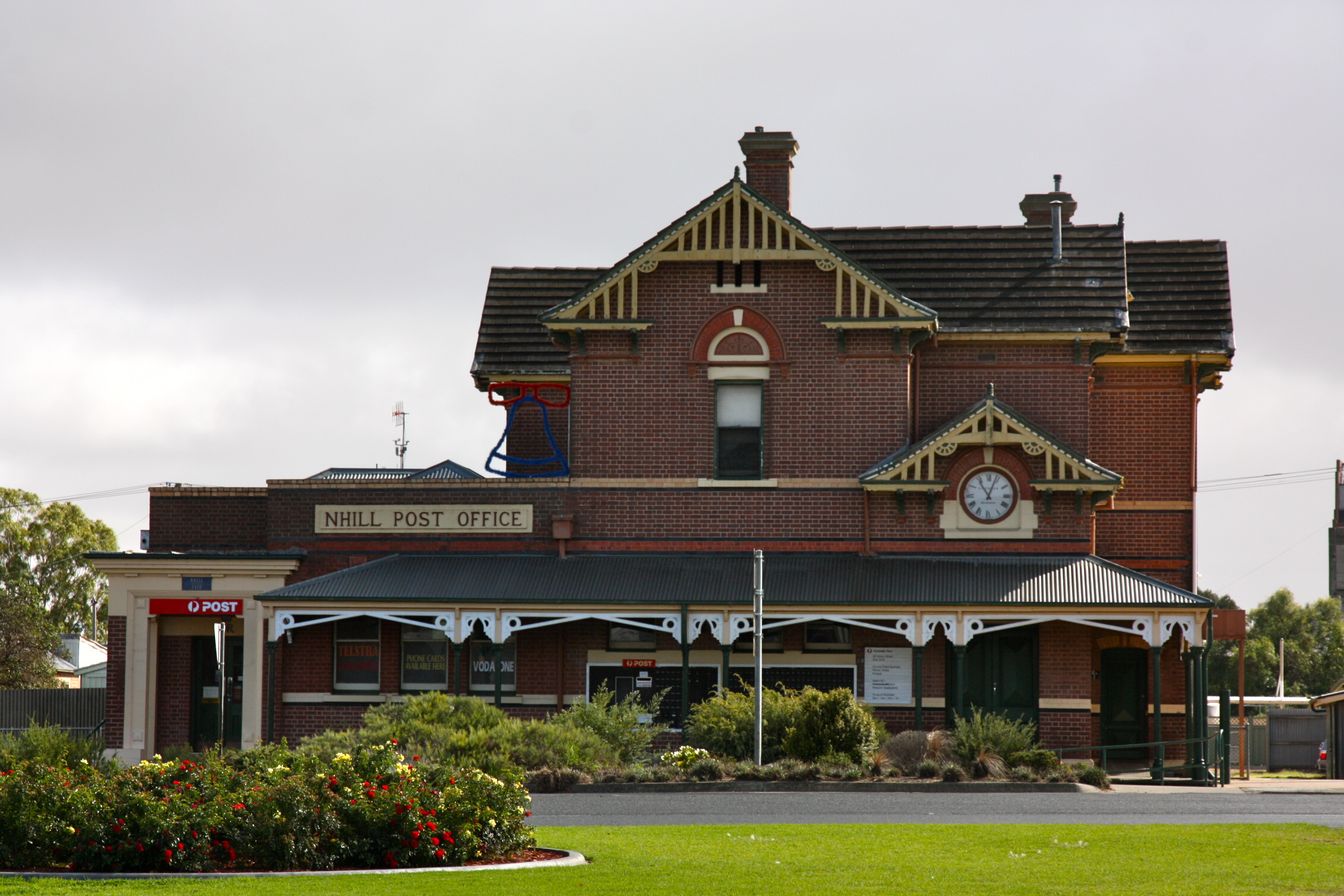
The Nhill Post Office
I never expected to end up on the road to Nhill, but that’s the town we rolled into not long after dodging countless mobs of kangaroos in the Grampians.
This Victorian hamlet shot to national fame in the late 1990s with the release of the comedy film, Road to Nhill. It’s a quirky story about a group of women who are in a car accident after playing lawn bowls. I remember that it had some good laughs, so I might just have to watch it again when we get home.
Nhill, which is an Aboriginal word meaning ‘early morning mist rising over water’, is well-kept. Main street has some buildings that have been done-up in the Federation style. Plus, there’s the rather grand old post office that opened in 1881.
The transport industry considers this small town to be the mid-way point between Melbourne and Adelaide and, as such, is where driver changeovers are made.
Now I know where the supermarket Luv-a-Ducks come from! Nhill is the company’s administration headquarters. Maybe I’ll buy a frozen duck on the way back to Canberra. On this day, we stopped in the bakery and bought bread for lunch.
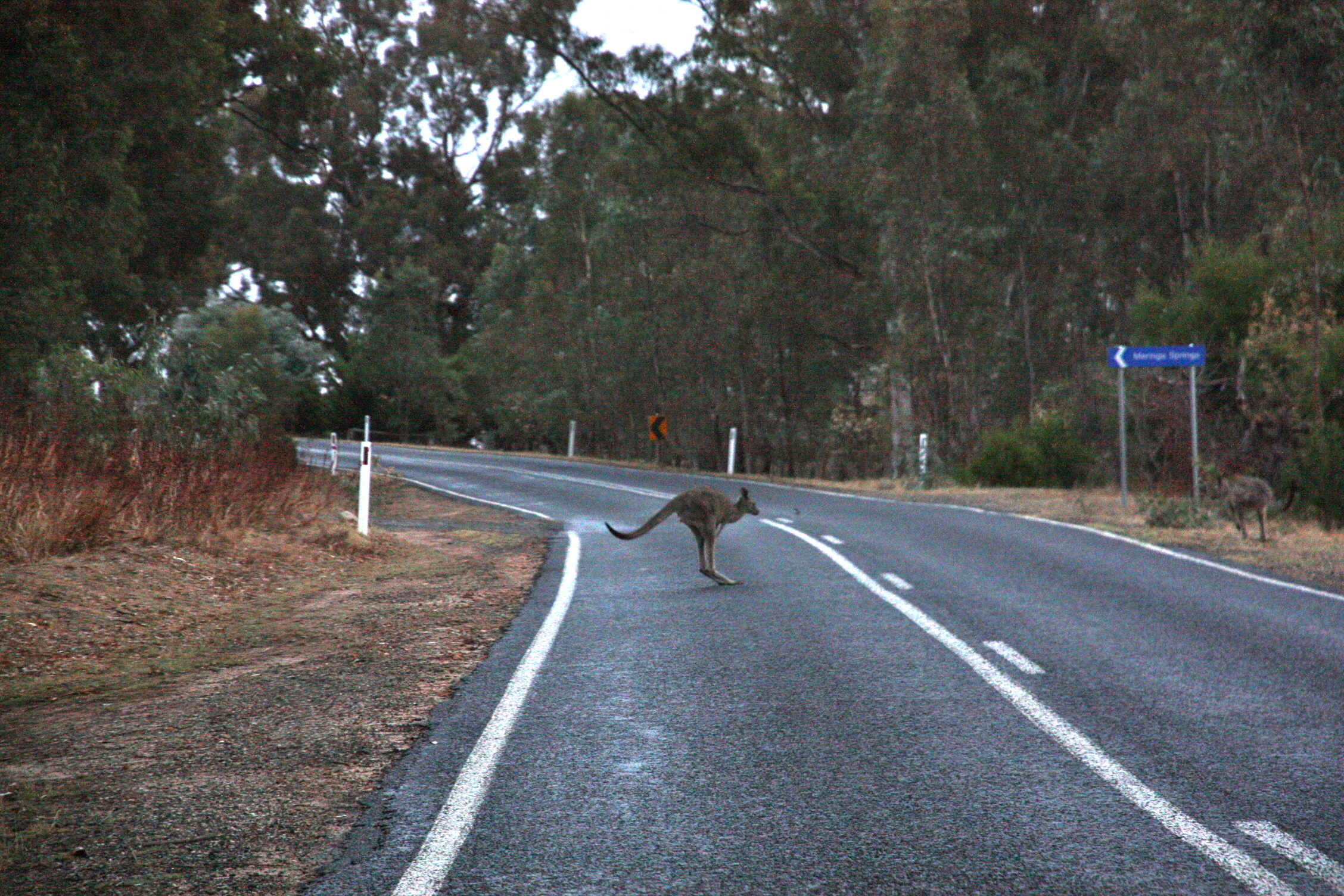
A roo on the move
Australia has no shortage of kangaroos.
We live in Canberra, the national capital. Our suburb is about 3 kilometres from the centre of town, but at least once a year we get a roo or two bouncing into the park in front of our house.
One morning a few years ago, I opened the bedroom curtains and was greeted by a large grey roo standing in our driveway.
So the other day, I wasn’t surprised to see plenty of warning signs and plenty of kangaroos on our drive out of the Grampians. We left our campsite not long after sunrise—roos are most active at dawn and dusk—and the critters were out in force.
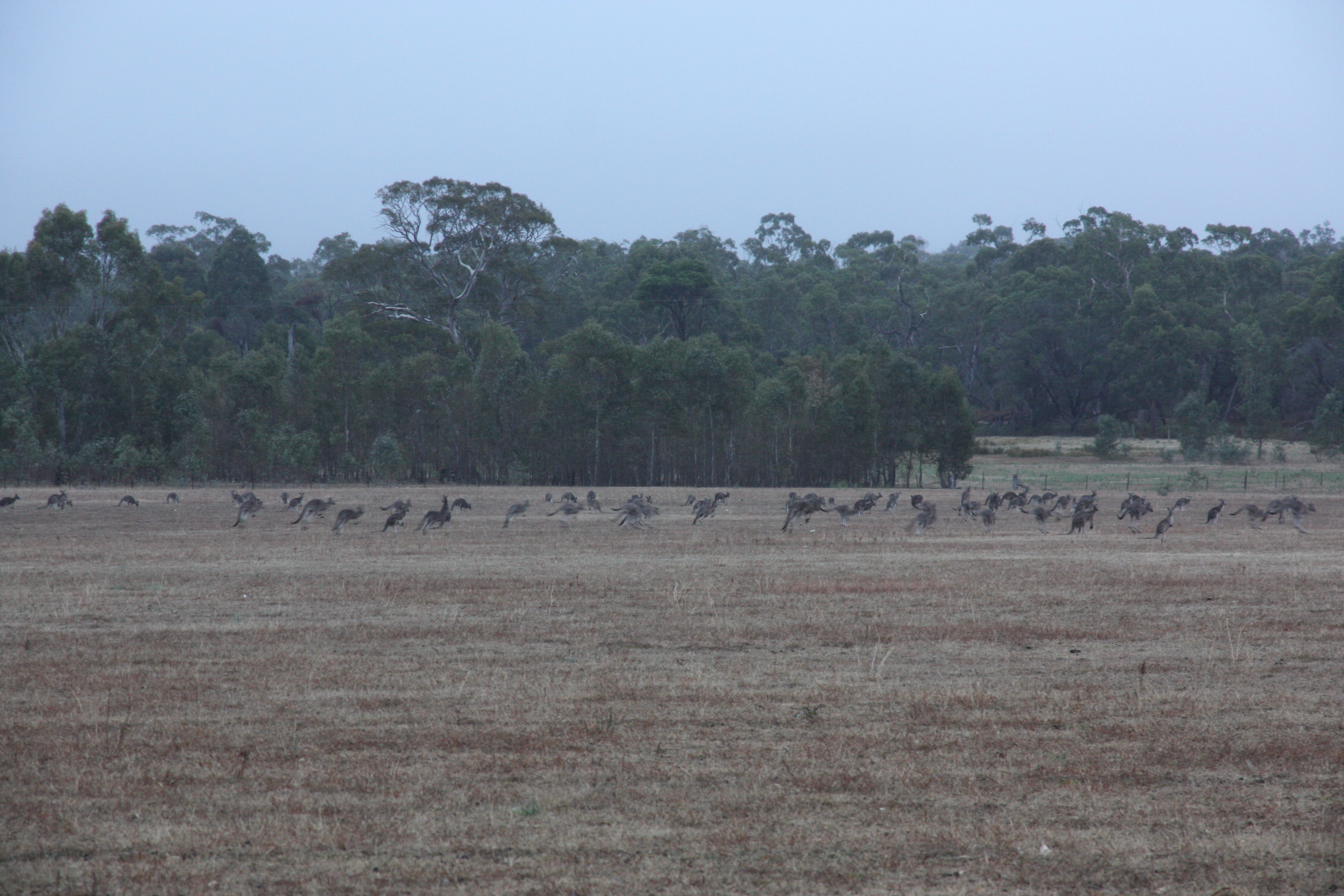
A field of roos
They were in the fields, on the sides of the road, on the road and crossing the road. The only options are to drive slowly and stay alert. Poor John was driving on this morning, and I made him stop too many times so I could snap a few pics to share.
It took about 40 minutes to drive out of the Grampians and I think, in that time, we saw more than 1000 kangaroos.
As an aside, if you hit a kangaroo—and plenty of people do—the damage bill will surpass $2000.
The TrailRider in the Grampians
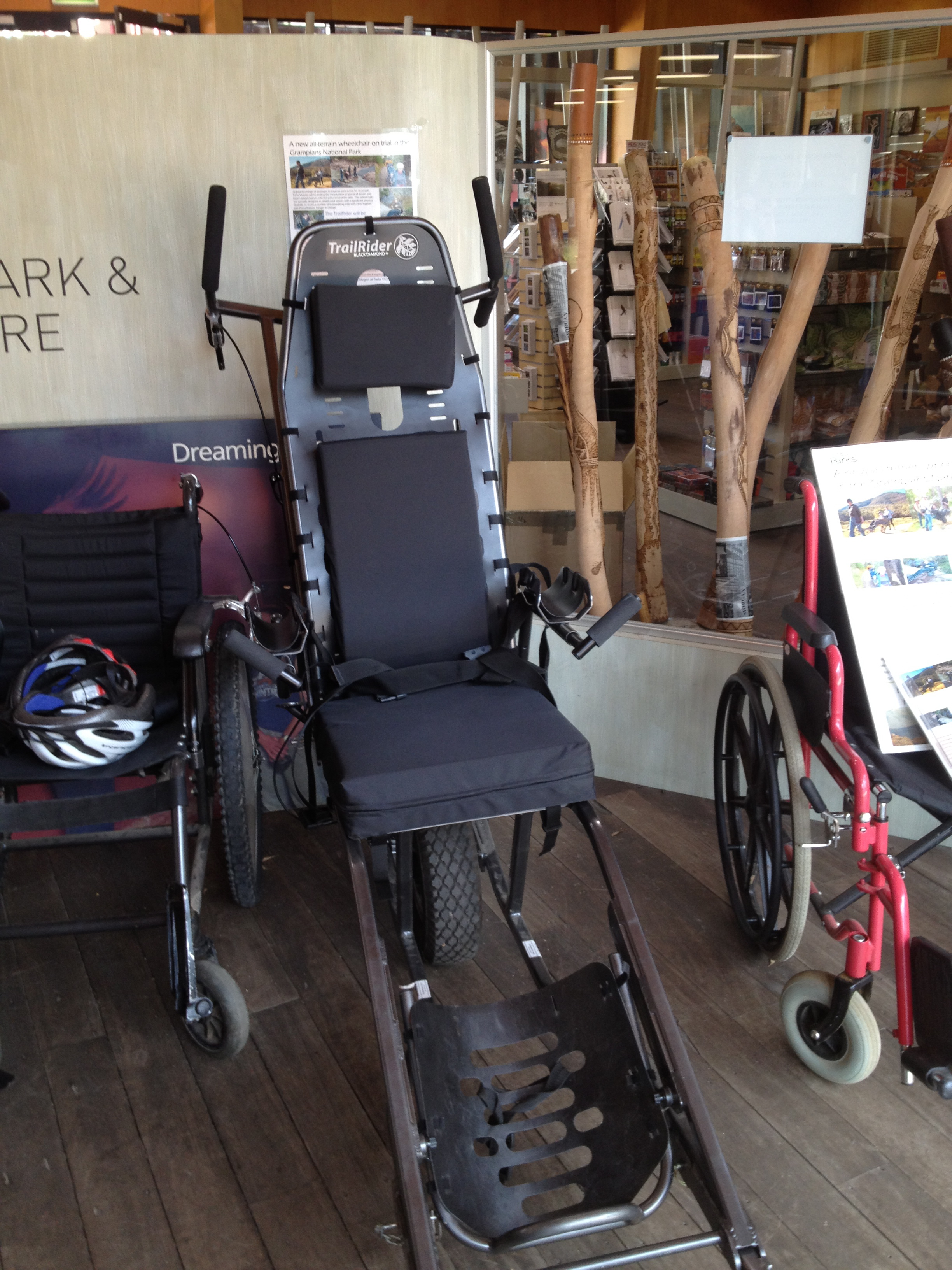
A lot of people in my life find it difficult to walk. In fact, some depend on wheelchairs. So I was delighted to see a nifty invention, the TrailRider, on display in the Parks Victoria office in Halls Gap.
The TrailRider was on trial in the Grampians until January of 2012, and it’s still there and available for free bookings. The woman at the counter wasn’t sure, but thought the park had purchased it for continued use. A good indication that it was well used during the trial.
According to the brochure, the TrailRider is specially designed for rough terrain, and allows visitors with physical disabilities to enjoy—with carer support—some of the park’s bushwalking trails.
The TrailRider seems a well-made and streamlined machine. The seat looks comfy, the wheels are large, and there are plenty of handles for ‘Sherpas’ to hang on to. And every booking comes with a brief rundown on operation and safety procedures.
I noticed that a couple of standard wheelchairs and helmets are also available for use.
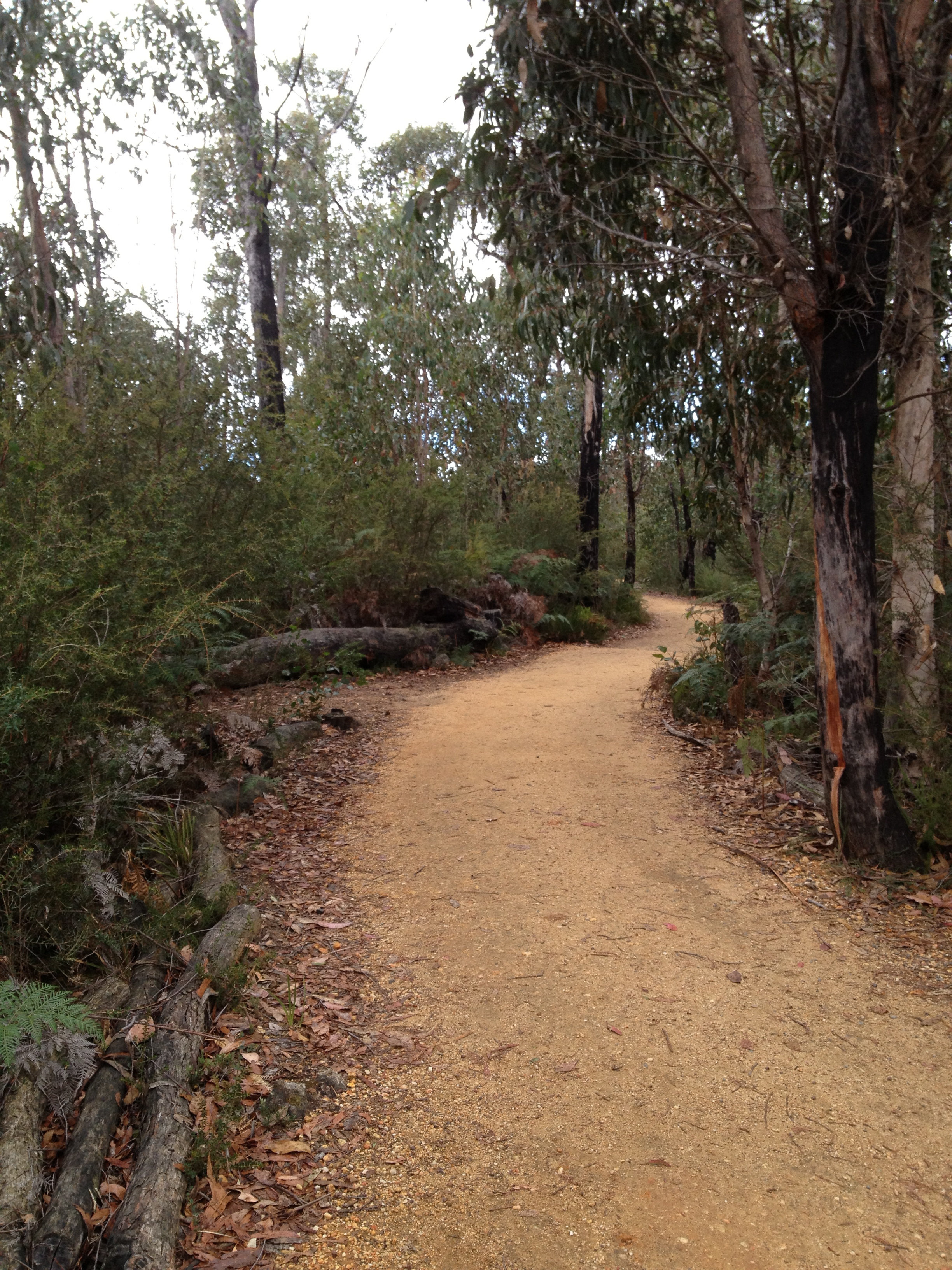
A perfect path just waiting for a TrailRider.
To make a booking or ask about the TrailRider, call Megan at Parks Victoria on 03 5361 4008.
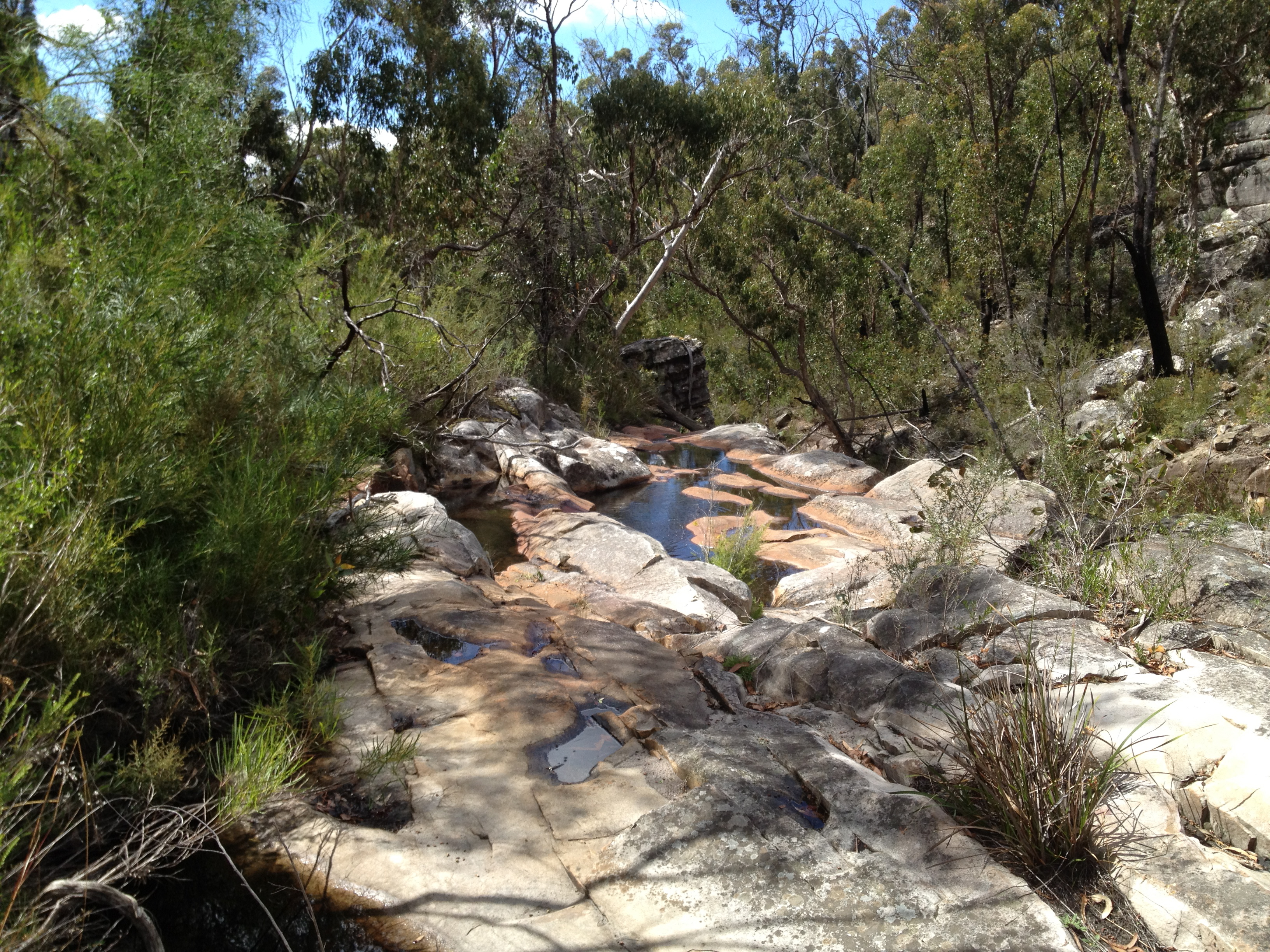
On the way to Turret Falls
Before we set out from Canberra to Perth, I reckoned that if we were driving all that way, I wasn’t going to miss out on seeing the Grampians again. I first visited this wonderful and scenic national park about 10 years ago—with two daughters, two exchange students, and an exchange student’s mum and sister in tow. We’d hired a ‘people mover’ and did the Snowy Mountains, Lakes Entrance, the Great Ocean Road and then turned right/north to see the Grampians. I’d never heard much about the Grampians before that, but someone recommended them as a side trip and what a wonderful choice it was.
Back then, I found that the road from Portland (Victoria) to the Grampians was one of the best-engineered roads I had ever driven on. My dad would have loved it. It was perfectly graded and a complete pleasure to drive. I wonder if it is still as good, and if it is also as good when you drive north to south?
This time we turned north after our visit to Warrnambool, and that road was pretty good too. Victoria must have some great road engineers.
But I digress.
The Grampians are a collection of sandstone mountain ranges. There are plenty of scenic walks, climbs, vistas and rock art displays. In fact, in 2006, the area was added to country’s National Heritage List for its outstanding beauty and for being one of southeast Australia’s richest sites for Indigenous rock art.
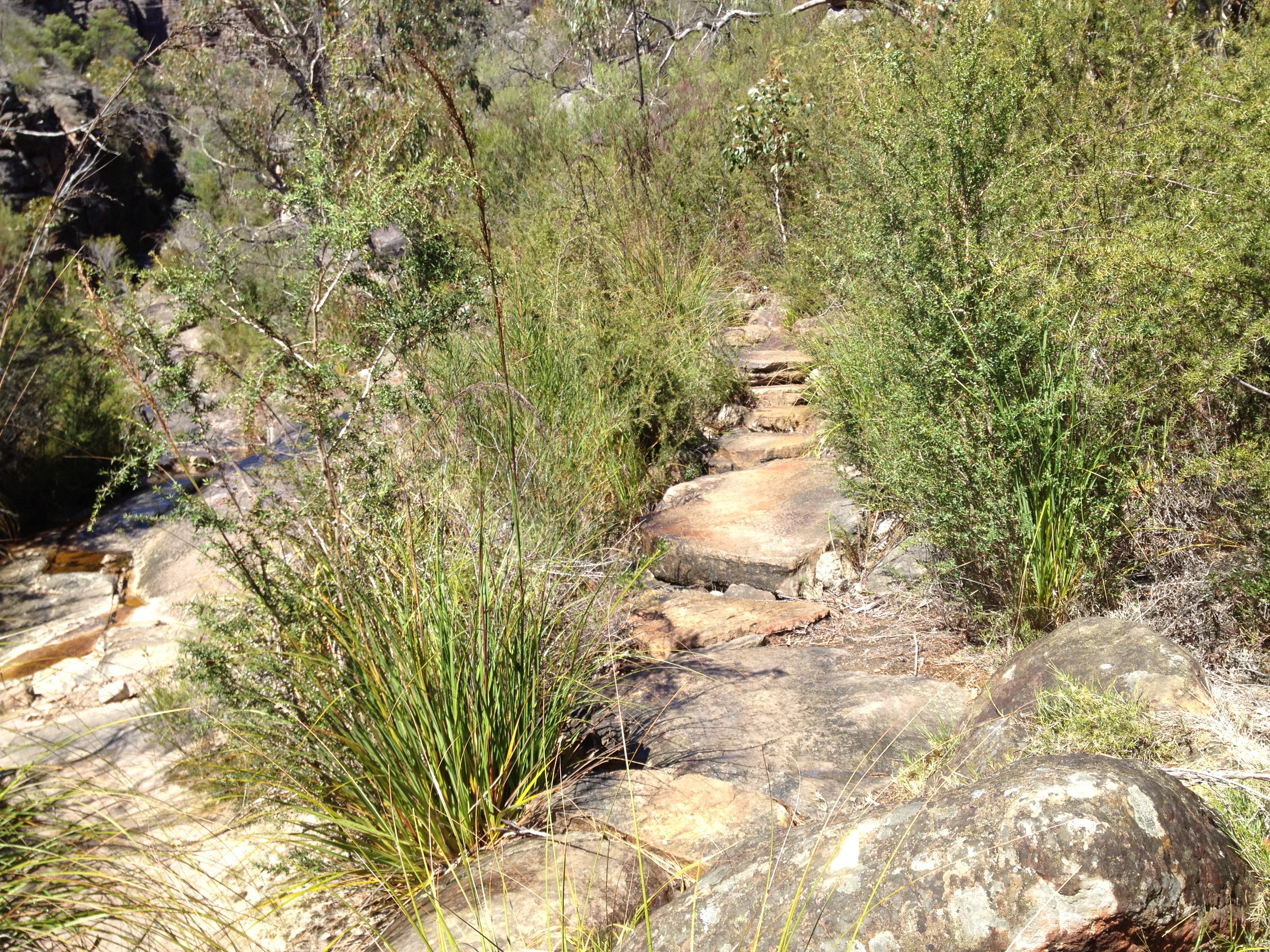
The path to Turret Falls
In recent years, the Grampians have suffered from some horrible extreme weather events. There were bush fires about six years ago. Then in 2011 there were severe storms and floods. Lots of the walks were washed out. Park staff have worked tirelessly to restore paths, but many remain closed.
We arrived on a rainy day. Poor John, who is always well-shod and very sure-footed, headed straight over the slippery rocks to the Pinnacles.
I followed him for some of the way, but having been there before, I succumbed to my in-built policy to ‘not break any bones when travelling’. So I turned back and hiked to Turret Falls instead. It was a sensible and practical choice. I got a good uphill aerobic workout with no ankle-breaking twists and turns. And I didn’t see another person on my track.
Poor John and I returned to the carpark about the same time, so headed off together to explore as many other walks as we could before the sun set.
We got chuckle out of the Cranage Lookout walk. A plaque there explained that the Cranage family used to run the kiosk in the Grampians. Every day, Pearl Cranage would shout across the canyon to Jack, the bus driver, to find out how many passengers he had, so she knew how many cups of tea to make.
There’s a kiosk there now, but it was closed when we arrived. So no tea for us, or anyone else.
Around sunset and after our exploring, we headed to one of the park’s two bush camps. You can’t bush camp just anywhere in the Grampians. There’s a ‘citified’ camp in Halls Gap, where we stayed 10 years ago, and two ‘rough’ camps—one south and one north. A rough camp costs $14.50 per night per tent.

Mackenzie Falls
Poor John and I went north and picked a flat spot, not too far from the toilets, and put up our tent. The campground has space for 25 campervans/tents and was about half full. Poor John reckoned the wood supply would be low, so drove off to find firewood. I gathered a lot of kindling and had it ready to go before he returned. Two sheets of scrunched up newspaper, a pile of kindling and one match were all it took to get the dinner-fire going.
It was a great night. The only downside was that it started to rain again just after 5am, so we had to pack up a wet tent.
Stay tuned for a posting about our drive out of the Grampians. There were kangaroos everywhere.
 Where to next?