
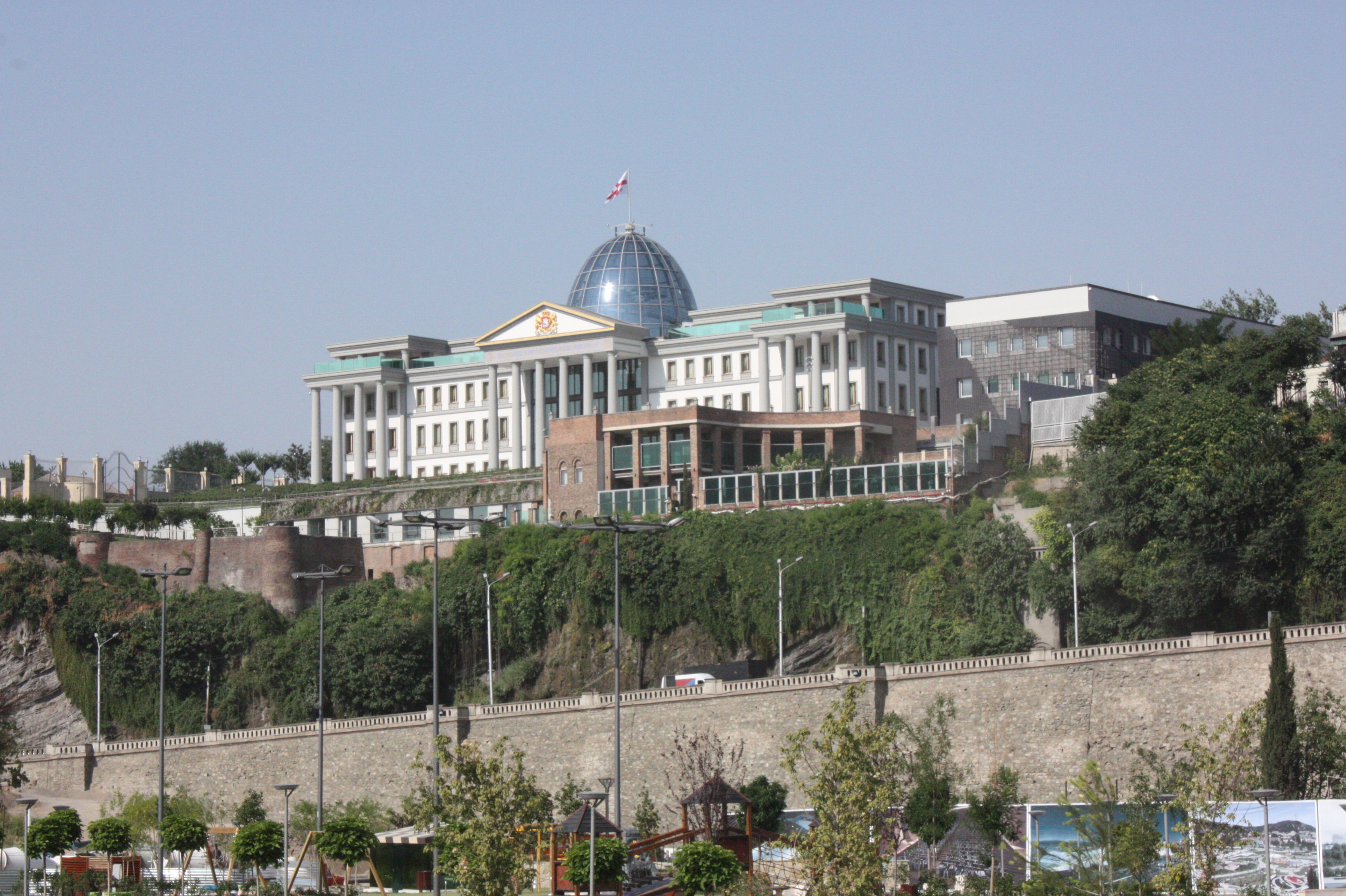
Georgia's Presidential Palace
I had a good laugh when I saw an online article about the newish presidential palace in Tbilisi, Georgia.
The place is ostentatious and ginormous—not as ginormous as the palace in Romania—but still huge. And in 2009, Georgian President Saakashvili said his new glass-domed digs had cost ‘a trifle’ to build—only GEL 13 million or US$7.8 million.
Oh, pleeze, I don’t think so. Then again, labour and materials must be cheap in Georgia.
The palace overlooks the Mtkvari (Kura) River and covers a massive expanse of land. I’ve tried to find out some of its dimensions, but the only promising sources of information are on YouTube and in a language I don’t even begin to recognise. It was designed by Italina architect, Michel de Lucchi, who also designed the city’s new pedestrian Bridge of Peace.
Poor John and I crossed that bridge to explore Tbilisi’s Avlabari District, where the palace is located. We managed to visit Georgia’s other ginormous structure, the Sameba Cathedral, and also tried to get near the palace. But no luck. We trailed through a labyrinth of small alleys and side streets, constantly running into high concrete walls and local people using hand signals to say ‘go this other way’.
It was a nice day of walking, but not overly productive from a touristic point of view. We did, however, find a much-sought-after padlock.
Our best view of the palace ended up being from the other side of the river. That position gave us an idea of how huge it is, but no idea of how opulent it might be.
President Saakashvili seems to think it’s pretty good, ‘This palace is not so rich, but it is the most perfect, modern palace, which has ever been built by anyone or anywhere in the modern world.’
He really should drop by the Madman’s Palace in Bucharest.
Hey, don’t forget to pick a number before 29 February 2012.
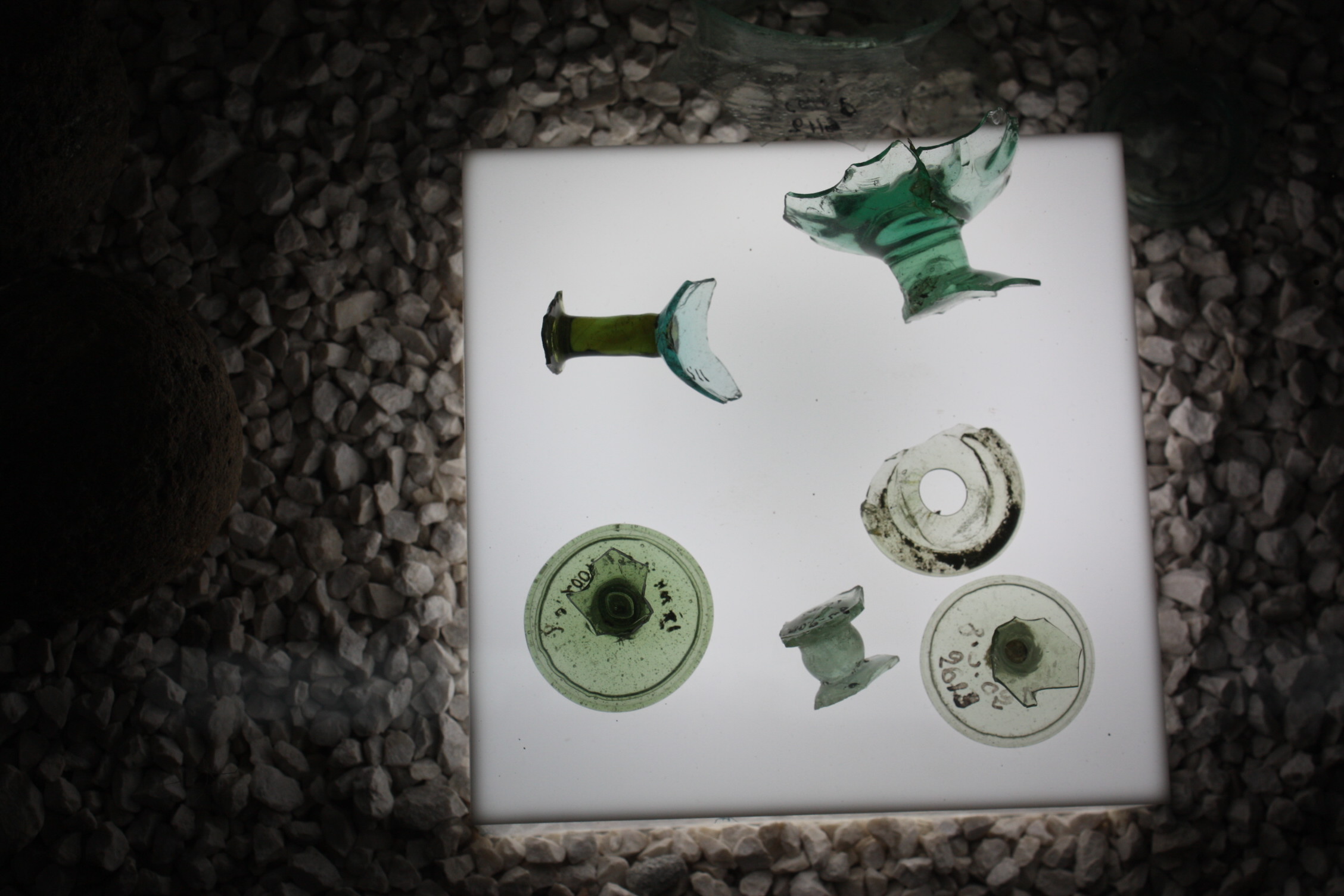
Glass items in the museum
Gonio Fortress was our first stop in Georgia. This Roman fortification, located on the shores of the Black Sea, is only 4 kilometres from the Turkish border. Admission is a bargain so we all piled out of the truck to have a quick look around.
Pliny the Elder first referred to Gonio in the 1st century AD. Within a century it was a well-fortified Roman city, and highly praised for its theatre and hippodrome. In those days it was called various names, including Apsarus, Apsirtus, Akampsis and Apsaruntos.
Over the centuries it passed through many hands—the Byzantines, the Genoese, the Ottomans and, finally, the Russians.
The grave of Saint Matthias, one of the 12 apostles, is believed to be inside the Gonio fortress. To date, this cannot be confimed because the Georgian government does not allow digging near the supposed gravesite. Other archaeological excavations are, however, taking place on the grounds of the fortress, focusing on Roman layers.
The small museum within the fortress is very classy. Exhibits are well displayed and the lighting was most impressive.
From what I read, the Gonio Fortress has become quite popular with Georgian tourists. I think that’s great because I was really glad we made this bonus stop.
Don’t forget to pick a number before 29 February 2012.

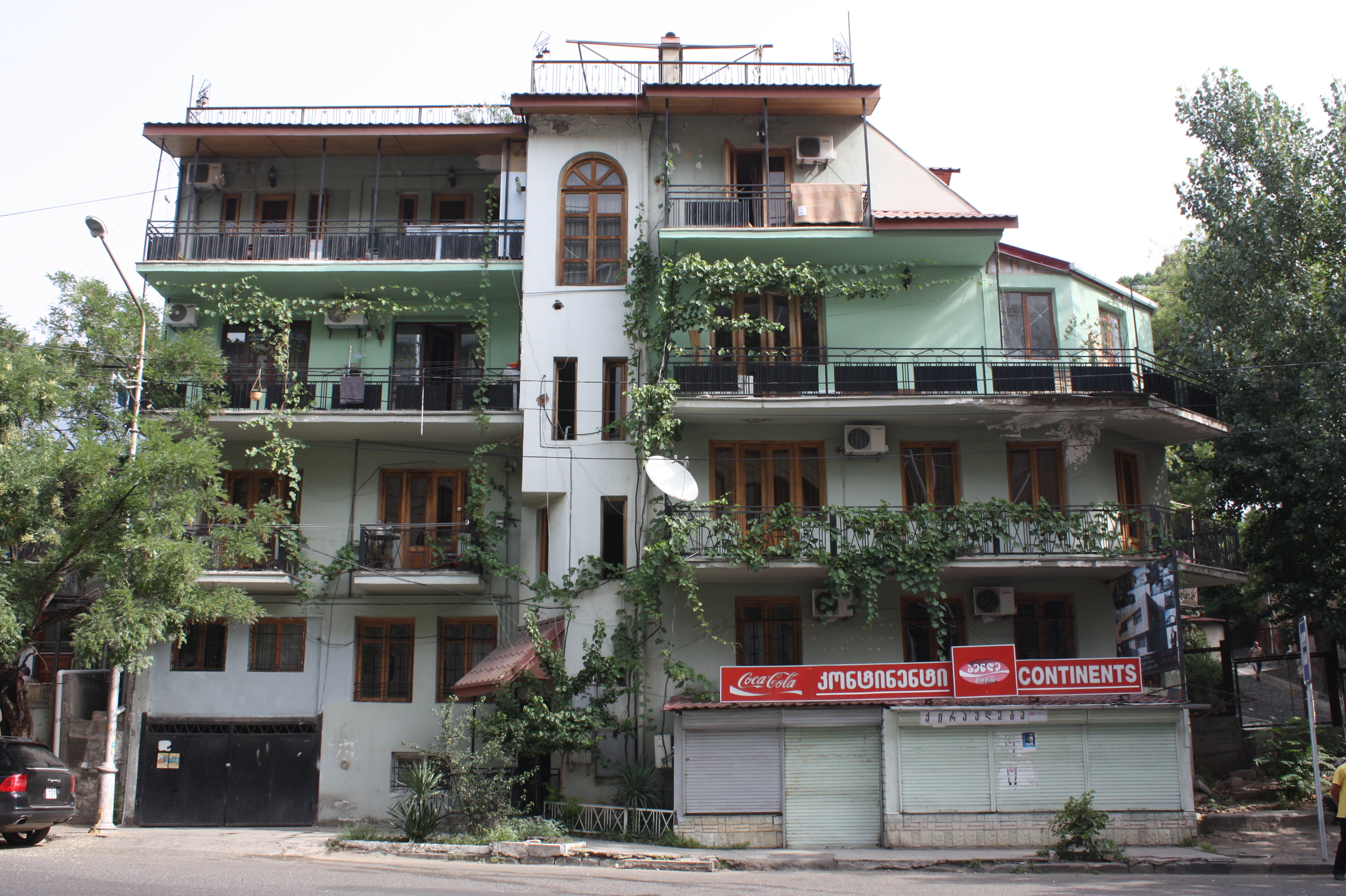
The walking tour I mentioned earlier gave us a wonderful chance to stroll past some of the old homes of Tbilisi—from the ramshackle to the elegant. The countries we visited prior to Georgia have interesting homes too, but Tbilisi was the place where the architecture caught my eye (Vietnam did too, but more about that in another post).
The tour took us up and down back alleys and narrow side streets—places you might not go for fear of getting completely lost.
The obvious and immediate impression was that verandahs, doors and windows are especially popular, and renovations/extensions (probably illegal) are common throughout the city.
In addition to the actual building designs, I liked the paint jobs. All across Western and Central Asia, homes that are painted have normally been done in various shades of green, blue or blue-green. There’s a bit of white, pink and peach thrown in, but blues and greens dominate on homes, fences, doors, sheds, garage doors—you name it.
As we walked along, a very sweet local woman (no English) stopped our guide to ask him about our group. They jabbered away for five minutes and then the guide announced that the woman was insisting that we follow her to her place for a cool drink. It was such a lovely gesture and she did not object to having photos taken inside.
Her flat (apartment) was simple, but comfortable. It was on the ground floor and the fridge welcomed us. It was in the long narrow, concrete entry hall that ran just outside the flat itself. The cool drinks were plastic bottles of frozen water, taken from the fridge’s freezer. A piano had pride of place in the living room, as did a full-ish china cabinet. I’ve included two pics here that show her china cabinet and her all-in-one kitchen, bathroom and laundry. Note the watermelon on the left foreground and the bathtub and pink shower curtain in the left background. I felt so privileged to have been so spontaneously invited into a local home. Definitely a cherished moment.
As an aside, I have not added captions to these photos. They’re all of houses in the centre of Tbilisi.
Don’t forget to pick a number before 29 February 2012.

Remembering an earthquake
Earthquakes occur a little too often in Georgia. In fact, the country’s Geophysical Society says that Georgia is one of the most seismically active regions in the Alpine-Himalayan collision belt. In the last decade, the country has had quite a few minor to mid-range earthquakes. Tbilisi, the capital, copped the biggest one in April 2002. It destroyed or caused heavy damage to thousands of homes and other buildings. The destruction is still apparent.
We did a walking tour of Tbilisi and saw lots of places that were still vacant and/or being propped up, and many others under repair. Encouragingly, we also saw a lot of new construction, including a revamp of the Town Hall, where the Tourist Office is located.
On reflection, our search for the Tourist Office took a very long time. There was a sign pointing to an entrance, but no obvious doorway. After quite a long time, we tried our luck around the corner and found a makeshift entrance with a very helpful guard. It was a great find because that’s where we booked our walking tour. It also had free drinking water and air-conditioning, which were very welcome on an extremely hot day.
If you make it to Tbilisi, be sure to pop in to the Tourist Office and book a walking tour. It’s a great way to get an insider’s glimpse of the city.
Don’t forget to pick a number before 29 February 2012.
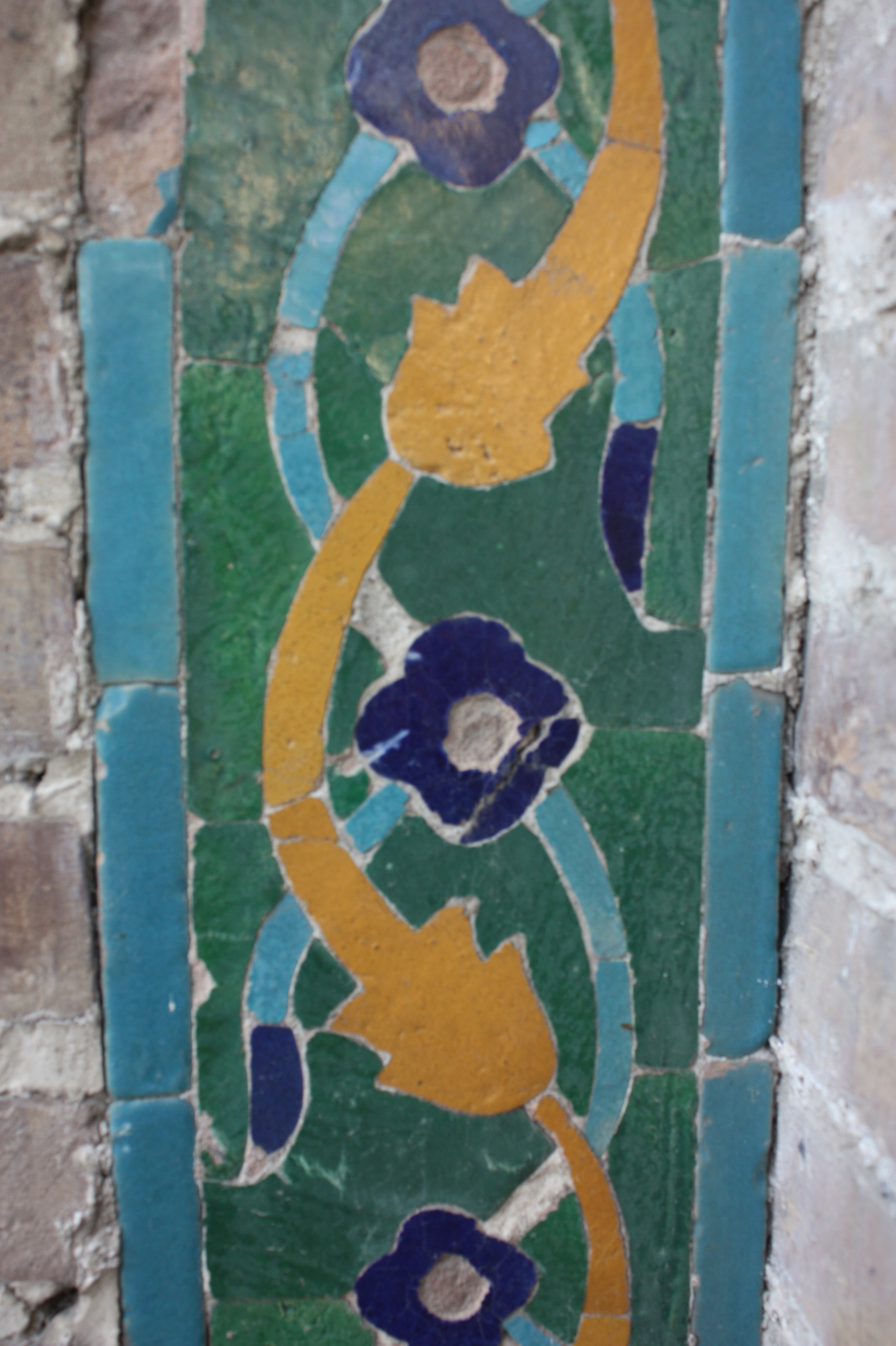
Tile detail
Abanotubani, an ancient and historic part of Tbilisi, is known for its sulphuric baths. It is also the place where, according to legend, the King of Iberia’s (Vakhtang Gorgasali) falcon fell to earth, leading to the discovery of the hot springs and subsequent founding of a new capital.
We visited the baths as part of a walking tour of Tbilisi. They cover a large area, and include quite a few different baths. A particularly stylish one (don’t know it’s name) has a tiled exterior and is a lovely example of Islamic architecture. It’s located right at the foot of the Narikala Fortress.
The baths are open to the public, but I’m not keen on the smell of sulphur, so gave that opportunity a miss. I’ve read that you can soak in communal baths or hire a private room. Scrub downs are said to be pretty invigorating and oh-so reasonably priced.
Don’t forget to pick a number before 29 February 2012.
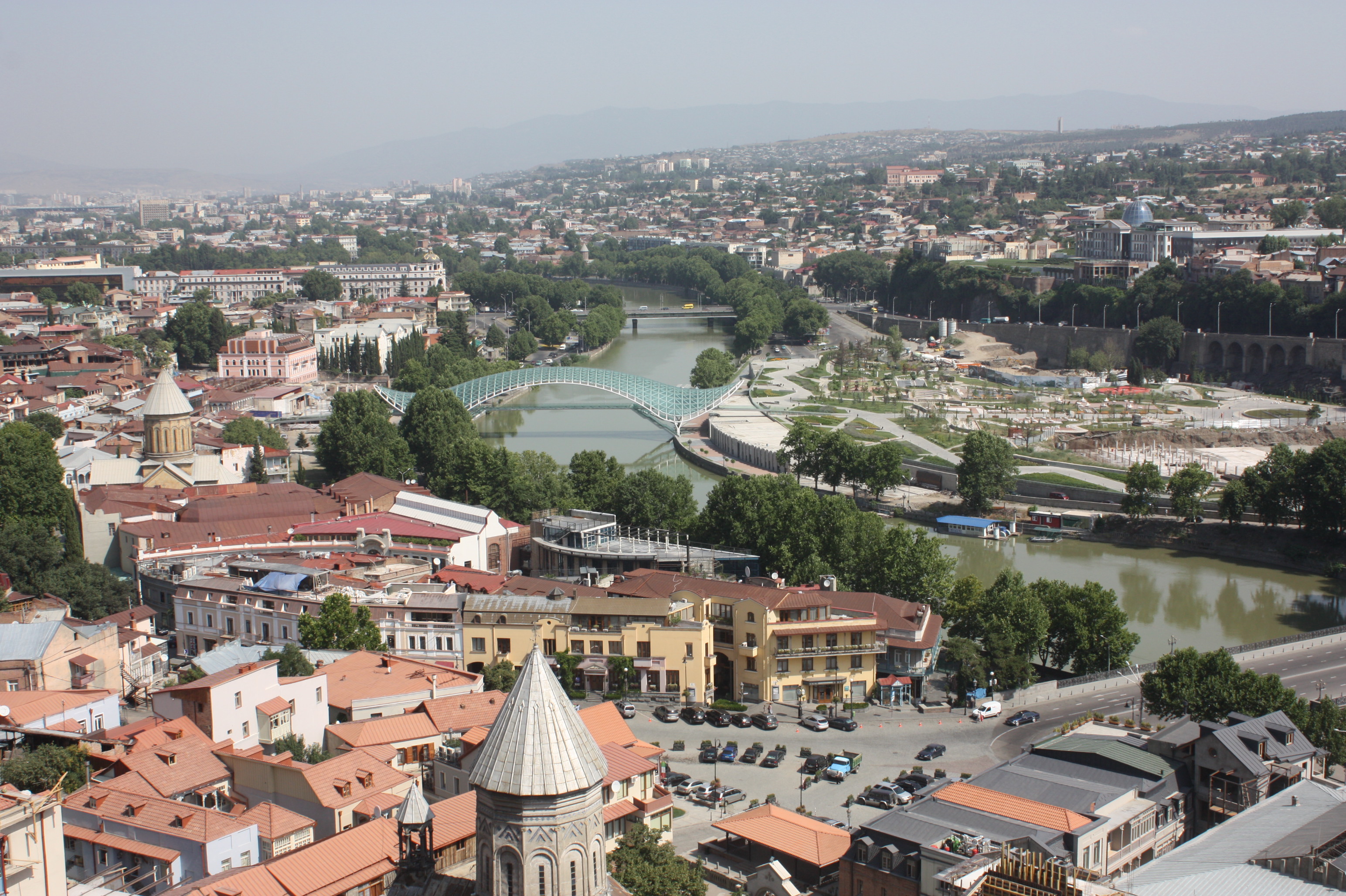
Tbilisi from the Narikala Fortress.
A visit to the Narikala Fortress was a highlight of our walking tour of Tbilisi.
The climb up to the fortress really isn’t hard and, once you’re up there, the views are fantastic.
You can see a vast expanse of the city and the Mtkvari (Kura) River that runs through the middle. You can also overlook the ancient and massive sulphur baths. I hadn’t really thought about how important the baths were in earlier days, but there is a lovely quote by the Georgian poet and historian, Ioseb Grishashvili, displayed at the top. It says, ‘Women stayed in baths all day long having dinner… drinking tea… Bath was their club, their theatre… the place where they demonstrated their dresses and jewelery… New dresses were first shown in baths… Match-makers of course made dealings there. The fate of many beautiful women had been decided in baths.’ The baths are still open and we had a peek inside.
Narikala was established in the 4th century and expanded by the Umayyads in the 7th century. King David the Builder had another go at it, as did the Mongols. Most of the existing fortifications date from the 16th and 17th centuries. About 200 years ago, parts of the fortress were damaged by an earthquake and demolished.
Don’t forget to pick a number before 29 February 2012.

A takhta—traditional seating in Central Asian teahouses.
Uzbekistan was a standout county for us, and Bukhara (our second stop) did not disappoint.
We arrived in daylight (unusual) and immediately appreciated the quirkiness of our hotel.
Now I should mention that when you are on an overland trip, you don’t normally stay in hotels. But Turkmenistan and Uzbekistan are not ‘camping-friendly’, so hotels, hostels or homestays are usually the only options.
Our hotel in Bukhara was just off the main square. It has two stories, built around a lovely courtyard which is overlooked by a rambling set of walkways and rickety staircases. All sorts of plaster and wood work is being carried out on the walls to give them an ‘olde worlde’ look, which sort of works and sort of doesn’t.
Just below our second-story room was one of those bed-type platforms that are so popular in teahouses in this part of the world. Built of wood, this traditional seating, called a takhta, is covered with carpeting, thin mattresses and pillows. There’s usually a low table in the middle. And of course, the rule is NO SHOES. As an aside, takhats tend to be men-only territory. Women and foreigners are tolerated.

When three isn't a crowd. Note the fancy ceiling
As with many hotels in Central Asia, the rooms in Bukhara are for three to four people—never just two—so we shared with Terry. He’s a night owl, so our schedules don’t conflict at all. He gets ‘home’ about the time we’re ready to leave for breakfast.
There was a small grocery store around the corner which sold an array of basics, as well as beer and spirits. Several times I went in to buy a couple of beers, but the fellow at the counter always wanted to charge me three times the price that was marked on the shelf. Other people from the truck had bought it for the posted price, but I never could. Many of my fellow travellers offered to go buy beer for me, but being a belligerent boycotter, I declined. I wasn’t about to give those thieves any of my money. I say, principles before beer. And gosh I’m thirsty.
But speaking of money, I felt like a bazillionaire in Uzbekistan. One US dollar was worth almost 1800 Uzbek som. So every US$100 we changed gave us almost 180,000 som. To top it off, the banknotes are huge. I had to carry our loot around in my daypack because it sure wouldn’t fit in a wallet.
Also don’t forget to pick a number before 29 February 2012.
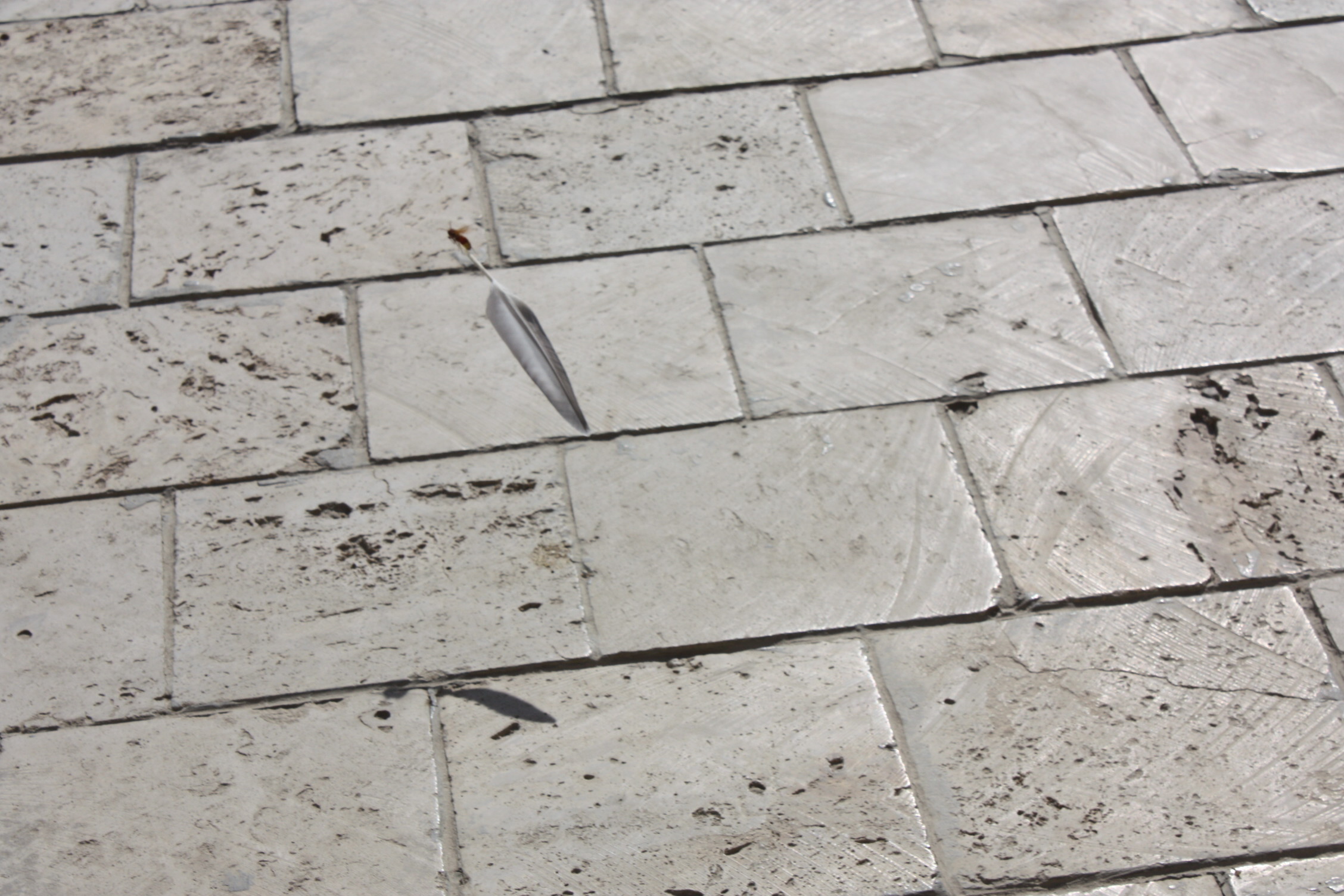
Hercules of the bug world (click the photo to see a larger version)
One of the first things we saw in Bukhara was the strongest and most valiant bug—for his weight—that I have ever seen.
Here’s a pic of him (at least I’m assuming it was a him) carrying home a feather.
He hovered about 30 centimetres off the ground and flew at least 100 metres. Poor John and I watched him for about 10 minutes, until he flew out of the touristic site we were visiting.
Given that I’m assuming it was a him, I hope the feather was a pressie for the missus or the kids. (Hope you can see him in the photo.)
Don’t forget to pick a number.
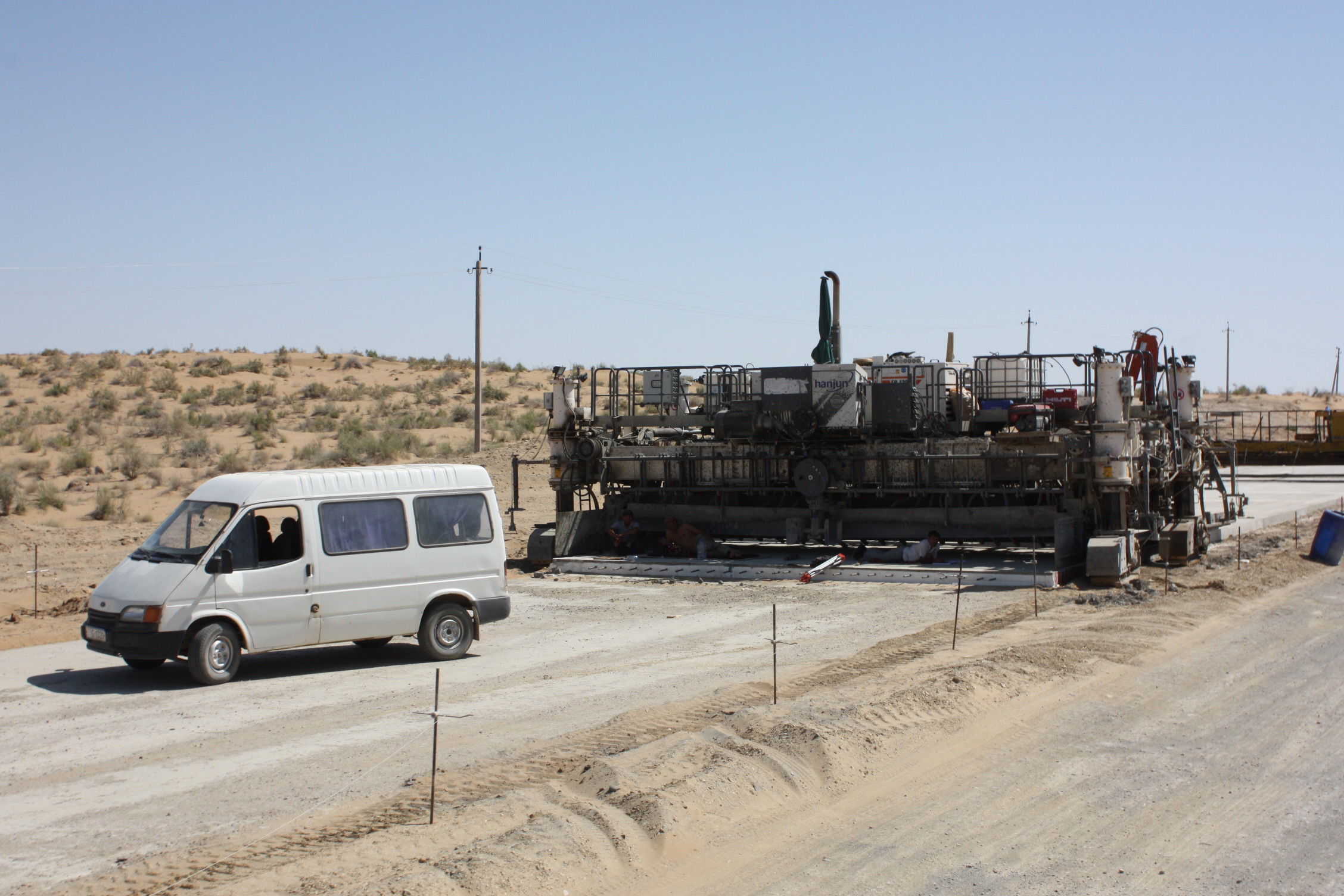
Road works in Uzbekistan
It’s about 500 kilometres from Khiva to Bukhara, our second stop in Uzbekistan. We started our journey very early in the morning, so we didn’t have to drive straight through Khiva’s market to escape.
Scenery-wise, the trip to Bukhara is pretty boring—flat, little vegetation, lots of sand and a canal that runs alongside part of the way. But there are plenty of road and infrastructure works in progress. More than 60 per cent of the population lives in the countryside, and agriculture is an important part of the Uzbek economy. That means decent roads are critical to creating an efficient farm-to-market network. And many of the existing roads are grossly sub-standard.
I’m actually rather partial to viewing infrastructure works. I spent five years as a reporter/photographer for the Kearney Daily Hub, a newspaper in central Nebraska. Every day, the editor asked for a community-based pic for the front page. A lot of my pics that made it to page 1 showed bridges being painted, roads being repaired, garden being maintained and the like.
So I wanted to share some typical scenes taken on the road to Bukhara. Some of the equipment and techniques are up-to-date, and others are older than old, but they’re getting the job done.
Don’t forget to pick a number.
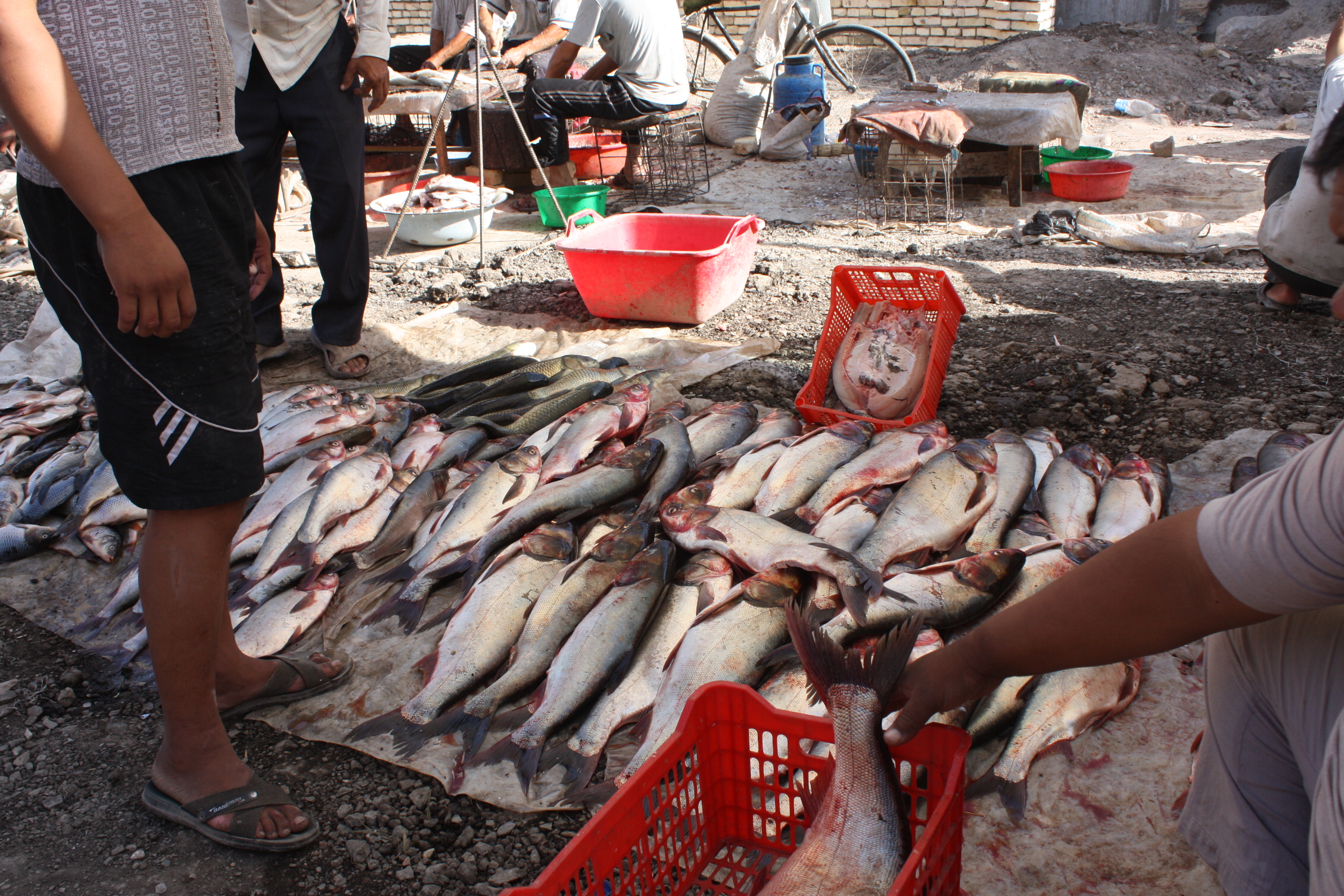
Need a fish?
About 70 per cent of the time, we reach a town, campground or bush camp a bit before dark (and sometimes long after dark). Khiva was one of our long, long after dark arrivals.
In order to park off the road, Will, our driver, had to manoeuvre the truck through the local market, to a spot not too far from the hotel. This effort took skill, patience and a lot of hands. The market is set up in a small and rather narrow space, so some market ‘furniture’ had to be moved before the truck could be ‘put to bed’.
The bonus in all this was that the next morning, we knew exactly where to find the market.
I love markets. I love to see the food and anything food-related. Khiva’s market was especially basic. No permanent structure, just a laneway where delivery vans parked or tables were set up. Most food goods were spread on the ground.
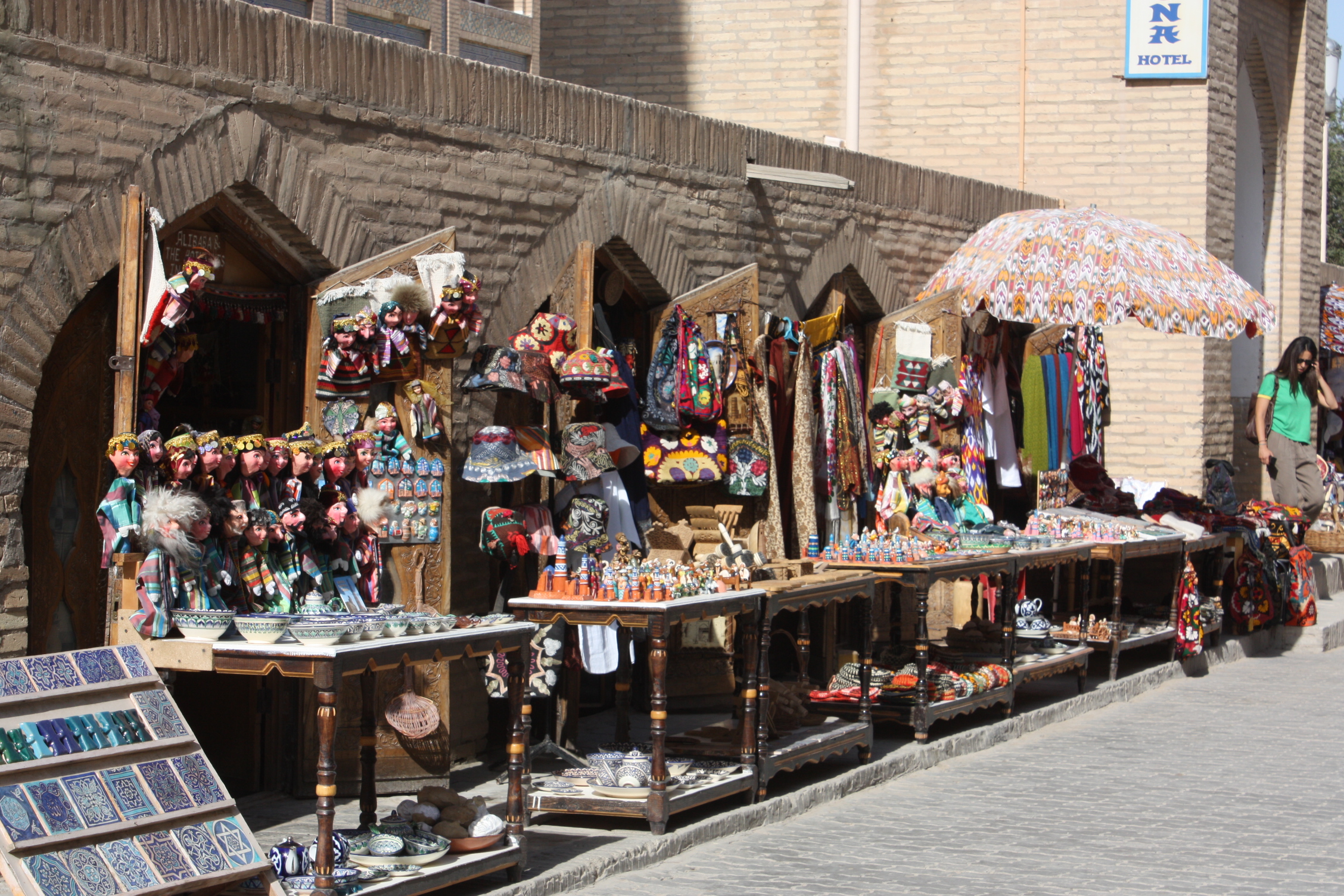
A souvenir shop in Khiva
Souvenirs are treated with more respect. They are the big money earners, so are hung on racks or spread out on tables. Many of them even have shade cloths and umbrellas to protect them (and/or shoppers) from the blazing sun. That said, it’s hard to convince yourself to buy a fur hat when the temperature exceeds 30°C. Weaving and appliqué are popular, too.
Souvenir stalls are scattered all over the city, and tucked into some of the touristic sites too. There even was a mini market at the Juma Mosque. I loved the style of the music vendors on the street. They were dancing to the music they were selling. I tried to get a photo, but the crowd was impenetrable.
I’m not an avid shopper—except for food—so wasn’t moved to buy anything, but there were lots of temptations. If you ever get to Khiva, have a good look at the array on offer.
Also: Don’t forget to pick a number by 29 February 2012.

