
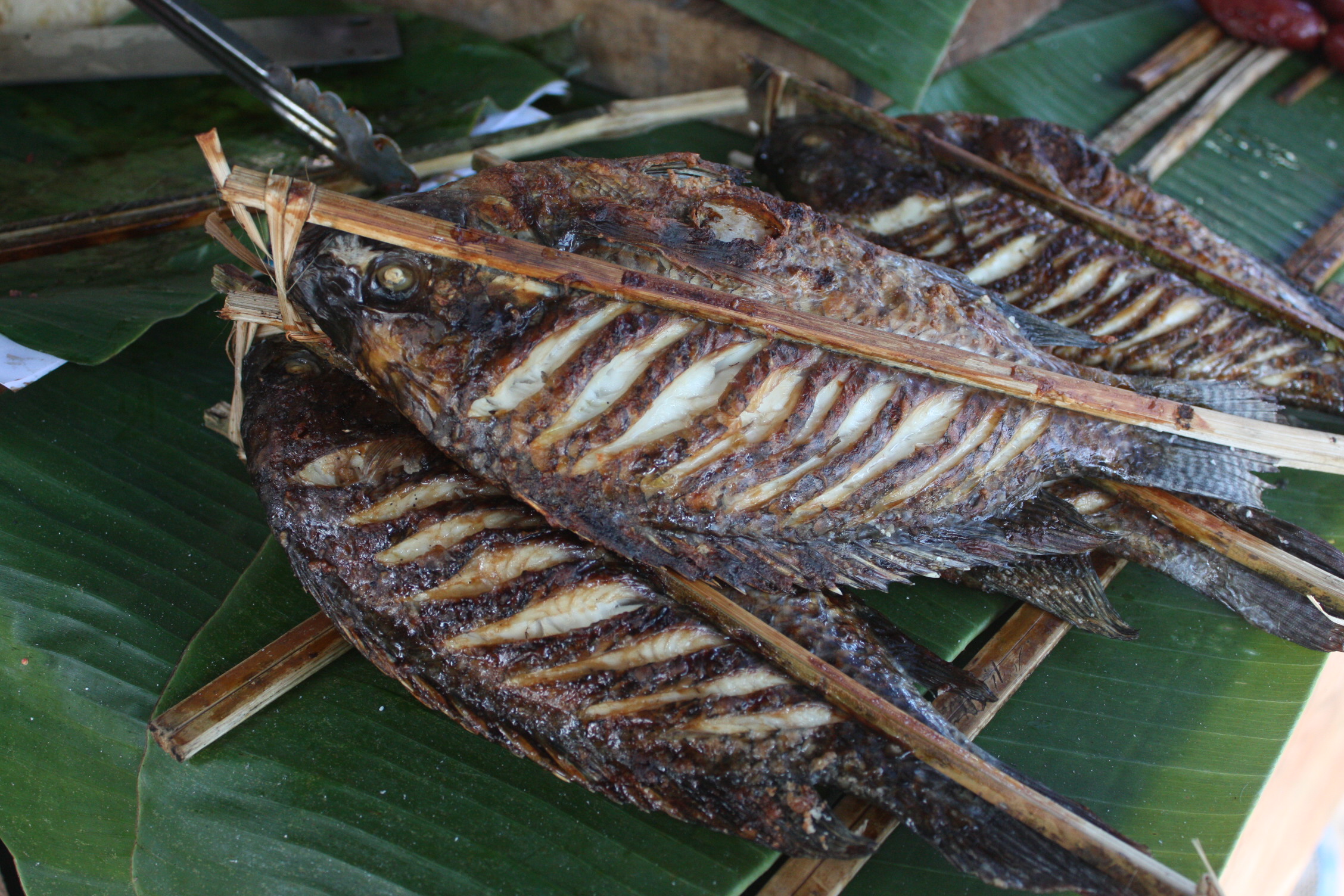
Cheap eats. A grilled fish for for next to nothing.
Lots of people ask how much money they’ll need on an overland trip. Let’s get one thing straight right now—I DON’T KNOW. Honestly. It’s going to depend on you.
Will you go to all the attractions? Will lunch be at Macca’s or from a street stall? Are you a clothes horse, shopper or souvenir junkie? Will you buy a bottle of wine at any price? Do you smoke? Will you want to upgrade from dorm to room, or tent to hotel? Do you take taxis, a bus or walk?
Even if you can answer all these questions, I still can’t tell you how much money you’ll need.
I can, however, tell you about how much Poor John and I have spent on this trip. This is based on the fact that I know how much cash we brought and how much we still have left. We used the credit card a lot in May and June in Germany, Belgium and Czech (before the trip began), so I’m not counting any of that. But we haven’t really used the card since then, so the cash trail is reasonably accurate.
Now before I reveal the amount, I’ll tell more about us and how we spend.
Poor John and I go on trips like this because it takes us back to basics. He did an overland in Africa in 1973. I did one in 1977. We always said we’d ‘do’ Africa again—together. We did in 2009.
So we’re comfortable in a tent. We love to eat local food. We walk most places. We’ve spent quite a few years living in the developing world and already have souvenirs coming out our ears. We don’t smoke and only I drink (local beer for me, thanks very much). The last bottle of whiskey I bought, in Kyrgyzstan, cost me an astonishing A$3.
We go to almost all the attractions/side trips—heck, if you come this far, you can’t miss out on these. In fact, we go to attractions not listed on the trip itinerary. We upgrade accommodation occasionally when the price is right. We’ve bought two pairs of shoes to replace ones that broke or wore out, and I replaced the jacket Poor John left on the train from Czech to Austria.
We don’t need a lot. Our main indulgence has been paper—we buy books and cookbooks everywhere and Poor John loves his newspapers.
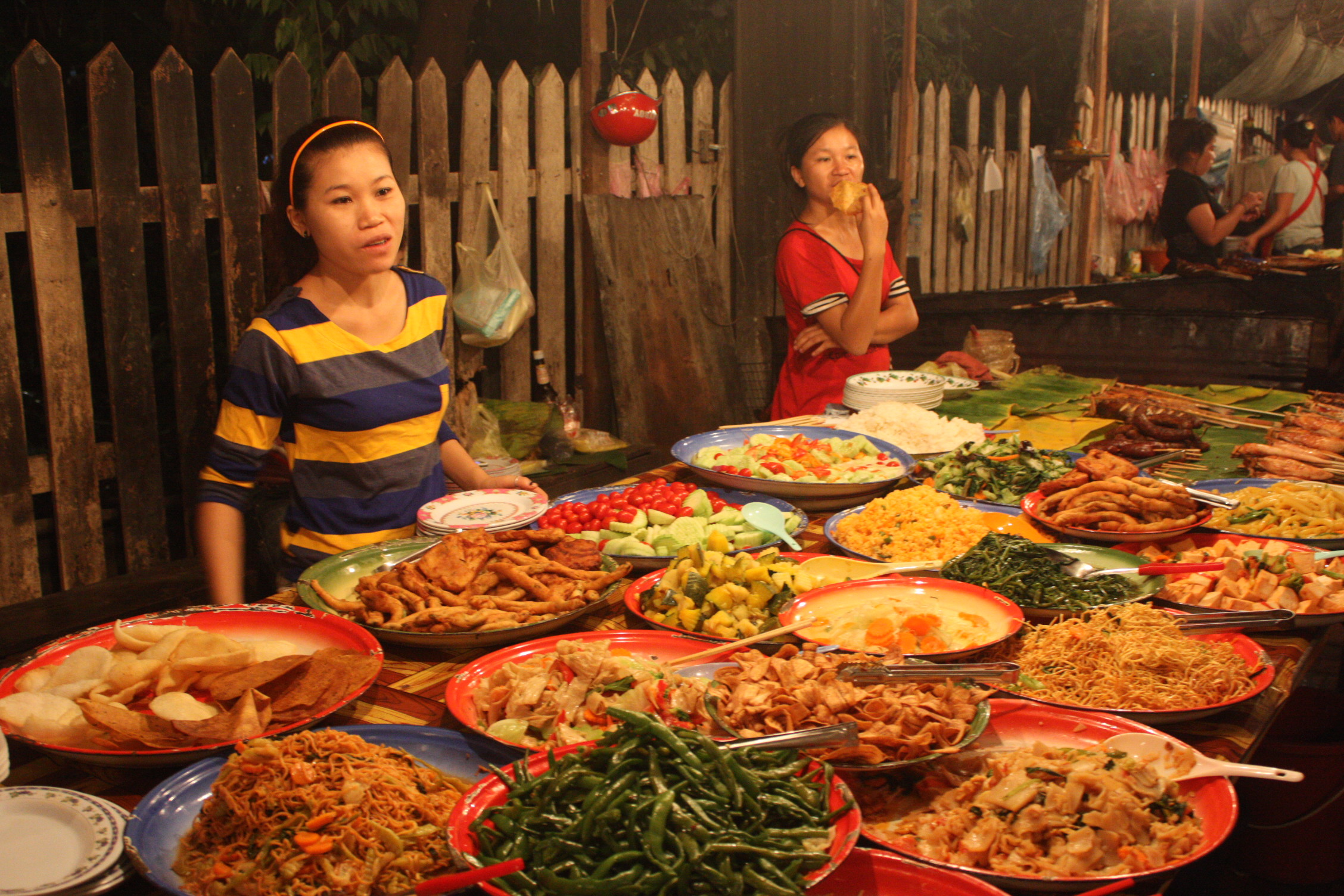
Night markets—pick and choose and fill a plate for a couple of dollars.
Some countries have been dirt cheap, others dearer. When we camp, breakfast and dinner are provided, and we buy our lunches. When we’re in hotels or hostels (basic accommodation is included in the package), we buy all our own meals. Visa costs vary from country to country, and we got nine visas before starting the trip.
So without visas, what’s the bottom line? Is the suspense too much?
Okay. We’ve spent US$3900 in 20 weeks (still four weeks of the trip left—with two cheap weeks in Indonesia and two pricey weeks in Australia). That works out to $195 per week for two people, or just under $100 a week per person.
I don’t know for sure, but I suspect we have spent the least of anyone on the trip. Some have bought lots of souvenirs and clothes, others have upgraded accommodation regularly, some love fast-food or fine dining. Our biggest ticket item was probably that thieving hair cut Poor John had in Kashgar.
So good luck figuring it all out for yourself.
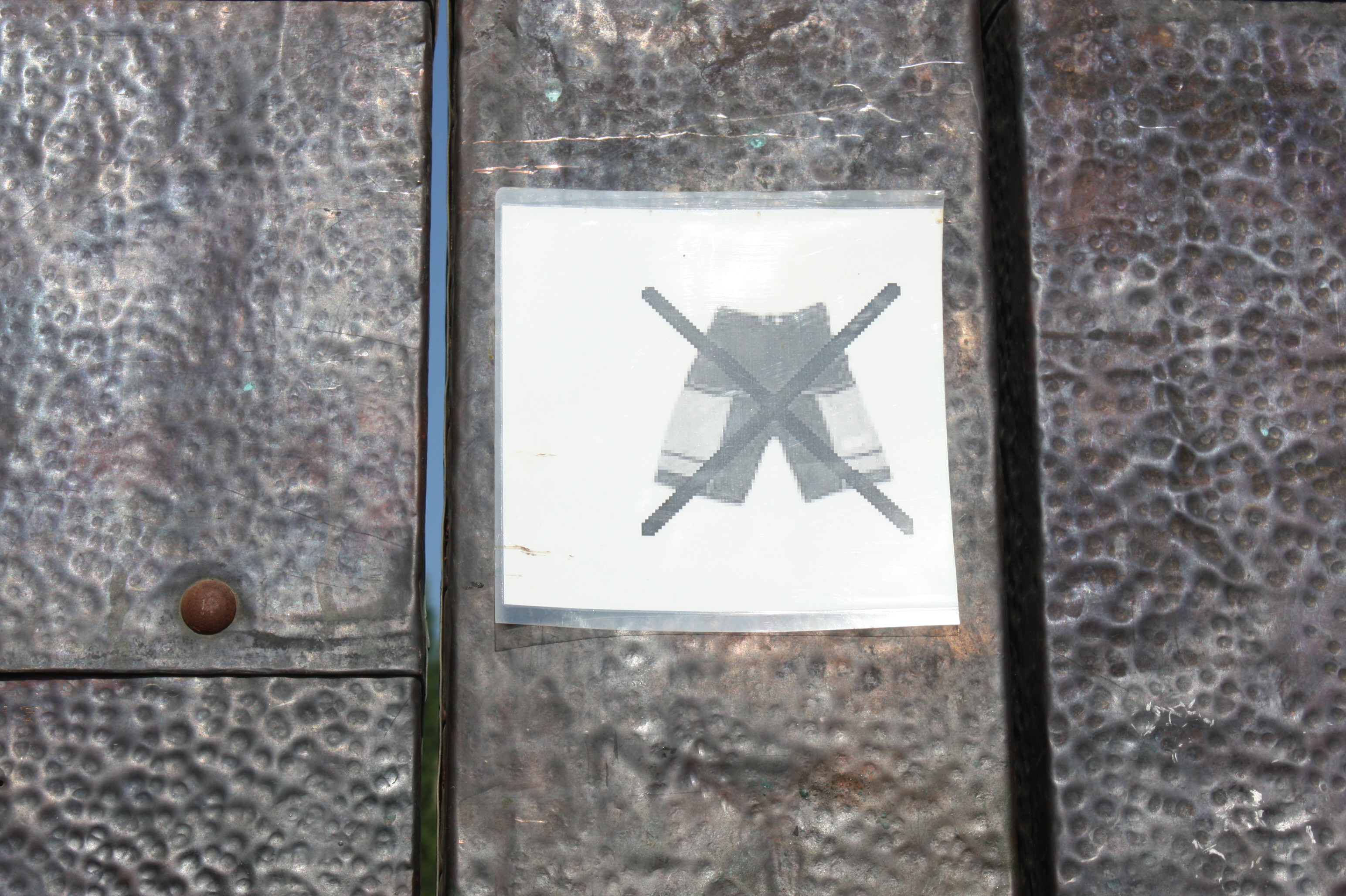
Get the message! On a church door in Georgia.
Not every country follows the same dress codes that are observed in the Western World.
For example, churches in Georgia (the country, not the state) have signs posted saying no shorts allowed. Some churches, temples and palaces require covered shoulders, head scarves and skirts on women, as well as trousers on men. All mosques want you to remove your shoes and some want you to wear a robe, too. If you’re lucky, they provide this gear for free. But occasionally they charge and sometimes you’ll simply be refused entry.
But dress codes go beyond what might be expected or demanded in religious or historical venues. They’re about people’s culture and way of life.
So far, this trip has taken us through more than 20 countries, with at least double or triple that many cultures. Frankly, it doesn’t matter diddly-squat if I’m irked because some place wants me to cover my shorts, my shoulders, my head, my knees or whatever. It all boils down to me showing courtesy and respect for another country’s culture. To play it safe, I usually carry a skirt, a sarong and/or a long-sleeved top in the bottom of my daypack. I’ve forgotten them on occasion, but for the most part they have saved me a rental fee and a lot of hassle, and ensured that I’m allowed in to most places.
People might point and stare because I have shockingly blonde hair (thanks to chemicals) and really, really weird-shaped feet (thanks to genetics), but they won’t be gawking or snickering because I’m showing too much skin.
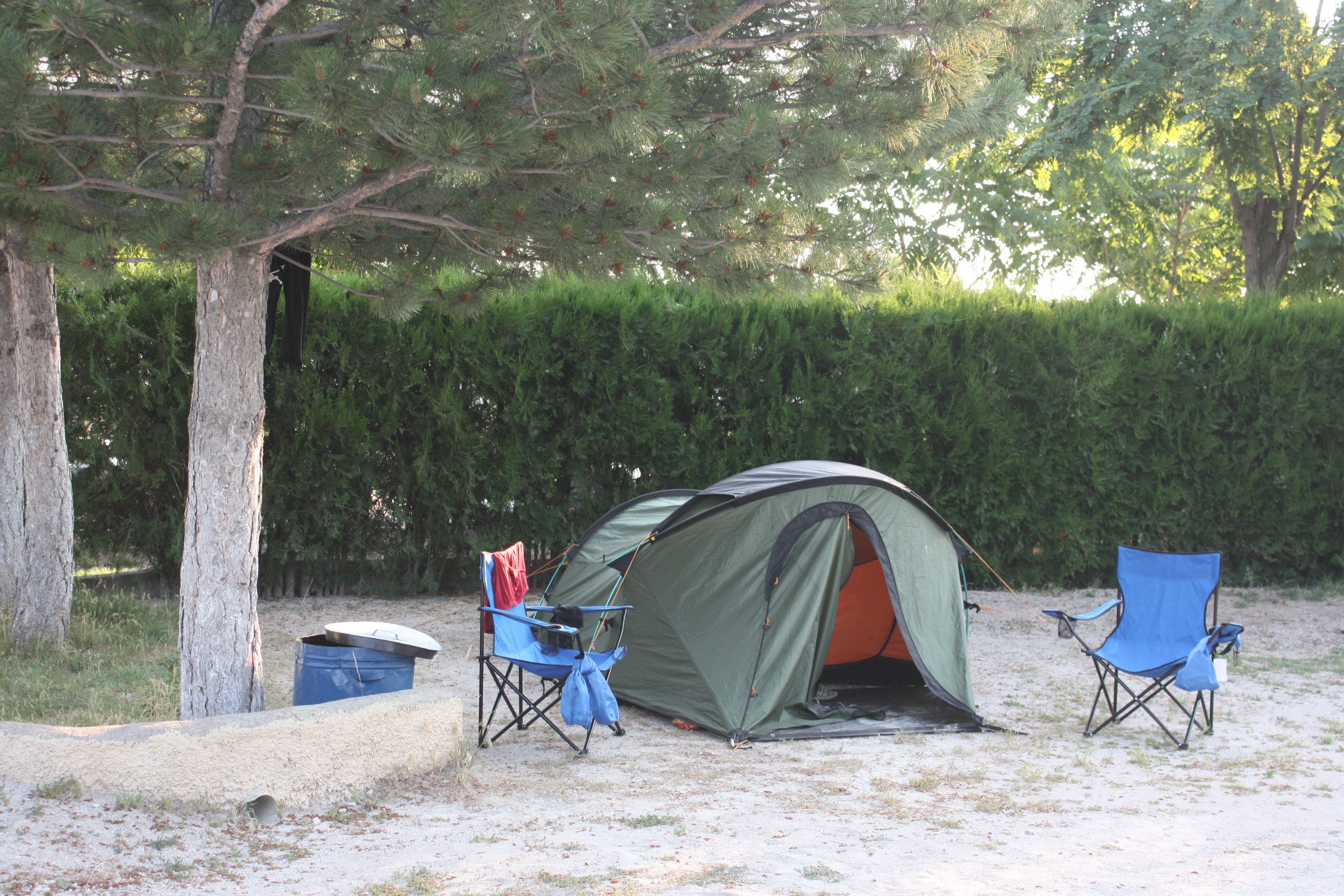
Home sweet home—not ours, but gear that works.
If you’re going to be camping for six or more months, think long and hard about the gear you take, such as tents, sleep mats, sleeping bags, backpacks and chairs.
Tents were provided on our African trip, but we had to bring our own for this UK to OZ trip. Poor John and I inspected countless brands, styles and price tags, before we settled on a Macpac Citadel, a 3.5-kilo tent with a spacious vestibule. It wasn’t the most expensive—heck we saw a $1000 tent—and we bought it on sale and the salesman knocked off another 15 per cent because we bought up big that day. The Citadel supposedly fits three, but I think that’s true only if you’re sharing with a midget. But we were only two, so there was plenty of space for us, our sleep mats and our backpacks.
Overall, the tent has been a success. It’s quick and easy to erect (verging on idiot-proof) and its inner-liner system means it can be put up in the rain and still stay dry inside. The tent pegs have been fantastic—they haven’t bent and are sturdier than everyone else’s except our tour leader’s (that’s because she has a Macpac too). The guy ropes glow in the dark, reducing the chances of you or someone else tripping over them. We’ve camped in lots of windy conditions and, while the fabric flaps noisily in the breeze, the tent has stayed anchored when we put in all 11 pegs. I’ve had only two main issues and I plan to talk to the Macpac shop about both the thickness of the floor and whether there is a trick to folding and packing the tent away so you keep condensation from transferring to the inside.
As for sleep mats, we’re on our second set of self-inflating Therm-a-rests, a brand I highly recommend. We took super-wide ones to Africa and, while they were wonderful, we decided they were too big to be practical in the Macpac tent. So we bought two new ones that are narrower and a tad shorter. They’re also Therm-a-rests and, from a size perspective, these been more than adequate for sleeping, and much more compact to roll, carry and store. As an aside, Therm-a-rests come with a nifty repair kit, but we’ve never had any punctures.
Our sleeping bags are ancient and will be retired before any other major trip. They—being a Mountain Design and a Kathmandu—have seen all of Africa and are now being lugged from London to Sydney. They’ve done a good job but they’re getting pretty worn. In future, I’d probably go for a 3–4 season. Not sure of brand yet, but Icebreaker always tempts me. We also have merino wool liners (as well as silk ones we took to Africa, but didn’t bring on this trip). The wool liners were an absolute godsend when we camped in the Himalayas. With our double-layer tent, wool thermals, sleeping bags and liners, we comfortably survived 3-degree nights in the tent. Most of our fellow travellers had to buy blankets and additional clothes to stay warm. So if you need to buy a sleeping bag, consider the weather where you are going and choose the number of seasons that will work best.
As for backpacks, I think they are too personal. You need to find one that is the right size for you and that sits well on your back. Same for daypacks. I’ve been thinking about replacing the little one I have and haven’t seen anything with the zips, pockets and compartments that make the current one so handy. Yet most people think I’m screwy for using it. Like I said—a pack is personal.
Overall, we’ve spent good—but not stupid—money on our gear, and have had good service from it all. Lots of tents have collapsed, poles and pegs have bent or broken, zippers have lost their zip, sleep mats have punctured beyond repair, sleeping bags have split, backpacks have torn. So we consider ourselves lucky.
If you are shopping in Australia, I have found http://www.productreview.com.au/ to be a very useful resource. There may be similar websites in other countries.
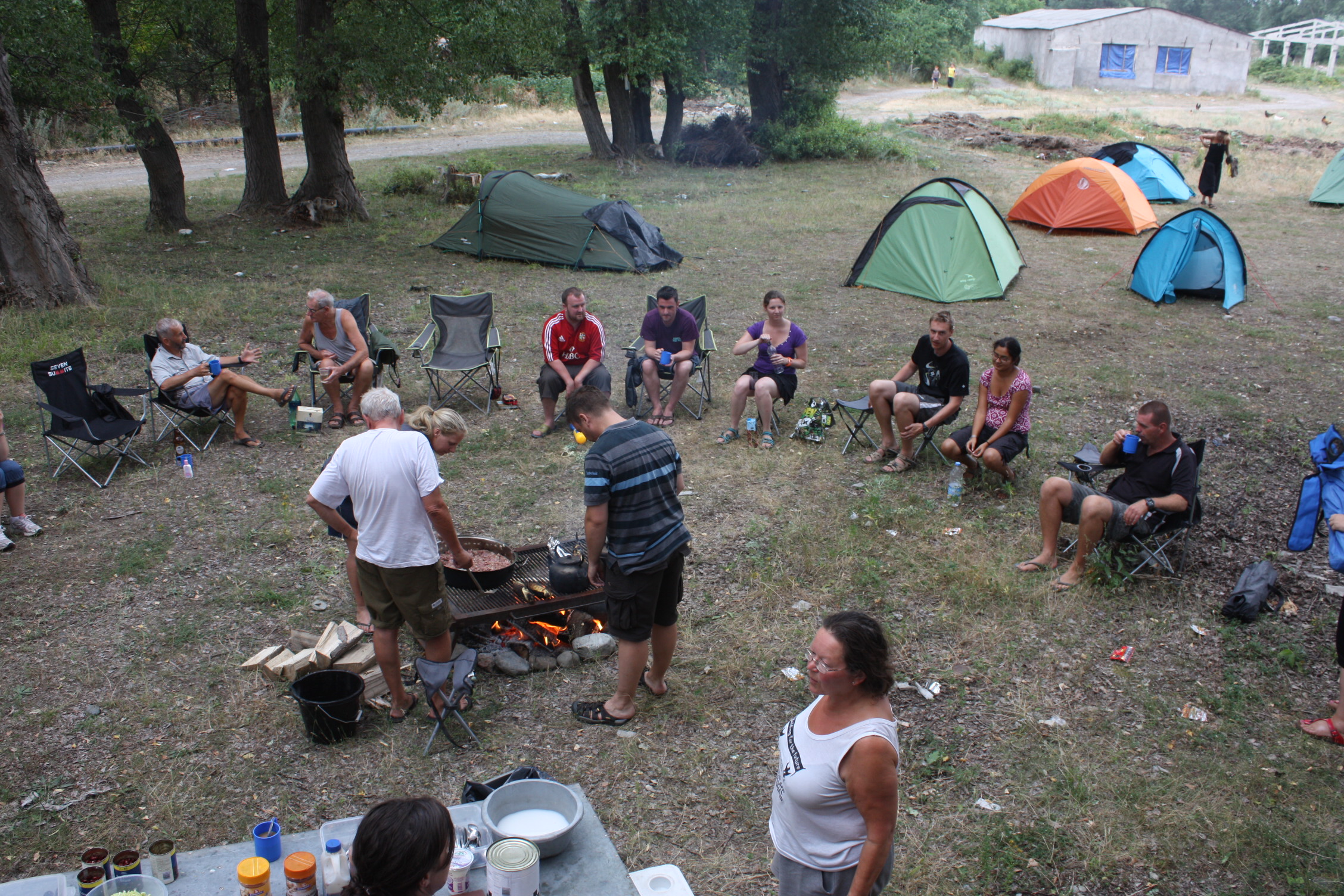
Camping in Georgia—the country, not the state.
A final word on chairs
Almost every overland company claims to provide ‘comfortable chairs’ for when you are sitting around the campfire.
Don’t believe it. The chairs are more like milking stools—three-legged (at least for a while), flimsy, spindly, uncomfortable and short-lived. Within a week of setting out in Africa, we bought two director-type chairs. This trip we didn’t mess around, so bought two chairs on Day One. Absolutely no regrets, and they cost less than A$20 each.
Those current chairs are still doing great and we are lugging them on the boat from Singapore to Indonesia, just in case the ferry has no deck chairs (the overnight ferry across the Caspian Sea had no seating). If our chairs aren’t too cumbersome, we might even take them on to Australia. Then again, they might not survive that long.
Someday I will write an entire blog about the nine lives of the camping chairs in Africa. As a teaser, I’ll mention that Poor John’s original chair lasted the longest, but he’d on-sold it before he realised all its qualities.

Good travelling fabrics will dry fast anywhere, even hanging off a ladder.
Seems silly to write about something as basic as fabric, but having learned by experience, it’s probably worth sharing the lesson!
So here’s one main bit of advice—don’t take jeans. They weigh a ton and take forever to dry. I took two pairs to Africa and regretted both. In fact, I ditched one pair on the last leg of the trip so I didn’t have to keep cramming them in to the case. The only reason I kept the second pair was because we were going to the UK in January. I needed warmth.
But if you really want to stay warm take thermals—made of washable wool. Long ones to wear under trousers (or as pyjama bottoms) and plenty of tops. I’ve got six merino tops—four lightweight and two big guns. The sleeveless, lightweight ones are as cool and comfortable as cotton, and they dry in no time. I took similar tops to Africa, too, and they were perfect.
Icebreaker (from New Zealand) is my favourite brand of thermal clothes, although Kathmandu and Mountain Design sell okay options. Haven’t tried other brands, but no reason to think they wouldn’t do the job.
All my tops are black, so most of the food I spill on myself doesn’t show. And I spill a lot—on a buxom gal, nothing ever hits the ground. The only thing that does appear on black is the salt residue that accumulates on particularly sweaty days.
Shorts and trousers are Macpac, Columbia and/or Kathmandu brands, and they’re all covered in pockets that close with zips or velcro.
Most of my underwear is lightweight cotton, and Poor John’s is a quick-dry synthetic.
And quick-dry is the key for all the clothes you take. Doesn’t matter how much you love a piece of clothing or how wonderful you think it looks on you, if it won’t dry quickly on a humid or cold day, then leave it at home.
Oh, and if you get someone else to do your laundry, be sure they aren’t going to toss your merino tops in a hot washing machine and then a hot clothes dryer. Most merino tops are washable, but send them through the dryer and they’ll only fit Barbie.
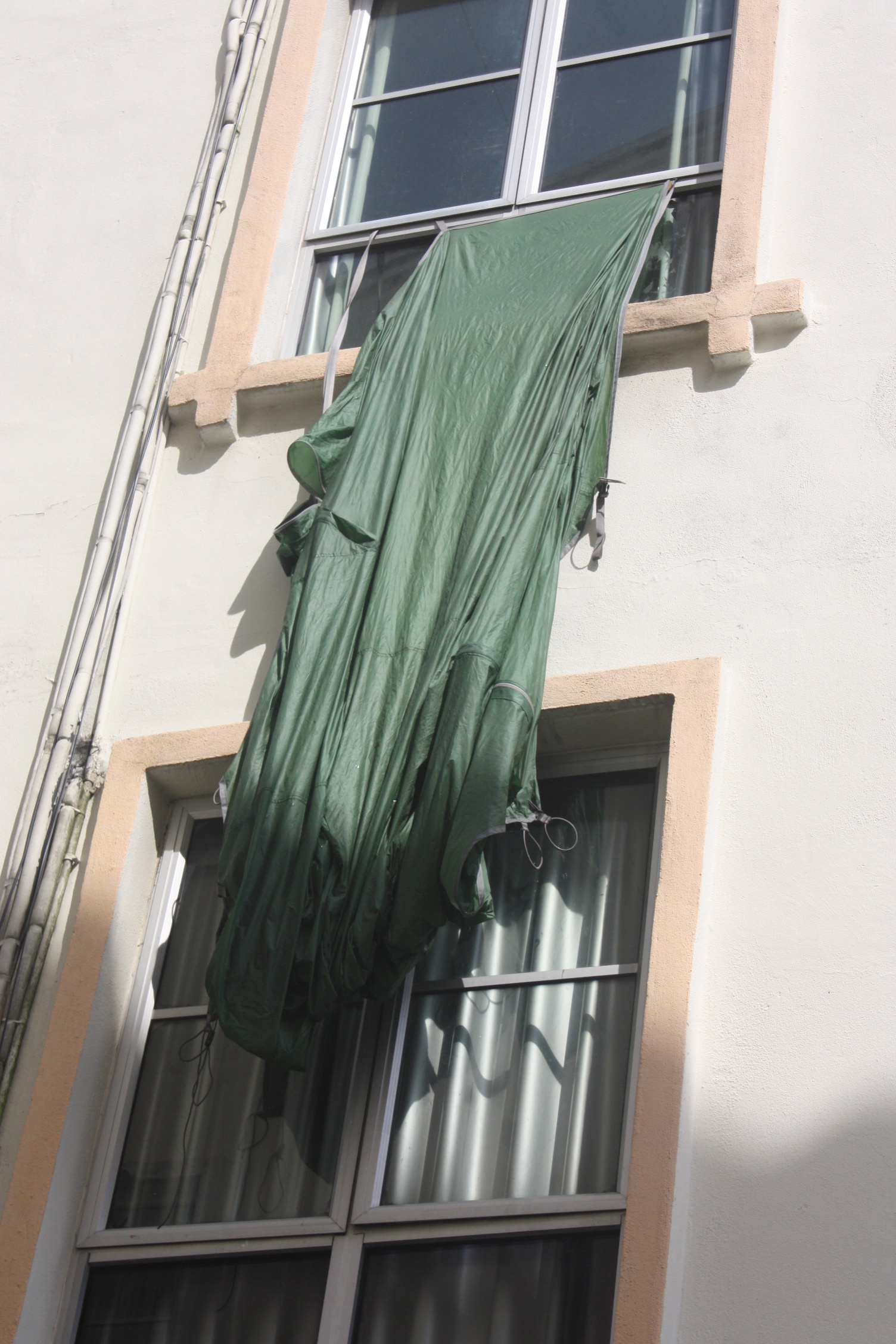
Doesn't everyone hang a tent out of a hotel window?
After five months of bush camping, we’ve got a clean tent again. Well, clean enough we hope.
We’ll be landing in Australia in a couple of weeks, and quarantine (AQIS) there is very strict. They’ll be wanting to see our tents, tent pegs and ground sheets. They’ll want to know all sorts of information too, such as where we’ve been camping and whether we’ve been on farms or in other rural settings. It may seem extreme but, over the years, Australia has managed to keep out lots of dreaded diseases and pests (foot and mouth, for example), so they’re serious about keeping things safe and clean.
Poor John and I looked into having someone else wash the tent, but thought $6 was exorbitant! Frankly, you do get used to cheap prices in these parts of the world and can forget that what might seem dear at home is actually quite cheap where you are at the time.
Anyway, we also decided that we might spend $6 and still have a fairly dirty or even damaged tent. So on our first afternoon in Malacca, we went to work in the bathroom of our hotel. There was a bucket in there, so we took the tent apart and washed the inner lining and fly separately—actually Poor John did most of the work. I washed the ground sheet, which was so dirty it had to be done twice. Thank goodness for the nail brush and enough floor space to spread things out a bit.
We hung everything out the hotel window and let it dry in shifts—it was a little tricky to make sure the gear didn’t slide out the window and down the side of the building. Poor John noticed that a lot of water from the tent dripped onto someone’s motorbike seat. They’re probably still trying to figure out how it rained on just their bike! 🙂
Our big case is now all packed up. Probably no need to open it again until we reach Australia, unless quarantine wants to eyeball the contents.

Wall art in Malacca, Malaysia.
Everyone I know who’s been to Malacca has raved about how wonderful it is, and I have to agree. But before I go any further, I need to clarify that Malacca is spelled Melaka in Bahasa Malay, so keep that in mind if I seem to switch between the two—both are used here.
Situated on the Straits of Malacca and on both sides of the Melaka River, this attractive Malaysian city was once a bustling seaport for traders from all over the world. It’s claimed that 84 languages were once regularly spoken here. Then, starting in 1511, along came the conquering Portuguese,* followed by the conquering Dutch and finally followed by the conquering British. Each had their own agendas and plans and, over time, other ports surpassed Malacca, the mouth of the river silted up, the ships stopped coming and the community languished.
Today Malacca is a lively tourist town, that doesn’t really feel too touristy. And the townspeople are doing a lot of things right to make Malacca a popular destination.
One of the things I liked best was the effort being made to beautify some of the waterfront. On a long section of the river, homes and businesses are being gussied up with fun and colourful street art. Many of the works are in progress, and over the time we have been here, we have seen many pieces grow and take shape. The many bridges—whether for vehicle or foot traffic—look fantastic too. And most of the waterfront is wonderfully lit at night, turning the whole area into a fairyland.
These photos were taken over two days—some from an afternoon river cruise and others near dusk when Poor John and I were on foot. According to the spiel on the river cruise, the waterfront has nine kilometres of walkway. All the bridges seem to be done. Most of the building/street art is happening on one side of the river (the west), over about a kilometre.
It will be interesting to see how the art progresses and expands over time. Two images show the state of things on the opposite side of the river—obviously, there’s a lot still to be done.
* The Portuguese first came in 1498, but didn’t conquer until later.
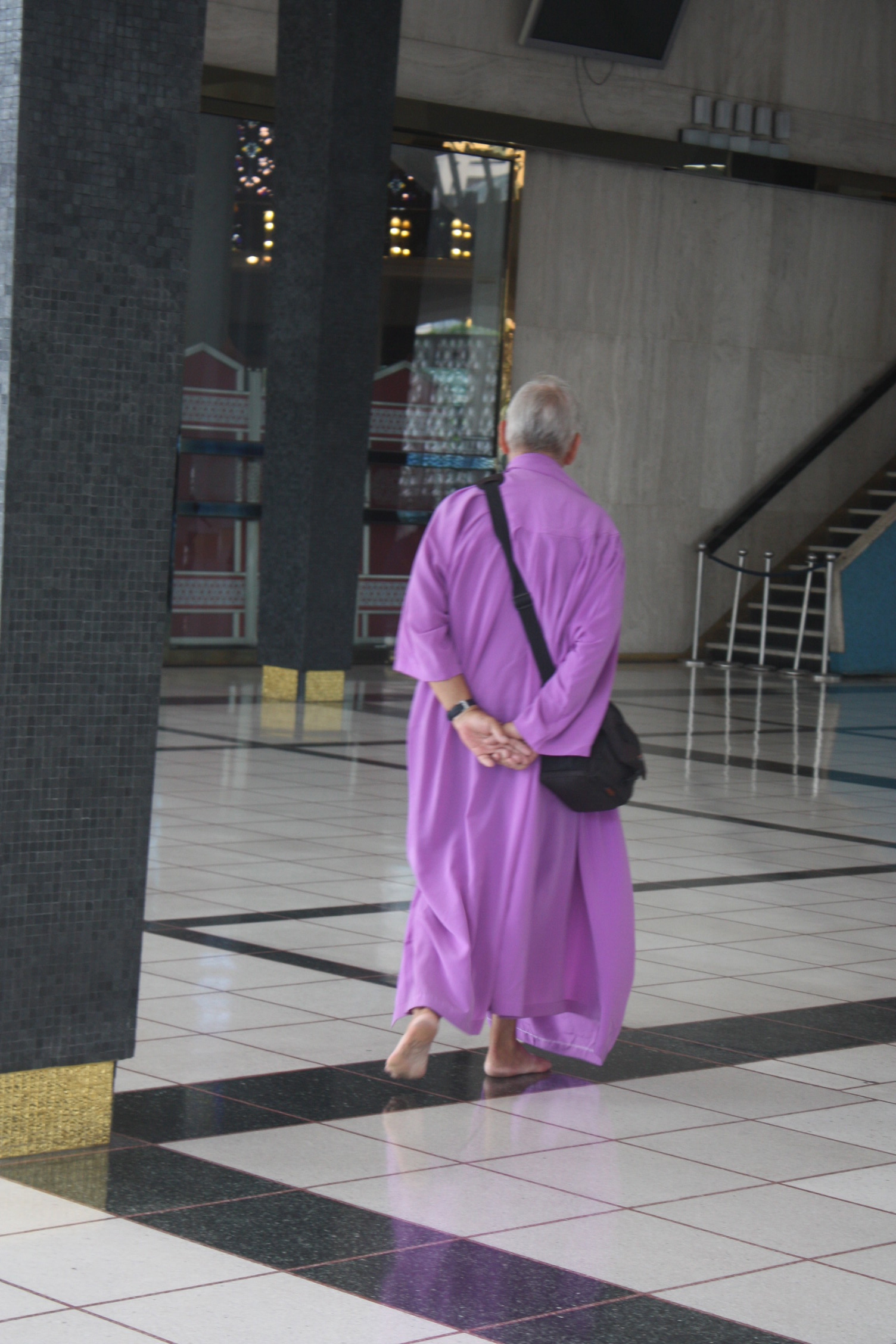
Poor John—new mosque, new robe, same stride—carrying the camera as usual.
Remember—your passport and money are the most important things you’ll take travelling. Everything else can be purchased or replaced. That said, I have to admit that I’m extremely attached to my laptop, camera and iPod. I don’t have a mobile phone to obsess about, so that’s one less worry.
Of course, the next most important thing is to hang on to all these cherished possessions for the duration of the trip. I almost hate to bring up this subject before the end of this trip, so picture me touching wood all over the place and listen for my bloodcurdling screams if anything goes missing.
Passport and money
My passport and money usually live in the truck safe—referred to cryptically as the fridge, as in ‘Does anyone need to get anything out of the fridge?’ I have a story about a fridge named Trevor in Africa, but that will have to keep for now.
Our fridge is concealed somewhere in the truck. I won’t say where. Every truck is different, so wait and see where your fridge lives. Our fridge has two different padlocks, each with its own key. We take it in turns to ‘mind’ the keys. Every week, two people—never a couple—each hold one of the keys. We open the fridge occasionally—at border crossings (when everyone needs their passports) or when people need money. The truck door is shut during this process so prying eyes don’t see what we’re doing.
But for several weeks now, we’ve had to carry our own passports. That’s because instead of bush camping, we’ve been staying in Southeast Asian hotels and hostels, and they always want to see our passports and record the details. We have our passports tucked away in pockets that have velcro flaps.
As of yesterday we’re carrying our money, too. The truck doesn’t travel beyond Singapore—it’s shipped back to the UK—so we’ll be travelling on public transport until we reach Australia. We have a deluxe money wallet—sure beats the crappy black plastic bag we used in Africa—but the money isn’t in it. Our shorts have zippered pockets and we reckon the money is safer there than in the wallet in the backpack. Pickpocketing is an art form in the developing world. Plus, backpacks can get slashed, yanked off arms or forgotten in restaurants.
Every morning before we set out, I do a personal pocket check to make sure everything is in place and secure. So far, so good.
The gadgets
I pay just as much attention to the laptop, camera and iPod.
The camera lives in it’s carry case and lucky Poor John usually gets to carry it. 🙂 I’m so used to him picking it up that a few terse words are fired his way if he ever forgets to bring it, which happens occasionally. The laptop and iPod ‘ride’ with me in the daypack.
Nothing gets left behind on the truck. The exception is sometimes overnight when I think there might be a chance that the tent could be slashed, in which case, I think the gear is safer locked away in the truck. That’s when I park it out-of-sight on the overhead rack.
By and large, we’ve been lucky on this trip. One camera has been stolen and that was from a hostel in Tbilisi in Georgia. A few other items have died, been lost or broken. The truck that left London just after us has not fared as well. In Turkey, someone left a truck window open when they all went to lunch. An opportunist climbed in and stole everyone’s precious gear—laptops, iPods, phones, cameras, e-readers. What a blow.
We’re in Malacca (Melaka) Malaysia and the wireless internet connection at our hostel is down today and possibly tomorrow. The fellow at reception says the telephone line is ‘broken’. Dang it! Had to find an internet cafe to post this.
Guess I’ll go to my room now and write more. Stay tuned.
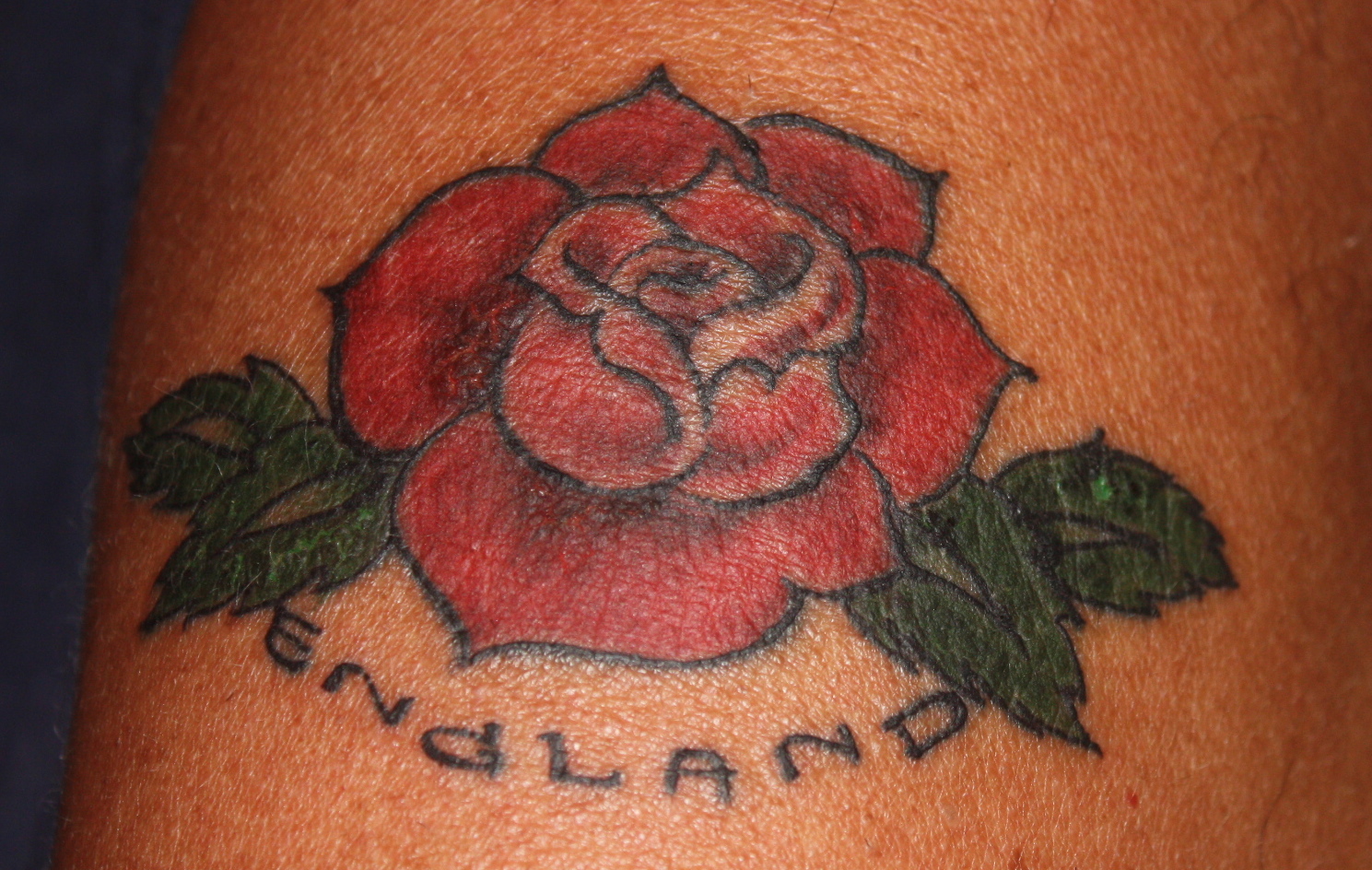
A wild English rose.
This week, two of my fellow travellers succumbed to the needle. No, they aren’t druggies and they didn’t get new vaccinations.
They took themselves to the tattoo parlour on the island of Koh Samui in Thailand and got themselves branded.
I won’t point fingers and I won’t name names. They know who they are and they were sober when they did it. In fact, they’ve both wanted a tat for a long time. That said, I think they egged one another on, but I wasn’t there for the discussions.
They both swear the process didn’t hurt, but we haven’t seen either of them signing up to have their legs waxed!
To be honest, the tats look great and suit them, and I’ve supplied a vat of moisturising cream for them to slather on to keep the tats healthy. Guess this means I’m an accomplice or an aider and abetter.
By the way, would anyone out there believe that Poor John got a tat?
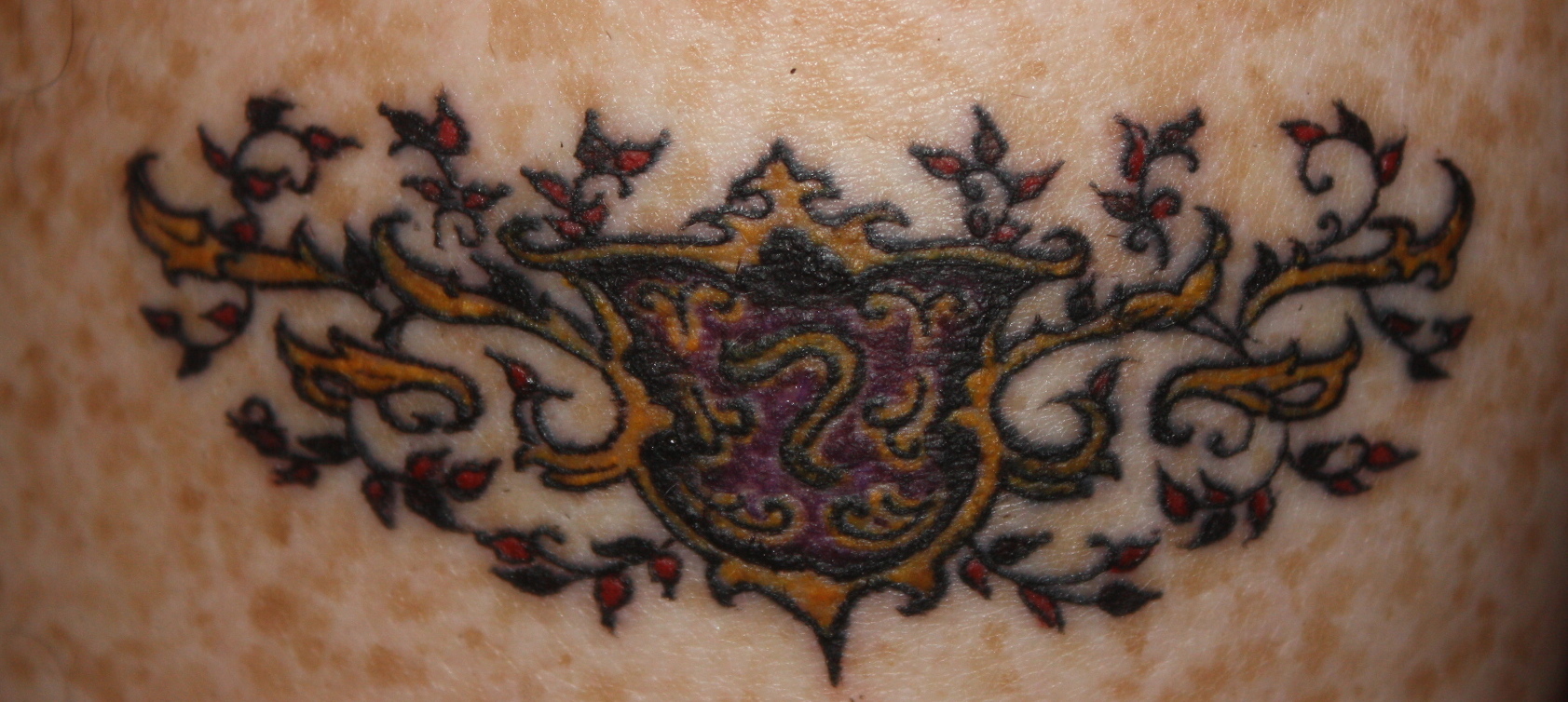
A streamlined tattoo.
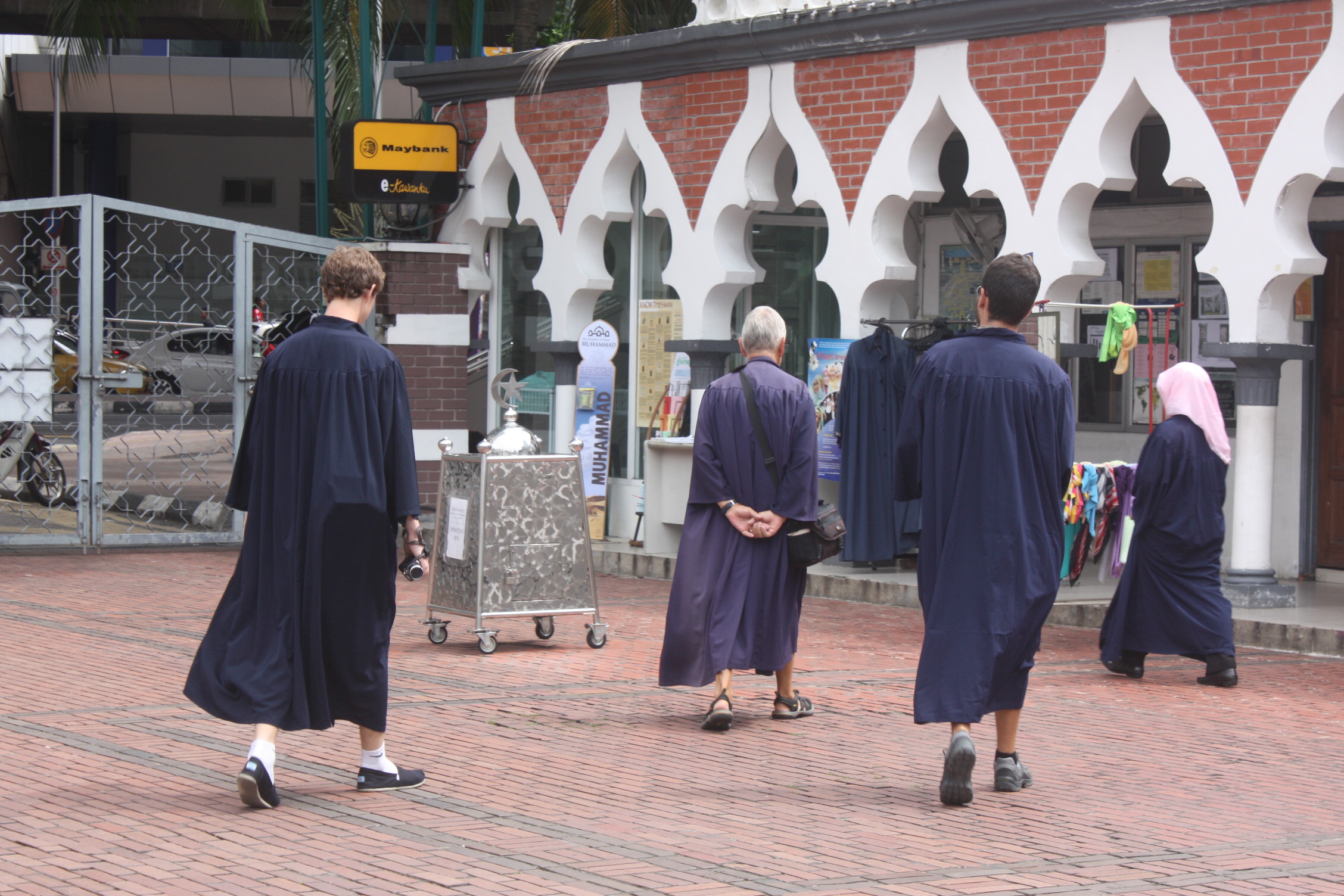
Where's Poor John?
I’ve said before that Poor John has a tendency to walk nonchalantly in front of me—far, far in front of me—and often with his hands clasped behind his back. He assures me that ‘they help to propel him forward’. 🙂
Of course, he almost never looks back. If I were to be kidnapped and bundled into a strange car, he might not realise it for hours.
Even when I got hit by the motor scooter in Hanoi and ended up with a huge black eye, he didn’t see what happened. Just the other day, he admitted that he heard a small yelp—still doesn’t know whether it was from me, the woman who hit me or someone in the crowd—and turned to find me face down on the road.
So today, as part of a walking tour of Kuala Lumpur in Malaysia, we visited the beautiful brick Jamek Mosque in the centre of town. There’s a strict dress code at the mosque and even men are required to don a long robe.
I’ll write other blog entries on the walking tour and mosque (both highly recommended), but for now I have a question. Can you pick which tourist is Poor John striding ahead of me? Yep, I thought so.
 Where to next?