
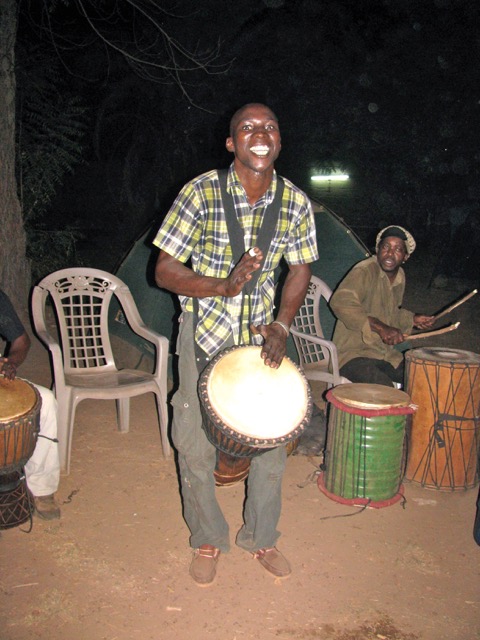
The drums of Africa make my heart sing. This guy was amazing

I’m guessing this would be considered a xylophone. See how it’s supported on two chairs
Memories of West Africa came flooding back yesterday as I listened to a local radio program introducing and playing the music of Songhoy Blues, a young and talented Tuareg band from northern Mali. Their amazing sounds and energy took me back to 2009 when Poor John and I spent almost a year travelling overland through Africa on the back of a truck—a very basic truck.
Mali was our sixth country on this African Trails journey—after Spain, Gibraltar, Morocco, Western Sahara (if you count that as a country) and Mauritania.
Our driver, Chris, who had already lived in Africa for five years and done this trip before, was passionate about Mali and its musicians. So he organised a band to come play at our campground in Bamako, the capital.
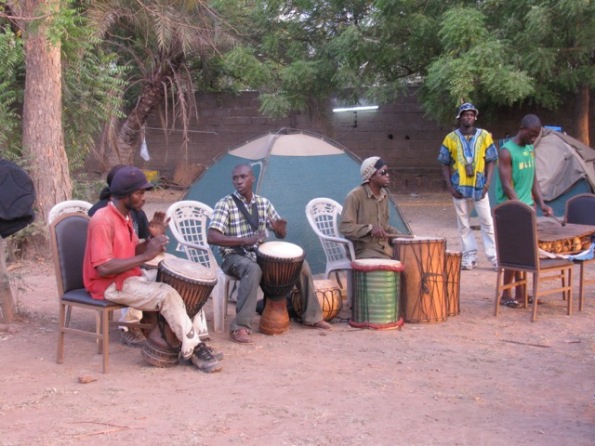
The band gets ready to play. That’s our tent in the background
It was a fabulous afternoon and night with great music.
Mali was one of our favourite African countries on that trip—we visited 30. We had the chance to travel to Timbuktu (by boat), the villages of Dogon Country (mostly on foot), Djenne (in the truck) and more.
It’s time for me to write more about Africa and the extraordinary time we had there, so I’ll be jumping around on my posts—more mixing of our current and past travels.
And now I’m heading out to buy a Songhoy Blues CD or two.
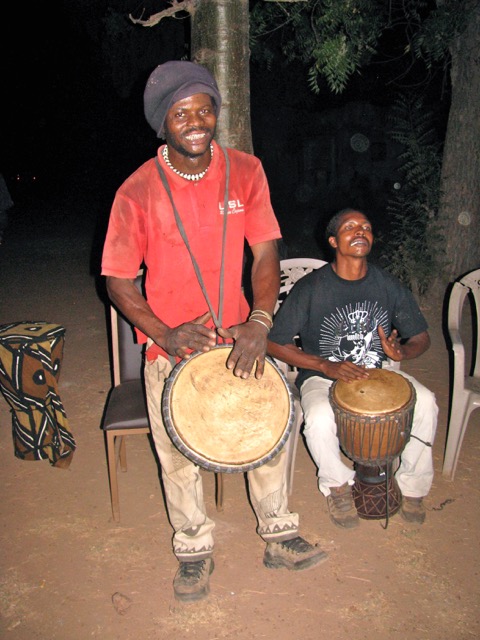
Hope you can take the time to check out the music of Songhoy Blues and see if they make your heart sing
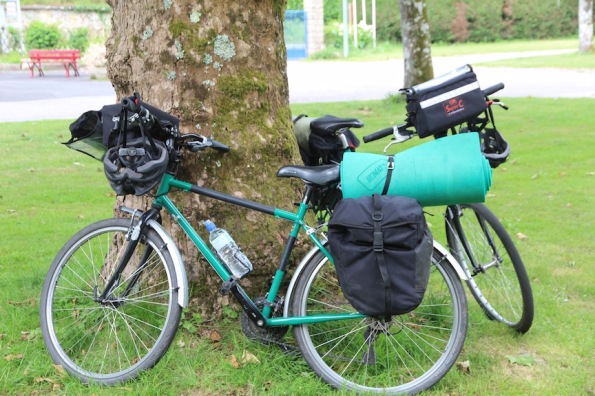
Bikes loaded and ready to go
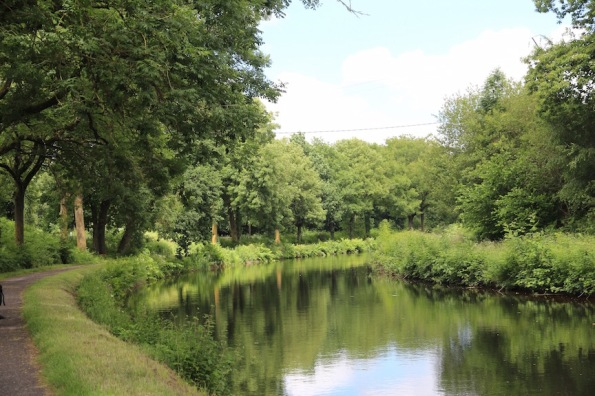
A scenic spot on our first day of cycling
The annual Tour de France ends today (Sunday, 23 July) and it’s almost certain that Australian, Michael Matthews, will win the green jersey (awarded to the top sprinter).
We have a vested interest in this competitor. The 26-year-old Matthews is from Canberra and his dad is one of our local butchers.
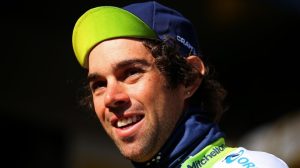
Michael Matthews (photo from Getty)
While Matthews has ridden with skill, determination and tactical smarts, he has had some ‘good luck’ along the way. Slovakian Peter Sagan was the pre-race favourite for the green jersey but, a few weeks back, he was disqualified after causing a crash. That crash led to legendary sprinter, Mark Cavendish, withdrawing from the event due to injury.
Next favourite, Marcel Kittel, crashed on Wednesday, leaving Matthews the new man in front. If he wins today, he’ll be the third Australian ever to capture the green jersey. That said, Matthews was already creeping up on those in front of him. He’s an amazing sprinter and not too bad on hills. So he might have won the jersey without the mishaps.
It’s amazing that Matthews is riding at all. Ten years ago he was, by his own admission, ‘heading in the wrong direction, hanging out with the wrong people’. But his high school physical education teacher suggested he attend a talent identification program at the local Academy of Sport. The fact that he was seen as a young man who could ride a bike fast changed his life.
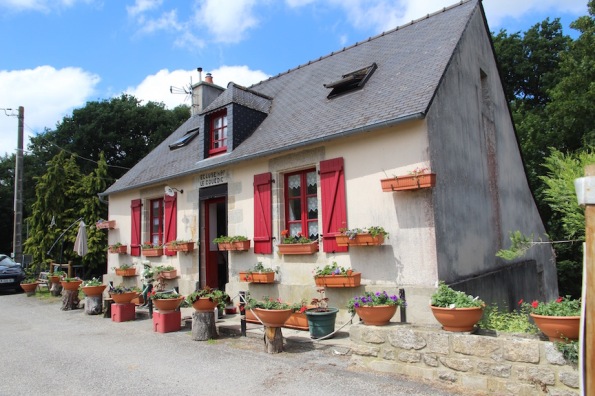
One of the prettiest lockkeeper’s cottages we saw and their garden below


Of course, all this cycling reminds me of our recent time on bikes in Brittany, France. Many of the Tour de France days covered more than 200 kilometres. Our whole week-long bike ride covered just over 200 kilometres.
So do I feel shamed. Nope. You have to remember that I was riding with a badly damaged shoulder, having been knocked over in Brussels a few days earlier.
We organised our bikes through Breton Bikes (highly recommended) and originally planned a much longer trip that would have taken us over plenty of hills and twice the number of kilometres.
But my injuries required a whole new approach.
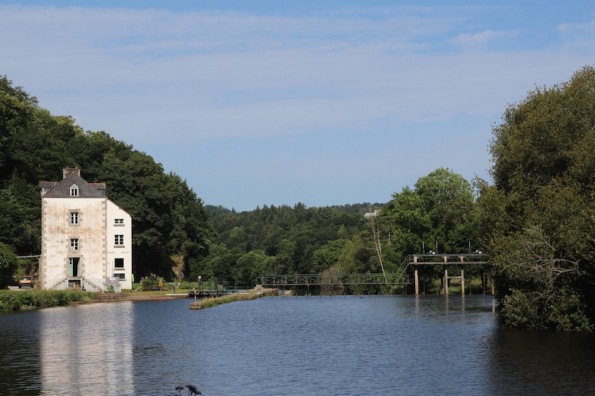
A large lockkeeper’s cottage where an annual canoe kayak competition takes place


As a result, most of our ride, but not all, was along canal paths (towpaths). That said, I had to laugh about the route instructions that referred to one ‘long, gentle slope’ on the first day. Ha! There were bloody ‘mountains’ every day, and because of my unstable shoulder, I often had to walk my laden bike up those inclines.
But the towpaths were a delight. These were along the Nantes to Brest Canal, which was built in the early to mid-1800s. It was important for trade until the 1970s, but is now used only for leisure boating. The canal runs for 44 miles and has more than 100 locks (12 have been submerged after the construction of the Guerlédan Dam).
We didn’t cover the whole length of the canal, but I reckon we pedalled past at least 40 of the locks and lockkeeper’s cottages. Some of those cottages are no longer in use, with one lockkeeper looking after several locks (and often riding their bike in between). Others are beautifully decorated, with lovely gardens and friendly lockkeepers.
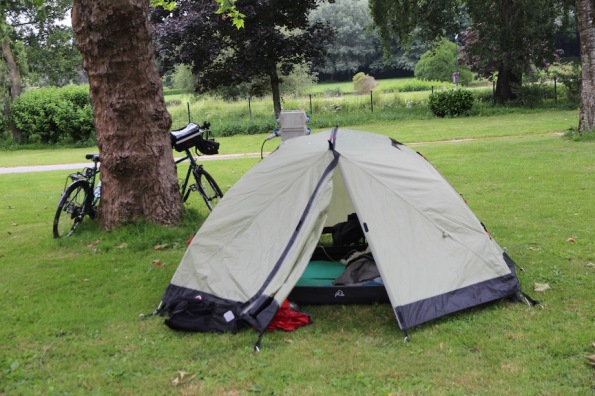
All set up at the campground in Josselin
And did I mention that we camped every night during the ride?
Breton Bikes supplied a tent, roll mats and sleeping bags. We declined their offer of a camp stove, cutlery, dishes and cookware. We had our travel coffee cups and spoons, ground coffee and an immersion heater to use for breakfast (baguettes and marmalade), and we ate out for the rest of our meals—usually a plat du jour for lunch and a light meal at night.
In spite of my injuries, it was a fabulous week with excellent bikes, beautiful scenery, superb food, welcoming campgrounds and wonderful weather.
So today I’m sharing some of the sights—my wonky shoulder kept me from taking too many scenery pics. That said, I’ll be back with pics of some of the towns we visited. Oh, and see those two food shots above? The burger was the biggest and nicest burger I’ve ever had. And the eggy pic is of a galette. Brittany is famous for this buckwheat pancake-y dish that can be sweet or savoury. We enjoyed quite a few galettes (occasionally two in one day).
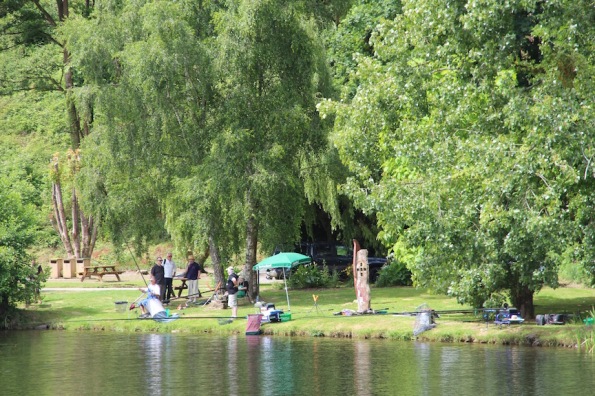
Picnickers enjoyed the canal and great weather
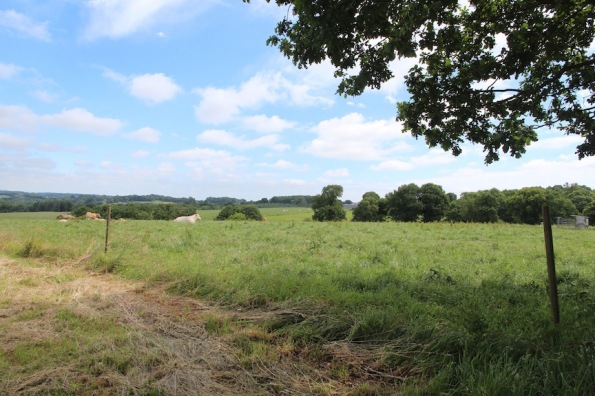
French countryside
Update on my shoulder
I got fairly banged up when that kid mowed me down in Brussels. I’m not exactly sure where he hit me (came out of nowhere) or how I landed, but my right shoulder, right hand (especially the thumb) and left knee suffered the most.
Since returning to Australia, I have seen the doctor and physiotherapist, and had an MRI plus arthrogram. The news is discouraging.
There are full thickness tears of two tendons, including the subscapularis muscle. It’s the largest and strongest cuff muscle and provides the majority of cuff strength. It’s at the front of the shoulder. It is the spot that hurts most and is probably where I was hit.
Now I’m playing the waiting game to see a specialist. Surgery seems likely, and recovery will be slow. Ugh! But for those of us (myself included) who thought I was crazy to do the bike ride, I can report that the doctor said it was probably good for me! Who knew?
And my brother-in-law sent me hilarious words of encouragement as I pedalled along. ‘Glad you are still game. You are in France: I watch the Tour and am used to riders crashing, having amputations or legs in slings and riding on. I’m proud of you!’ Thanks David.
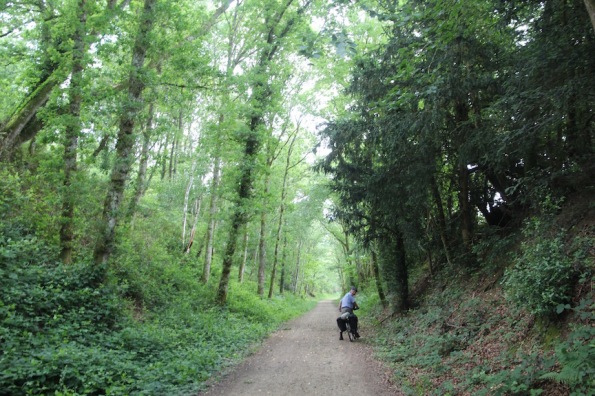
Poor John is dwarfed by trees along the trail
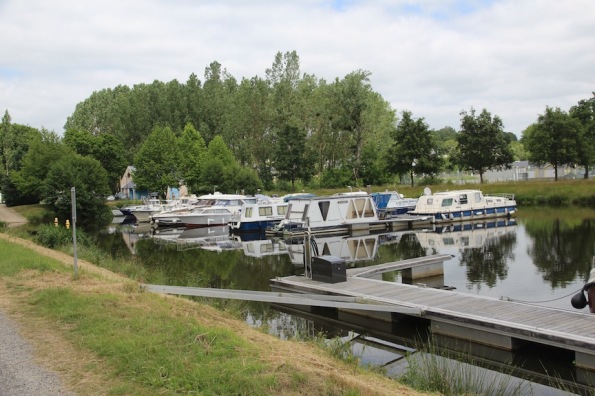
A small marina on the canal
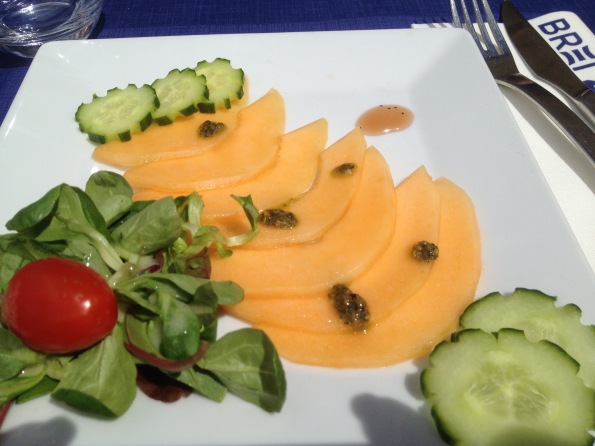
Melon salad in St Brieuc—very manageable
We’ve been overseas for almost two months and enjoyed almost three weeks travelling around France. We’ve enjoying the landscapes, the museums and other touristic sites, the language, the cheese, the wine and the food, in general.
But nothing prepared us for portion control.
The French have a wonderful lunchtime option called the ‘plat du jour’. It’s only offered at lunchtime on weekdays and it can be one, two or three courses—meaning an entrée (or starter depending on where you live), a main and a dessert.
The plat du jour is usually quite generous and usually ranges in price from 10 to 15 euros. I usually ordered an entrée and main, while Mr. Sweet Tooth usually opted for a main and dessert. When we ordered the plat du jour, we usually went very light on dinner.

Custard tart

Fromage blanc with strawberries
When we headed out to start our 200+-kilometre bike ride in Brittany, we had a compulsory change of trains in St Brieuc. It was a couple of hours, so we sought out a likely lunch spot and ordered their plat du jour. It was a melon salad, fish with vegetables and a fancy custard tart. We each ordered two courses, and you can imagine who ordered what.
The melon salad was quite nice and just what I’d hoped for.
After seven days on bicycles (more about that soon), we met up with daughter and son-in-law, Libby and Daniel, to enjoy the surrounds of Limoges in southern France.
We did a lot of exploring, visiting and eating.
One of the most telling experiences was in Le Sans-Lys, a restaurant in Martel. Their plat du jour listed a starter of another melon salad, a main of duck and a dessert of I don’t remember what. I was completely stonkered (Aussie slang for outdone) by the salad alone. It really was all I needed.
Hope you appreciate the difference between the two melon salads, and the difference between the portions of the elegant north and more -down-to-earth south of France.
Oh wait, I still dream of the amazing dessert I ate in Brittany (northwest of France). It was fromage blanc fraise (white cheese with strawberries). I could eat that every day. I have found a recipe and will share it if it turns out with any success.
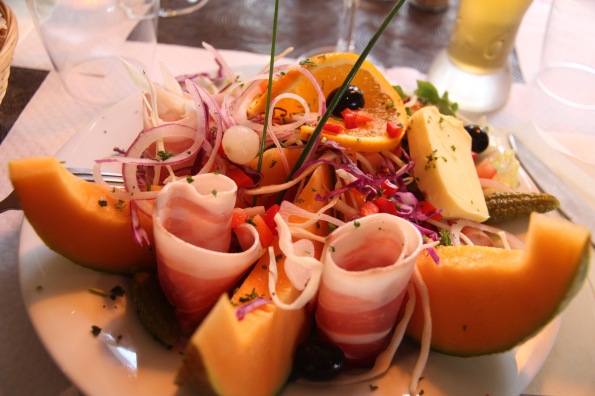
Huge melon salad in Martel
Poor John and I are sitting in Charles de Gaulle airport, about to start 20 hours of being airborne and 16 hours of roaming airports (hoping for a quick escape into Singapore). Bad connections. Argh. What are the worst flight connections you’ve ever had?
I find airport internet often doesn’t work, so don’t expect me to be around until sometime Sunday. Have a great weekend. Stay grounded. 🙂

Sharbat Gula (Bibi) as she stared at us from National Geographic in 1985
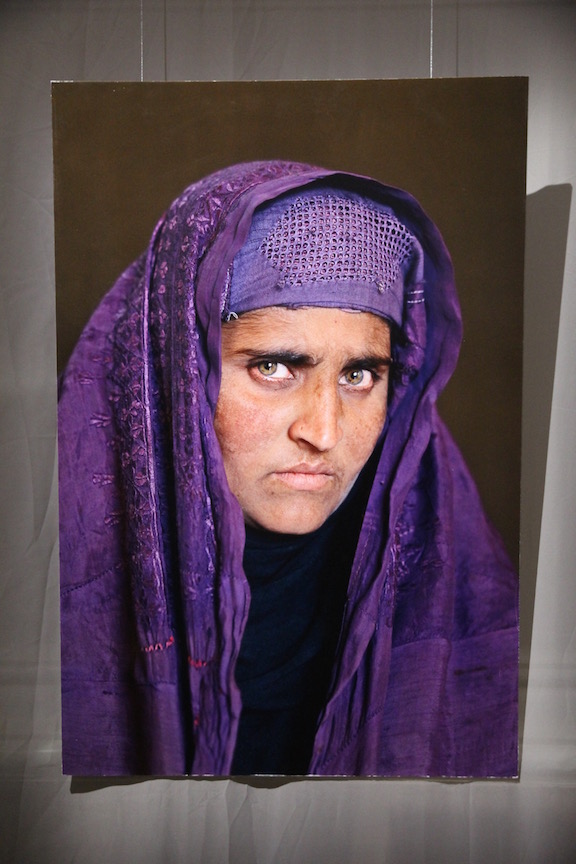
Sharbat Gula rediscovered in 2002
She stared out at us from the cover of the June 1985 edition of National Geographic magazine. She had the most arresting gaze and the most incredible green eyes. She gave a face to the hundreds (perhaps thousands) of Afghans living in refugee camps in Pakistan.
The image of her face, with a red scarf draped loosely over her head and her eyes staring directly into the camera, has been named ‘the most recognized photograph’ in the history of the magazine, and the cover itself is one of the most famous in National Geographic’s collection.
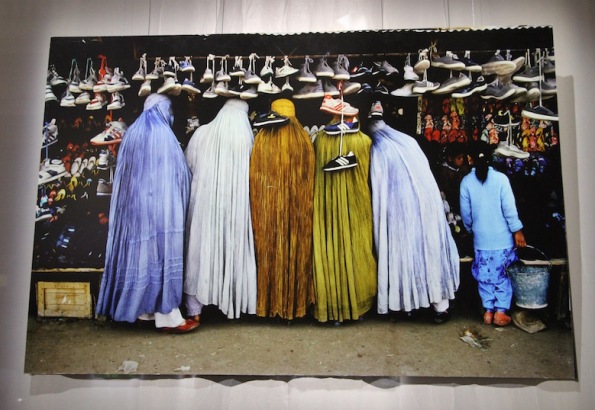
Women choosing shoes in Kabul Afghanistan, 1992

Refugee camp, Pakistan, 1990s
Today the ‘Afghan Girl’, Sharbat Gula, is a widow, mother of three girls and about 45 years old. After remaining a nameless mystery for almost two decades, she was rediscovered by Steve McCurry, the man who photographed her bewitching image all those years ago.
McCurry had unsuccessfully searched for her in the 1990s. He returned to the area in 2002, and with perseverance found she had returned to her mountain village of the Tora Bora in Afghanistan. With her then husband’s permission, she met with and was re-photographed by McCurry.
And that brings me to the main subjects of this post—McCurry and his vast collection of work.
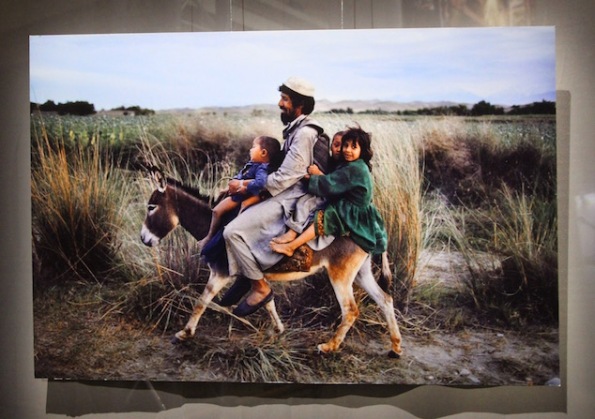
Typical transport in Maimana, Afghanistan, 2003
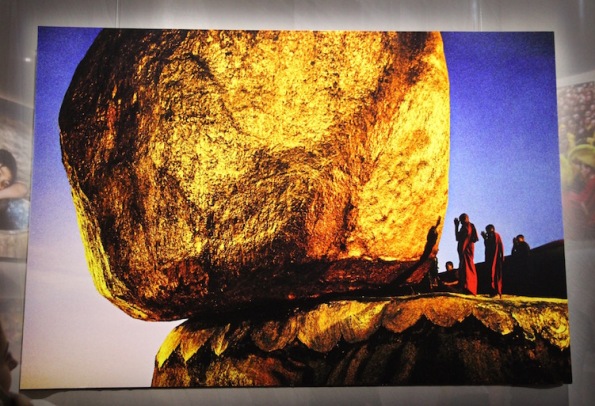
Monks with the balancing rock, Kyaikto, Myanmar, 1994
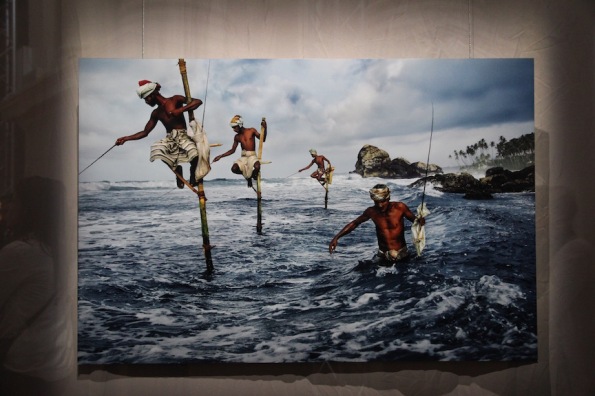
Fishermen perched on poles in Weligama, Sri Lanka, 1995
Two weeks ago, when we were in Belgium, we passed by the Brussels Stock Exchange and saw that it was exhibiting more than 200 of McCurry’s images.
The ‘Afghan Girl’ has always been one of my favourite images and I found the prospect of the exhibition irresistible. So we joined the lengthy queue to visit The World of Steve McCurry, the most complete retrospective dedicated to this accomplished American photographer.
The large-format photos took us on a magical and, often, heartbreaking journey from Afghanistan to India, the Middle East to Africa, Cuba to the USA, Brazil to Italy, and much, much more.
Every visitor got an audio pack that had McCurry explaining 50 of the images. Of course, the spiels went by so quickly I can hardly remember any of them, but a consistent theme was people.
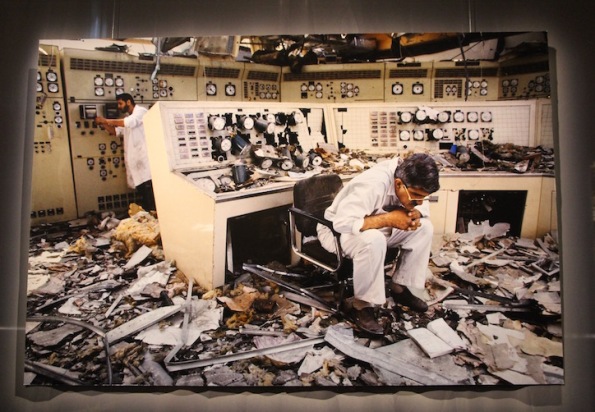
A man sifts through the office debris after a bomb in the Gulf War
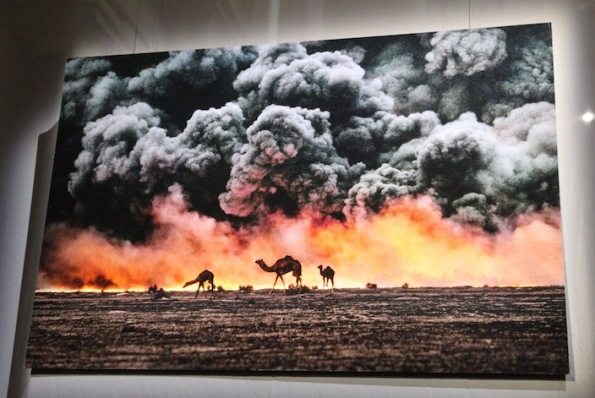
The Al Ahmadi Oil Fields burn in the Gulf War, Kuwait, 1991
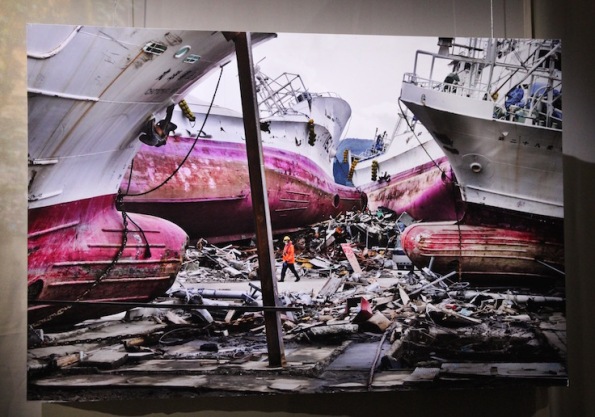
A man dwarfed by tsunami destruction, Kesennuma, Japan, 2011
McCurry’s work often focused on the human consequences of war. He covered the Iran–Iraq War, the Gulf War, the civil wars in Lebanon, Cambodia and Afghanistan, and more. (By the way, Poor John and I lived in Lebanon during its civil war.)
McCurry once said, ‘Most of my images are grounded in people. I look for the unguarded moment, the essential soul peeking out, experience etched on a person’s face. I try to convey what it is like to be that person, a person caught in a broader landscape, that you could call the human condition.’
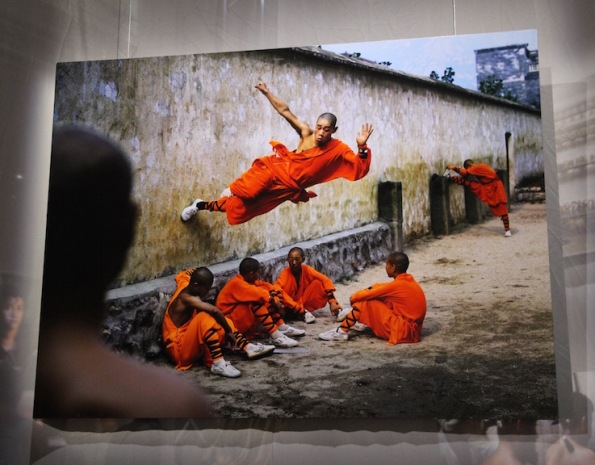
Athletic monk bouncing off the wall in Hunan Province, China, 2004
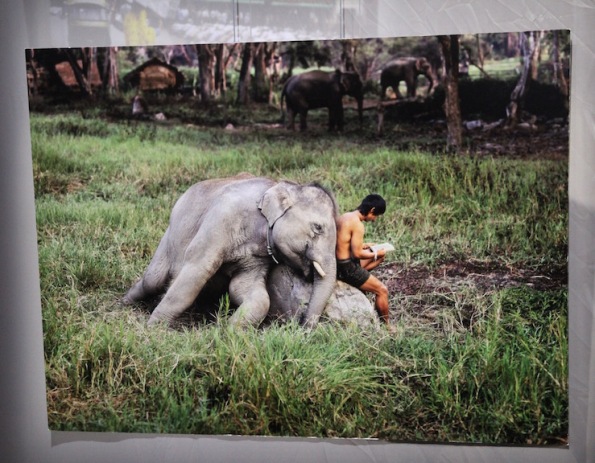
A mahout teaches his elephant to read (or so it seems), Chiang Mai. Thailand, 2010

Robert De Niro captured on Kodachrome transparency film, New York, USA, 2010
I do, however, remember one of his spiels fairly well. Kodak was discontinuing its famous Kodachrome transparency film and gave McCurry one of the last rolls to use in a series of portraits. That roll was processed in July 2010 by Dwayne’s Photo in Parsons, Kansas, and the image in the exhibit is of Robert de Niro.
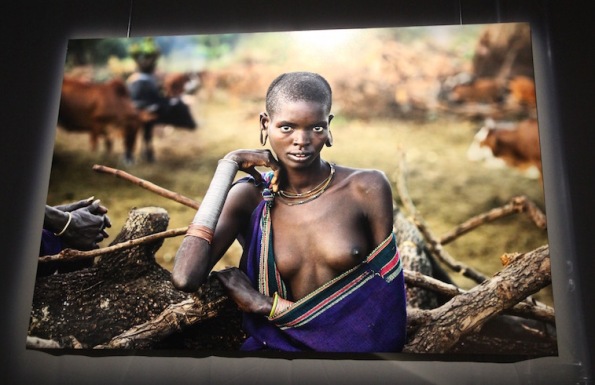
An Ethiopian coffee farmer from the Lavazza, ¡Tierra!: the project, Ethiopia, 2014
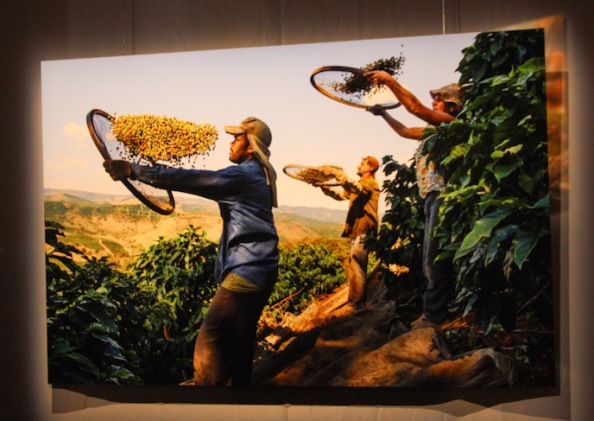
Brazilian coffee farmers from the Lavazza, ¡Tierra!: the project, Ethiopia, 2010
Another 150 photos covered some of McCurry’s other work, including his images for ¡Tierra!: the project.
¡Tierra! coffee is from Rainforest Alliance Certified™ farms. The coffee’s name comes from Lavazza’s social responsibility project. It was created in 2002 to improve the social and environmental conditions and the production techniques of small communities of coffee growers.
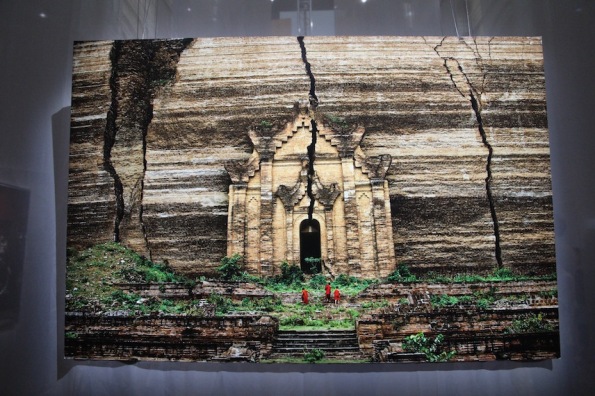
Earthquake damage at the Mingun Pagoda, near Mandalay, Myanmar, 1994. This pagoda is unfinished and is considered the largest pile of bricks in the world
McCurry’s exhibition goes through Sunday and I can’t find any references to a future showing. If you hear about one—GO!
P.S. I took these all photos of Steve McCurry’s photos. No way I could include all 200 here. I’ve tried to show a cross section of places, faces and circumstances.
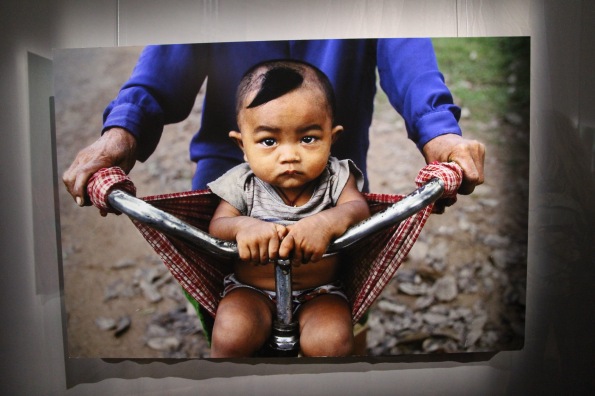
Clever way to carry a child in Angkor, Cambodia, 2000
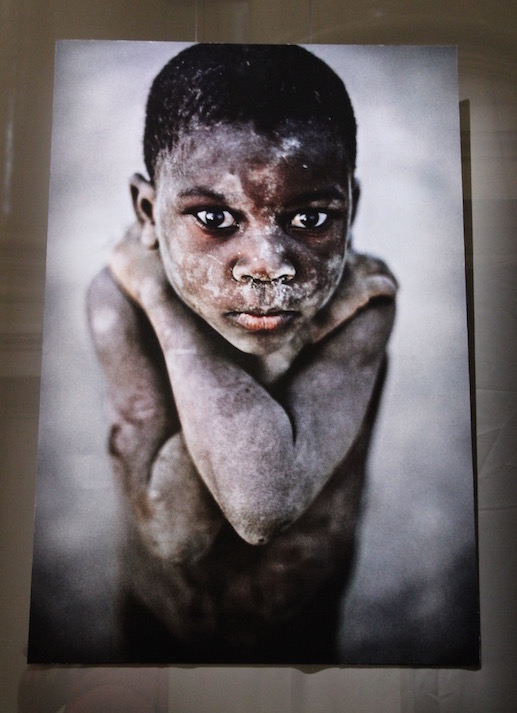
A young boy in Timbuktu, Mail, 1987

Tripe has multiple meanings. In the world of slang, it is something silly, false, worthless or a load of rubbish. In the world of food, it is part of the stomach of a cow, sheep, goat, pig or ox. In Poor John’s world, it simply means delicious.
And for the last eight days he has revelled in the land of delicious.
We’ve just completed a 200-kilometre bicycling tour in Brittany (also known as Bretagne and Briez), that northwestern part of France where tripe is on virtually every menu.
He’s managed to have tripe—or the more elegant-sounding andouille (kind of rhymes with chop suey)—at least once a day and sometime twice. But never for breakfast.
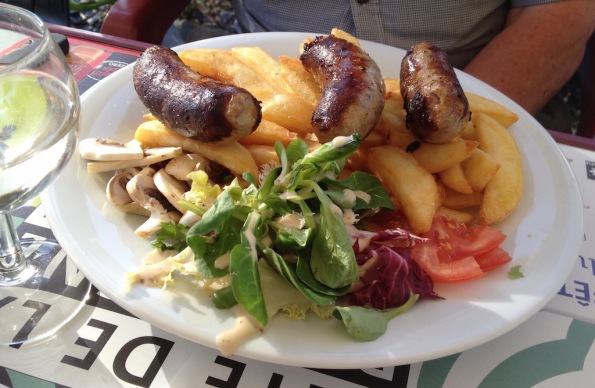
French andouille isn’t straight tripe. It’s a sort of sausage with pork and spices, so the tripe fades into the background. I’ve shown two variations on the presentation, although he’s also had buckwheat pancakes (galettes) with tripe in them.
I have to admit that andouille is pretty darn good. Of course, I’ve never ordered it. I just steal a bit off Poor John’s plate. So far he hasn’t stabbed me with his fork.
He says he still prefers the tomato-y tripe stews made in Spain. I suppose there is a slim chance that I will try to make such a stew. Anyone have a decent recipe?
Oh, and don’t go feeling sorry for Poor John on Father’s Day. We’ve travelled 10 hours east and south in France—by taxi, train and bus—to arrive in the land of foie gras. So he’s enjoying this luxury food made from duck and goose livers. That’s my carnivore!
P.S. Happy Father’s Day to all the dads out there. Hope you are able to enjoy some delicacy today. Maybe you can find something on my cooking blog.
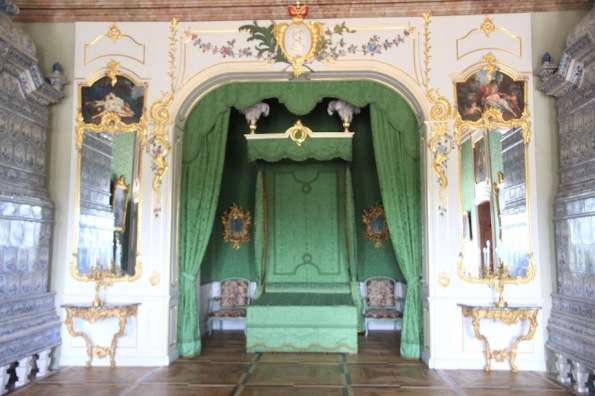
The Duke’s Bedroom would have been just the place for Poor John and me to spend the night
As you may know, Poor John and I have set off on a week-long bike ride through Brittany in northwestern France. We covered 50 kilometres on Saturday, another 73 over Sunday and Monday, and then a meagre 20 today, but over a gravelled track that did my arm no good.
Of course to make things ‘more interesting’, we’re also camping.
Our tent is quite cosy, but it suddenly makes me long for our visit to the Rundāle Palace outside Bauska in Latvia.
This would be a great place to stay after a long bike ride. I read that in addition to being a museum, the palace is also used to accommodate notable guests. I’m guessing we don’t quite meet the criteria.
But we weren’t riding bikes in Latvia, so we arrived at Rundāle by car and took the wrong turn in, which meant we parked as far away as possible from the entrance. Never mind, a good walk gets the day started.

Plenty of hunting trophies displayed as you enter


There was a lot of activity in the main courtyard, which meant they were probably preparing for some notable event or guests, but tours were running as usual.
We opted for the long tour, which cost an extra 2 euros and included more rooms (including the Duchess’ suite) and the garden, but not a lift to our distant car.
Tours aren’t guided (although there may be an option with advance notice) but most rooms have explanatory cards in a variety of languages. There can be hot competition for certain languages, so we read most of the cards, but not all.
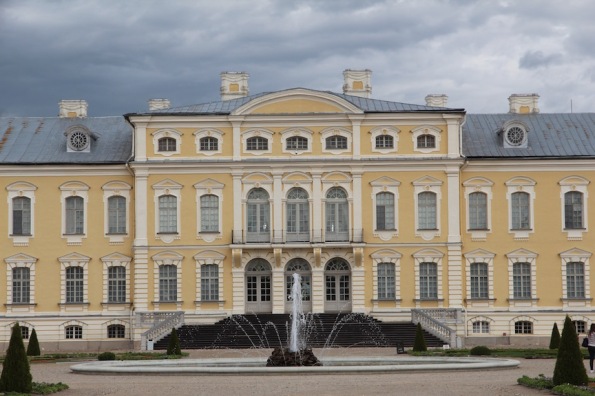
The real front of Rundāle Palace, with a fountain in the foreground
So let’s have a look at the palace
I suppose it makes sense to start at the entrance, which is very grand, but I subsequently realised that what I thought was the back of the castle is actually the front. The give-away information was that the front has fountains. I suppose the other give-away was the rows of antlers to the right of the doors where we entered. Antlers strike me as billiards room decor and not the stuff of grand entrances.
Now I should mention that the placement of pics here does not necessarily sit beside (or above or below) any accompanying text, but everything has a caption, although you may need to roll over the pic to see it.
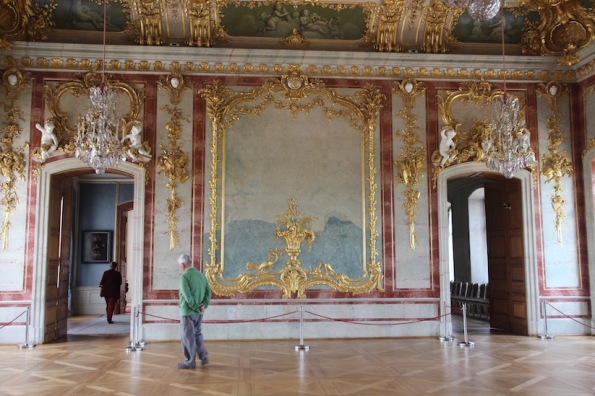
Poor John heads out of the Throne Room. I’m about halfway back up the room


Of the rooms we saw, the Throne Room is the most elaborate in the whole palace. Also known as the Gold Hall, it is used for state gatherings. Gold wreaths and garlands surround the room and depict music, architecture, hunting, geography, cattle breeding, gardening, fishing and more.
The White Hall is the ballroom and it was being prepared for some event when we were there (probably the same reason for the outdoor activity I mentioned earlier. The stucco decorations (see JM Graff in the history) depict the four seasons and the four elements of the world—fire, water, earth and air. The rosette on the ceiling was my favourite. It depicted a sun with a stork’s nest. By the way, I haven’t been able to find measurements on any of the rooms or the palace itself, but let’s agree that it’s ginormous.
There is a porcelain room at one end of the White Hall with 45 vases from China and Japan.


Next we saw the library and the Rose Room. The latter is decorated with garlands of stucco roses by JM Graff (see history) on every wall. The ceiling, painted by Italian artist Francesco Martini and Carlo Zucchi, shows Flora, the goddess of spring and flowers.
The Duke’s Bedroom (at top) came next and if Poor John and I could have stayed there, I can guarantee you we would have made the bed. I’ll show the parquetry from that room. Most of the original flooring was destroyed over the years, and this shows some of the replacement work.
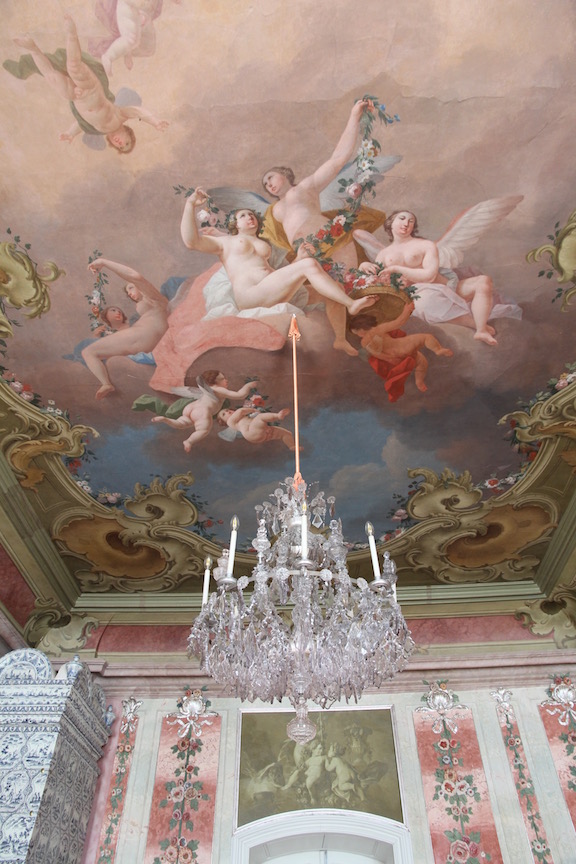
Rose Room ceiling depicting Flora, goddess of spring and flowers
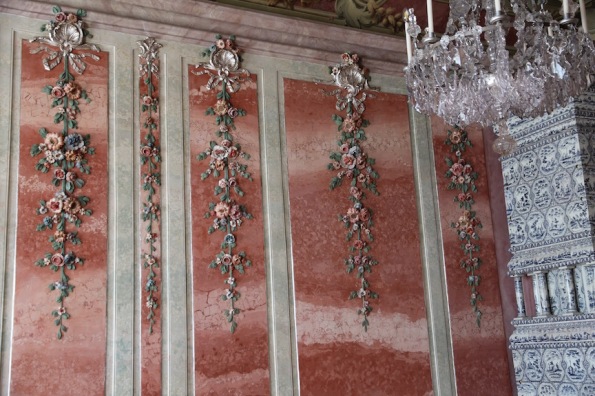
Rose garlands decorate the walls of the Rose Room. That’s a blue and white fireplace on the right
Are you exhausted yet? I was and I couldn’t even lie down. So we’ll press on.
About now is when the extended part of the tour kicked in. We went through a small dining room and several unnamed rooms (have included only a few pics of those). These were beautifully decorated and furnished, and I think part of the quarters used by the Duchess.


But I knew we were in her quarters when we came to her boudoir, bedroom and bathroom. I couldn’t get a decent pic of the bedroom, but the boudoir and bathroom more than made up for that. The bathroom ceiling alone is stunning. Come to think of it, her bathroom could be the other throne room. The display of her cosmetic set was enormous, and the gowns were typically ornate.
Then it was out through the ground floor to the magnificent gardens that were hard to photograph. The intricate layout really needs an aerial view to appreciate the 10 hectares of manicured cultivation (so I’ve added an aerial pic from Wikipedia, all other pics are mine). The roses hadn’t bloomed yet, but plenty of tulips were out.
And by now Poor John and I were plenty weary and still had to trudge back to the car.

Ceiling in Duchess’s bathroom
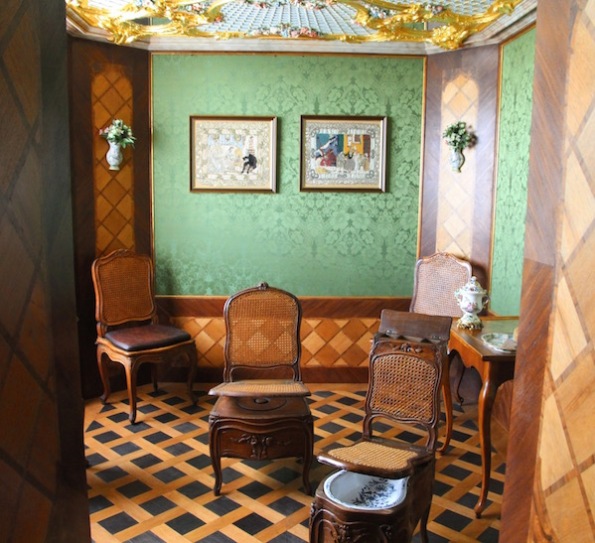
Duchess’ bathroom with a glimpse of the ceiling
A bit about the palace’s history
Rundāle is one of two baroque palaces built in Latvia for the Dukes of Courland (the other is Jelgava Palace, which we didn’t visit).
It took eight years to build Rundāle Palace, and it was done over two bursts from 1736 to 1740 and 1764 to 1768. I thought it was interesting that work on Rundāle progressed slowly because the duke of the time, Ernst Johann von Biron, was more interested in the other palace. As a result, he had materials and workmen shifted from Rundāle to Pelgava.
Biron fell out of favour in 1740 (probably over religious disagreements), and the palace remained empty and unfinished for about 24 years. That’s when Biron managed to return from exile (not sure how he managed that).


At that time, Italian architect Francesco Rastrelli supervised the completion of Rundāle, which included lavish decorations by Johann Michael Graff, a German Rococo sculptor and plasterer. Rundāle Palace and Schönhausen Palace in Germany are among his most celebrated works.


In the end, Rundāle became the duke’s favourite palace and he lived there until he died in 1772.
The palace later passed through many hands and fulfilled many roles.
It was a hospital for Napoleon’s army during the French invasion of Russian in 1812, and a German hospital and commandant’s office during World War I. It was severely damaged in 1919 during the Latvian War of Independence.
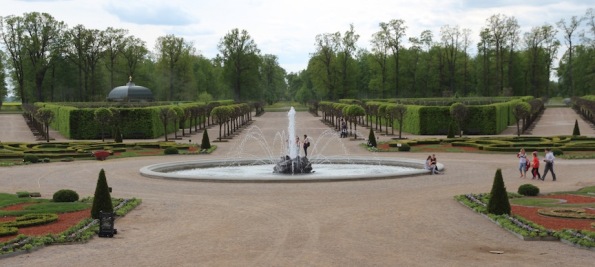
Looking out to the 10-hectare garden
In 1933, it was taken over by the Ministry of Education and reconstructed as a school. In fact, some of it remained as a school until 1978, although part of it did a stint as a grain store.
In the 1960s, the palace was declared part of the Bauska local history museum and restoration works began in 1972. This work has been ongoing and was only officially completed in 2014. The works cost 8.5 million euros.
Today the palace is on one Latvia’s major tourist destinations. It and it’s gardens are also a museum and a centre for research into Latvia’s history.


A final few comments
Rundāle Palace and Versailles near Paris are the two most elaborate and beautiful palaces I have ever seen. I haven’t written about Versailles yet, but I promise to do so. So much to tell about and so little time.
Plus, I’ve been without internet for two days and don’t expect to have it again until late Thursday. So cheers for now.
P.S. Still 44 kilometres of bike riding to do and too much of it uphill. Ugh!
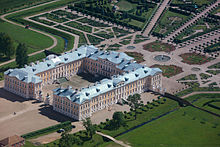
Aerial view from Wikipedia
This is a report on my health, my fitness, my sanity and my bedtime.
It’s 9:15 pm (21:15 for those who observe the 24-hour clock) and I’m going to bed. I’m absolutely knackered, My arm hurts, my knee hurts, but I did it. Five more days to go.
There was more uphill today than I had expected and, I confess, I walked some of it. I would have had a much better performance had I not been knocked down by the proverbial freight train five days ago. But I am mending.
Besides months ago, we booked and paid for this cycling adventure in Brittany in northwestern France. So we’re doing it. That said, the 50 kilometres (or was it 55) took us 7 1/2 hours, with stops for lunch, water, resting my arm, taking photos (not too many) and consulting the instructions (egads, we couldn’t afford to get lost unless it was a shortcut). Fortunately, at least half of the last 14 kilometres was mostly downhill.
You’ll have to wait for photos of this part of our travels. By mistake, I left all the equipment for downloading photos in Paris. Argh!
Not sure how much internet I have over the next five or six days. We’re camping and not every campground offers wifi. Don’t worry. I’ll be back online for a couple of days and then four more days of camping (but no bikes).
And now it’s 21:30 and I’m really going to bed. Tomorrow’s ride is only 25 kilometres. I’ll store up for the day after that which is 48.
P.S. Should have internet tomorrow morning, but after that I might not be able to answer comments for a while.
P.P.S. I mentioned my sanity. It’s there—only just—but I can still smile. Just got a gold star from fellow campers. They are French but couldn’t figure out how to get into the internet they’d paid for. But I could. Everyone’s happy.
Szzzzzzzzzzzz!
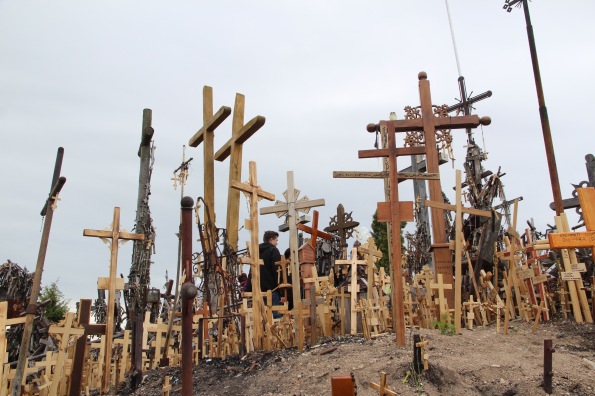
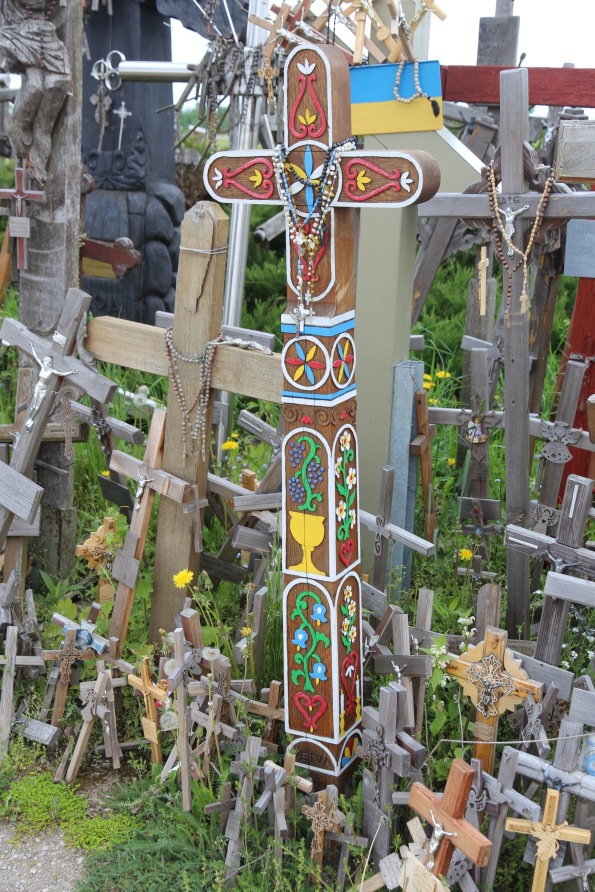
If you’ve read my most recent post, you’ll know I was knocked over in Brussels the other day by a teenager trying to escaped from the police. I’m still very sore and bruised, but the muscles and joints are slowly improving. Nothing seems to be broken, and I’m hoping that I’m good to go tomorrow on our week-long bicycling trip in northwestern France.
But you wonderful people have been amazing. I’ve been gobsmacked by all the kind messages that I’ve received on that blog post (and on Facebook too). I think you’ve all helped (willed) me to heal.
So as a thank you and before I set out on the French cycling tracks (with probably no connection), I thought I’d share a hill of crosses (and blessings) with you.
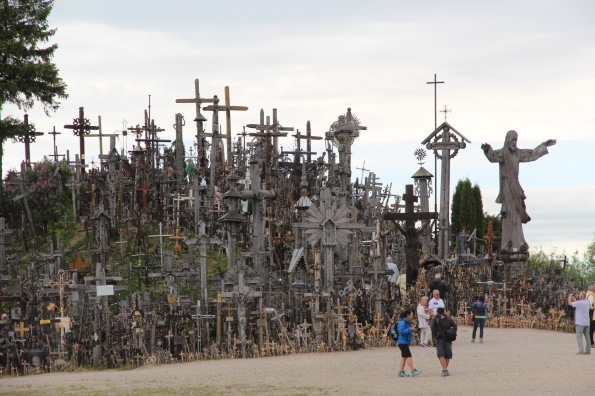
Entering the Hill of Crosses
It’s a fantastic and uplifting story.
Back in 1831, in Lithuania, there was an uprising against the Russian tsar. The uprising was put down. Sadly, the families of the fallen rebels ended up with no bodies to bury. So they started to leave crosses on a special hill (perhaps the highest hill in all of Lithuania).
I have to admit that the hill isn’t very high. We scanned the horizon and saw nothing. And then drove around aimlessly even though it was ‘plugged into’ our car’s GPS. If you ever happen to be searching for it, try keying in ‘kryziu kalnas’ instead of ‘hill of crosses’. That was what finally worked for us, and we found that reference on a local map.
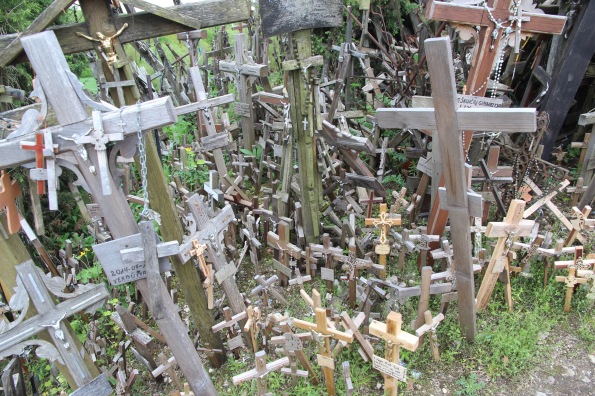
Crosses being forgotten
But back to the hill.
This place is amazing. It’s impossible to know how many crosses are here today, but estimates assume there are more than 200,000. I suspect there should/could be many more. I read that when the crosses started to become a symbol of resistance to the communist regime, the KGB had the hill bulldozed twice.
As you enter the site, there is a long list of rules and regulations about what crosses can be left. They can be made of wood, metal or many other substances. They shouldn’t be more than 3 metres tall.


We saw hundreds of small crosses draped over larger crosses and assumed they were added, not on a whim, but as a convenient place to hang a cross.
There are crosses to commemorate the young (so touching) and the old, and there are crosses from all over the world. Poor John spotted one from Nebraska, my home state.
But there are more than crosses. Statues of the Virgin Mary, carvings of Lithuanian patriots, and thousands of tiny effigies and rosaries have been brought here by Catholic pilgrims.
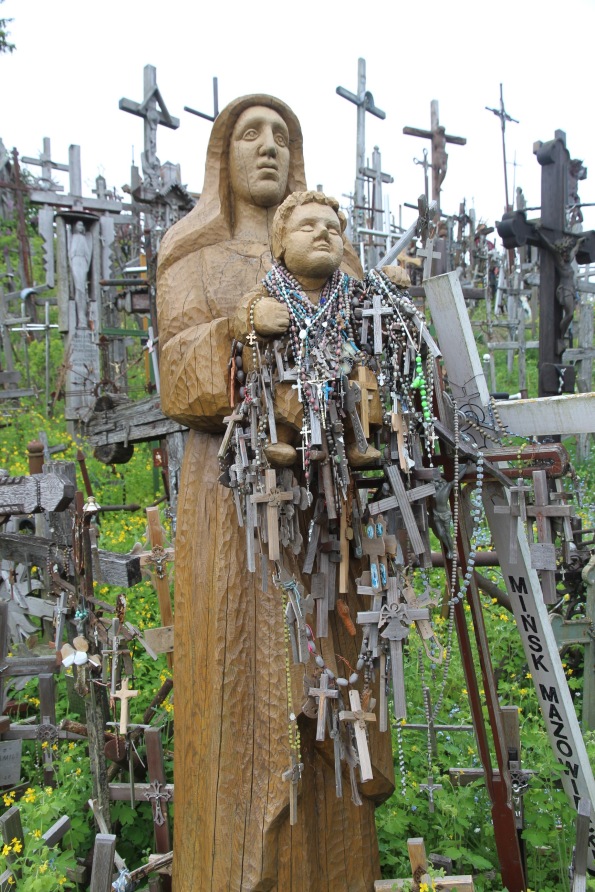
Loads of crosses in one place
Pope John Paul II visited the hill in 1993 and declared it a place for hope, peace, love and sacrifice. I really appreciate those thoughts. In 2000, a Franciscan hermitage was opened nearby.
Important tip: If you plan to visit and don’t need to go to the toilet or buy a cross, don’t pull into the carpark. Park on the verge outside and enjoy your time strolling through the crosses.
P.S.: Poor John and I are heading out tomorrow on a week-long bicycling trip around Brittany. I have no idea whether there will be internet connections. So don’t worry if you don’t hear from us for a week or more. If it goes beyond that—worry and send reinforcements!


He came out of nowhere. In fact, I didn’t even see him coming. It was only later that I even learned it was a him.
We were in the Brussels North bus station trying to find our bus to Paris. There were plenty of Flix buses around, but none heading for Paris.
Poor John did a fact-finding foray and then I set out on one.
I’d gone maybe 50 metres when I was hit by a freight train, or what seemed like a freight train. I’d still be lying there on the ground if three kind people hadn’t helped me to my feet and collected the things that slipped out of the side pockets of my backpack.
I was so dazed, I have no idea what people were saying to me, except I knew they were trying to be reassuring and helpful.
I staggered back to where Poor John was standing. I was breathless, hunched over, hobbling, in shock and probably fairly incoherent. He asked, Did that guy hit you? I saw him running and thought he’d knocked someone over.
It confounds me that Poor John always manages to miss these attacks on me. He was walking in front of me when I got hit by a motor scooter in Hanoi four years ago. It was going the wrong way on a one-way street. He said he heard a whoompf. When he looked back, he didn’t know if the sound had come from me, the woman who hit me or the crowd. At any rate, I was the one lying on the ground.
You can read about that disaster here and here.
Anyway, we’re still not sure what happened this time. Poor John had a look around and saw that one teenager had been grabbed and was being held by the police, but probably wasn’t the one who barrelled into me. Most likely, the pair had committed some crime and were being chased by the cops.
All I could do was sit on the pavement in a sort of stunned silence until it started to rain. We moved to a bit of shelter and the bus came eventually. It’s probably good that I had four hours of just sitting quietly on a bus.
So here I am with wounds all over. I don’t even know which side the guy hit me from. My whole right arm is wrenched. Did he hit me there or are the injuries from the fall. Still deciding whether my right shoulder is dislocated and whether my right thumb will regain function. My left hand, left thumb and left knee are going to be okay.
Thank goodness, I didn’t hit my head or lose a tooth. Yay!
But if you don’t hear from me much over the next few days, I can assure you that typing is a challenge.
 Where to next?