

Daughter, Libby, and Poor John—walking the walk as they go into the Versailles
Regular visitors to this blog will know that Poor John has a tendency to walk with his hands clasped behind his back.
After years of watching him do this, I have concluded that the condition is both genetic and catching.
There is plenty of photographic evidence already on this blog. His daughters do it, his siblings do it, friends do it, sometimes I even do it. People even send me pics of other, unknown, people doing it.
But we had an especially amusing episode the other day at Waterloo in Belgium.
We were there with Jean-Mi (our very first exchange student), his partner, Sali, and their two-year-old son, Samuel. Ah, two years old, you say. Yes, two-year-olds have some very definite ideas about how the world is supposed to operate around them.
On this day, hands behind the back were a big no-no.
Samuel trotted along behind Poor John—determined to stop him from having his hands behind his back. Stop, stop, he ordered in French, as his small hands tried to prise apart Poor John’s interlocked thumbs. We all smiled, but were careful not to encourage him by laughing out loud.

Samuel has a go at copying Poor John
Yet he persisted until suddenly it dawned on him that this might be worth trying. Maybe Poor John had the right idea. Hmm! I guess I’ll give it a try, he decided.
So he clasped his hands behind his back, and that’s the way things went for the rest of the afternoon.
The pics are here to remind him of that day. I wonder if it will be one of those childhood memories that, in years to come, he’ll vaguely recall some guy who ‘taught’ him to walk with his hands behind his back.
And speaking of kids and their memories, my great nephew Georgie remembers helping me make scones just before Christmas. Thanks Georgie.

Kindred souls sharing their special walk. It’s the end of the day and Samuel has his dummy and is now carrying a truck, a car and a little blanket
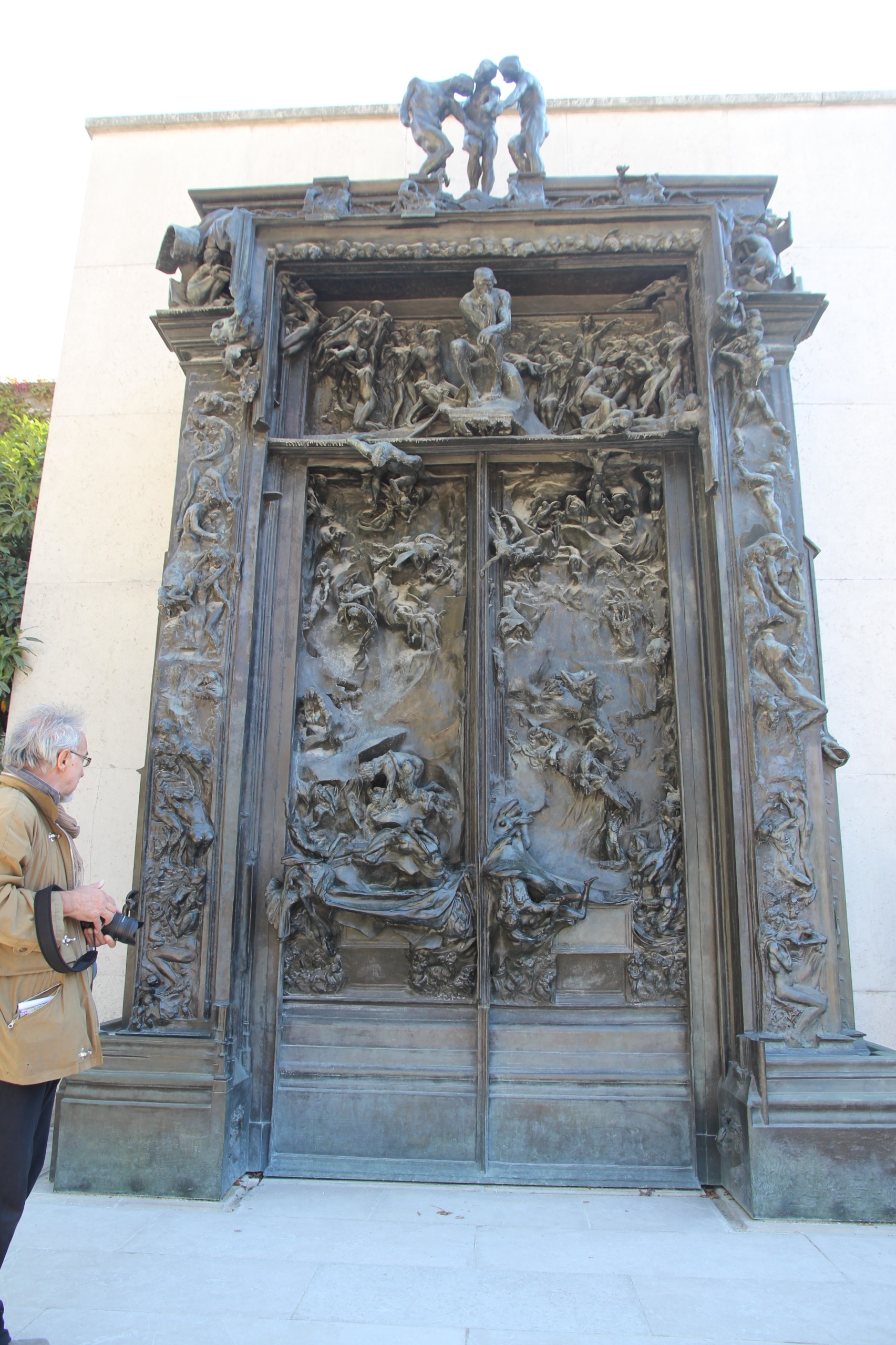
The Gates of Hell, commissioned in 1880 for a decorative arts museum that was never built. Note The Thinker near the top, and The Three Shades at the very top

A life-size version of The Three Shades. They point to the inscription that reads ‘Abandon hope all ye who enter here’
Artworks by French sculptor Auguste Rodin hold a special interest for most Canberrans, probably because our National Gallery of Australia has a set of his famous The Burghers of Calais.
We’re frequent visitors to the gallery’s sculpture garden and never fail to admire these colossal statues that represent a group of 14th century citizens of the northern French town of Calais. The six men had offered themselves as hostages to induce the English to lift a siege during the Hundred Years War, and spare their starving city.


Years later, when Calais was planning to tear down its medieval walls, the town decided to erect a monument reflecting its ancient history. Rodin pursued the commission eagerly and won it in 1884.
I’m not sure how many sets of his bronze burghers have been cast (possibly 12), but we were delighted today to see a complete set—along with many prototypes—in the Rodin Museum (Musée Rodin) in Paris.
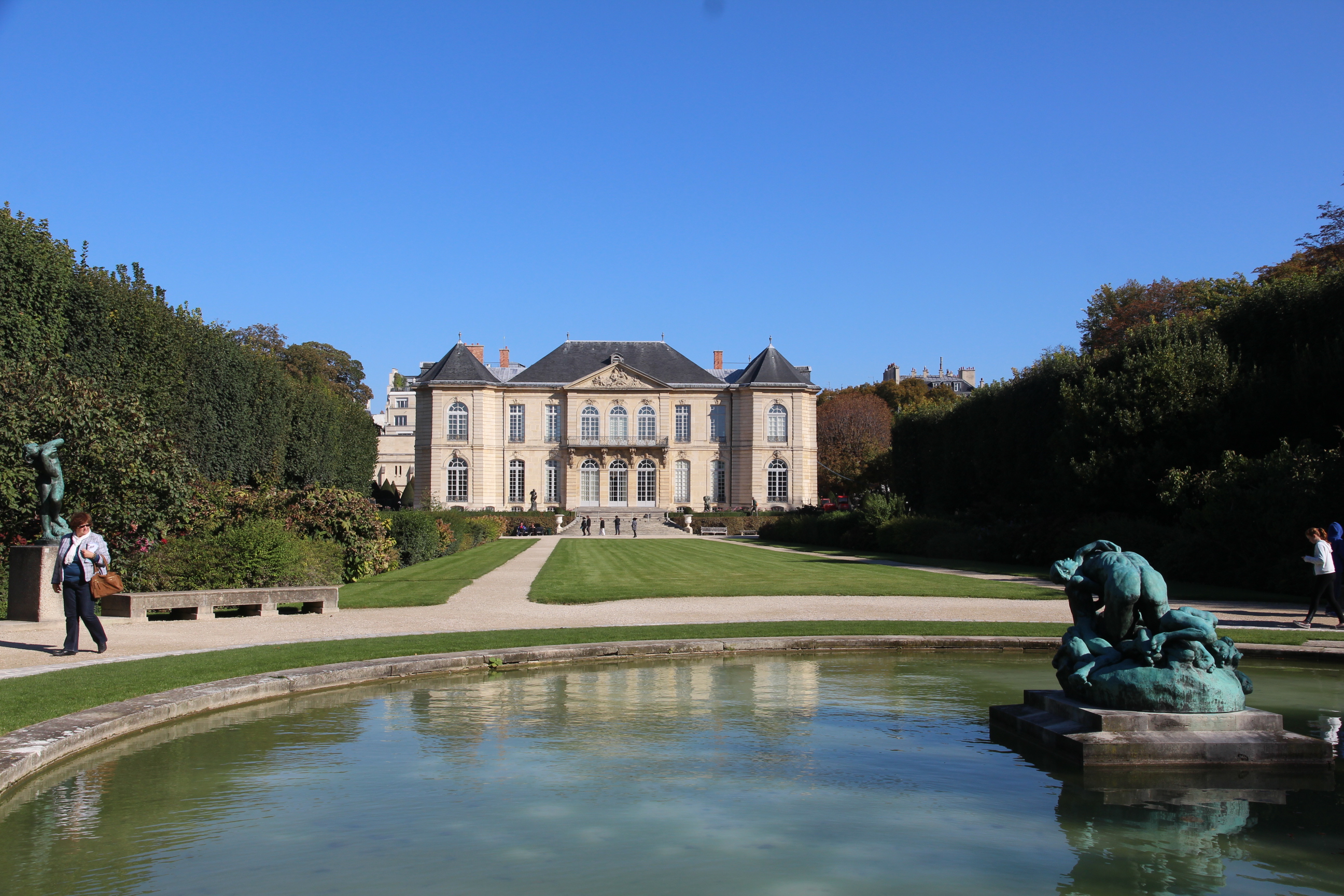
Hôtel Biron and surrounding gardens. This main museum of Rodin’s work is currently being renovated and is not open to the public
Well, we weren’t actually in the museum proper—the Hôtel Biron—which Rodin used as his workshop from the early 1900s until his death in 1917. At present, the main museum is closed for renovations, but the garden is open, as is another building with a temporary exhibition of about 140 pieces of Rodin’s plaster casts and other studies.
The top drawcards for most visitors are the burghers ensemble, The Gates of Hell and The Thinker. But many other items are displayed with accompanying explanations—in French and English—so Poor John and I were able to read all the details.
I hadn’t known that a small version of The Thinker was originally created as part of The Gates of Hell, which depicts ‘The Inferno’, the first section of Dante’s Divine Comedy.
The massive gate sculpture is 6 metres high, 4 metres wide and 1 metre deep, and has 180 figures. Some are as small as 15 centimetres high (6 inches) and others range up to one metre.
The Directorate of Fine Arts commissioned the work in 1880 and expected it to be delivered by 1885, and used as the showy entrance for the planned Decorative Arts Museum.
The museum was never built, but Rodin kept working on the gates until his death. He enlarged many of the individual parts, including The Thinker, to life-size sculptures in their own right.
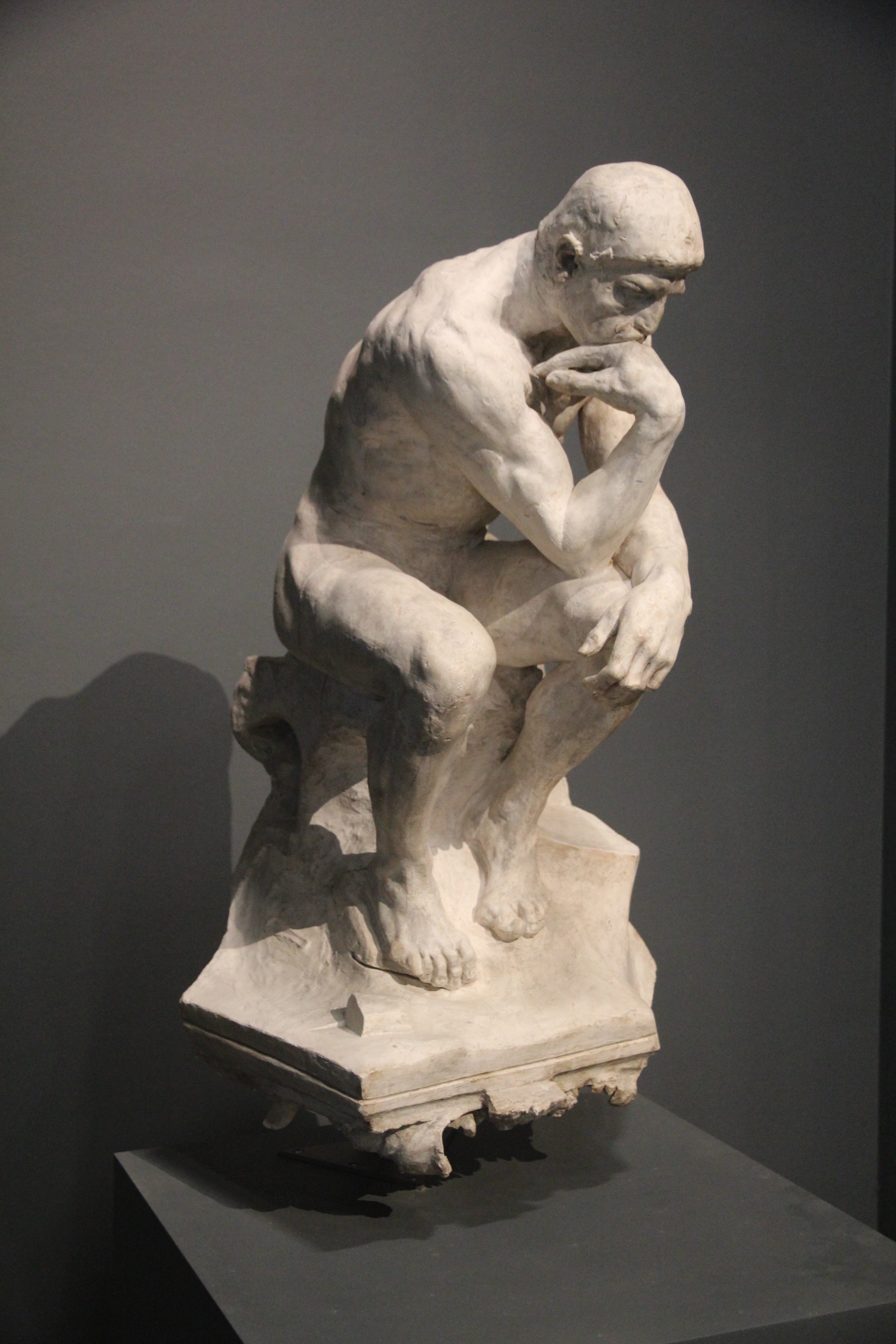
Plaster version of The Thinker
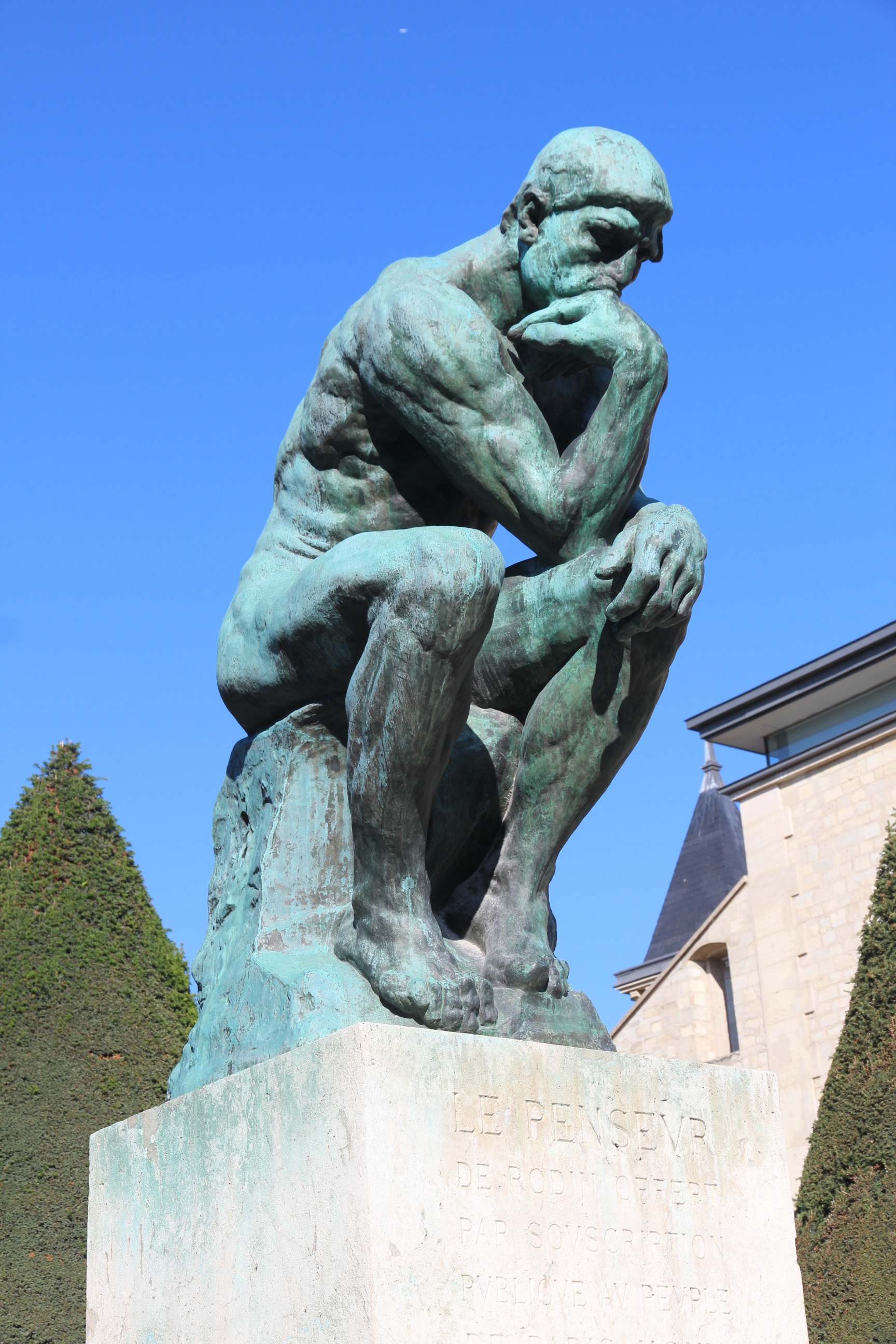
Bronze version of The Thinker
As we went through the exhibition we got a distinct impression that a lot of Rodin’s work was never completed, completed late or a source of criticism. In fact, Poor John wondered if Rodin ever got paid for his work, but Libby and I thought that he must have had a patron or received advances or both.
Nevertheless, the scandals and furore are interesting.
Rodin spent years working on a monument to Victor Hugo, the famous French author who wrote, among other things, Les Misérables and The Hunchback of Notre Dame.

Head of Victor Hugo. I never got a pic of the seated monument 😦
The saga began in 1883 when Hugo refused to pose for Rodin. Instead the artist spent hours one day on the author’s veranda, making 60 sketches of the author, who paced the garden at a distance.
After Hugo died in 1885, the French government commissioned Rodin to design a monument to him.
Rather than a routine approach, Rodin depicted the author in exile, seated among the rocks of Guernsey. This first effort was deemed to lack ‘clarity’ and the ‘silhouette was muddled’. It was unanimously rejected by those commissioning it.
Rodin tinkered with this and other versions on Hugo (including a nude) over the next decade before abandoning the project completely. The seated version was first cast in bronze in 1964.


The plaster sculpture of French author, Honoré de Balzac, drew criticism from the moment it was first unveiled to the commissioning organisation, the Societé des Gen de Lettres in Paris in 1898.
By then, Rodin had worked on the sculpture since 1891, rather longer than the 18 months allowed for in the original agreement. That was because Rodin had become obsessed by the author’s works and history.

Monument to Balzac
After reading all of Balzac’s works and carrying out almost 50 studies on the man who died in 1850, Rodin decided to create a sculpture that captured the author’s ‘persona’ rather than his image.
While the critics were not impressed and the societé rejected the sculpture, Rodin’s contemporaries, such as Cézanne, Monet and Toulous-Lautrec, liked it.
The sculpture was not cast in bronze until 22 years after Rodin died. Today many castings are displayed around the world and the work is often considered the first truly modern sculpture.
Near the end of his life, Rodin donated sculptures, drawings and reproduction rights to the French government.
I have a story to tell about Rodin’s mistress, Camille Claudel, which I’ll tell when I do a post about the two guided walks we did in Paris.
In the meantime, enjoy a drink on me—limoncello cocktail.
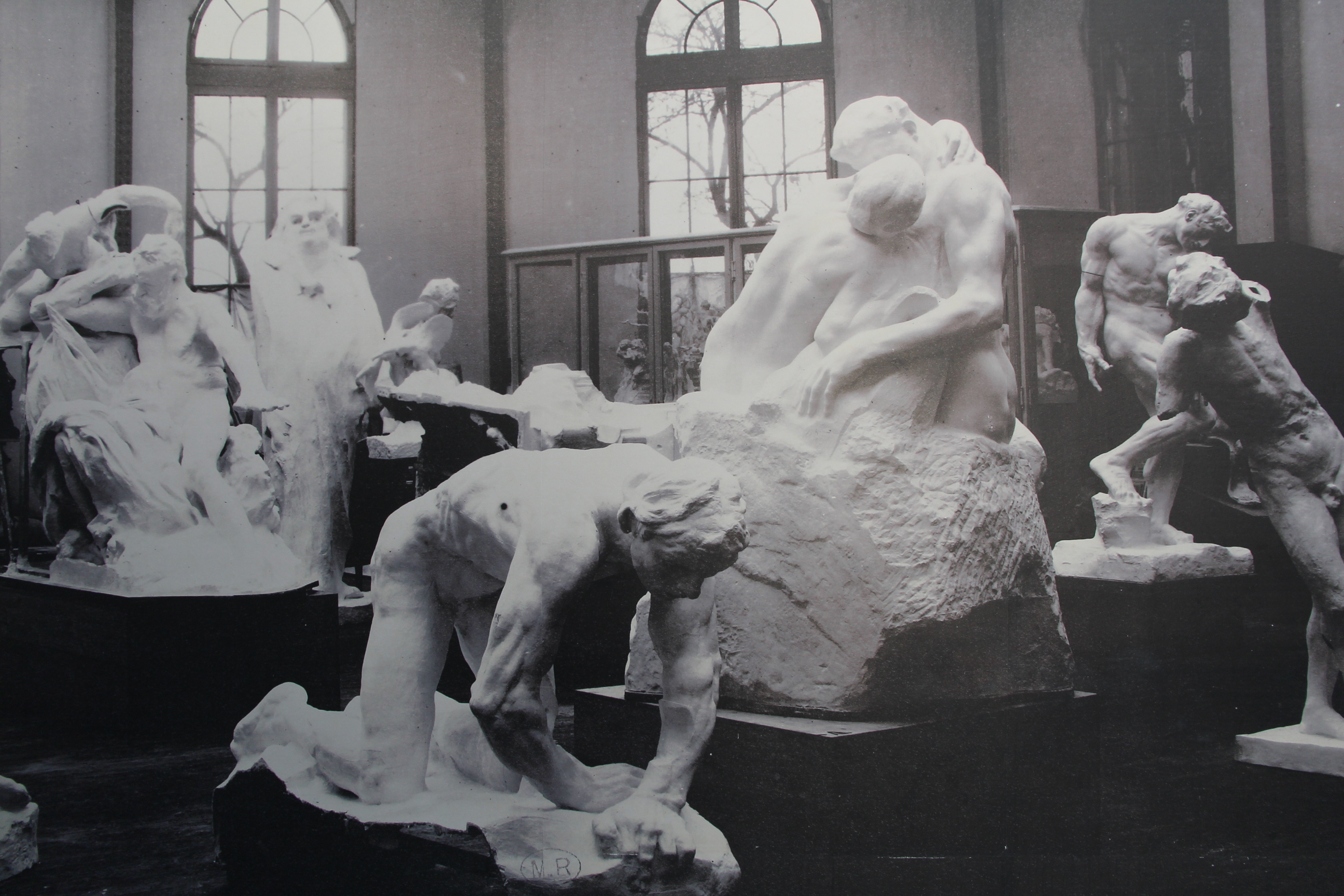
A picture of a picture of Rodin’s workshop in the Hôtel Biron
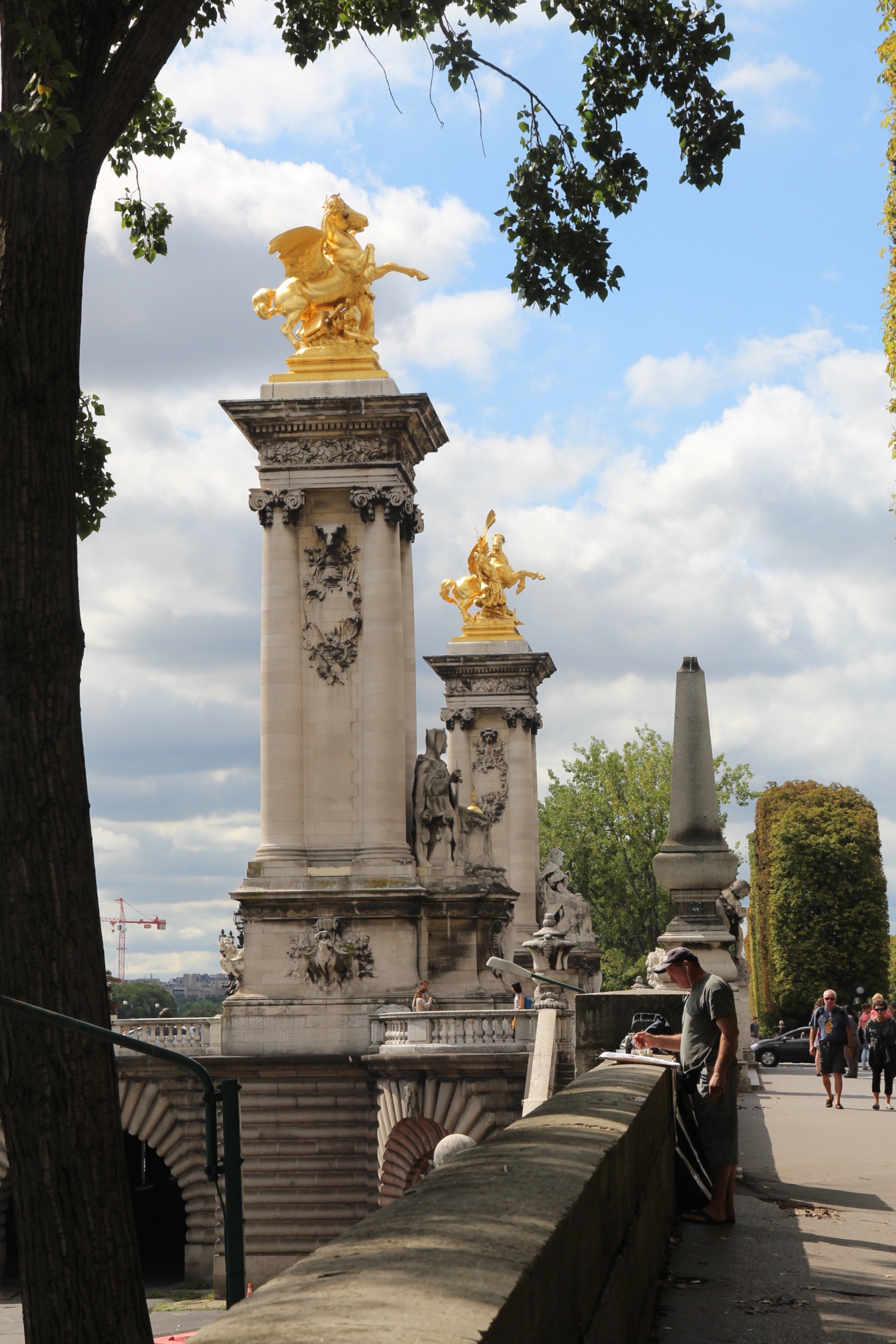
One end of the Pont Alexandre III. An artist sketches in the right foreground
The weather has been glorious this week in Paris—much better than the rainy, grey days we had when we arrived in August. So it’s been good times for taking outdoor photographs.
Poor John decided that the Champ-Elysées and Pont Alexandre III were perfect places to start so off we went to see Paris’ most famous street and prettiest bridge.
The grandness of the Champs-Elysées is a little hard to capture on film when the streets are primarily crammed with tourists and lined with big-name brand stores.
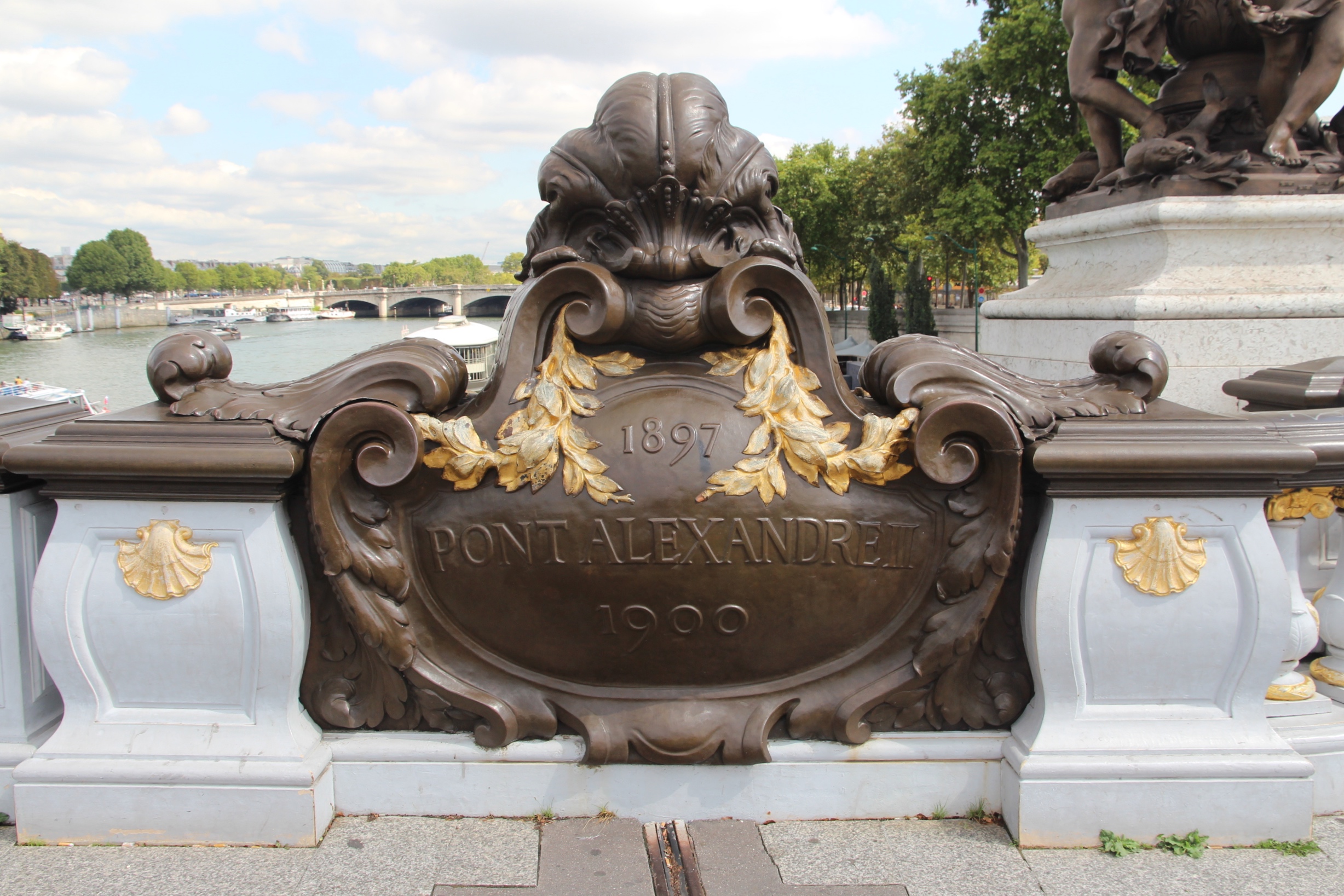
Named after Tsar Alexandre III
So this is a tribute instead to the bridge. Built between 1896 and 1900, the Pont Alexandre III commemorates the 1892 alliance between France and Russian. It’s named after Tsar Alexandre III, who laid the foundation stone in 1896.
The bridge is a lavish structure with Art Nouveau decorations. There are gilt and bronze lamps, cupids, cherubs, nymphs and winged horses at either end. It’s easy to see why it’s considered the prettiest bridge in Paris.

The bridge is a single-span steel arch across the Seine
It was also considered an engineering marvel of the 19th century. It’s consists of a 6-metre (18-foot) high single-span steel arch over the Seine River. The design had to comply with strict controls that prevented it from obscuring the view of Champs-Elysées.
We walked all the way across and then all the way back, and weren’t once accosted by souvenir sellers or the scammers who want you to guess which cup the ball is under! That made it even prettier in my opinion.
If you’re a fan of all things pretty, here’s a good-looking salad I made for my cooking blog.

In the middle of the bridge
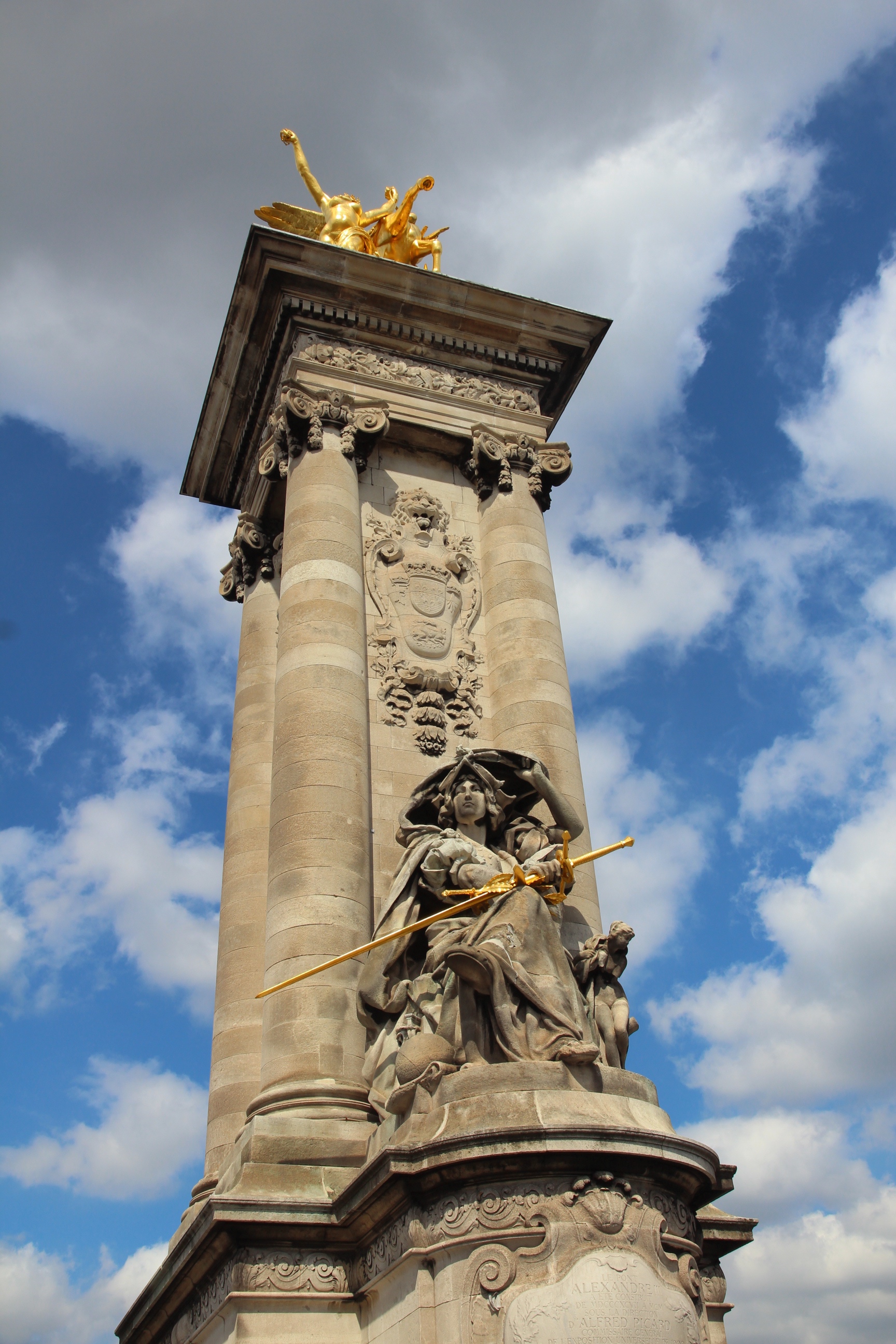
One end of the bridge
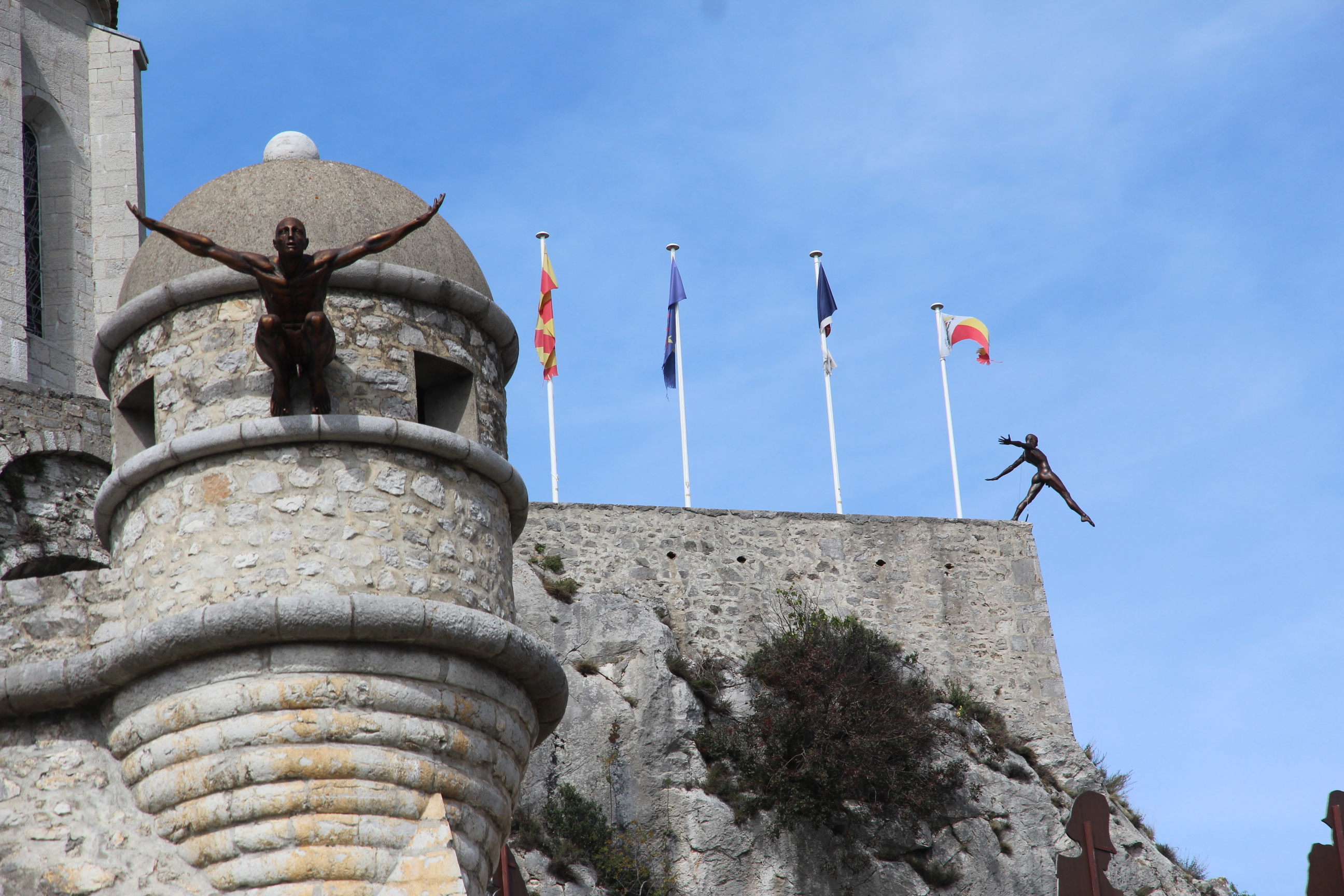
Sculptures leap off the sides of the Sisteron citadel
We’ve seen quite a few citadels in our travels, but nothing prepared me for the impressive show at the lofty citadel at Sisteron in southeastern France.
It wasn’t just the imposing citadel and chapel that overwhelmed. The views from the top are sweeping and breathtaking, and the sculpture show that has just ended (sorry, but I only just got there in time) was one of the most awe-inspiring I have ever seen.
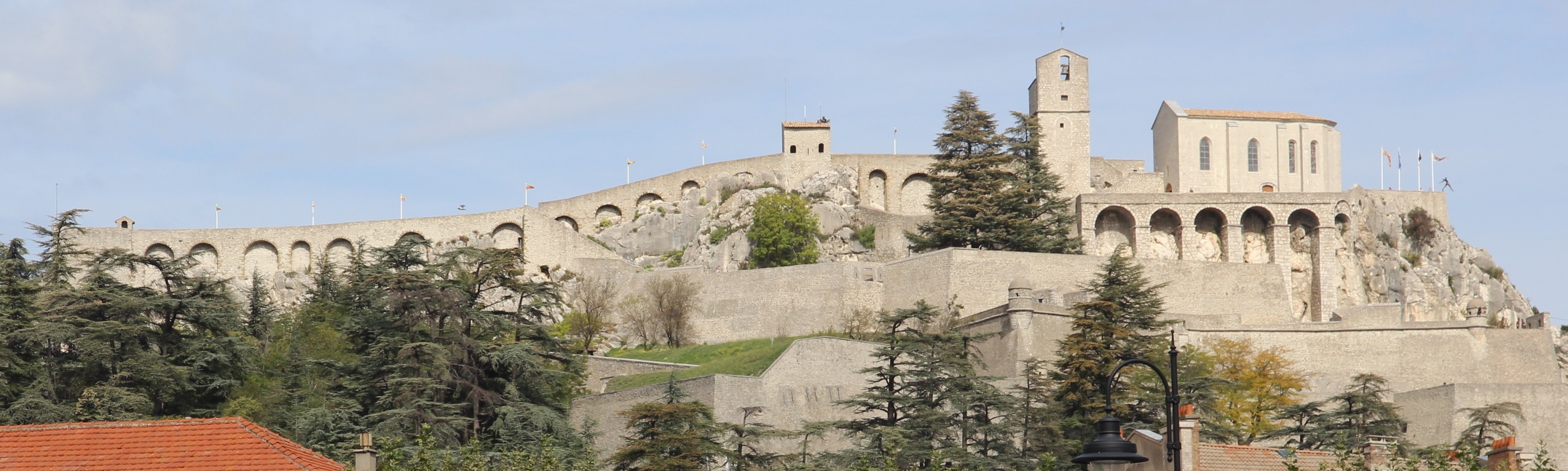
Sisteron citadel
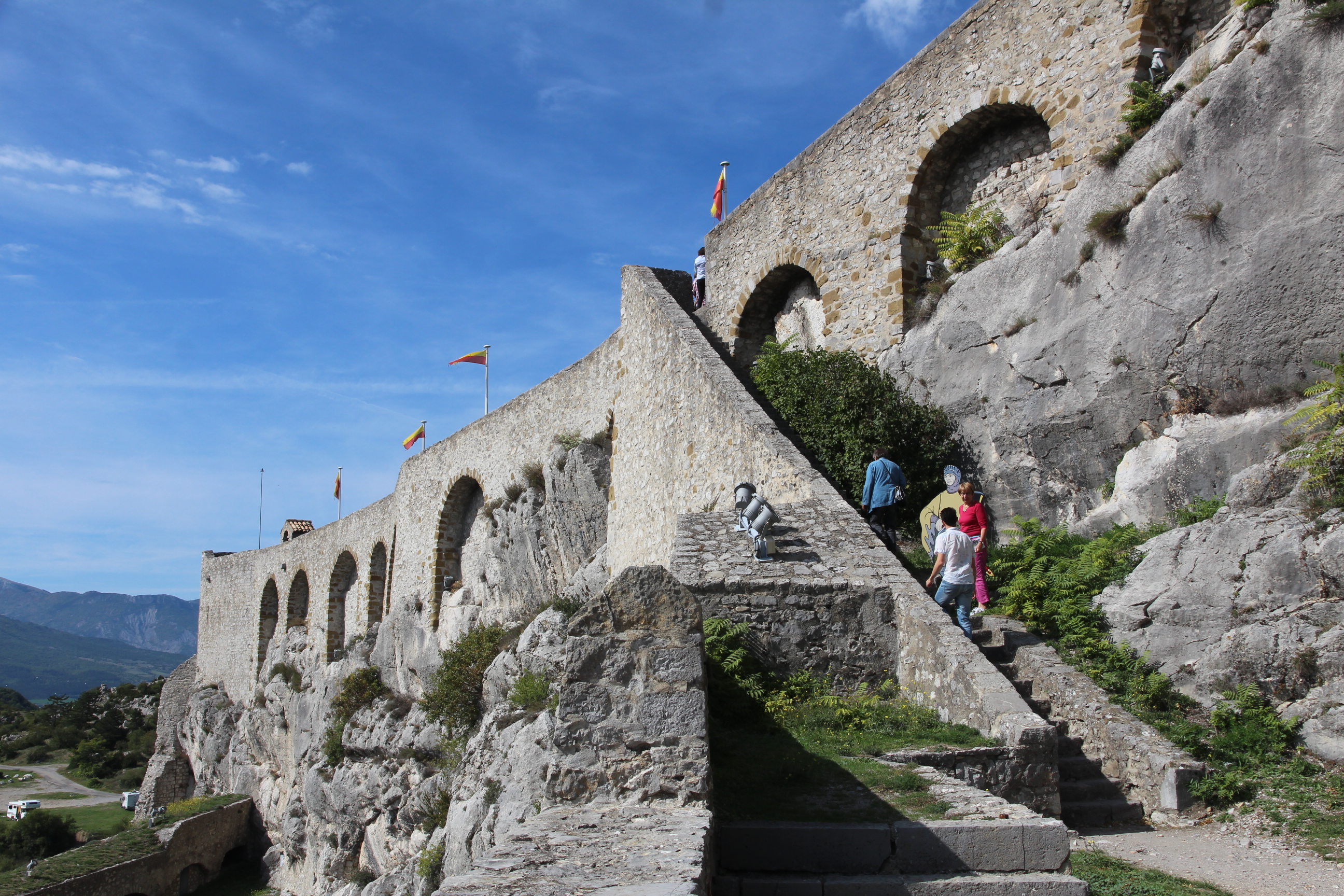
Plenty of stairs to climb
But first a bit about the citadel. The rock on which is sits overlooks the Durance River and history says that some sort of fortress has been there since early days—probably for 4000 years. None of those original structures remain, but the upper rampart of today’s citadel was built in the 13th century.
It’s easy to see why it was a popular choice for a lookout and stronghold. What a vantage point. You can see for miles and miles in virtually every direction.


Over the years, the fortress has been modernised and remodeled as needed. But the biggest renovations came after World War II. On 15 August 1944, French and American bombers tried to destroy the railway bridge and road bridge that spanned the Durance. The weather was poor and the mission failed. But one bomber, in trying to avoid a collision with another, dropped several bombs on the town, causing about 100 deaths and seriously damaging many structures, including the citadel and 15th century chapel.
When we visited the chapel, called Our Lady of the Castle, it had several exhibitions, including one of photos showing the damage and subsequent rebuilding. The chapel stopped having a religious role within 200 years. Instead it became a dungeon and later a prison. I’m still wondering how something so high up could be called a dungeon.

The chapel’s stained glass windows and art exhibits
The chapel was restored in the 1930s and stained-glass windows were added, but all this was lost in the 1944 bombing. The restoration included new windows by artist, Claude Courageux.
But the artist of the day—well the artist of this northern summer—is a man named Nicolas Lavarenne. He created 11 sculptures to be exhibited at the citadel between 8 July and 27 September.
These life-size figures celebrate the human form and have been, I suspect, created specifically for this location. The way they fit into the spaces is incredible—stepping off buildings, hanging from walls, enjoying the view and entering into combat.
I’ve read a bit about Lavarenne. Born in 1953, he is a self-taught artist who specialises in human forms and movement. If you’re desperate to have one, here an art house in London with some for sale. Even the small ones aren’t in my price range, but I love looking at them. I added names to the sculptures below (except for one that I can’t figure out).
And if you need a hit of French food, check out the recipe for salad niçoise on my cooking blog.


A green door in Draguignan
As I stroll through narrow laneways in France, Spain and Belgium, my mind often takes another course—tagging along with the fictional detectives and crime fighters of continental Europe.
Suddenly I’m sipping pastis in a small French bar with Georges Simenon’s Maigret. A little later Agatha Christie’s Poirot is pointing accusingly at me as I fumble to hide something in my pocket. Luckily, Inspector Rex of Austria leaps up just in time to push me out of the way of a speeding car. It would have been death, for sure. As an aside, Australia is Inspector Rex’s biggest audience outside Austria.
But reality hits and suddenly I am returned to a side street in Draguignan in the south of France.
I don’t always daydream, but there’s something about Europe. Maybe it was that green door I saw in Draguignan. Its colour and sign brought back memories of a song from my childhood and tales of mystery.
If you don’t know the 1956 song Green Door by Jim Lowe, here’s your chance to hear it. I’ve listened to it thousands of times since my childhood. And if you’ve never seen a brass plaque like the one below, step a little closer and maybe this one will trigger your imagination as it did mine.

You have to call for an appointment (rendez-vous)

One of the Medieval dances


When we were planning our trip to France, Libby (the daughter we’re visiting) said she and Daniel would like to spend a week with us in the south of France.
So we put her to work choosing a likely place through Airbnb. She came up with two choices in Flayosc, a village on a rocky hill about 35 kilometres from the Mediterranean Sea.
Poor John asked me to choose. One was quaint and 100+ euros a night. The other was modern and 65 euros a night. Quaint was really, really tempting until Poor John pointed out there was no shower, only a bathtub.
The combo of four adults and a bathtub was never going to work, so we went with modern. The two-bedroom apartment had been perfect—it opens almost directly on to the main square—and so has Flayosc and surrounds.
Of course, when we booked, we had no idea that our visit would coincide with Flayosc’s second annual billy-cart (go-cart) races, a wine tasting and open day (with medieval demonstrations) at a nearby winery, heritage days in the local towns and villages, a Division 5 handball match, and several nearby market days.
What a fantastic way to immerse ourselves into life in the French countryside.
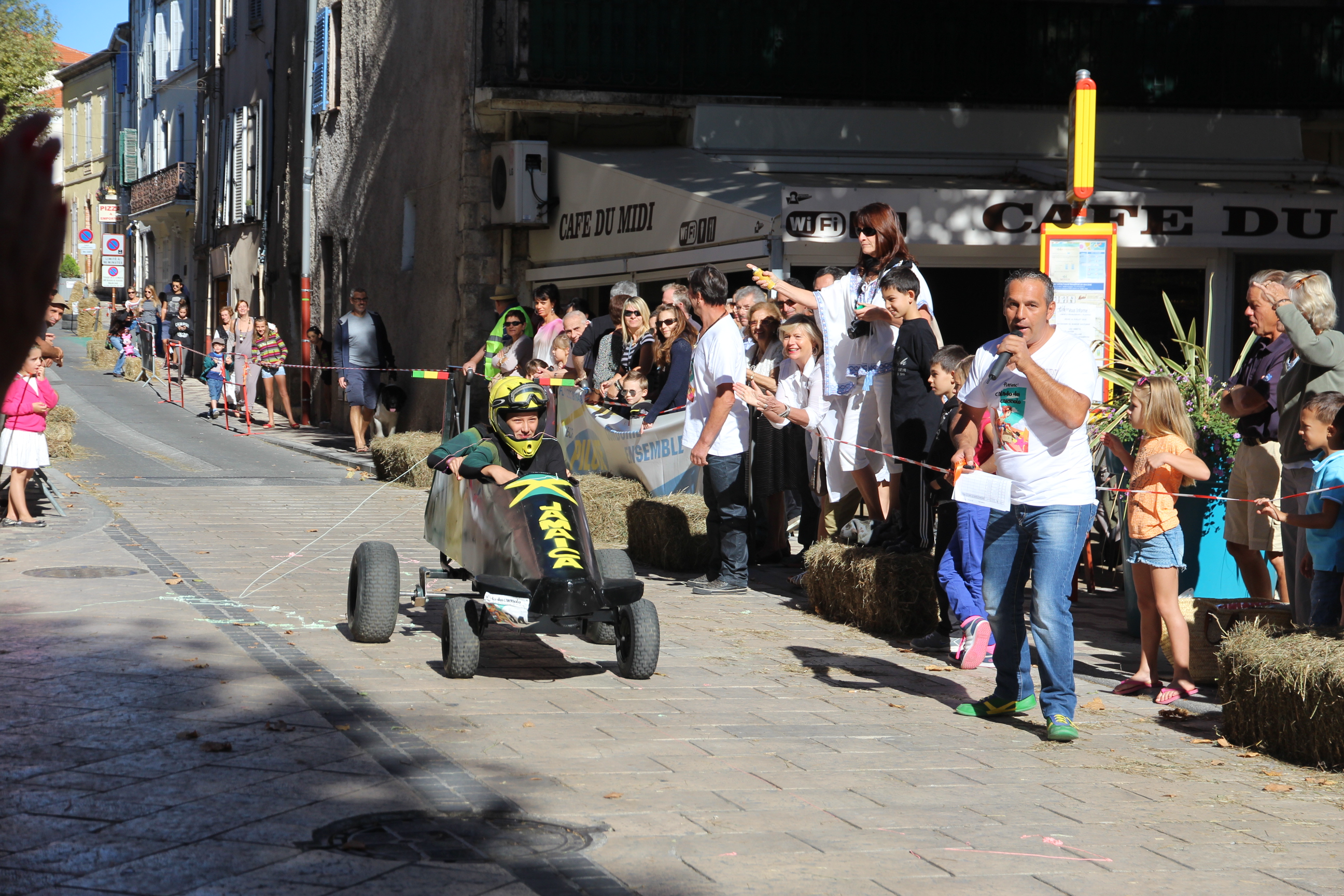
Jamaica passes by


One of our first excursions was to the nearby ‘Big Smoke’ of Draguignan, where we visited the markets, had crepes for lunch, toured the folk museum (more about that separately) and ordered a new pair of eyeglasses for Poor John, who lost his while cycling in the Loire Valley. He even finagled a discount for coming so far to make his purchase.
Then it was back to Flayosc for the billy-cart races that went over two days. The main street through town was blocked off from the night we arrived, so we knew something was going to happen, and when we emerged from the flat on Saturday morning the fairy floss/cotton candy stand was a giveaway that the festivities were about to begin. In case you didn’t know, the French calls fairy floss ‘papa’s beard’.
The races were hilarious. The kids’ races went all morning and the adults were in the afternoon. It looked like someone was timing each race, but winning didn’t seem to be the goal. Having fun did. A few of the carts went so slowly that they had to be given a push by the spectators.
Lunch was served between the two sets of races. There was a buvette—in this case, a kind of pop-up restaurant—serving daube, a stew. We dawdled so missed out on the daube and had delicious chicken sandwiches instead.
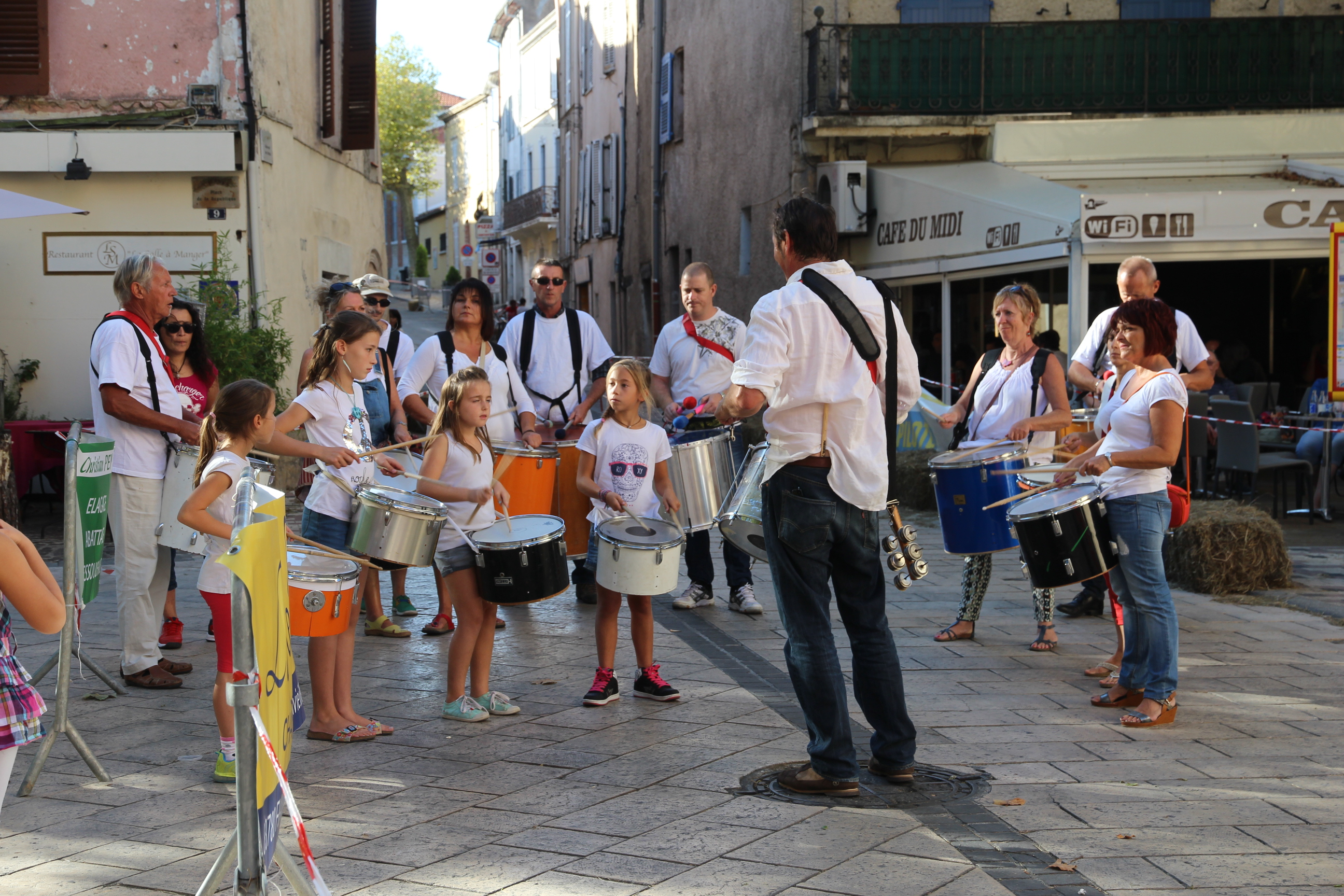
Percussion band

Brass band
There were a couple of bands playing and all the shops that would normally have been closed were open. One band was drums and percussion and included a few kids who had a great time banging on their drums and any hard surface at hand. The second band was beautifully colour-coordinated in blue and orange. The French horn player used orange clothespegs/clothespins as clips in her hair, and the tuba player created stripes on his ‘uniform’ with knives and spoons.
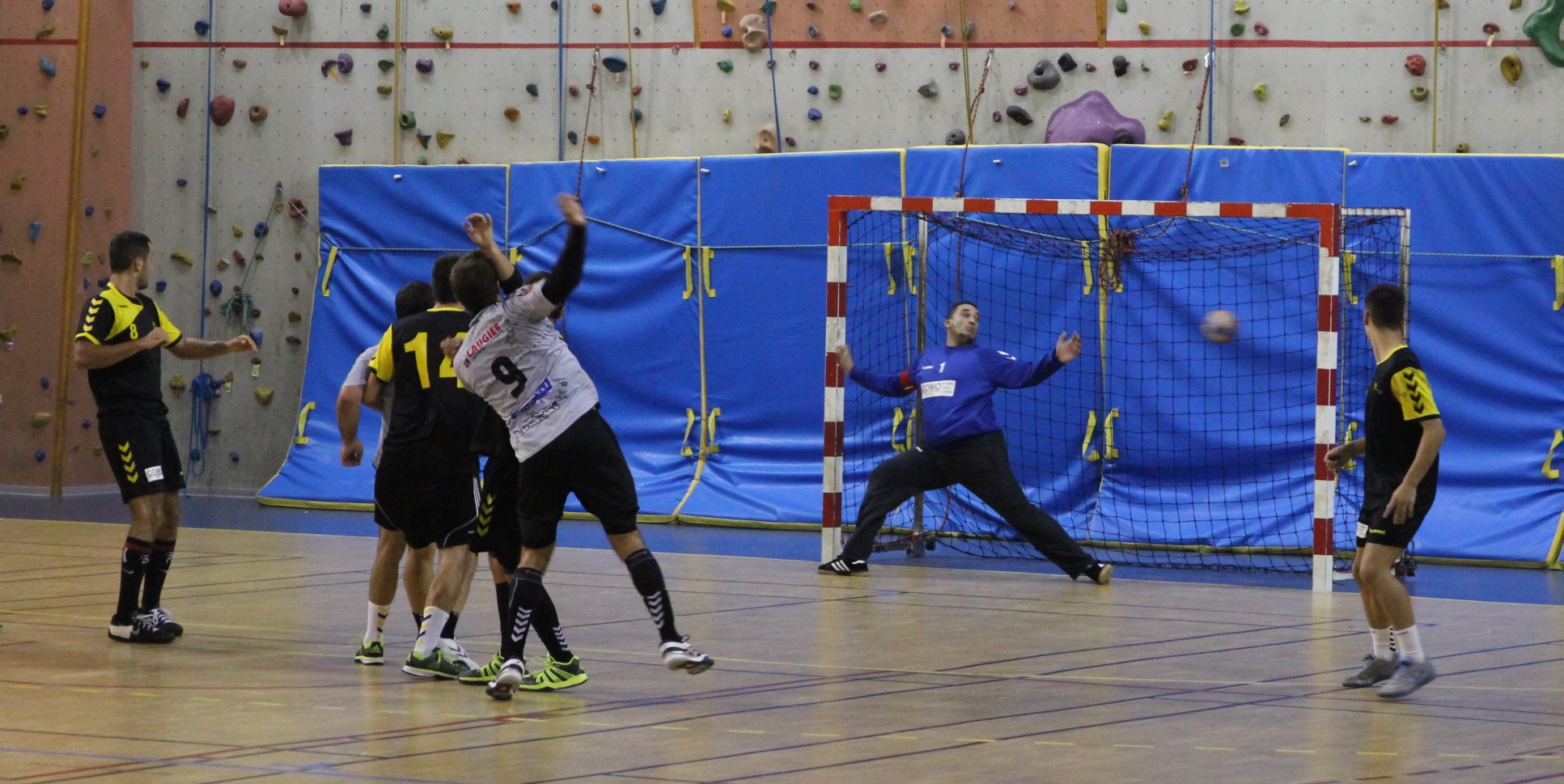
The goal that wasn’t allowed


The handball game was a nail-biter. It was Draguignan versus we-don’t-know-who, and played at the local high school. The scores ran pretty much neck-and-neck until a dramatic goal by Draguignan was disallowed. None of us know the game well enough to understand what happened, but we booed and heckled along with the rest of the home crowd. And I got a pic of the goal being made. I wonder if it could be used as evidence? Anyway, Draguignan lost steam after that and the visitors ended up winning by eight goals. We were appropriately disgruntled.
However, I was super-impressed by the rock-climbing wall at the school. The French love rock climbing and are good at it. It’s no wonder that the school sunk a lot of money and effort into creating the best climbing wall I’ve ever seen. Another bonus was the dance display at half-time. Six young men did a sort-of rap/hip hop dance routine.

Sylvie selling herbs and spices in Flayosc
And of course, we’ve made it to a couple of markets including the one in Flayosc where we met Sylvie who is bringing unknown spices and herbs to France. She was super impressed that I knew chimichurri (a South American flavouring) and I told her all about turmeric. I’ll try to send her some from Australia.
We head back to Paris in a couple of days, but until then we are savouring being locals in a small French village. Oh, and Poor John is our bread master. He’s out the door about 6:30 every morning to buy as many baguettes as we think we’ll need to get us through breakfast and sometimes lunch.
Speaking of bread, I reckon a muffuletta sandwich would be great on a baguette.

One of the bakeries in Flayosc
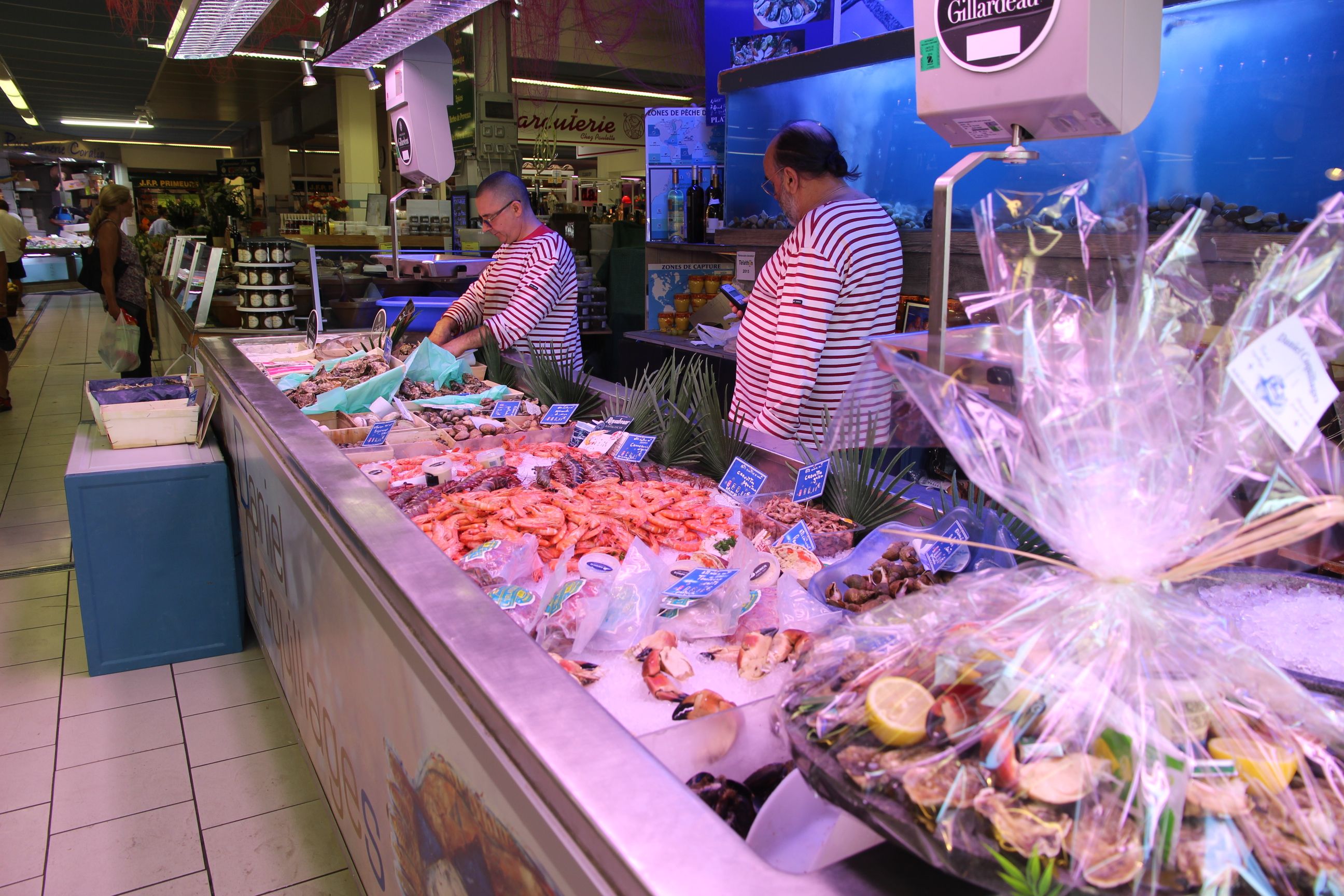
Where we bought the prawns and oysters. Check out the typical striped shirts

Our order
We were in Sainte Maxime’s—a mere stone’s throw from St Tropez, France’s playground for the rich and famous and a whole lot of wannabes..
To be honest, we were on the way to St Tropez when we decided to check out the wonders of Sainte Maxime’s. First we stopped at the beach, Plage de la Nartelle. The beach is nothing all that special if you come from Australia—the land of amazing beaches—but we found something to intrigue us.
The French military (I assume the Navy) were having exercises on and near the beach. We weren’t allowed to cross the sand near the sea (because that’s where they were landing their equipment), but once we were up by the road we could walk among the vehicles and talk to the soldiers. Not that we had enough French for any sort of discussion.


Libby and Daniel, daughter and son-in-law, went for a brief swim on the beach and then we set out to explore and find lunch. That meant driving on a bit farther and finding a precious parking place. As principal driver, I was pleased to find something free and convenient.
Then we strolled through the streets of Sainte Maxime and were lucky enough to come upon the town’s covered market. It’s tucked out of the way, and probably quite easy to miss. But we’re all market experts, so it’s unlikely that a market would go undetected by us.
We strolled in to check out what was on offer. Luckily Daniel has enough French to figure out that it was possible to order a meal at one of the seafood counters, and then have it prepared and delivered to the eating area, which is named, of all things, Daniel Coquillages.


So we ordered a selection of prawns (shrimps) and oysters. Libby and I went on to order some duck rillettes (sort of like paté) and finely sliced ham, while the fellows found a table and ordered bread and wine.
The tables around us were filled with locals (except for one German couple), so we knew we were in the right place for people who didn’t feel the need to be among the rich and famous.
It was a most amazing choice. The food was superb. Plus, about the time we finished our carafe of white wine, the woman who was serving us insisted on giving us an extra half carafe for free. Our collective French couldn’t figure out why, but we polished it off and made Poor John, our non-drinker, drive us on to St Tropez.

The tail-end of the extra wine
All in all, it was one of the nicest meals we’ve had in France.
The food was excellent and people were quite happy to have me take pictures in the market itself.
If you’re ever in the neighbourhood, be sure to stop by. As an aside, I often post reviews on Trip Advisor. I posted one about this place and was the first person to ever do so. Still surprised that such a great find is so little known.

Just a third of the cold-cuts case.

Lac de Montmeyan Quinson with Pont (bridge) de Quinson on the far left. We paddled under the bridge to enter the gorge

Libby and Daniel setting out on Lac de Montmeyan Quinson. This lake is very shallow so gives you a false sense of security for the deep gorge
Guess I’ll need to call this my sporting holiday—so far we’ve bicycled more than 250 kilometres, walked many kilometres day after day, climbed hundreds of stairs and hillsides, and now paddled for half a day in kayaks. Puff, puff, puff!
Daniel, our son-in-law, has been keen to visit Les Gorges du Verdon, also known as the Grand Canyon du Verdon, ever since he bicycled in the area about eight years ago.
Given that we’re spending a week in the southeast of France, not far from the French Riviera, a trip to the nearby Verdon River shot to the top of our to-do list.
Daniel tracked down a likely place to hire kayaks and off we went. There were options to hire for one hour, two hours, half a day or a full day. We arrived late morning, so a half day was the best option—although a couple of hours later I might have settled for the one or two-hour option.
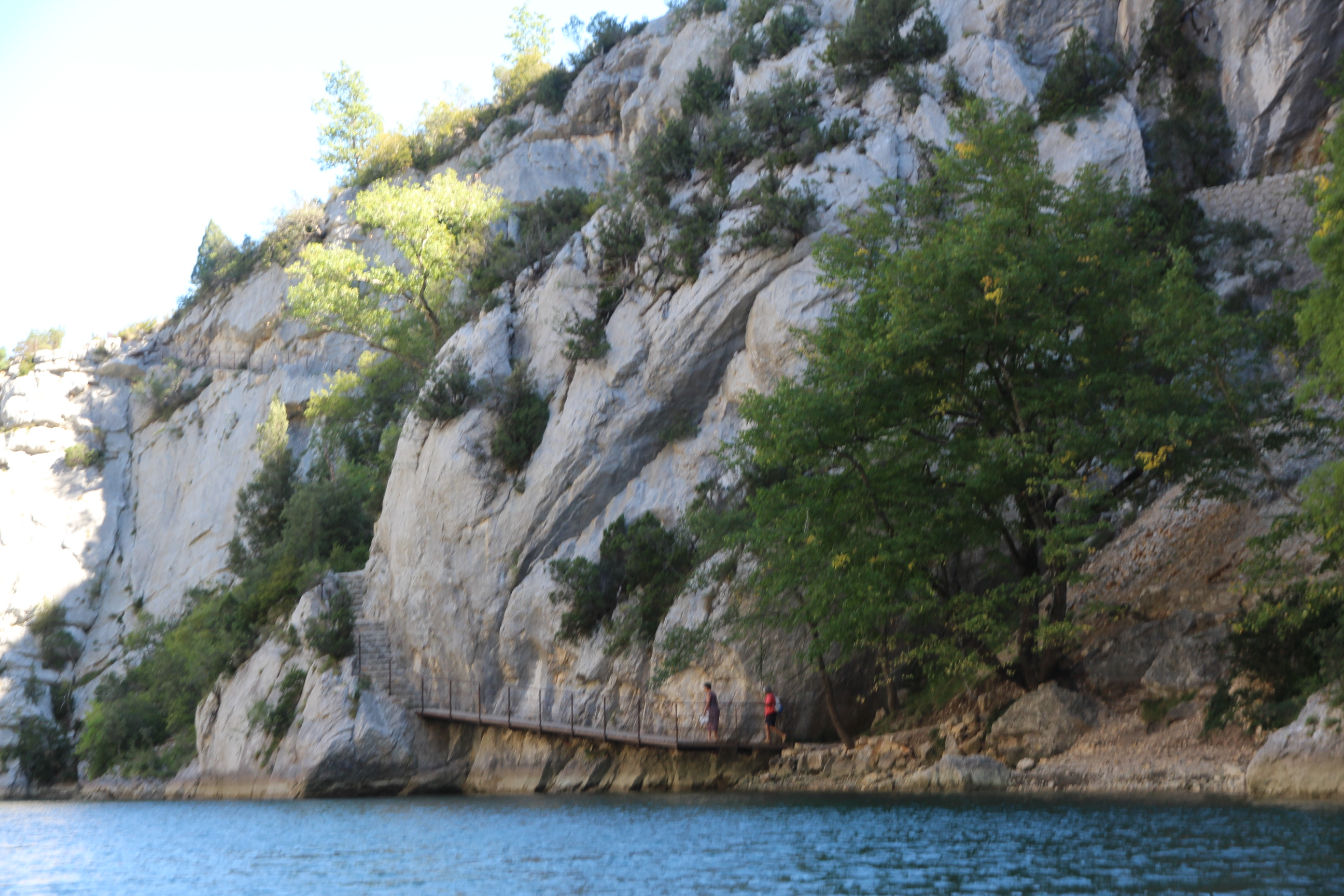
Plenty of walkways have been added for hikers
The gorge is spectacular and considered to be one of Europe’s most beautiful. It wasn’t known outside France until 1906. The gorge is 25 kilometres long and 250 to 700 metres deep. Glad I didn’t know that until after I returned to shore.
In addition to kayaks, visitors can hire canoes, pedal boats and electric boats, Plus there are many hiking trails (we saw many groups of walkers), as well as more than 1500 rock climbing routes. In addition to the sports available where we were, there’s rafting, paragliding, fishing and canyoning.
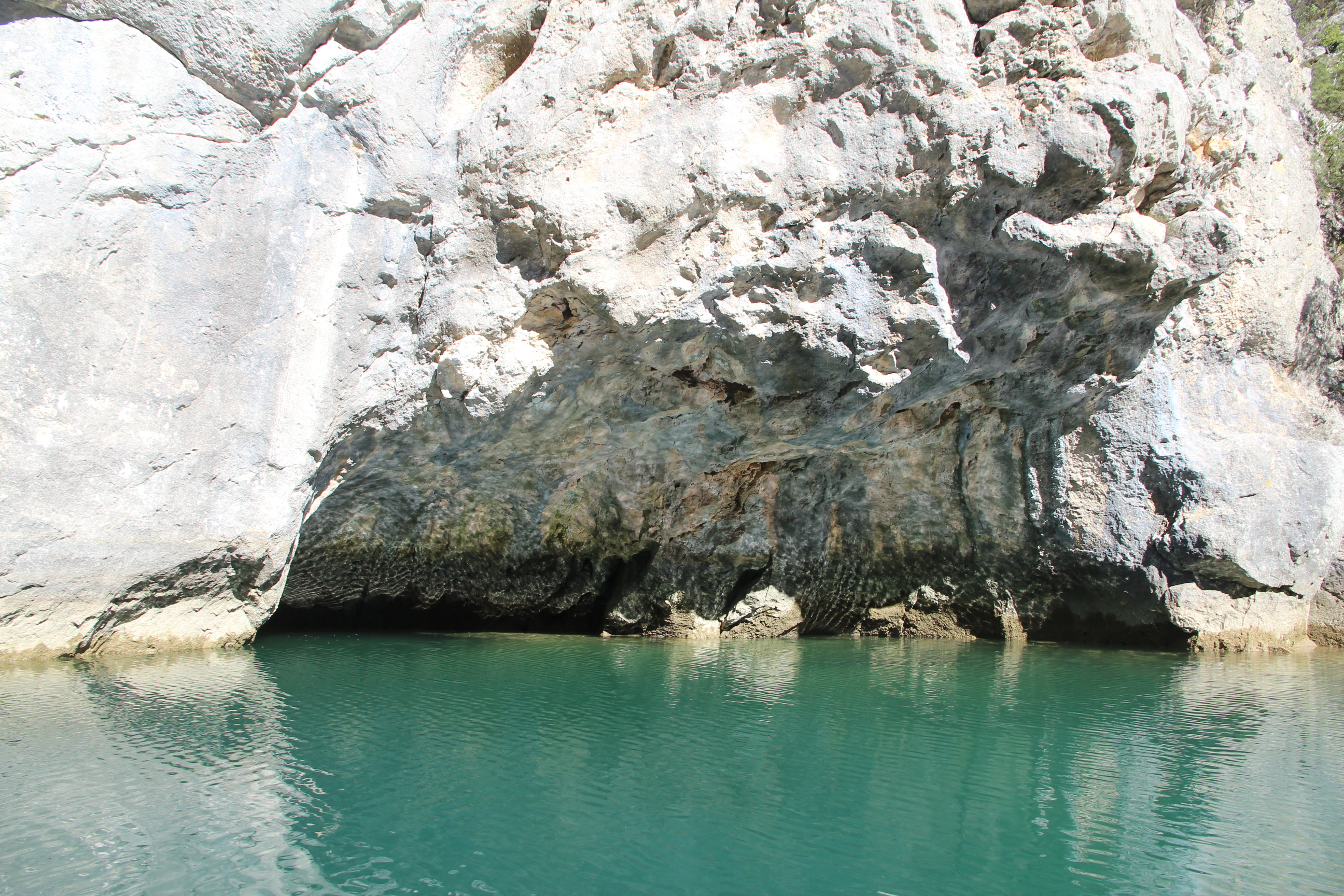
The gorge’s strong blue–green colour comes through
The gorge is named after the Verdon River, which in turn is named after the blue–green colour of the water. The colour is said to be caused by glacial sources and minerals of rock flour suspended in the water.
Five dams were erected along the river between 1929 and 1975, and these help to provide hydro-electricity.
We started from Lac (lake) de Montmeyan Quinson and were aiming to cover the 9 kilometres to Lac d’Esparron, but really needed a whole day to cover that distance and return. I’m guessing we got about halfway before we stopped for our lunch of homemade sandwiches, and then headed back.
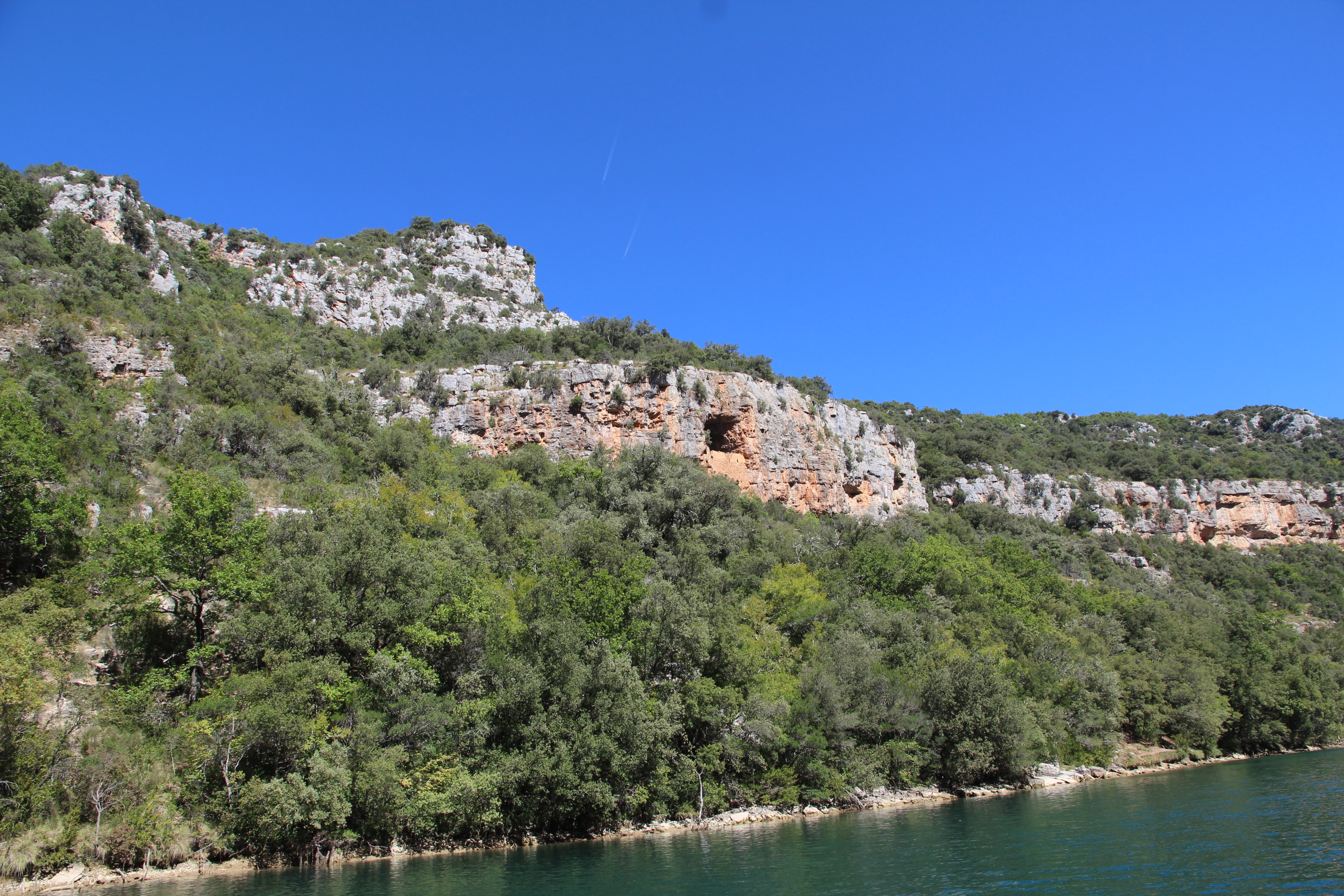
The Grotte de Gaspard de Besse from a distance
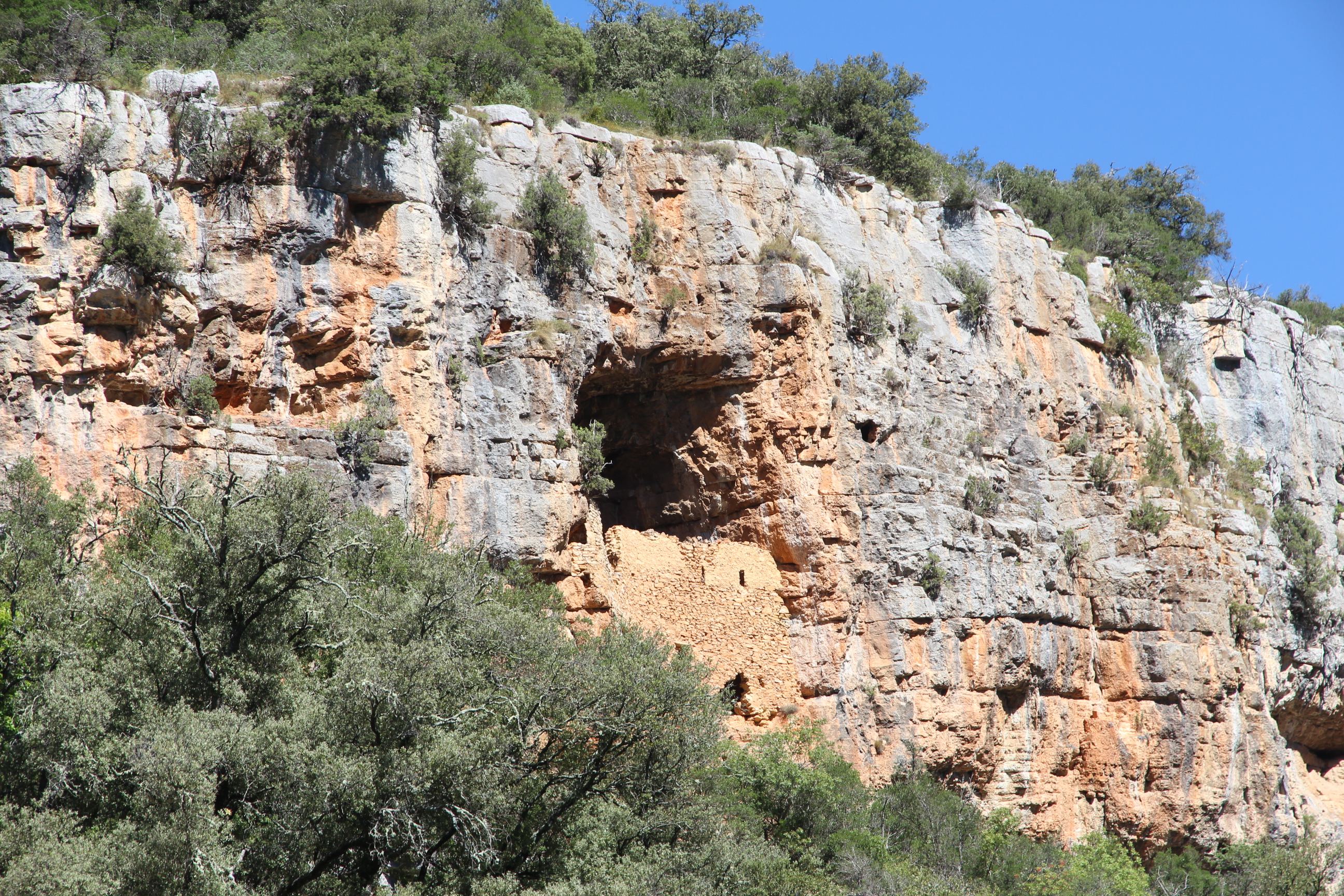
Up close the wall of the cave is easier to see
Some of the sights we saw, besides the great scenery, were the Pont (bridge) de Quinson and three caves—the Grotte de Gaspard de Besse (also called Grotte Murée or the Walled Cave), the Grotte Sainte Maxime (no photo) and the Grotte de la carte au trésor.
Gaspard de Besse was a notorious robber, who was loved by some because he gave to the poor. It earned him the nickname of ‘Robin Hood of Provence’. He did operate throughout the region, including in the gorges, so it’s likely he used the cave (grotte) that bears his name. He was executed at age 24 after being accused by foreigners he robbed. The locals were not pleased.
According to legend, Gaspard’s most daring caper happened during a festival at Castle Fontblanche. Dressed and introduced as a gentleman, he charmed the nobles and wealthy guests while robbing them of their valuables.
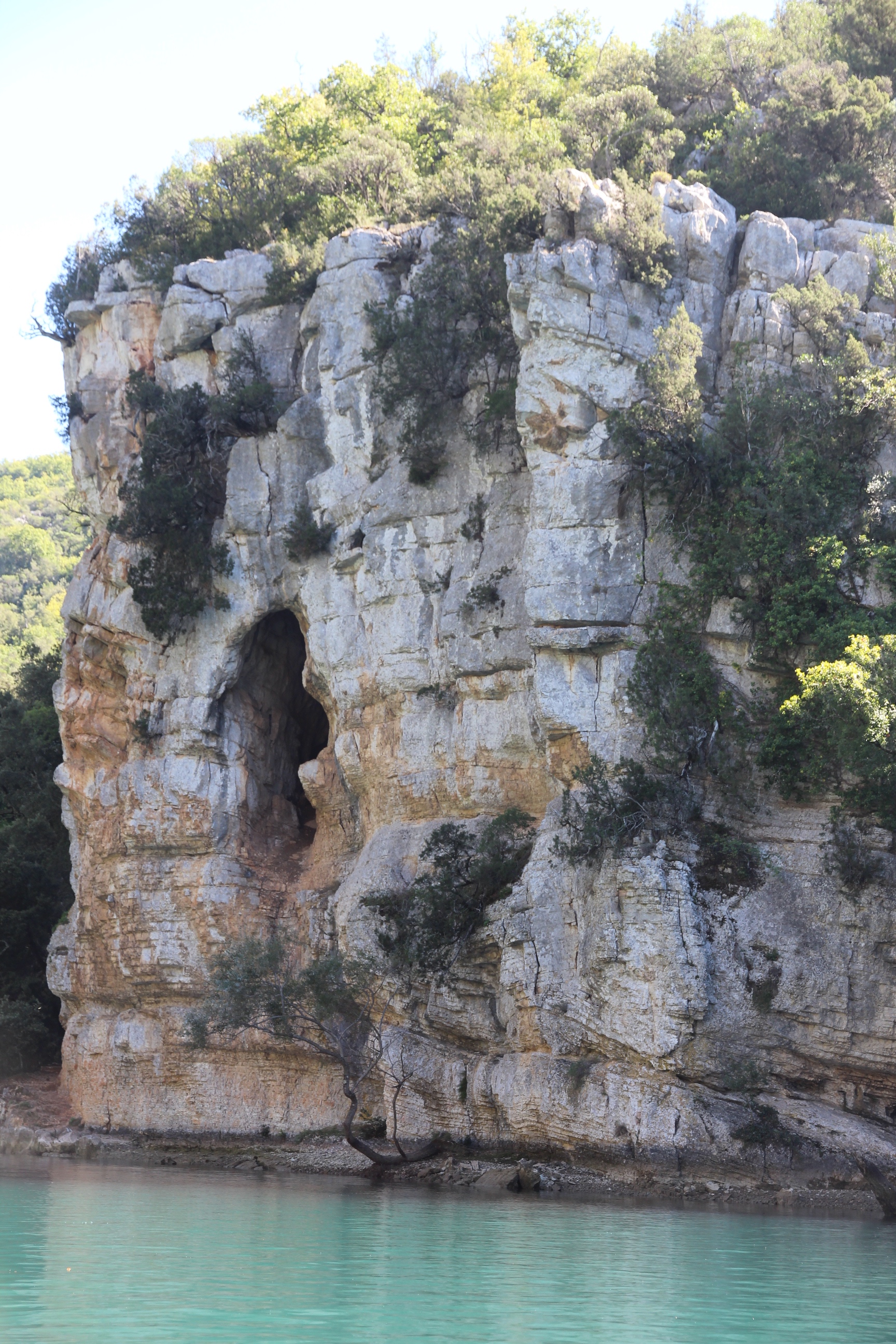
The grotte de la carte au trésor. Note the blue–green water
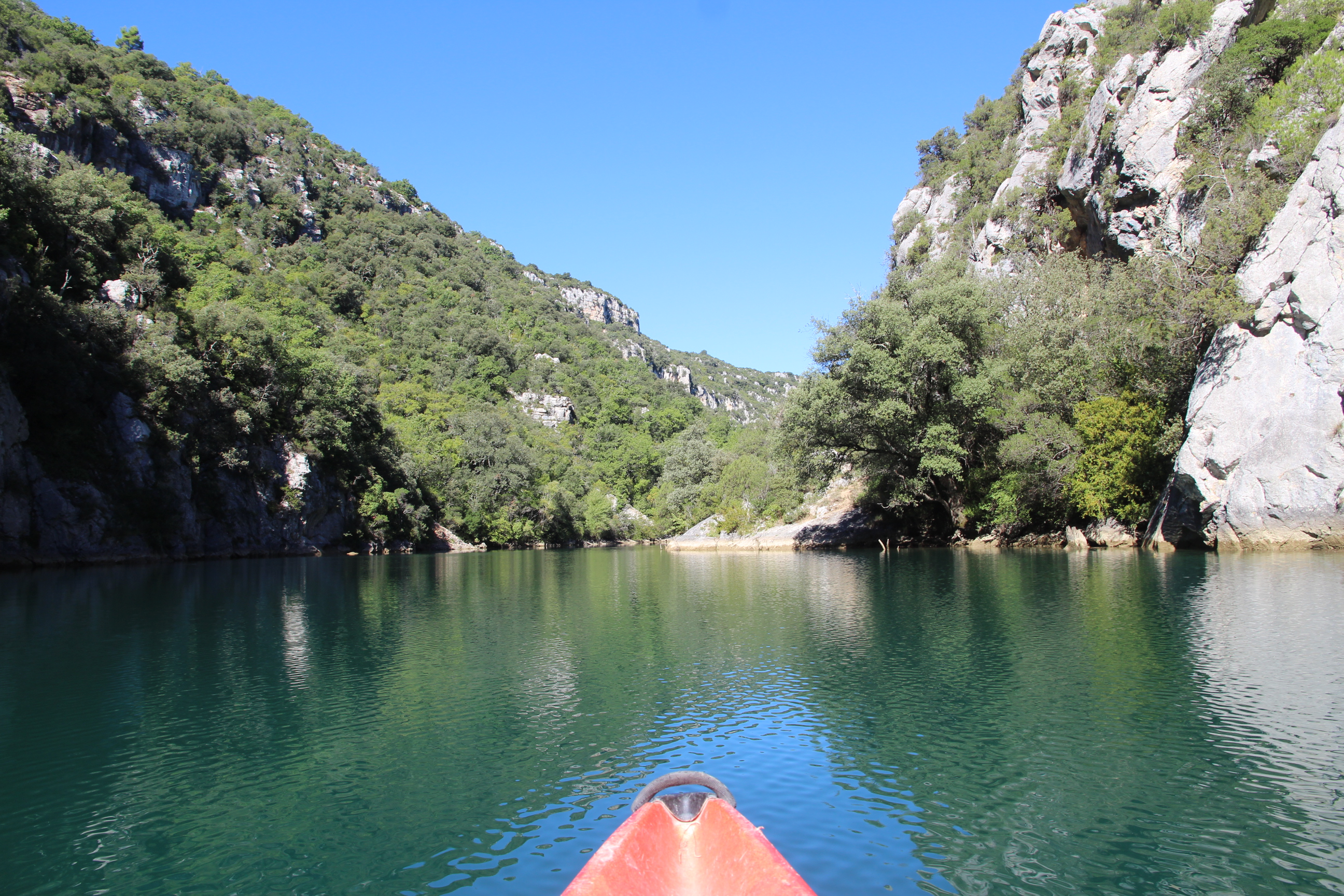
Setting out on Les Gorges du Verdon

Standard fruits and vegetables

Exotic fruits from all over the world
Our first full day in Barcelona had us walking down La Rambla, a main street in the centre of town that’s popular with tourists and locals alike.
It’s only 1.2 kilometres long, but packed with shops, cafés, kiosks, souvenir sellers, pickpockets (we were warned) and, supposedly, sex workers, although we didn’t notice them.
Luckily, Poor John’s eagle eye did spot the city’s most well-known local market. Formally known as the Merkat de Sant Josep de la Boqueria, it’s more often referred to as La Boqueria.
Aurélie, our hostess in Barcelona, had marked it on the map for us as a must-see destination, so we were delighted to come upon it almost by chance.

Didn’t expect to see chillies. The sign said no photos, so I had to.


So in we went and were immediately struck by the overwhelming diversity of goods and the overall cleanliness of the place.
Usually in a market, you’ll see crushed cardboard boxes and other packaging, fruit and vegetable peelings, loose plastic bags, general grime and an array of other debris.
La Boqueria was spotless. Poor John and I could have eaten our lunch off the floor. But I have to admit that we didn’t eat lunch there. The meals looked good, but most of the diners were foreigners and we decided that the eateries might be a bit of a tourist trap—over-priced for what you get. We did buy a stick of cold cuts to sample.
But we marveled at the sheer variety of goods on offer, and it was the locals who were buying the produce.


I saw a few items I’d never seen before in markets, mostly in the line of seafood, charcuterie (cold meats) and mushrooms. There were special snails and barnacles, and cold cuts and mushrooms with names I’ve never seen. And it wasn’t just a matter of language difference. I may not know a lot of Spanish or Catalan, but I know most of the food names.
The market could have entertained me for hours and I could have spent lots of euros, but we only had a few days in Barcelona, so Poor John hustled me on at the first opportunity. Well, maybe the second or third.
And later we got a nice enough three-course lunch for a little less than the asking price for a simple meal in the market.

Over the entrance at Barcelona’s La Boqueria
A bit of background on the market
History shows that a market has been operating near Barcelona’s old city gate since—are you ready for it?—1217. That market sold meat. A pig market opened in 1470, and more changes happened regularly over the years.
The first market on La Rambla came in the early 1800s, and it was officially recognized by 1826. Construction on the current site began in 1840. Heaps of changes have taken place since then, but the existing metal roof was added in 1914, so it’s just over 100 years old.
Spanish recipes
My cooking blog has a couple of popular Spanish recipes—Spanish mussels and Escalavida (Spanish-roasted vegetables). I hope you’ll give them a try.

Charcuterie (cold cuts)
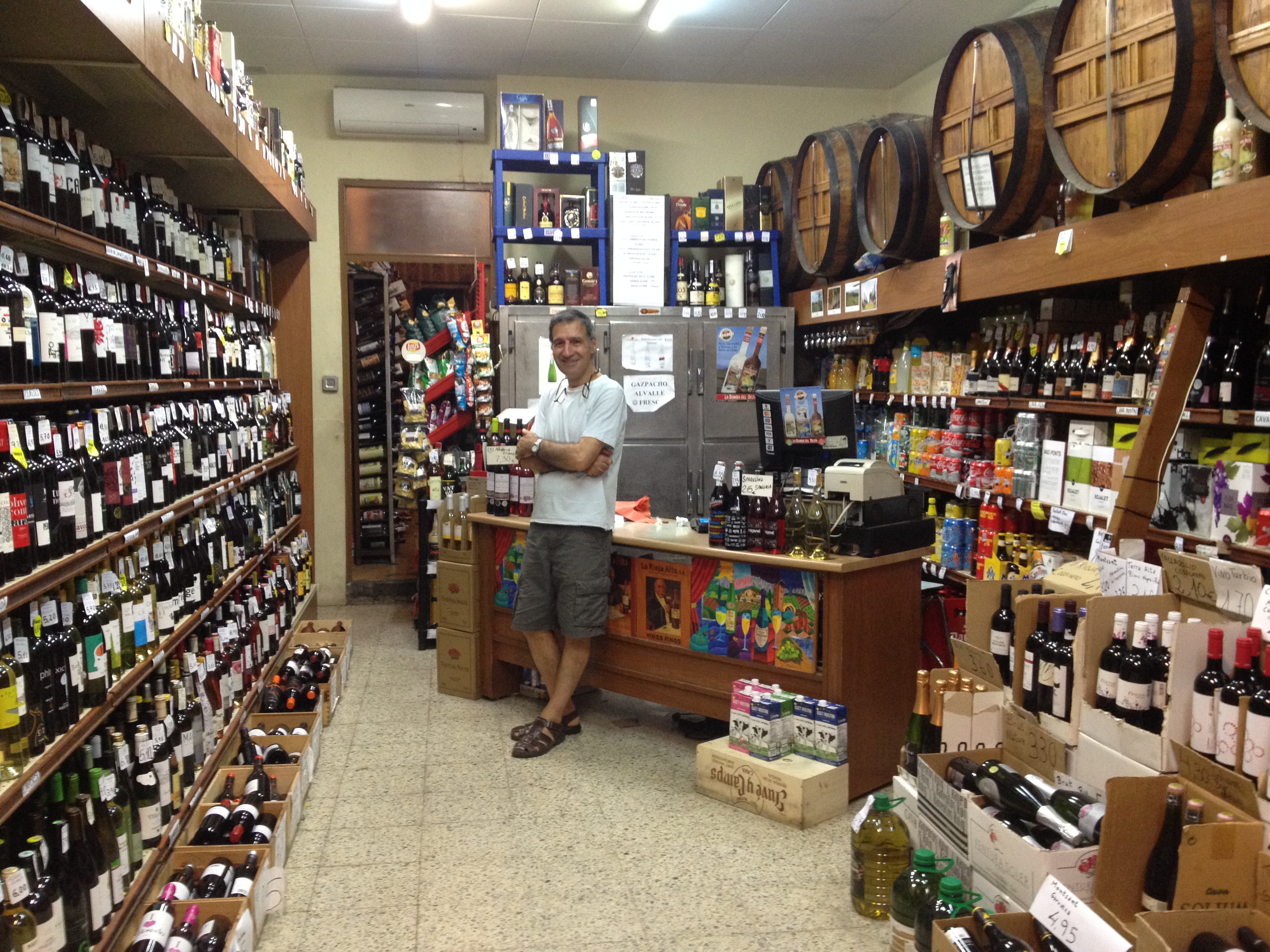
Josep is rightly proud of his wine shop. He sells spirits too.
This week we’re enjoying village life in the south of France. Yesterday we went to Draguignan (yes, I can pronounce it), where we bought up big at the weekend market, visited the traditional arts museum, climbed to the panoramic viewpoint (puff, puff) and enjoyed lunch. Then we were back in the evening for a nail-biting handball game between Draguignan and some unknown competitor. Draguigan lost. 😦
Today we’ll gather along the narrow main road of Flayosc for the 2nd annual billy-cart/go-kart races and local festival. Then it’s off to another nearby village for their festival and a wine tasting.
I’ll write about all those later in the week, but the mere mention of wine tasting reminded me of our visit last week to a wine shop in Barcelona Spain.
We drove to Spain to spend a couple of days with Aurélie and Marti. We’ve known Aurélie since the year 2000, when her younger brother, Jean-Mi, stayed with us for about six months while he was on exchange from Belgium.
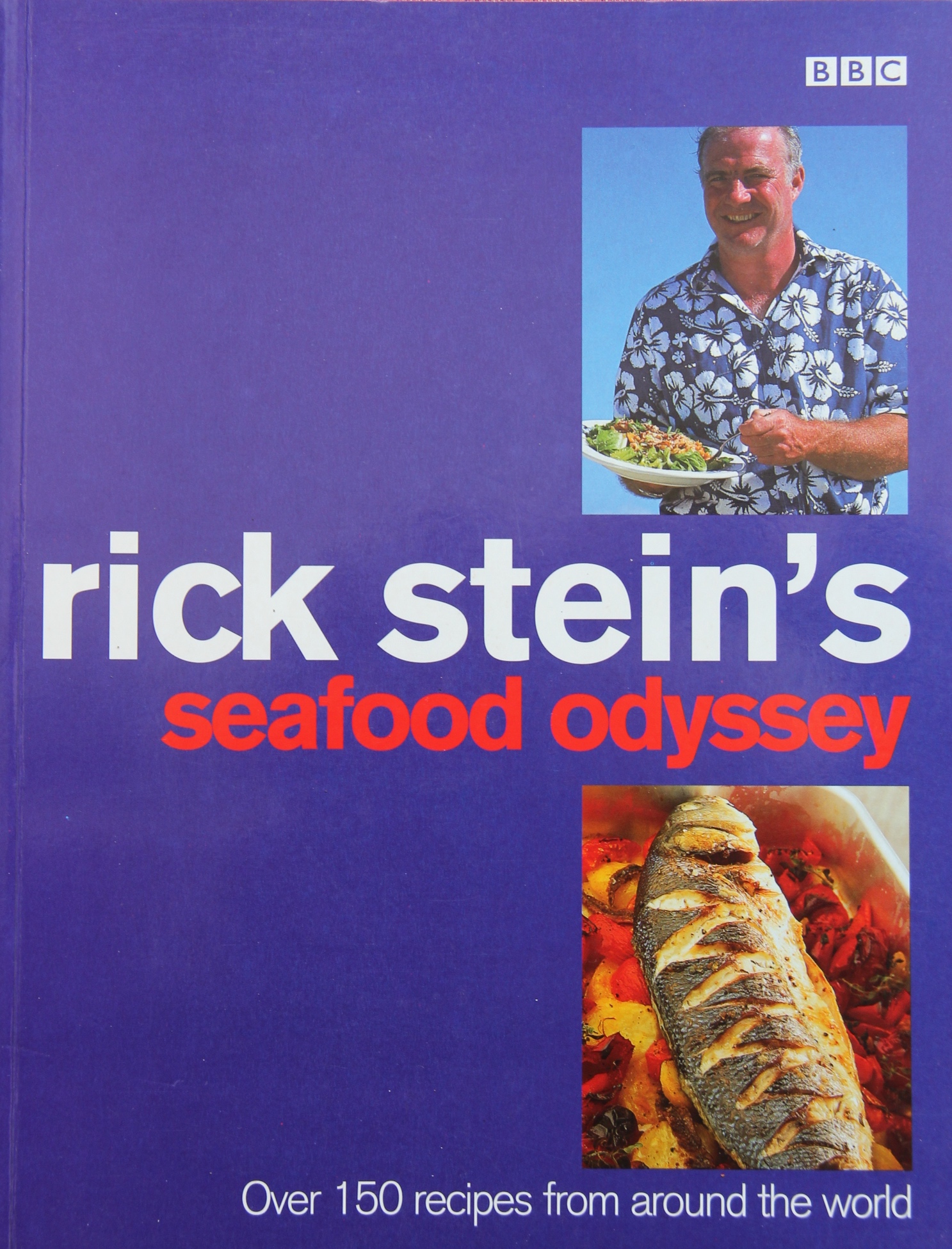
There’s a wonderful connection between our two families and we’ve caught up in Australia and Europe many times over the last 15 years. So the trip to Spain was a special treat for us to catch up with Aurélie and welcome Martí to the ‘extended’ Bright family.
Before we came to Spain, Aurélie let us know that Martí loves to cook (which puts him top of the chart in my book), and especially loves to cook seafood. We brought him one of Rick Stein’s seafood cookbooks (stay tuned for its page-32 recipe to appear on my cooking blog).
But this night he had another recipe in mind. So while Martí went to buy groceries, the rest of us went to their local wine shop—Mestres—to buy supplies. Aurélie has high praise for this little shop and I have to agree that they’ve done a fine job stocking it and the service is good too.
Aurélie told Josep, the owner, that we were from Australia—a fine wine-producing country—and asked him to choose a dry white and dry red that were fairly priced and good examples of Spanish wine.
He did a great job and also suggested a slightly salty mineral water. All three came to less than A$25, and were perfect with the delicious seafood salad Marti made using bonito, cannellini beans, tomatoes, capsicums, red onion and a dressing. I missed getting a photo, but I did manage to get details for the wine shop. It’s at Tenor Massini 28, telephone 93 339 71 26. I don’t know that I could find it without Aurélie to guide me.
News flash and update: We had such a wonderful time chatting, cooking, eating and sampling wine, that I never got around to taking a picture of Aurélie and Martí together. Luckily, Aurélie sent me a great one today from their recent travels in Portugal. I’ve added it below.

Sparkling water and two Spanish wines

Aurélie and Martí
 Where to next?