

What is it? A performance stage? A mirror for skiers?
Lately I’ve done a few posts about France and her art, so I figured it was time to do one about France and her science.
I’ve always known that France has a rich science history, but I never knew it held the world’s record for something big.
Both Poor John and I were gobsmacked to gaze down from our hotel room in the Pyrenees Mountains, near the French–Spanish border, and see a gigantic reflective box, probably about 10 storeys high.
At first I thought it was a large stage for outdoor performances. Poor John is much more imaginative than I am and, given that we were in one of France’s oldest ski resorts, he thought it was the bottom of a ski slope where people could look at (and admire) themselves from three directions as they skied to the bottom.
But the cheery woman at reception (who gave us a room with a view at no extra cost) explained that it was a famous (yeah, we’d never heard of it) solar furnace—the largest in the world.
So there we were in Font-Romeu-Odeillo-Via (we’d never heard of it either) with this history-making object just down the hill and around the corner. So we had to visit and take the tour before we drove on to Spain.

Smaller mirrors collect the first rays of the sun

Rays are then bounced to the gigantic mirror array (see the little car at the bottom left?)
The furnace’s education centre, which has a mix of written, photographic, models and hands-on exhibits, explains that the furnace is not used to generate power for the community.
Instead its 10,000 mirrors bounce the sun’s rays onto a large concave mirror which focuses the enormous amount of sunlight it receives onto an area about the size of a cooking pot.
This, in turn, produces temperatures in excess of 3000°C (or 5430°F) that allow scientists to carry out projects on energy, the environment, materials for use in space and materials of the future.
We read the English booklet, pushed all the buttons, twisted all the dials, watched the video and saw the demonstration of how the sun’s ray’s can start a fire in a nanosecond. It was an hour well spent and admission was cheap.
The solar furnace was built more than 40 years ago and has a smaller ‘sister’, site, Thémis, which we saw by chance later when we drove on to Spain.
Given that we’re talking sun, I can’t resist sharing this recipe for pasta with sun-dried tomatoes.
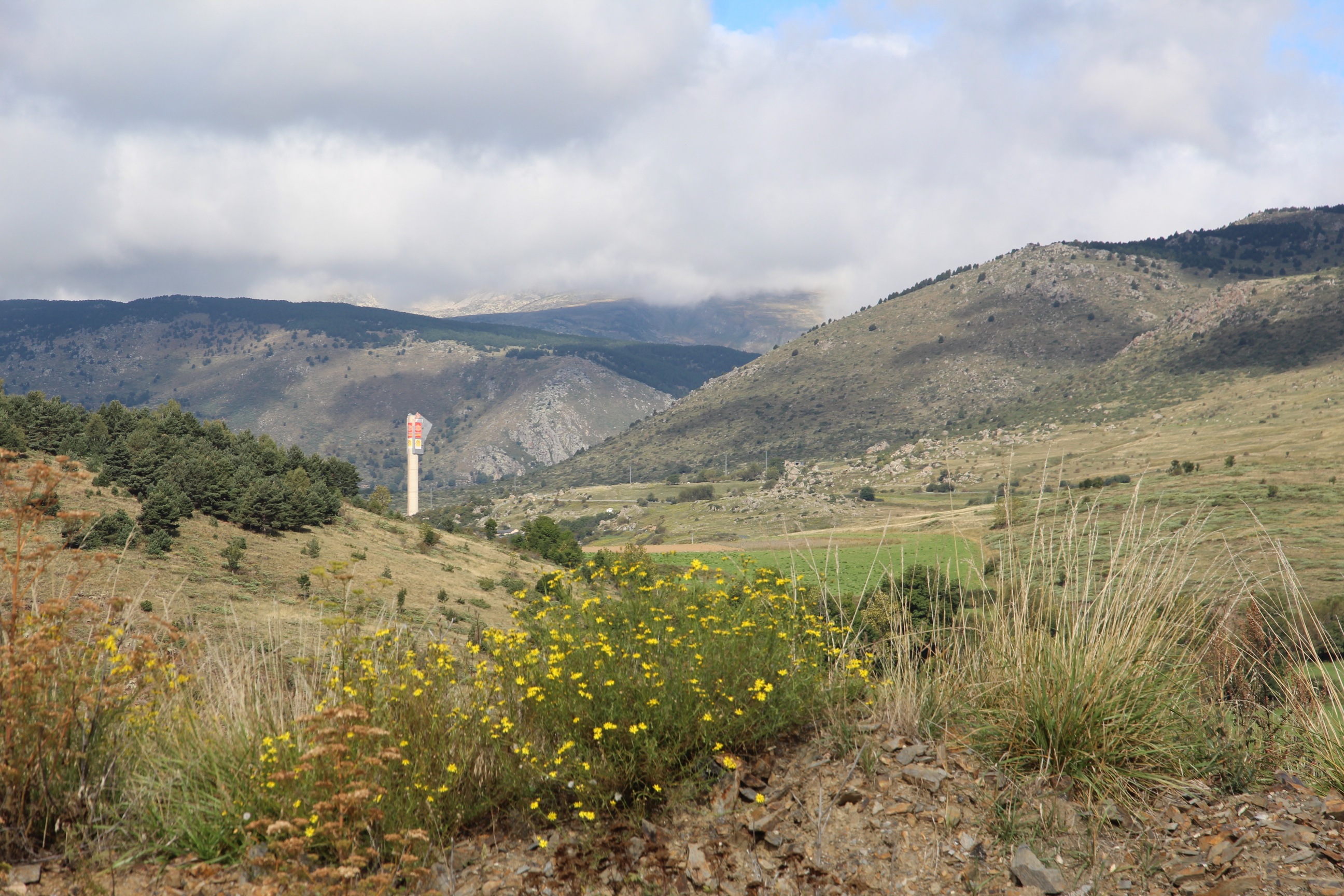
Tucked away in a beautiful landscape, the tall ‘sister’ site at Thémis
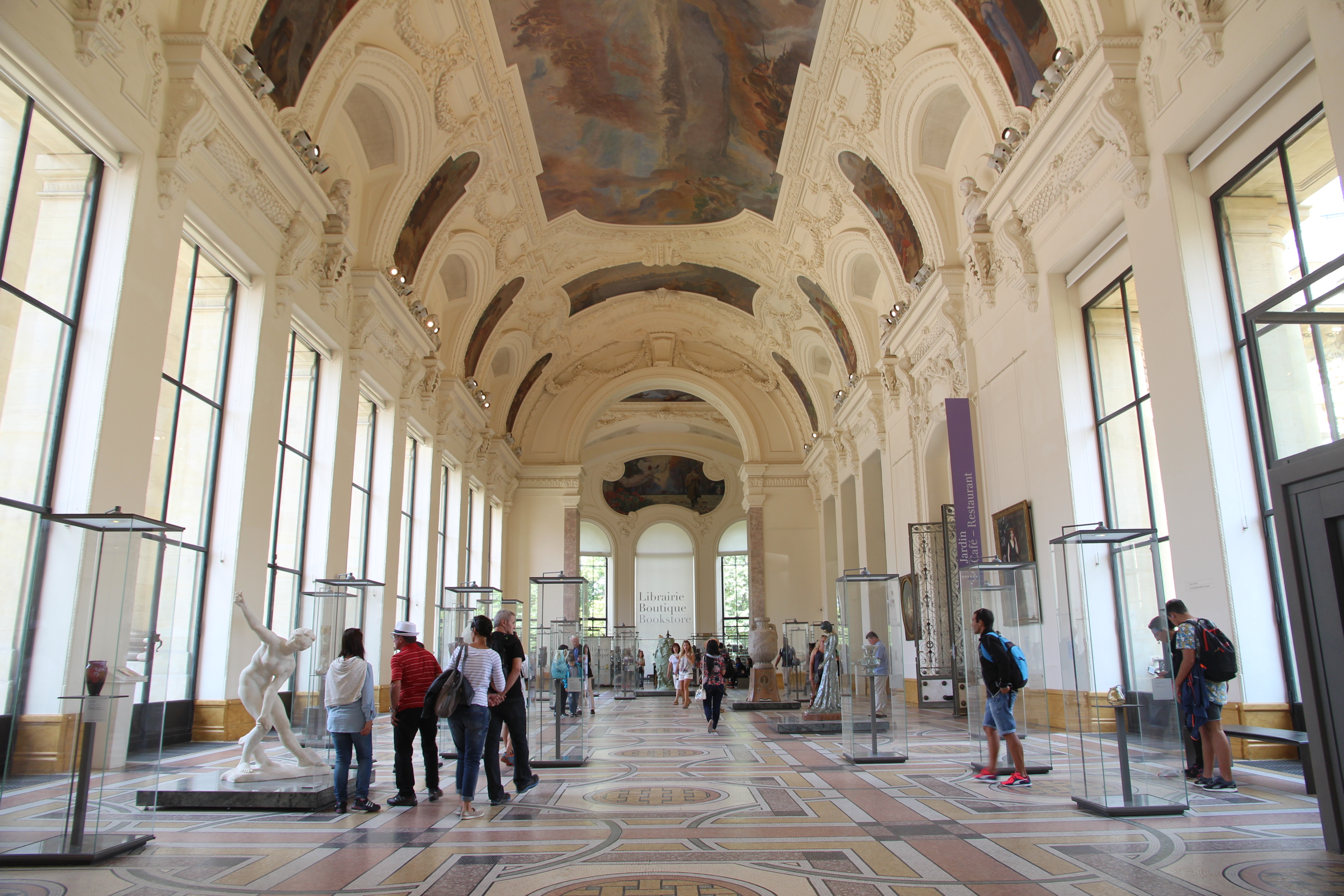
Plenty of room and smaller crowds

Petit Palais exterior and entrance
After whingeing (fussing) about the Louvre in my last post, I figured I should showcase one of the museums we really enjoyed—the Petit Palais.
Built in 1900, along with the nearby Grand Palais, for the Universal Exhibition in Paris, the Petit Palais became a museum in 1902.
Designed by architect Charles Girault, the palace isn’t all that petite. In fact it was designed to have spacious exhibition spaces, so has large gardens, two levels, high ceilings and wide corridors and hallways, which means it can accommodate plenty of visitors. The exterior and entrance are imposing too.
Some famous sculptors of the time, such as Convers, Desvergens, Fagel, Ferrary, Hugues, Injalbert, and Peynot, worked on the building’s exterior decoration.
While the Petit Palais displays works from many periods, I was particularly interested in the pieces that were created in the last half of the 1800s and the first half of the 1900s.

Vitrine from 1867
I loved seeing the vitrine created in 1867 created by four artists, whose names probably won’t mean anything to you (let me know if I should list them). I remember the frequent references to vitrines in the book The hare with amber eyes, so it was great to see such a beautiful one on display.
There’s an intriguing sculpture of Woman with a monkey, done by Camille Alaphilippe in 1908, and a wonderful portrait of Sarah Bernhardt, done by George Clairin in 1876. Bernhardt rose to fame on the French stage in the 1870s and was often referred to as ‘the most famous actress the world has ever known’. She must have been a great drama queen because I remember my mother cautioning us kids not to behave like Sarah Bernhardt.
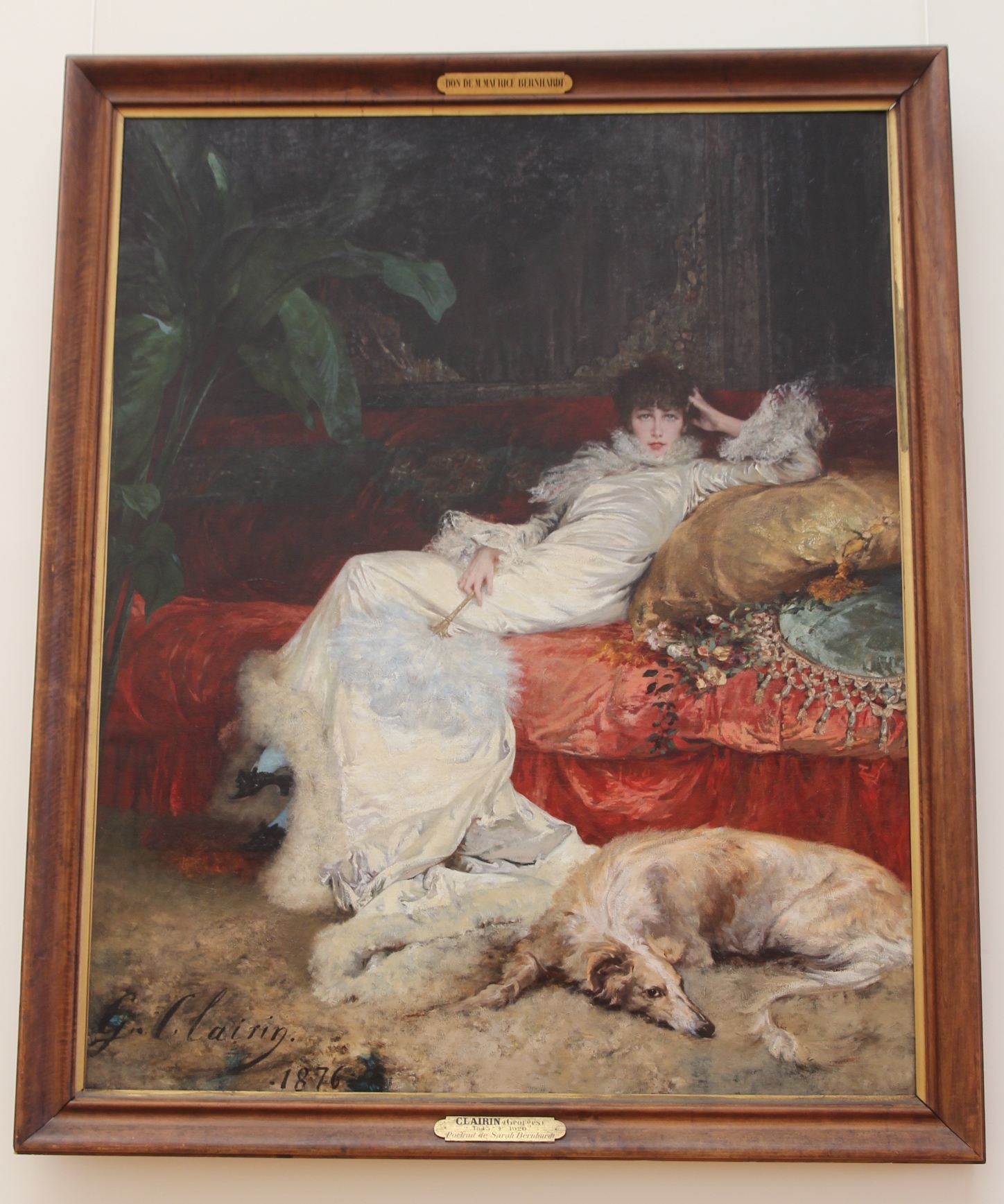
Sarah Bernhardt
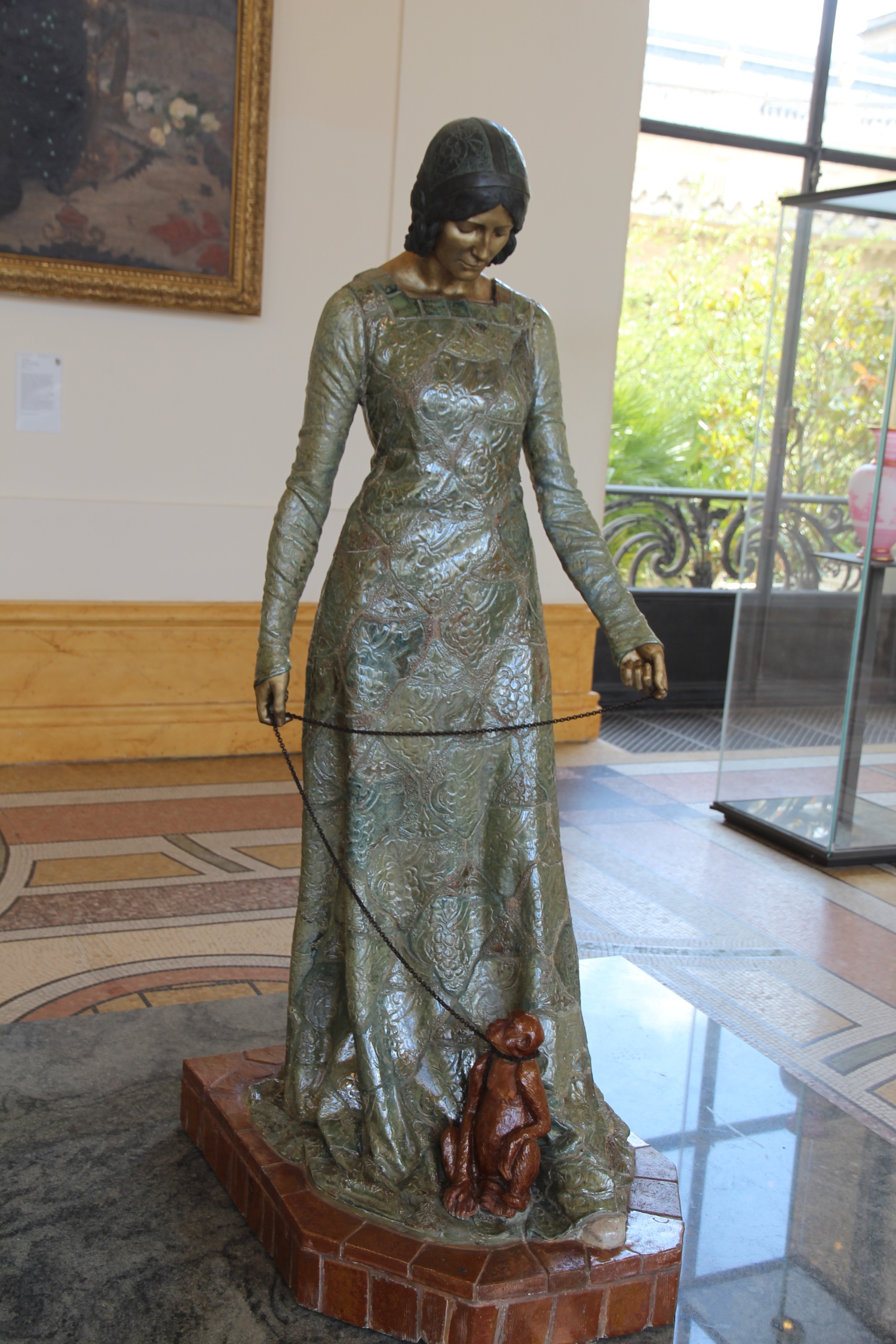
Woman with a monkey
I read about Bernhardt before writing this piece and was surprised to learn that she lost a leg to gangrene in 1915, resulting from a stage injury in 1905 that never healed. She despised using an artificial leg and often appeared on stage without one. Not sure how she managed to get around?
But I’ve digressed. The Petit Palais is well worth a visit. It’s not overcrowded, it’s well-lit and it has lovely pieces to see. Another big bonus—admission to the main exhibitions is free.
And if you’re wondering why I took a picture of a simple portrait of a baby with a dog (see below), it’s because most early European painters managed to make babies (especially Baby Jesus) look like little Al Capones minus the cigar. This one actually looks like a baby. Probably because the artist was the child’s father, so he knew what the kid looked like.
The other two works below are: Grimaces and wretchedness, The entertainers, by Fernand Pelez, 1888, and The bread carrier, by Jules Félix Coutan, 1882.
Speaking of bread, this is a nice recipe from my cooking blog—buttermilk bread loaf.


Where’s the Mona Lisa?
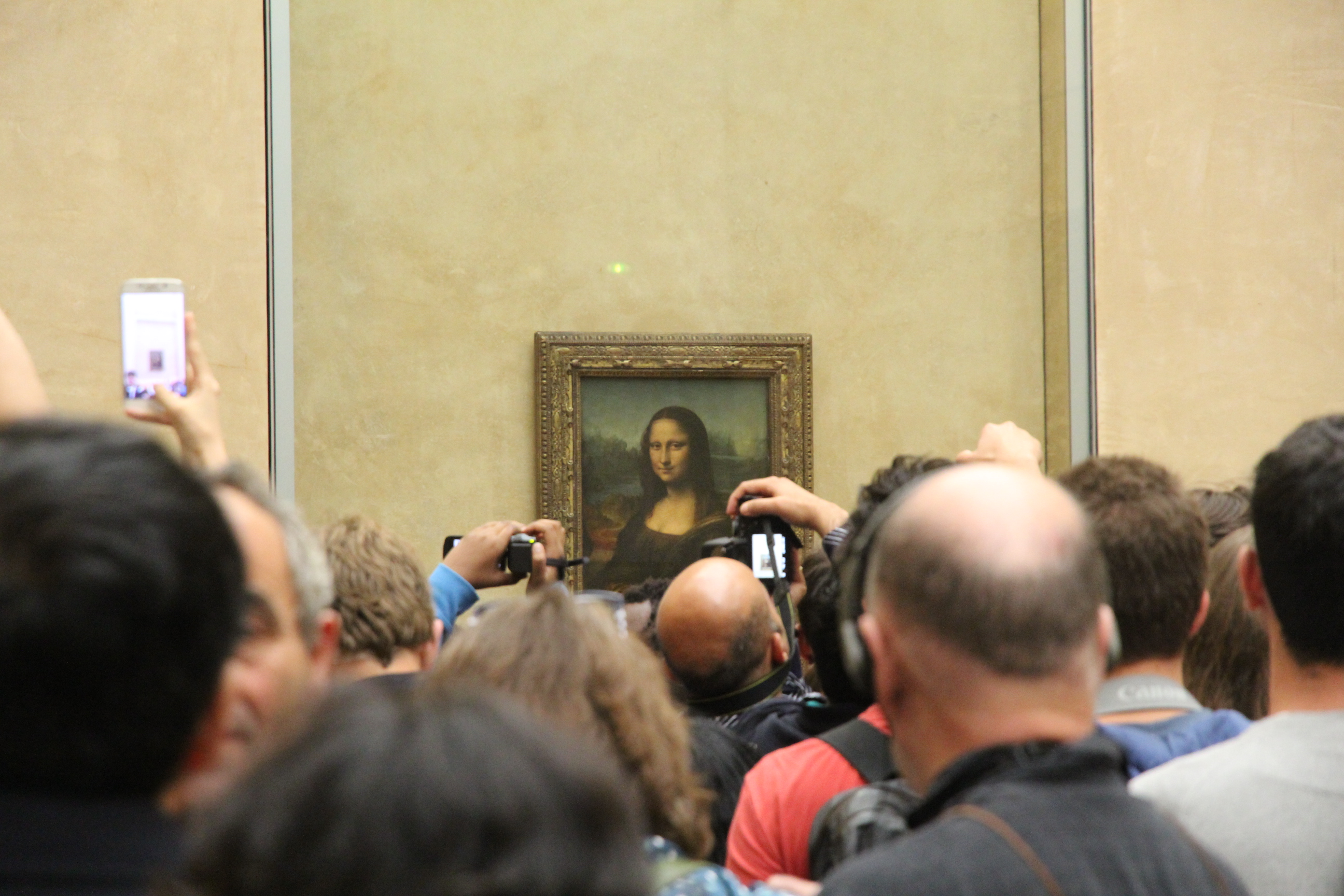
Oh there she is!
Just about every visitor to Paris will manage to squeeze in a visit to that famous art gallery–museum, the Louvre. In fact, it is the most visited museum in the world with about 15,000 guests per day. Poor John and I were a paltry two of them.
We joined the queue, which wasn’t too long, about 2:30pm because Poor John’s guidebook said admission was half-price after 3pm. You can imagine the ticket seller rolling her eyes when she laughed and said ‘that deal ended years ago’.
I checked his guidebook, purchased secondhand a couple of weeks ago in Australia—copyright 1994. Duh! So we agreed then that history might not have changed, but the particulars of open hours and admission prices probably have.

Plenty of visitors

Almost a stampede

You get a clear view of the ceilings
But as soon as you enter the museum itself you are confronted with the other 14,998 visitors who decided to come that day. And they all have cameras, tablets or mobile phones.
It’s a good thing I didn’t come expecting a close-up view of the museum’s two most popular exhibits—Mona Lisa and Venus de Milo. You can barely see them for all the arms holding cameras aloft. Luckily, I had a reasonable view of these gals about 12 years ago and an even better one in the 1970s. So if you want a good view now, take your stilts.

Venus de Milo still has her legs, but you wouldn’t know it
But there are plenty of other gems to see. I’ve been told that some people come in just to see the Mona Lisa and Venus de Milo and then leave. Woo-hoo! Good riddance.
So on to some of the other exhibits. The museum holds about 380,000 items, with about 35,000 on display at any one time. Works date from the extremely distant past to the 21st century, and include just about any kind of work you can think of.
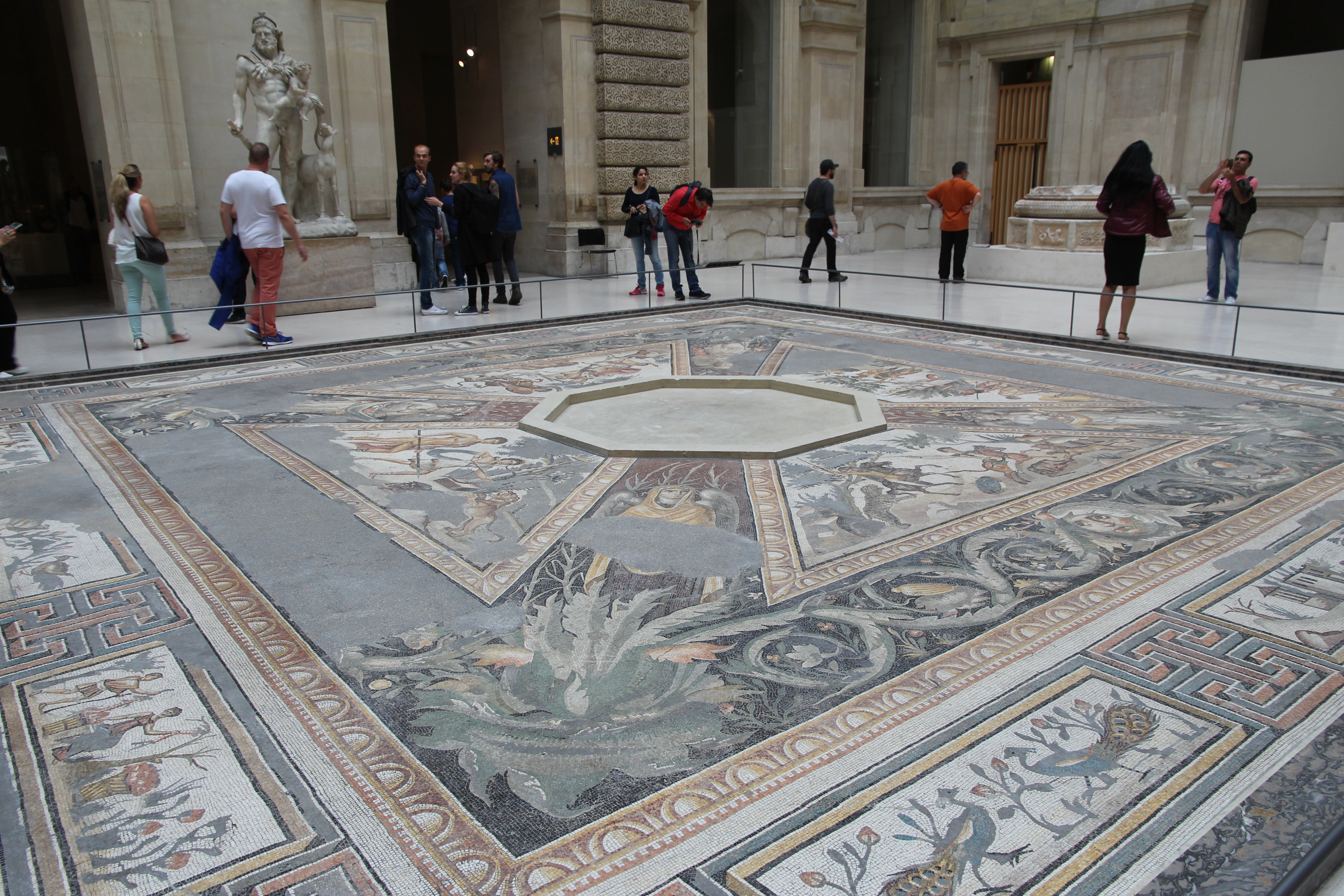
Mosaic of the Seasons


Poor John and I headed to the Mona Lisa and Venus de Milo first, just to say we’d tried, and then moved on to enjoy some other treats. Having lived in the Middle East for quite a few years, we lingered at some relevant works.
We also sought out the furniture displays that show how the Louvre (it used to be a palace) might have been furnished.
I didn’t take a lot of pictures. Too crowded to get many good shots of displays, and just crowded enough to get good shots of people. Lots of people. Don’t forget your stilts.
And if you’re tired and hungry after all this sightseeing, try a restorative French dish of salade niçoise on my cooking blog.


Louvre exterior

Louvre interior
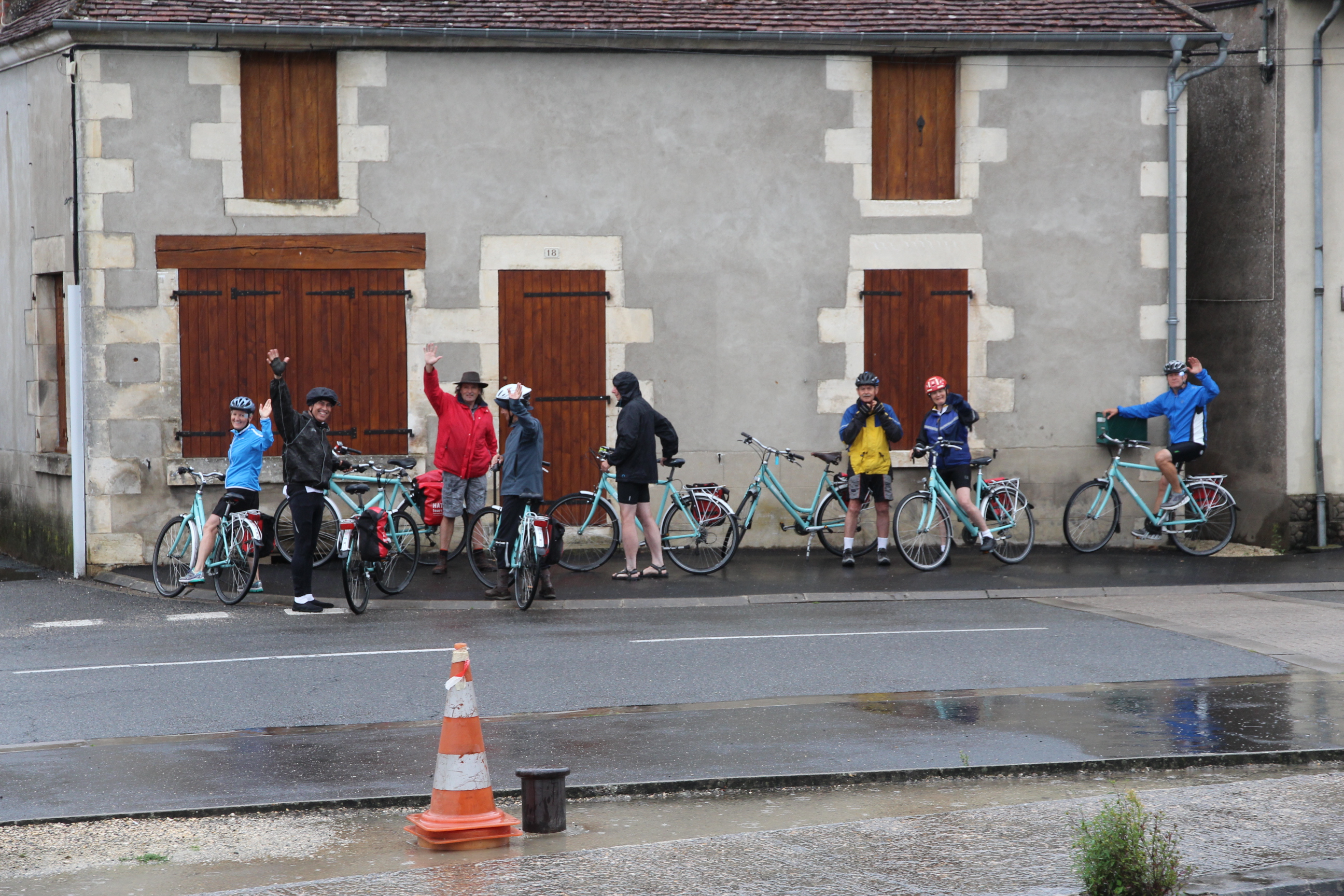
Riders ready to go. Our guide, Peter, is in red. Poor John is there too, just to Peter’s left.
It’s always interesting to note when a new word creeps into your vocabulary. This week’s word was undulating, but the vocabulary wasn’t mine.
Let me explain. When we decided to visit Libby and Daniel—the daughter and son-in-law who got married and moved to France earlier this year while we were in India—we figured we’d better add some side trips.
Our top choice was a bicycle–barge trip along the canals in the picturesque Loire Valley, south of Paris. While I assumed that a valley would be fairly flat, Poor John had me in training for a couple of months leading up to the trip. Several times a week, I’d pedal about 20 kilometres around the ups and downs (undulations) of the central and eastern sections of Lake Burley-Griffin.
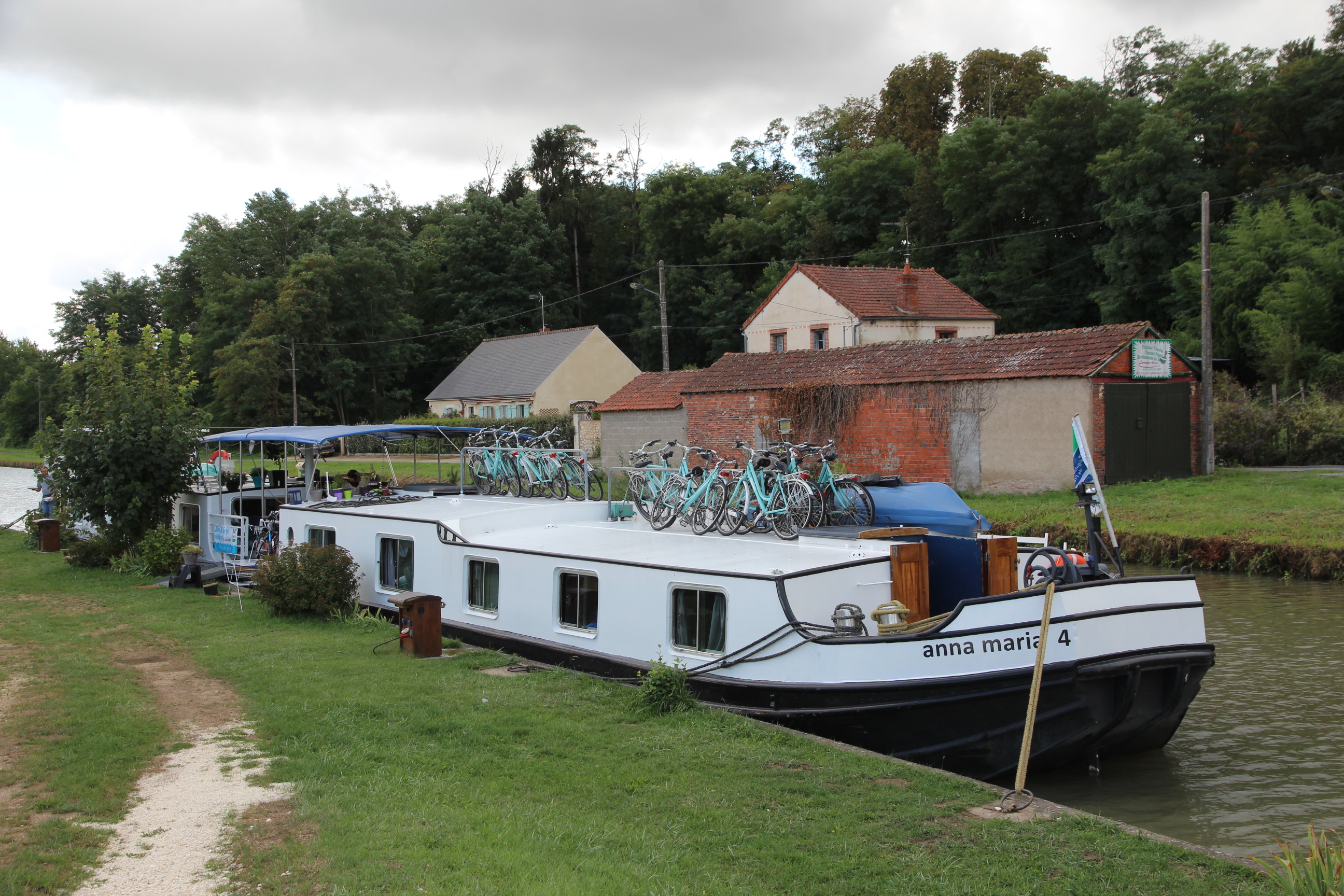
Our barge, the Anna Maria 4
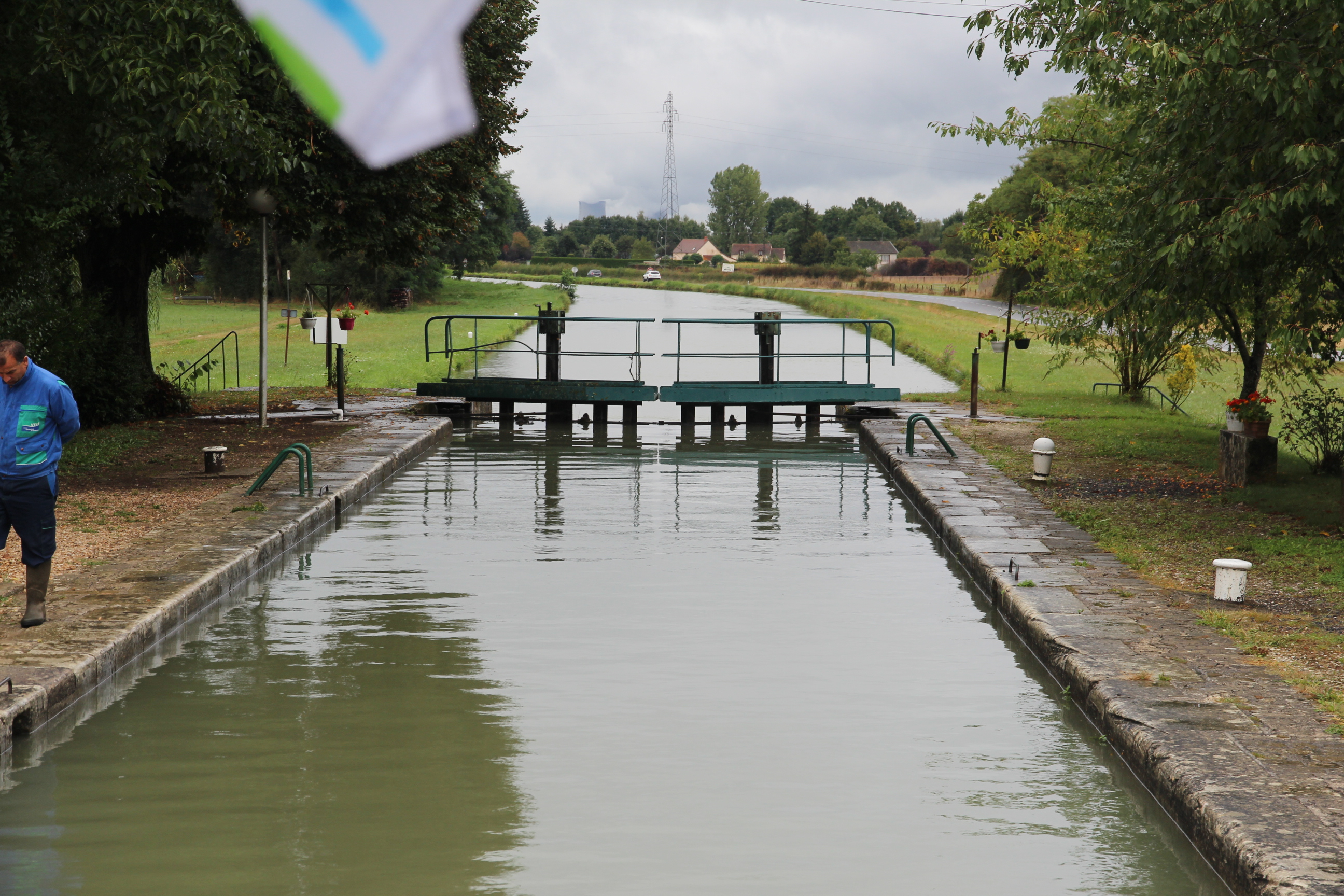
Entering a lock. You can’t really tell from the picture, but the water level in the canal beyond the lock is almost two metres lower
So by the time we joined 13 others—two more Australians, 10 Americans and a German—I figured I wouldn’t completely embarrass myself as we tackled the undulating terrain of the Loire Valley.
Now I’m going to be a bit smug here. Even though I didn’t make it to the top of Tiger’s Nest Monastery in Bhutan (only because I didn’t have enough time to do so without holding up the rest of the group), I managed six days and 250 kilometres of cycling in the Loire’s undulating hills.
So what’s all this business about undulating?
I grew up in Nebraska where hills ‘roll’. Then I moved to Australia where they undulate. I know and use both words, but I’d forgotten that undulating might be an odd word for our non-Aussie cyclists. It was totally odd—in fact, it was unfamiliar to all of them.
The conversations about ‘undulating versus rolling’ took me back to my first years in Australia when words I knew were replaced by similar words (or phrases) that I didn’t know. Complain became whinge, common became ubiquitous, aggravated became exacerbated (I knew both, but always used the former), and surprised became gobsmacked.
My vocabulary is so much richer for being in Australia, and now we’ve managed to pass a few new words on to more Americans, including undulating. Hope they aren’t too gobsmacked.
Oh, and the word undulating came up on the only day I didn’t ride a bike. It was raining on Tuesday and I had no wet weather gear (the forecast had been for a week of clear weather). Half of the group stayed on the barge to watch us go through the locks. We read, chatted and lolled around on the barge.
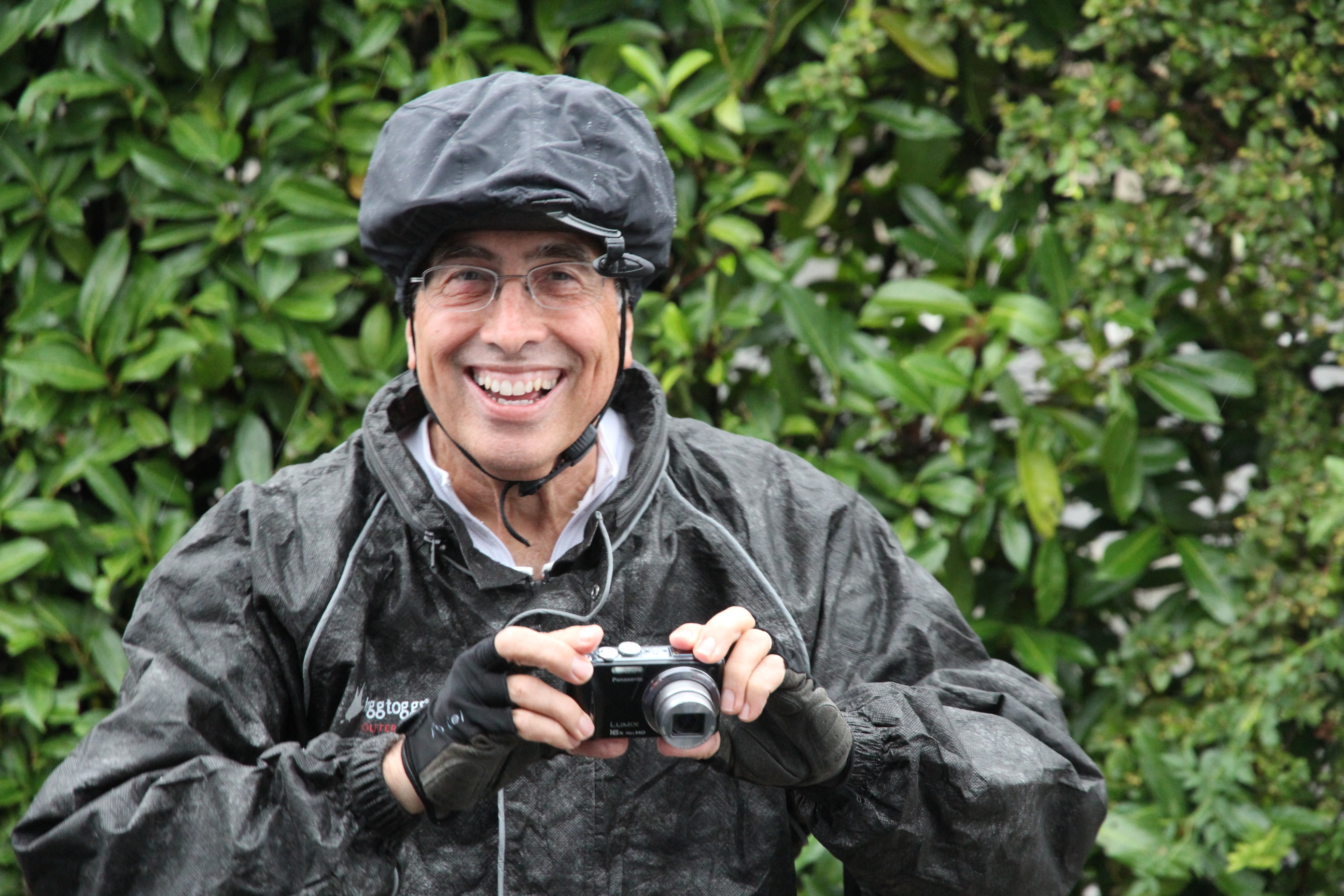
Chuck—all decked out in Dave’s wet weather gear.
For the cyclists, that day dished out plenty of rain, a longish hill at the start and many undulating hills at the end, which is when the word arose. Many, including Poor John, had brought their waterproof clothing. Chuck hadn’t, but borrowed Dave’s, and did just fine.
Can’t say I’m sorry I missed any of it, but very pleased with myself that I managed all the other days of undulation. After dinner on the wet day, we had to explain that undulating doesn’t apply to body fat, just terrain or waves.
Stay tuned for more about the bicycle rides and stops.
And if you’re having a rainy day, check out the recipes on my cooking blog. I can especially recommended the chocolate chip cookies, which we’d call biscuits in Australia.
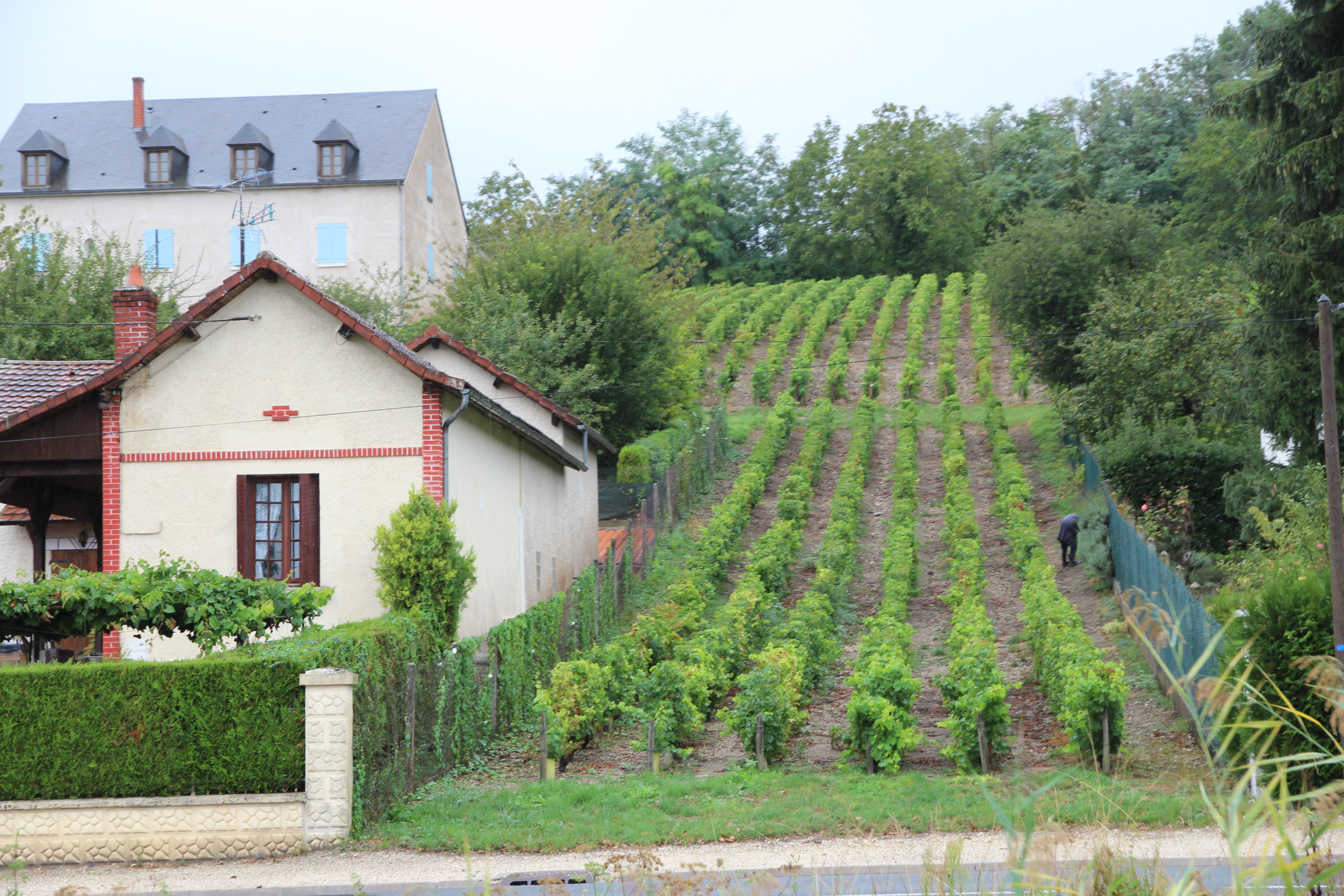
Proof of the undulations in the Loire Valley
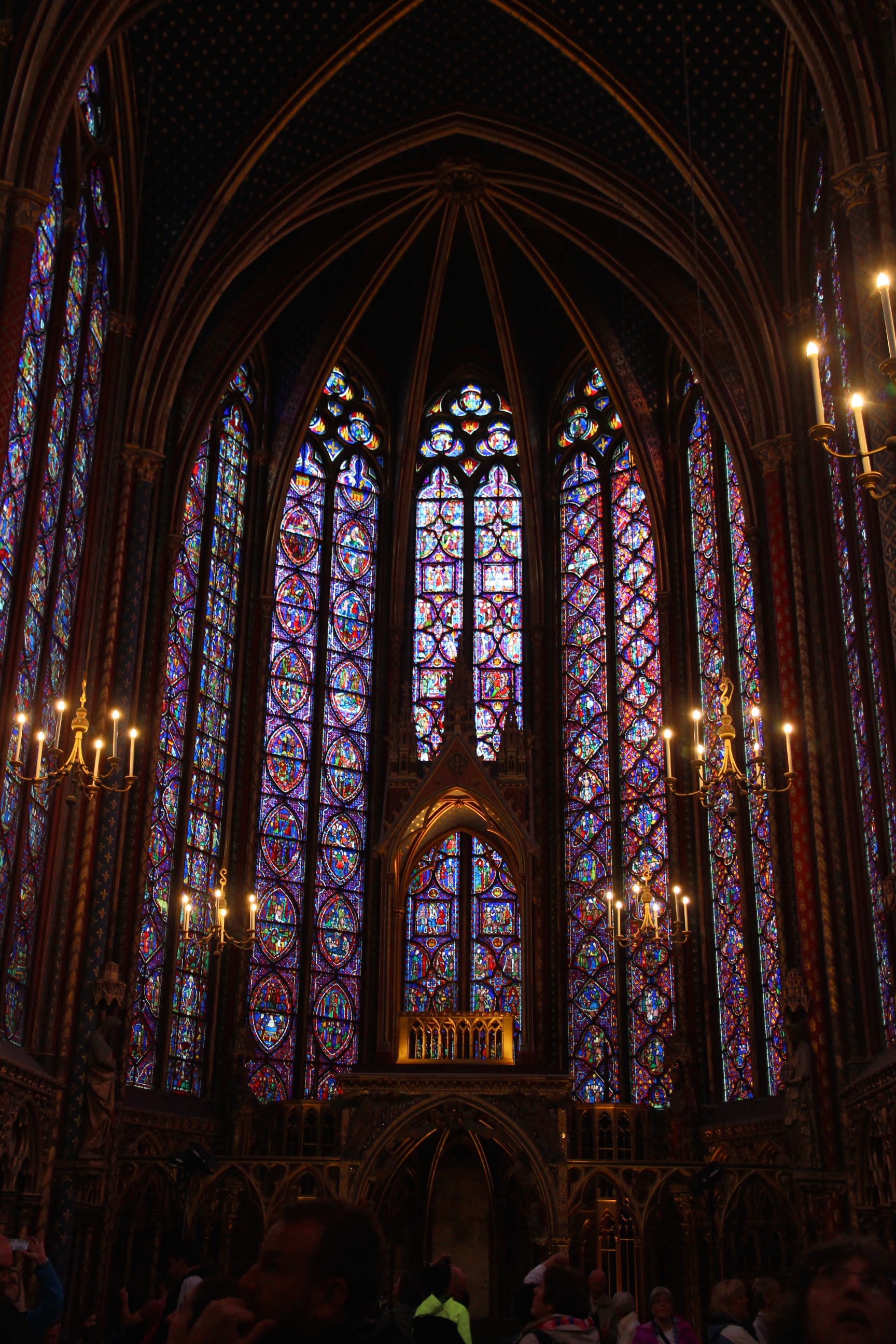
The windows at one end of the second storey of Sainte-Chapelle
After Poor John managed to escape trying on some stunning men’s clothing in an over-the-top Parisienne shop, we found ourselves in the even more stunning Sainte-Chapelle, a medieval Gothic chapel on the Ile de la Cité in the heart of Paris.
Hailed as one of the greatest architectural masterpieces of the Western world, this chapel was commissioned in the 1240s by King Louis IX of France to house his collection of important Passion relics, including what was believed to be Christ’s Crown of Thorns and fragments of the True Cross.
The story goes that the king bought the relics from Baldwin II, the Emperor of Constantinople, for almost three times as much as it cost to build Sainte-Chapelle.

Sainte-Chapelle downstairs


While we didn’t see any of these pricey relics, we were gobsmacked by the interior decoration of this incredible building. People of the Middle Ages were too, and referred it as the ‘gateway to heaven’.
The ground floor is a somewhat sombre introduction to the chapel. It was set aside for use by servants and lower court officials. But climb the narrow spiral staircase and you come to the magnificent upper floor where the royal family and its courtiers worshipped.
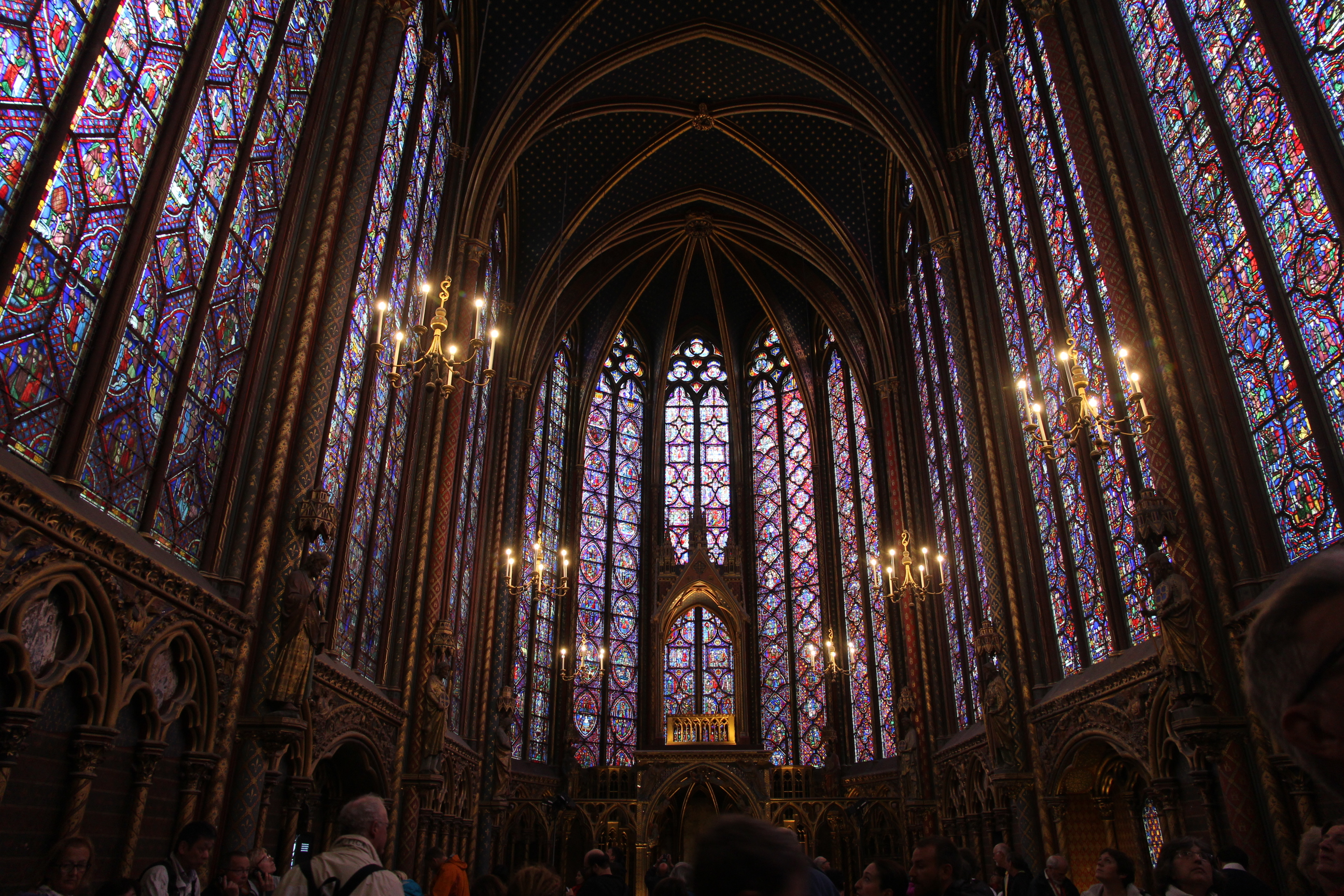
One of the world’s largest collections of stained glass windows
Here is one of the largest collections of 13th century stained glass of anywhere in the world. There are 15 dazzling windows, separated by slender columns soaring almost 15 metres to a star-studded ceiling.
The windows portray more than 1000 Biblical scenes. Starting from the left, near the entrance, and going clockwise, you can trace the scriptures from Genesis through to the Crucifixion and the Apocalypse. There is also a large Rose window at one end of the room.
The building was badly damaged during the French Revolution and then used to store flour, but renovations have been ongoing since the 1900s.
The Sainte-Chapelle has been a national historic monument since 1862. Concerts of classic music are now held there regularly to take advantage of the building’s superb acoustics.
And if the mention of flour above has made you hungry, check out this Middle Eastern bread recipe on my cooking blog.

Base of column between windows
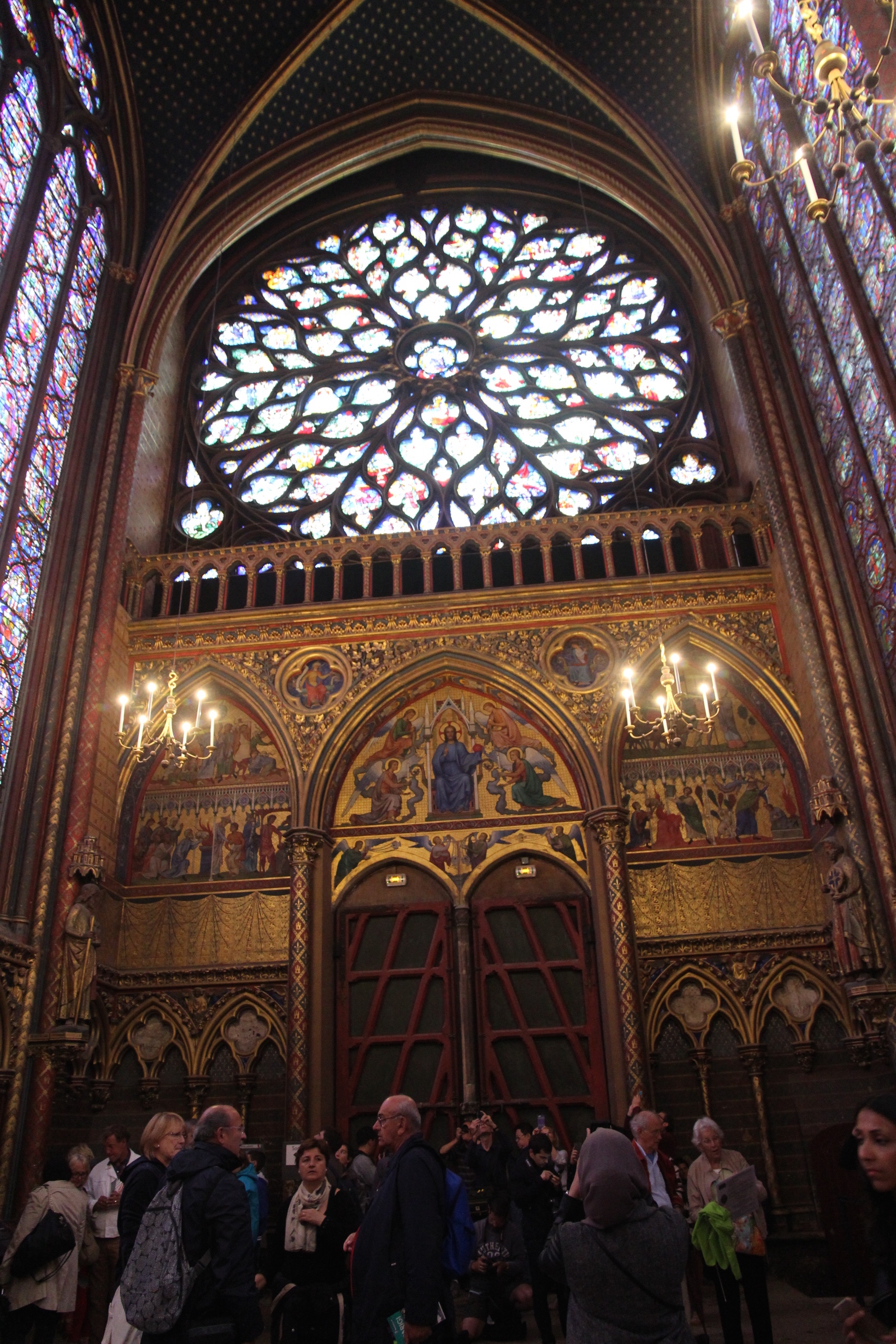
Rose window


Outfits galore in Paris
We’ve been in Paris for a few days and Poor John has quickly adopted the habit of devouring a couple of baguettes (slathered with cheese, pâté or other spreads) every day. He’s even volunteered to be first out the door in the morning to go on the day’s initial bread-buying expedition.
But I’m making no headway at all getting him out of his camping clothes and into something more fashionable. Just yesterday, we passed a shop specialising in elaborate men’s garments. The display windows were filled with temptations, but I couldn’t even get him to go in.
So what do you think?
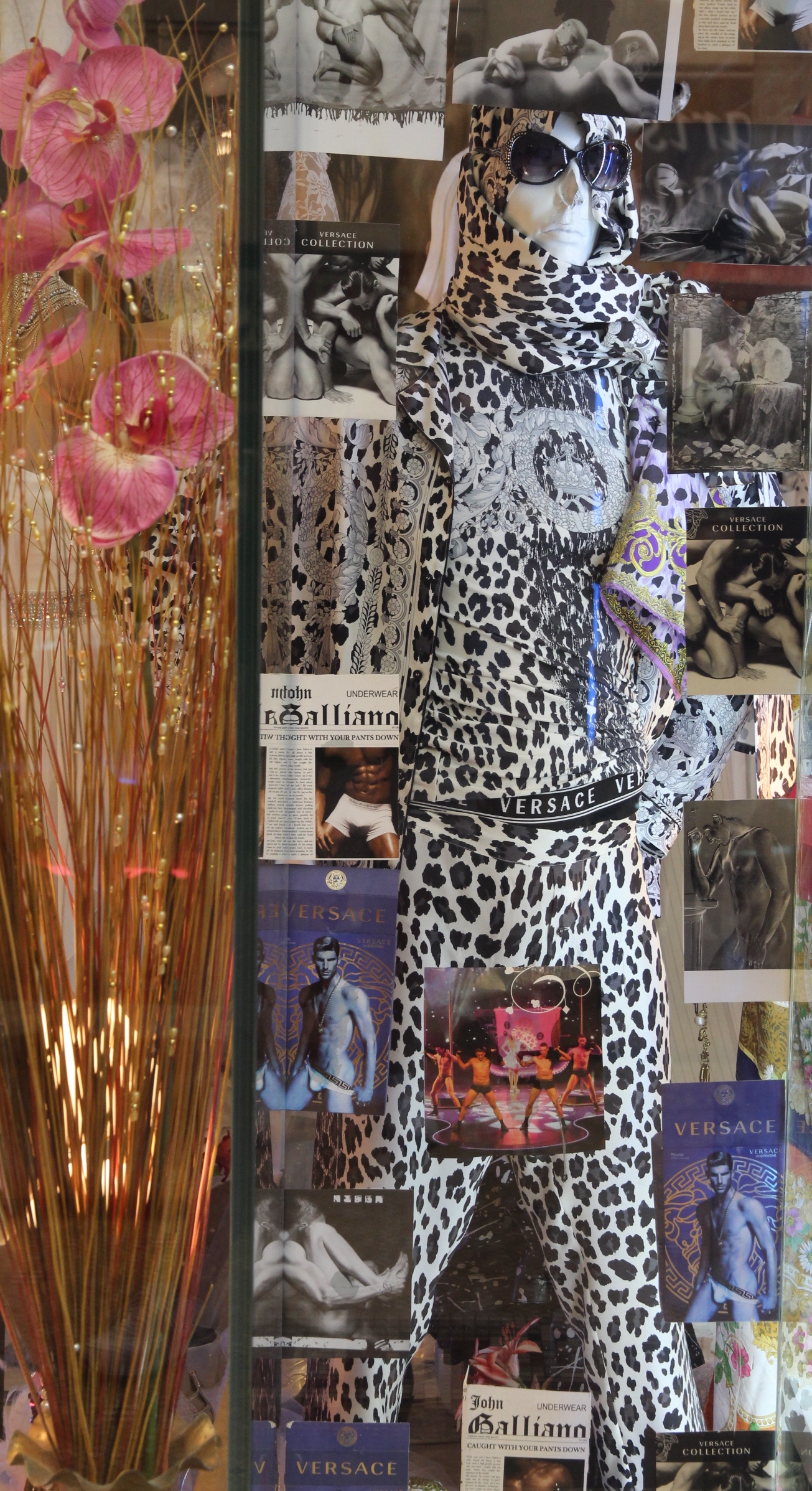
Same shop, different display window

Bones and skulls artistically arranged
If you follow this blog, you’ll know that we usually travel to far-flung places. But for this couple of months we’ve made an exception—we’re visiting Libby and Daniel, the daughter and son-in-law who got married in February and moved to France in March, while we were in India. You can read about that here.
We arrived in Paris four days before Libby and Daniel returned from a two-week hiking holiday in the Alps, but we weren’t concerned. We know how to keep ourselves busy, plus we chose to arrive early on purpose so we could recover from jetlag before joining a bike–barge tour in the Loire Valley (more about that soon).
So after we collected keys to their flat, washed off the grime from two long flights and changed into fresh clothes, we headed out to explore some of the places Libby recommended on the lists and maps left for us on her kitchen table.
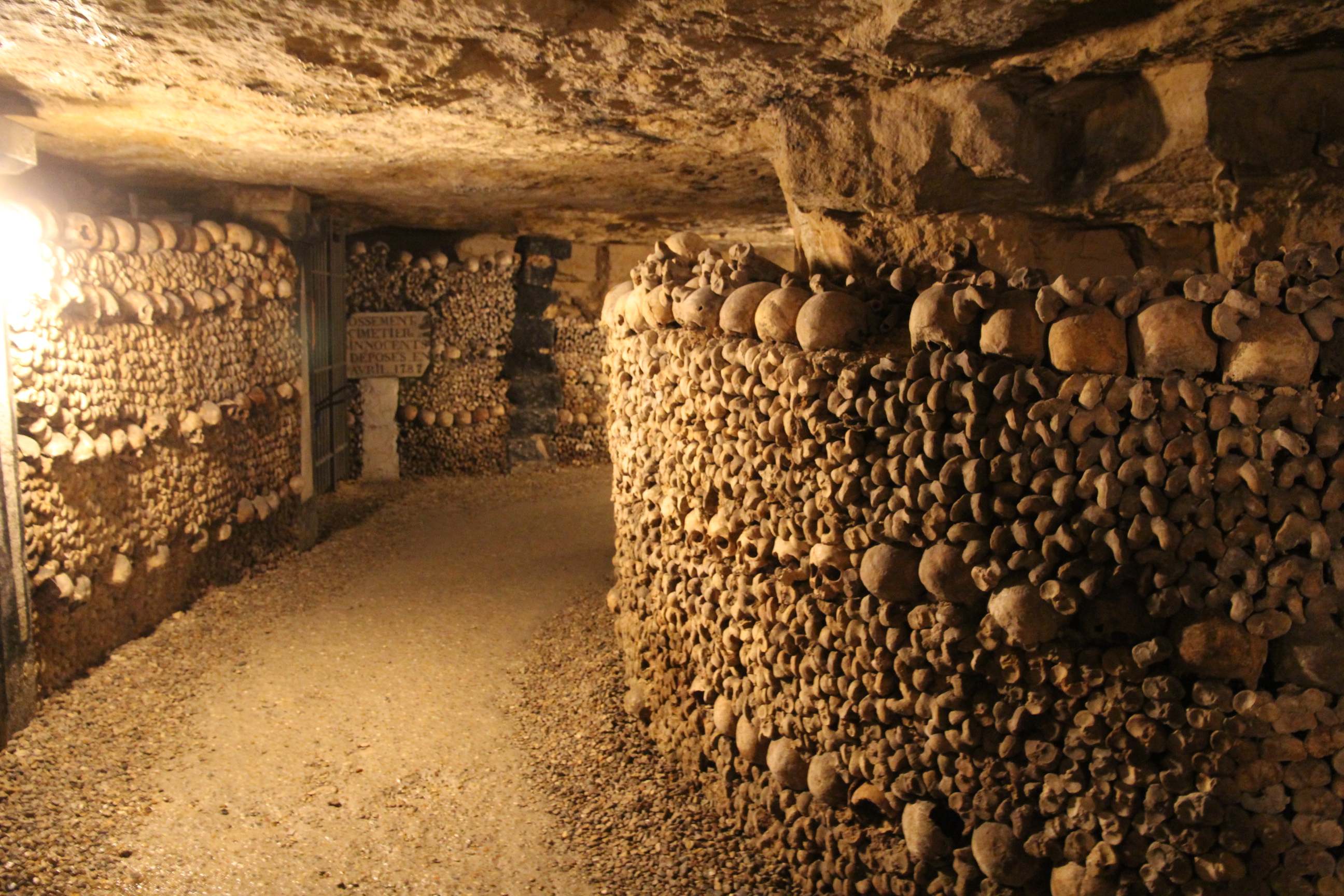
Entering the ossuary in the Paris catacombs
While Paris is often referred to as the City of Light, we decided to start with its alter-ego—its dark underside—the catacombs.
It was a convenient choice and a place that Poor John and I had never before visited. Lib’s note said the entrance was a short walk from their place and that the tour would take about three hours, including queuing (standing in line).
We figured that our arrival in the queue at 1:30pm was just about perfect. Little did we know that the catacombs close for a couple of hours at lunchtime, so we were standing in a queue that wasn’t going to move for at least 30 minutes.
Luckily it was sunny and warm—a nice change from the wintry days we’d left behind in Australia. There was plenty of people-watching, and it gave us of time to study the guidebook we’d brought.

In to the catacombs
So what about the catacombs?
Let’s start with the miles and miles of tunnels that snake beneath the streets of Paris. Much of the city is built from limestone and, starting in the 13th century, much of that rock was quarried in Paris itself, leaving a vast network of empty tunnels.
These tunnels were forgotten about until the mid-18th century, when some of them caved-in causing widespread panic among the people of Paris.
This mayhem was further aggravated by the fact that construction and collapsing continued throughout the city, often disturbing the graves of those ‘resting in peace’ in the many cemeteries scattered across the city. The residents of The Halles neighbourhood were the first to complain about the smell of rotting flesh. Even the perfume stores said they couldn’t compete with the stench.

A record of where the bones and skulls came from
In 1763, Louis XV banned burials in the city, but the churches took no notice and the problem festered, literally. Fourteen years later, King Louis XVI created a government department tasked with preventing underground risks and monitoring and shoring up the tunnels to ensure the safety of property and people. Exploratory tunnels were dug under the streets. Some parts were filled in and other were reinforced with thick support walls and pillars.
Finally in 1786 they began to shift skeletons from cemeteries to the vacant and reinforced tunnels. It took 12 years to move all the bones from 150 monastery, church and convent graveyards. It is estimated that six to seven million skeleton parts now lie in the catacombs.
During the French Revolution and until 1859, the dead were often buried directly into the catacombs ossuaries. Two of the famous/infamous characters from history who call the catacombs their final resting place are Jean-Paul Marat, one of the Revolution’s most radical voices, and Maximilien de Robespierre, an influential figure during the Revolution and the subsequent Reign of Terror.
While we didn’t see the resting place for either of these historical figures, we saw thousands of others. Bones are grouped by the cemetery they came from and the date they were moved.
About a mile’s worth of bones are currently open to the public. These are neatly, and often artistically, arranged with skulls and leg and arm bones being used to create walls behind which, we assumed, are the remaining smaller bones.

A sculpture in the Paris catacombs

More sculpture in the Paris catacombs
We also saw the handiwork of Décure, an ancient quarry inspector. HIs subterranean sculptures were made long before the tunnels became a gigantic graveyard. They depict the Port-Mahon fortress in the main city of Minorca in the Balearic Islands. Décure sculpted the models from memory after being held prisoner there by the English during the Seven Years War. Décure was later killed by a cave-in while he was trying to dig an access stairway way to the tunnels.
It took us about 45 minutes to wander through the catacombs, so with the two hours we stood in the queue, the prediction of needing three hours was just about right. That said, we noticed the queue was quite short about 2:30pm—at least half the length from when we joined an hour earlier.
Oh, and Libby and Daniel are pretty sure some of the catacombs run under their flat. Here’s hoping they don’t fall through.
And if you need a refreshing drink after this subterranean visit, try the limoncello cocktail that Libby and Daniel made for my cooking blog.
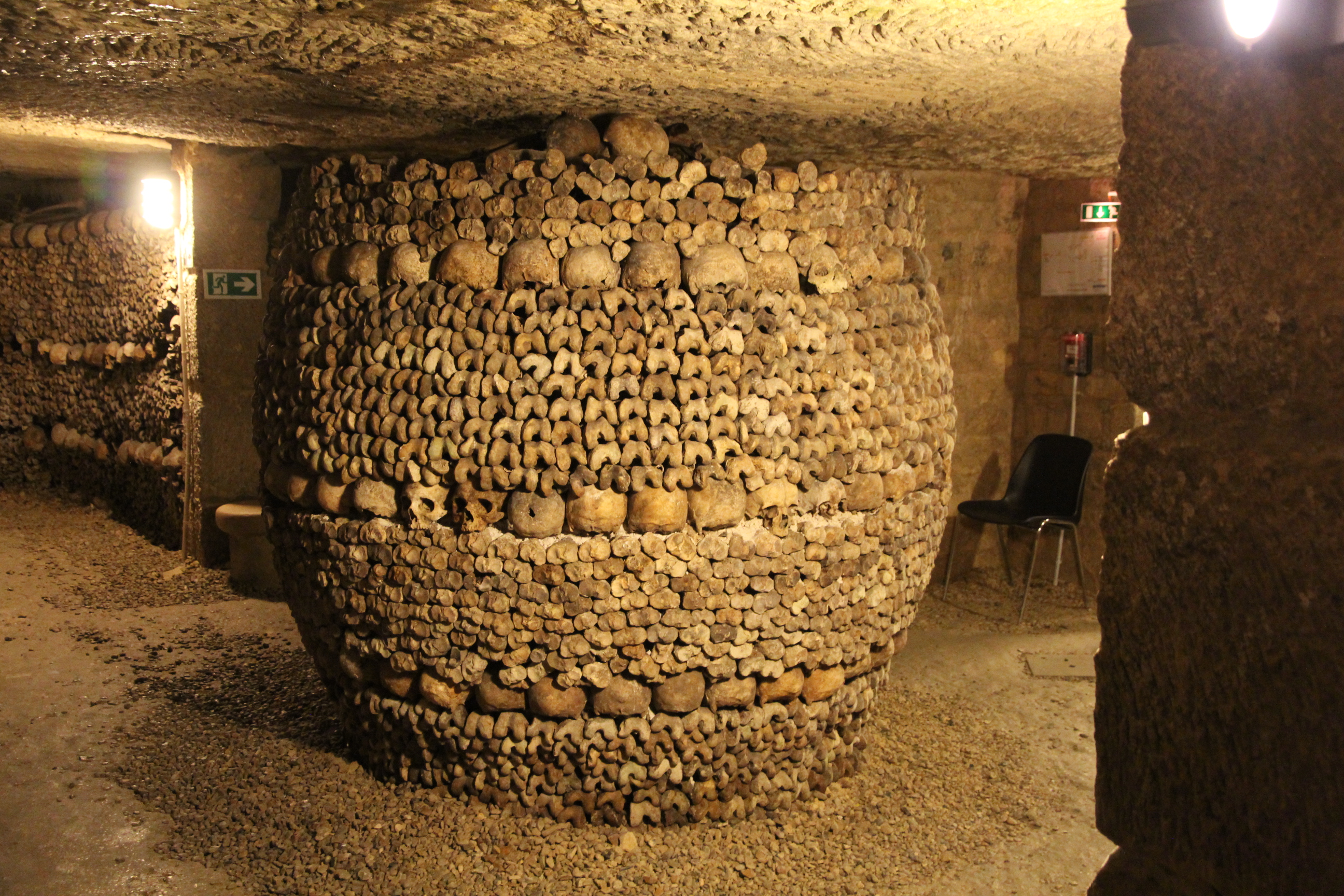
A round collection of bones and skulls

A close-up of the fine weaving by Dechen

Back of the weaving
Earlier this week, I showed off the elaborate and colourful traditional clothes worn by the people when they attend a festival Bhutan.
Little did I suspect that within a week of enjoying the sights and sounds of the Paro Festival, I would be donning a Bhutanese outfit in the home of the woman who made it.
A little background first. We camped our way across Bhutan. There were a few nights in hotel, but almost three-quarters of our 15-day stay was in tents. I wouldn’t necessarily recommend that much time in tents there, but that’s another story.
For now, I’m talking about fabric, weavers, traditional clothes and a very special family in rural Bhutan.
We met the Lhadeen family—note: Bhutanese don’t really have surnames, but at least two family members use Lhaden/Lhadeen in their names—when we camped on a hill near their dairy farm in east central Bhutan. Their house is just down the hill from the small village of Sengor and they were returning home from a community meeting.
There was mum, Dechen, and daughters, Carma and Chokey. The three women were in dressy versions of the day-to-day Bhutanese outfit. A group of sassy schoolchildren came up to us just before them, doing the silly antics that kids do to get your attention. Two were especially bold and entertaining, and they turned out to be Chokey’s kids.

Chokey’s two kids on the left
Carma has quite good English, plus our Bhutanese guide, Tek, was there for extra translations. With warm hospitality, the family—mum was especially insistent—invited us for tea at 5pm.
I always feel a little sheepish about accepting such invitations. I don’t want to be thought of as the foreigner who takes advantage of generous hospitality from people who might not be able to afford it.
But the invitation was so genuine and heartfelt that we willingly accepted. Plus it was a wonderful opportunity to see inside a rural home.
Poor John didn’t come—he’d already taken himself off on a long walk. So Tek, Anand, Deepti and I set off just before 5. We shed our shoes at the bottom of the entry steps and were welcomed into the warmth—and I emphasise warmth because a cosy fire was going in the kitchen—of a Bhutanese farmhouse.

The farmhouse kitchen was like a family room with the wood stove in the middle
Tea and simple treats—popcorn is a common snack in Bhutan—were served and we exchanged mini life stories.
You already know a lot of mine, so here’s a bit of theirs. Mum and dad have three children—two daughters and a son. Chokey is married with children, and Carma and the son—we didn’t get a chance to meet him—are both single.


We were treated to a show-and-tell of the looms and some pieces of wonderful textiles (kiras) the women in the family had woven. Kiras are rectangular, about two metres long, and are the main part of a woman’s traditional dress in Bhutan.
And then came the invitation to try on an entire Bhutanese outfit. How could I resist? The colours and patterns were breathtaking, and the work was flawless. Oh yes, why not.


Carma and Chokey made short work of getting me trussed up. If you look at the photos carefully you might be able to figure out how it all comes together. I’m still pondering how it all worked. There are no buttons, no zips, no darts—just two sets of clips that go over the shoulder and anchor the fabric, front and back.
Finally there’s a fancy belt/cumberbund and a shiny jacket over the top.
It was the dressiest I’d ever looked on an overland trip, and I have to say I scrubbed up rather well.


Deepti was next, and we had fun playing dress-up like kids.
At the family’s insistence, we moved into the shrine room for lots of pictures. The family commissioned someone to build and decorate the shrine for prayer and contemplation. The same painter added lovely artwork to the right of the shrine and to other rooms. You might notice some of the work in the kitchen pictures.
Then came the question from Dechen. Through Carma and Tek, she asked if I’d like to buy the kira I was wearing. The dairy farm was profitable, but not so much so that that they could put their younger children in higher education. So would I consider buying that piece for 20,000 ngultrum (their currency) or about US$330 at the time.
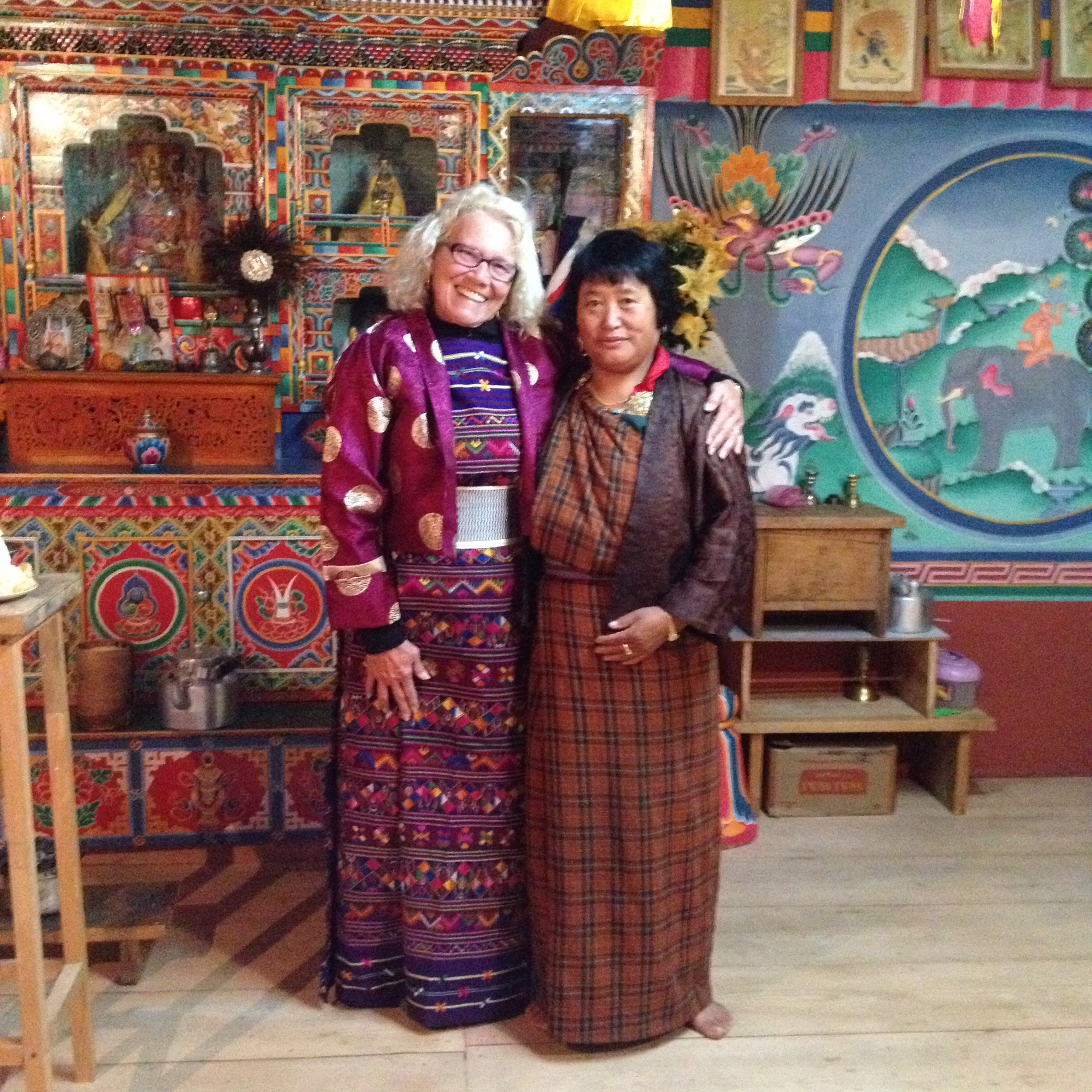
All dolled up and with Dechen in front of the family shrine
I gulped. It’s a lot of money for something I’d probably never use. That said, I knew the price was more than fair—I’d been in plenty of souvenir shops where prices were way through the roof. I saw a chipped and not-at-all special teapot (no it wasn’t an antique) that had a price tag of 10,000 ngultrum.
The price for this weaving—while high on the face of it—was fair to her and to me. The work was exquisite, and Carma and Chokey explained that their mum wasn’t weaving anymore because her eyesight was no longer good enough for the task.
Of course, this made it a one-of-a-kind and never-to-be-repeated item.
But I stalled. It’s not like I needed an elaborate hand woven piece of fabric. It’s really lovely, but it’s a lot of money, I said. I’ll have to ask my husband if he thinks it’s okay. Yep, I used Poor John as an excuse to think things over.

Deepti and Anand with Chokey and Carma. They thought Anand was like a giant
So we made arrangements to return at 9 the next morning for a final decision.
That evening, Poor John and I discussed the matter at length. We both figured Dechen might get 10,000–15,000 ngultrum for the piece in her local market or even from a souvenir shop. We also figured we’d pay about 30,000 to 40,000 for something like it if we were to buy from some souvenir shop.
But do you buy something you don’t need—that you don’t need at all? Finally, we came to a decision we could both live with.
Next morning was rather frightening. We arrived at the farmhouse to learn that Dechen was having heart palpitations. I suspected it was nerves, but you never know. We offered to take her with us to the next large town so she could see a doctor. That was rejected. She couldn’t possibly go without first saying prayers and giving offerings at the family shrine.

A magnificent shrine in the family home
The more pressing and all-important question was would I buy the piece?
The answer, of course, was Yes. And do you know why?
Dechen had me when she said she wanted the money to provide more education for one of her children.
Poor John and I decided to treat the purchase as a scholarship. You don’t get anything for providing a scholarship, except the satisfaction that a young person might go further in the world that they would have otherwise.
My only regret is that the ‘scholarship’ won’t stretch to allowing both Carma and her brother to pursue more education. At this stage, only her brother is studying, and Carma is now working in a town away from home. She pops up on Facebook chat every now and then to say hello. I hope her chance to study comes soon.
So if you get to Bhutan and then to Sengor, try to find the Lhaden household and buy another piece of Dechen’s weaving. Or maybe a piece by Chokey or Carma. Believe me, your money will go to a worthwhile cause. Oh, and my purchase of the kira put an immediate stop to Dechen’s heart palpitations. Whew!
Food
And if you’re feeling a bit peckish (Aussie slang for hungry), check out my cooking blog for a recipe on cucumber and salmon bites.

Dechen holding the ‘scholarship’
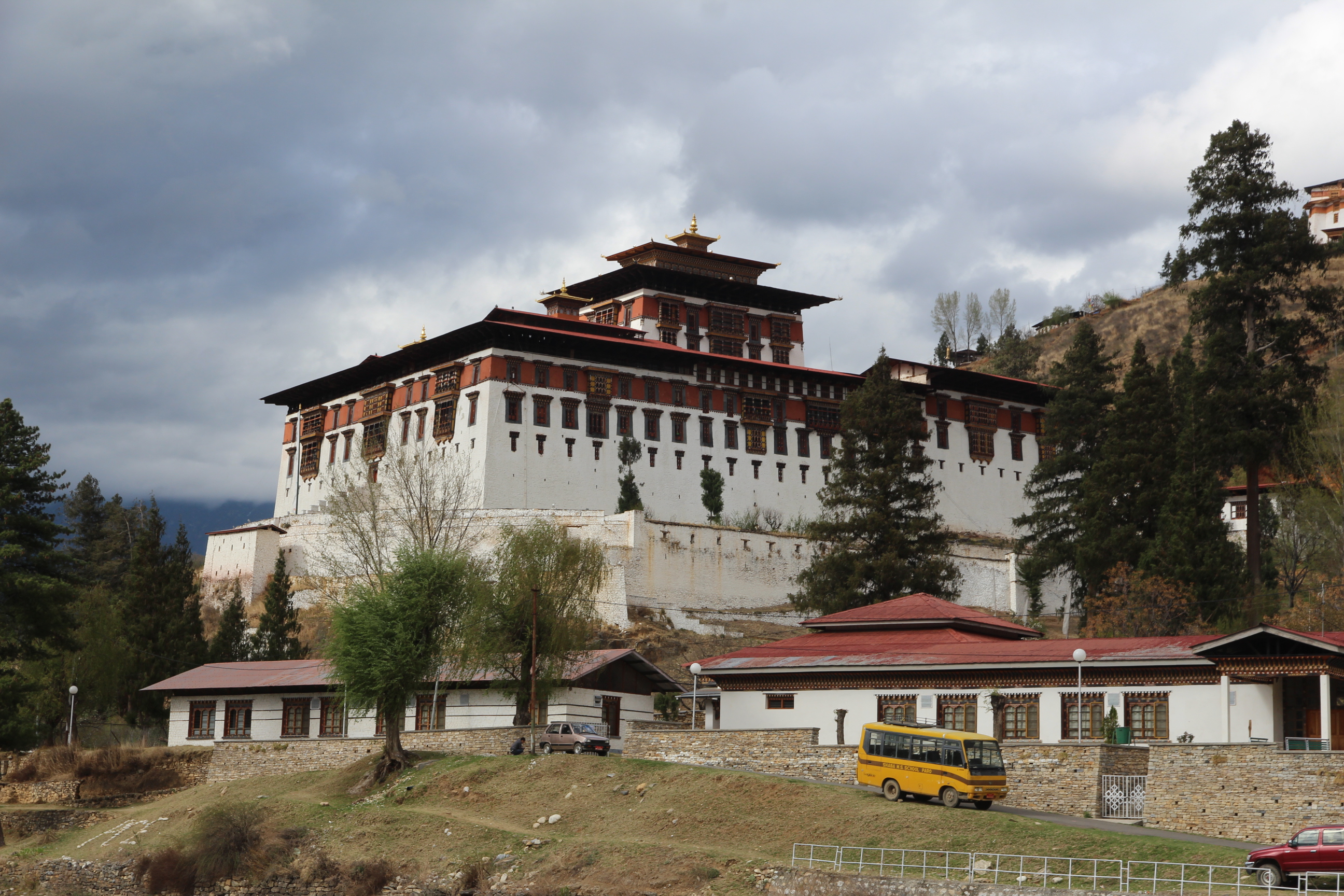
Rinpung Dzong, location of the Paro Fesitval


It pays to know something about the events calendar of any place you plan to visit. When we asked about an itinerary for Bhutan—you have to visit the country through one of their approved tour agencies—the first plan had us travelling east to west.
We didn’t really care which direction we travelled, but it also had us arriving in Paro about six days after their annual mega-important religious festival ended.
How about we go the other direction? I suggested.
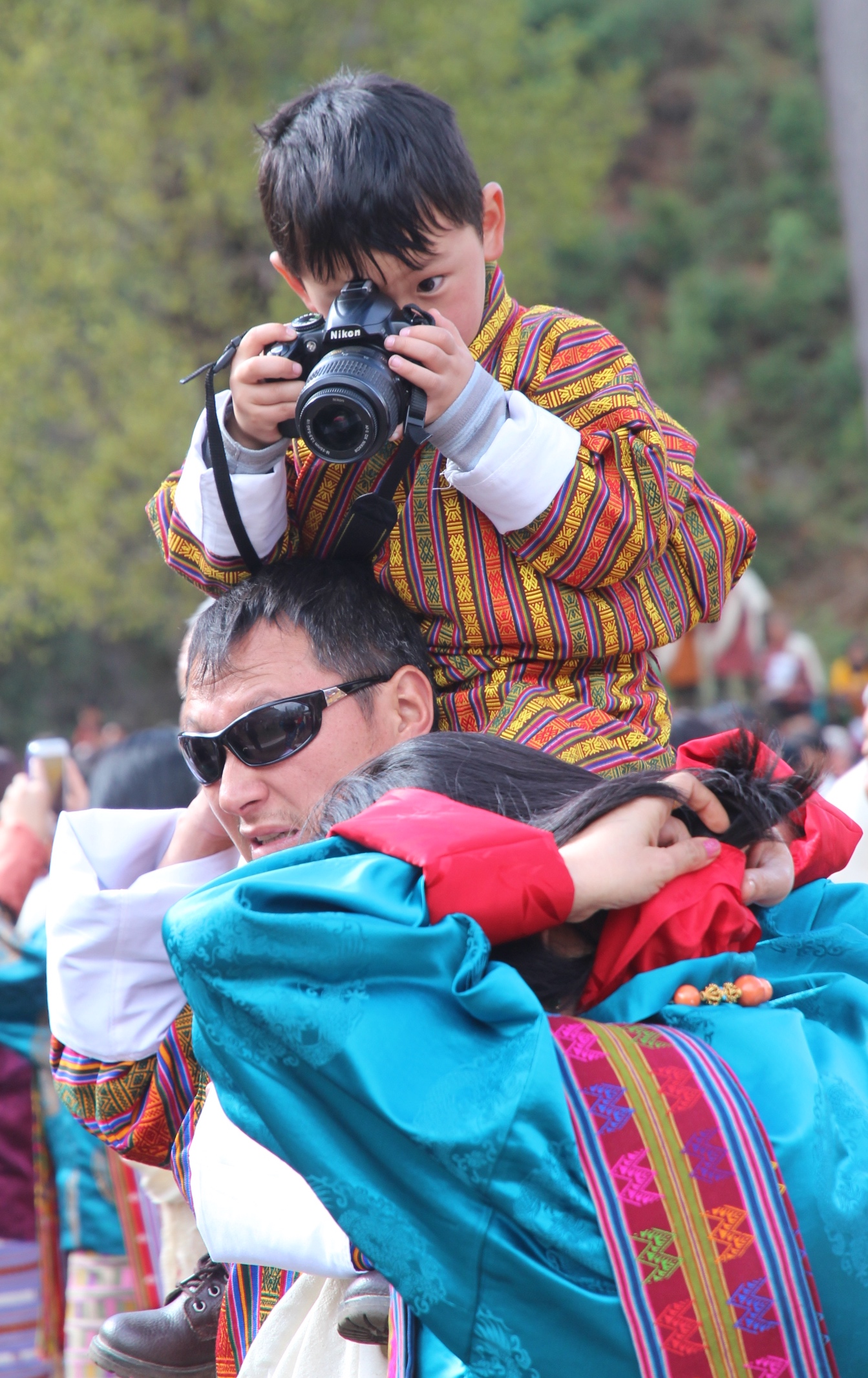
Et voila! We entered Bhutan from the west and ended up in Paro for the last two days of this incredible festival that honours Padmasambhava, also known as Guru Rinpoche, the saint who brought Buddhism to Bhutan.
So what made the Paro Festival so special for us?
For starters, I managed to hike up the bloody great hill to the top level of the Rinpung Dzong (fortress) where the main festival activities were playing out. You’d think it would have prepared me for the next day’s long haul up to Tiger’s Nest Monastery. It didn’t, but I digress.
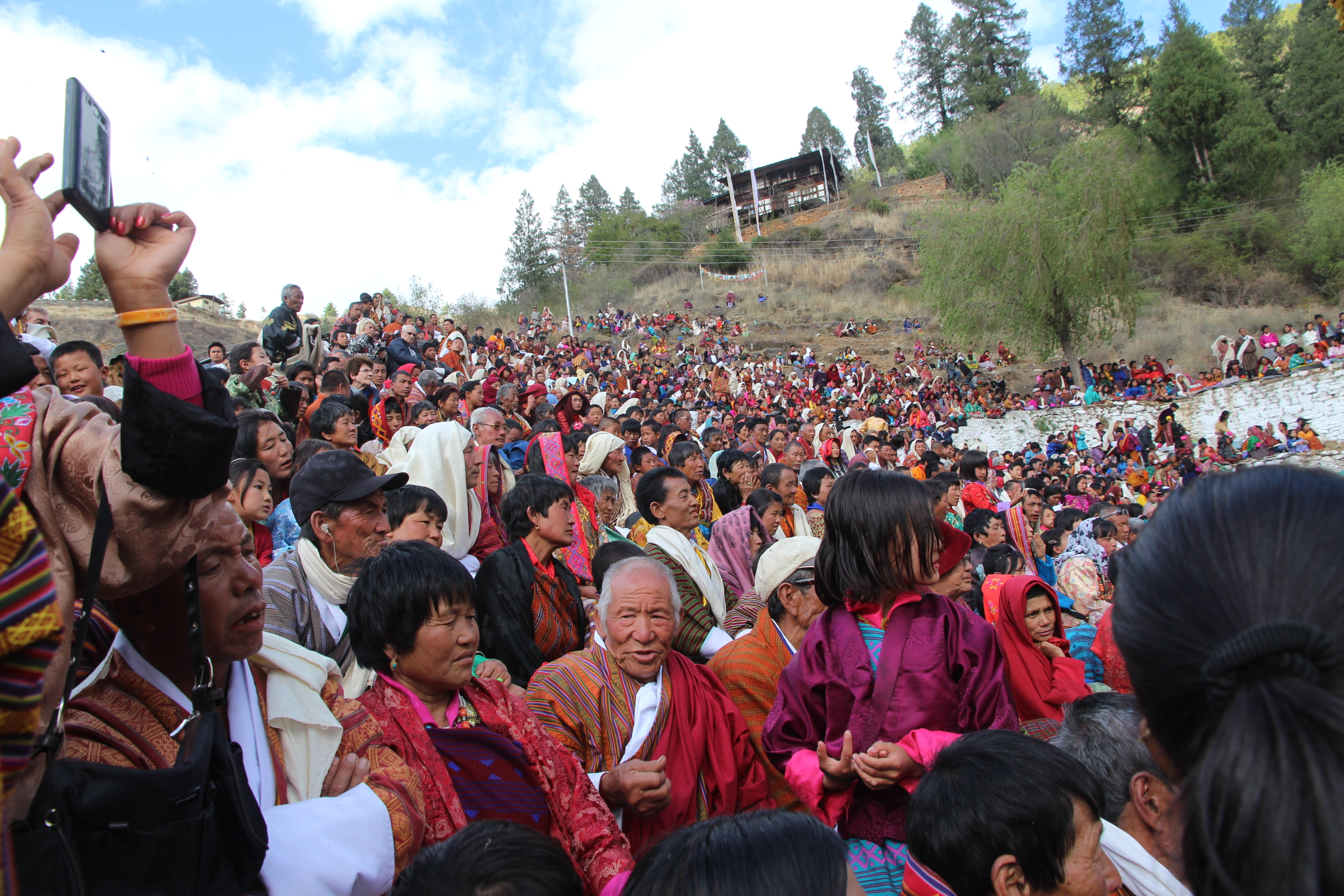
Thousands attend the Paro Festival
Once I made it to the top of the fortress, also known as a dzong (as usual Poor John was miles ahead of me), I was gobsmacked by the fashion, performances and sheer number of people. Literally thousands of people attend each year.
So I’ll start with the fashion.
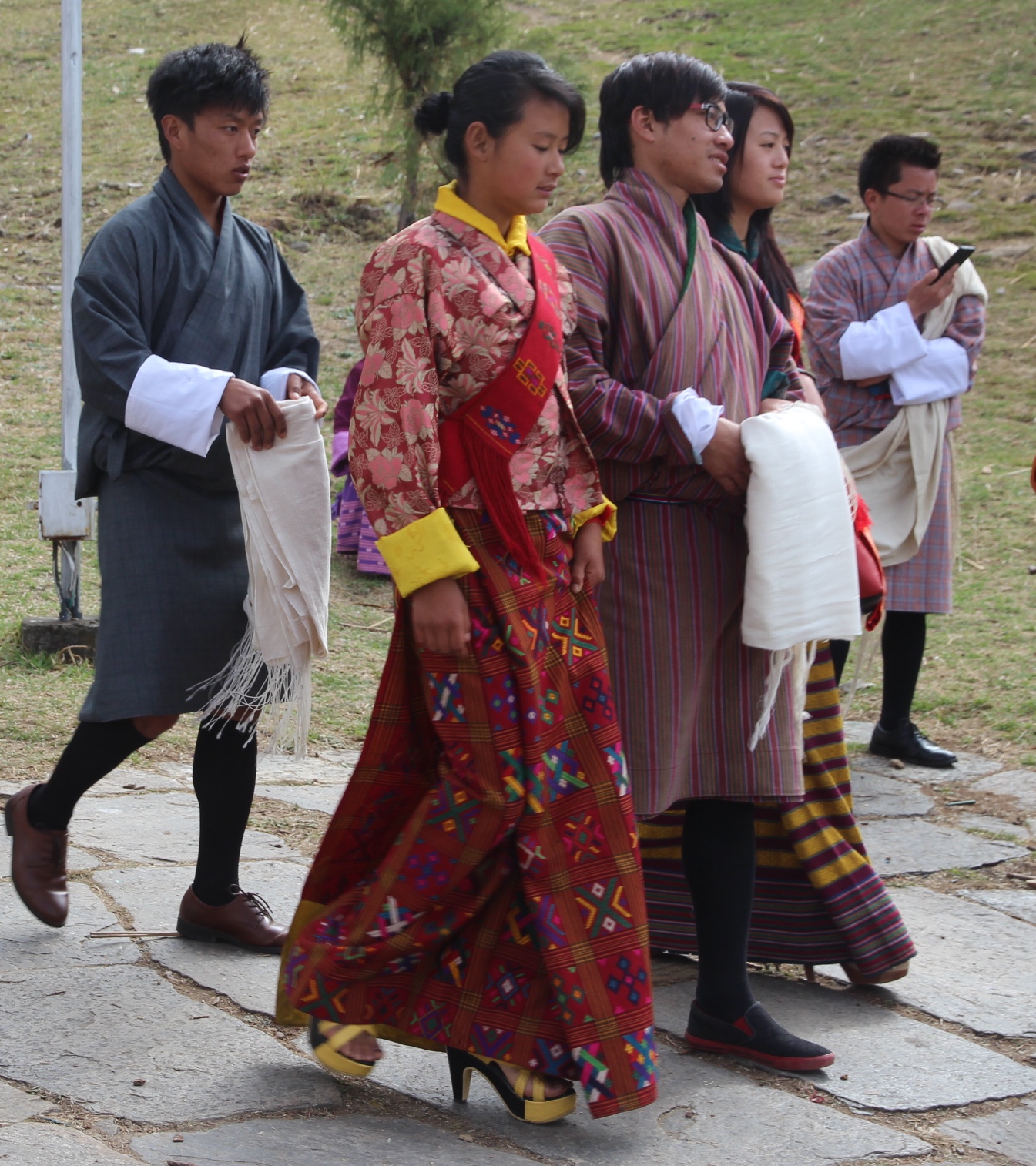


Bhutan has a colourful and distinctive national dress that goes right down to footwear for the men. With the exception of the elaborate costumes we saw in Papua New Guinea, I have never seen such fabulous clothing on both men and women. And virtually no skin exposed—have a look at a Papua New Guinea post to compare!
Bhutan’s national dress is governed by a dress code, which has been imposed in modern times. Citizens must wear it as they go about their business in public during the day and for all special occasions. When the code was originally imposed, some people—mostly tribal residents and Tibetans living in Bhutan—were so opposed to this ruling that they left the country.
I always felt a little sorry for Tek, our guide for most of our 15 days in Bhutan, when he had to wear this get-up. day in and day out. as we travelled. It’s stylish, but not all that warm when the weather is cold.
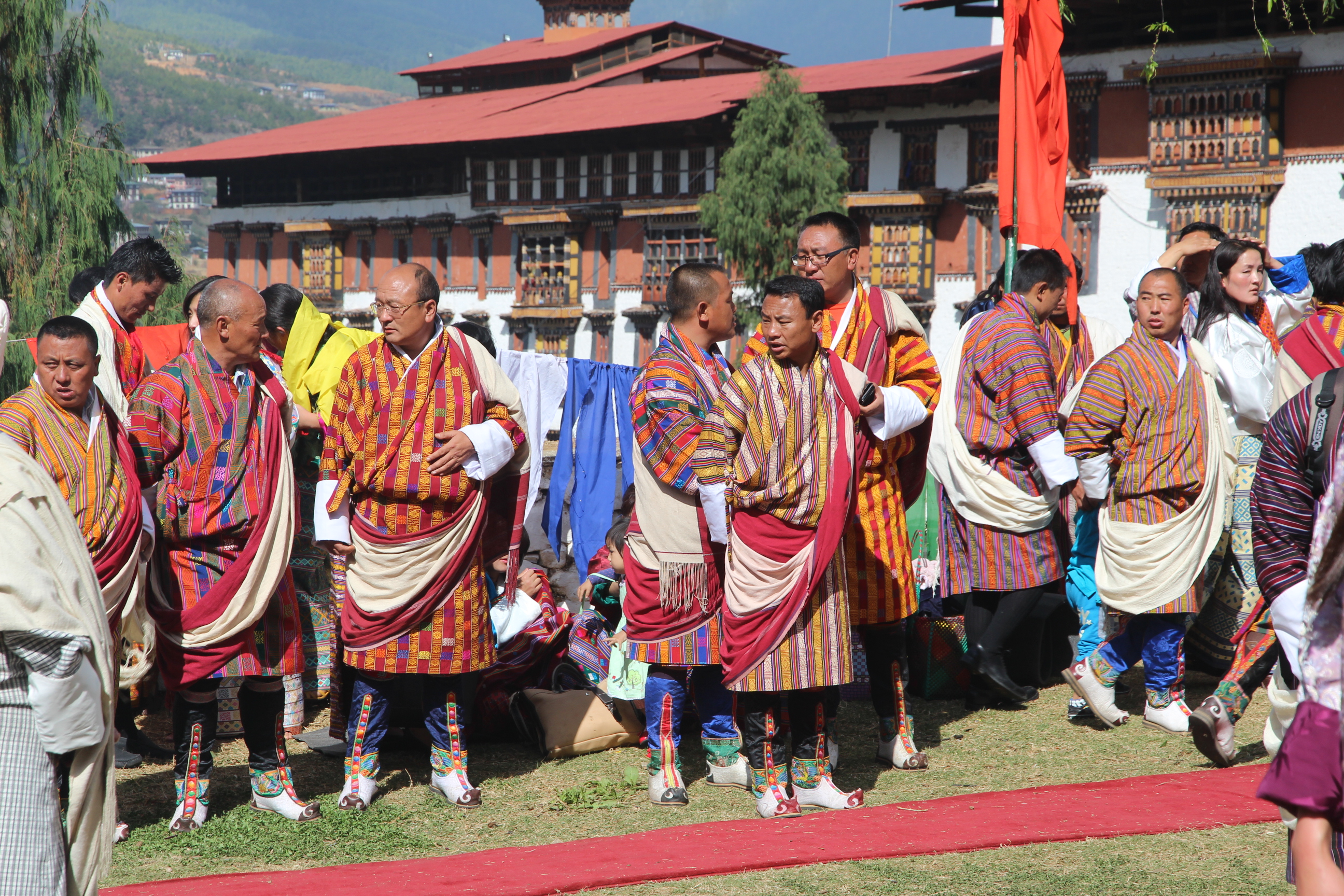
Men wear a gho


The men wear a gho, a knee-length robe that is tied at the waist by a belt known as a kera. The traditional boot, called a tshoglham, is usually made of silk and does not seem to be compulsory. That said, I reckon the robe is knee-length so they can show off their boots.
Women wear a kira, an ankle-length dress that clips at the shoulders, and a flashy, lightweight jacket known as a tego.
Both sexes add a special scarf when visiting dzongs and other administrative centres. Men’s scarves vary in colour depending on their status or rank—the king wears yellow, I know this because I saw the king at the festival—while women can wear any colour.
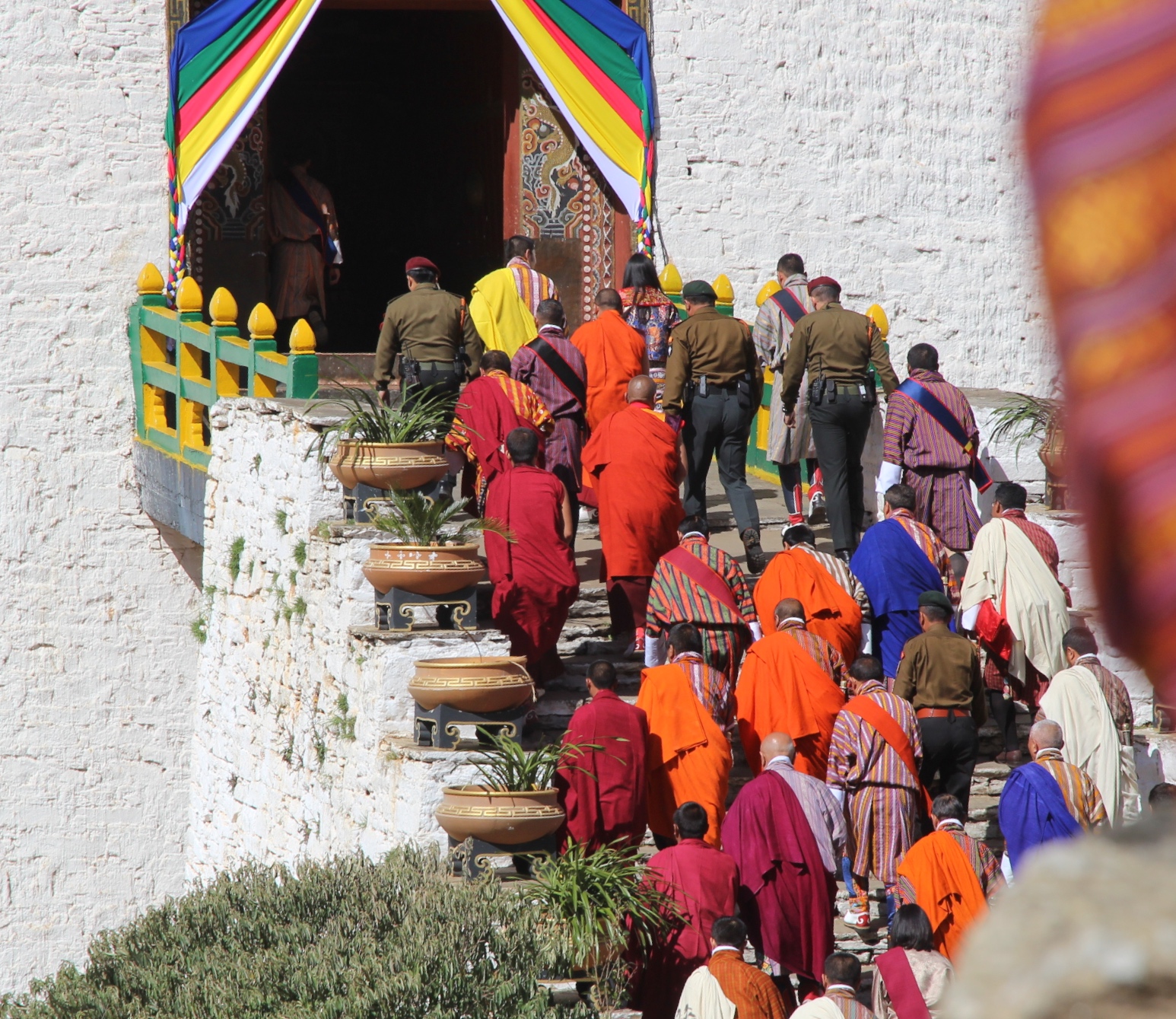
The king leads the way, draped in his yellow scarf
I was completely stunned when Tek said that some ceremonial outfits cost as much as $2000, especially if they include silk and gold threads. That’s some serious money in an economy that’s not oozing wealth.
Luckily many people can weave their own clothes to keep costs down (stay tuned for a post about a fabulous hand-woven kira that I bought).
Of course, we arrived in our very best camping clothes—it was all we had. A few foreigners outdid themselves with full traditional dress. And were rewarded for their efforts. On his way out of the festival, the king stopped for a lengthy chat with a foreign woman who was wearing traditional Bhutanese dress.. We were directly opposite her at the time, but our camping clothes didn’t muster a comment from him.


But festival attendees weren’t the only one who were all dolled up.
The drama performers—monks and professional actors—know all the right moves and wear wonderfully elaborate and colourful costumes and masks.
Their dances act out stories and incidents from many decades ago. Some honour the life of Padmasambhava, remember he’s the man who founded Buddhism in Bhutan.
We missed the first two days of dances. Not sure that’s a big loss because we made it to the last two. Based on the descriptions, I think the dances of all days are rather similar, so I hope it’s totally okay to miss one or two days of them.
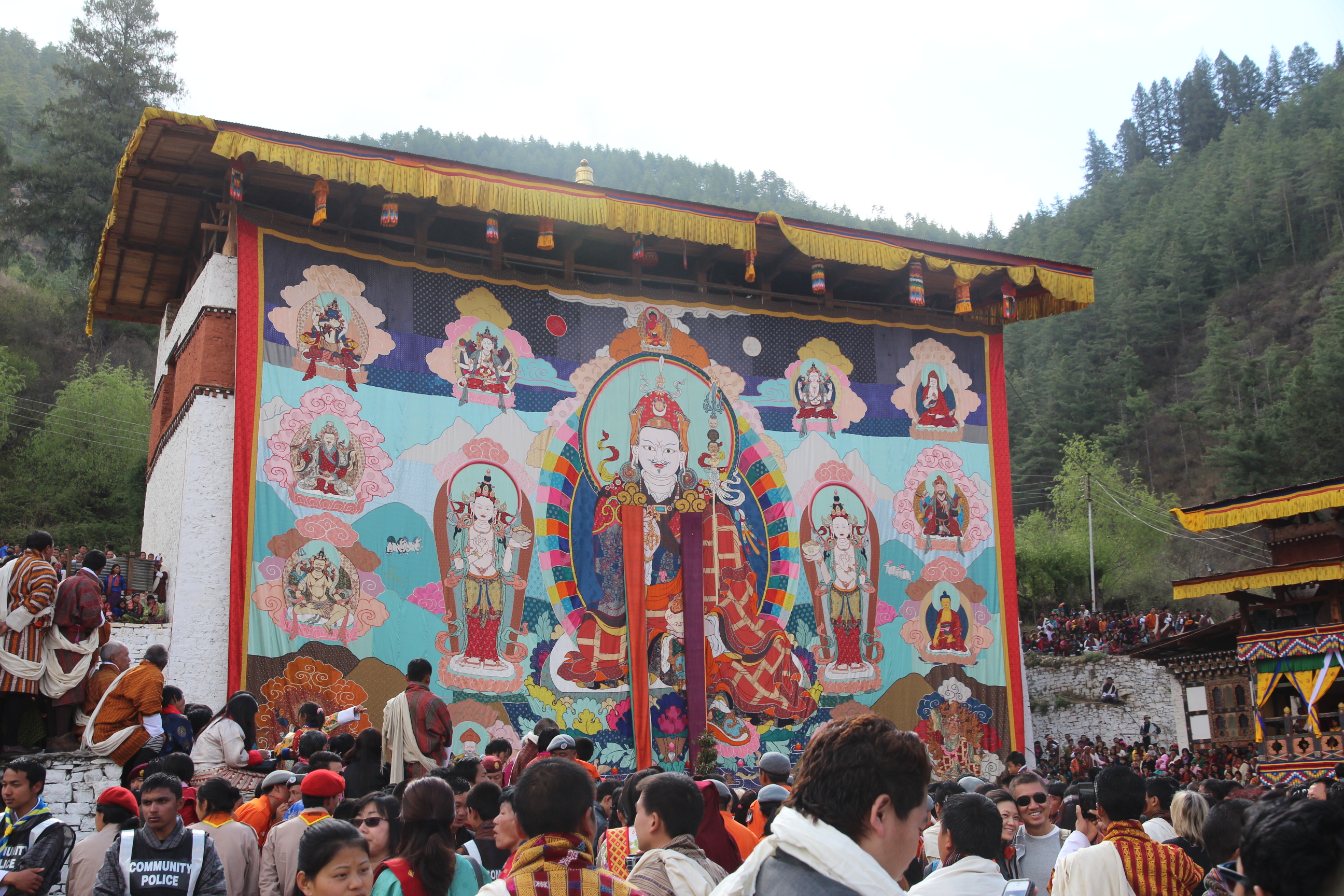
But we were there to see the thangka or thongdroel draped on the side of a building. It’s a sacred, religious picture scroll, or tapestry, that is exhibited for a few hours on the last day of the festival. It covers the entire facade of a building and is considered one of the most sacred blessings in the whole of Bhutan. We didn’t get up early enough (3:30am) to see the moment it was unfurled, but we were there before it was rolled away later in the morning.
More about the religious festivals (or tshechus)
Bhutan’s religious festivals (also called tshechus) take place all over the country, but the four-day events in Paro and Thimphu (the national capital) are considered the best.
Tshechu, which means ‘10th day’, celebrates the 10th day of a month of a lunar calendar. In Bhutan, the month observed varies from place to place and temple to temple.
It is believed that everyone must attend a tshechu and witness the mask dances at least once in their lifetime in order to receive blessings and wash away their sins.
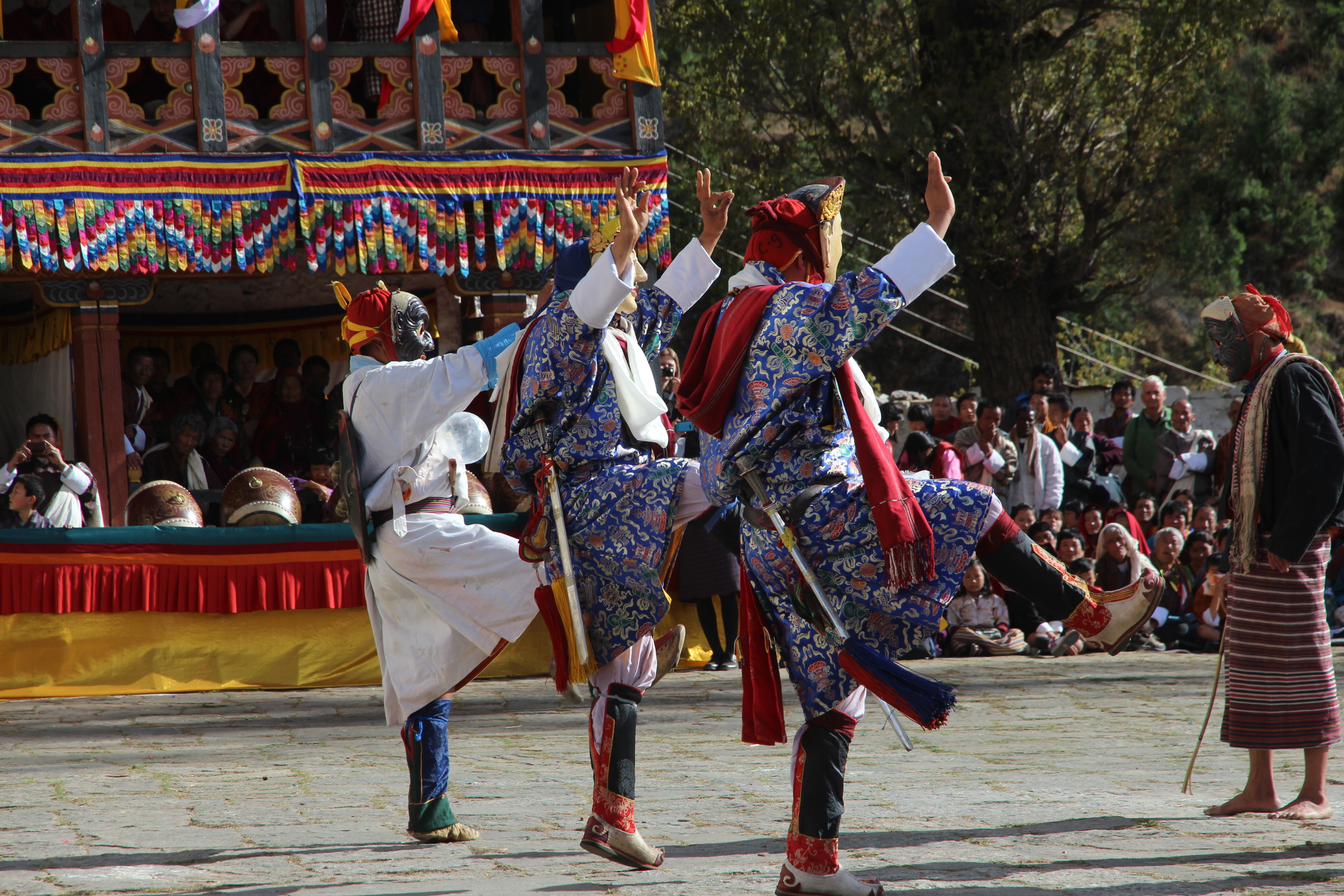


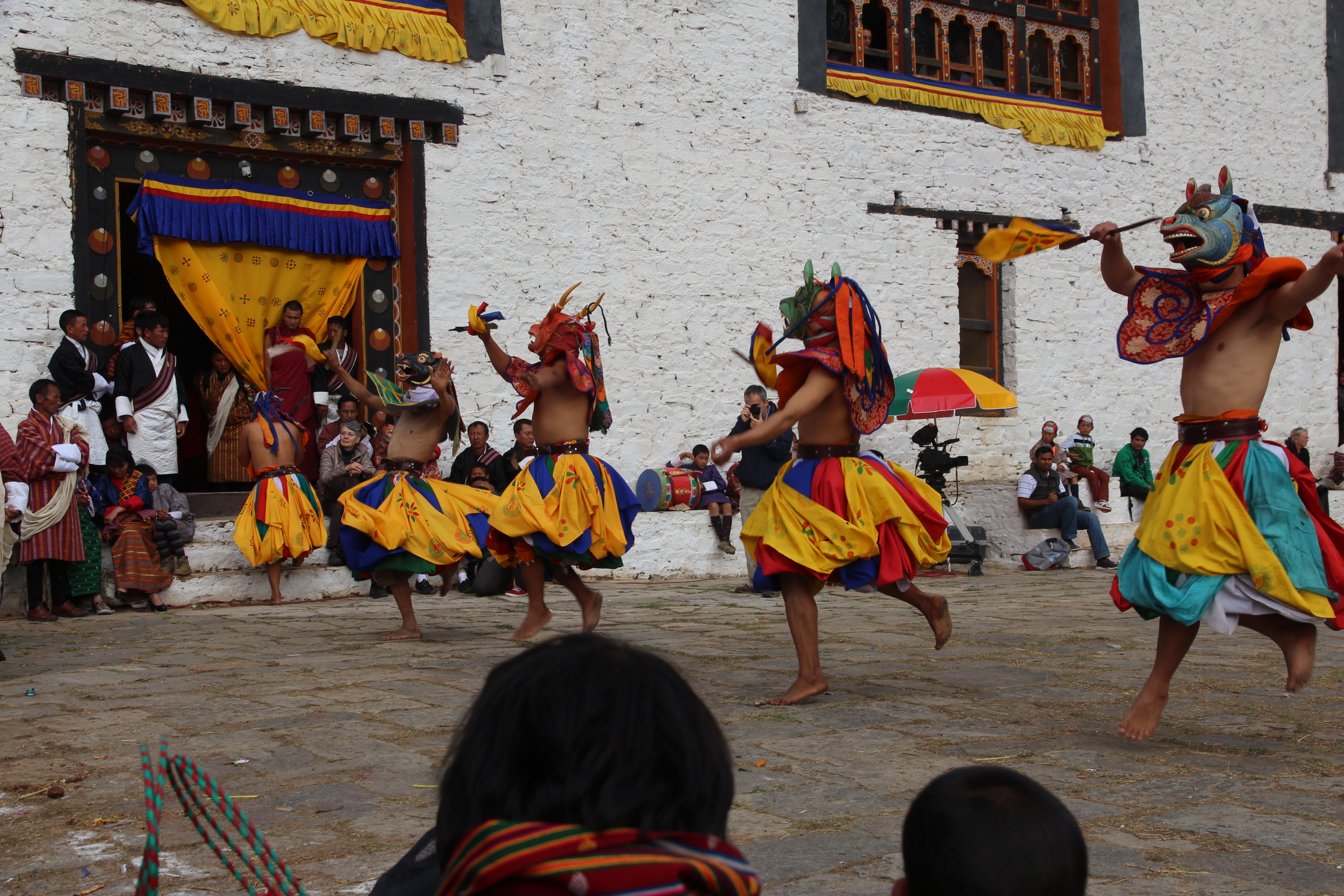
There are almost 20 different mask dances. Each dance has a special story behind it, and many are based on stories and incidents from as long ago as the 8th century and during the life of Padmasambhava.
The dances are creatively named with titles such as Dance of the Terrifying Deities, Dance of the Four Stags, Dance of the 21 Black Hats, Dance of the Eight Manifestations ofPadmasambhava and Dance of the Heroes.
I have to admit that I couldn’t figure out the meaning of the dances we saw, but I loved the colour, movement and energy. It seems that there are at least four dances per day, and these are televised live during the festival.
And if your head is spinning after all this whirling around, drop by my cooking blog for some cookies and milk.


The final approach to Tiger’s Nest Monastery. Photo by Gary Foster
Everyone who knows anything about Bhutan and who also knows that I’ve been there asks if I saw Tiger’s Nest Monastery. Yes, yes, of course I saw it.
Frankly, I’m relieved if that’s how they phrase their question. Because if they ask have you BEEN to Tiger’s Nest Monastery, I have to hang my head and admit that I got halfway there.
Getting to the halfway point was enough of a struggle that I was easily discouraged from tackling the rest.

The gentle slope on the way to Tiger’s Nest. It doesn’t last long. The monastery is that little white spec on the lump of hill in the middle of the pic
So trudge along with me.
We were up early and ready to go. Our guide for the day (I can’t remember his name), Anand, Deepti, Poor John and I were set to scale the hill that leads to this famous monastery. The promotional hype says it ‘clings to a cliff 3120 metres above sea level’ overlooking the Paro Valley. This is true, especially the clinging to the cliff bit.
The hype also says you can make it to the monastery in two hours, and that the ‘weak and weary’ (my quotes) can take a horse to the halfway point and even a bit beyond. This is only half true, and the two-hour comment isn’t at all true.

Near the bottom of the climb
So off we set. It’s a nice gentle start up the hill and I briefly thought if most of the climb is like this, I’ll be fine. I can walk for hours on the flat or even the gentle slopes of a well-graded switchback.
But then the hard slog began and the horses appeared.
I think I’d like to take a horse, I told the guide. No, you don’t want a horse. They’re unreliable. Some fall down and some people even die when their horses throw them over a cliff. Oh yeah, the monastery ‘clings’ to a cliff.
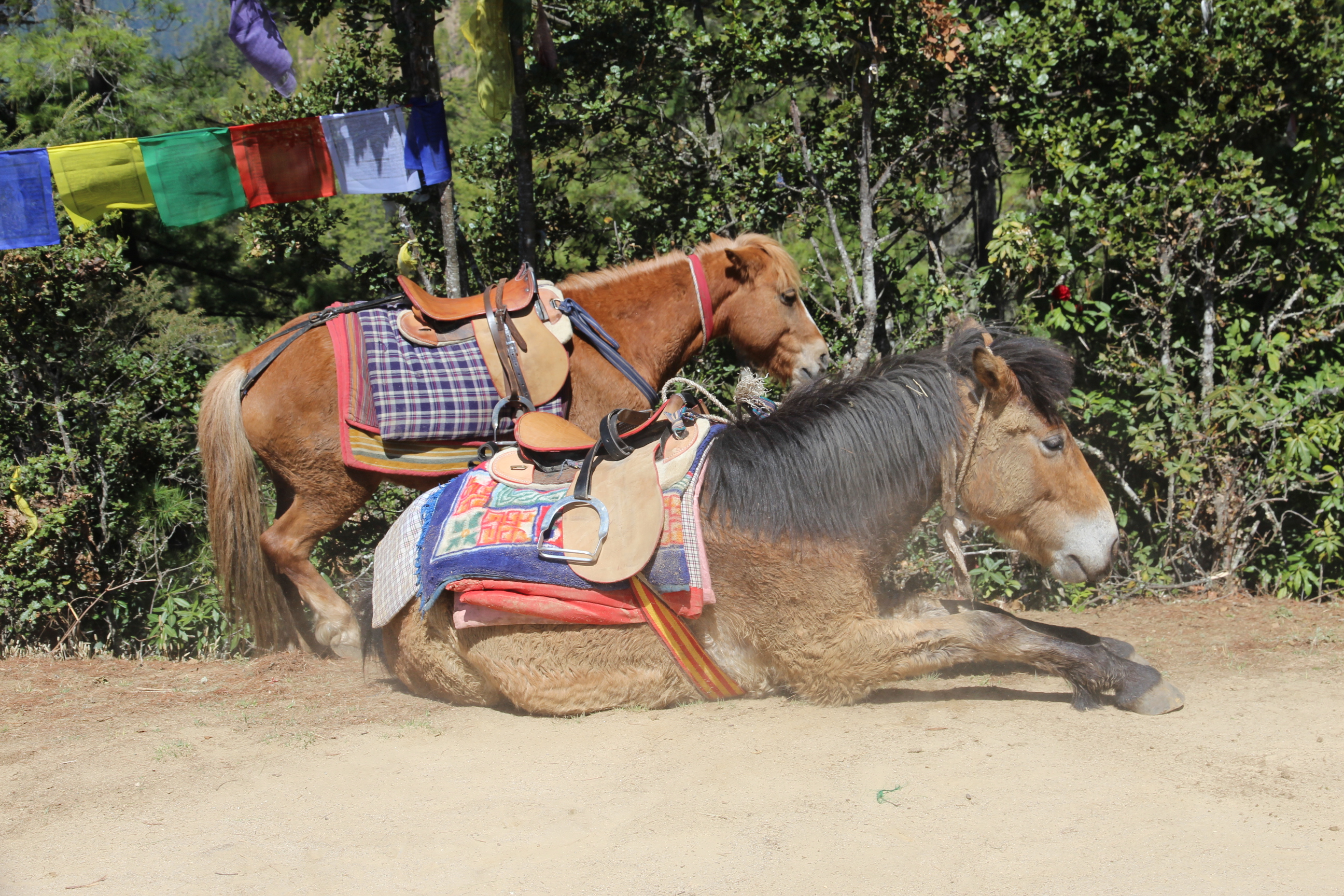
Not confidence inspiring horses
I wavered. I know how to ride a horse. I’ve even owned a horse. But one look at the beasts was enough to convince me that they weren’t any keener than I was to walk up that hill, so I passed up the opportunity. Better that my own legs give up and I collapse in a small heap on the ground.
The plus was that I didn’t get chucked over the side by an uncooperative horse. The minus was it took me a very, very long time to get to the halfway point.
The gentle slope ran out almost immediately. Then the ladder kicked in—not a real ladder, but a slope that seemed like one. Poor John (sometimes called He Who Walks Everywhere) and Anand strode ahead. Deepti and the guide lingered with me, but I shooed the guide on.
Deepti is young, fit, energetic and good company. It was a pleasure to have her with me—she walked and talked, while I huffed and puffed and gasped and struggled and dawdled. Of course, I’m exaggerating, but the walk up is long, steep AND rather boring.
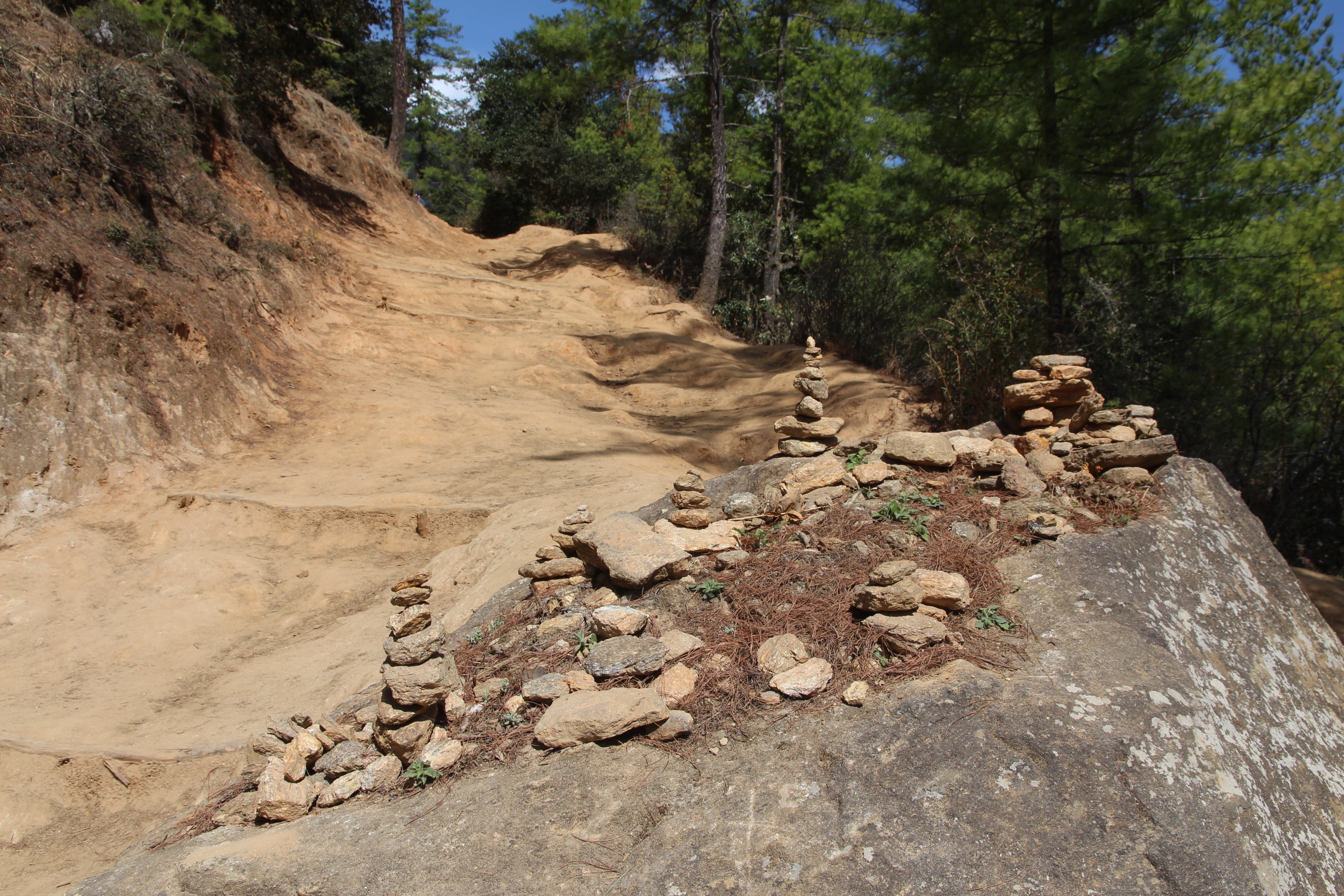
Visitors build cairns on the edge of the path to Tiger’s Nest
I look back at my photos and most are of the monastery inching slightly closer in every frame. I have photo after photo of the monastery, but very little else. I usually find lots of things to snap—flowers, people, scenery—but this stroll was all about reaching the monastery. For me it was all about reaching the halfway point, which I managed in an hour and 40 minutes.
When we finally arrived, I urged Deepti and the guide, who’d waited for us, to go on without me. I’ll be fine waiting here. And believe me there were plenty of other stragglers who didn’t press on to the top. Quite a few had ridden horses to the halfway point, and one even saw a horse stumble and toss off its rider. So I allowed myself a slightly smug smile that I got that far walking.
There wasn’t much to photograph at the halfway point, except a gigantic prayer wheel and endless views (mostly the same) of the monastery in the distance. But there were plenty of people to chat to and a restaurant (but we were going to lunch somewhere else later). Oh, and there was lots of hot tea and biscuits to revive us. I particularly liked the cheesy snacks, but more about that soon on another post.

Prayer wheel at halfway point to Tiger’s Nest
It was a while before the others returned, and they had many tales to tell.
Poor John, who took just under two hours to get to the top, was quick to say you would have hated the second half of the trek. A lot of steep up, then a lot of steep down and then more steep more. It was exactly what I needed to hear.
Then Anand and Deepti added the fact that no photos were allowed inside the monastery. Oh yay! Another reason for my ancient self to stay behind.
And then an absolutely corker of a story from all of them.
It seems that way back when the monastery was first built, there was a huge Buddha statue created to be displayed at the top. He’s there now, but can’t be photographed.
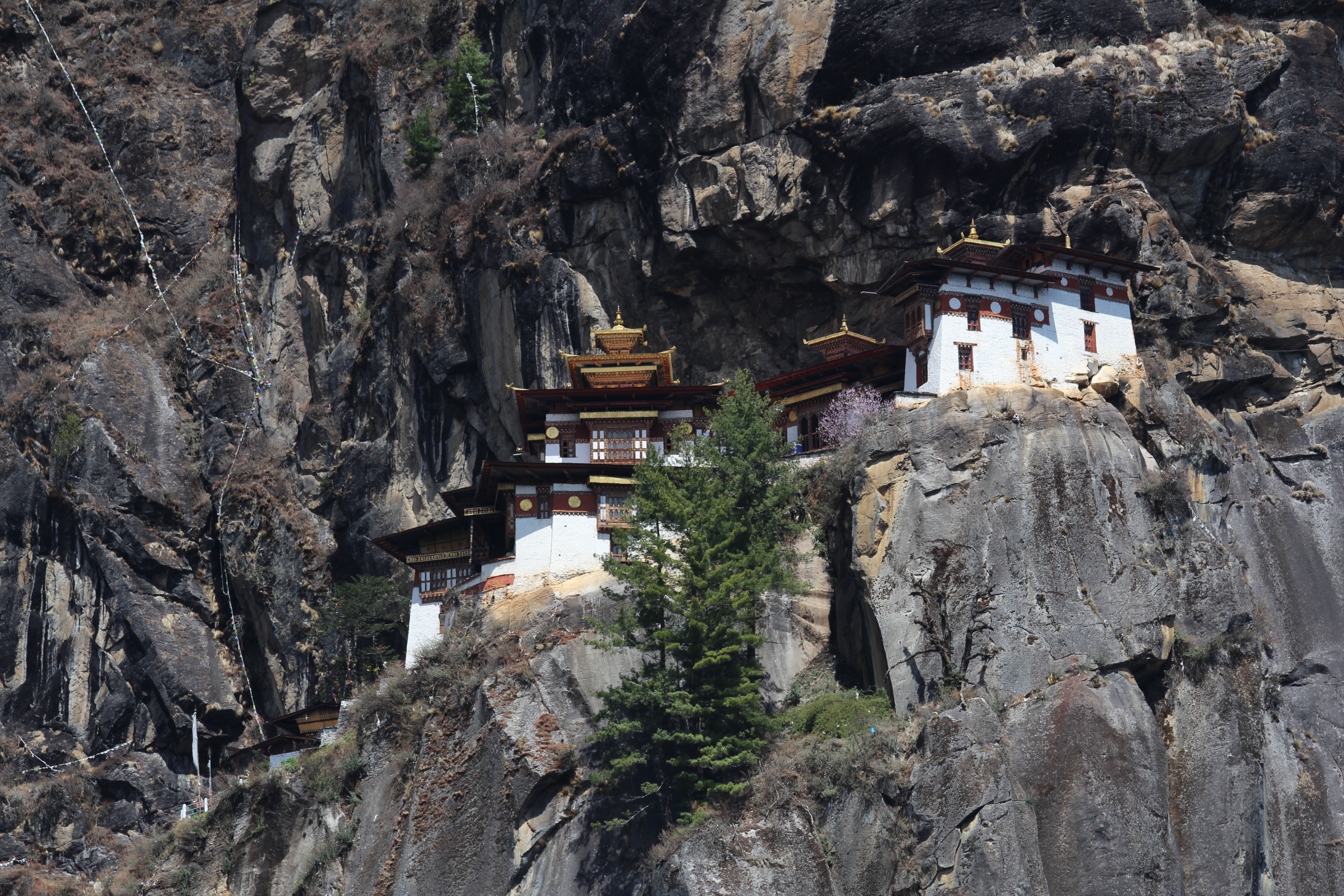
The view of Tiger’s Nest from the halfway point
Now I hope I get this right, and feel free to correct any mistakes.
The story goes that this Buddha weighs about 8 tons (way more than I weigh). When it came time to carry him (I’ll assume it’s a him) to the top, the locals pondered how to get him there. He was way too heavy for the locals to lug up there.
After some discussion, they decided to break the statue into pieces and carry up each piece individually (a plan I would have supported). But apparently the statue interrupted and insisted that he should not be dismembered. In fact, he said they should just leave him alone and he’d get himself up there.
And apparently that’s exactly what he did because the locals awoke in the morning to find the Buddha positioned in the monastery. Such a pity that I couldn’t figure out how to get him (the Buddha) to teleport me up there too.
That said, I’m really glad I didn’t tackle that last struggle. I always take time to go up a slope or hill, and always take caution to go down. As I often say to Poor John, The chances of me falling are slim. The consequences of me falling are huge.
The guide was quick to point out that just a few weeks before we were there and on the last leg of the uphill trek, a Thai woman leaned back against a railing to take a pic, and fell to her death.
So no regrets that I didn’t go the distance.

Getting closer. Photo by Gary Foster
A bit about Tiger Nest’s Monastery
First built in 1692, Tiger’s Nest Monastery is Bhutan’s most important and most visited site. Also known as Taktshang Monastery, it overlooks the Paro Valley and really does hang off a cliff at 3120 metres above sea level. I’m so glad I started much higher up than sea level.
The monastery has four main temples and a few dwellings. Most buildings have balconies with amazing views. The main courtyard has a prayer wheel that is rotated every morning at 4am. There are also eight caves. Monks of the monastery are supposed to live and meditate in these caves for three years.
The Hall of a Thousand Buddhas, which is carved into rock at the monastery, also has a statue of a tiger. This is important because tigers are respected symbols of the monastery. Legend says the monastery’s site was chosen by a tigress, which also explains its name.
All of the monastery burnt down in 1998 and has since been rebuilt.
Note: You’ll see that some of the photos are by Gary Foster. Gary travelled with us in India earlier this year, but he did not join us in Bhutan. That’s because he visited there in 2011. He graciously sent me his photos. Poor John won’t carry a camera, so I have to rely on Gary and others in these circumstances.

A memorable view on the walk
 Where to next?