

Breathe by Harriet Schwarzrock
If you’re in Canberra over the next two weeks, be sure to drop in to see the current exhibition at the Canberra Glassworks.
The Tree, curated by Clare Belfrage, features 25 established and emerging Australian glass artists. Each artist was asked to create a piece that reflects our relationship with trees—from their beauty to their place in mythology to the ways they are exploited.
The exhibition continues through 8 May, and the Glassworks is open Wednesdays through Sundays from 10am to 4pm. Admission is by a gold coin donation.
I’m sharing pics of a few of my favourite pieces, but go see the artworks for yourself. The Glassworks also offers classes, demonstrations and workshops. And plenty more exhibitions are coming up.


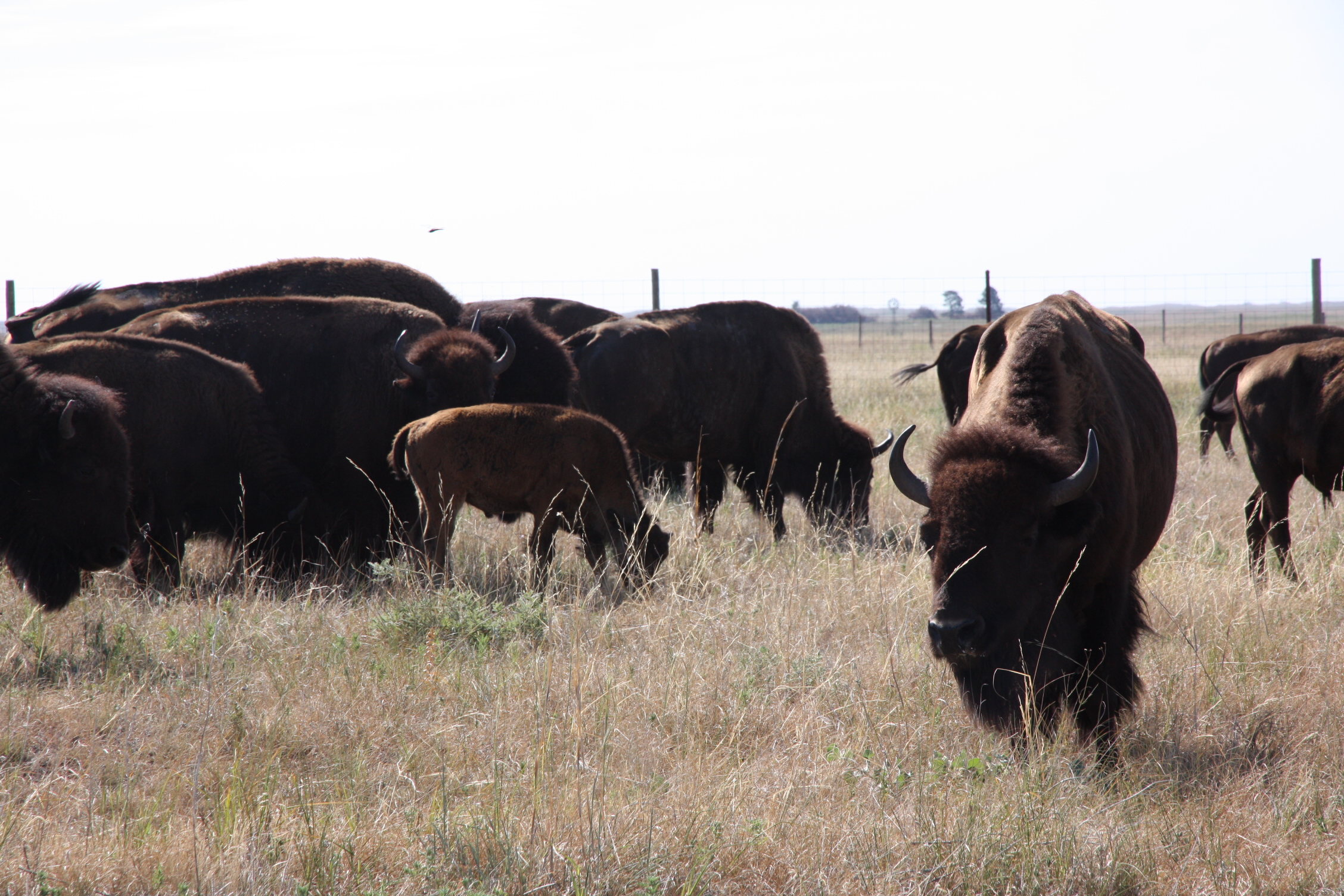
Bison at Fort Niobrara National Wildlife Refuge
Poor John and I were lucky enough to visit the Fort Niobrara National Wildlife Refuge when we travelled northwest across central Nebraska from Kearney to Valentine.
Established in 1912 by President Theodore Roosevelt, this 19,000-acre refuge is part of a national network of land set aside specifically for the preservation of birds, bison and elk. So far, more than 540 refuges have been established.

The Fort Niobrara refuge is doing its job. More than 230 species of bird are found there, along with 350 bison and about 100 elk. The Niobrara River runs through the refuge, bringing plenty of water and nourishment for all the ‘beasts’.
We saw a meandering herd of bison in the refuge. Based on what I’ve read, I think we were there in the mating season—June to August. The bulls weren’t showing signs of aggression, but they were with the herd. Apparently they are solitary during other months.
Bison were also featured at Woolaroc in Oklahoma. I’m pretty sure Woolaroc has some bison on site, but we didn’t see any on the hoof. But there’s an excellent display of information about the bison’s history and plight.


The bison info is heartbreaking. No one knows exactly how many bison there were before the main slaughter began in the 1800s, but estimates range from 30 to 200 million. Travellers in the Great Plains were always impressed by the numbers of bison they saw, and guesstimates reckon there were still 60 million in 1800 and 30 million in 1830.
Bison hides and bones were big business in the later 1800s and the biggest year was 1874, when more than seven million pounds of bones were shipped to eastern markets.
It makes me proud that Nebraska is doing its bit to keep bison on the planet. Oh, and we loved seeing the prairie dogs too.

Prairie dogs rule the Nebraska plains
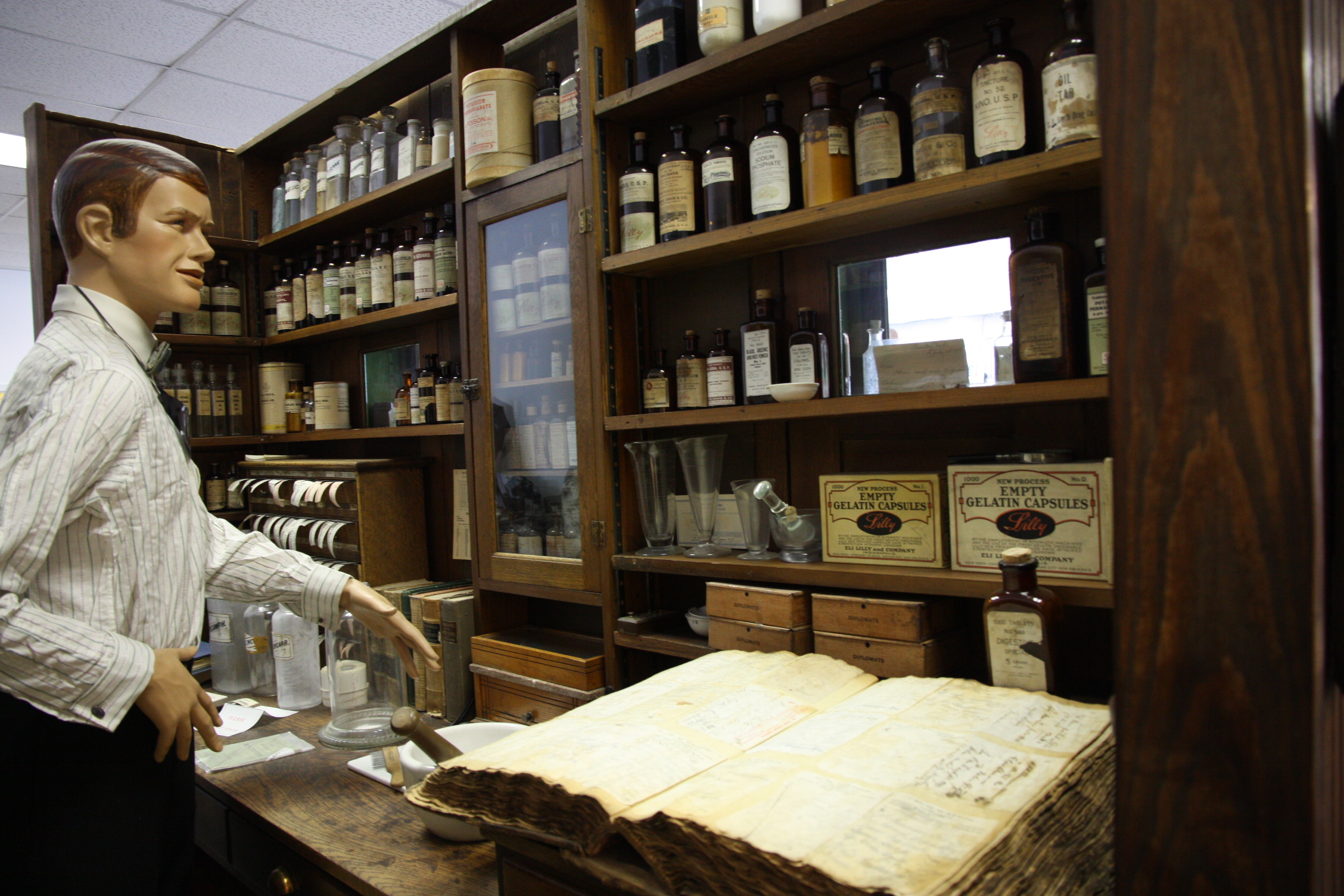
An early-day pharmacy
I share two allegiances—I’m a Nebraskan and an Australian.
While I was born on the USA’s eastern seaboard, New Jersey was never my home, but Nebraska certainly was. I moved there as a young’un and stayed until my late 20s. It was where I grew up, was educated and worked for some years after graduating from university.
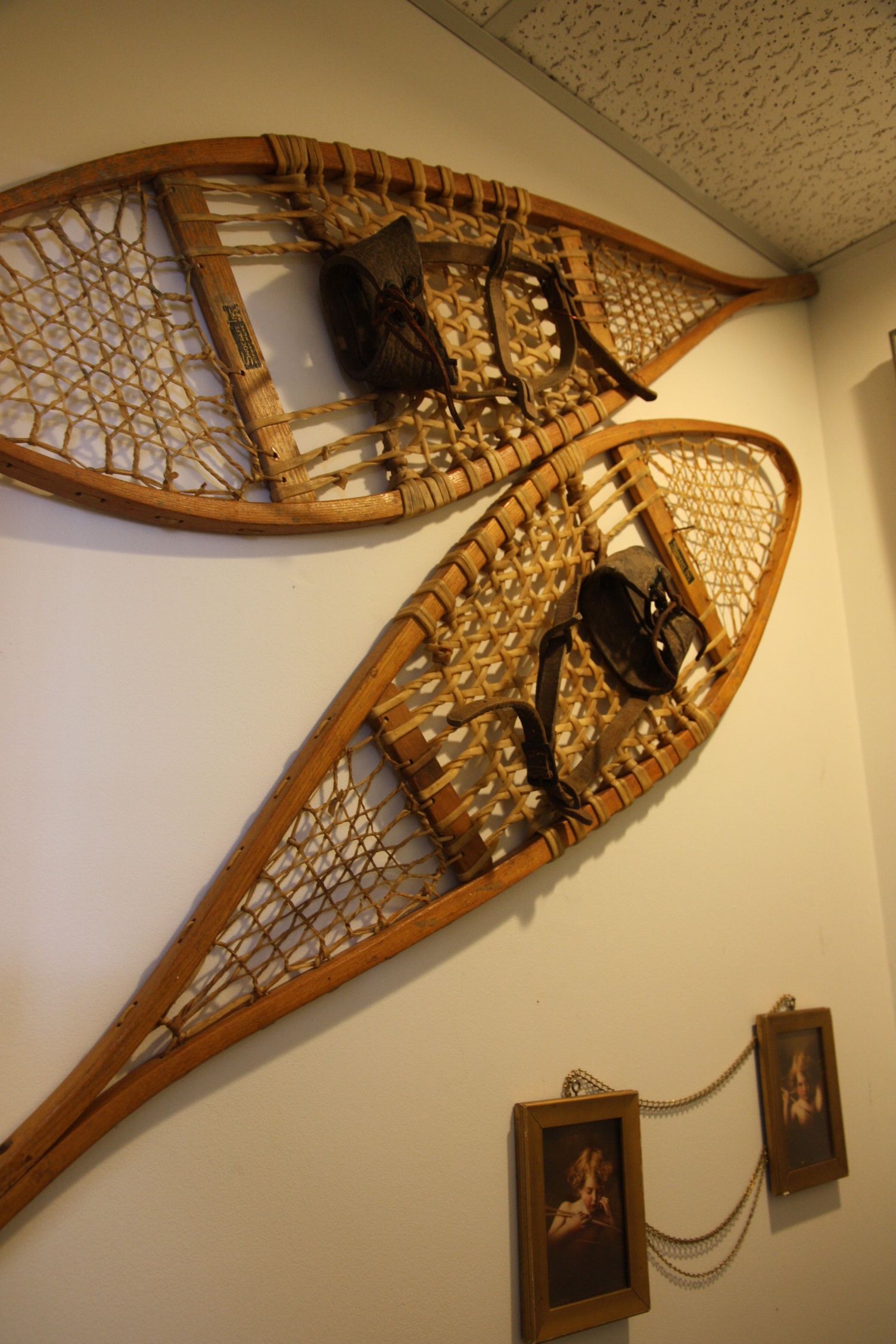
Bill Porter’s snow shoes
Today, I suppose I’m mostly Australian. I’ve been here more than 30 years and have become a citizen. That said, my broad Nebraska accent has people thinking I arrived here last week.
I get back to the USA every couple of years, and always find time to visit Nebraska—even though my parents have died and my sisters have mostly moved away from the state.
Nebraska isn’t a popular or likely tourist destination, but it is a great place to grow up. I’ve enjoyed showing Poor John around and introducing him to people who have been important in my life.
On our most recent visit to the USA we had a few days up our sleeve so I decided to drive Poor John to Valentine in northwest Nebraska. We headed north out of Kearney to Ravenna and then on to Highway 2.
The 272-mile stretch of Highway 2 between Grand Island and Alliance is famous—in Nebraska. Known as the Sandhills Journey Scenic Byway, it has several places that are worthy of stops.

A melodeon, a portable reed organ that was unique to the USA
Our first stop was at the local museum in Broken Bow in Custer County. What a great country museum. The displays are beautifully presented and very reminiscent of the Nebraska I know.
Bill Porter’s snow shoes caught my eye immediately. Porter was a Custer County rancher caught in the huge blizzard of 1949. That storm was so bad that 7500 passengers on 50 trains were held up as far west as Pocatello Idaho and as far east as Chicago Illinois. Wind blew at 65mph and packed the snow so densely that rescuers needed dynamite to blow open paths. I had landlords who had been caught by that storm on their property in rural Nebraska. They were snowbound for four months.
There were also great displays of musical instruments, an old-fashioned soda fountain, a chemist’s shop, clothing and much more. The museum also holds a lot of historical and ancestral documents for the county.


But without doubt, my favourite display was the SD Butcher gallery of photographs and a wood carving that depicts the pioneer photographer taking a photo of a family. For 26 years, Butcher travelled widely in Nebraska, capturing images of early settlers in their new environment, often in front of their sod houses.
His efforts began in 1886. Over the next five years, Butcher took almost 1500 images in Custer County alone. He used this work to produce the Pioneer History of Custer County, Nebraska in 1901. The success of this book, one of few successes in his life, prompted Butcher to expand his photographic work to surrounding counties.
In 1904 he produced Sod Houses or the Development of the Great American Plains: A Pictorial History of the Men and Means that have Conquered this Wonderful Country.
Today the collection, comprising about 3500 glass plate negatives, is held by the Nebraska Historical Society.

Wood carving of SD Butcher at work, by a Mr. Mooney
I don’t have any of Butcher’s work, but I do have a wonderful painting of rural Custer County—with gentle sandhills, browned fields and rolled haystacks—by Sid Jablonski.
Sid was a student of mine when I lectured in journalism at the University of Nebraska at Kearney. He was the main artist for the student newspaper, The Antelope. The painting hangs in our living room, over the fireplace. It’s been there for more than 30 years.


But I got off the track. We thoroughly enjoyed the Custer County Museum and I recommend it to anyone in the neighbourhood.
I’ve already written a bit about our stop in Valentine (which is north of Highway 2) and I’ll stop back with posts about our visit to Halsey State Park, and the residents and scenery in the Fort Niobrara National Wildlife Refuge.
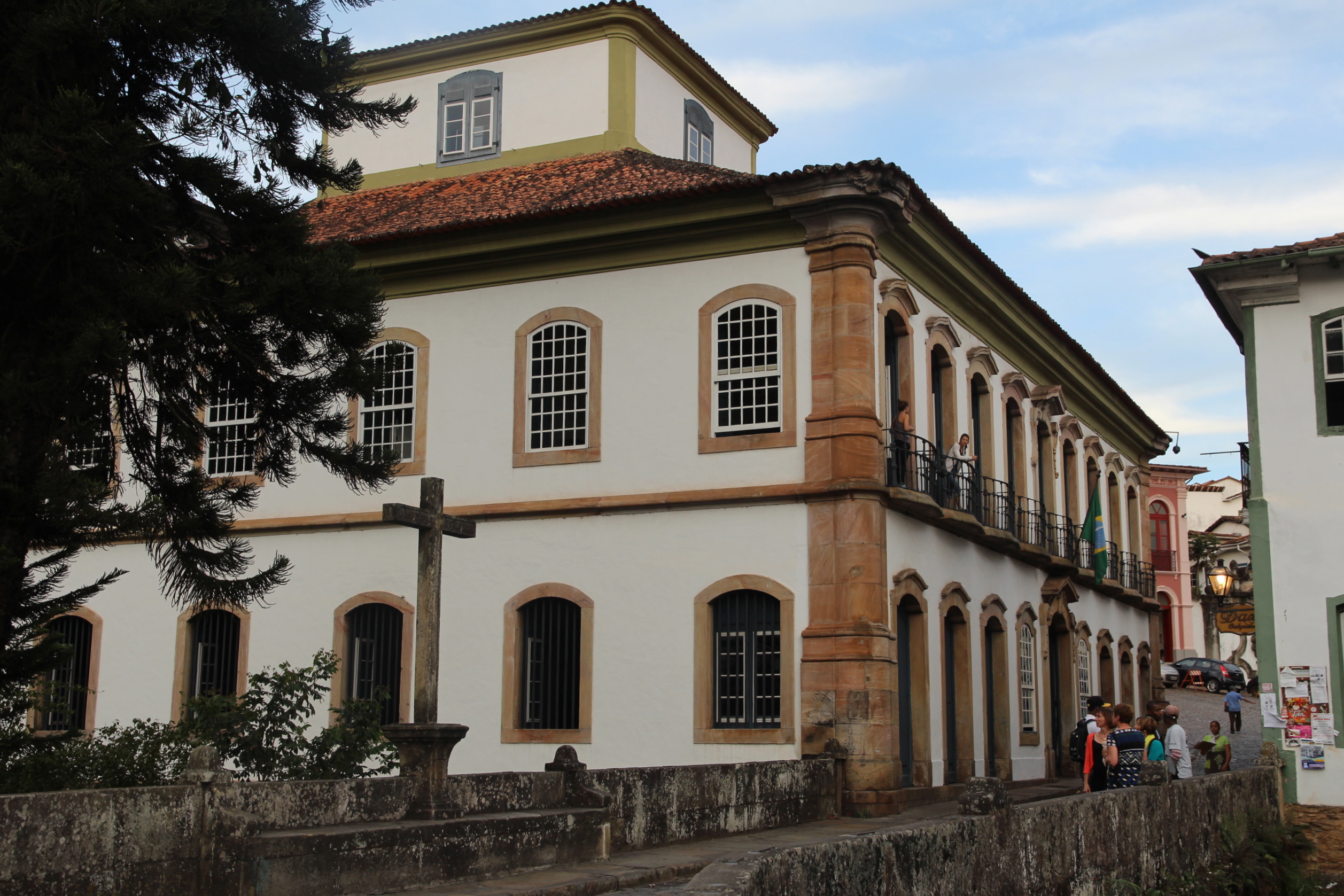
Casa dos Contos—House of Tales in Ouro Preto, Brazil
Houses rarely inspire or impress me—too many people trying to out-build the neighbours. But Ouro Preto’s House of Tales (Casa dos Contos) is an important historical residence and a knock-out example of baroque architecture in the Minas Gerais state of Brazil.
Casa dos Contos is hard to miss. It’s ginormous, not far from the town’s main square, painted bright white and covered in windows.
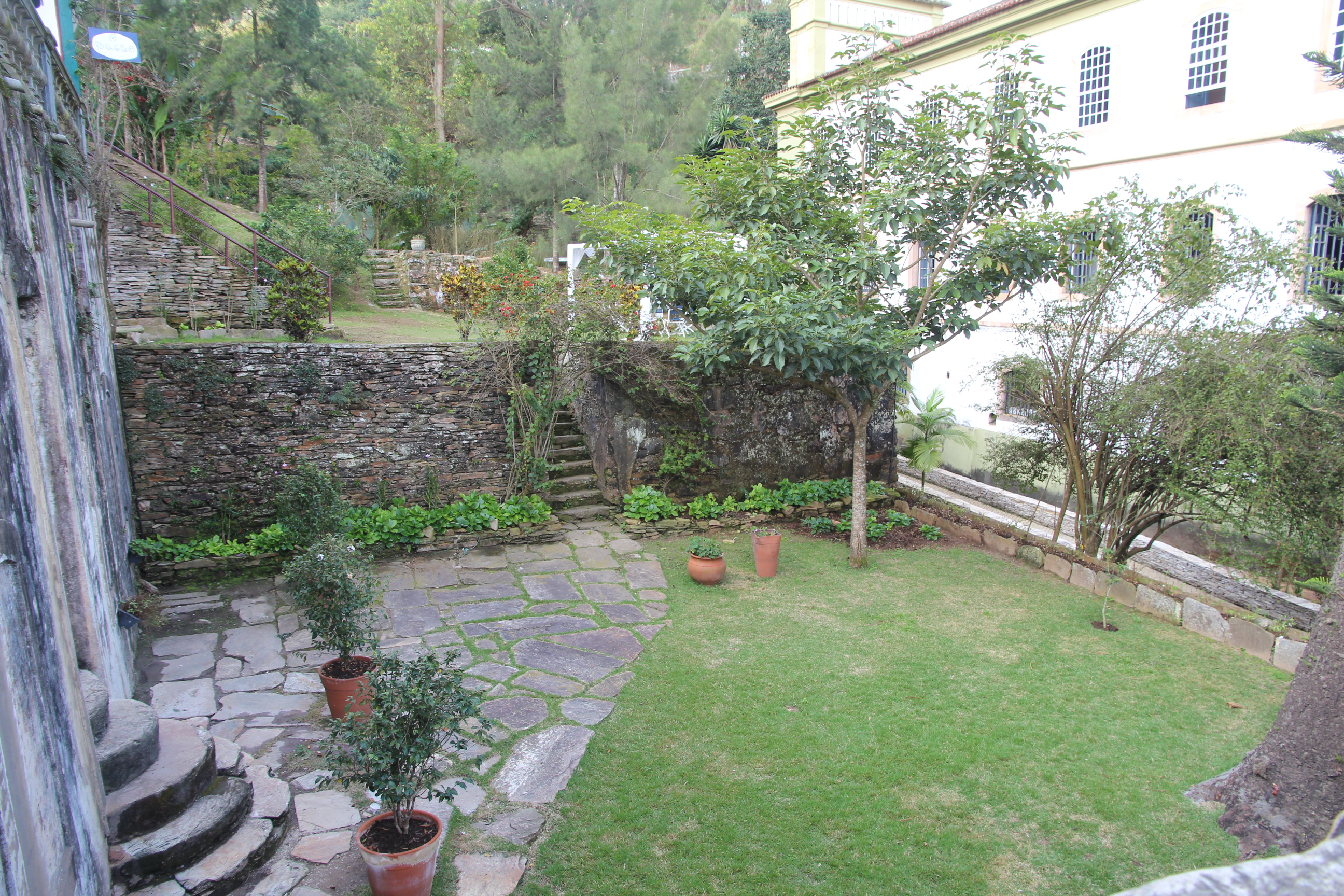
The garden outside Casa dos Contos
Built between 1782 and 1784, Casa dos Contos was home to João Rodrigues de Macedo, the administrator of tax collection and one of the wealthiest men in 18th century colonial Brazil. Tax money owed to the Portuguese crown was paid at the house.
Macedo was also one of the most eminent supporters of the underground Independence Movement of Minas Gerais (the Inconfidência) in 1789.
During the repression of the separatist movement, the house was used as accommodation for troops loyal to the viceroy and as a noble prison for high-ranking citizens in the rebel alliance.
Macedo managed to remain above suspicion, but he couldn’t manage his money. He fell into huge debt and the house was seized by the Royal Treasury in 1803.


Over the years it has been used as a mint, a post office, a savings bank and the mayor’s office.
The Ministry of Finance reclaimed the building in 1973, adapted it and inaugurated the Gold Rush Cycle Study Center, which is in keeping with Ouro Preto status as a mining town.
Poor John and I spent a nice afternoon wandering through Casa dos Contos, and I though you might like seeing this still useful old building.
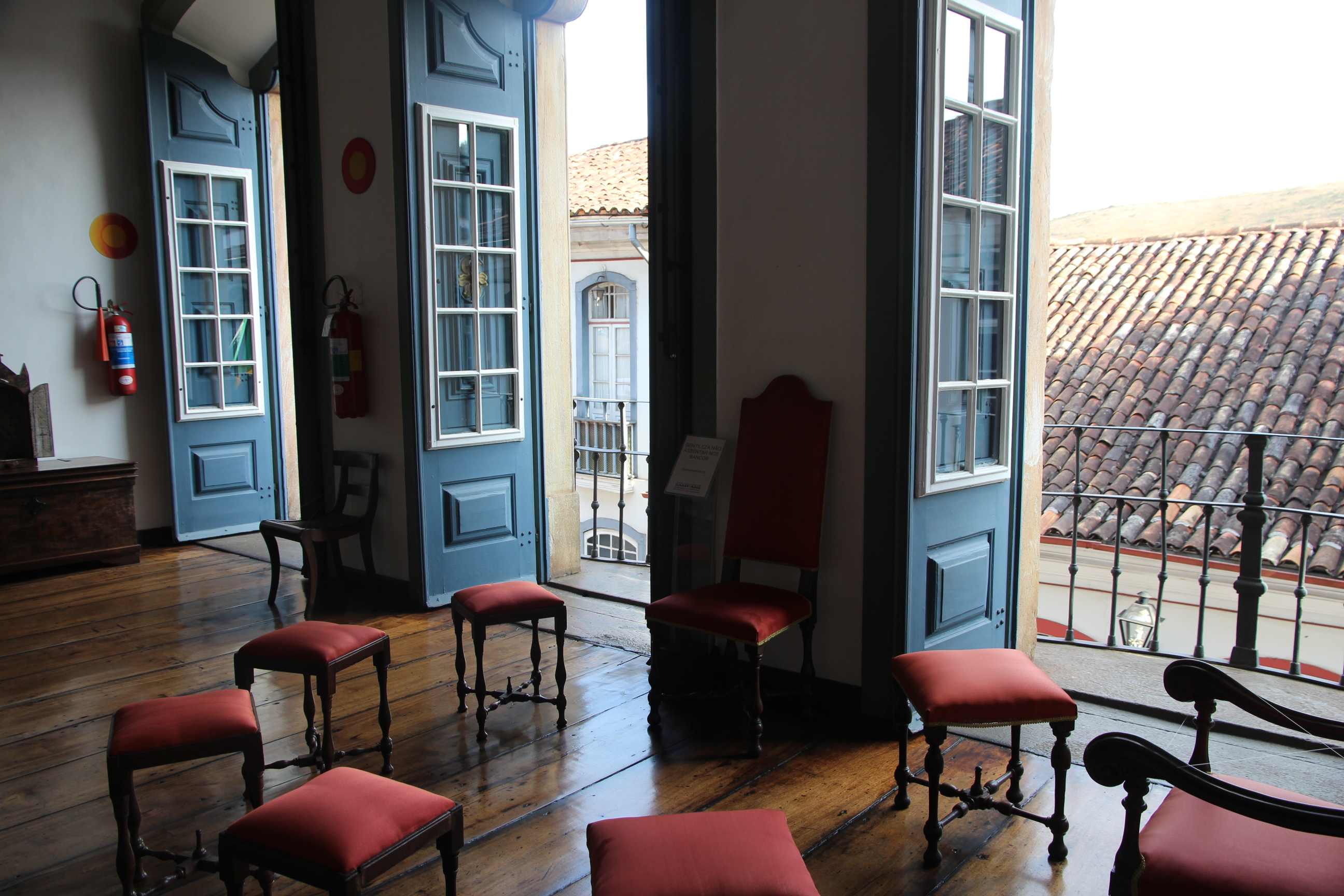
Inside and upstairs at Casa dos Contos
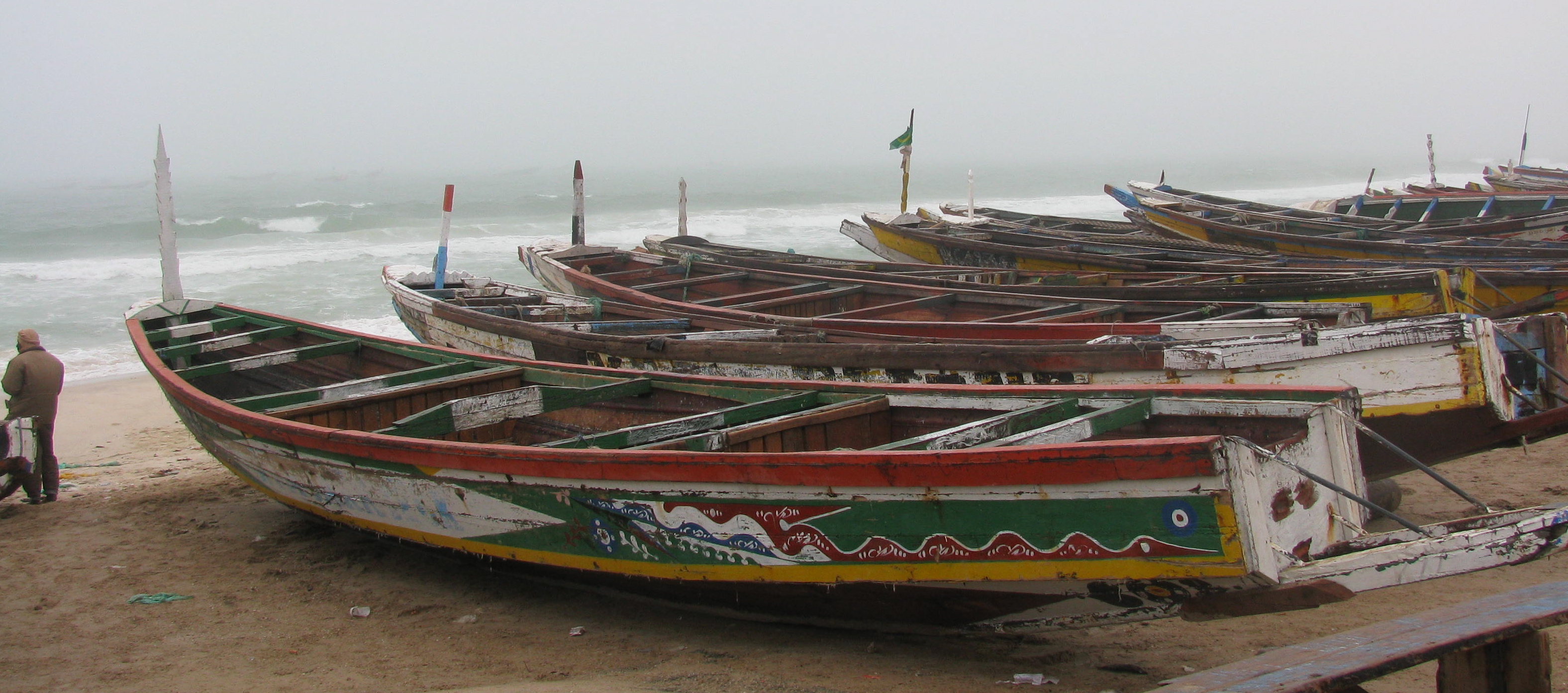
Nouadhibou’s fishing fleet
It’s been a couple of years since Poor John and I arrived in Nouadhibou, Mauritania’s second largest city and a major port on the Atlantic Ocean, but I remember its fish market well.
In fact, we’d heard about this fish market long before arriving in Africa. It’s a must-see for any traveller.
A fleet of local wooden boats sets out most days and the catch is available for sale each morning. You know you’ve reached the market when you come to the clapped-out cars that serve as the main points-of-sale for the catch.
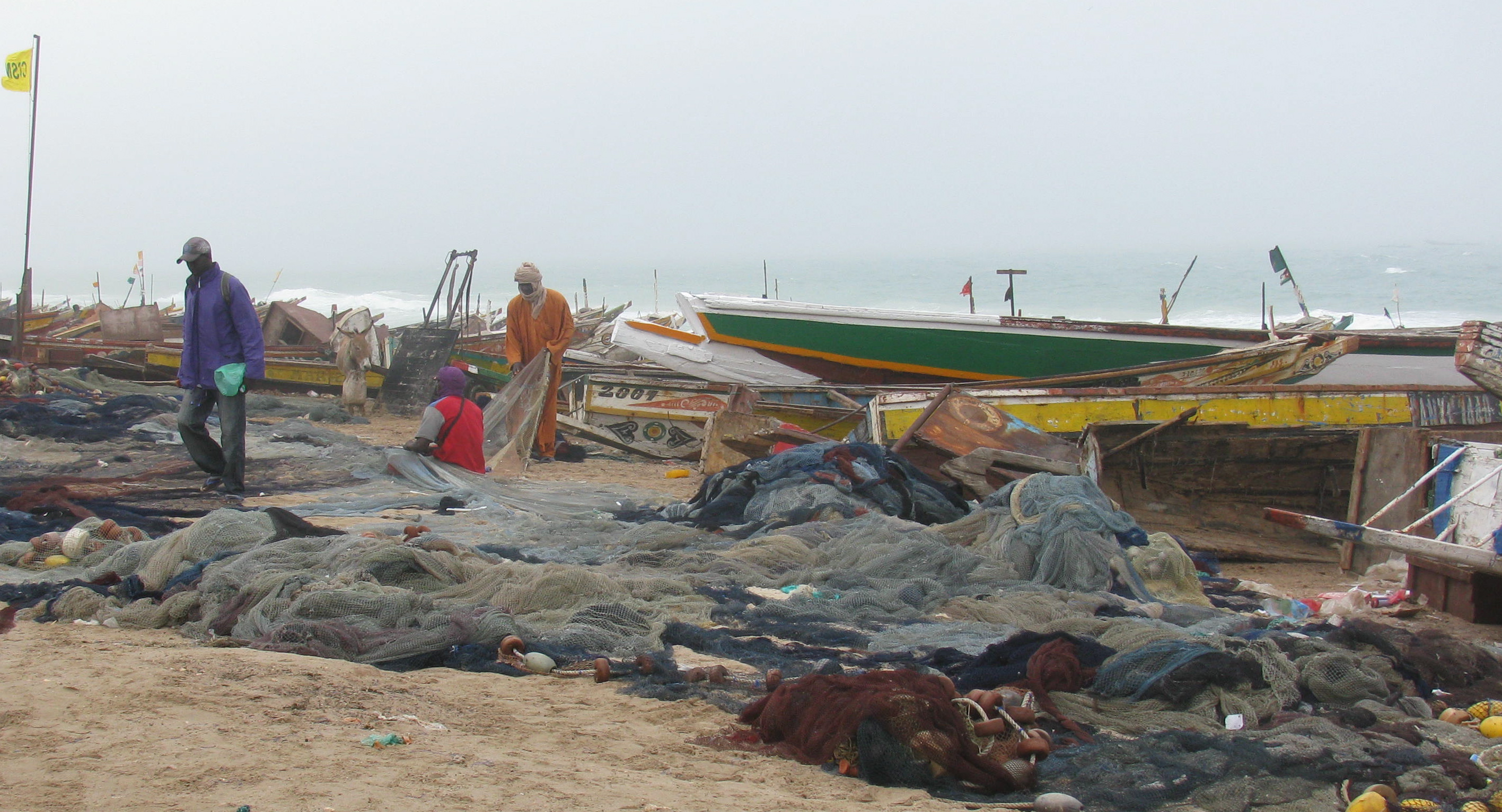
Fishing nets spread out on the beach


Unfortunately we arrived too late in the day to see the cars covered in fish, but the market was still bustling, and we were able to stroll among the crowds, fish and boats.
So why does Nouadhibou come up today? It’s thanks to Global Village, a 25-minute documentary that airs every weeknight on Australia’s multicultural television station, SBS. Global Village has been going for 15 years and is SBS’s longest running series. Its stories give a glimpse of other cultures and traditions. It lets viewers ‘see the world through different eyes’.

Notice how the women are carrying their babies
Poor John and I make a point of watching it and were rewarded this week with two episodes on Nouadhibou, its fishing industry and a group of women who are trying to eke out a living in the fish trade.
Parts 1 and 2 of this insightful documentary are available to watch free of charge through SBS’s On Demand service. I’m heading off to watch them again. Hope you can check them out within the next two weeks. Maybe you’ll find some other great SBS viewing.
Part 1—link expires at 6pm, 31 March 2014
Part 2—link expires at 6pm, 1 April 2014
Oops! A friend in Kenya tells me the clips will not play outside Australia. Bummer.
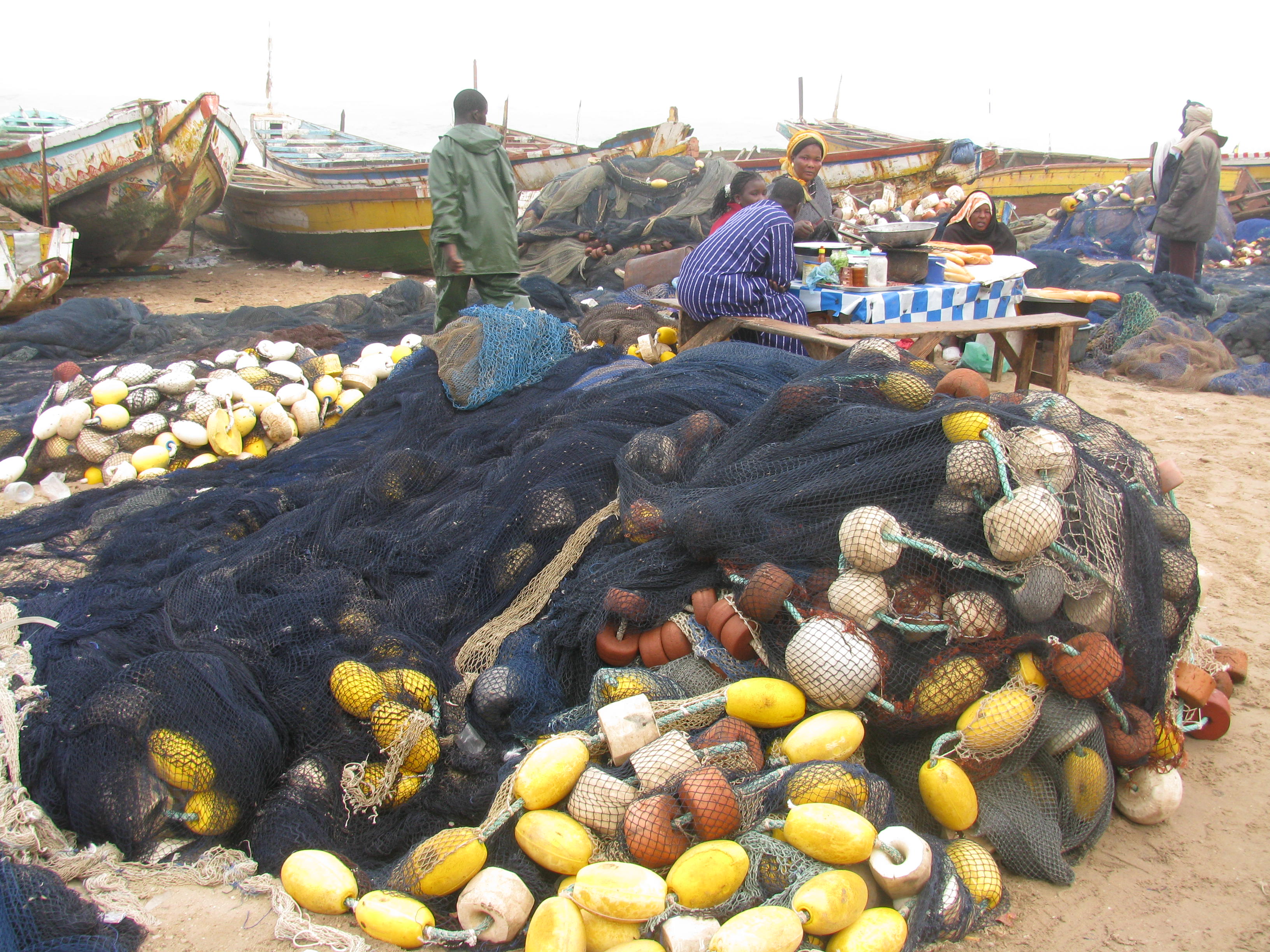
Lunch among the nets
I hadn’t checked this blog’s spam folder for a while—a few weeks—only to find more than 600 worthless messages/comments.
Geez, these people are persistent, repetitive, obvious and obnoxious.
But before I dismiss them all, I should share some of the topics.
The first five pages had offers for car and life insurance, sex (unimaginable varieties), headphones, tattoos and tattoo guns, Thai books, venetian blinds, cookware, ice cream makers, age creams, chinos, massage, hair straightener, shoes, books, sunglasses, computer games, sports jobs, bit coins, laser hair removal (especially upper lip), weight loss, acne, home treatments for yeast infections—okay I’ll stop there.
There were also two identical requests from different people asking if they could buy ad space on my blog. I searched google for the exact wording and found it was a scam. Doesn’t matter because I don’t sell ad space or earn money off this blog.
In fact, I pay $8 a year for the blog host to filter out the spam. Some cagey stuff gets through anyway—I reckon three or four slip through each day. But I delete them before you see them.
So I wanted to send a big thank you to everyone who leaves a real comment. You are most appreciated. And if you want some decent (and edible) spam, check out the recipe I posted on my cooking blog.
Poor John and I were up and out the door early this morning—on our way to see the Canberra Balloon Spectacular.
Every year for about a week in March, armies of hot-air balloons lift off around sunrise from the lawns in front of Old Parliament House.
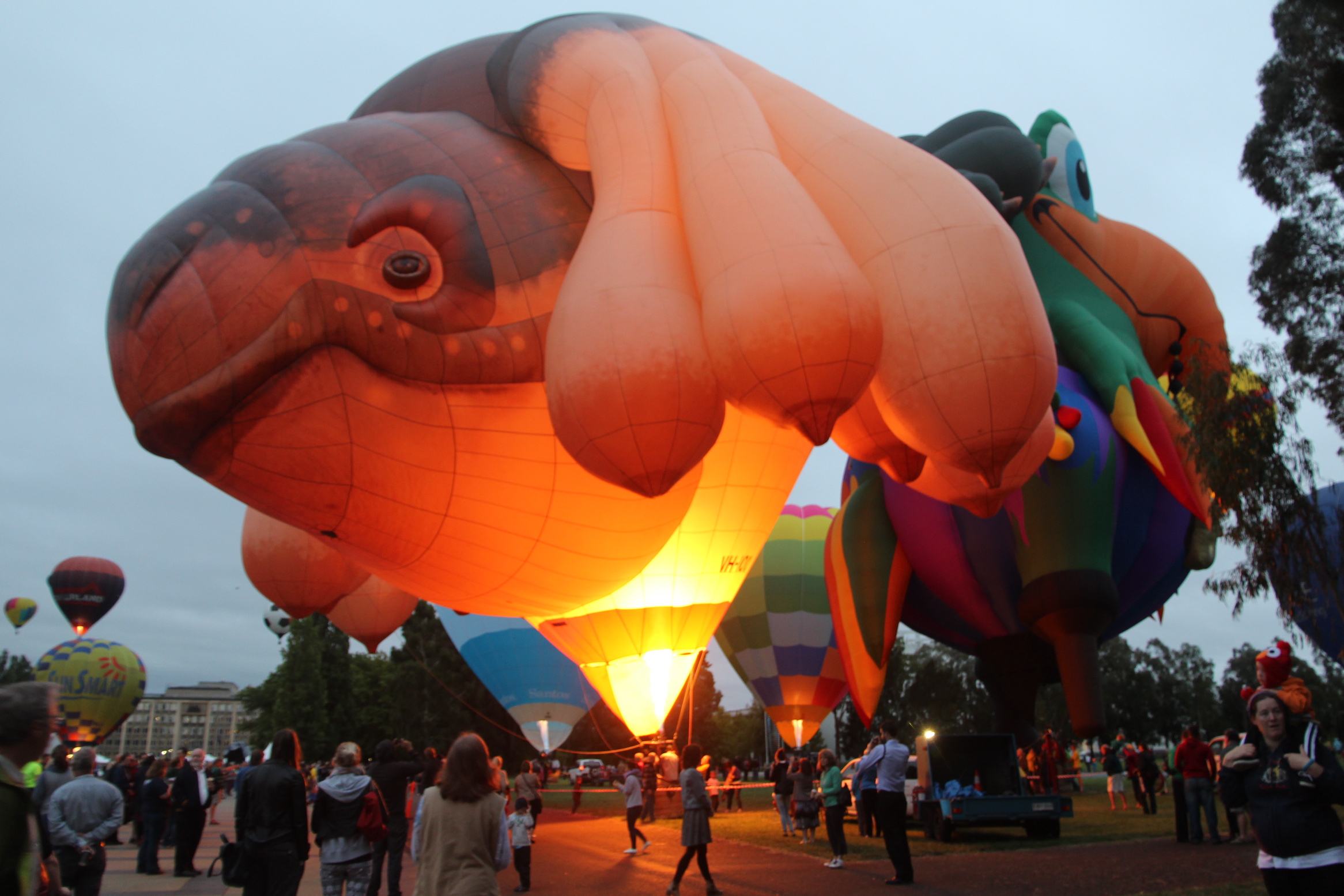
This year’s centerpiece was Skywhale, the gigantic sculpture created to mark Canberra’s 100th birthday last year.
Designed by internationally renowned artist and former Canberran Patricia Piccinini, Skywhale has been controversial and impossible to miss. She (is it a she?) is twice as big as a standard hot-air balloon, measuring 34 metres long and 23 metres high. She weighs half a tonne and is made of more than 3.5 kilometres of fabric. It took 16 people seven months and more than 3.3 million stitches to make.
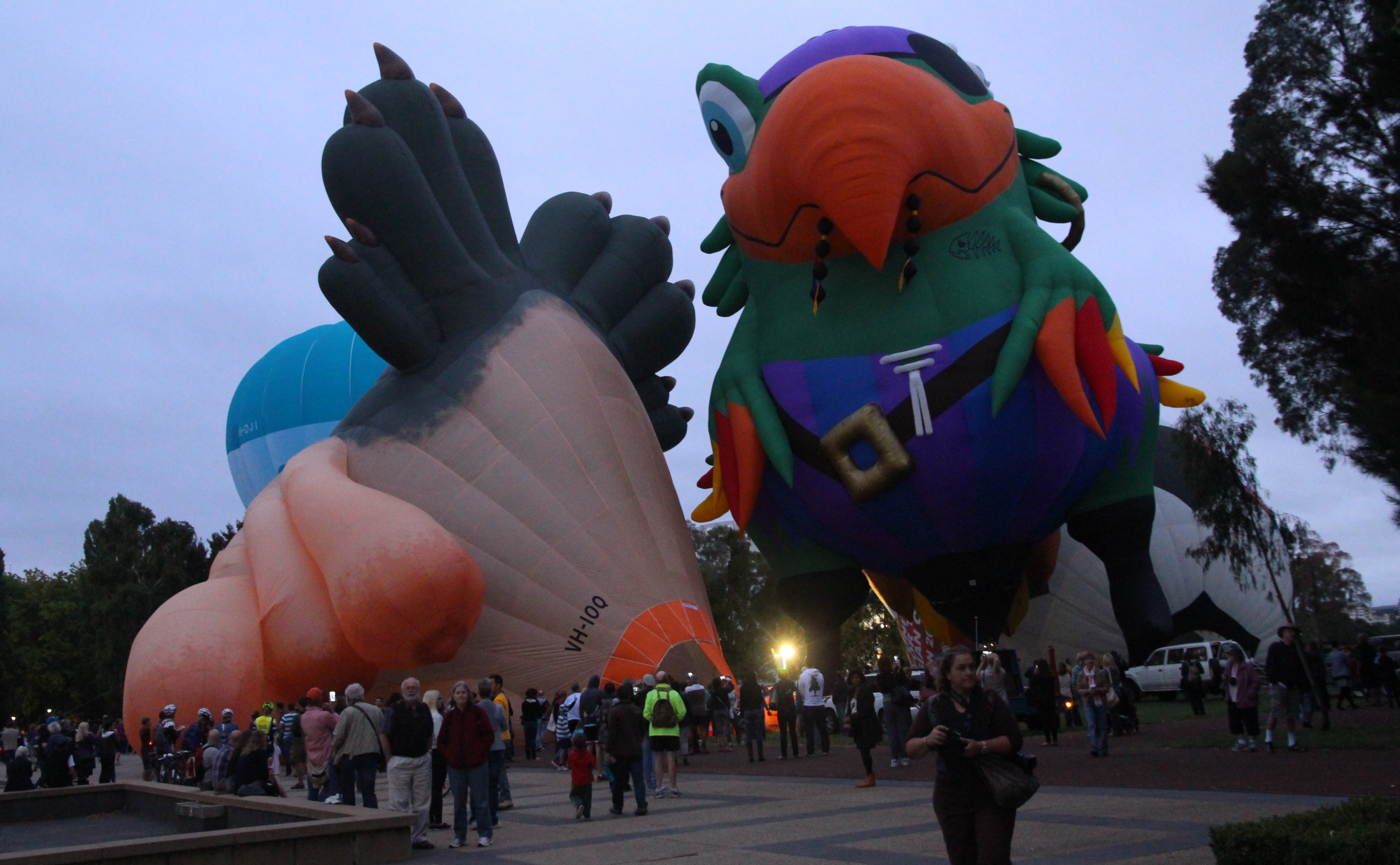
Pegleg Pete keeps an eye on Skywhale


But enough statistics. From her very first flight, Skywhale was at the heart of a love-it-or-hate-it relationship with the citizens of Canberra, with more people on the hate-it side. But over the year, people have come around. We’re getting used to her bulbous shape and swinging teats. And the city has benefited greatly from the international attention we got after Skywhale was first launched.
This morning, Skywhale and Pegleg Pete, the pirate–parrot, were being inflated side-by-side. Are they a couple? Pete seemed to be stealing a few kisses. But Skywhale turned her back to him and flew off on her own. Maybe she was annoyed by his mishap on Monday when he landed on a major thoroughfare in town.
I hope to pop back again this weekend to photograph more of the balloons and I urge you to check out kayakcameraman’s great pics taken as he floated on Lake Burley Griffin.
Who would have thought that three blow-up horses would bring me to my knees—literally?
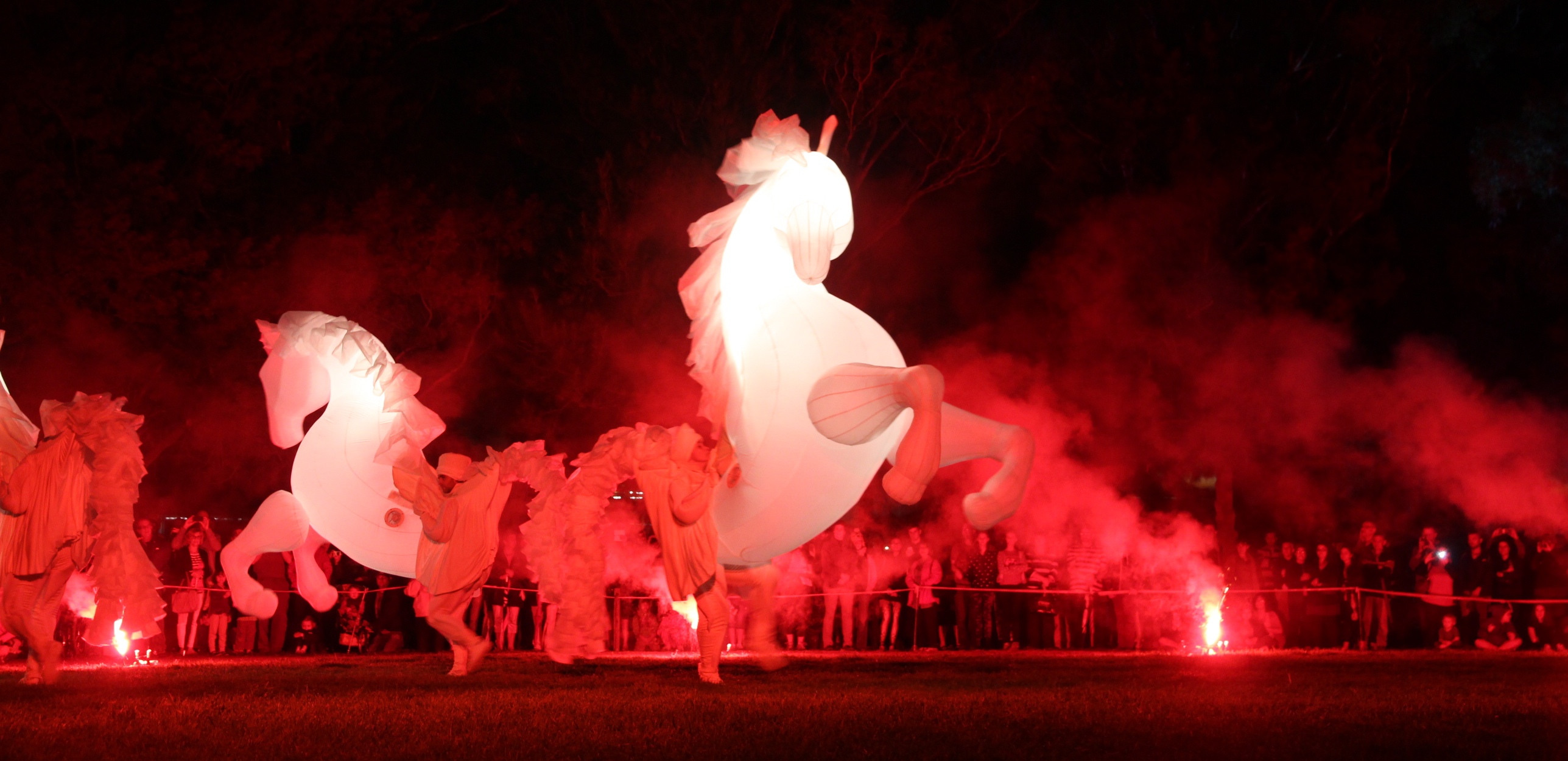
Poor John and I (and new dog, India) headed out to the last night of Enlighten—Canberra’s annual light show—especially to see the puppetry horse show.
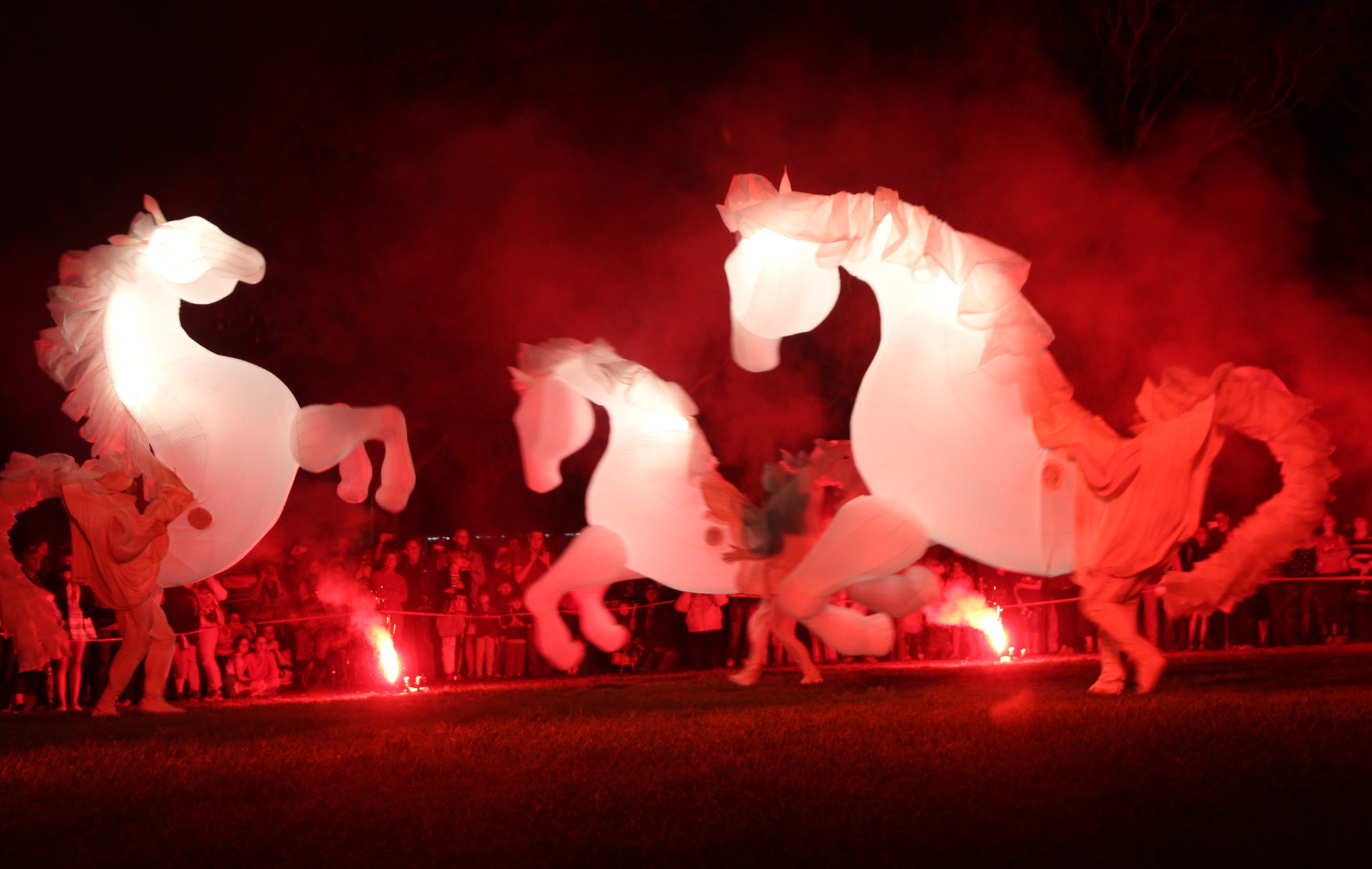
Designed and created in France, the Fiers-a-Cheval (Proud Horse) is a herd of up to nine gigantic inflatable puppets. Three of these 12-foot-tall horses came to Canberra, for their first-ever performance in Australia.
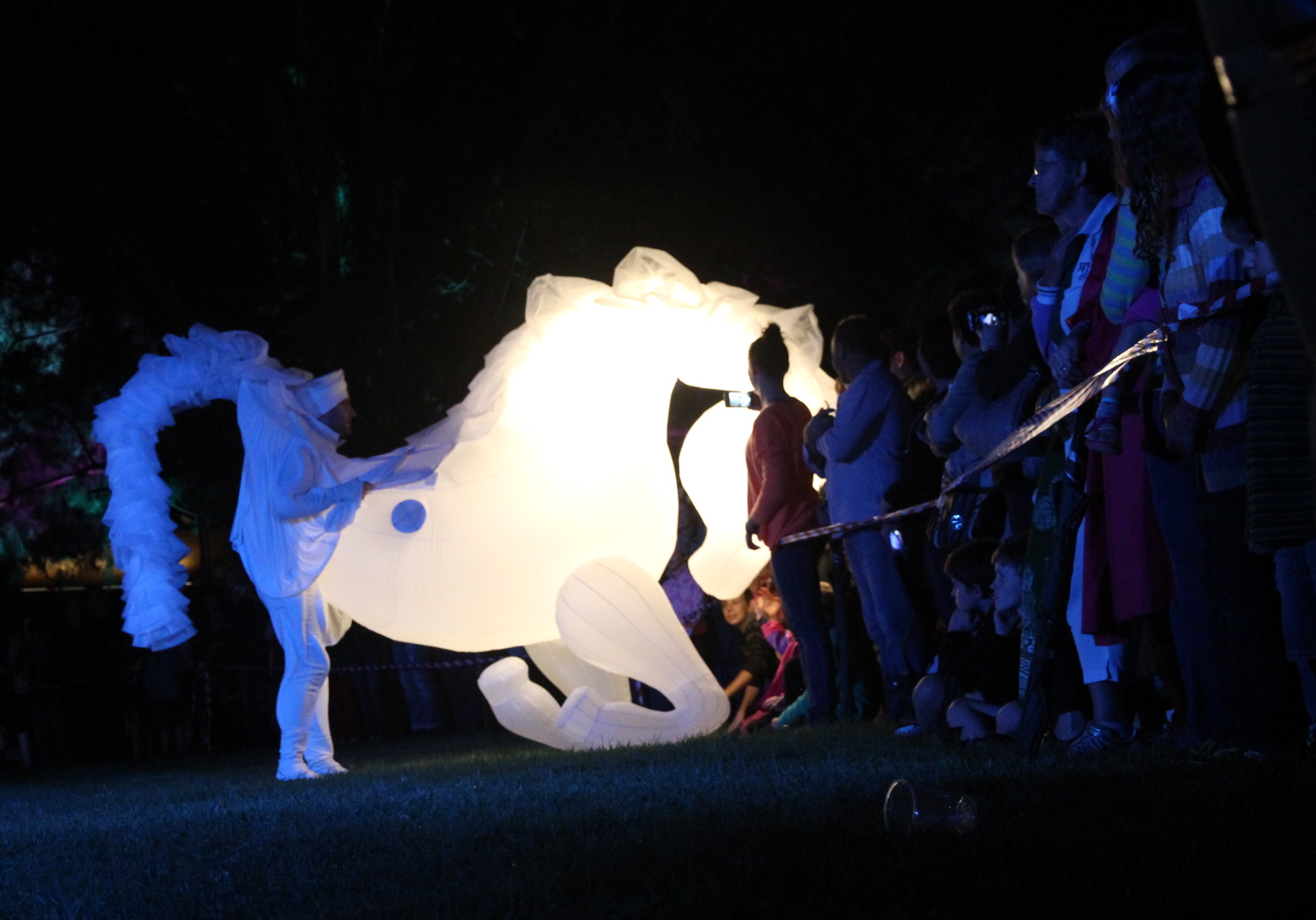
Getting pats from the crowd


Accompanied by a symphonic musical score as well as smoke and colourful lights, the horses ‘galloped’ and ‘cavorted’ through the night, captivating all ages. Two even approached the crowd to receive pats and praise.
Instead of using strings, the puppeteers—who I think were two men and a woman (hard to be sure under the turbans)—form the hind legs and tail of each horse. It’s obvious they have to combine strength and grace to bring the animals to life.
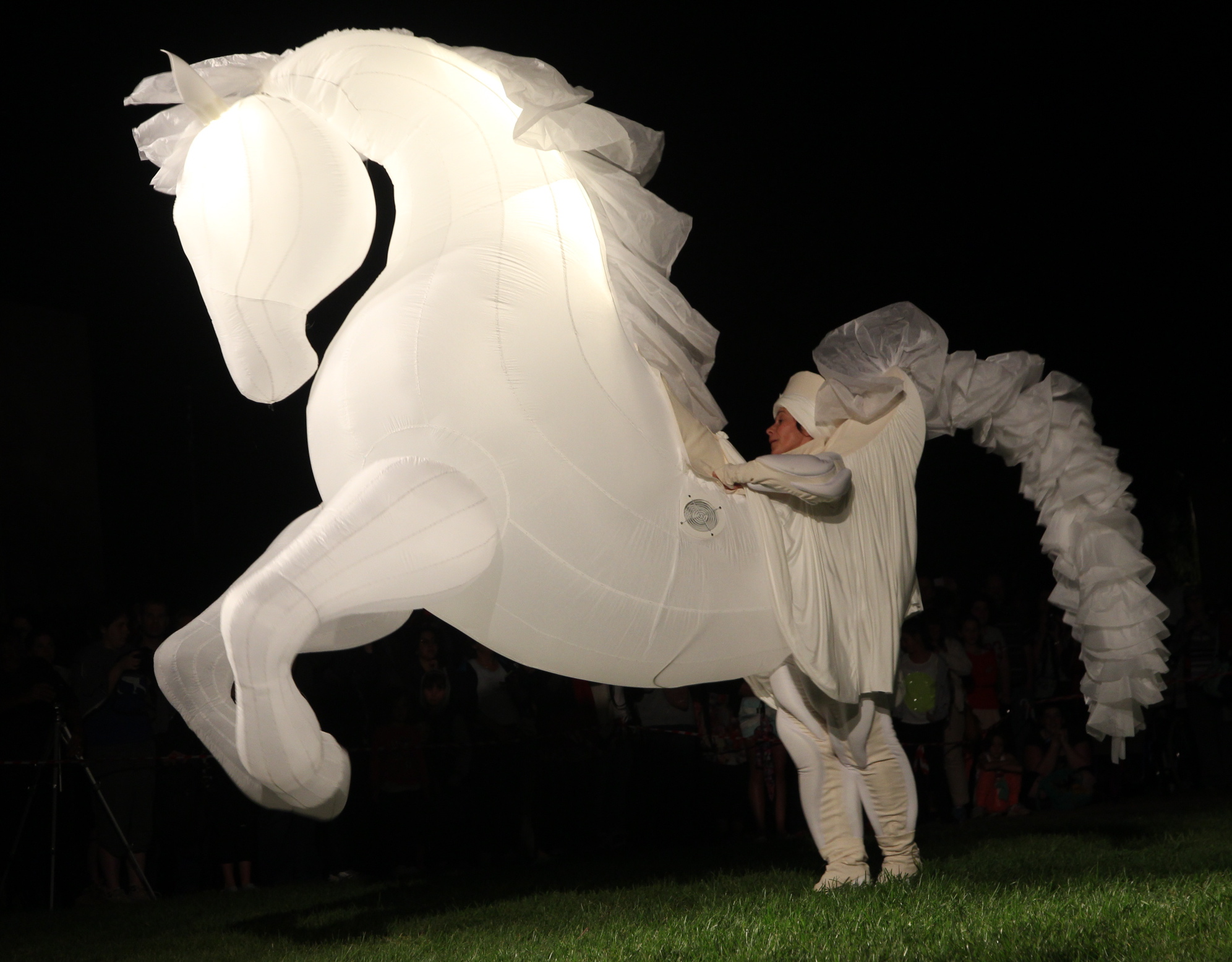


Each puppet was lit from within, and the colours changed from white, to blue, to red, to blue again, to apricot and finally to white.
The performance—there were two on Friday and two more on Saturday—concluded with each puppet being deflated and gathered into a bundle against the puppeteer’s chest.


As for me being on my knees? I got a prime spot at the edge of the performance ring but, just before the horses arrived, a woman elbowed her way ahead to me to join her husband who had saved her a place. He could have said something. Not to worry. I tapped the shoulder of another woman in front of me and to my right and asked if I could sit or kneel in front of her. She kindly obliged and I had a great unobstructed view.
And Poor John and India? They had to keep backing farther and farther up the hill because, as Poor John said, the horses scared the bejeezus out of the dog. But one of my daughters understands. She thought the horses were magnificent and creepy at the same time.

Old Parliament House
Canberra’s annual Enlighten event kicked off Friday with great weather and at least 10,000 people turning out to see six national buildings bathed in colourful artworks through the magical of projectors.
Started in 2011, Enlighten marks the beginning of autumn and is a lead-up to celebrating Canberra Day, which is observed each year on the second Monday in March.
Poor John and I arrived soon after the lights were switched on, and already there were crowds surging around the National Gallery, where we parked and started our walk to see all the displays.
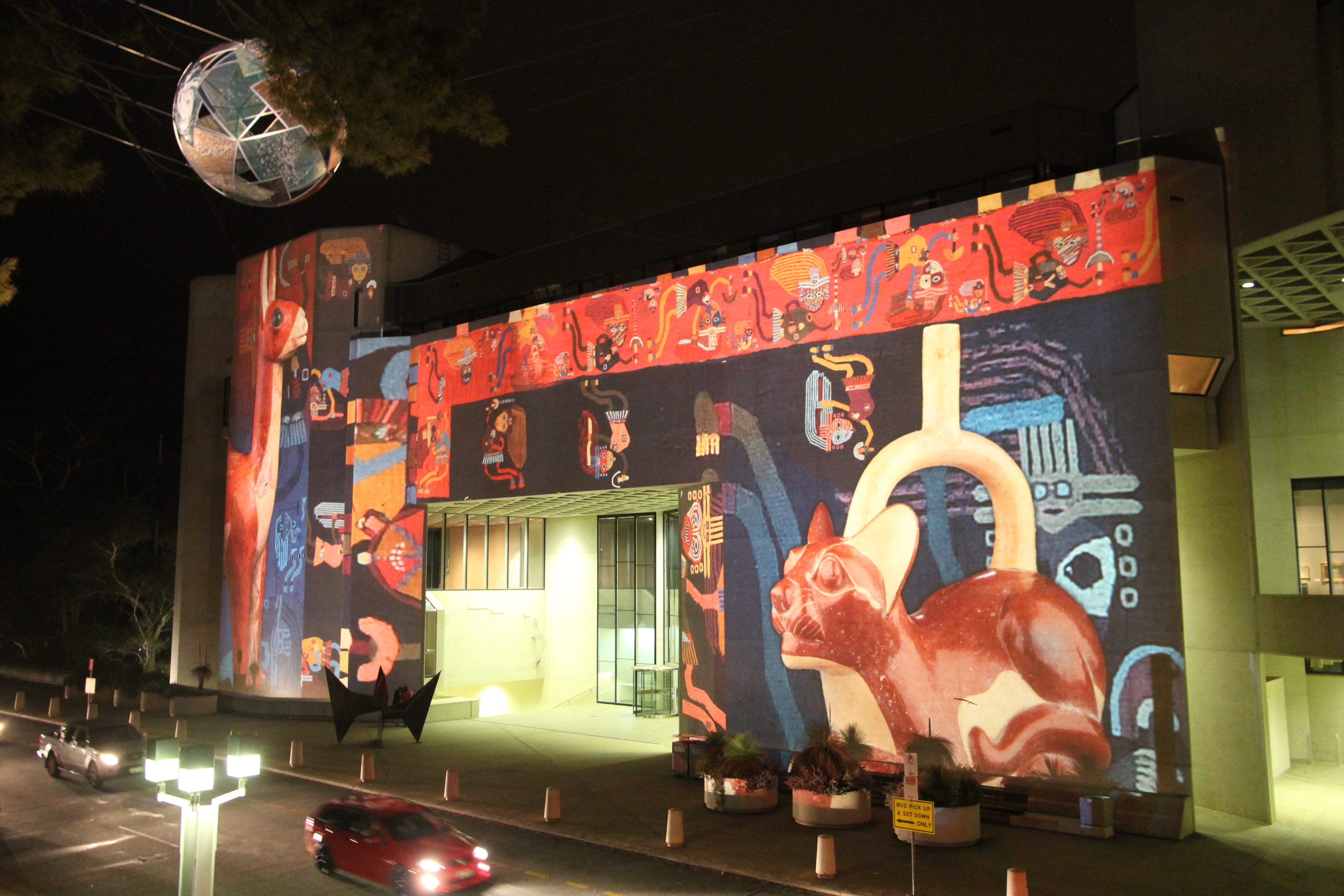
National Gallery—art from the Moche culture with stirrup vessel on right


The gallery was showing off images of the breathtaking artworks in their current exhibition, Gold and the Incas: Lost worlds of Peru.
Images cycle every couple of minutes, so it’s ideal to linger for 10–15 minutes at each building.

Fire Garden and High Court


From the gallery, we moved on to the High Court and its Fire Garden. This is the first year I remember there being a display at the court. Pippa Bailey created this artwork that had fire canisters on the court’s entry ramp and large fire displays positioned in the court’s decorative and cascading fountain.


Next stop was the National Portrait Gallery. It’s a long low building filled with paintings, sculptures and photographs of Australia’s greats and not-so greats. It also has a special photography exhibit, Elvis at 21. This collection has 56 black-and-white pics of a young Elvis before his rise to fame. Photojournalist Alfred Wertheimer took the pictures following a photo shoot commissioned by RCA Victor, which had recently signed Elvis. Be quick if you want to see it, because it ends 10 March.
Then it was on to Reconciliation Place, Questacon and John Dunmore Lang Place.

Fire and water by Judy Watson
Reconciliation Place is a symbol of the government’s commitment to the ongoing reconciliation with the Indigenous people of Australia. It has 17 important artworks. One of my favourites is fire and water by Judy Watson.
Questacon, our science and technology centre, has a wonderful cube shape and is perfect for architectural projections. This year, visitors are able to ‘splash’ colour onto the building’s exterior. Poor John and I opted to leave this fun to the many young children waiting for a turn.


Nearby was the Circle of Light. Visitors were welcome to manipulate the controls to change the colour and movements of the 12 robotic searchlights.
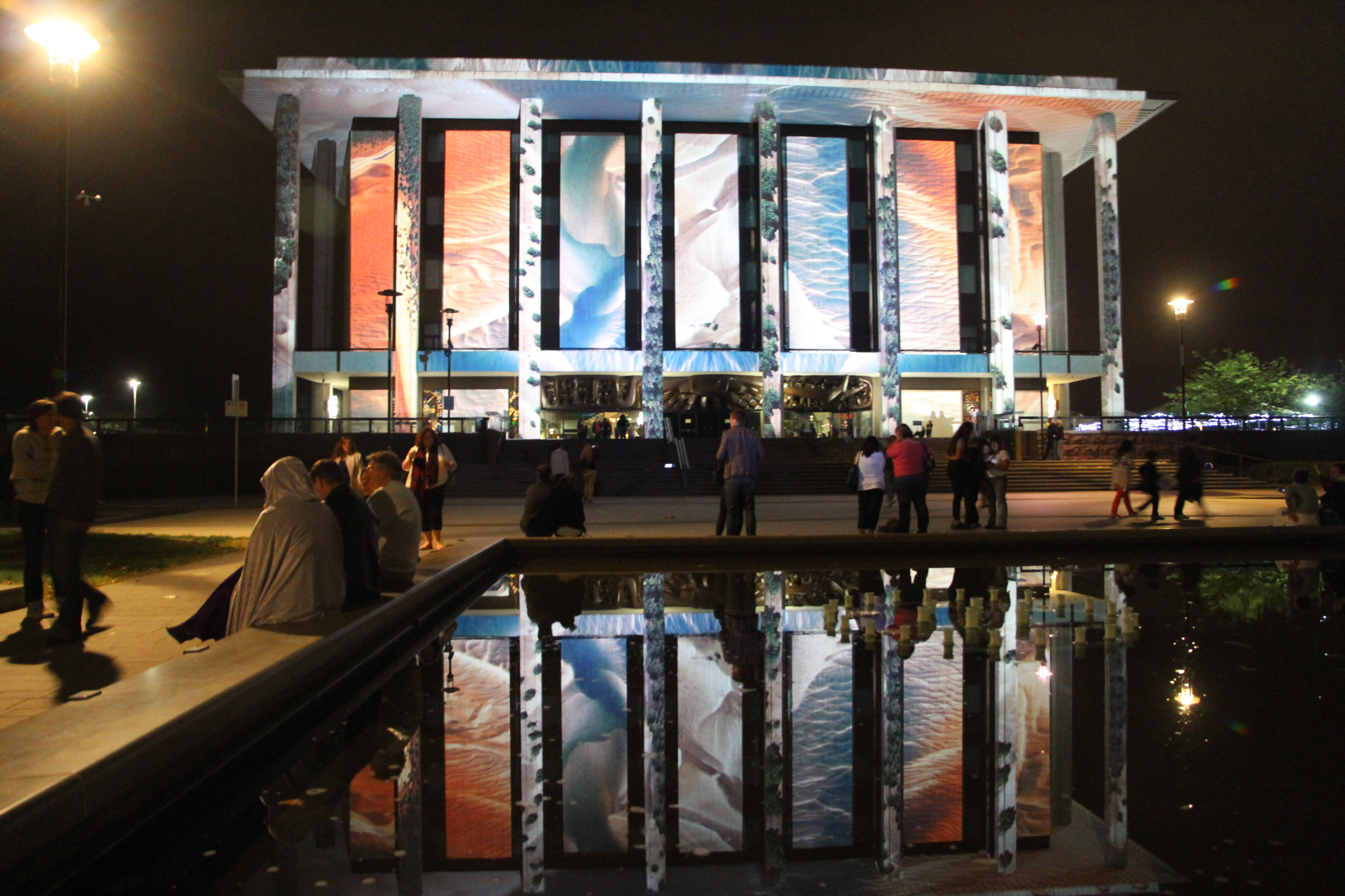
Textures and reflection


The National Library is another interesting surface for displaying the projections. Its many columns make it reminiscent of the Parthenon in Greece. We lingered there for quite a while, enjoying the seven or so different images and the reflections they made on the pond in front of the library. The library found my blog and sent along a link to a short video they made of Enlighten at their place. It’s fantastic, so I urge you to check it out.
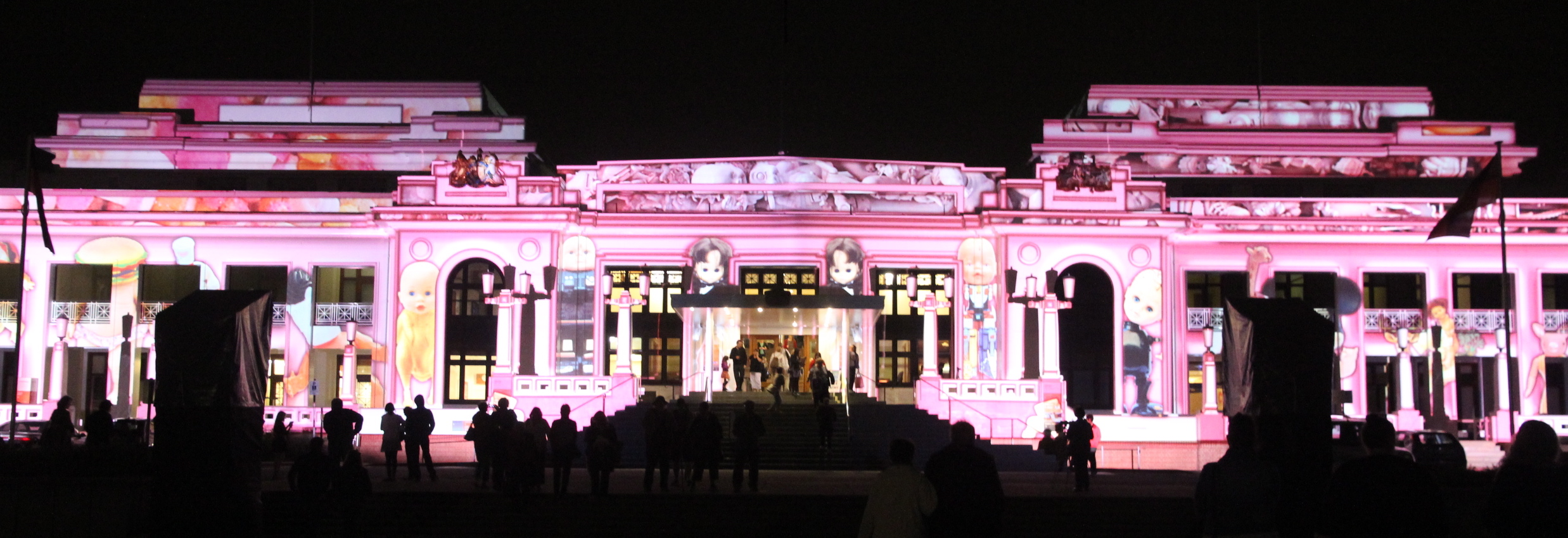
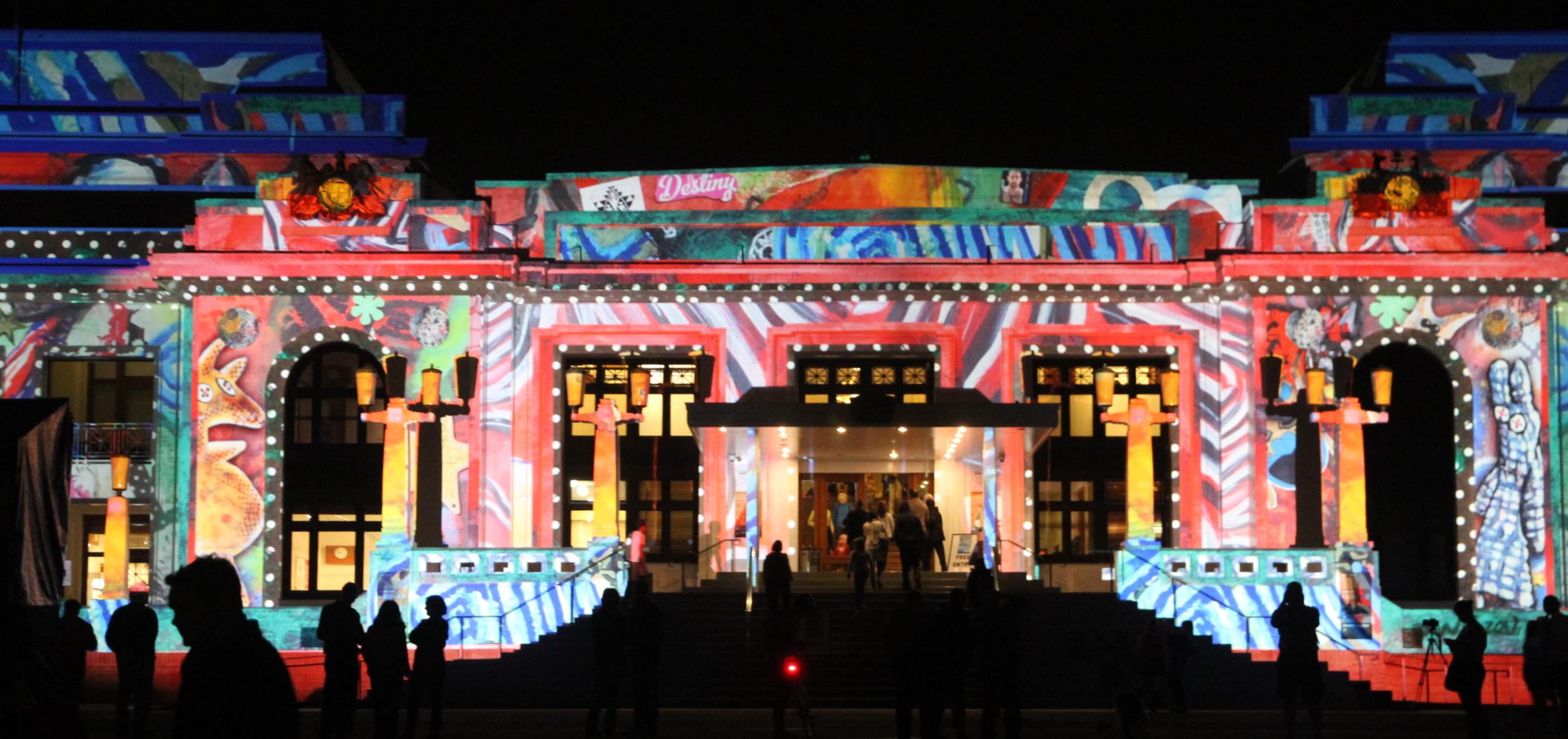
Our last stop on Friday was Old Parliament House. By day, it’s a pure white building, but Enlighten brings out its wonderful architectural lines.
We didn’t get up to the current Parliament House this time, but will pay a visit this coming weekend when Enlighten has it’s final two nights. I’m also keen to see the 12-foot-tall horse puppets scheduled for Friday and Saturday.
There are plenty of other activities going on and organisers are hoping that more than 115,000 people will attend the free and ticketed events on offer.

A Toulouse Lautrec image on the National Gallery
Get out your comfy shoes and get ready to see Canberra in a whole new light.
The annual Enlighten event starts Friday, 28 February, in the Parliamentary Triangle. If you aren’t living in Australia’s national capital, this might not make sense to you, but if you are here or nearby, this year’s program is looking fantastic.

Questacon—Science and Technology Centre

Questacon
It all kicks off with one of my favourite sights. It’s stunning to see six iconic buildings—Parliament House, Old Parliament House, the National Gallery, the National Library, Questacon and the National Portrait Gallery—become architectural canvasses.
Each will have an enormous and ever-changing lightshow splashed on its exterior. There will be animation, interactive finger painting, images from the Gold and the Incas: Lost Worlds of Peru exhibition at the National Gallery, and contemporary artworks.
The free lightshows run from 8pm to midnight for two weekends—this Saturday and Sunday and the next.
And I mentioned the comfy shoes. Believe me, it’s easy—in fact recommended—to walk from display to display because they are close to one another. Parking will be chaotic, so park and walk.
But festivities aren’t limited to lightshows. There is plenty of other outdoor entertainment—some free and some with admission.
Poor John and I are having a terrible time trying to figure out how we’ll fit everything in. Luckily a program arrived as an insert in our newspaper, so we can spend hours trying to puzzle together a plan. You’ll have to check out the details online.

Australian National Library


Look for these. A fire garden at the High Court and a herd of 12-foot-tall puppets—horses to be precise—in John Dunmore Lang Place. Or check out the local and interstate bands, and book a ticket to one of the many performances.
And then there’s Priscilla. The lighthearted, colour-splashed and hilarious movie, The Adventures of Priscilla: Queen of the Desert, turns 20 this year. There will be a special showing this Friday at the National Film and Sound Archive. Tickets are $40 and include an outdoor showing, a talk about the costumes by the designer and complimentary drink on arrival. If you haven’t seen the movie and you can’t be there, hire it this weekend and join in the laughs. Here’s some background about the movie and costumes (the designers won the Oscar).
Note: The pictures here are from Enlighten 2013. Links to some of 2012’s offerings are here.


 Where to next?