
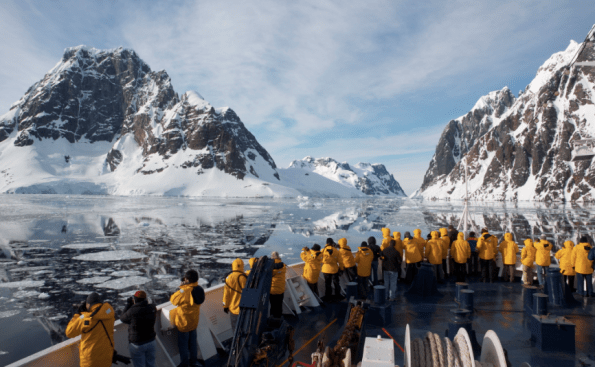
Entering the Lemaire Channel
Poor John and I are in the Antarctica aboard the Ocean Diamond. Internet connections cost a bomb, but I couldn’t resist buying some megabytes so I could share a few blog entries. More detail and photos will follow after 9 December.
Yesterday Poor John and I sailed southeast down the Beagle Channel from Ushuaia (which claims to be the world’s most southern city) on our way to Drake Passage and the beginning of a 10-day adventure in the Antarctic.
The passage is known for its wild conditions. The current swirls clockwise around Antarctica, with nothing in the way but icebergs. The water can swing from Drake’s Lake to Drake’s Shake.
Amazingly, our journey so far has been almost lake-like. I noticed when the ship entered the passage about midnight—my bed bobbed under me for a bit, but nothing kept me from actually going to sleep.
And sailing has continued to be smooth-ish, although the gentle rocking has sent some people rushing for the sick bags.
The ailing ones missed a busy day. Breakfast was at 8 with too much delicious and tempting food. Compulsory briefing after compulsory briefing followed. It’s all for our own safety.
We learned how to board and disembark a zodiac, and how to avoid damaging the biodiversity. For example, all the gear we plan to take or wear ashore was vacuumed. We were fitted for heavy-duty, waterproof parkas and boots. Wait til you see a photo of me in both.
There was a fantastic rundown on the many birds we might see and a late-night viewing of episode one of David Attenborough’s Frozen Planet documentary.
But the best bit of all came around sunset when it was announced that a couple of light-mantled sooty albatrosses and snowy sheathbills were accompanying us on the starboard side. I had enough time to walk (no running in the halls or on the stairs) to our cabin and grab my coat and camera and head to the bow on Level 4.
This is what I got for my effort! 🙂
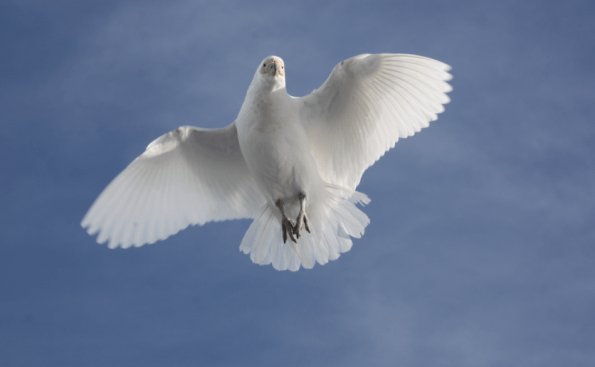
A very showy snowy sheathbill
Letting you know I’ll be missing for almost 10 days.
Poor John and I have scored last-minute berths on the Antarctic-bound ship, Ocean Diamond. I’m thrilled and still rather gobsmacked by our good fortune. We booked yesterday and board in about 45 minutes.
There is supposed to be limited wifi on the ship, so I’ll try to check in regularly to let you know where we are, but the photos and details will have to wait until we return to Ushuaia, Argentina, on the morning of 9 December.
Depending on the weather, we will take two to three days crossing the Drake Passage, then the remaining time visiting the South Shetland Islands and the Antarctic Peninsula. We may have up to three landings per day—or none. Fingers crossed for good weather all the way.
So drop back soon. Better still. Subscribe to the blog and you’ll know when I post. See you soon.
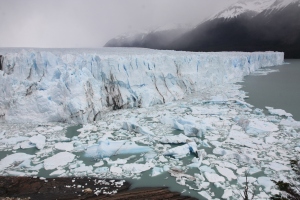
A long view of the north face of the Perito Moreno Glacier
It may have been freezing and snowing, but I was hooked. In fact, I’m hooked for life.
I had no idea glaciers were so breathtaking, so awe-inspiring, so mesmerizing, so colourful, so completely fascinating.
Approaching the Perito Moreno Glacier
My introduction to the world of these ice behemoths came in the Argentine Patagonia.
That’s where the Perito Moreno Glacier heaved, belched, cracked and groaned it’s way into my heart. Who knew these beasts made so much noise and created so much action?
We stood spellbound on the viewing platforms, waiting for the slightest indication that a chunk of ice was about to tumble into Lake Argentino in Los Glaciares National Park. You hear a crack, almost a mini explosion, and scan the face for a sign of falling ice.
Perito Moreno is immense. Its face is five kilometres long. The glacier stretches back 30 kilometres and covers a total of 250 square kilometers. It stands an average of 74 metres in height above the waters of Lake Argentino.
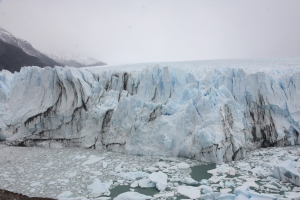
A block of ice breaks off and tumbles toward the lake
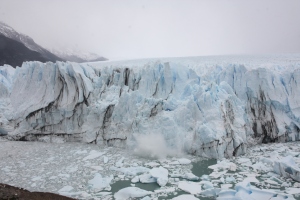
Ker-splash! Can you see where the the block fell?
It is one of 48 glaciers fed by the Southern Patagonia Ice Field in the Andes straddling Chile and Argentina. The ice field itself is the world’s third largest reserve of fresh water.
Perito Moreno is one of three glaciers in Argentina that is still growing, sometimes with spectacular results. The glacier is constantly advancing until it joins an opposite peninsula. Water then backs up behind the wall of ice until the pressure brings on a gigantic rupture. For days prior to a rupture, spectators wait for the big event. Everyone missed the last one in March 2012. It very uncooperatively came at 3am.
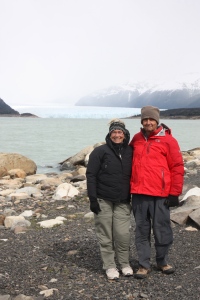
On the shores of Lake Argentino
We approached the glacier on foot, walking on the shores of Lake Argentino for almost an hour before rejoining a small bus that took us to the visitor’s centre. Then we spent ages roaming the viewing platforms and watching the north face. Our patience paid off and we saw a couple of mini icebergs ‘calve’ into the lake. I even caught a photo of one.
Later we had about an hour in a boat on the lake to get a closer look at the south face. Because we were at water level, we got a real appreciation for just how tall the glacier is, but we didn’t see much ice action (traveller’s tip: it’s probably not the best value-for-money option).
We learned a bit about the colours. Blue ice is old. The brown and yellow streaks come from sand and grit picked up as a glacier advances.
Some of our group—including Super Jong—had the extra adventure of glacier trekking, and I’ve included two of his pics.
Another member, Janet, visited the glacier in 2005. At that time, the 40,000 tourists who arrive each year had limited access to the glacier face. Today there are 10 times as many people coming. They can enjoy kilometres of elevated walkway, with large viewing platforms that get them up-close-and-personal with the ice.
I plan on getting up-close-and-personal with a glacier again soon. It’s an amazing and highly recommended experience.
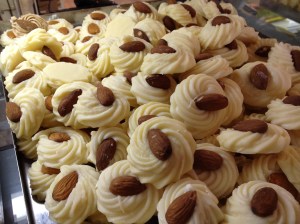
How about something with almonds?
How in heaven’s name does a small bakery in a village at the end of the earth become a hot favourite with everyone who passes by?
I’ll tell you how! The Panaderia La Union in Tolhuin, Tierra del Fuego, makes sensationally delicious baked goods and chocolates.
Before we were to cross from Chile to Argentina, Sammy our tour leader, asked if we wanted to have lunch at a terrific little bakery about an hour’s drive north of Ushuaia, which really is at the southern end of the earth.
There was universal agreement that after six days on a farm in remote Chile, we were all hanging out for some indulgence.
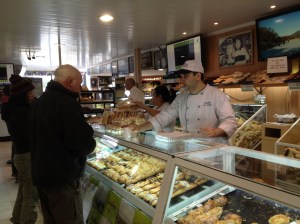
Tony tries to choose
Panaderia La Union did not disappoint.
Everything about it is a success—the pictures of the locals who have caught ginormous fish, the chocolates and baked goods, and the free WiFi. We could have stayed all day, but we only had just over an hour to stuff ourselves with everything on offer.
Poor John and I got an assortment of empanadas—I liked the chicken best—as well as some churros and other sweets. We resisted the chocolates simply because we couldn’t make up our minds.
What would you have chosen?

What a backdrop for camping in Chile
This overland trip has delivered a first for us—a camping stay on a remote farm.
This wasn’t just any farm. It’s located on the outskirts of the Torres del Paine National Park in Chile and, more or less, set up as a campground.
Now imagine this. We’re in the very south of South America. It’s November and almost summer. It’s blowing, snowing and raining. It’s Thanksgiving Day.
The big bonuses are stunningly beautiful scenery, a spacious cookhouse with two wood fires and tables and chairs, running water, shelters for some of the tents, hot showers, toilets and toilet paper.
Over the next six days we made the most of everything.

Quick drying laundry—note the angle on Poor John’s blue shirt
Hot showers were top of the list, along with laundry. Water tanks had to be refilled twice a day—with water pumped from a well or the nearby river, Rio Cerrano.
Keeping the fires going was important too, which meant chopping, gathering and splitting wood. There were hikes in the national park, horse riding, fishing, cooking, long walks around and near the farm, and a lot of card playing. There were even bridge lessons!
It was freezing cold, and most everyone took a night or two to figure out how to stay warm in their tent. Here’s a tip. Put a towel or a sarong between your roll mat and sleeping bag—helps to distance you from the cold ground.

Barbecuing the Patagonian lamb
In spite of the cold nights and howling winds, the weather wasn’t too bad during most days. Our laundry dried in a couple of hours even though the temperature was about 8°C or 46°F! Mind you our hands nearly froze doing the washing.
Boredom set in. The overall stay was longer than it needed to be, except for the group who did a three-day hike in the Torres del Paine (I’ll write separately about that and some hikes I did), and even they got bored in a day.
That said, a huge highlight was the barbecued Patagonian lamb the farm owner cooked for us on the night the long-distance hikers returned. He cooked it in the traditional Patagonian way—with the whole lamb butterflied. I have no idea what herbs he used but it was, without doubt, the tastiest lamb I’ve ever had in my life.

Gauchito Gil banner
From the moment we arrived in Argentina, we began seeing shrines decorated in red.
At first I thought they were graves but Sammy, our tour leader, explained they are tributes to the legendary Gauchito Gil.
Gauchito Gil, whose full name was Antonio Mamerto Gil Núñez, is Argentina’s most prominent and revered gaucho saint. Born in about 1840, he has a long history, but his reputation soared when he became an outlaw and Robin Hood figure who sought to protect and help the needy. Some also thought he was clairvoyant.
The police finally caught up with him in a forest in 1878. They tortured him and hung him by his feet from a tree. As one policeman was about to kill him, Gauchito Gil said, ‘Your son is very ill. If you pray and beg me to save your child, I promise you that he will live. If not, he will die.’ The policeman dismissed the offer and cut Gauchito Gil’s throat.

Detail on a Gauchito Gil shrine
It turned out Gauchito Gil spoke the truth. The policeman returned home to find his son gravely ill. He prayed to Gauchito Gil and the son recovered. The policeman was so grateful he gave Gauchito Gil’s body a proper burial, told everyone of the ‘miracle’ and built a shrine to honour the ‘outlaw’.
He’s still honoured throughout the country. January 8, the day he died, is marked by celebrations with dancing, singing, drinking and sporting events. There is even a campaign to have Gauchito Gil sainted by the Catholic Church.
We saw shrines, large and small, from north to south. And I especially loved the ones with plaques, flowers, elaborate decorations and long letters of requests for favours. One letter, pinned to a shrine, was 10 pages long.

Roadside shrine to Gauchito Gil
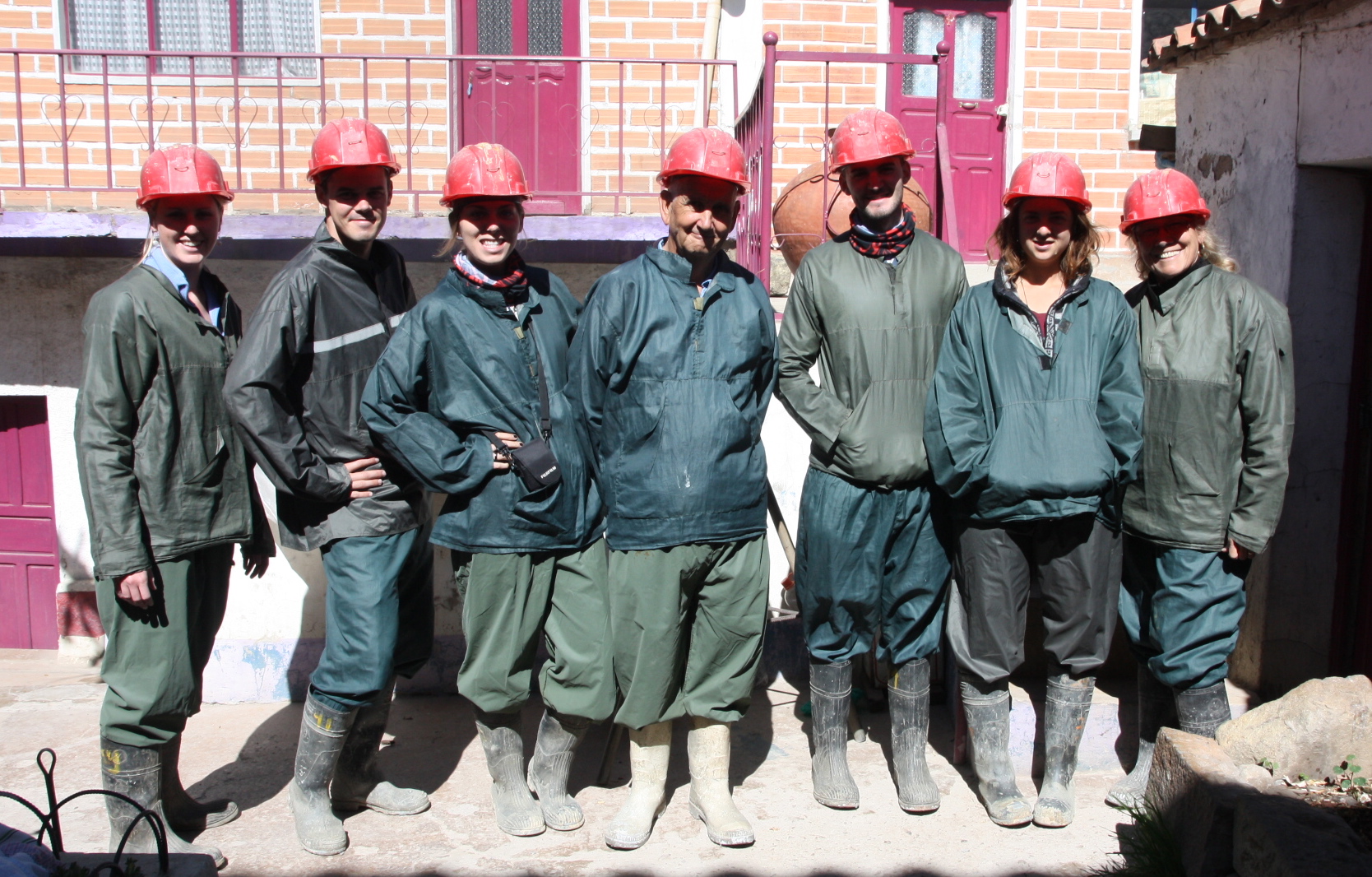
All kitted out for a mine tour with Julia, Tom, Rael, Poor John, Matt, Louisa and me.
No one will ever know how many died working the silver mine in Potosi, Bolivia. Some say millions, which may be too high, but it certainly was in the thousands.
Cerro de Potosi—often referred to as Cerro Rico or Rich Mountain—was the mountain made of silver ore.
Legend has it that one night in the 1500s, a shepherd lit a fire on the mountain and a silver substance oozed out. The Spanish got wind of the news and descended on Potosi with greed and manpower.
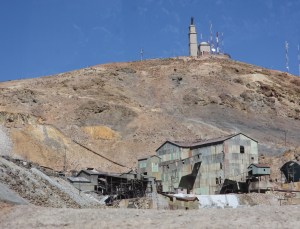
Some of the mine at Cerro Rico
Potosi produced so much wealth it became one of the largest and richest cities in the Americas and the world. They say there was enough ore to build a bridge of silver from Potosi to Madrid, and then enough more silver to make it worth carrying it from one to the other.
That bridge could have been lined with bodies as well. Working in the mine was never easy. Exposure, mercury poisoning, brutality were the norm—and the labourers paid the price with their lives. Altitude was a problem too. The mine is located at 4160 metres, and miners chewed (and still do) coca leaves to help them fend off altitude sickness.
At first there were indigenous workers. But in the early 1600s, when Indian miners were dying in the thousands, Madrid began to let African slaves be imported.
More than 30,000 were brought in the colonial period. It’s said that it was cheaper and faster to replace four mules with 20 Africans.
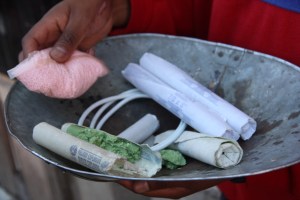
Things we purchased for the mine tour
By 1672, a mint was established to coin silver. At that time, Potosi grew to 200,000 inhabitants and almost 90 churches were built. Some believe the dollar sign stems from the local mint mark—the overlaid abbreviated letters of Potosi (PTSI).
The silver was depleted by the 1800s and tin became the main product. By then, the height of Rich Mountain had dropped by several hundred metes.
Some of us took a tour of the mine. Our first stop was at an over-priced market where we bought water, coca leaves, pure alcohol, dynamite and other essentials to give to the miners we would see that day.

Our guide shows us a shrine deep within the mine
It was a Sunday—the weekly rest day—so we didn’t expect to encounter many miners, and in the end we left our gifts at various points in the mine itself. We left quite a few
The underground tunnels are low, narrow and cramped. We wore overalls, gumboots, hardhats and headlamps, bent at the waist for a lot of the tour, and waded through ankle-deep water at times.
It was sad to see the conditions and be confronted with how hard these people had to work to barely eke out a living. Unfortunately, times haven’t changed much. We learned that there are no—well very few—old miners. They breathe in silica for many years and die at a young age—about 40—from silicosis.
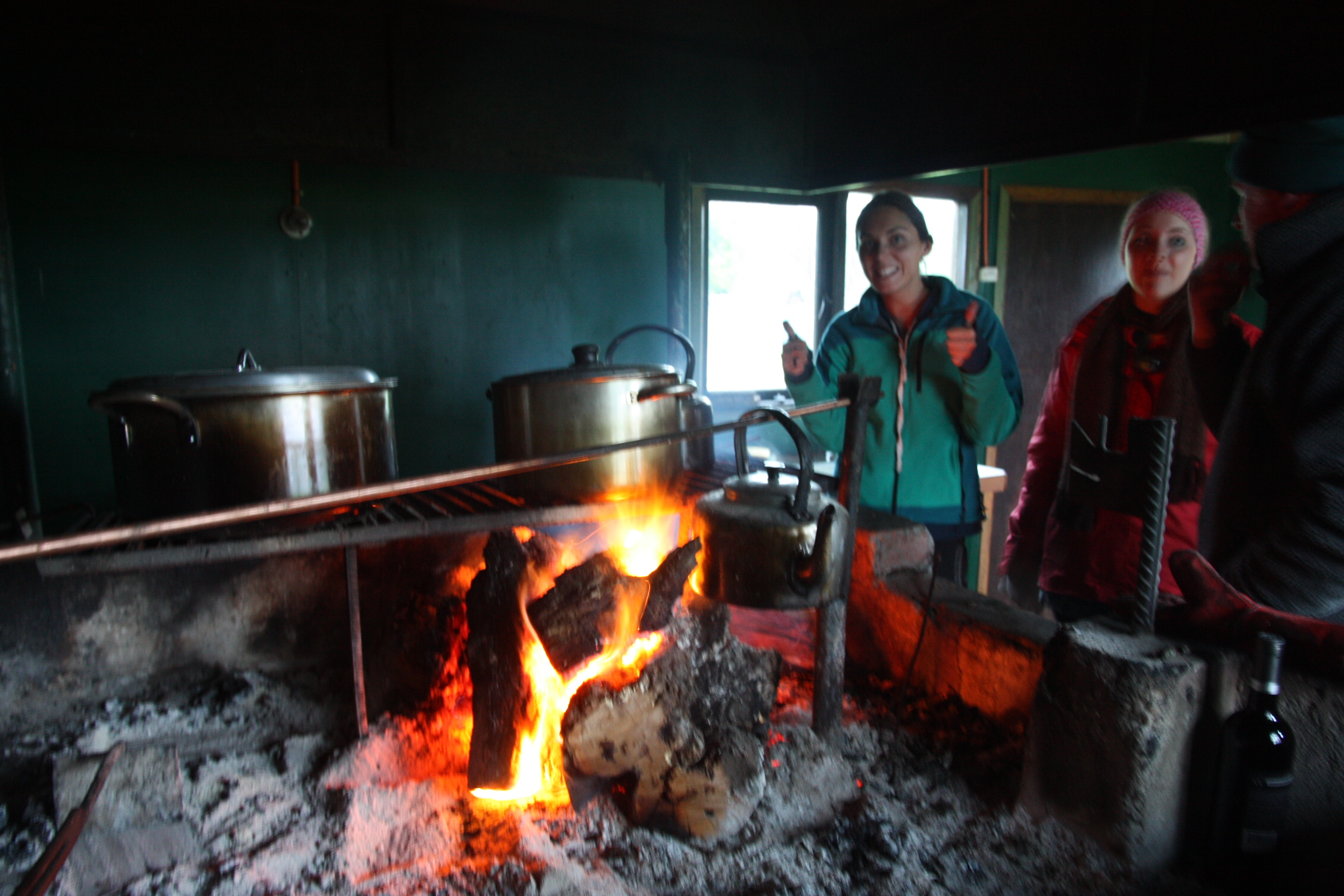
Rael and Lauren keep an eye on the huge fire bed where turkey stew is cooking.
No doubt about it, Thanksgiving is my favourite US holiday—because it’s about sharing food with friends and family.
Every few years, I throw a Thanksgiving shindig in Australia. The invitation list is always pretty much the same, and guests are asked to bring their signature dish. I’m not talking about their prettiest plate, but what they put on it. Then I roast a couple of turkeys and legs of lamb, bake at least four pumpkin and pecan pies, and make anything else I think might be missing.
There’s some history relating to signature dishes. When strawberry-tart maker moved back to the UK, she ‘left’ her recipe to another Thanksgiving regular. One year when I called to invite the pavlova makers, and they asked if the mud cakes were coming. Invitees are very serious about the menu!
That said, we’ve been travelling extensively since 2009, so I’ve neglected Thanksgiving for the last few years and I expected to do the same this year.
Heck, we’re on an overland truck trip in South America, and this Thanksgiving we camped on a remote farm in Patagonia in the south of Chile.
On Thanksgiving Day, we stopped in a small town—Puerto Natales—on the way to the farm so our cook groups could buy ingredients for three days worth of dinners and breakfasts. We were to cook first. I bought the makings for chicken stir-fry—but our meat was frozen solid, so the next group said they’d cook instead.
They’d bought everything they needed for a chicken stew—a great choice because the weather was cold and they’d be cooking over wood fires.
Imagine everyone’s surprise when they opened the meat to discover they’d bought was nice big slices of turkey leg—osso bucco pavo. Things like this happen when no one in the cook group can read Spanish!
So we had turkey stew (with plenty of vegetables) and mashed potatoes for Thanksgiving and a sit-down meal to boot—a rare event when you usually camp and cook outdoors over an open fire.
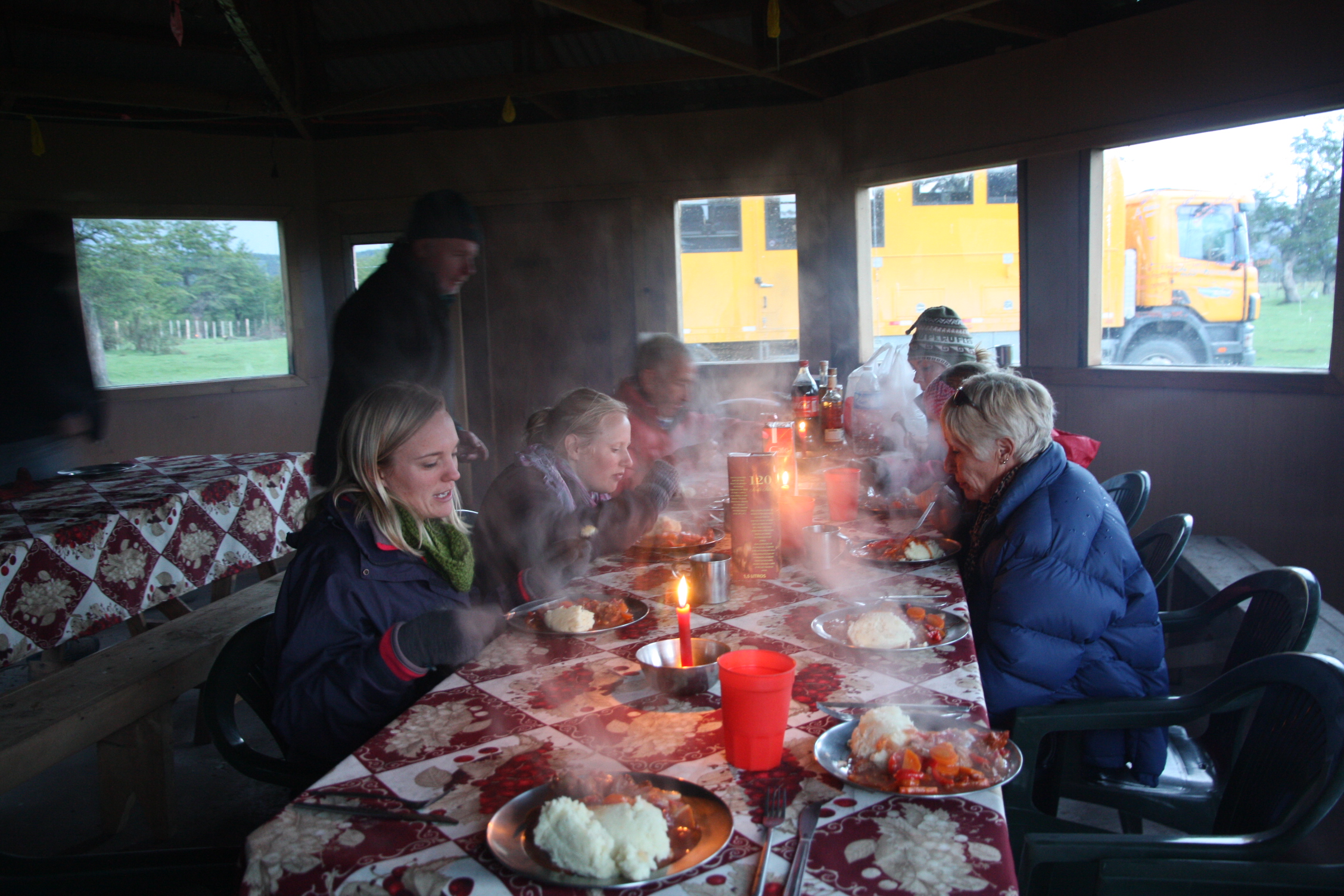
Sitting down to Thanksgiving dinner in Patagonia.
I haven’t dropped off the edge of the world.
We cross from Argentina to Chile tomorrow and will spend five or six days out of civilisation. No internet, minimal electricity, but I hear there’s a fireplace and hot showers. I’ll try to come back with lots of news and pics.
In the meantime, I want to wish my friends and family a wonderful and joyous Thanksgiving. Have some turkey for me.
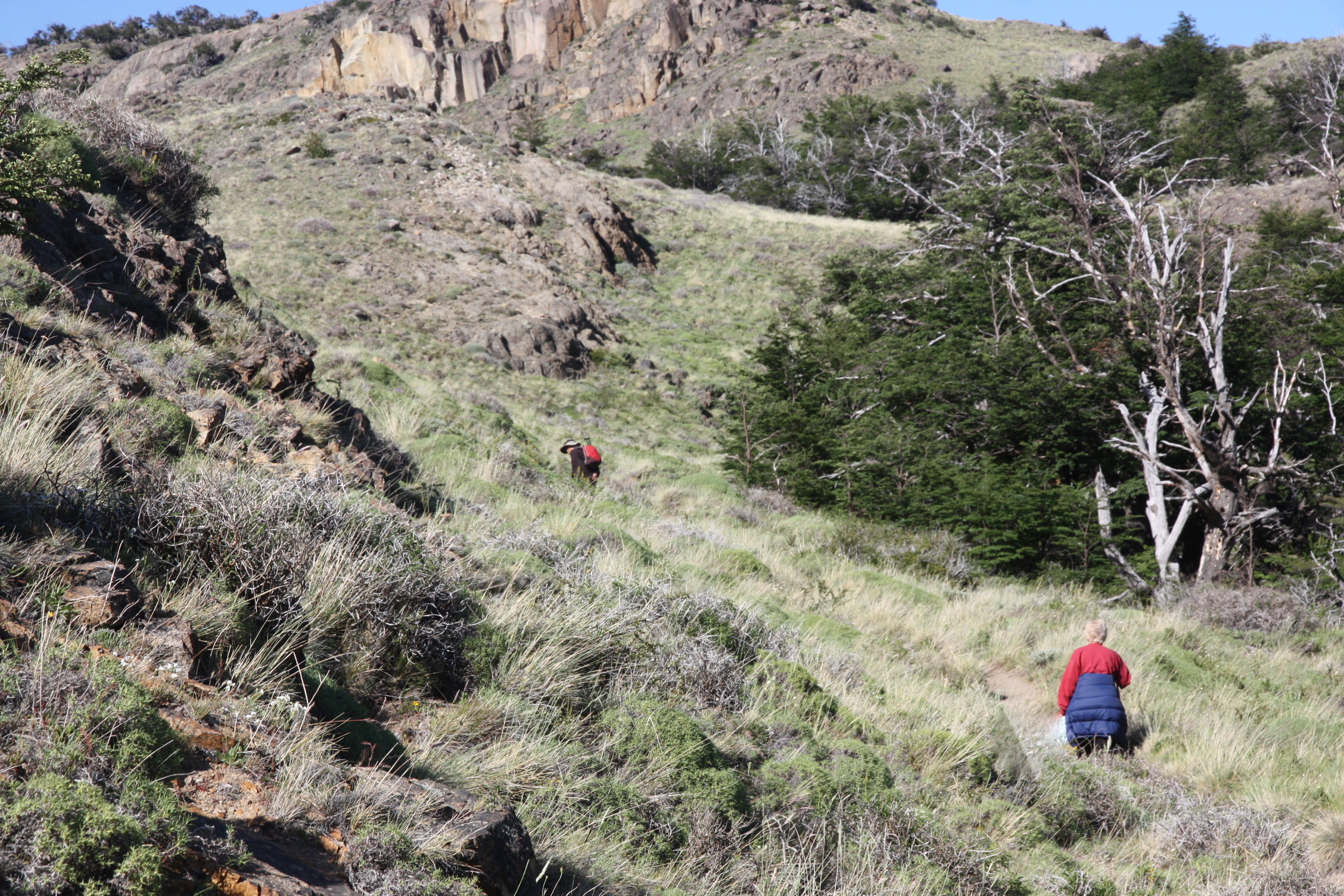
Poor John and Janet start up the hill. I’m dawdling.
Super Jong may have done two giant treks in one day in the Fitzroy Range, but Janet, Poor John and I at least managed to do one six-hour expedition.
Soon after breakfast, we headed out of El Chaltén at the foot of the range in southern Argentina. Our destination was Laguna Torre, about 11 kilometres away, which is fed by the Torre Glacier.
As these things happen, the start of the trek was a gravelly, semi-vertical climb that had me cursing Poor John under my breath. Steep and gravelly are my most-hated and terrifying terrains. I know that if I go up, I’ll have to come down, and I’d rather not make that exit on my bum or head first.
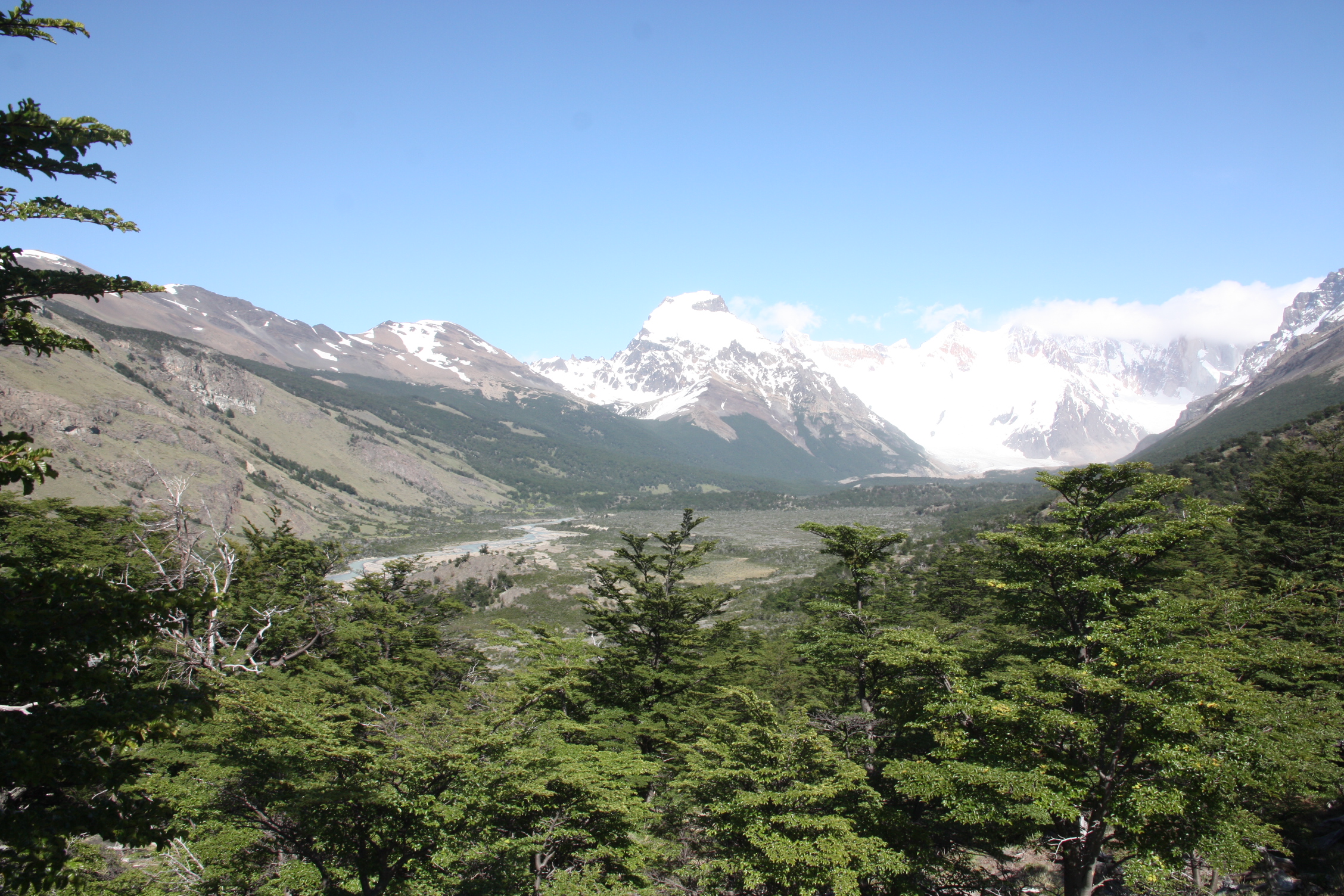
View on the trek to Laguna Torre
Poor John, as usual, strolled along with his hands clasped behind his back—a nonchalant pose that is genetic in his family and implies that he’s merely out for a leisurely walk around the block.
Within 30 minutes, the terrain leveled out and we began to see the views that make the struggle worth the effort. It was a clear day, but the wind presented the biggest challenge.
The last 30 minutes we walked into gale force winds that had us struggling to stay on our feet. The last incline was loose gravel, but not at all steep. When we finally reached the lake, we were relieved to find that previous trekkers had built a stone shelter that offered a little bit of protection. Obviously, it must be windy all the time.
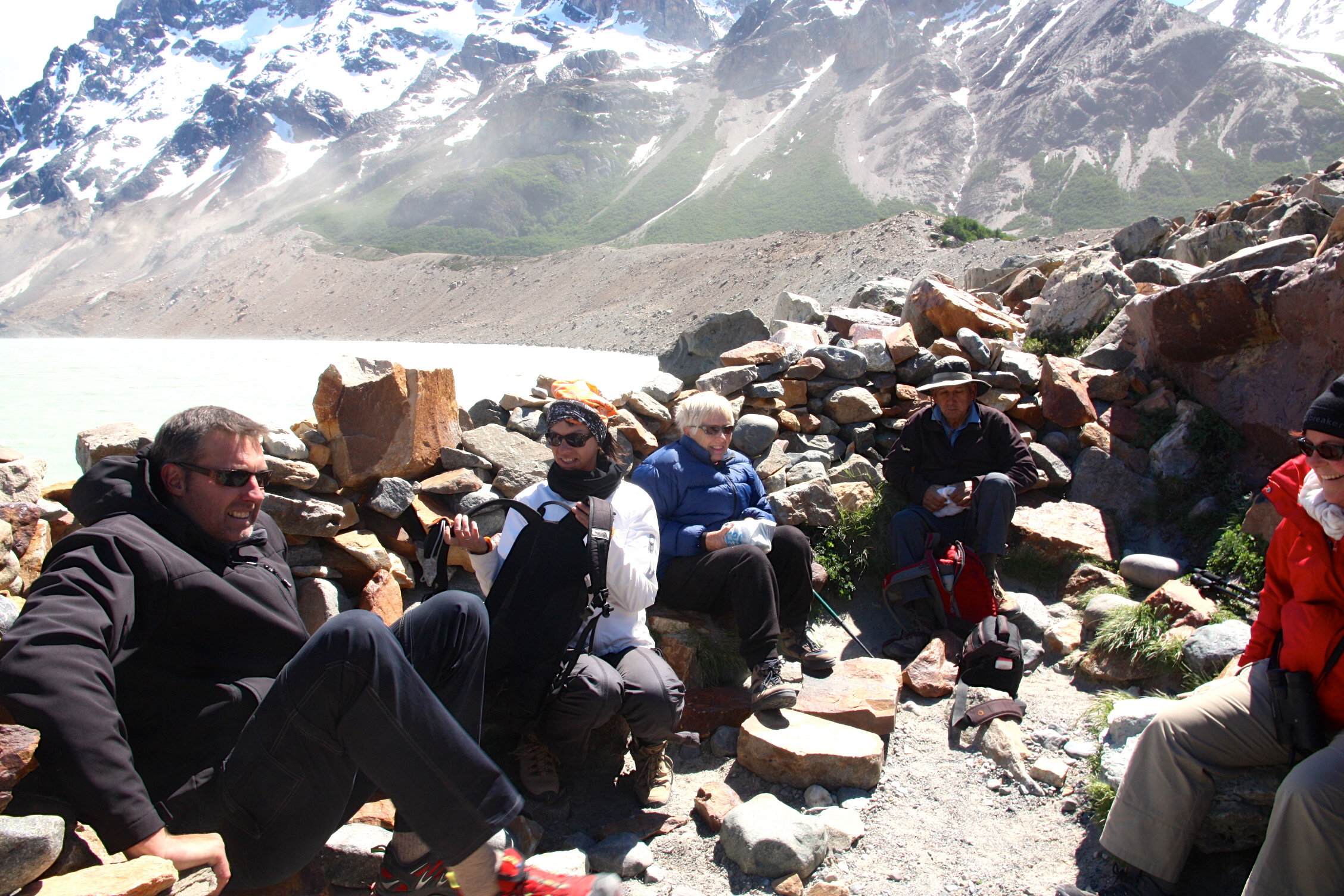
Sheltering at Laguna Torre
Quite a few people huddled in the shelter and had lunch or just took a break, popping up from time to time to snap a pic. One fellow ventured to the shore, stretched out his arms and leaned into the wind, which held him up.
That was the wind that was at our backs as we descended and it was hair-raising—literally. I saw my shadow in front of me and it looked like an image of Marge Simpson on a bad hair day.
The wind was so strong that we often stood for several minutes, digging our feet into the gravel, clinging to our walking sticks and waiting for a brief lull before taking another step. I was blown off my feet once. We were buffeted almost all the way back, except when we had brief stints in the trees.

Almost able to fly in the wind at Laguna Torre
About two-thirds of the way back, we diverted from the path we took up in an effort to avoid the vertical descent I was dreading. Careful what you wish for. Some parts of the second path were better, but some were worse. But it’s a good day if I arrive home without any broken bones.
We took eight hours. I’m slow. I dawdle, daydream, take photos, but I was pleased to see the sign at the bottom that said the one-way duration was four, not three, hours.
About El Chaltén
A little note about El Chaltén. It was created in 1985 as an outpost along the Argentinian–Chilean border.
The weather Is horrible, but the scenery is stunning, so the village has become a tourist destination—and a mecca for mountain climbers. Mount Fitz Roy is known for its sheer faces. Our hostel was full of climbers and trekkers.
The community shuts down in winter—June to September. The server in the bakery said it becomes a ghost town. She, like many other workers in El Chaltén, goes home to Spain around the end of May and enjoys a northern hemisphere summer. Does this mean there are no border issues in the middle of winter?
 Where to next?