
A blog reader has let me know that—at least in Australia—phishing ads are appearing at the bottom of my entries. Gosh, this annoys the crap out of me—not that he told me, but that the ads are happening.
I have no control over the ads here. The site is free for me to use and I don’t earn any money from it. That said, I recently paid $20 to get more space because I was running out of free room.
Phishing ads try to trick you into clicking on something (they often promote free giveaways).
They masquerade as a trustworthy or a temptingly provocative site, but they really want to grab information about you, such as your usernames, passwords and credit card details.
So my plea is don’t get sucked in. Don’t click through to promises that are too-good-to-be-true. Trust me, no grocery stores are giving away vouchers for $400 worth of goods.
Here’s a link relating to the ad my informing reader has been seeing. The story has other links with more detail about phishing.
I have to confess that I can’t see these ads. In South America, the ads are in Spanish, so I’m not sure exactly what they say. The one I see most often has a pic of a horoscope, which makes me wonder?
As an aside, I tried to purchase an ad-free version of this blog, but it says it is not an option available to me. No idea why, but I have written to WordPress to tell them about the phishing and ask why I can’t get an ad-free option. Stay tuned for updates.

Jong overlooks Laguna Torre with Mount Fitz Roy in the background
There’s no doubt about it, Jong is the dynamo of our trip. He treks to places and sees sights that none of the rest of us get to. He’s got the pictures to prove it and he does it all in record time.
Take this week, for example, when we were in el Chaltén in southern Argentina. Two days ago, we were given a choice of trekking for eight hours to see Laguna de los Tres and a great view of Mount Fitz Roy, or trekking for six hours to see Laguna Torre and the glacier feeding into it. The eight-hour hike could be shortened by about an hour if you paid 50 pesos ($10) and rode a bus up the steepest part at the beginning.
Enter Super Jong, who did both in less than nine hours, and looked rather sheepish when we all gaped in wonder at the tale and photos of his expedition.
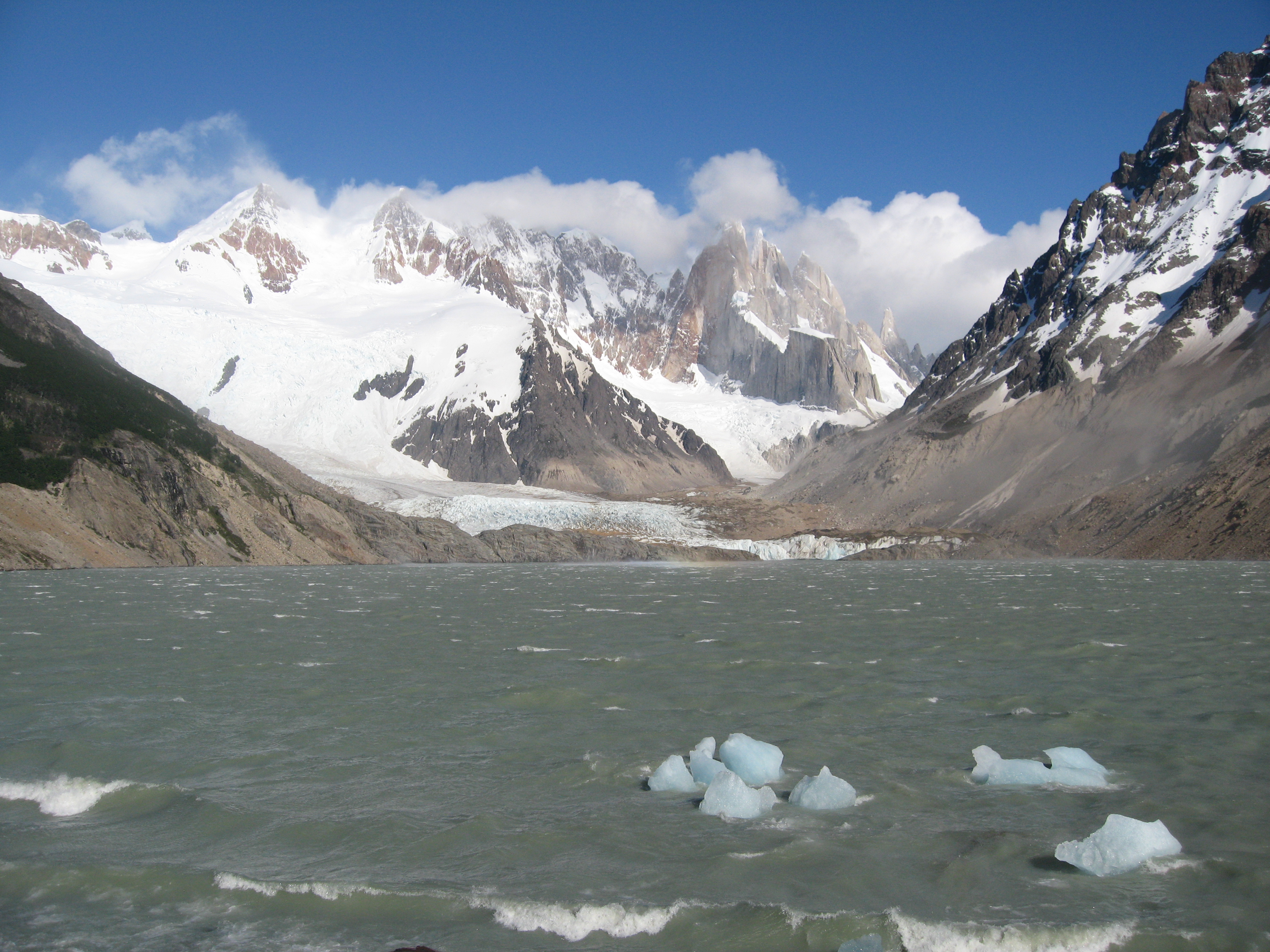
Icebergs in Laguna Torre with Torre Glacier in the background
Granted, he trekked to Laguna Torre first and then came halfway back and cut across to Laguna de los Tres. Then he trekked down the steep bit that the others had travelled by bus. He admitted later that he could have done it faster, but he met a fellow Korean and they chatted and dawdled on the way back. We reckon Jong covered about 40 kilometres—perhaps more because Poor John and I did just the Laguna Torre trek, which was a 22-kilometre round trip.
Yesterday, Jong decided to take it easy. He even contemplated a complete rest day, but by noon he was getting antsy so he set out on a short trek. That covered a mere 27 kilometres and took him up through the snow to a vantage point where he could look down on Laguna Torre and its glacier.
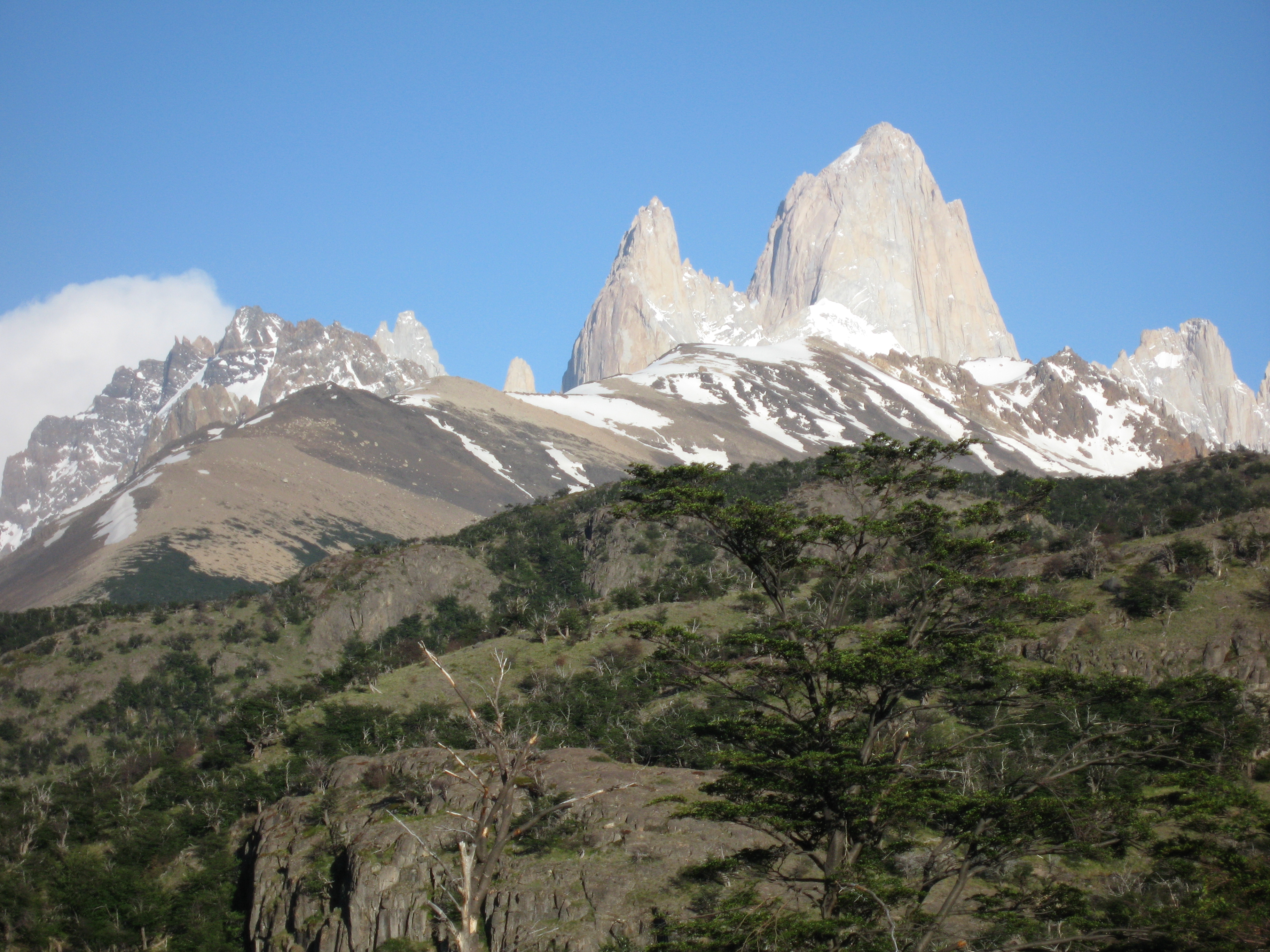
Mount Fitz Roy on a clear day
It’s not just that he treks with such gusto—he carries weights that impressed even the porters on the Inca Trail to Machu Picchu. Sometimes he even manages to tuck in a bottle of red wine. This man knows how to trek with energy and in style.
Those of us who did the Lares Trek to Machu Picchu had packhorses to carry our gear, but the many steps of the Inca Trail meant those trekking this path must carry their own pack, or pay a porter to carry it for them. Porters are a bargain at $45 per person for three days and up to seven kilos in weight.
Everyone in our party of Inca trekkers took the carry-it-for-me option—except Jong. He carried his own pack, which weighed closer to 10 kilos, led the walk much of the way and was offered honorary membership in the Porter Hall of Fame.
In a couple of days, many in our group are doing a three-day, W-shaped trek in the Torres del Paine in the very south of Argentina. It’s called W-shaped because it’s up and down and looks like a ‘W’ on the map. The name translates as Towers of Paine, but I suppose that refers to a person and not how you’ll feel at the end of the journey. That said, we’re guessing Jong might finish the entire route in a day and a half.
We sometimes wonder if after his year of travel, which ends early in 2013, Jong will decide not to return home to Korea and take up a porter’s position in Peru.
P.S. All the photos here were taken by Jong or a fellow trekker.
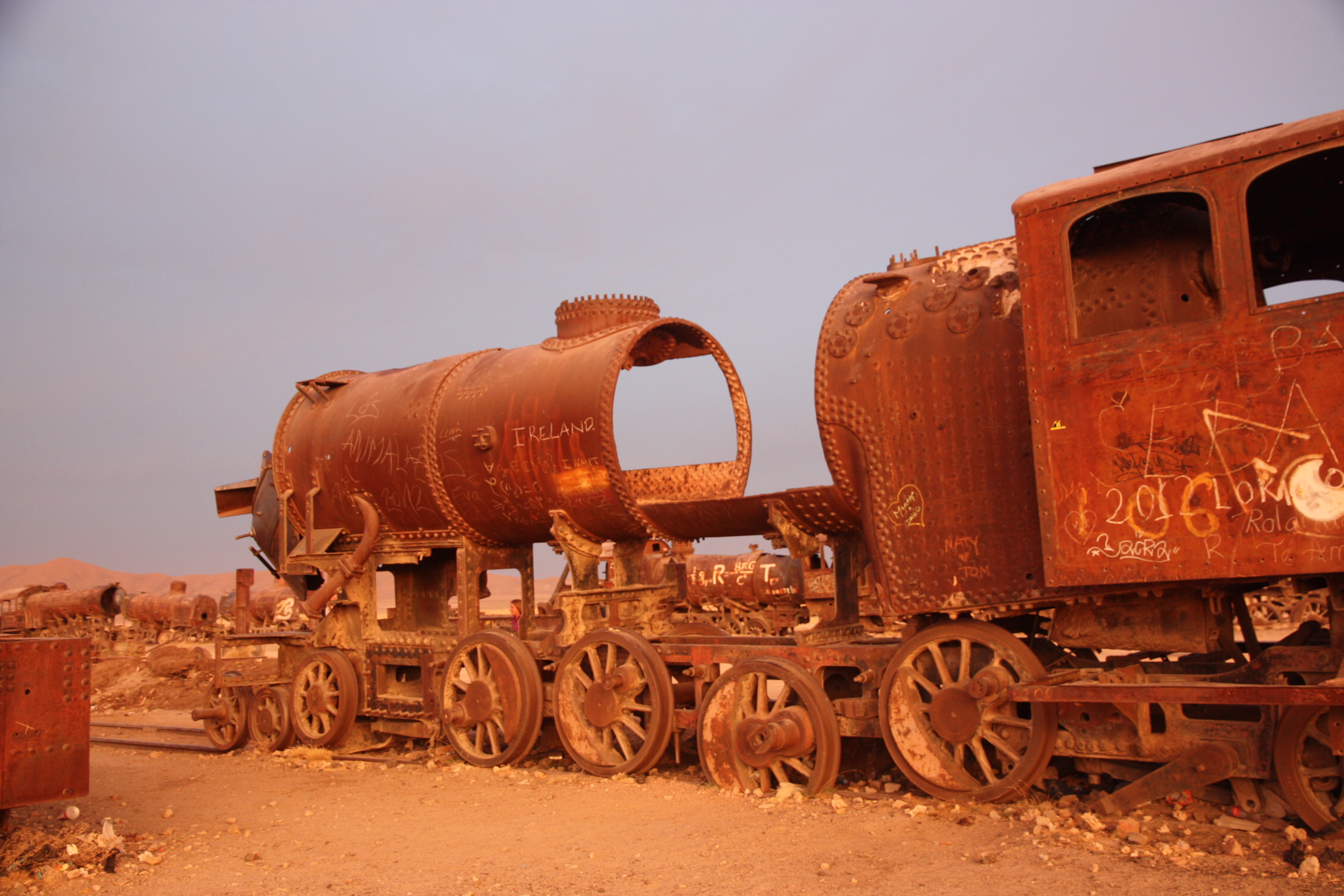
The sun sets at the train cemetery
The world is full of train buffs and I’m wondering why a group of them haven’t descended upon Uyuni in Bolivia to create a proper museum out of the many train carcasses rusting away not far from the Salar de Uyuni (salt flat) of Bolivia.
I should have, but didn’t, count how many train parts are languishing there, but the overall display is massive. And the variety of pieces is overwhelming. Someone needs to do a catalogue.
The cemetery is connected to the town of Uyuni—3 kilometres away—by old railway tracks. Uyuni was once a distribution center for trains carrying minerals to ports on the Pacific Ocean.
The rails have been there since the late 19th century, when British engineers were invited to come build them by the then British-sponsored Antofagasta and Bolivia Railway Companies.
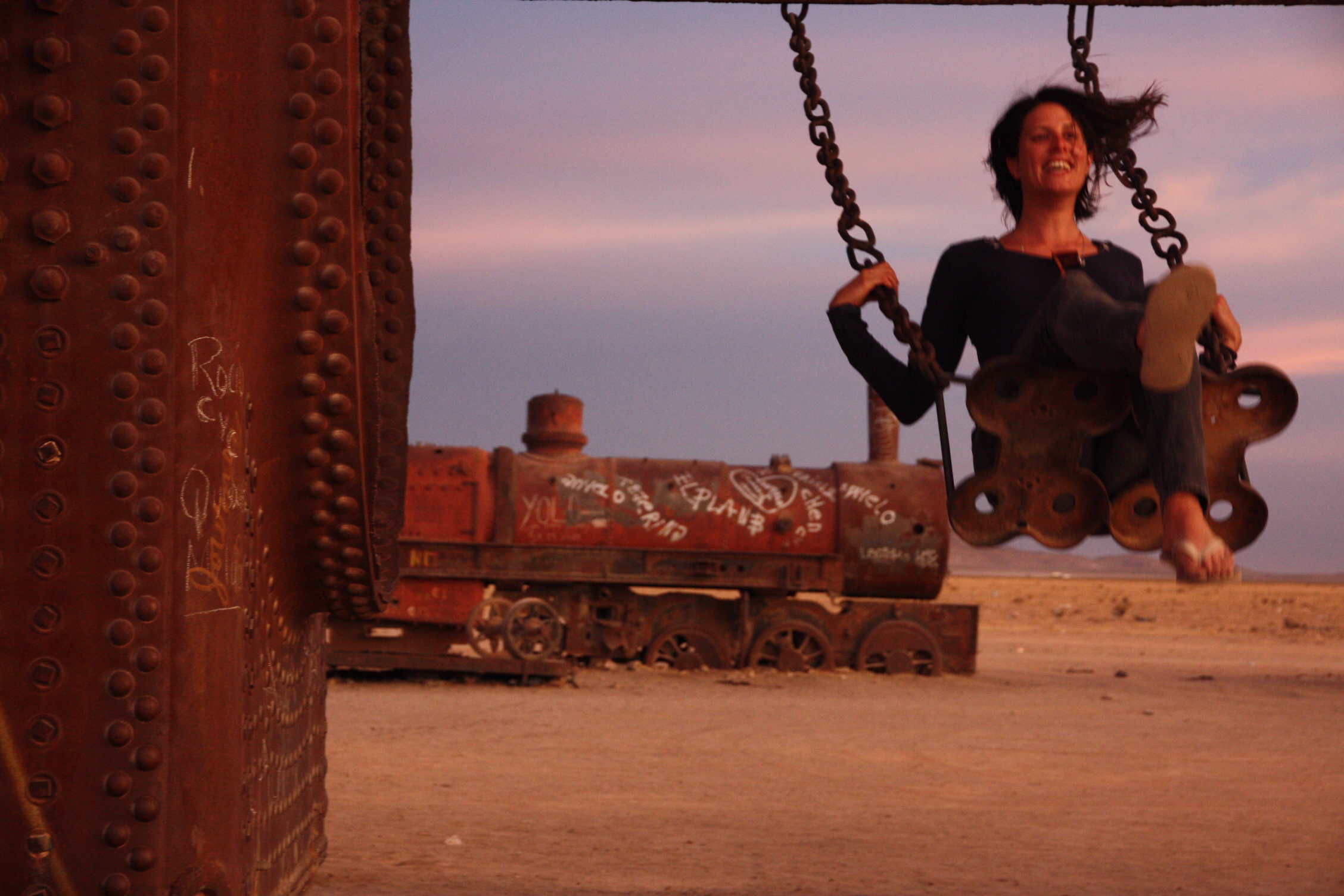
Donna-Leah tries out a swing someone has made from train parts
The Bolivian president at the time, Aniceto Arce, encouraged the project, because he thought a good transport system would help Bolivia to prosper. Unfortunately, he didn’t count on frequent sabotage by the indigenous Indians, the Aymara, who thought the railway intruded on their lives.
Over the years, the mining companies were the main train users. But when mineral reserves were depleted by the 1940s, the industry collapsed and the trains were abandoned to the elements.
We arrived in late afternoon and hung around until the sunset. It seemed fitting to see the sun go down on these metal beasts, but I hope the day comes that an actual museum is created.

A salt hotel on the Salar de Uyuni
Poor John used to tell our daughters not to lick the poles at our coast house. It doesn’t seem such odd advice when you know the house verges on being a treehouse and the many poles that support the roof have been treated with arsenic.
What always irked the girls was the fact that he thought to tell them this when they were teenagers—as if they might even consider licking the poles!
But licking the walls is an issue for the salt hotels of Bolivia.

International tourists leave flags at salt hotels
Salt hotels are scattered across the Salar de Uyuni. They cater for the tourists who come from all over the world to visit this expansive salt flat.
So while the roof might be thatched, the walls and furniture, including beds, toilets and such, are made of salt—the only plentiful construction material around. It’s all held together with a sticky substance made of salt and water.
At the end of the day and on our way out of the salt flat, we dropped in for a quick look around, and a quick pee for the desperate few who had to go and were willing to shell out the exorbitant asking price.
During the rainy season, the walls are reinforced with still more blocks, making the hotel thick, warm and especially sound-proof.

Hippy gives us all a ride
From the first mention of going to Bolivia’s Salar de Uyuni (salt flat), the young ones in our group began planning the props and shenanigans they’d get up to on the vast expanse of flat whiteness.
Why all the fuss? What’s the big deal?
I’d heard of the Bolivian salt flat, but I had not realised that in addition to its remarkable and expansive landscape, it was the perfect place to lose your perspective on how the world looks from different angles.
Here’s your chance to jump out of a Christmas parcel, be poured out of a wine bottle or pop out of a Pringle’s can. You can fight a dragon and win, or dive into a leather hat. We spent hours on the flat, taking shots with clever positioning and an array of props borrowed from the truck and our hostel.

Getting ready for a photo shoot (result below)

Friends hold friends hold friends
The trick is to have one person or some item positioned close to the camera, while the ‘small’ people stand farther—sometimes much farther—back. The person operating the camera needs to play around quite a bit so everything lines up properly.
In our case, we had almost two dozen directors—shouting out move left, move back, move over, duck down, lean forward and many more instructions several hundred times.
Colin and Sammy, our driver and tour leader, were the chief consultants and photographers as they have stopped at the flat many times in the past. Although everyone got in the act, and it’s hard to say who took which pictures here, so many thanks to all who contributed.
I’ve shared a few of our most impressive photographic efforts here. You can also see some of the fun when the girls were being frisky on the salt flat or when Hippy shared some of his holiday adventures.
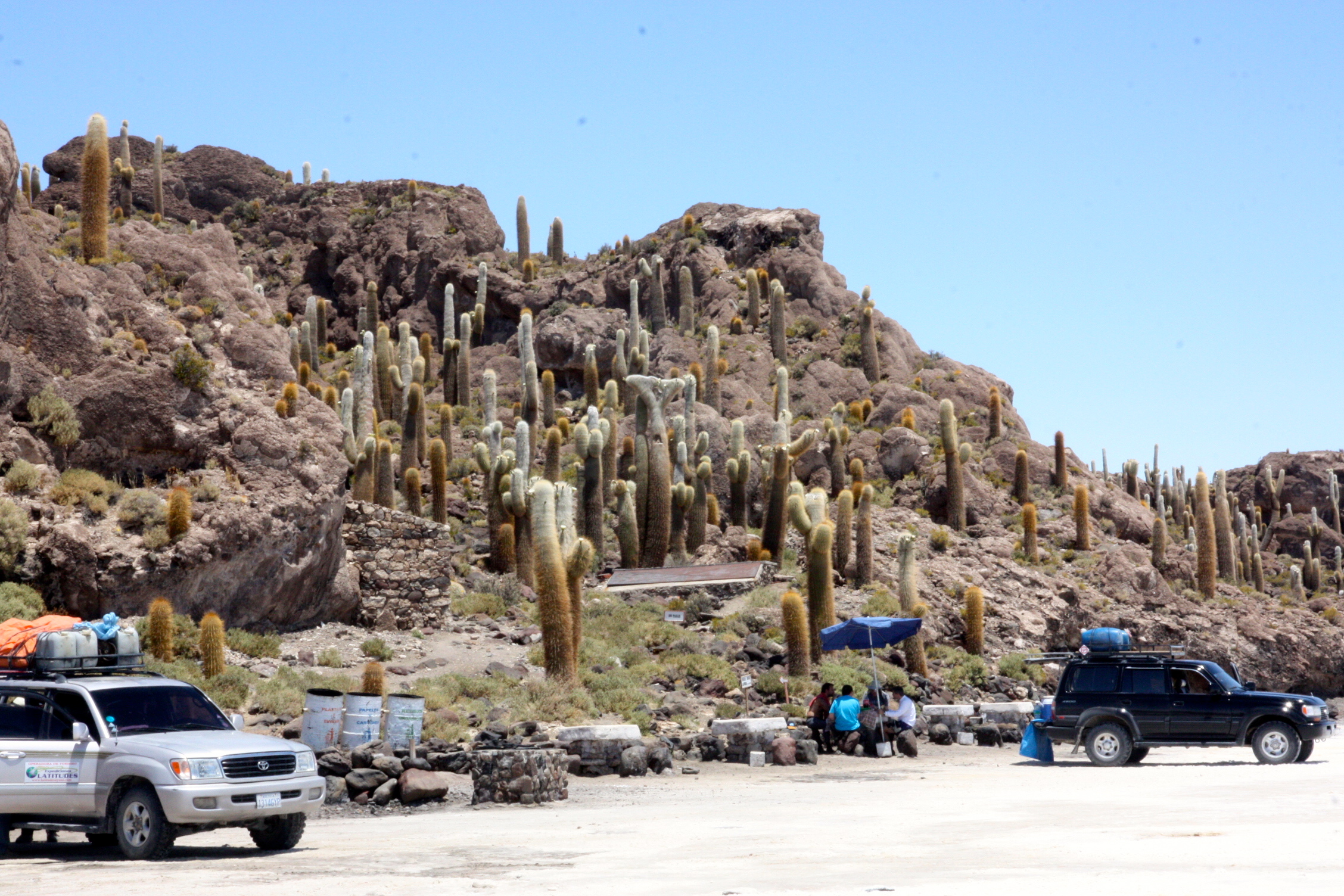
The 4WDs start to roll in to Isla Incahuasi so lunch can be set up
After visiting a salt-processing village and the Eyes of the Salar in the ginormous salt flat of southwestern Bolivia, we sped off to the cactus island, about 10 kilometres away and almost at the geographic centre of the Uyuni de Salar.
Called Isla Incahuasi, this island one of 72 ‘stranded’ on the flat, with about a third of them having a surface area of at least one square kilometer.
All these islands are the tops of ancient volcanoes. They were submerged during the era of Lake Minchin, which was around about 40,000 years ago.
In addition to thousands and thousands of cacti, Isla Incahuasi has coral-like structures and deposits that contain fossils and algae.

Blooming cacti on Isla Incahuasi, Salar de Uyuni
The group had lunch—a great spread of roasted chicken, potatoes and salads—before tackling a 30-minute trek to the top of the island. As usual, the walk took longer and the climb was higher than I expected, but then I am dawdler and a slow one at that.
A few cacti were in bloom, plus we saw an ancient, but very dead, cactus. The sign said it had been more than 12 metres tall and 1203 years old, and had died in 2007.
Then it was back into the 4WDs for a photo session on the huge expanse of salt. The flatness and whiteness allow for a lot of creativity. The girls got frisky, Hippy had an outing and everyone got creative with an array of props from the truck and/or borrowed from the hostel.
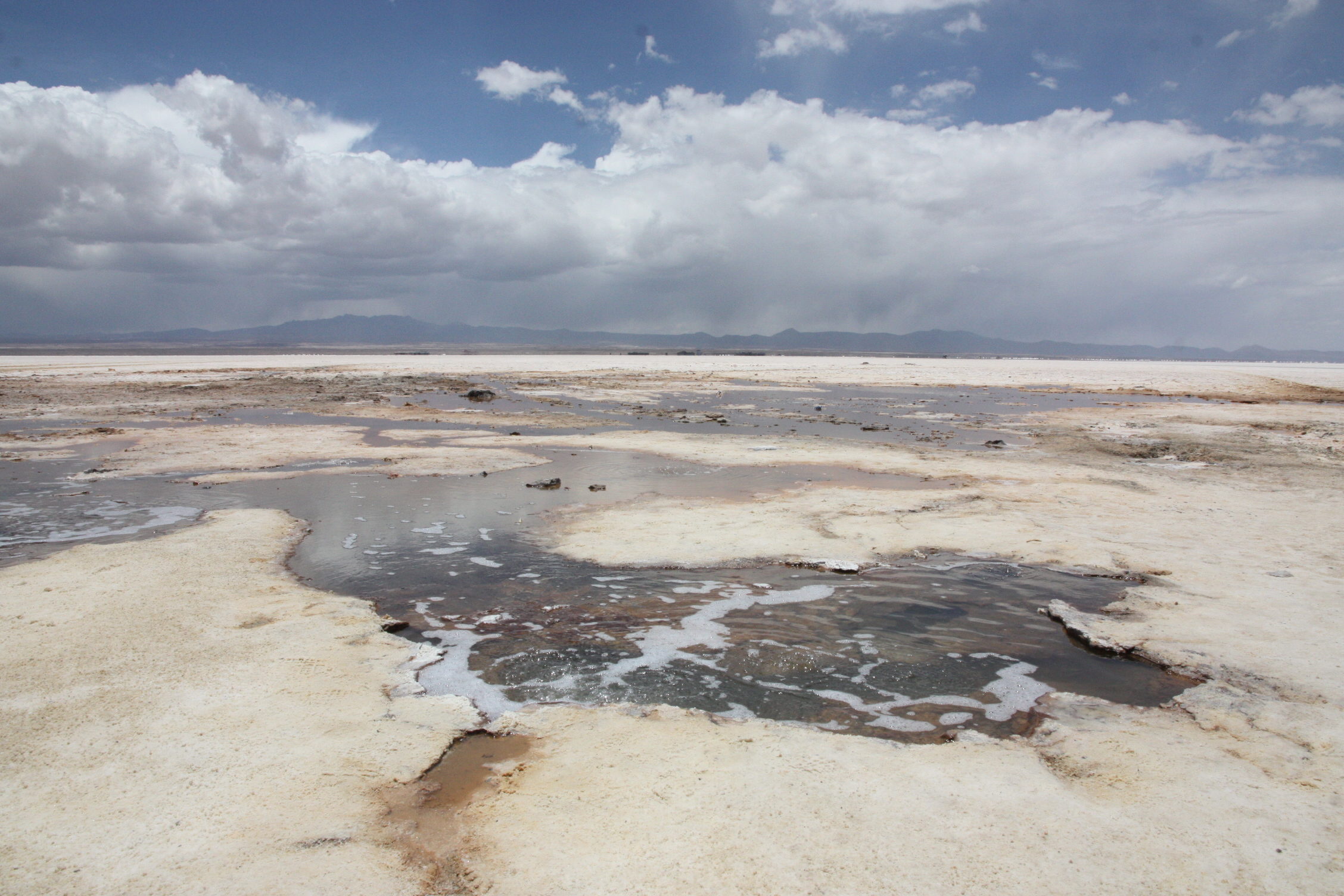
Eyes of the Uyuni de Salar
Bolivia’s huge salt flat—Salar de Uyuni—sits near the crest of the Andes. Created as a result of a transformation over time of prehistoric saline lakes (including the gigantic Lake Minchin), the flat is covered in most places by a few metres of salt crust.
This crust is much thinner at the edges and, according to our driver, up to seven metres thick in the centre (where we’d reach later in the day).
The flat was dry when we visited, but during the wet season, it is covered with a layer of water, which is overflow from nearby lakes. I’d love to see it then because it supposedly becomes the world’s largest mirror.
I’ve already written about the salt-processing village we visited at the beginning of our tour. The next stop was the Eyes of the Salar—where the flats look back at you.
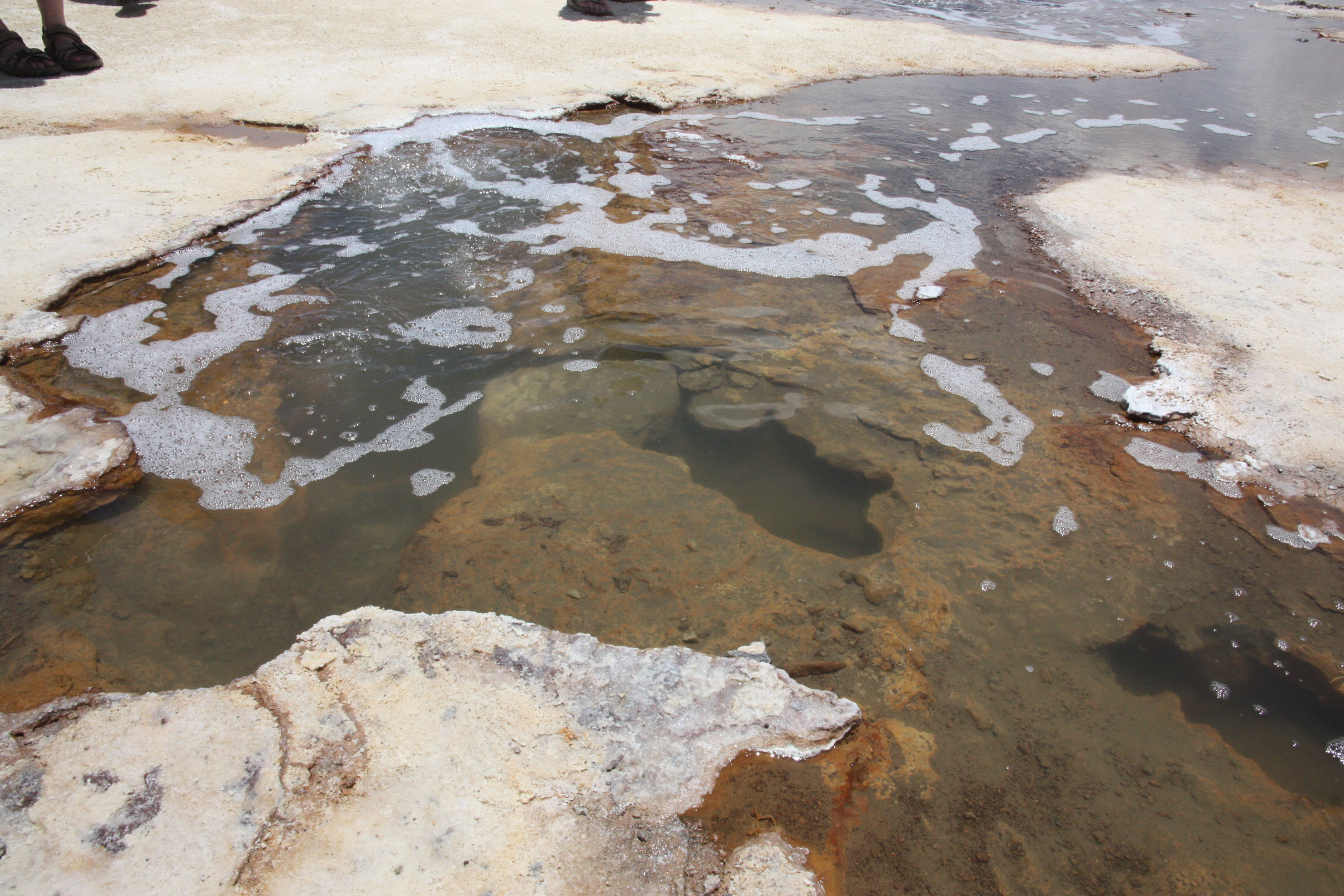
Lots of colours and lots of layers at the Eyes of the Salar
The eyes, which appear year-round, gave us a chance to see first hand the layer of brine that lies beneath the crust. I’ve read this brine can vary in depth from two to 20 metres.
We stopped for 10 minutes or so to see it bubble and ooze around us. It was interesting to see the array of colours and the layers of crust peeping through to the surface. The brine is rich in lithium. In fact, Bolivia has about 43 per cent of the world’s lithium reserves and most of these are in the salt flat.
I asked our driver if anyone ever drove into the Eyes of the Salar by mistake, but he wasn’t confessing anything. 🙂
Then we were speeding on to centre of the flat for lunch and to see the cactus island. We considered ourselves lucky to have the tour cook in our 4WD.

Salt miner working on the edge of the Salar de Uyuni in Bolivia
As much as I love salt, I never expected to be standing in the middle of the largest salt flat in the world.
But that’s exactly where we ended up on a day-long adventure to see the Salar de Uyuni in southwest Bolivia.
Everything about the salt flat is impressive.
For starters, it covers 10, 582 square kilometres and sits at an elevation of 3656 metres. It also has 50 to 70 per cent of the world’s lithium reserves (which is still being under accessed). Plus it’s really, really flat. The altitude varies by no more than a metre over the entire area of the Salar.
A fleet of soon-to-be-rusted-out 4WDs carried us to and across the flat at speeds of up to 100kph. When you look over the vast expanse of dazzling white, it’s hard to imagine the drivers have any idea were they’re going. And it’s a little disconcerting when you can see the speedometer!
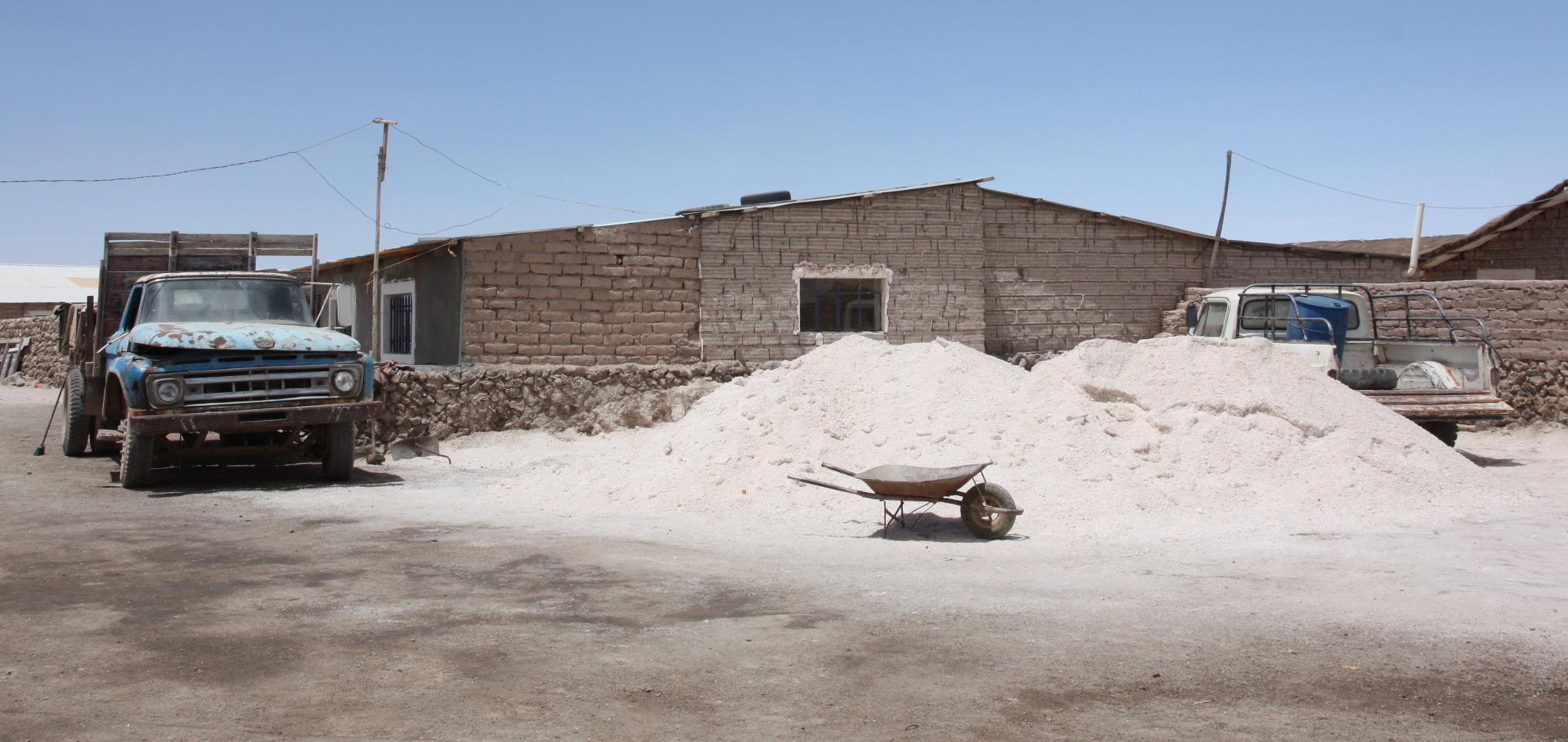
Salt drying outside. The truck on the left is used to haul salt and twigs used to heat ovens for further drying the salt
Our first stop was at a small salt-processing community near the perimeter of the flat. For a donation of a couple of coins, we had a tour of the ‘plant’.
The miners start by collecting salt from the fringes of the flat. We saw this step later, but I have added a pic here so the sequence makes sense.
Once brought in by decrepit trucks, the salt is dried outside in mounds. It’s then carted inside and spread over crude homemade ovens and dried for about 30 minutes. There’s a third drying period before the salt is bagged using a rather primitive method of hand scooping the salt into small plastic bags, which are then heat-sealed.
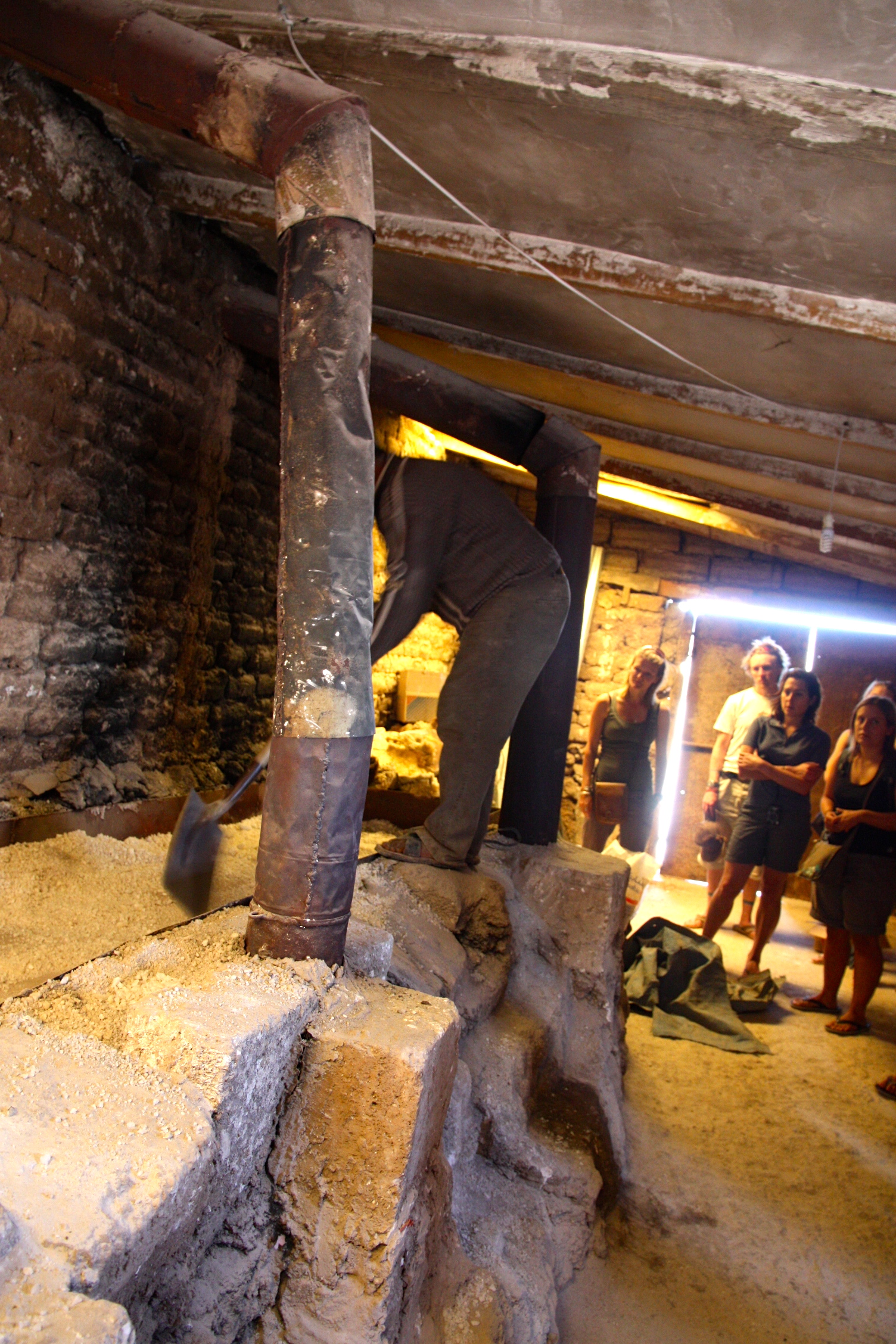
Our host spreads salt over the drying ovens
I suppose the operators are so used to scooping salt that they can calculate 500 grams per bag, but you would never give them gold stars for quality control.
These bags are then packaged in larger bags, and about nine kilos of salt is sold for 14 Bolivianos, or about
No salt is exported. Neighbouring countries have salt flat too, although none is as large as the Salar de Uyuni. I read that it has 10 billion tonnes of salt, of which only 25,000 tonnes is extracted each year. Miners working in the Salar all belong to Colchani’s cooperative.
After our tour, we had time to visit the salt museum (not open) and inspect the ever-present souvenir shops. Besides woolly garments, all the items for sale are made of salt.
Then it was time to speed on to the Eyes of the Salar and the cactus island in the centre of the flat. Stay tuned for these instalments.
There were quite a few cars out there, and they weren’t all hauling tourists. Because of its location, expanse and flatness, the Salar is an important transport route across this part of Bolivia. I think vehicles can even drive to Chile from here.

Varying stages of undress with Hippy at centre stage
Salt has taken on a whole new meaning for the girls (none of us are old enough yet to be women) of our overland journey.
Maybe the glare of the Bolivian salt flats cause sunstroke, day blindness, craziness or just plain fun. Whatever the cause, our girls took the day’s outing as a opportunity for sisterly pranks and a chance to break loose, while shedding inhibitions and clothes.
A few days earlier, I heard them plotting and planning this adventure. The deal was to have a no bars…er…no bras photo session. I’m no prude so figured, what the heck, I’m old enough to know better and young enough to care less.
So about the time I expected to be lined up to lose the bra (I wore a purple one that day, just in case), I had a reprieve. The women decided I was the one they trusted the most to take the photos. How flattering.
So we trudged out in to the expanses of sand—even Hippy came—for several different poses. But we left the boys a long way off. That said, our camera-hungry Hippy sneaked into another skin shot with Tom.
P.S. Stay tuned for a couple of serious blog items on these amazing salt flats.

Merz Equatorial Telescope installed in 1875
As a kid I wanted to be an astronomer and I’m still not sure why I never got around to it. The night sky holds a huge fascination for me as does anything to do with stargazing and astronomy.
Poor John has similar interests, so it’s not surprising that we sought out the Museum of the Quito Astronomical Observatory while we were in Ecuador.
Founded in 1873, it is one of Latin America’s oldest observatories. That helps to explain why it sits in Alameda Park, smack in the middle of contemporary Quito.
It’s in a gorgeous old building that was completely restored just three years ago. It’s Victorian style, three turrets and use of wrought iron make it a perfect setting for a remake of The Time Machine.
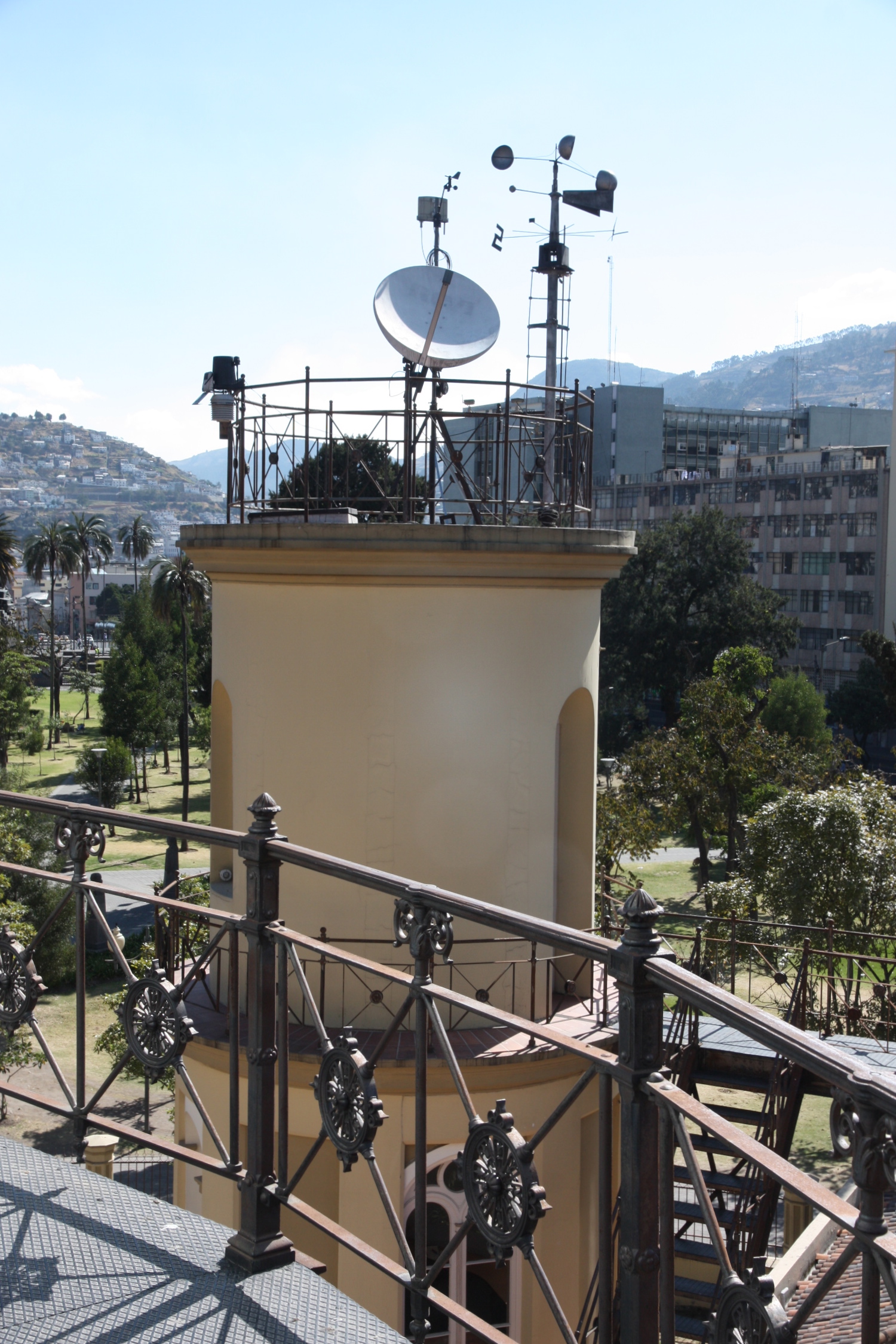
A view from one turret to another
In the mid 1700s, Ecuador was the site of the first French Geodesic Mission, which measured a precise arc of the Earth’s meridian.
It was perhaps from these early surveys that a site for a world-class observatory in Quito, which lies just arc minutes south of the equator, was born.
The observatory itself was the brainchild of then President Gabriel Garcia Moreno and visiting German scientist Father Juan Bautista Menten, who modeled the floor plan after the observatory in Bonn Germany.
The Quito museum has displays of the instruments used by early astronomers and scientists, as well as a valuable Merz Equatorial Telescope made in Germany.
We spent at least an hour exploring the various exhibits and also climbed (a very easy climb on a normal staircase) to the roof for a view of the city and part of the weather station on one of the turrets. Don’t forget to descend the floating-in-air staircase to see the exhibits in the basement.
It wasn’t until after we left Quito that we learned the observatory offers basic astronomy courses and sometimes provides night observations by telescope. More information is here, but in Spanish only.
 Where to next?