

Toucan
A trip to amaZOOnico was part of our package at Arajuno Jungle Lodge.
This animal rehabilitation centre in the Amazon headwaters is home to a variety of creatures that have been confiscated, handed in, mistreated, abandoned or injured.
The centre is in a protected forest reserve (Selva Viva) and the goal is to return ‘residents’ to the wild. It doesn’t always happen. Our guide explained that about 50 per cent of residents are too tame or too weak or unskilled to survive in the wild. Another 25 per cent are released successfully and the final 25 per cent die because of injuries, malnutrition or other factors from their ‘previous’ life.
All kinds of monkeys have been pets that have outgrown their popularity. A jaguarundi was simply left behind in a hotel room. An ocelot grew up and took over its owner’s apartment and would not let her in. Many birds have had their feathers and well as their muscles cut, meaning they can never fly again. One such macaw regularly falls out of his tree and has to be hoisted up by way of a makeshift pulley-and-tray system. And I never would have guessed that birds that can talk cannot easily survive in the wild.
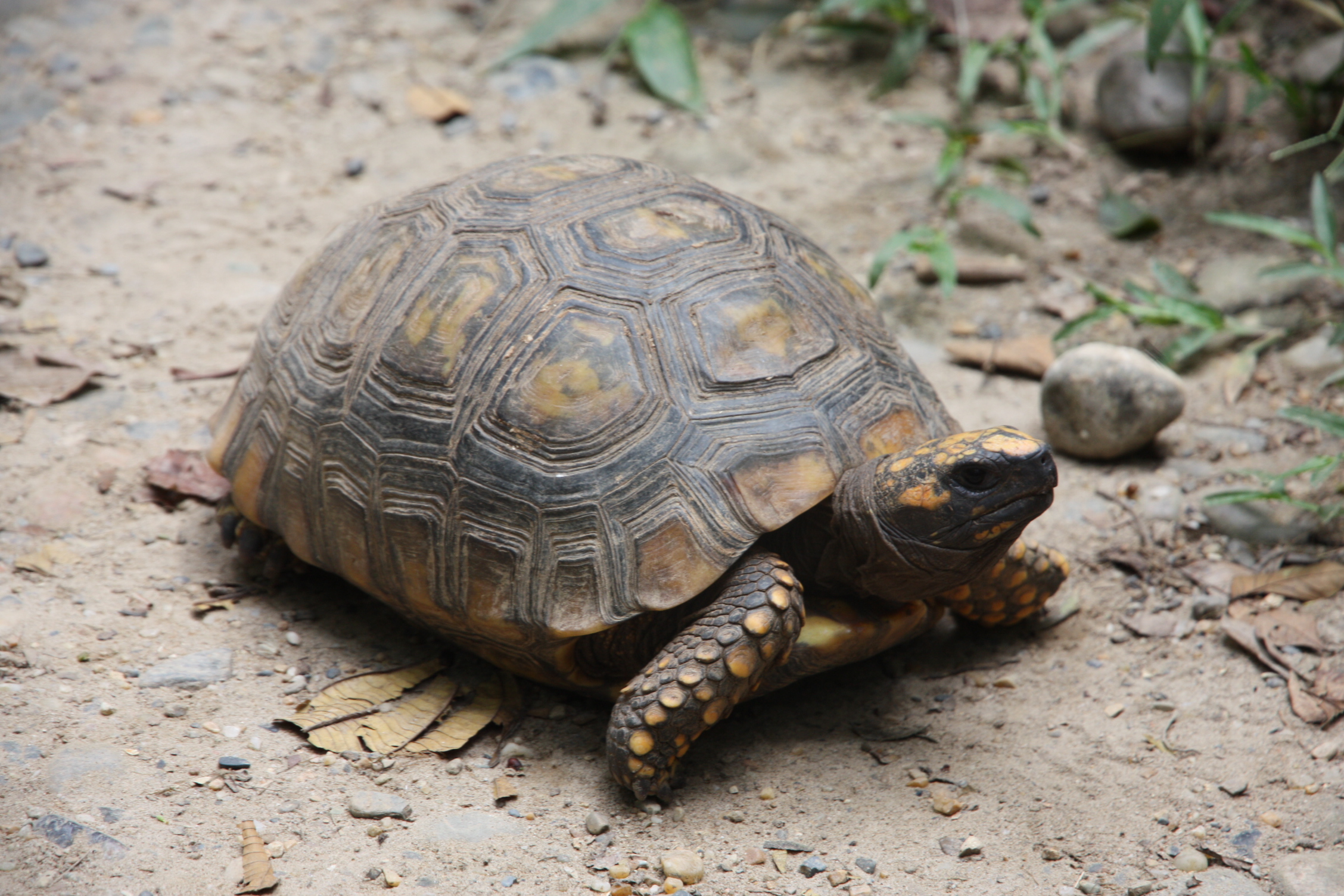
Yellow spotted turtle
Many of amaZOOnico’s workers are volunteers, and I can see why they would be inspired to participate. It’s in a lovely setting and is founded on a strong commitment to animal welfare.
Getting to amaZOOnico was part of our adventure. We were taken by long boat and because the river was quite low, we had to ‘abandon’ ship in a few places and walk along the shore or across islands. It was also fun to see life on the river.
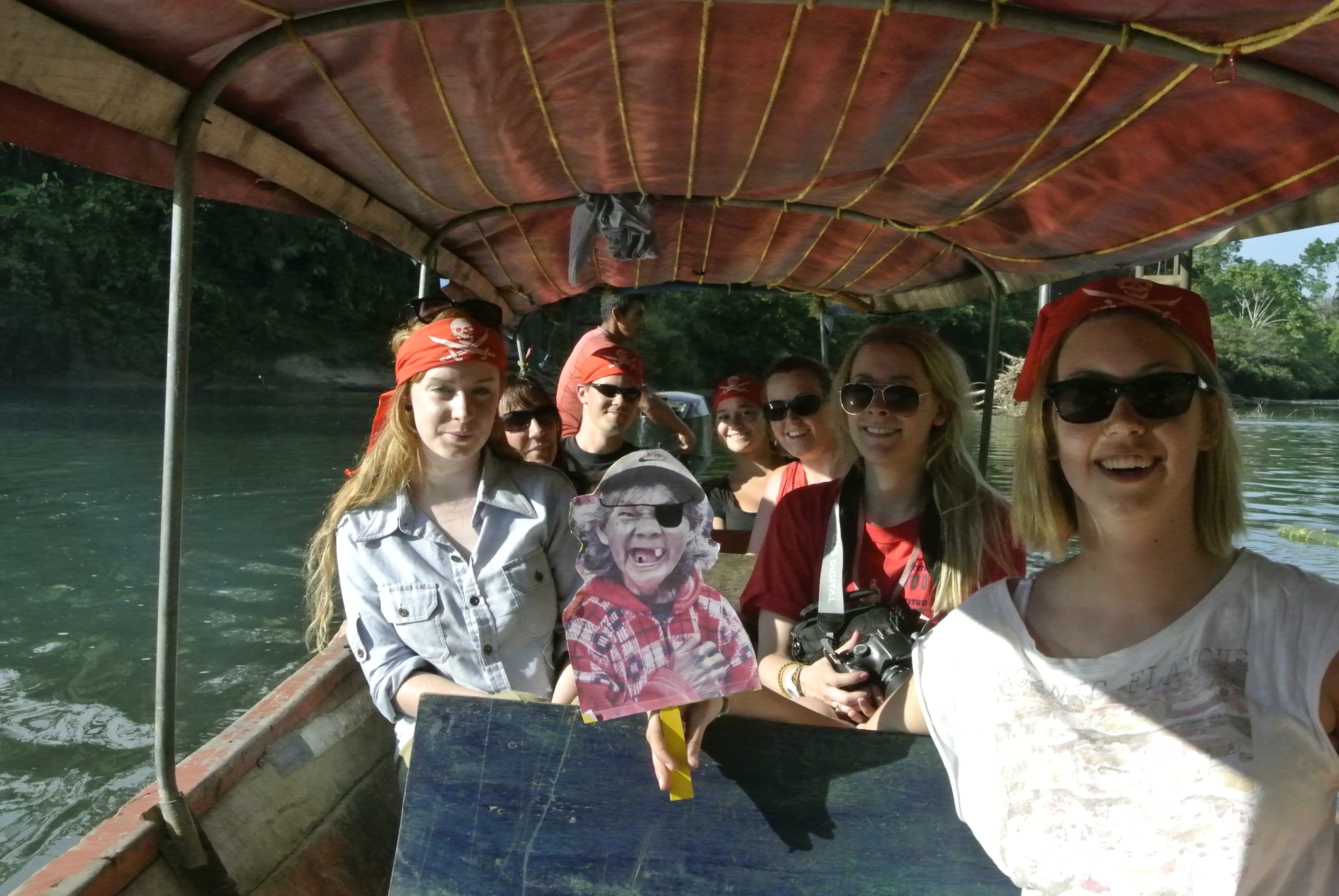
Pirates on the way to Arajuno Jungle Lodge. Our toothless pirate is Carmen, a cutout character who travels with us and keeps us in smiles.
Less than a week into our overland journey and we were off to the Amazon headwaters in Ecuador. This side trip coincided with International Pirate Day, so we donned skull-and-cross-boned bandanas and eye patches and set out on a long boat.
Our destination was the Arajuno Jungle Lodge run by Tom Larson who hails, would you believe it, from Nebraska, my home state.
Tom first came to Ecuador as a Peace Corps volunteer in the late 1980s, starting in the Galapagos. He fell in love with the country and has stayed on.
About 10 years ago, he bought a rundown farming property along the Arajuno River, which feeds into the Napo, which feeds into the Amazon. He’s done an amazing amount of work since then, with most focusing on eco-tourism and making the surrounding communities and jungle more sustainable.
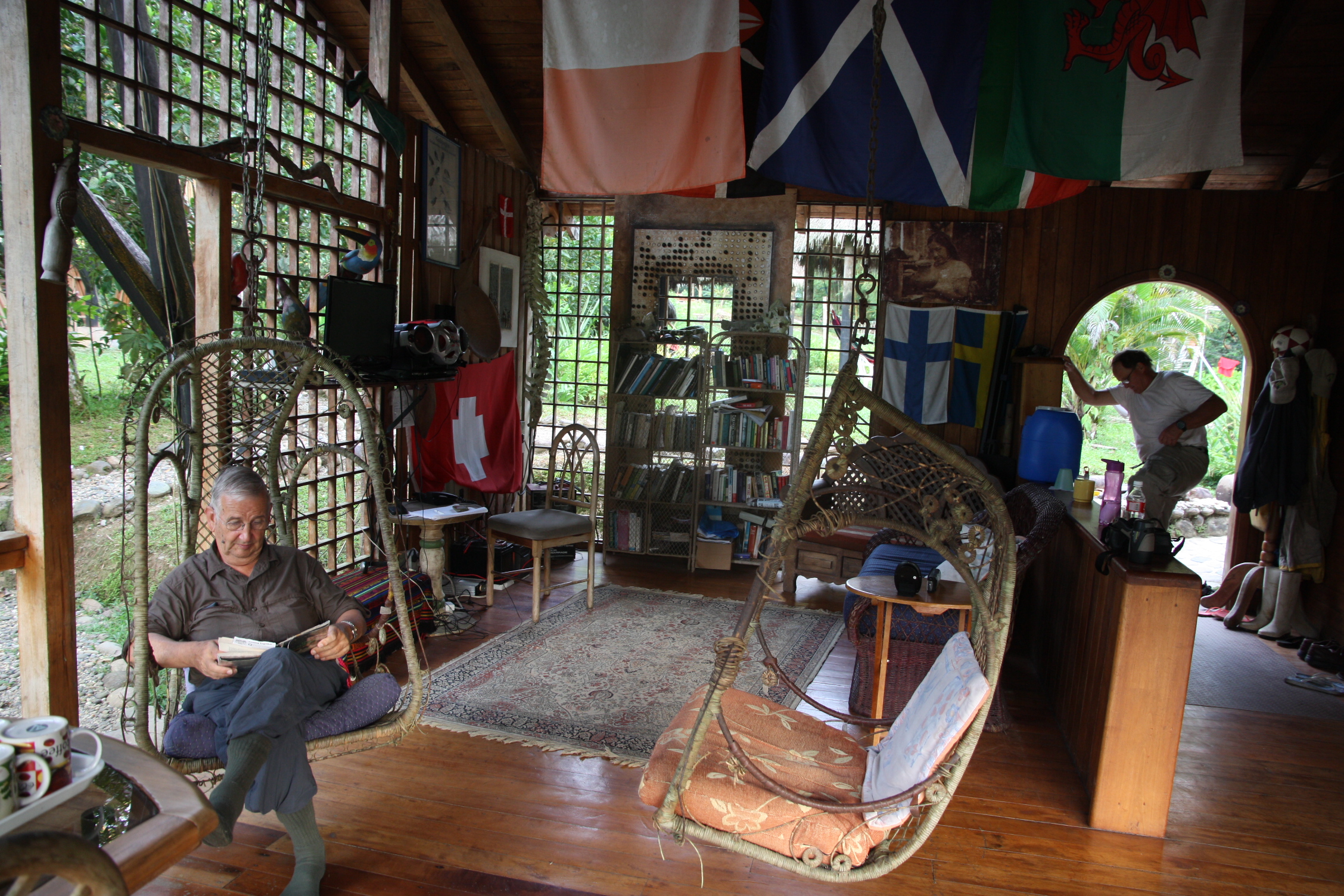
Poor John enjoying the swing chair in the main lodge. That’s Tom in the background, putting on his Wellington boots
One important campaign has been to get local communities to stop fishing with dynamite (or expanding bait as it is called in Lebanon). He worked with local ‘bigwigs’ to deliver an appealing and ongoing solution. Villages now run their own local fish farms, and the temptation to dynamite has been reduced by at lest 90 per cent.
Tom is also involved in a project to increase the population of yellow spotted turtles. This includes a turtle breeding and rearing facility at Arajuno Jungle Lodge.
We had several very special days at the lodge. The accommodation was excellent—it may have been basic, but the showers were hot and the mattresses were top-notch. Our stay was fully catered and the three-course meals were sensational. We even had some of Tom’s ‘homegrown’ fish.
While we had time to chill and relax, we all enjoyed the extra activities—daylight and nighttime jungle walks, a river trip and visit to AmaZOOnico, tubing on the river and a tour of Tom’s property.
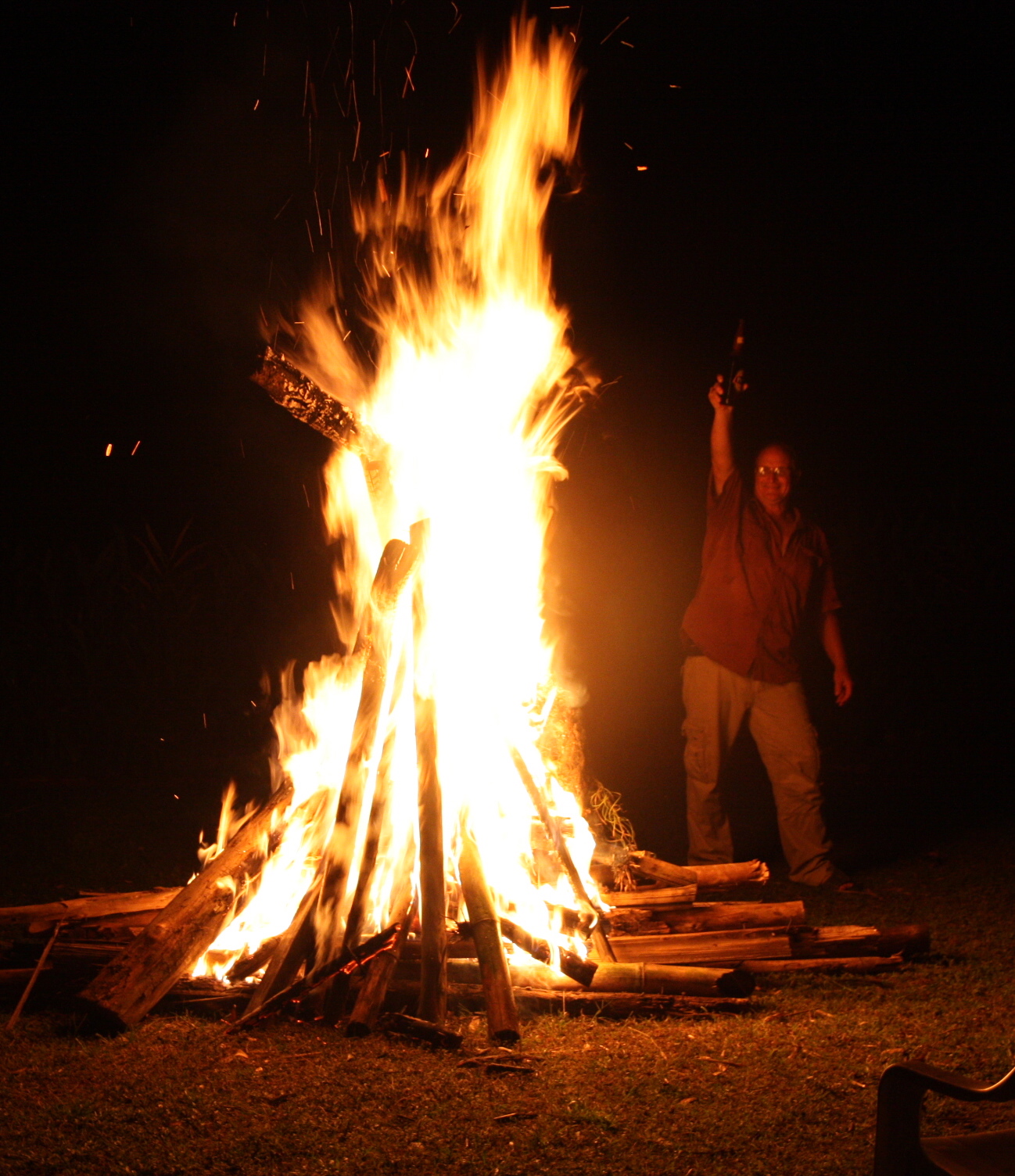
Roaring bonfire and a very pleased Tom
Tom and I had quite a few good old chinwags too, talking about all things Nebraskan—the Cornhuskers football team, runzas, Dorothy Lynch’s salad dressing, reuben sandwiches (supposedly invented at the Blackstone Hotel in Omaha), cheese frenchees (another sandwich), Valentino’s pizza and much more. It was also great to meet his wife, Charo.
Tom lit a roaring bonfire on our last night. It was his way to say farewell to Colin and Sammy, our overland driver and guide, who are making their last South American trip. There must have been some extra magic in those flames. Arajuno had been desperate for rain for several weeks and then got three inches after we all went to bed.
If you ever get to Ecuador, plan to stay a few days at Arajuno Jungle Lodge.
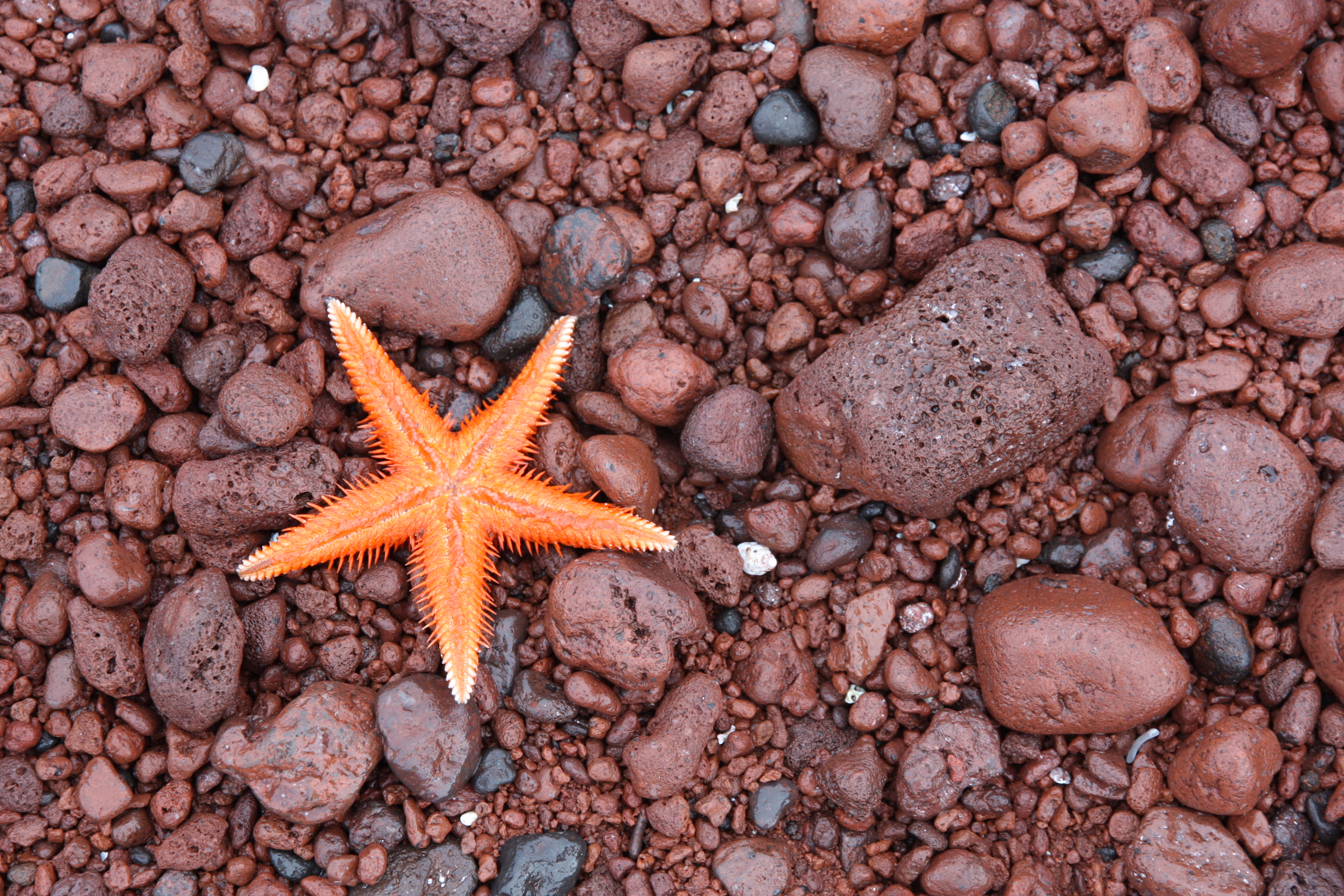
Rabida Island
My friend, Maggie, collects stones from the places she travels. She likes it when other travellers bring stones and rocks from their trips too.
I wanted to bring her one from the Galapagos, but it’s against the law to remove any organic matter from the islands. Normally I wouldn’t worry about that, but this place is so peaceful and so special, that I’m sure any pilfering would have a bad effect on my karma forever.
So Maggie, you’ll have to settle for these specimens (starfish included), photographed on the gorgeous red beaches of Rabida Island.
I loved this beach and couldn’t help myself. I took way too many photos and am sharing way too many here. Pick one and I’ll get it blown up for you when I get home.
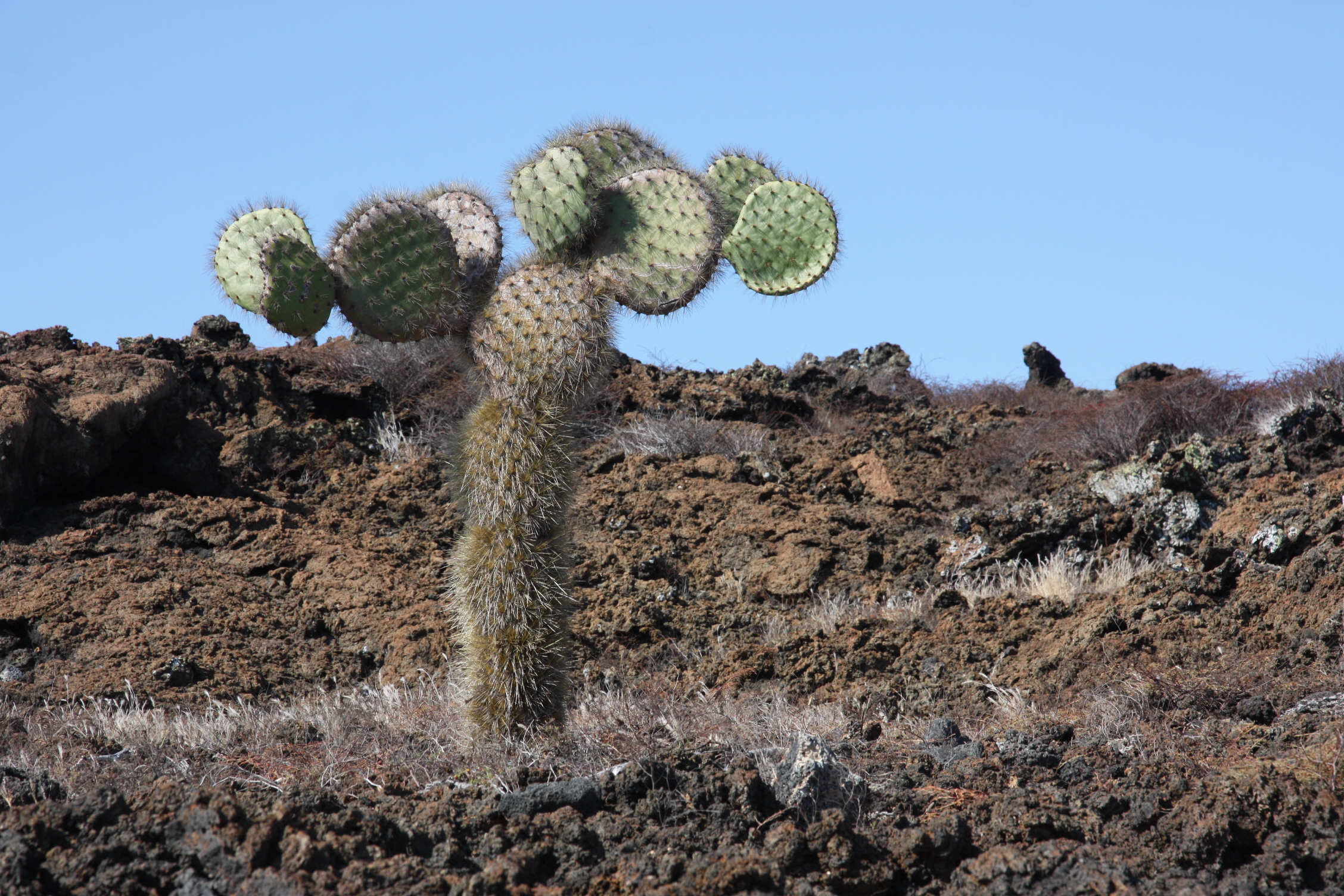
Prickly pear cactus
The Galapagos Islands may be in the Pacific Ocean, but they are actually quite dry—the perfect climate and conditions for cacti.
Three main varieties grow there—prickly pear, lava and candelabra.
We saw lava cacti first on Bartolemé, an island dominated by lava. It’s considered a ‘pioneer’ or colonising plant. It grows in clumps with each microphone-shaped ‘branch’ being a separate cactus. New growth is bright yellow.
Then we saw the hardy prickly pear cacti. This plant is a survivor. Today many plants are quite tall and have trunks that are well-protected by spines and thick bark. It’s an adaptation that has helped them to fend off the many land tortoises that sought food and water from their once fleshy stems. That said, the land iguanas still manage to munch their way through these cacti.
We didn’t see candelabra cacti until the day we were leaving, near the town of Puerto Ayora on Santa Cruz Island. This cactus is quite tall and looks like its name—and I missed getting a pic.
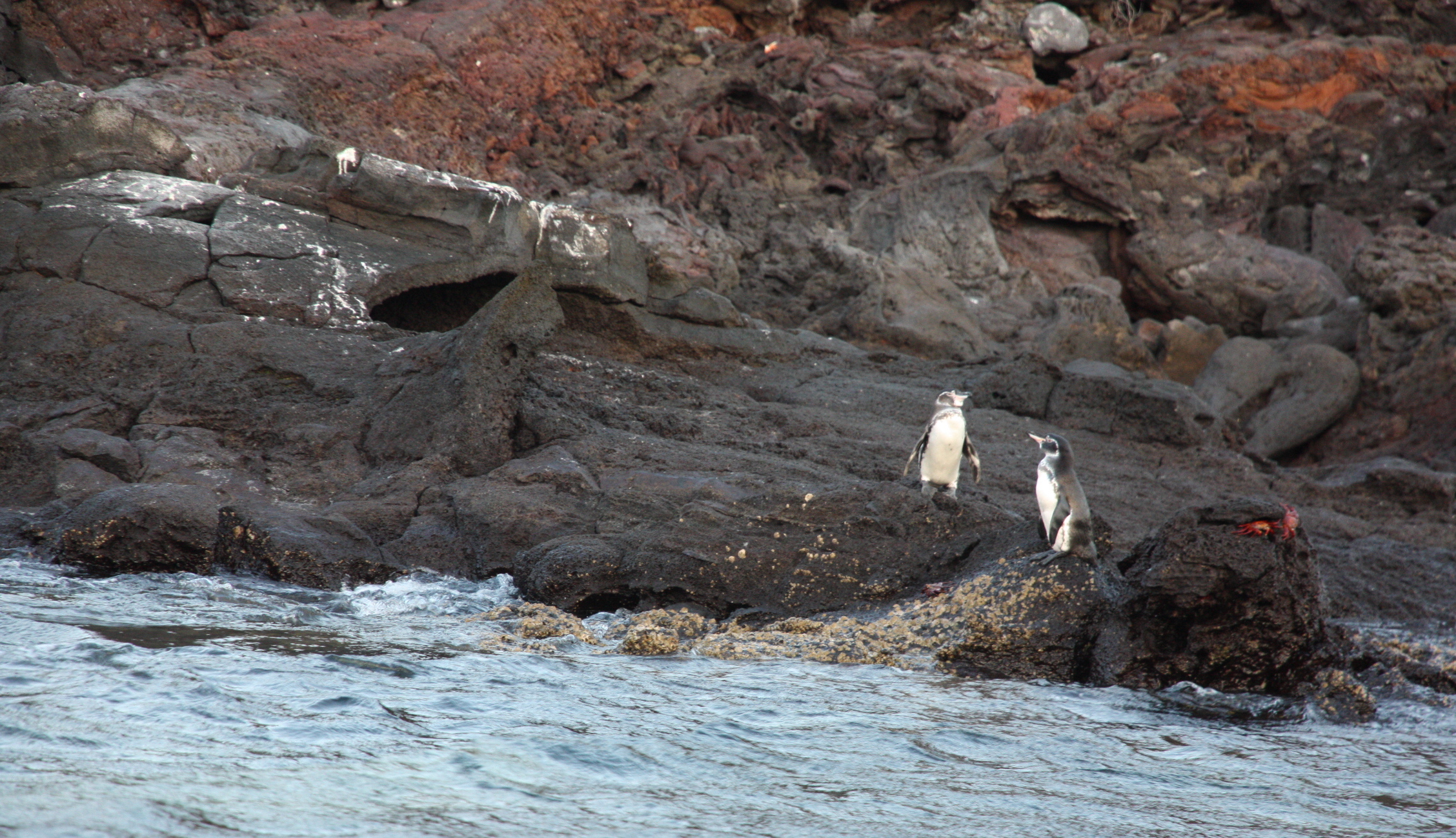
A penguin couple?
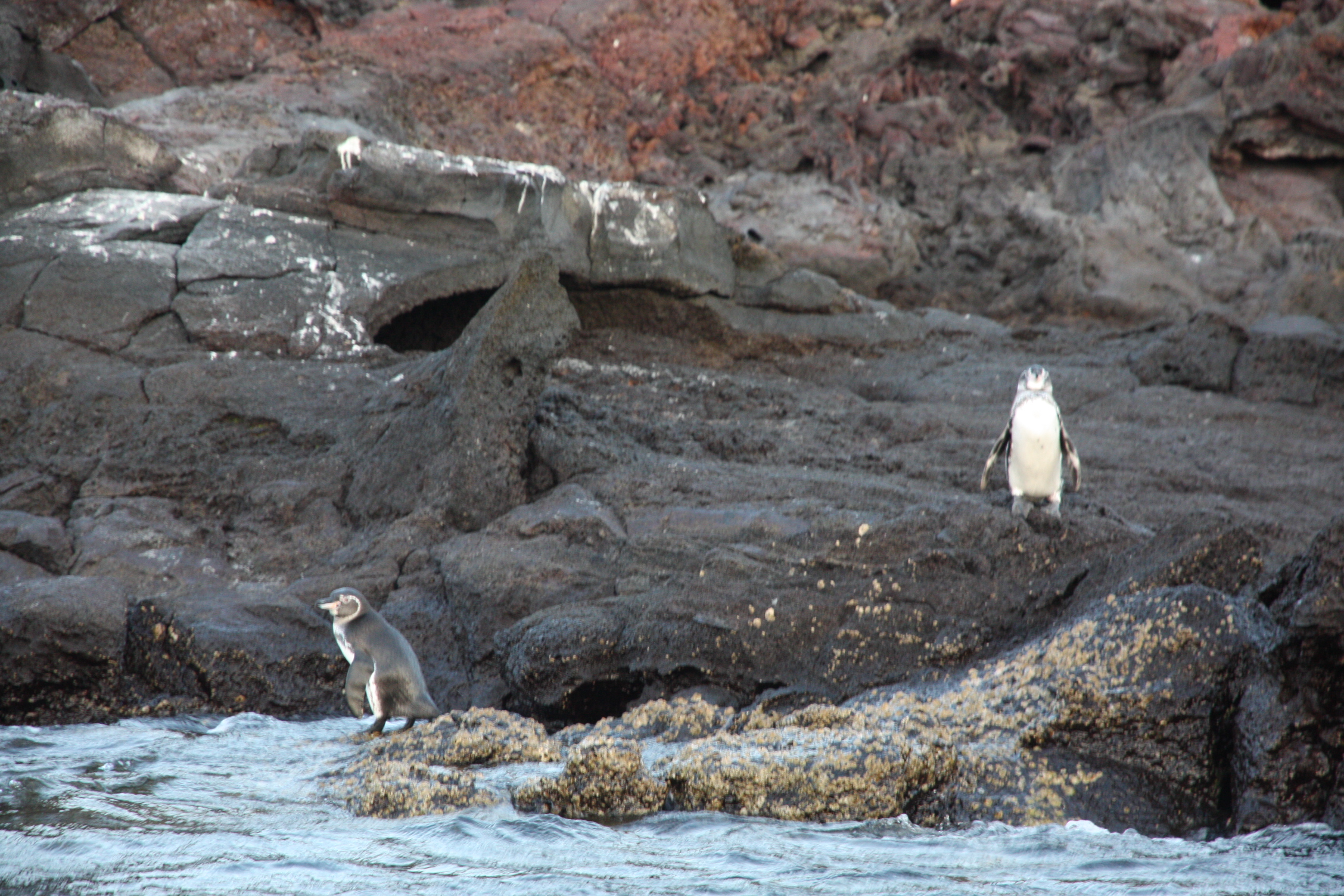
Somebody’s leaving, but why?
You bet! The Galapagos Islands have one species of penguin and we saw it. Actually we saw several.
These are the only penguins that live in the wild north of the equator.
There’s a theory that they originated in the very south of South America—in the cold and stormy region known as the Chilean Patagonia (we’ll be there later this year). The penguins may have come north during the last Ice Age and stayed after the ice melted because the Humboldt and Cromwell Currents keep the water cold enough for them to survive.
A Galapagos penguin weighs about 2.5 kilos (5.5 pounds) and is 49 centimetres (19 inches) long. They’re the third smallest species of penguin in the world. They’re also endangered with only 1000 breeding pairs. Because they are small, they have a lot of predators such as hawks, owls, sharks, fur seals, sea lions, snakes and even crabs.
These penguins mate for life, and breeding occurs in the second half of the calendar year. We saw what may have been a romantic interlude or domestic tiff. Two penguins were standing together on a rock. One dived off and swam to a nearby rock. The pair then had a back-and-forth ‘conversation’, which we could hear from the boat we were sitting in. My photos are a bit fuzzy—you try taking pictures in a rocking boat and from a distance—but you get the idea.
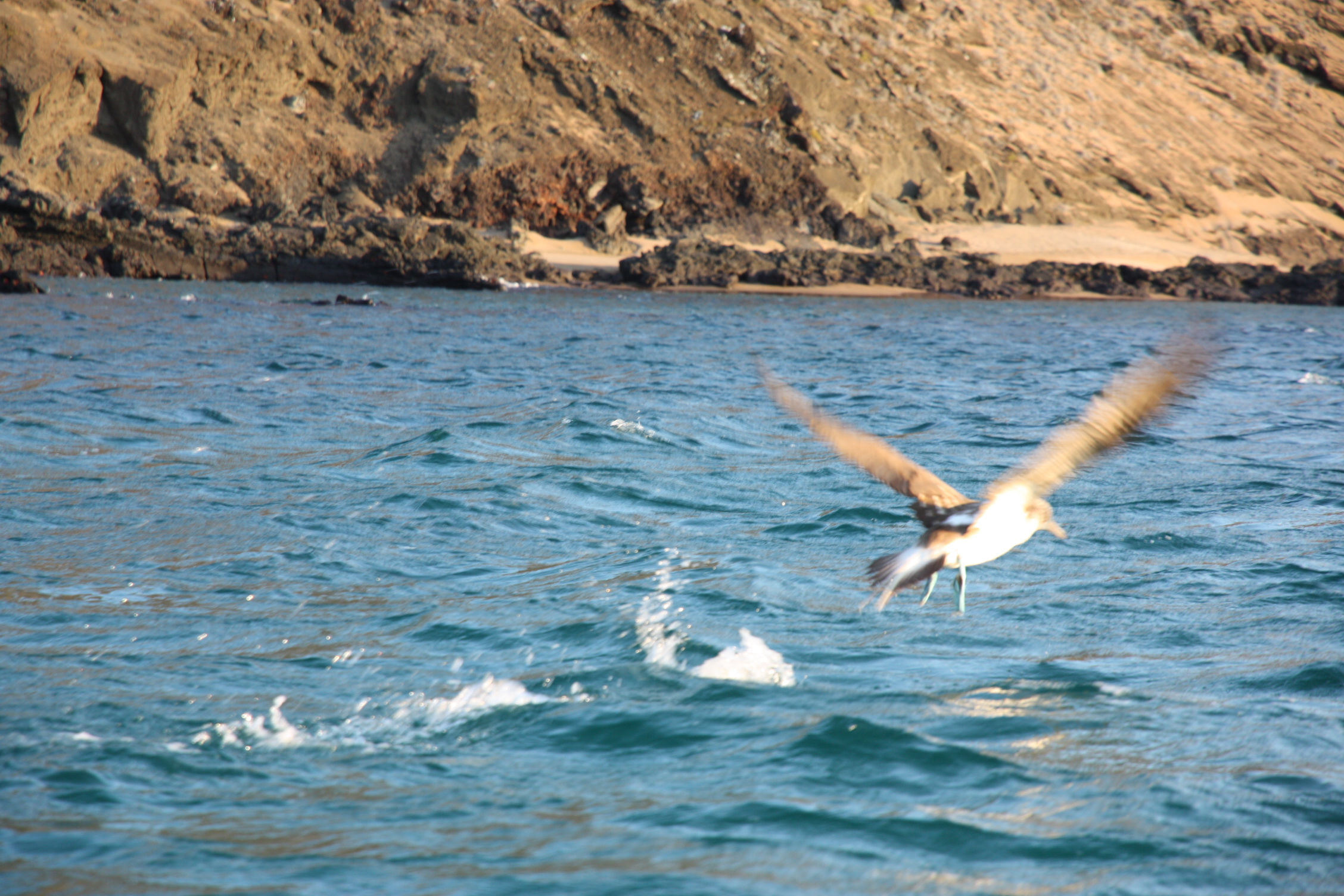
Booby taking off
What a name—blue-footed booby! The story goes that this bird, common in the Galapagos, got its name from Spanish sailors. They thought it acted silly (it’s very clumsy on land) and knew it had funny-coloured feet, so they made use of the Spanish word for clown or fool, bobo.
There’s another link to the name, better known to English speakers. The birds often perched on the raised hatches near the bow of British ships—hence the term ‘booby hatch’.
We saw plenty of boobies in the Galapagos. It’s fun to see them showing off their blue feet, but the best thing is to watch them hunting and dive-bombing for food. There are red and white-footed boobies, but we didn’t see any of them.
The blue-footed boobies fly high overhead searching for likely targets. When they spot a school of small fish such as sardines, mackerels or anchovies, they dive in unison. They point their bodies down like arrows and dive from heights of up to 30 metres (100 feet). Apparently they can dive into as little as 2 feet of water. I bet synchronised divers would be jealous.
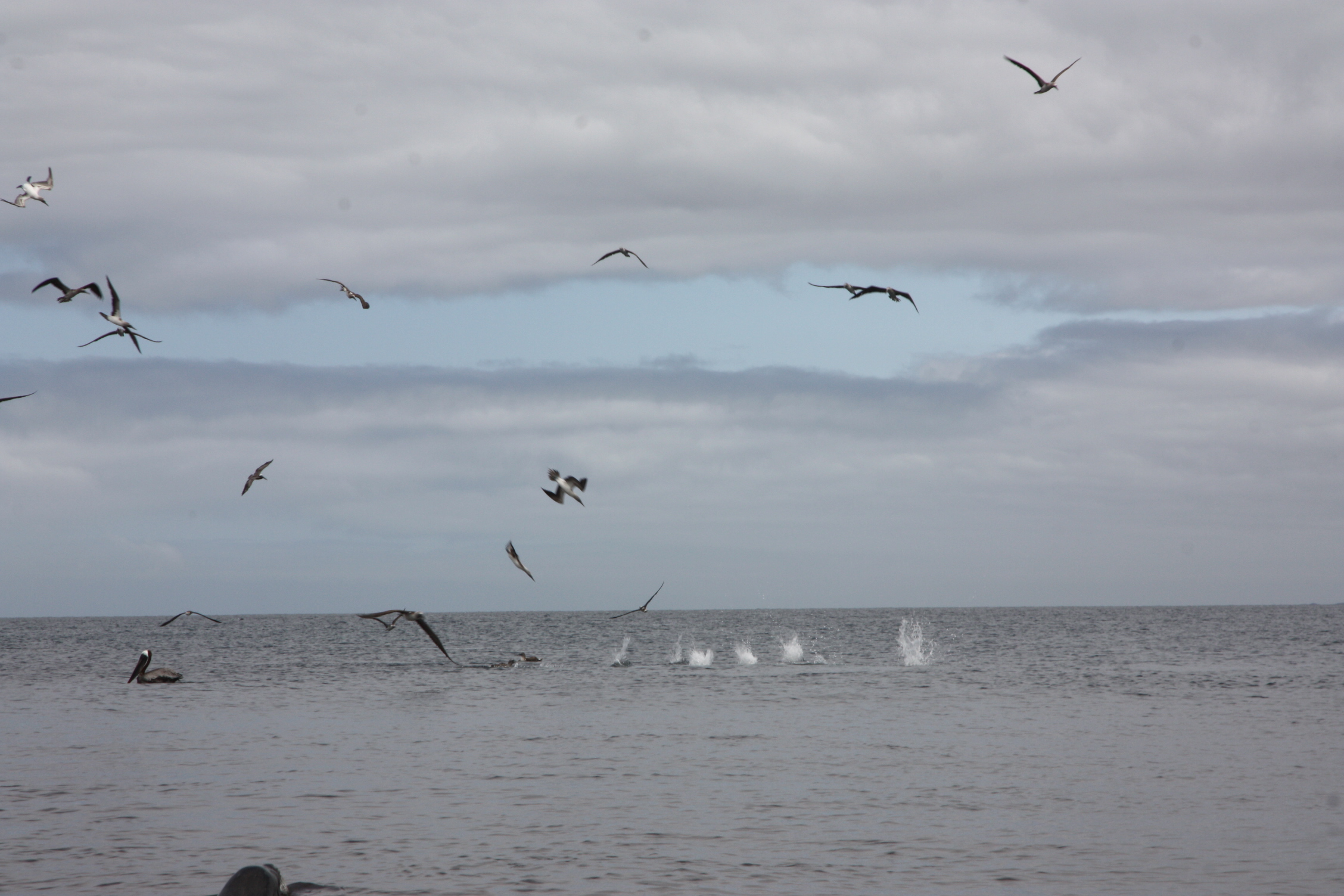
Diving boobies
They hit the water at speeds of up to 100 km/h (60 mph) and by the time they pop to the surface, they have probably already eaten their catch.
Male boobies have a showy mating dance, which we never saw. Darn. Boobies lay two or three eggs each breeding season, and the parents share the incubation (they use their feet to keep the eggs warm) and later the feeding of the young.
Most of the birds we saw were flying, diving or nesting on shore, while we were in a boat, so I don’t have any great close-ups, but I do have a lot of great memories.

Luis Fichamba making an Andean pipe
Today we had the good fortune to meet Jose Luis Fichamba, a gifted traditional musician and instrument maker in Ecuador.
Luis was director of the popular Andean band Nanda Manachi. The group took the music of the quechua people of the Andes to the world, touring in many countries. They might still be performing together today, but the group split up when various band members moved to other nations.
We met Luis in his workshop in Peguche (near Otavalo). He doesn’t speak English, but our local guide, David, explained some of Luis’ background and many talents.
Luis sat with us and within less than 15 minutes of casual cutting, trimming and tuning pieces of bamboo, he had created and was playing a set of small, typical Andean pipes.
He also gave us several short performances, with him playing the pipes, a stringed instrument, and then a flute, drum and percussion instrument made of sheep’s toenails. I managed to get a short video and will post when I figure out how.
We all had a go at getting a sound out of the pipes and other instruments, but the sheep’s toenails were certainly the easiest to play. The rain stick—a piece of bamboo filled with stones and sealed at both ends—was extra easy too. Just tip it end to end.
Our visit to Luis’ workshop was part of a day-long community-based tour we booked and I’ll post more about it soon. We’re off to the Amazon tomorrow—for three days—and I’m not expecting to have an internet connection.

Shawls are popular and colourful
Otavalo, north of Quito, is a commercial success story and colourful too.
For centuries, rich volcanic soils have made this area rich in farming communities. But a rise in tourism and the popularity of local handicrafts have helped to create a thriving market.
Saturday is the big day, when up to a third of the town is taken over by stalls selling textiles, jewelry, musical instruments, blankets, leather goods, fake shrunken heads, indigenous costumes, hand-painted items, purses and bags, clothing, spices, food and spools of wool. There are lots of local shops, too, where prices seem higher and the quality can be better.
But you don’t have to come on a Saturday. We arrived on a Monday afternoon and found an abundance of choice and plenty of not-too-pushy salespeople.
They were congregated in the main market square, called Plaza de los Ponchos (Plaza of the Ponchos). The square, which was about half full when we arrived, was designed and built in 1970 by a Dutch architect. It has 90 mushroom-shaped ‘stalls’ with circular benches, and room for countless other makeshift operations.
We had a quick run-through yesterday, but that was just a starter. We strolled past in the evening. About 10 food stalls were set up that hadn’t been there earlier in the day. We bought dinner—four empanadas—for $1.40. We’ll be back tonight.
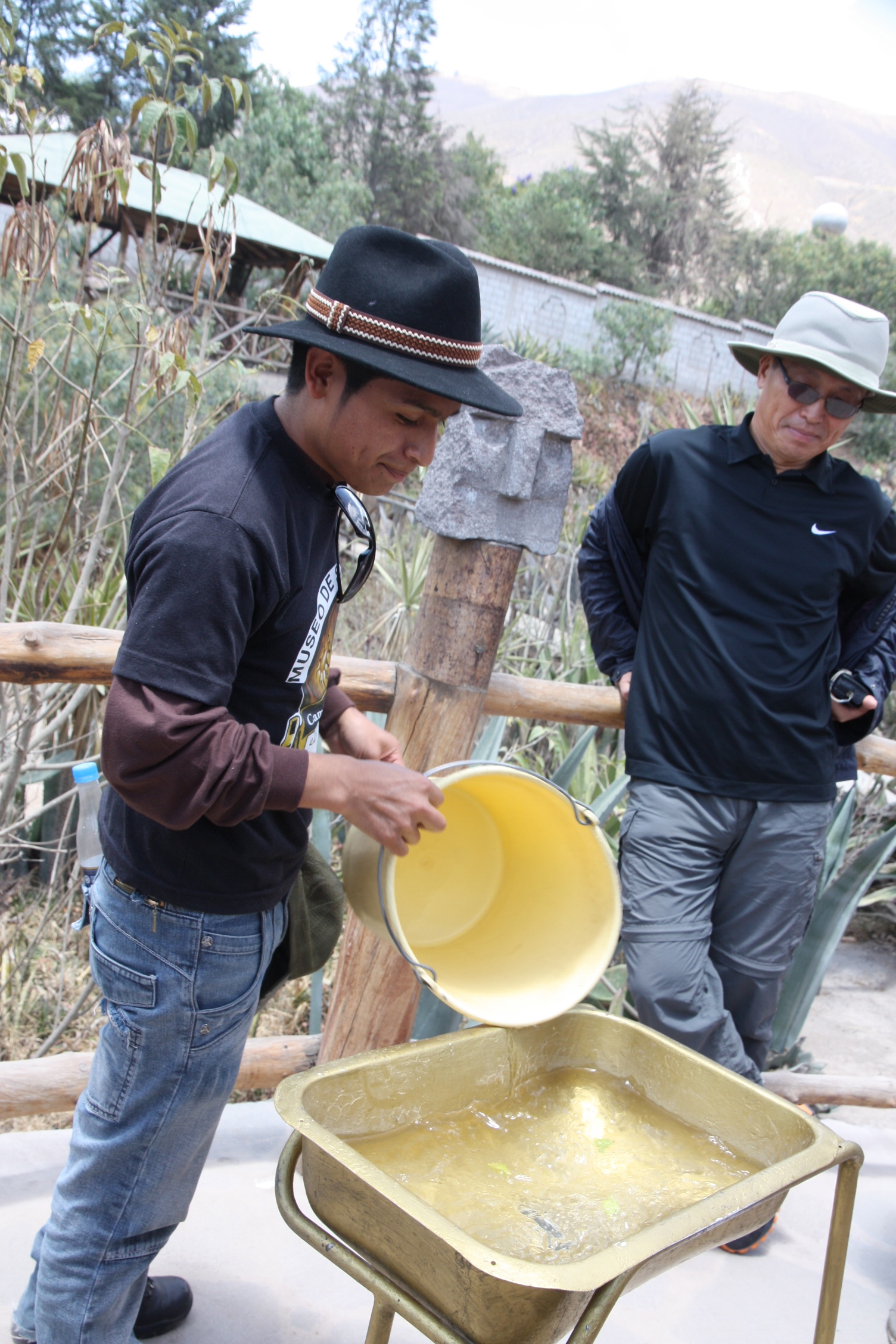
Pouring water near the equator—note the pouring technique
We headed out about mid-morning today with our first destination being the equator north of Quito, Ecuador.
There are some interesting facts and misinformation regarding this place.
In 1979, the Pichincha Province Council started work on a monument to mark the Ciudad Mitad del Mundo (Middle of the World City). It replaced an earlier monument, and was meant to mark the exact equator.
Problem was, they were about 240 metres off the mark. Oops! But it doesn’t keep people from visiting and believing.
A couple of hundred metres north is the Intiñan Solar Museum. It too claims to be on the equator. This is not proven as they use civilian rather than military GPS to confirm the reading. This is where we visited and what a hoot! It’s more like a charlatan’s sideshow at the circus.
Our guide showed us a REAL shrunken head and explained the process—it takes three months.
Then he escorted us through some Ecuadorean cultural exhibits and a garden of totems contributed by other countries. These all were quite nice.
Finally came the array of demonstrations of proof, including the water one based on the Coriolis force.
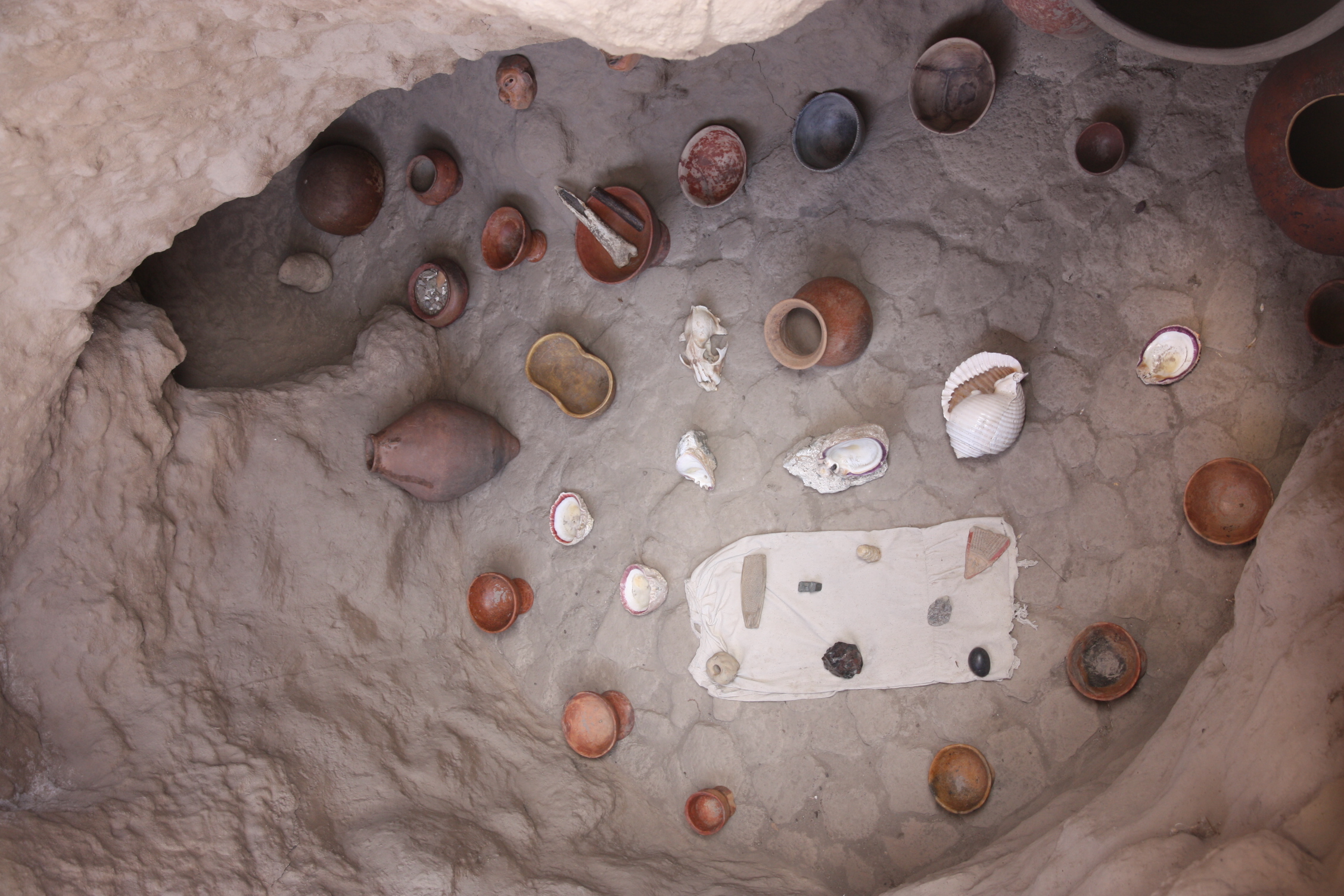
Artefacts from an Ecuadorean tomb
Our guide emptied water from a portable sink positioned ‘on the equator’. The water drained straight down. Then he moved the sink north and south of the equator and showed how the water drained, counter-clockwise or clockwise.
Poor John saw through the technique pretty quickly. On the first demo, the sink had been stationary for a while, and the water emptied straight down quickly. On the two subsequent efforts, the guide poured the water into the sink from the left or right edge, depending on which way he wanted the water to drain. He pulled the plug so soon after filling the sink, that the water was already moving (although not visibly) in the direction he wanted.
The Coriolis force is real, but the truth is that it is simply too weak to affect such small bodies of water. Skip the sink or the toilet and try a hurricane or typhoon instead.
Sorry if this spoils the story for anyone.
One good thing came of outing. The guide managed to get the first photograph of most of our group!
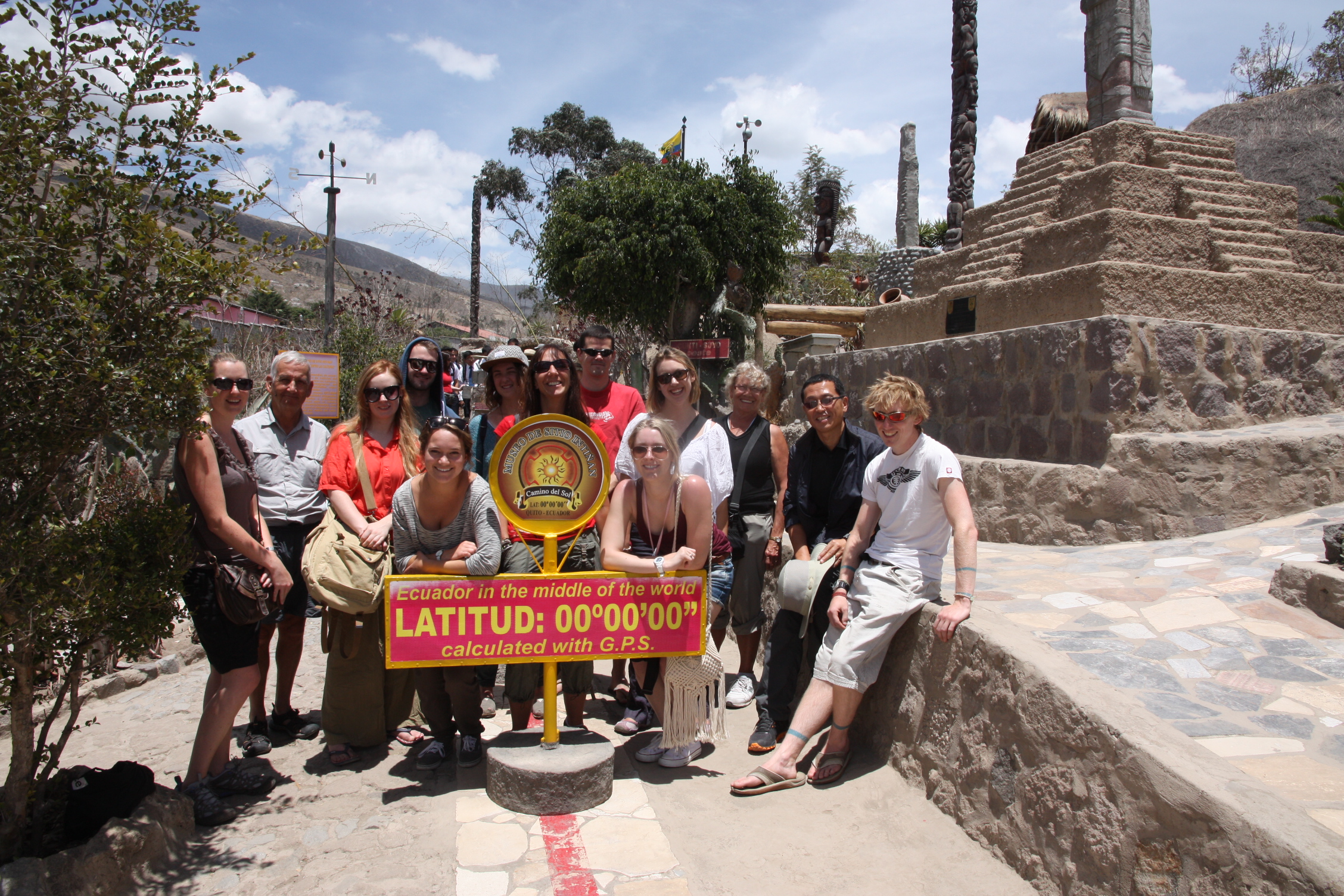
Most of the group at the equator

Poor John and Sponge Bob
If you’ve followed this blog for a while, you’ll know that our original plans for a overland trip in South America were thwarted.
We booked a new option with Oasis Overland. The itinerary is pretty much the same, but we’re five weeks behind on our original starting date. That’s okay. We’ve spent the last little while goofing off in the USA, Canada, Colombia and now Ecuador.
But our big day actually comes tomorrow—we get started. In the morning, we’ll set off in a big yellow truck (nicknamed Sponge Bob) and spend the next four months getting to see huge slabs of South America and getting to know our fellow travellers.
I’ll be writing about our adventures, and still writing about past adventures in other far-flung places—there’s so much to tell and I always feel so far behind.
Hope you continue to come along for the ride. Please, please, please—I’d love it if you’d leave comments, ask questions and share in the journey. I’m sure we can squeeze you on to the truck.

A rough guide to our route in South America
 Where to next?