
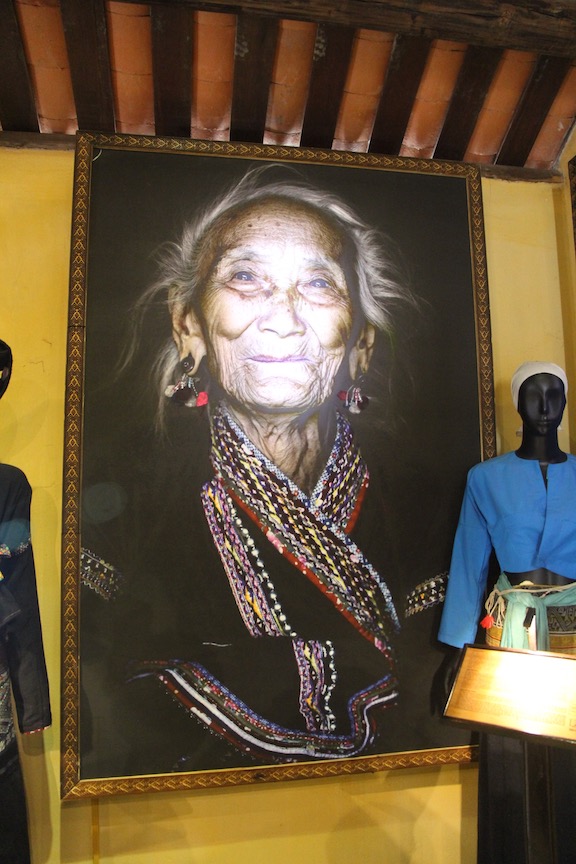
The Lu. She asked the photographer why he didn’t come when she was young and beautiful.

I think she’s as beautiful as ever. What do you think?
Hoi An, on the east coast of central Vietnam, has changed dramatically since we first visited in 2011. The old town looks much the same, but the town itself has become so popular with tourists that the streets, shops and historic sites are overrun with people.
And then there’s the traffic—cars, vans, buses, motorbikes, scooters and push bikes. It’s not an easy place for pedestrians. I’m surprised we didn’t see a steady stream of ambulances carting accident victims off to hospital.
But we did manage to find a divine haven that allowed us to escape the heat (most days it was 38°C or 100°F) and the crowds.

Precious Heritage Museum
Two years ago, world famous photographer, Réhahn, established the Precious Heritage Museum as a way to permanently display his work done across Vietnam.
For eight years, Réhahn travelled from tribe to tribe, visiting and photographing 53 of the country’s officially 54 documented ethnic groups. He also found many subgroups. His goal was to capture the faces and the traditional costumes unique to each culture.
The museum displays 100 photographs and 62 traditional ensembles. Signage explains where each ethnic group is located within the country and how large the population is. One group has fewer than 400 members (2009 census) and the largest has almost 75 million. There are also stories about the costumes and the person shown in the portrait.
In many cases, Réhahn was given a costume by a group’s chief. Too often, the groups are down to one or very few traditional outfits.
Here are some summaries. Each group’s name is in the photo caption. My favourite is from the Lu. They are shown in the first photo and explained in the last entry below.


Meet the tribes
The Ha Nhi
The Ha Nhi number about 11,000 and are organised into two subgroups—the Black Ha Nhi and the Flower Ha Nhi. Réhahn met the former group, as well as a subgroup known as the Pink Ha Nhi. The Ha Nhi’s cotton, indigo costume takes up to six months to make.
The O Du
The O Du is Vietnam’s smallest ethnic group, with fewer than 400 members. Today they have only 5 original costumes left. Réhahn met Vi Thi Dung, the last woman making the traditional skirt. I’m guessing she is the person featured in the photo.


The Pu Peo
Réhahn had just 25 minutes in the Pu Peo village in northern Vietnam and near the Chinese border. He’s not sure why he was asked to leave so abruptly, but he managed to capture a quick photo of the oldest person in the village.
The Si La
The Si La keep their traditional costumes for special occasions. The silver coins are believed to bring good health and good luck. Réhahn was the first foreigner to visit the village in far northwest Vietnam. They came to Vietnam from the Philippines, via Laos.
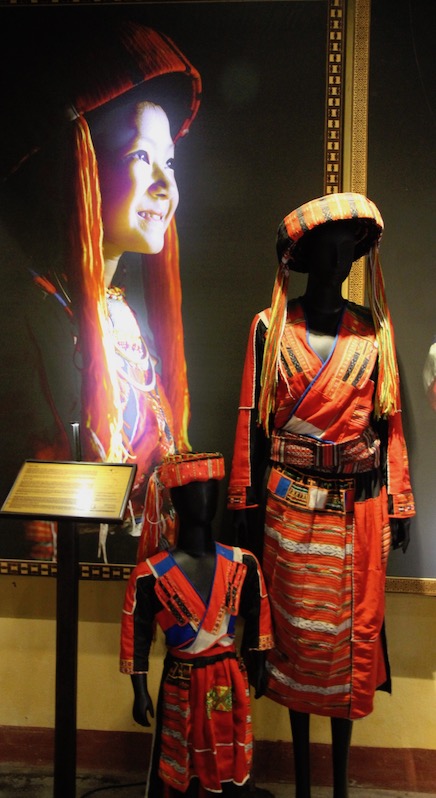
The portrait is of an 8-year-old from the Pa Then group
The Pa Then
Huong, the 8-year-old old Pa Then girl in the portrait, was delighted to dress up in her outfit. Some schools require children to wear the traditional costume every Monday. Today only two people still know how to weave the fabric to make the brightly coloured outfits.


The Lo Lo
This ethnic group is divided into three subgroups—Flower, Red and Black. The bottom photo on the left is the Black Lo Lo version, while the top is the Flower. Because it is covered with 4000 appliquéd triangles (photo on right), the Flower version is the most expensive at about US$1200.
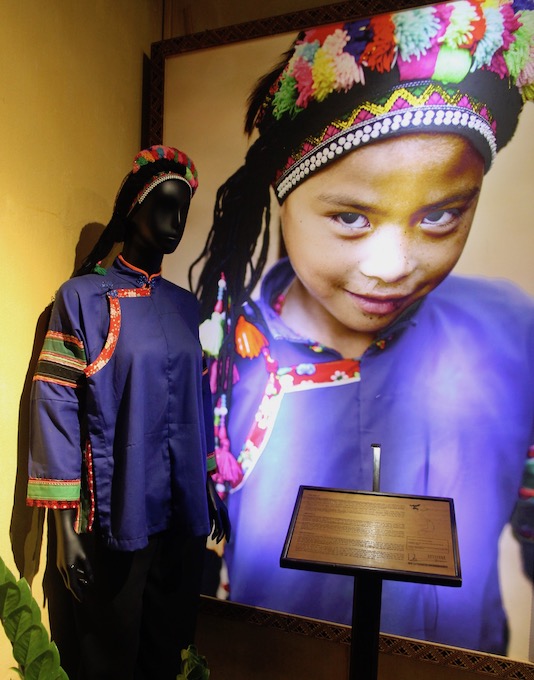
The Phu La
The Phu La
The Phu La are reserved. Réhahn struggled to find someone willing to pose in a traditional costume, until he met the young girl (pictured) and her mother. While travelling, he also met the Xa Pho, a subgroup of the Phu La. He hopes to photograph them soon.
The Flower H’Mong
The Flower H’Mong is a subgroup of the H’Mong ethnic group and is named after their brightly-coloured traditional costumes (see above). These detailed garments take up to 6 months to make and are so precious that they are considered heirlooms.


The Cho Ro
Réhahn spent two days with the Cho Ro, who were puzzled as to why he was interested in their traditional clothing. In the end, the chief gifted Réhahn the village’s last costume and his wife offered to pose in it for him. These outfits are no longer made.
The Cor
This traditional costume was one of the hardest for Réhahn to find. He visited more than 20 villages before he came across the woman (pictured) who owned the last original version. The provincial government also holds several costumes for traditional festivals.
The Ro Man
The Ro Man live in a restricted area near the border with Cambodia. As a result, it took Réhahn three years to get permission to visit. He was given one of the village’s last 12 traditional costumes, along with a pipe and a basket.
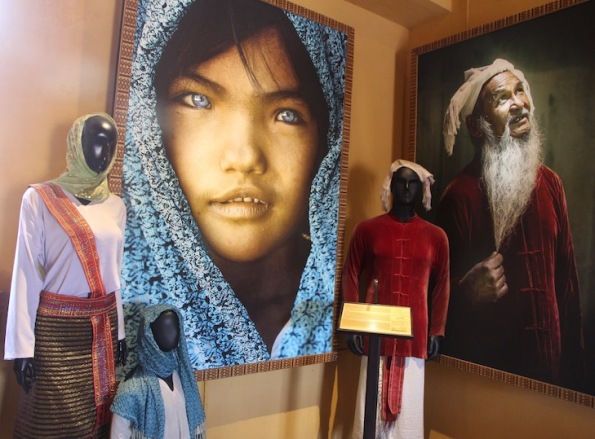
The Cham
The Cham
The Cham live in the south central coast, along the Mekong Delta. They are considered to be the root of Muslimism in Vietnam. The picture is one of Réhahn’s best known works. The girl has blue eyes, inherited from her French paternal great-grandfather.
The Co Tu
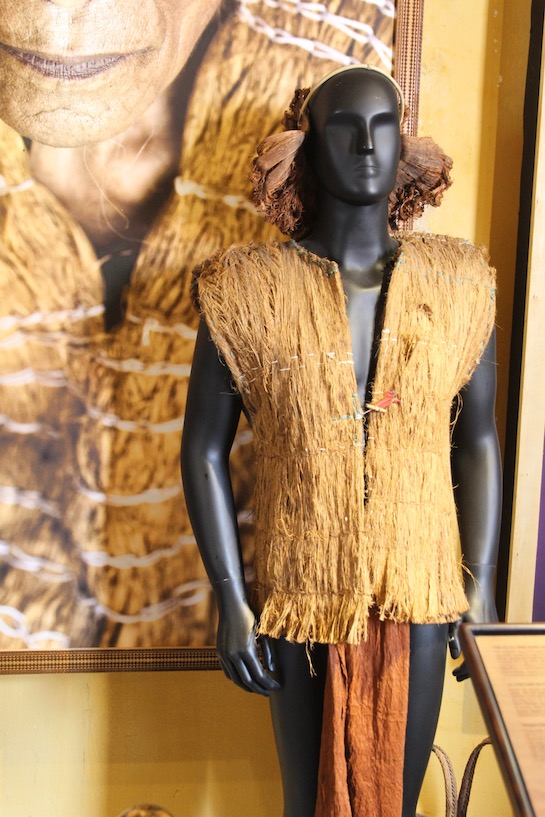
The Co Tu
For centuries, the Co Tu wore costumes made out of tree bark. They used five types of bark with solid fibres. These were beaten and then soaked in a mixture of water and spices for about 10 days. The museum holds the only known one in existence.
The Chu Ru
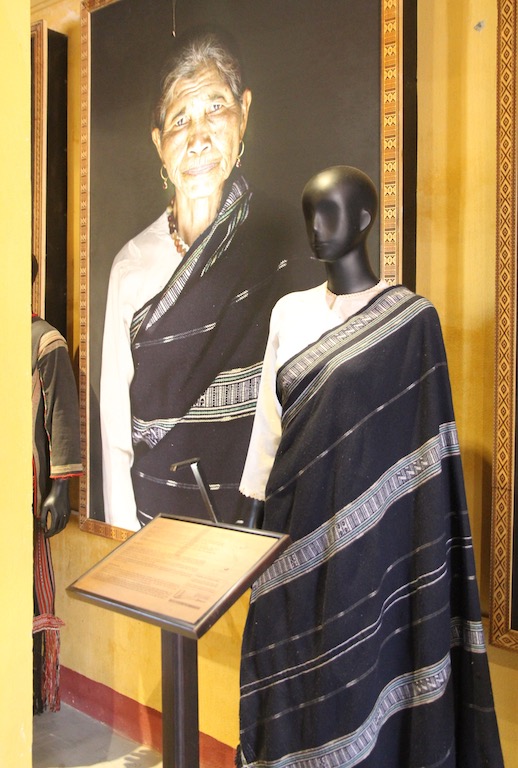
The Chu Ru
The Chu Ru is said to have links to the Cham group. They are also known for making good rice wine and wine jars. I was surprised by how similar their outfits are to the Indian sari. Réhahn was given a costume, as well as a ring and a musical instrument.
The Ede
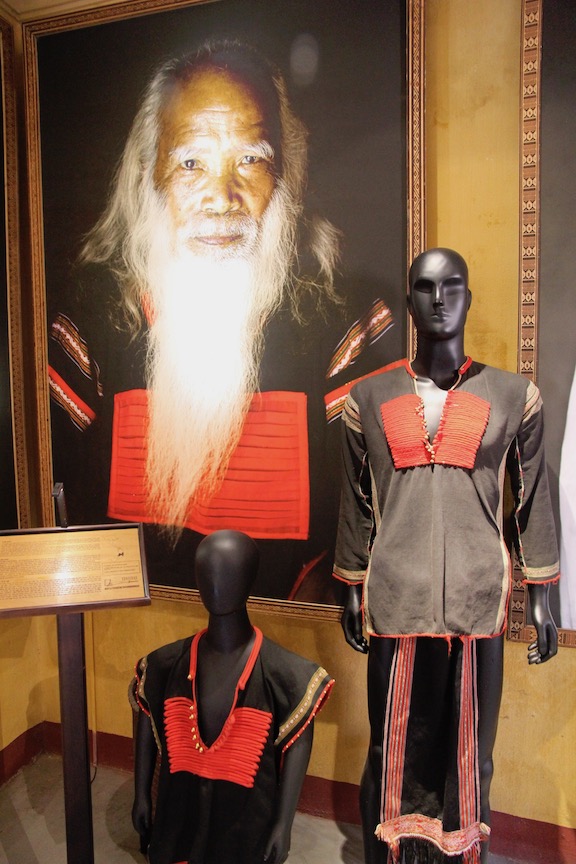
The Ede
It took Réhahn several visits to the Ede before he managed to see and secure an original costume. In this case, he found a male outfit. The bright red frontispiece was traditionally reserved for those of high social ranking. Today it is wore for festivals.
The White and Black Thai
There are some obvious differences between the White and Black Thai—starting with colour (see below). This group is large, with more than 1.5 million people. It has good relations and connections with the O’Du group, which is introduced above.
The Lu
Without doubt, this is my favourite portrait (shown at the very top). The subject, 93-year-old Lo Van Bau, told Réhahn, ‘Why didn’t you come when I was still young and beautiful?’ I think she’s still as beautiful as anyone can ever be. What do you think?
Love these images
I hope you like these images as much as I do. This is one of the most remarkable and most rewarding museums we have ever visited. We bought one of Réhahn’s books. If you want to know more, please visit his home page.
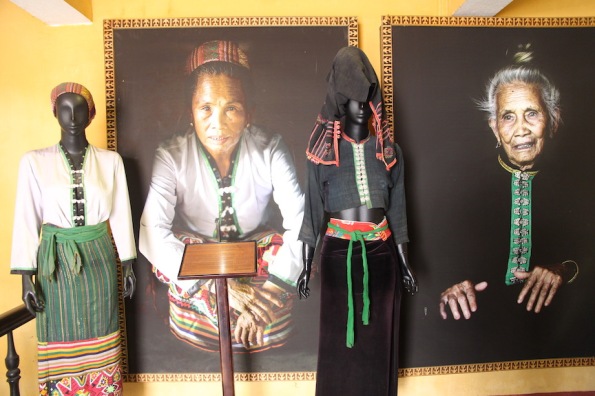
White and Black Thai costumes (see explanation above)
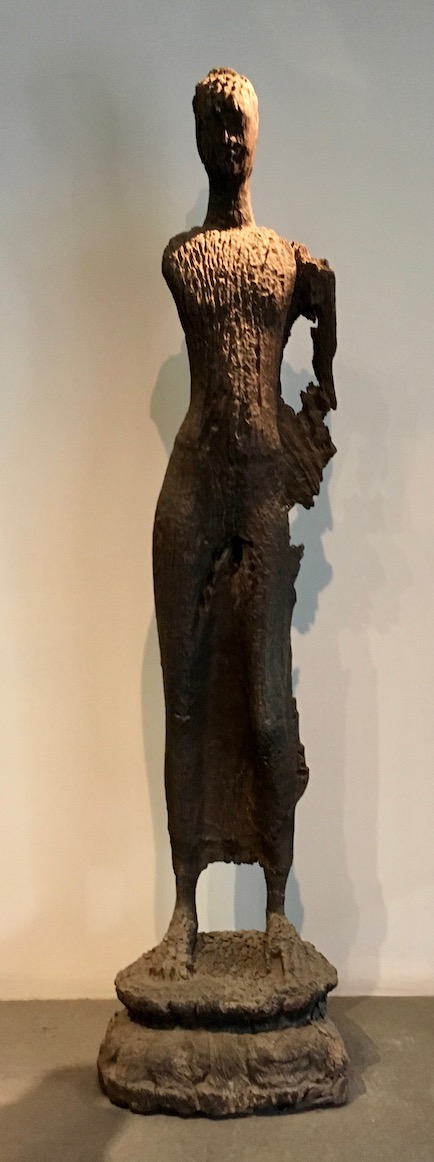
A 1600-year-old Buddha
It’s the rainy season in Vietnam, so Poor John and I have visited four museums in our first week here.
By far the best has been the Museum of Vietnamese History. Designed in the 1920s by French architect, Auguste Delaval, the colonial structure displays a combination of Indochinese and French architectural styles.
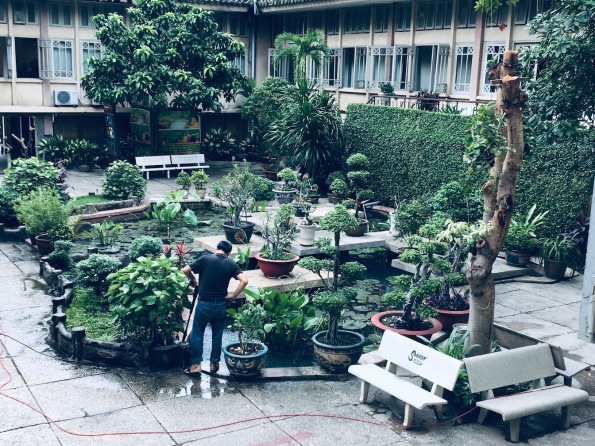
Museum garden
The building and its gardens are located within Ho Chi Minh City’s picturesque Saigon Zoo and Botanical Gardens. The museum itself is home to about 30,000 artefacts dating from the early Vietnamese kingdoms to the present day. It represents all of Vietnam’s 54 ethnic groups, and also showcases ancient art from surrounding Asian countries.
There are plenty of Buddhas, including the most elegant, haunting and unusual Buddha statue I have ever seen (shown at top). It’s from the Mekong Delta, is about 1600 years old, almost three metres tall and made of sao wood. This divine statue was declared a national treasure in 2013.
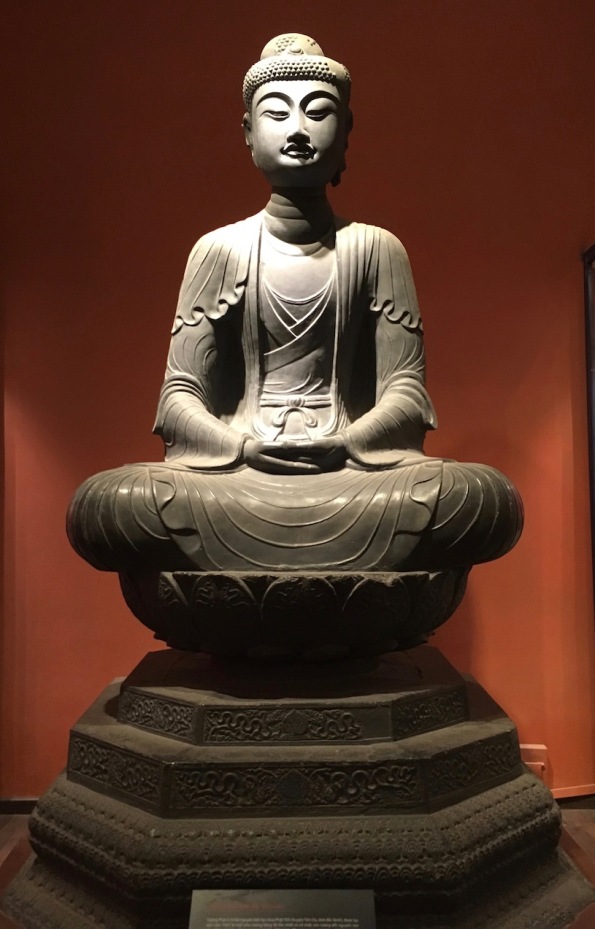
Amitabha Buddha
A year before that, another Buddha statue was declared a national treasure. The Amitabha Buddha is from the Hanoi region and was carved in 1057. It is the largest, most ancient and most intact stone Buddha in existence. It is typical of the Ly dynasty’s culture and art. The museum displays a replica.
Many other statues caught my eye. One was a jade image of a Kṣitigarbha. That’s a bodhisattva, or someone on the path to Buddhahood. A Kṣitigarbha is usually depicted as a Buddhist monk. Another was Tianhou, who became a popular Mother Goddess. She is worshipped in temples throughout the south of the country. We also liked the googly-eyed Buddha from Cambodia.


There’s also a plump, stylised lion from the 12th or 13th century and a head of the mythical bird, Garuda, from the 10th century. Both are carved from sandstone.
But the museum is way more than statues. In fact, it’s been on the receiving end of two important collections. Vuong Hong Sen was a famous researcher of culture and antiquities in South Vietnam. He donated his entire collection of about 800 items dating from the 10th to the 19th century. Likewise, the entire collection of Professor Duong Minh Thoi and his wife, Ha Thi Ngoc, was donated to the city by their daughter after both had died. These collections include pieces from the everyday to the elaborate.

Games table and other items from a donated collection


There’s also household goods, tombhouse statues, coins, ancient tools, musical instruments, dioramas of ancient battle scenes, cannons and other weapons, stelae, drums, columns, and clothing. There’s even an unusual base of a lamp stand.
A timber door from the Pho Minh pagoda in the Red River Delta in northeast Vietnam dates from 1262. The door is carved with dragons, waves, foliage and geometric patterns. The museum displays a replica.
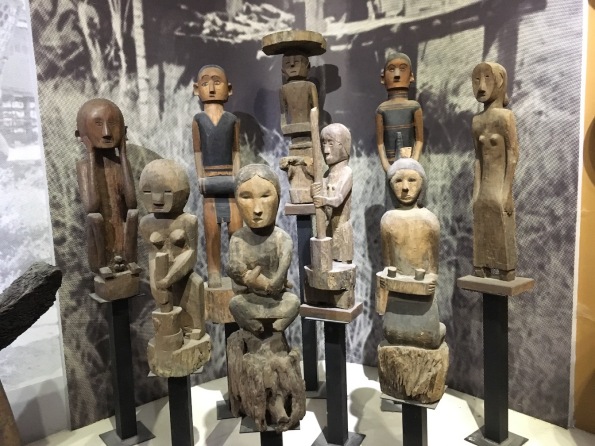
The more beautiful the tombhouse statue, the more peacefully an ancestor ‘sleeps’


Overall, Poor John and I were impressed by the breadth of the exhibits, as well as the organisation and signage. Most items are explained in three languages—Vietnamese, English and French. A central exhibit area was being updated when we were there and, other than an overpowering smell of glue, the work was progressing quickly and professionally.


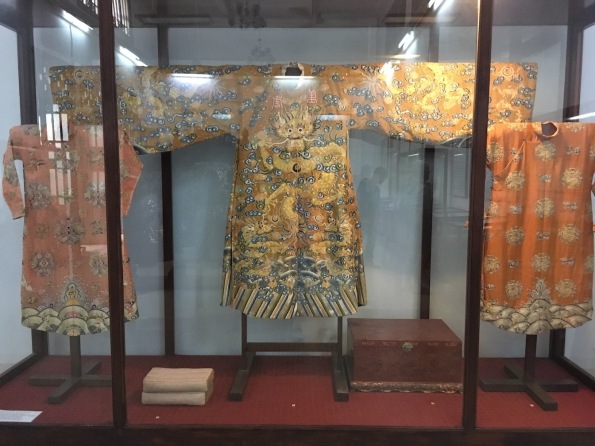
Royal clothing


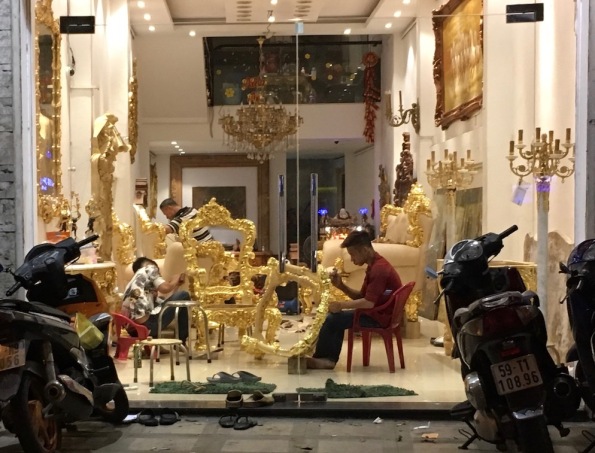
Never enough gold furniture
In a matter of a few weeks, we’ve gone from hot, dry West Africa to hot, wet Vietnam. We arrived two days ago.
Our daughter, Petra, who lives in Ho Chi Minh City, told us not to join the ‘landing visa’ queue on arrival. ‘You already have electronic visas, so go straight to immigration.’
Unfortunately, the guy at immigration thought otherwise. He ignored our e-visas and sent us, along with many others, back to the queue for visas on landing.
Two hours and US$50 later we managed to collect our luggage—two bags sitting on their own next to carousel 2. The fact that the cashier for visas managed to disappear for long periods of time added to the delay. Luckily the airport had wi-fi, so I was able to let Petra know about the hold up. And Poor John reminded me it wasn’t as bad as the last time we entered Vietnam when we were stuck overnight at the border.
Anyway, Petra was puzzled and annoyed by this change of system. It had worked perfectly well for others in the past. She discussed the matter with her work colleagues and speculated that it was because immigration hadn’t reached its financial quota in July.
Nope, her colleagues were confident that it was because ghost month had begun and ‘it’s bad luck not to pay your fees because the spirits of your ancestors will get you’. Below I’ve added a short explanation about the annual Ghost Festival observed in much of South East Asia.
After leaving the airport long after dark, we were pleased to find one of the two taxi companies Petra had recommended. She said the ride would take about 30 minutes and the fare should be about 140,000 dong (or less than A$10). One guy pretended to be from a recommended company, but his offer of a $25 fare exposed him as a fake.
Our taxi got us to Petra’s place for 139,000 dong. I managed to take a couple of pics along the way, including one of a furniture showroom/workshop where two fellows were adding gold paint to chairs.
Yesterday was a chance to settle in. We explored the nearby markets and treated ourselves to pho (the famous Vietnamese noodle soup) and a watermelon juice (less than A$5 each).
We’re in the Mekong Delta now and it’s pouring with rain.
Ghost Festival
The Ghost Festival is held during the seventh month of the Chinese calendar. It also falls at the same time as a full moon. During this month, it is believed that the gates of hell are opened and ghosts are free to roam the earth where they seek food and entertainment. These ghosts are believed to be ancestors of those who forgot to pay tribute to them after they died, or those who were never given a proper ritual send-off.
In Vietnam, this festival is known as Tết Trung Nguyên. It is a time to pardon the condemned souls who have been released from hell. The ‘homeless’ should be ‘fed’ and appeased with offerings of food and, presumably, the extra $50 for visas we already had.
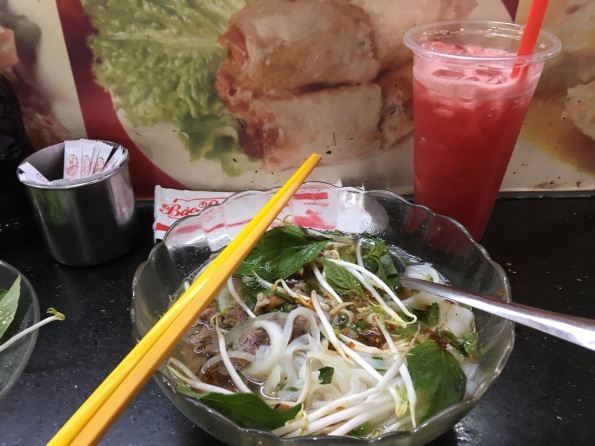
Pho and watermelon juice

Let’s be honest—life in Africa can be tough, really tough.
In the course of our travels, I’ve met people who don’t have jobs but who want to work. Others have been employed, but don’t have enough money to send a brother or sister to school. Some find it hard to look after a parent who is blind or unwell. And way too many are generally unwell.
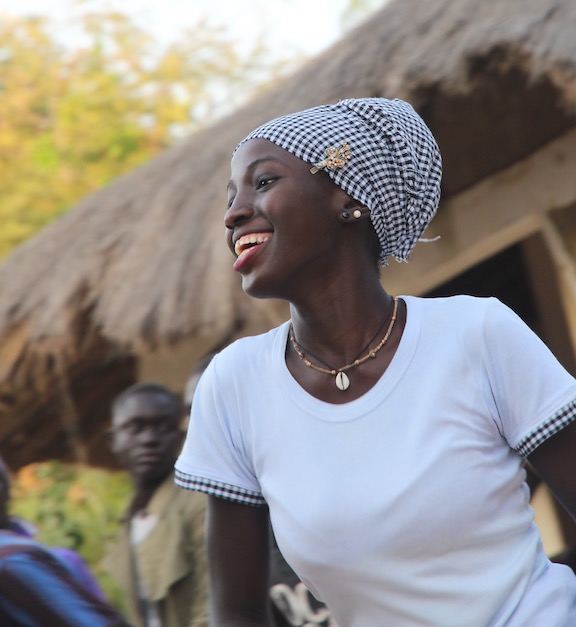


There are people who have lost family members to AIDS or horrific road accidents. We came down a mountain road to find an overturned/crushed ute (pickup) that had been fully loaded with passengers. It had toppled over a missed curve. Hard to believe that anyone survived.
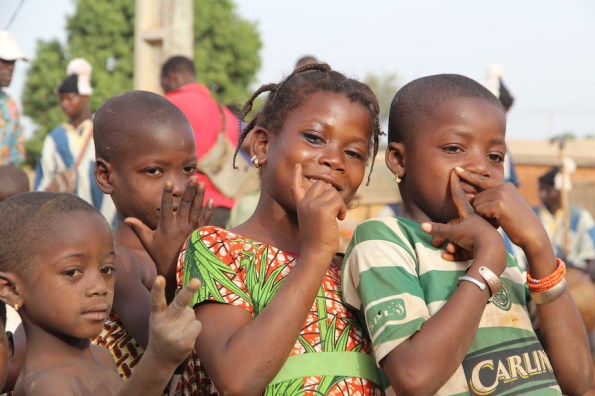
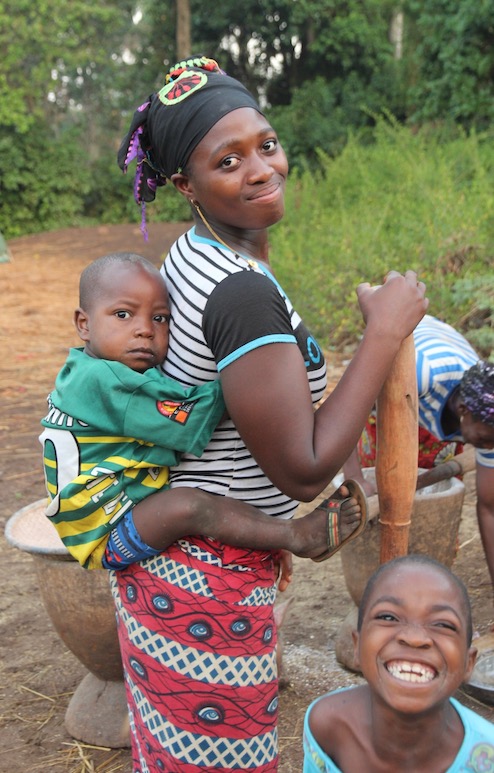
Yet, in the face of all this hardship and heartache, Africans still manage to smile.


So this post is about the many smiles we saw this year. As I go back through photos, I’ll probably find more, but these are here to brighten your day.
P.S. We are back in Australia now, but heading to Vietnam later this week to visit Petra, the daughter who lives there on a diplomatic posting. You can expect a mishmash of postings that cover Africa, Vietnam and everything in between.


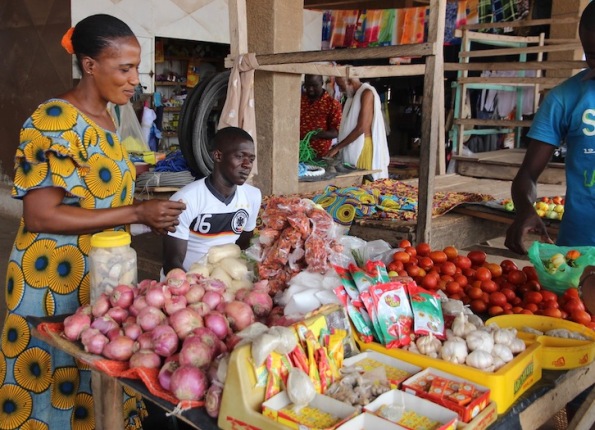
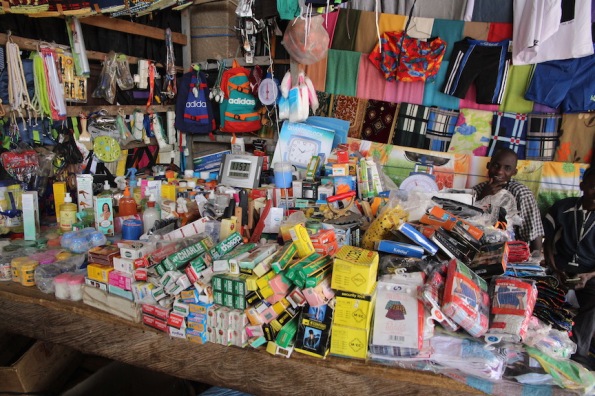
In the comments on my last post, fellow blogger Sharon Bonin-Pratt asked what we ate most of the time on this most recent African trip.
Overland travel and camping in Africa means we were almost always shopping in local markets (proper supermarkets are rare outside the big cities in West Africa).
Generally, the markets have tinned goods and fresh items that are in season and abundant. In all our African travels—now and 10 years ago—the most widely available fresh ingredients have been tomatoes, onions and eggs, eggs and more eggs.


You don’t want to know how many eggs I’ve eaten over the three months of this trip. Oh okay, I’ll confess. We usually bought eggs in trays of 30 and usually bought two trays a day—for just over 20 people.
Nassian was an exception—they didn’t have any eggs. This village was our first food shop in the Ivory Coast. Luckily it wasn’t my group’s turn to shop and cook, so I was free to tag along and take photographs. Frankly, I love markets and could bore you with pics of every market I’ve ever visited.
The Nassian market was quite basic, but still sold an array of food, clothes, tools, toiletries, fabric, towels, fans, luggage and more. Potatoes were on sale, which was rare at this time of year. Two local fellows even bought a live goat.

Carrying a goat
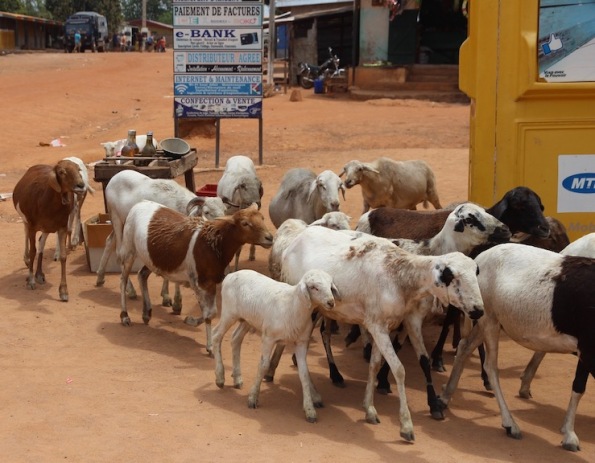
Goats to market
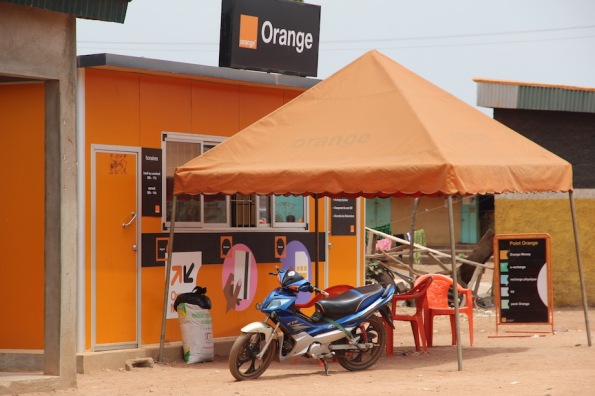
I was delighted to see an Orange phone shop across the road from the market. I bought one of their SIM cards in Bondoukou when we first entered the country, but I ran out of time to get in activated—too many people in the queue in front of me. So after photographing the Nassian market, I made a beeline to the fellow sitting out the front.
He didn’t understand any of my French or even any of my charades trying to explain what I needed. Turned out he didn’t work there and was just sitting in the shade of the large umbrella. I suppose he spoke the local language, but not French. As it turned out, I never managed to activate the SIM for the Ivory Coast.
Most of the pics don’t have captions, but you’ll see what’s going on.
P.S. Do you ever have the good fortune to shop in a local/farmer’s market?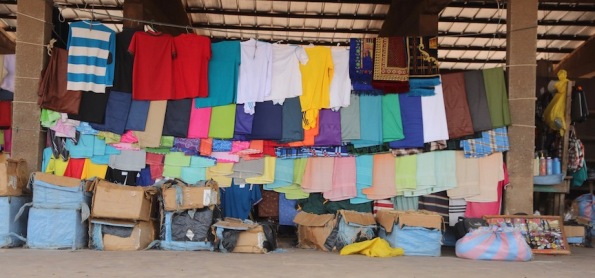


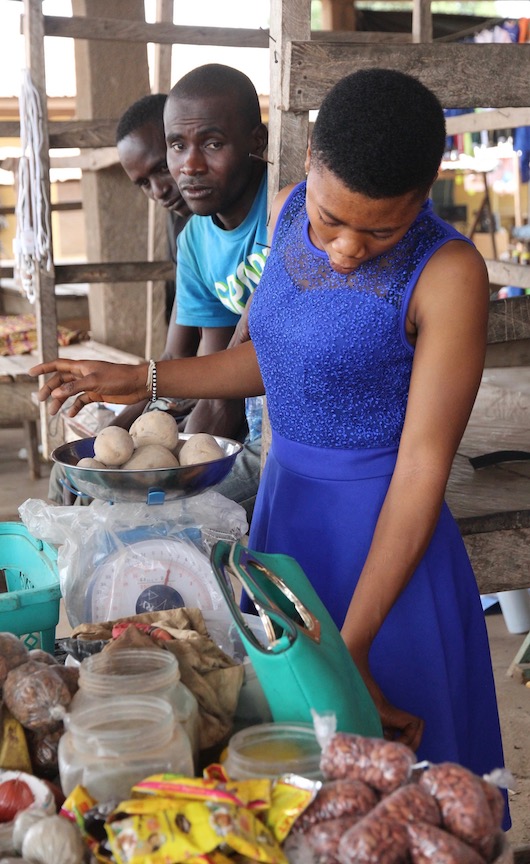
Weighing potatoes
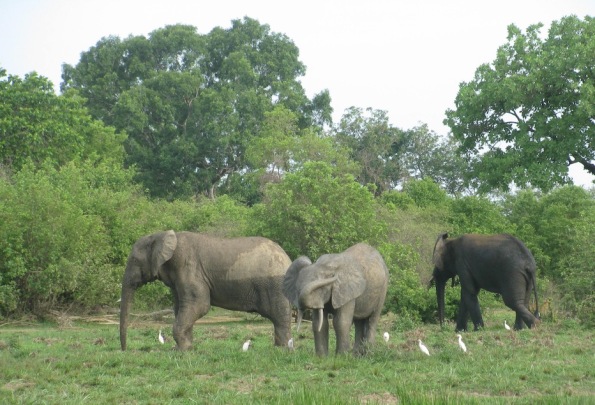
Elephants in 2009
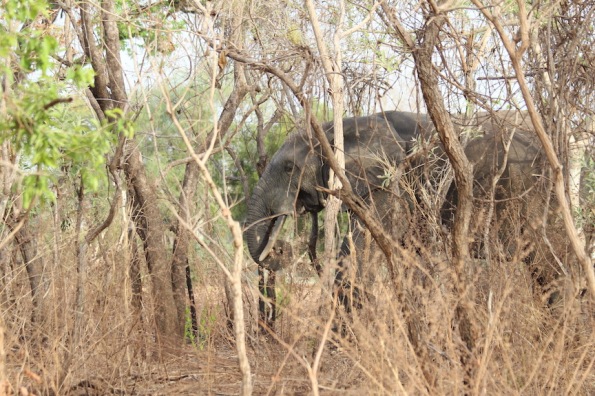
Elephant 2019


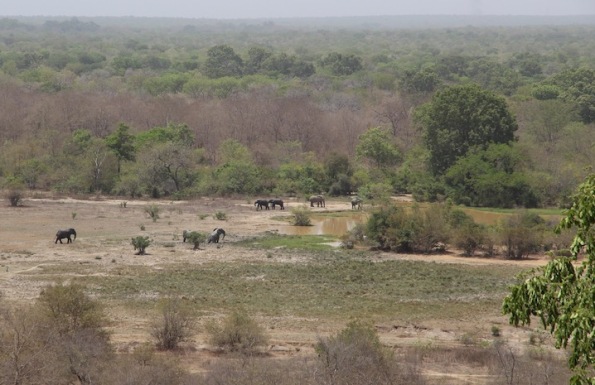
Elephants gather at the edge of a main watering hole, 2019
Africa is famous for its wildlife, especially the big five—lions, elephants, leopards, cape buffaloes and rhinos. But the big five are most common in the south of the continent. We saw all of them there when we travelled overland through Africa back in 2009.
This year we travelled up north, in West Africa only. It’s that bit of Africa that bulges out on the left side. There aren’t quite so many animals up there, but there are more than enough to satisfy wildlife lovers.
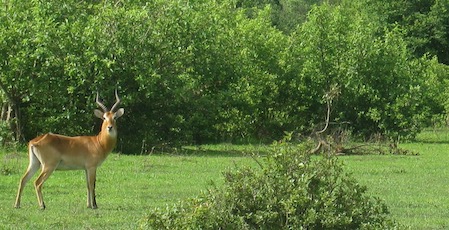
Kob antelope (the West-African subspecies Buffon’s Kob) 2009


In 2009 and again this year, we visited Mole National Park, Ghana’s largest wildlife refuge. Mole (pronounced Mo-lay) is home to 93 species of mammal, including elephants, hippos, buffalos and warthogs. It’s an important preserve for African antelopes, such as kobs, waterbucks, bushbucks, oribis, roans, hartebeests and two kinds of duiker.
The park is also popular with primates. There are black-and-white colobus monkeys, green vervets, patas monkeys and olive baboons (also called Anubis baboons).


On both visits, we saw plenty of baboons and made a point of steering clear of them. They are aggressive, hungry and thieves. While the park has motel-type accommodation and a restaurant, we chose to camp. That meant we shared the area with hungry, opportunistic baboons. You can’t leave food or even a tube of toothpaste in your tent because they’ll break in and take it.
Back in 2009, a baboon came in through the skylight of the van we were riding in. He was after a chocolate bar one of our companions was holding. The driver beat him off with a club that he carries for just that purpose.
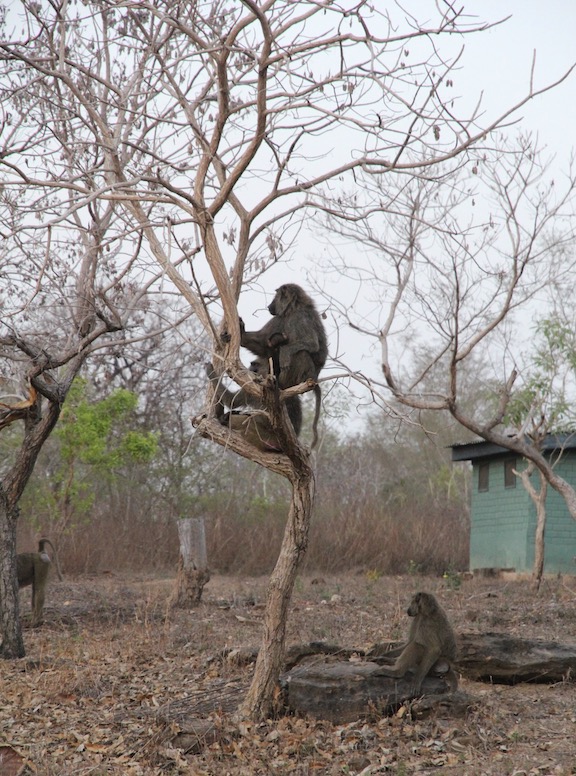
Baboons in the campground waiting to steal something (2019)


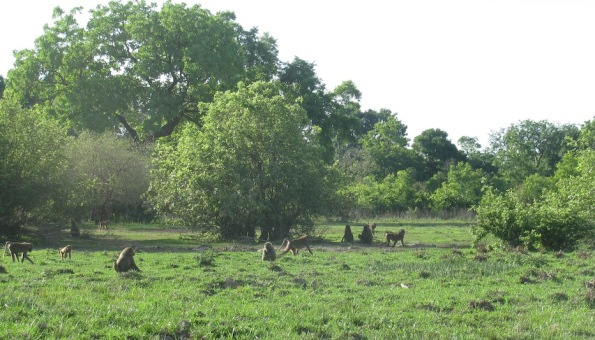
A field of baboons, 2009
Beyond mammals, Mole has 33 species of reptiles and 334 species of birds. Sadly my telephoto lens conked out early in the trip, so the birds in my pictures are the size of a flea.
You’d think seeing all the wildlife and landscapes would be enough, but there were two unexpected events at Mole.
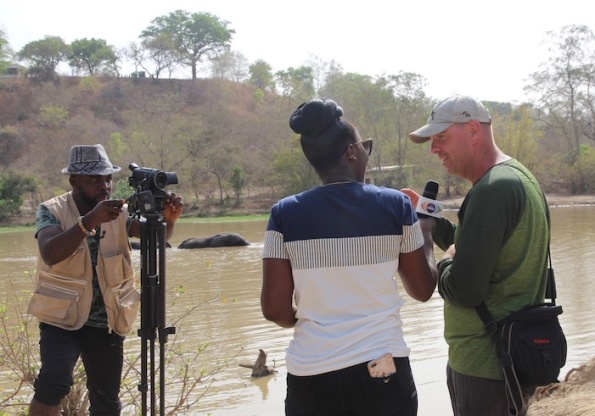
Gary being interviewed by Ghana TV. Elephants in the water in the background (2019)
First, a TV crew turned up at the park (mostly because of the second unexpected event). Gary, who we have been lucky enough to travel with repeatedly in Africa, India, and London to Sydney, was interviewed about his experiences in Ghana. Turns out he was interviewed for TV on a previous visit to the country. He must be a media magnet.
Second was meeting the 2018 Miss Ghana Tourism Ambassador and her two princesses. Apparently these three women are travelling the country to promote the most popular destinations. Elorm Ntemm is the ambassador. The two princesses are Maud Kunorvi (1st) and Ama Owusuaa (2nd).
The 2019 Miss Ghana Tourism Ambassador will be crowned in August.

Elorm Ntemm (centre), 2018 Miss Ghana Ambassador, and princesses, Maud Kunorvi (left) and Ama Owusuaa (right)
A bit more about Mole
Mole dates back to 1958. That was when land was set aside for a wildlife refuge. In 1971, the small human population was relocated from the area, and the land was designated as a national park.
The park is poorly funded to prevent poaching, but professional and armed rangers guard the animals.
The Mole and Lovi rivers flow through the park during and after the rainy season. The park gets about 1000ml (40 inches) of rain a year between April and mid-October.
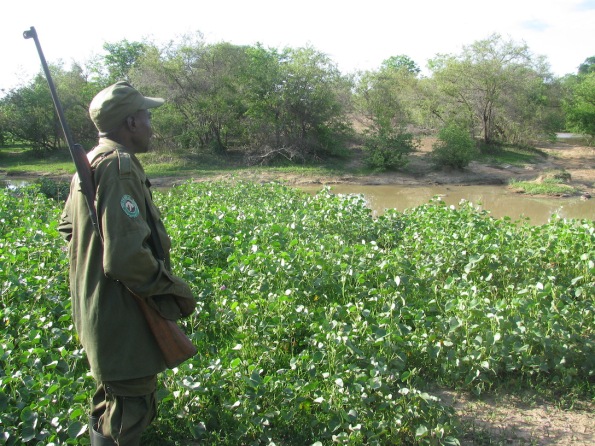
An armed ranger on duty in Mole, 2009
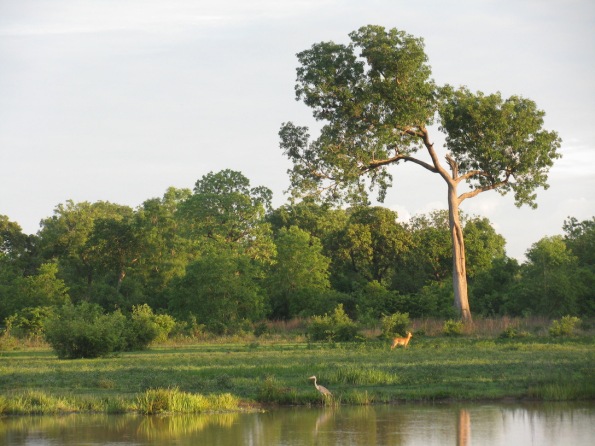
The park in 2009
About the pics here
This post includes pics from 2009 and 2019. Ten years ago, we visited in the month of May. That was after the rainy season had begun, although I don’t remember it raining while we were there. This year, we visited in March, at the very end of the dry season. You can probably immediately figure out what year a pic was taken, but I have added dates for your convenience.
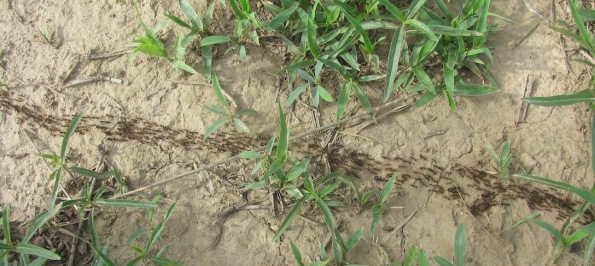
Ants on the march, 2009
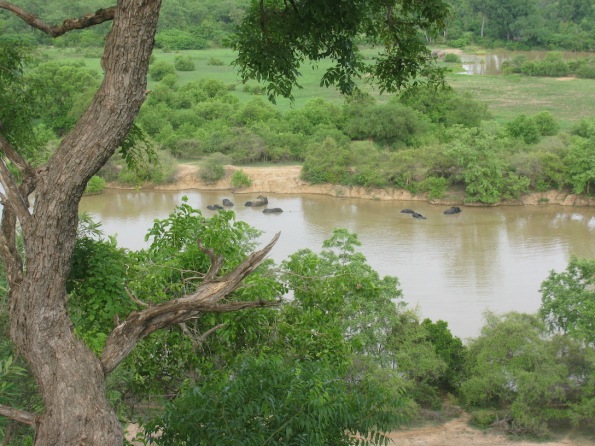
Elephants enjoying a bath, 2009
Korhogo was one of those overland stops with a bit of everything. We saw cloth being woven and decorated, granite being chipped, bead making, wood being carved, a typical village, and some amazing traditional dancing.
We’d been told that the dances were quite athletic, but you can never be exactly sure what that means. Turns out the star attraction is the Boloye, or the Dance of the Panther. The name stems from the fact that dancers wear costumes that are reminiscent of panther fur. And the dance is definitely energetic.
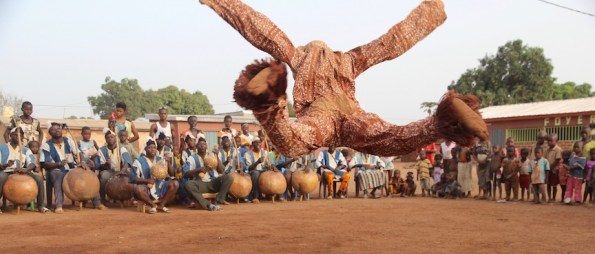
An airborne dancer

Airborne again
Historically, the Boloye was a sacred dance of the Sénoufo (Senufo) community in the Ivory Coast. It used to be performed only at funerals and possibly at initiation rites, but now it’s more widely shown. It must be highly regarded because photos of this type of dance were featured on tourist posters throughout the region.
We saw the dance performed in the village of Waraniéné.
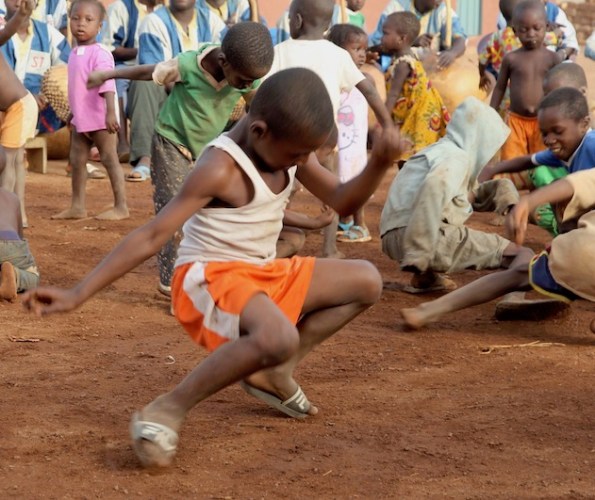
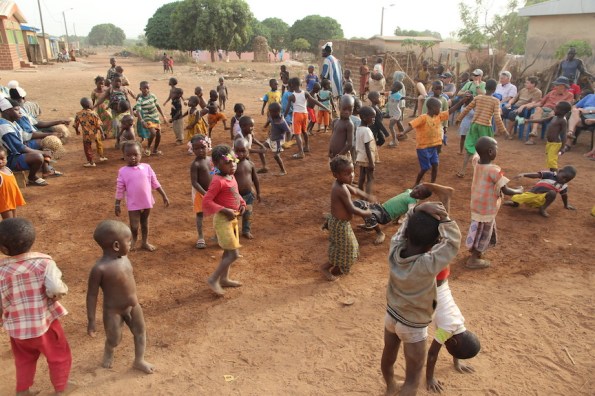
The event started with an ad hoc dance by children. It went on for about 15 minutes with the assembled band providing music. Eventually, some of these kids will be part of the main attraction, but that day they were improvising. It was great fun to see their moves.
One thing you might notice from the pics of the kids dancing is that people carry babies on their backs. We saw that all over Africa—this time and 10 years ago. Women, children and sometimes men wrap a cloth around their waists to hold their babies securely on their backs. It’s a fantastic way to do hands-free carrying. I’m surprised it has never caught on in the West.


But back to the main performance.
The all-male band had about 15 members. That said, a few other men wore the same blue and white shirts and black and white beanies as the band members, but seemed to have more of a managerial role.
I’m pretty sure the instruments were the shekere, a gourd covered in netting and wooden beads, and a larger drum, that looks a bit like a kora but doesn’t appear to have 21 strings. I haven’t been able to find a name for the latter instrument.

Our guide shows us a shekere up close

The band plays and sings
I’m guessing that most of the costumes were made of cotton, and you can see that they were dyed in earthy colours, as well as black. Their ankles were decorated with grass or wool (not sure which) and they had twigs for hands.
There were nine masked dancers, presumably all male. I believe the small one was a child. They entered single file and did an introductory routine (shown in the first video). You can see how they greet/acknowledge each of the band members, as well as the audience in general. You’ll see one dancer shoo a couple of children away from the ‘dance floor’.

The youngest performer
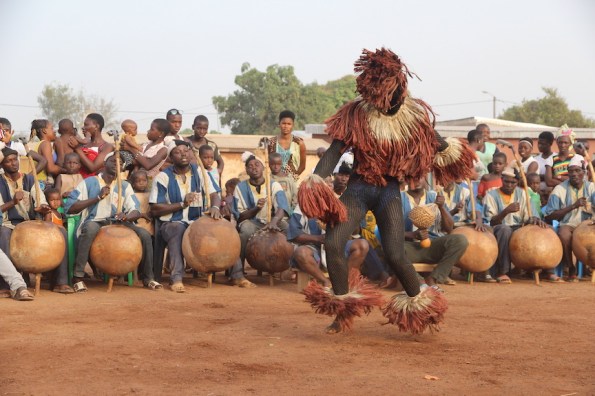
The most elaborate costume
All the dancers then sat on the ground off to the left and performed one by one. In the last video, you can see how they greet/acknowledge their fellow dancers before each performance. You’ll also see just how athletic these guys are.
Each dancer did at least three routines and while some were more complicated and athletic than others, they were all excellent and well timed. I was especially impressed by how well the dances and music complemented one another. Clearly these are routines that are well rehearsed.
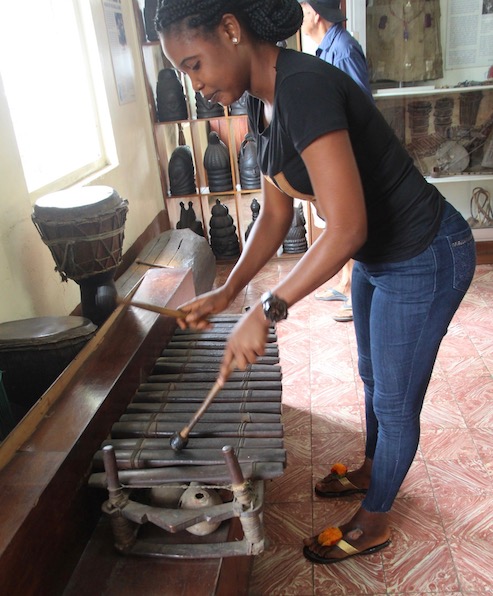
Our guide demonstrates a musical instrument
Whenever Poor John and I arrive in a new town, we seek out a local museum. Sometimes there’s more than one. Freetown, the capital of Sierra Leone, has two important museums—one featuring national culture and the other featuring the history of trains in the country (more about that in another post).
Inspiration for the national museum began in 1953. At that time, Governor Sir Robert Hall encouraged the formation of the Sierra Leone Society. He then challenged its members—mainly colonial expatriates and the Creole elite of the city—to establish what later became the national museum.
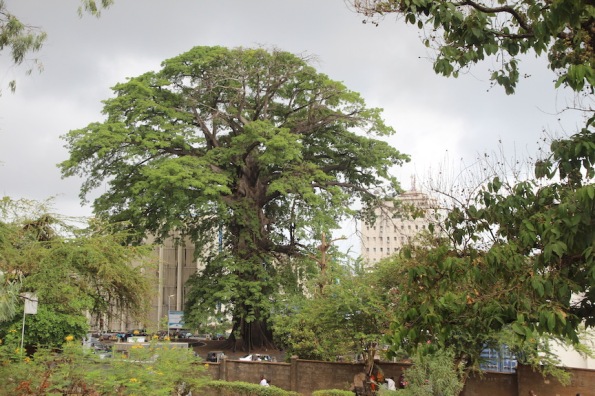
The magnificent Cotton Tree
We found it easy enough to find the National Museum. It’s in the old Cotton Tree Telephone Exchange in the centre of the city, and has been there since its opening in 1957. It was supposed to be a temporary location, but it’s still there. The telephone exchange was named after a large cotton (kapok) tree that is still nearby.
The museum isn’t overflowing with exhibits. Sierra Leone has suffered considerable conflict over the last decades, but in recent times a Reanimating Cultural Heritage project has digitised more than 2000 museum objects and documented traditions and raised awareness of their significance.
One of those was the photo of Bai Bureh. In 2013, the museum displayed the only know photograph of this Temne guerrilla leader, who started a war against British rule. I wrote about him here.
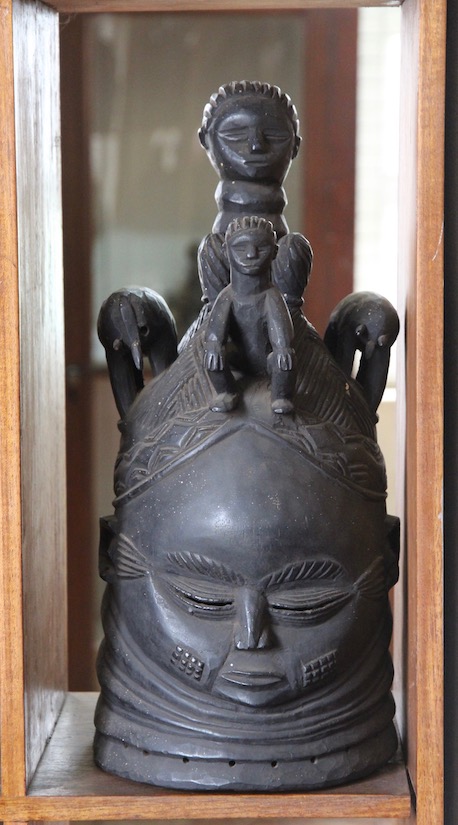


Two of the museum’s most comprehensive exhibits feature tribal masks and ceremonial costumes.
According to a placard in the museum, the distinctive helmet-style masks are worn by members of the Ndoli Jowei, the ‘Dancing Sowei’, an exclusively female Sande or Bondo initiation society. Traditionally a senior member of the society wears the mask and a black raffia costume, which disguises the wearer’s identity, during the annual initiation of girls. Today a Ndoli Jowei appears (and dances) at a wide range of social events. It is thought to be the only masquerade figure that is actually performed by women anywhere in Africa.
A classic Ndoli Jowei mask is made of lightweight wood and dyed black. It has an elaborate hairstyle, small face, delicate features, pursed lips, downcast eyes and scarification marks on the cheeks or near the eyes.
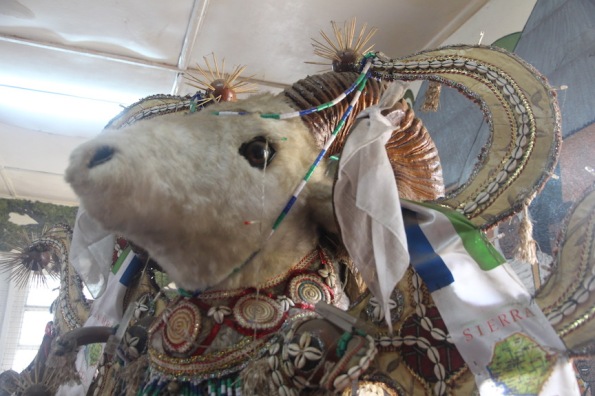


While a lot is probably known about the ceremonial costumes, but I’ll be darned if I could find any placards that explained them. Our guide didn’t know much either.
But the photos show the construction. The materials are diverse and great fun. There are shells from small to large, dusters, brooms, grasses, horns, teeth, toothpicks, cloth, fishnets, gourds and more.
One particularly elaborate costume has what I think is a stylised ram’s head. It’s heavily adorned with hundreds of shells and long grasses, as well as two dusters for hands. I had to laugh when I saw the timber toothpick holders, complete with toothpicks. I used to own one of those. Another featured a crocodile head and numerous large shells.
I can’t imagine how many hours it took to construct these garments, and I wish I knew who wore them and under what circumstances. Some of the displays had a name at the base, but even searching online hasn’t explained much.


There are loads of other interesting items—household goods, work tools, musical instruments, games and charms. There’s a map of the continent of Africa carved, sadly, on a tortoise shell and a banner showing African leaders from the days of Nelson Mandela.
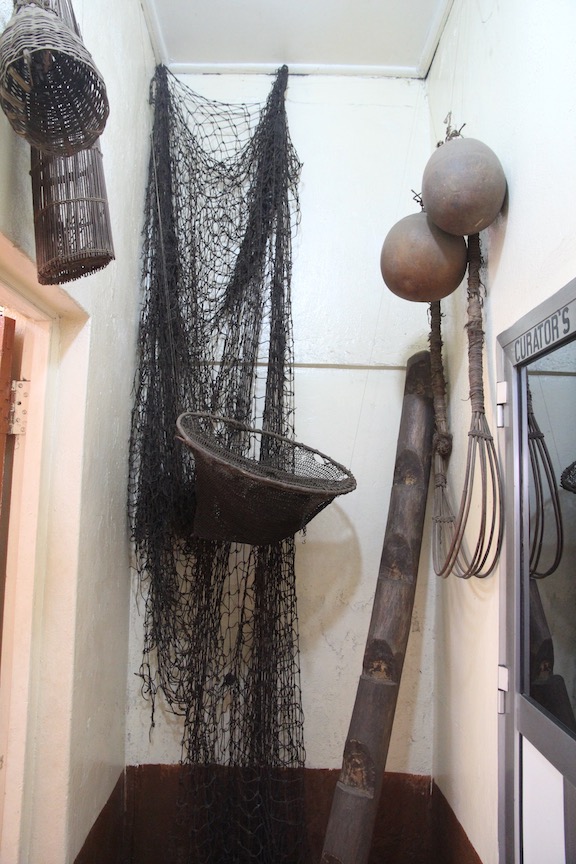
Work tools


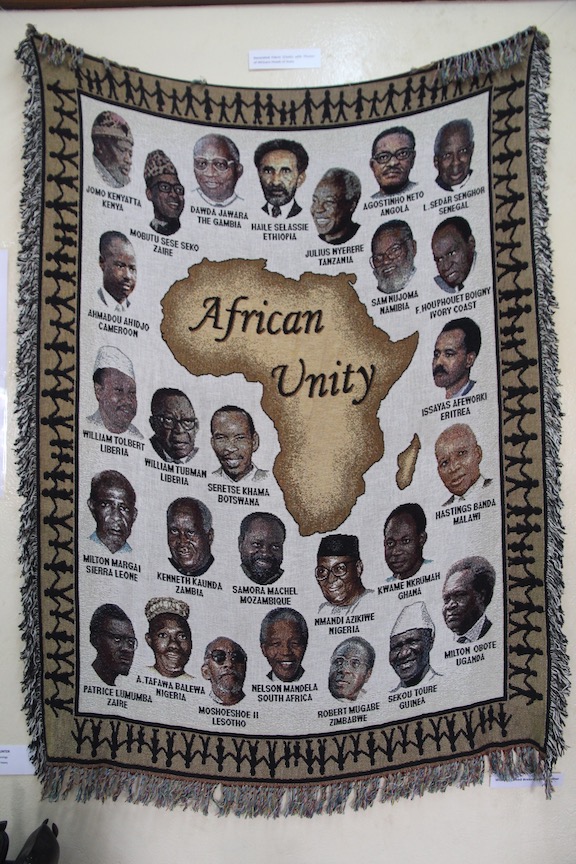
Banner of African leaders
I have a weakness for fabric—I bought more than 10 metres of fabric on this trip—so was interested in what’s called ‘country cloth’. Traditionally women grew, harvested and dyed the cotton (usually in blue or brown), while men wove the cloth. Today it’s done by both.
The cloth is woven in long strips. It’s durable and is used to make clothes, hammocks, blankets, wall hangings, and, in the past, as currency.
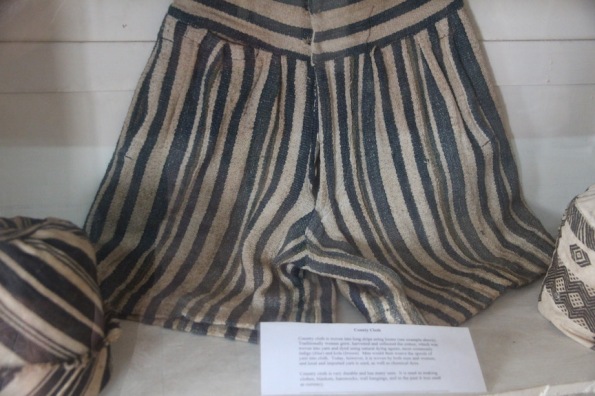
Country cloth shorts

Country cloth
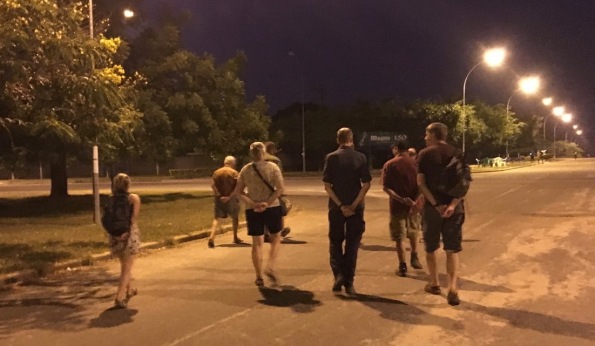
Poor John is second from the left
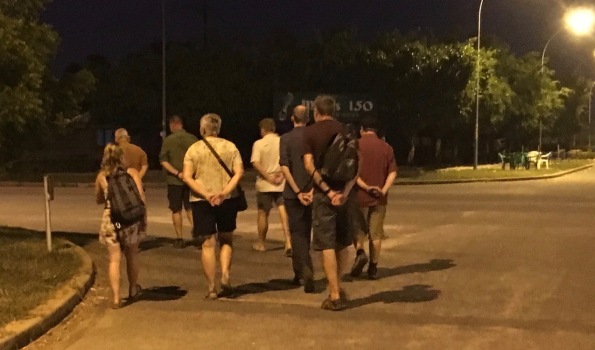
Regular followers of this blog will know that Poor John almost always walks with his hands clasped behind his back. It’s his signature pose. I’ve written about it here and here.
People who have travelled with us in the past get a kick out of sending me (not him) photos of other people doing the same. They also like to copy his pace.
This African trip was no exception. Most of the truck group went out to dinner one night in Yamoussoukro, capital of the Ivory Coast. I think Poor John was completely unaware of his following.
I wonder if any of them are keeping up the tradition? I wonder if any of you walk this way? I do sometimes.
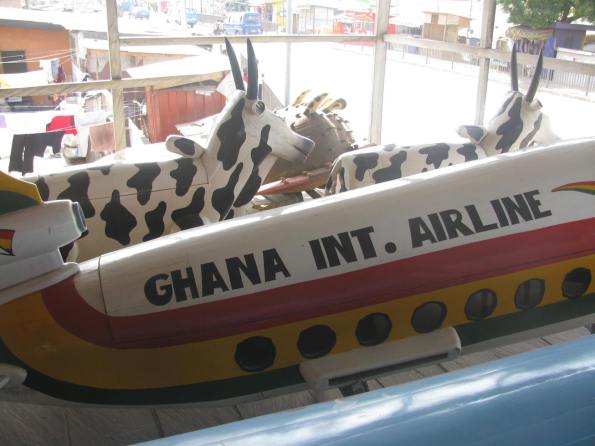
An airplane coffin in 2009 (cows in the background)
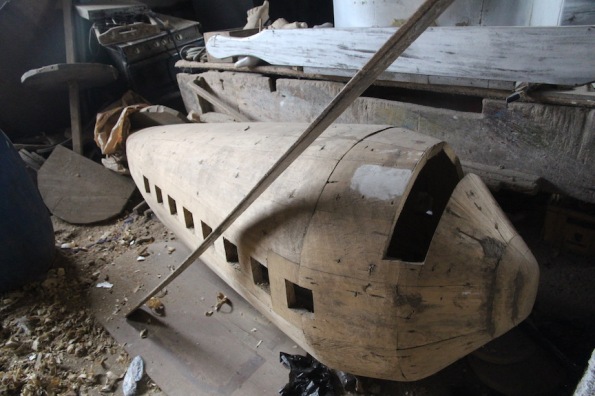
An airplane coffin in progress in 2019
One of the first posts I wrote regarding our travels this year in Africa was about a meal we had in the Ghanaian town of Teshie.
But food is not the main reason a person heads to Teshie. Nope. It’s the elaborately carved and hand-painted coffins that draw people from all over Ghana, in fact from all over the world, to this town. Some want to buy these ‘fantasy’ coffins and others just want to see them.
Back in 2009, we made a special trip to Teshie just to visit the workshops. But once is never enough for a place like this, so three of us (Poor John, me and fellow traveller, Dee) grabbed a taxi and headed east from Accra.
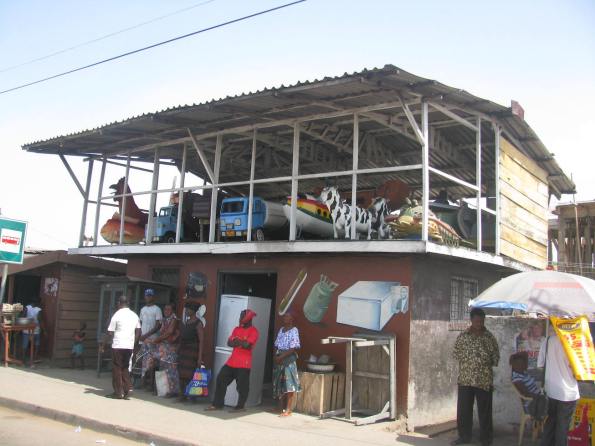
Coffin showroom from the street, 2009
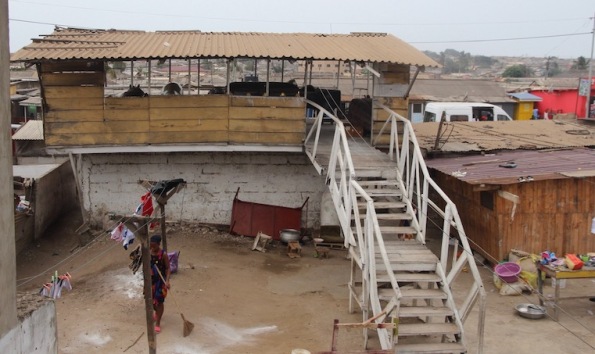
Entrance to coffin showroom
It was amazing to discover how little some things change. The main workshop is in the same place and looks much the same as it did 10 years ago. Just like in 2009, we were told it was okay to go round the back and up the stairs to the showroom, so off we went. I was surprised to see a child-size fish coffin that had been there on our first visit. Maybe it’s a new one but, judging from the weathering, I reckon it’s been kept for display. Each coffin is made to order.
The custom seems to have started sometime between the mid-1940s and the mid-1950s, and reflects a local attitude to the afterlife. The Ga people, an ethic group in Ghana and Togo, believe death is not the end and that life continues in the next world in the same way it did on earth. So the right send-off is important. (As an aside, West Africans spend a fortune on funerals. I saw banks with signs offering loans for homes, cars, education and funerals.)


The Western world was first introduced to these masterpieces at an exhibit in 1989 in Paris at the National Museum of Modern Art (Musée National d’Art Moderne).
A coffin usually depicts the deceased person’s profession, hobby or passion. Sometimes it indicates their status in the community.


In addition to the little fish we saw back in 2009, we saw an airplane for a pilot, a cow for a farmer, a pencil for a teacher and many more. This time we saw a flour bag, a vegetable, a camera, a truck, a spider and an eagle. Some were complete, some were in progress and some were ancient.
There was also a gorilla’s hand, but this wasn’t a coffin. It was a ‘throne’ made for a village chief. If I understood correctly, the chief was carried in it for a parade.
By the way, we saw a few more coffin-making shops on the side of the road as we drove through West Africa. Not sure which country, but I’ll try to let you know.
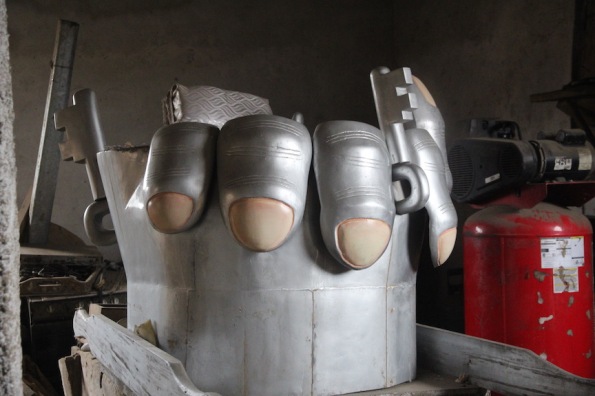
A throne for a village chief
 Where to next?