
This blog is long overdue for an overhaul. It needs to be better organised and more stylish.
I’ll be working on it over the next few weeks (with the help of one of my daughters). Don’t worry if you see it morph into something new and better. It’s not going to stop: it’s only going to get easier to use and easier to look at (I hope).
My plan is to organise our travels by continent, plus some other relevant categories.
Your suggestions, comments and criticisms are most welcome. Let me know what you think of any changes and how I might make the blog better.
Also don’t forget to pick a number before 29 February 2012.
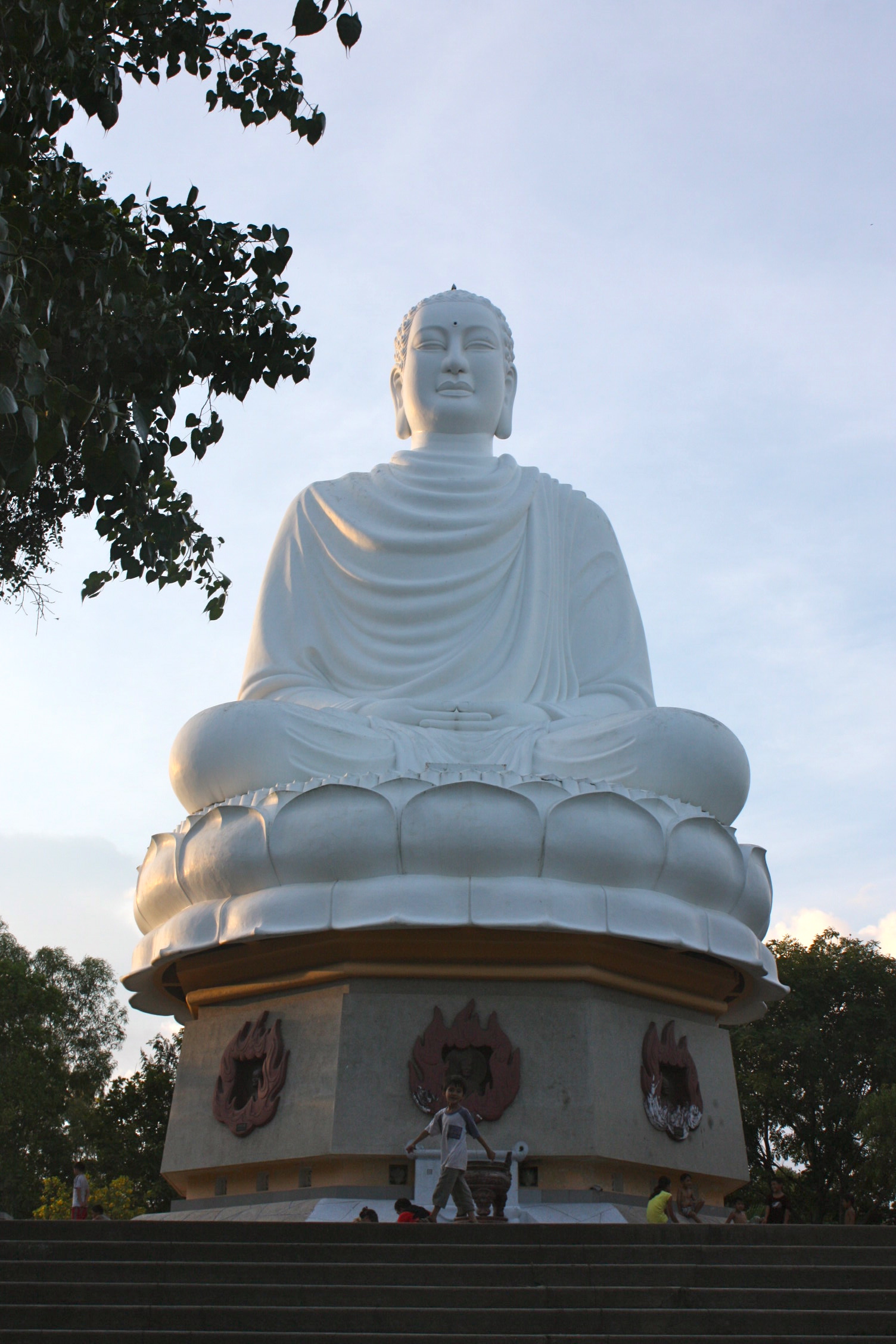
The Kim Than Phat To Buddha in Nha Trang.
After leaving Hanoi, Poor John and I had two days and a night in Nha Trang, a popular beach and party destination in the southeast of Vietnam. True to form, we walked along the beach but didn’t go to any parties—we just wanted to have a stop-off on the way to Saigon (Ho Chi Minh City).
In addition to being a popular holiday destination, Nha Trang is a big producer of cashews, coconuts, coffee, sesame seeds (one of my favourite flavours) and salt (another favourite). I’d like to think it’s also a big producer of bug repellent, but they only sell it. I wandered into a supermarket and bought five bottles of cheap (less than $1 each), but effective, repellent that lasted for the rest of the trip.
The best touristic stop we made in Nha Trang was at the Long Son Pagoda (also known as Tinh Hoi Khanh Hoa Pagoda or Am Nam Phat Hoc Hoi Pagoda). The original pagoda was founded in the late 19th century, but it has been rebuilt and/or relocated several times. In 1890, it was destroyed by a cyclone and later rebuilt on its current location. The Vietnam War resulted in new and extensive damage, but it’s all looking very orderly now.
We visited because—from a long way away—we could see the pagoda’s magnificent 14-metre-tall, white buddha, called Kim Than Phat To. We figured you can’t see something so impressive from afar, and not track it down.

The buddha's view of Nha Trang
It was only a couple of kilometres to the pagoda (we walked, and that walk included the supermarket/repellent stop), and it was interesting to see that the pagoda still functions as a monastery. We arrived in late afternoon and there were still a lot of monks (especially females) wandering around. Wish I’d taken a photo, but sometimes you know it would be too intrusive to take one.
We climbed up to the buddha, which sits on an enormous lotus blossom. There are fewer than 200 easy stairs up, and a very quick trip down, especially if you go by the road.
There was a group of gorgeous kids near the pagoda. While one appeared to be the ‘ringleader’, no one followed us down the hill, and no one begged us for money or our phone number. That was an unexpected, but refreshing deviation from the norm.
Also don’t forget to pick a number before 29 February 2012.
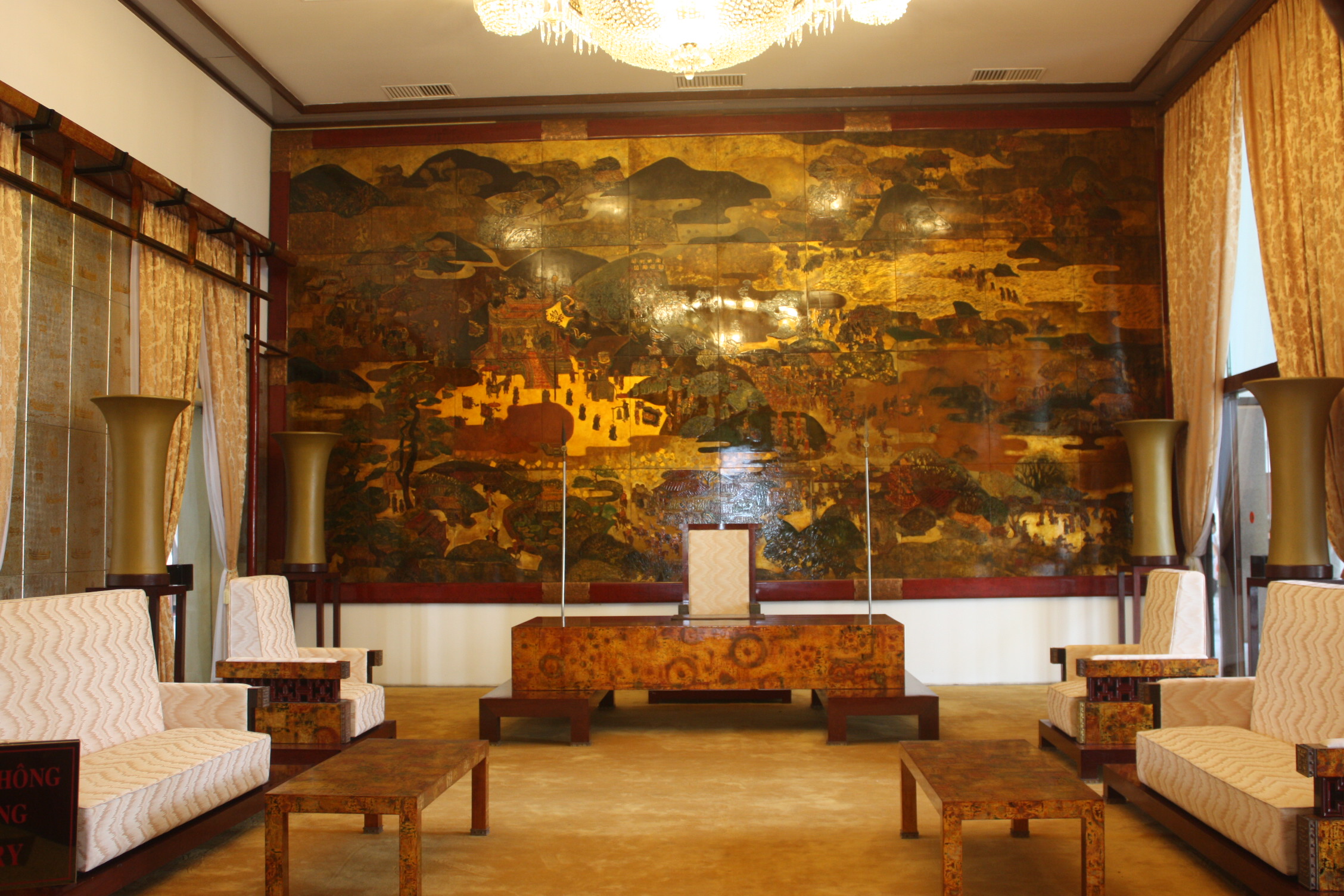
My favourite room—the Vice President's reception room.
The Vietnam War was huge in my life in the 1960s and 70s.
Indeed, it was part of everyone’s life. Horrifying television coverage, the daily death count, shocking photographs and television footage, student moratoriums and protest marches. Friends enlisted, friends enrolled in university to avoid be drafted, friends studying for a second uni degree had their birthday ‘come up’ and got drafted, friends went to war and came home scarred, both physically and mentally.
In the 70s, I worked for the Kearney Daily Hub in Nebraska, and the war was regularly front page news. I remember when Saigon fell on 30 April 1975. I remember seeing newspaper photos of a North Vietnamese tank crashing through the wrought-iron gates at the then Independence Palace (also called the Presidential Palace). A soldier ran into the building and up the stairs to raise a Viet Cong flag from a top floor balcony. It brought an end to the Vietnam War.
Just recently, I was in front at that palace in person. And it was like stepping back in time.
Now called the Reunification Palace,* the building is preserved almost exactly as it was on the day the city fell (or was liberated, depending on your point of view).
Furniture and décor remain unchanged, although the papers in the basement war room are gone. Reception rooms are in perfect order, ready to receive dignitaries and other guests. Dining tables are set for a meal, although only some of the drink glasses match. There’s also a bar, theatre, dance hall and casino. A helicopter is parked on the roof, and tanks, like the ones that crashed through the gates, are on display in the front yard.
The palace is spacious, bright and airy, and not sickeningly grand. It was designed by a French-trained Vietnamese architect, Ngo Viet Thu.
Guided tours are available, but we chose to wander through on our own. There’s plenty of signage. We also walked all the way around the building and saw several couples toward the end of their day of wedding photos.
* I think it is also referred to as Reconciliation Palace.
Also don’t forget to pick a number before 29 February 2012.
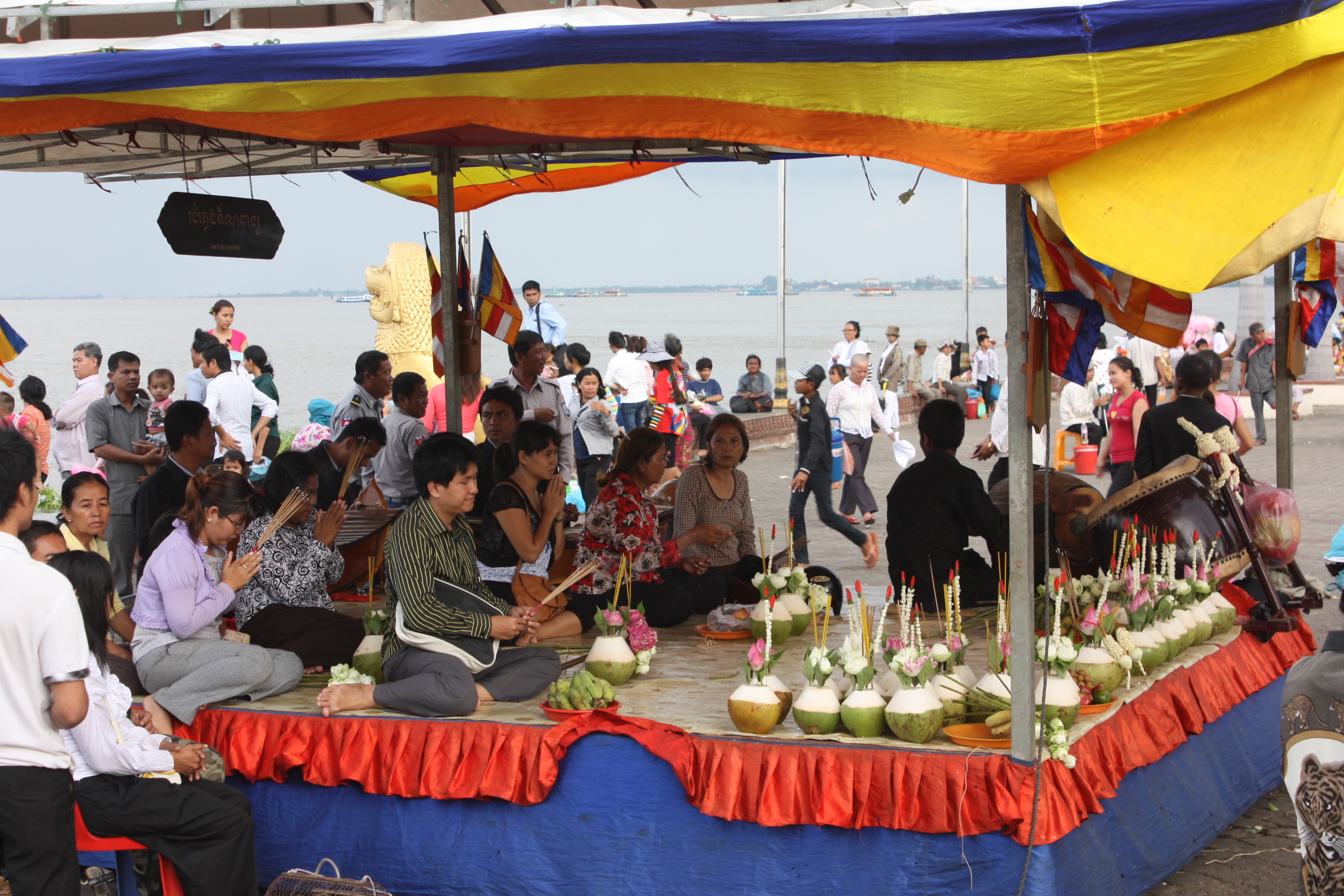
A solemn ceremony in Phnom Penh
Something special was going on the day we arrived in Phnom Penh, Cambodia.
Lots of people were gathered in and around a colourful stand near the river. In addition to the crowds, there were speeches, flags, banners, flowers, incense, prayers, coconuts, offerings and plenty of music. It didn’t appear to be a particularly happy or a sad occasion—just solemn and respectful.
At the time I didn’t know it was special, but the next day all signs of the event were gone. I’m guessing it was a local Buddhist ceremony because I can’t find anything on the net that links to the relevant date.
But the day was just getting going. After leaving the ‘ceremonial’ stand, we walked quite far down the corniche (if that’s what they call their riverside walkway) and came upon an unexpected traffic jam—an elephant being walked home from his day’s work—and an important toilet, funded by the World Toilet Association, Republic of South Korea. Who knew there was an international toilet organisation.
Anyway, the toilet is downstairs from the local tourist information centre. It started to rain about the time we arrived at the tourist centre, so we ordered some lunch (delicious, but no photo) and I whipped out the laptop and checked email on their free WiFi.
Before we resumed our foot tour of Phnom Penh, Poor John and I had ceremonial pees in ‘Mr Toilet Public’ and probably pilfered a generous supply of toilet paper, if there was any (can’t remember now). A few days later, we stopped in for another pee. Not because the toilet was that great, but because we were already in the neighbourhood.
As an aside, the tourist info centre and its accompanying Mr Toilet Public are quite a long way from the centre of town. Bad planning.
And as another aside, Poor John and I are really glad we set out to explore this city from the minute we arrived. Good planning.
Also don’t forget to pick a number before 29 February 2012.
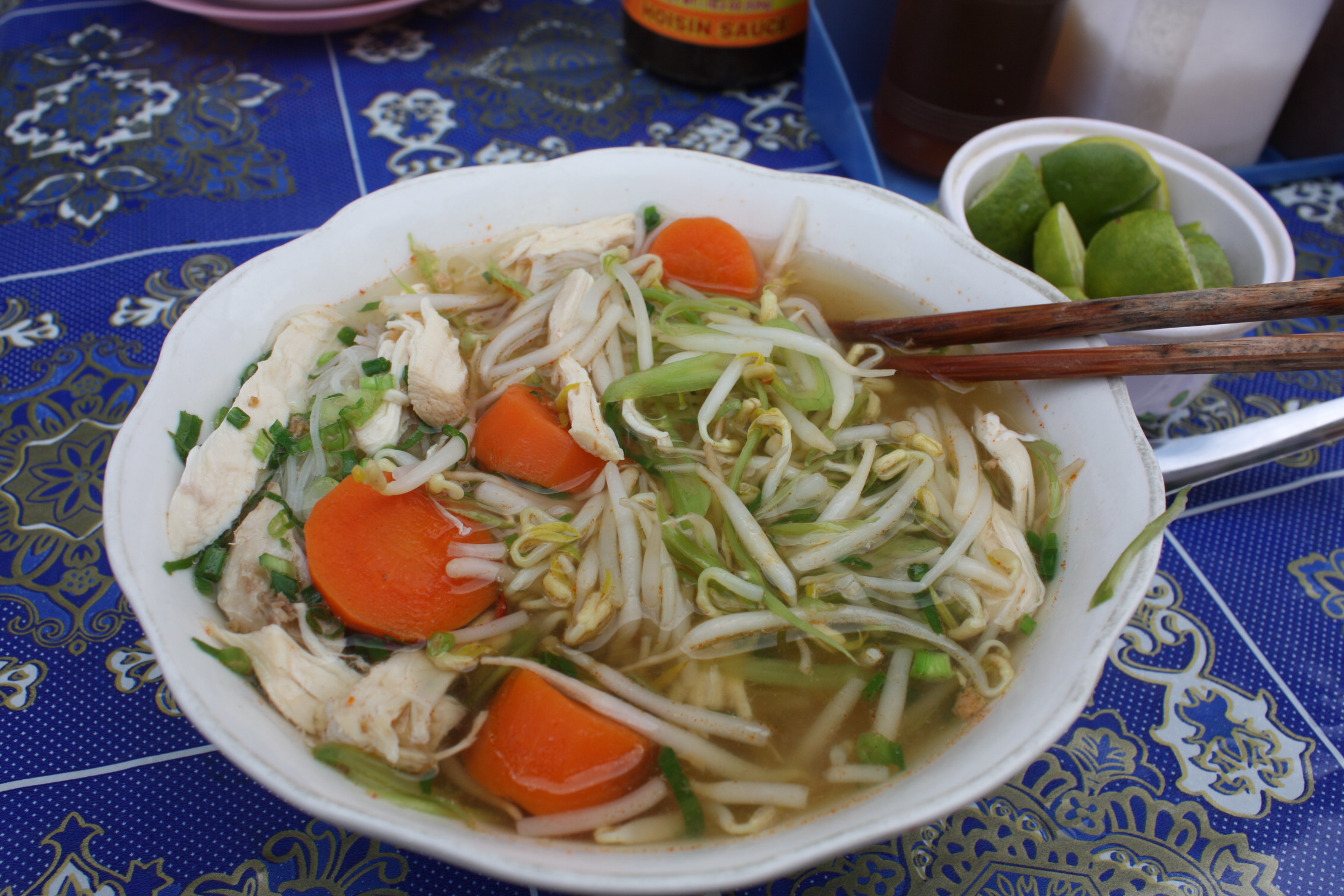
Chicken soup in Phnom Penh.
The other day I wrote about the Cambodian street food that got away. It didn’t actually get away, but we had already eaten so we were just too full to sample and enjoy any.
But the first day we were in Phnom Penh, we had dinner at a nifty all-in-one stall on wheels. By all-in-one, I mean it has the ingredients, cooker and dining table in a single unit. Only the plastic seating is separate. These stalls appear each day on most street corners and are around from breakfast through lunch.
It’s amazing how such lovely food can be produced on a lone burner and in a space not much bigger than a tea trolley. We ordered two soups—one with chicken and the other beef. You can spice up a dish to your liking. At least half the stall’s ‘table’ is devoted to an incredible array of condiments.
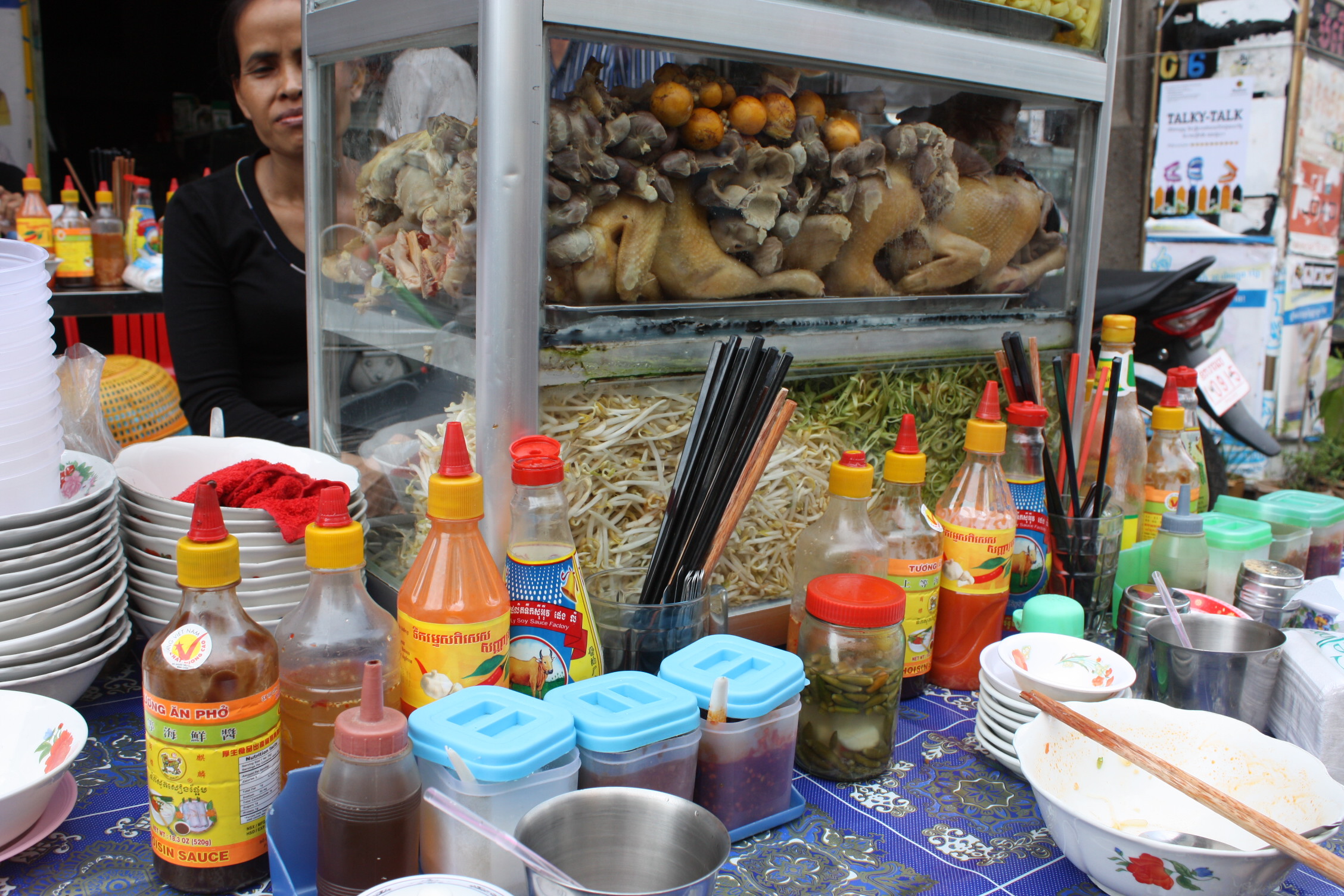
An all-in-one food stall in Cambodia. Complete with cook, ingredients and heaps of condiments.
The city is full of baguette stalls, too, most likely a hangover from the days of the French. I adore these sandwiches. They’re sensational and packed with healthy goodies. I bet that’s where Subway got its inspiration. Pity I never got a photo.
We tried to buy baguettes on the last morning we were in Phnom Penh, but no stalls were open at 6 am. Darn.
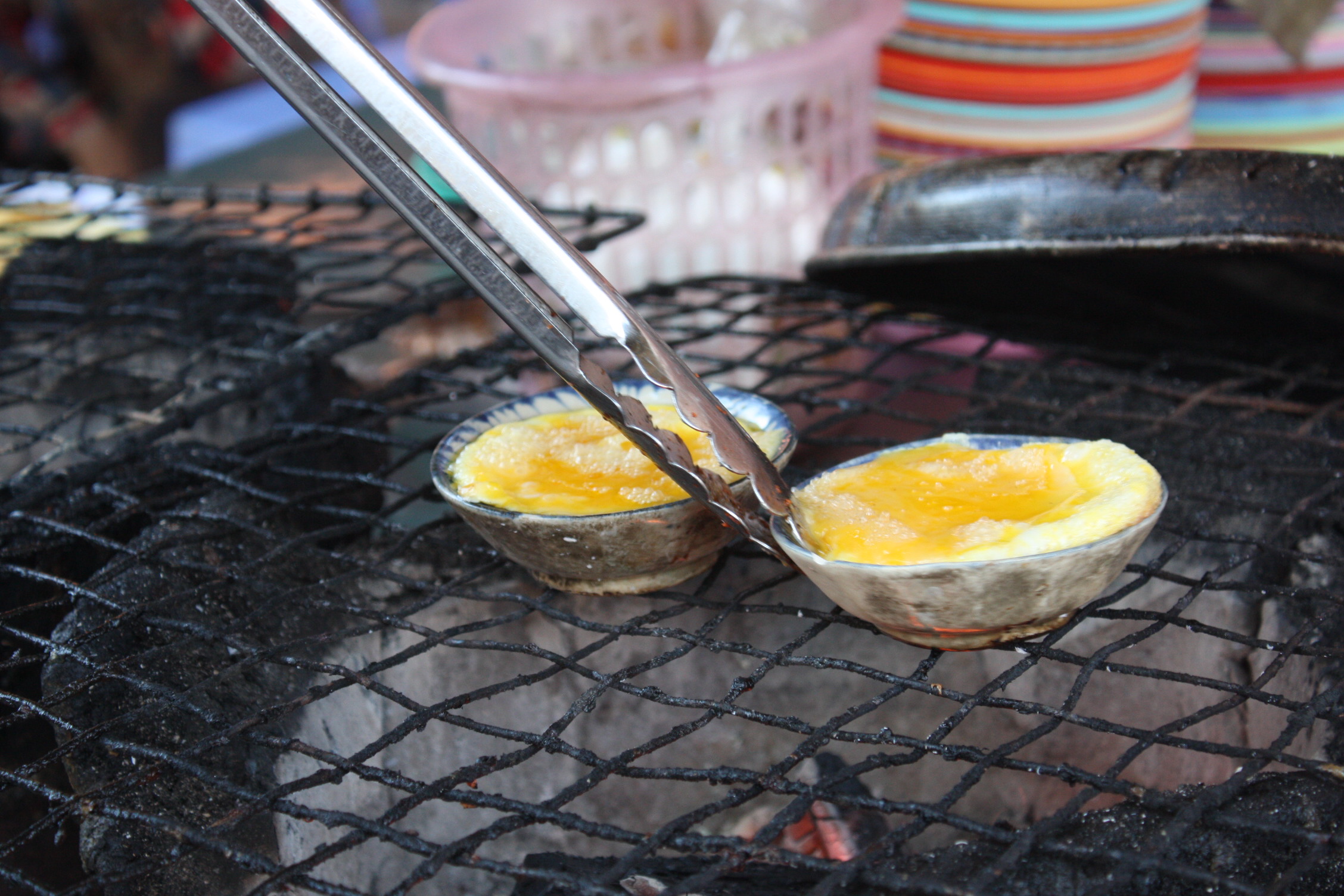
A custardy egg dish.
I hate it when we eat dinner early. Too often, it means we miss out on sampling lots of tempting street food.
On our second day in Phnom Penh (capital of Cambodia), we’d already had dinner before we headed back to our hostel on foot. Why didn’t someone tell me that we’d walk home past an entire street of delectable food goodies. The array was amazing—clams, snails, egg dishes, prawns, salads and so much more.
Fortunately I was able to enjoy someone else’s meal—visually. The vendor let me take some snaps. Plus, a lovely young Cambodian couple (they had no English), who had ordered their treats, were kind enough (through hand signals) to let me know that it was okay to photograph their choices. They invited us to join them, but I figured that was going too far.
Nevertheless, I was hungry all over again.
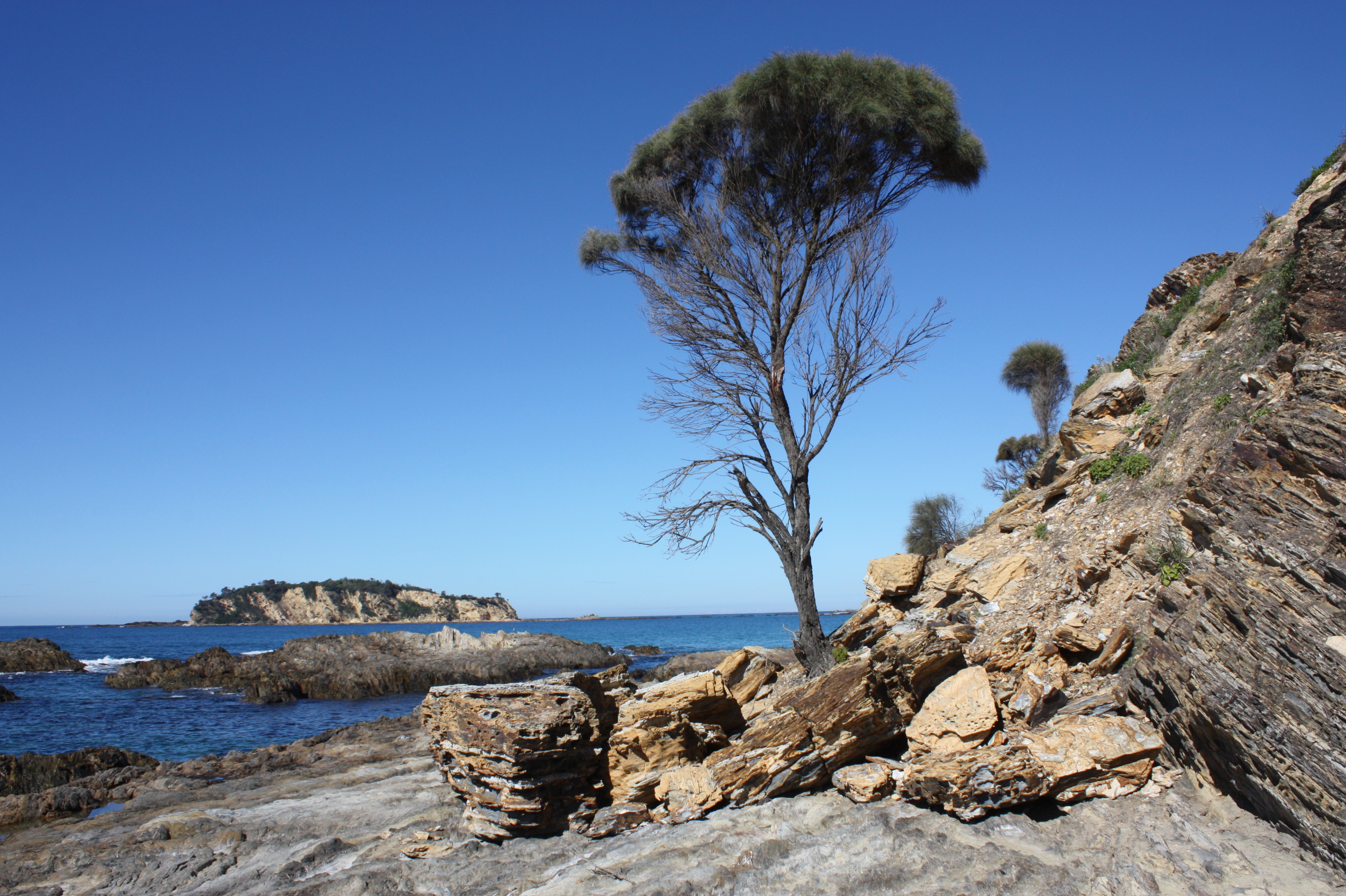
A small, but scenic, slice of Rosedale Beach.
We’re in Rosedale, at Australia’s South Coast, to see in 2012. Rosedale is a little remote and quite laid-back. We are lucky enough to have a beach shack here, but we try to keep it a secret. Hope you like the view.
A few minutes ago, we watched the kiddie’s version of the Sydney Harbour fireworks (shown three hours before midnight). Poor John wants to go to bed soon, so we’ve accommodated his early-to-bed preference. 🙂
I hope to stay up for the grown-up version of the fireworks at midnight, but you never know.
The blog will continue in 2012 with a vengeance. Thanks for your support throughout 2011. I’ll be back. 🙂
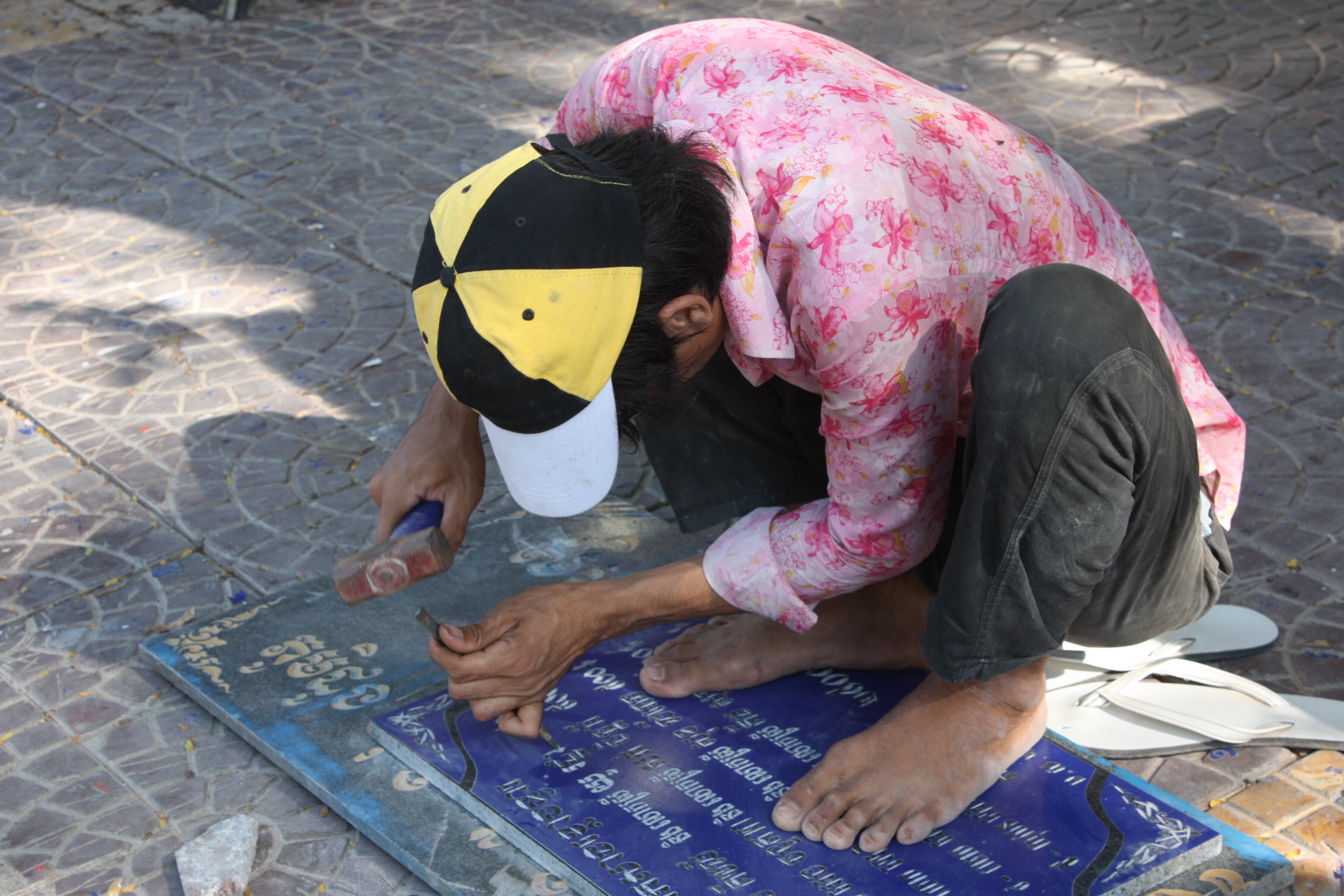
Amazing stance
I still can’t get over the ease with which people of the developing world squat on their haunches. It’s second nature.
Their feet stay flat on the ground and their bums hover just a few centimetres from their heels. They can sit this way for hours. They can even work this way.
I watched this fellow, and a couple of other guys, etching and painting letters on plaques, posters and possibly tombstones. It makes my legs hurt to think about it.
I can squat like this comfortably for about 20 seconds. Obviously, I need lots more practice, but I don’t plan on taking up the art of tombstone carving.
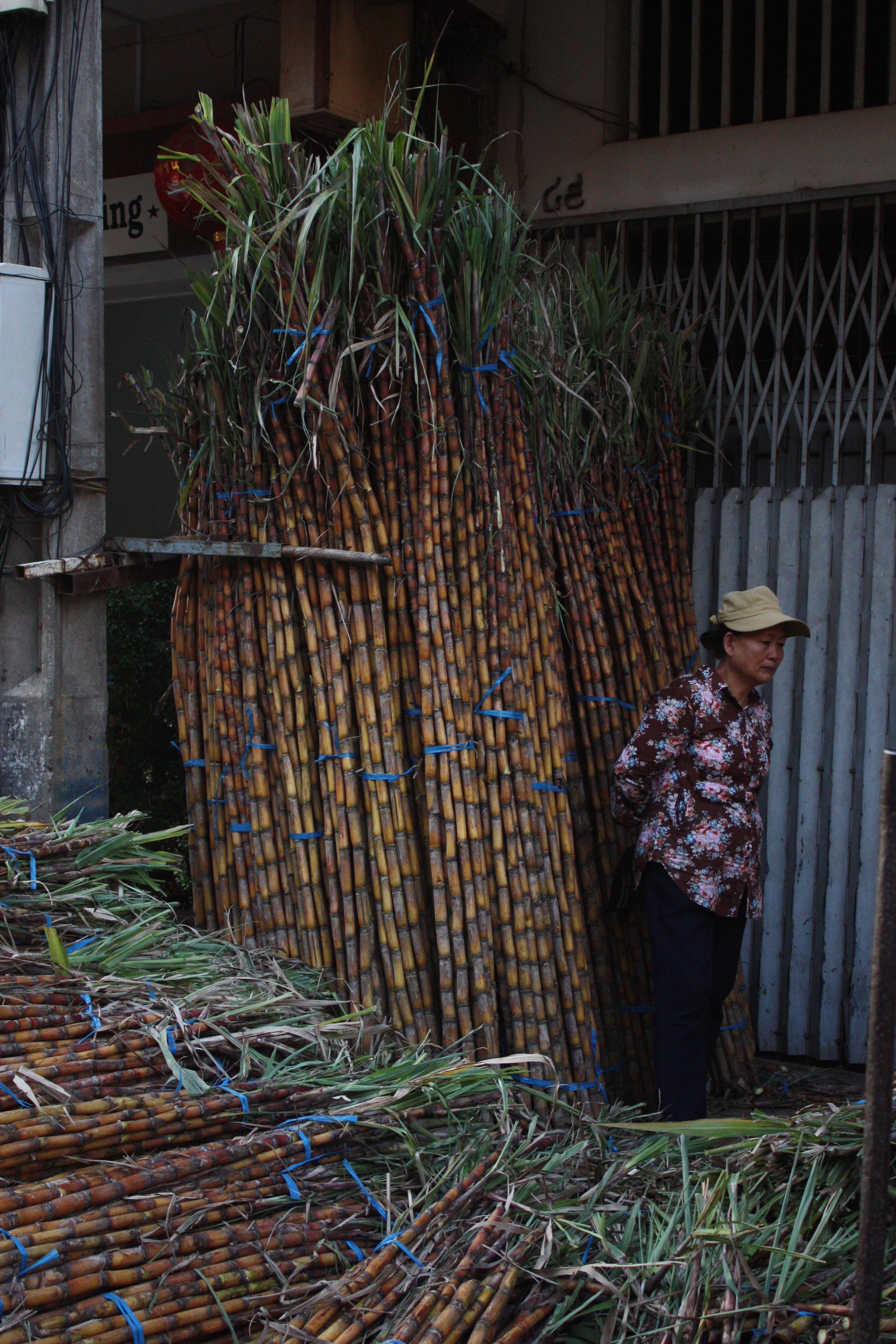
Sugar cane waiting to be collected
Sugar cane juice is a popular drink throughout Southeast Asia and I was lucky enough to come upon the sugar cane distribution centre in Phnom Penh in Cambodia.
It seems that the cane is delivered to a central location and is then collected by the city’s many juice sellers. Some bring just their motorbike, while others bring their entire juice cart. I wondered if there was more than one distribution point. In a city this size, it would seem likely.
You could never call it a sophisticated operation, but it definitely gets the job done.
I was quite surprised to see that half the kids in town WEREN’T hanging around waiting for a handout.
Just wish I had had a little bit of the language so I could have found out more about this enterprise.
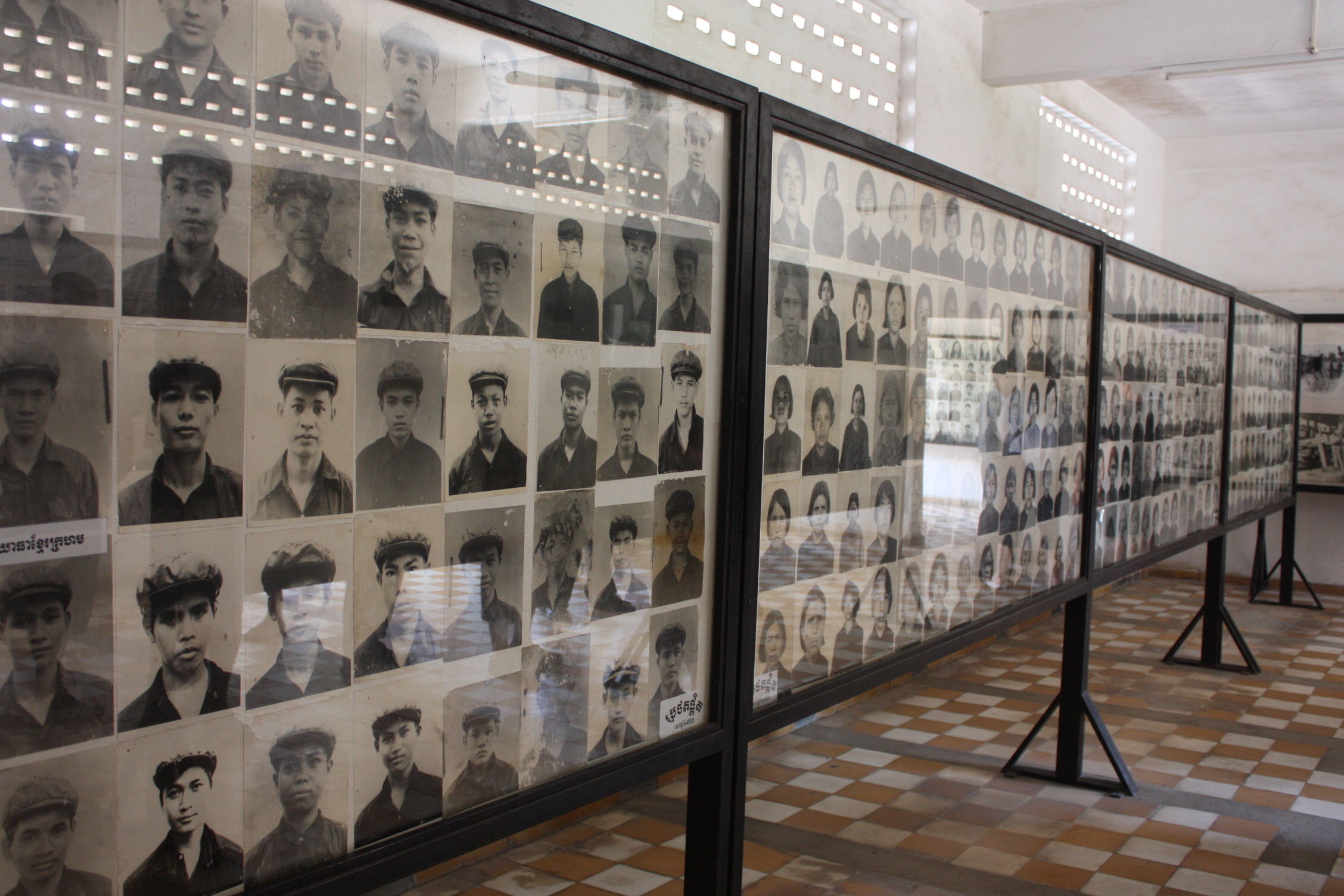
Acres and acres of heartbreaking photos.
Cambodia has a dark, brutal and heartbreaking past. There’s no need to give a history lesson here—if you’re interested in knowing more, books and the internet have plenty of information on Pol Pot and his Khmer Rouge regime (these links are to Wikipedia—I’ve just given a donation and I hope that anyone else who can give, will do so. Wikipedia is an amazing and valuable resource).
But I digress.
The bottom line is that during the second half of the 1970s, tens of thousands (perhaps even two million) Cambodians, especially those from the capital of Phnom Penh, were tortured and executed by the regime’s security forces.
A glimpse of the horror of those times is captured in two sites that are must-sees on any trip to Cambodia—Security Prison 21 (S-21) and the Killing Fields.
S-21 started out as the Tuol Svay Prey HIgh School. In 1975, Pol Pot’s security forces took over this suburban school and turned it into the country’s largest centre for detention and torture. The Khmer Rouge kept meticulous records of its cruelty. Prisoners were photographed before, and sometimes after, being tortured. These records survive and are displayed.
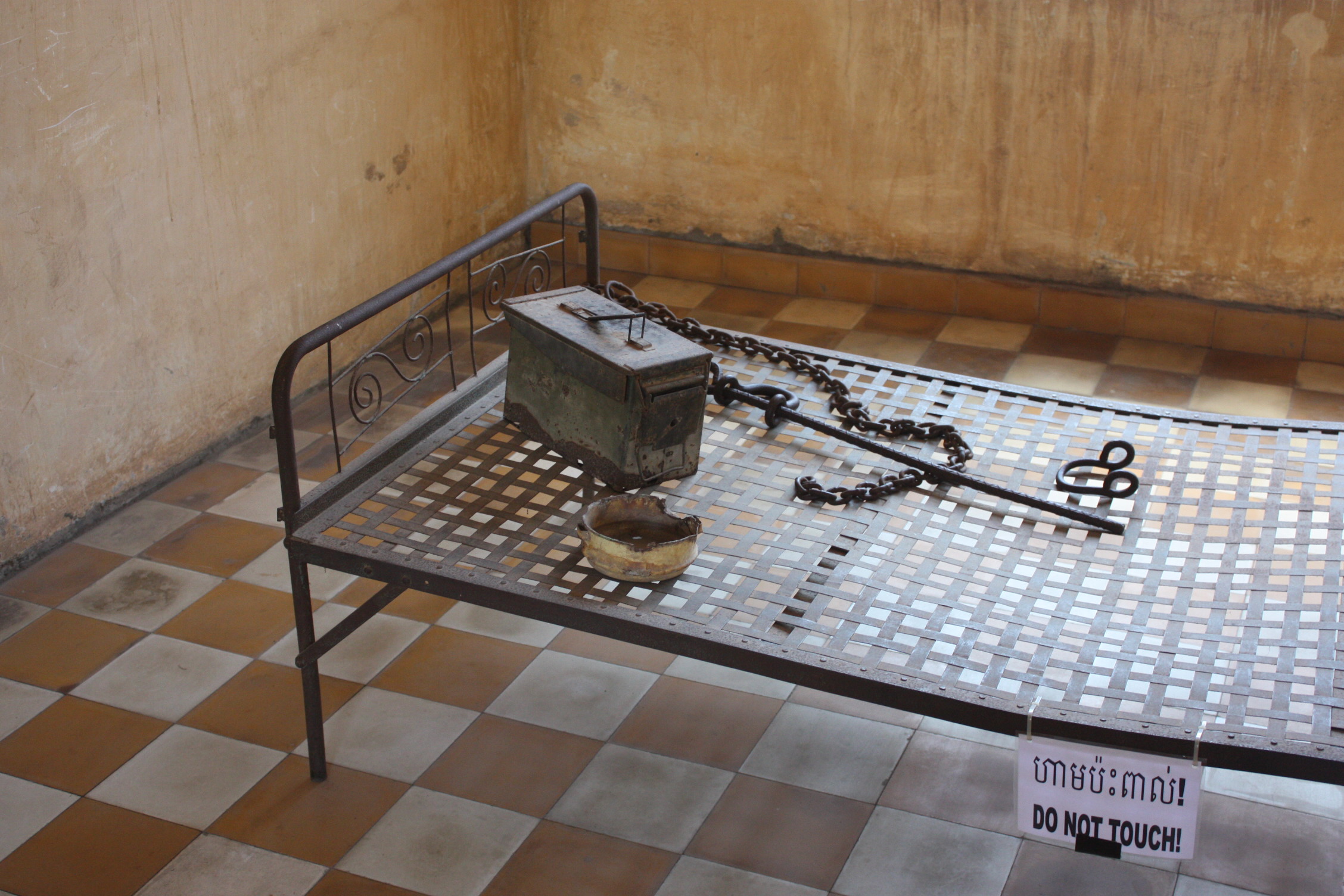
A detention room
As a result, S-21 (also called the Tuol Sleng Genocide Museum) displays room after room of these depressing and heartbreaking photographs, including men, women, teenagers, children and infants. Cells and detention rooms are shown, more or less, as they were when the Vietnamese liberated Phnom Penh in 1979.
When liberation came to S-21, only seven prisoners were still alive—all of whom survived because they had skills such as photography or painting that were valued and exploited by the regime. Fourteen other prisoners were tortured to death as the Vietnamese forces closed in on the city. Their graves are in the courtyard.
A poster at S-21 explains, in slightly broken English, that the display should help to ensure that younger generations never forget what happened and remind them that such a thing must never again occur in Cambodia or other countries.
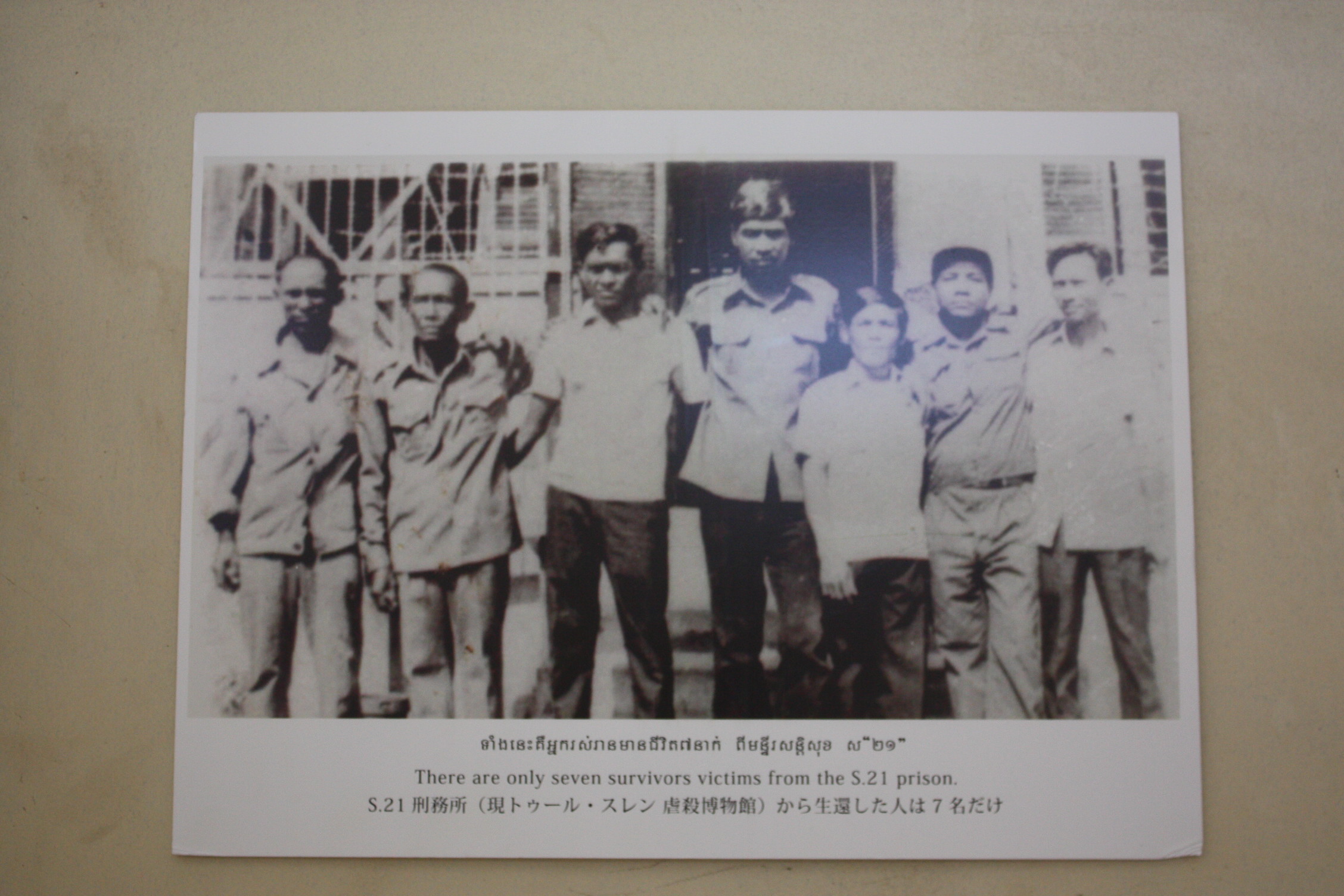
The seven survivors from S-21
Pol Pot died in 1991. Today some surviving members of the Khmer Rouge regime are being tried for their crimes in the specially created Extraordinary Chambers in the Courts of Cambodia for the Prosecution of Crimes Committed during the Period of Democratic Kampuchea (ECCC).
 Where to next?