
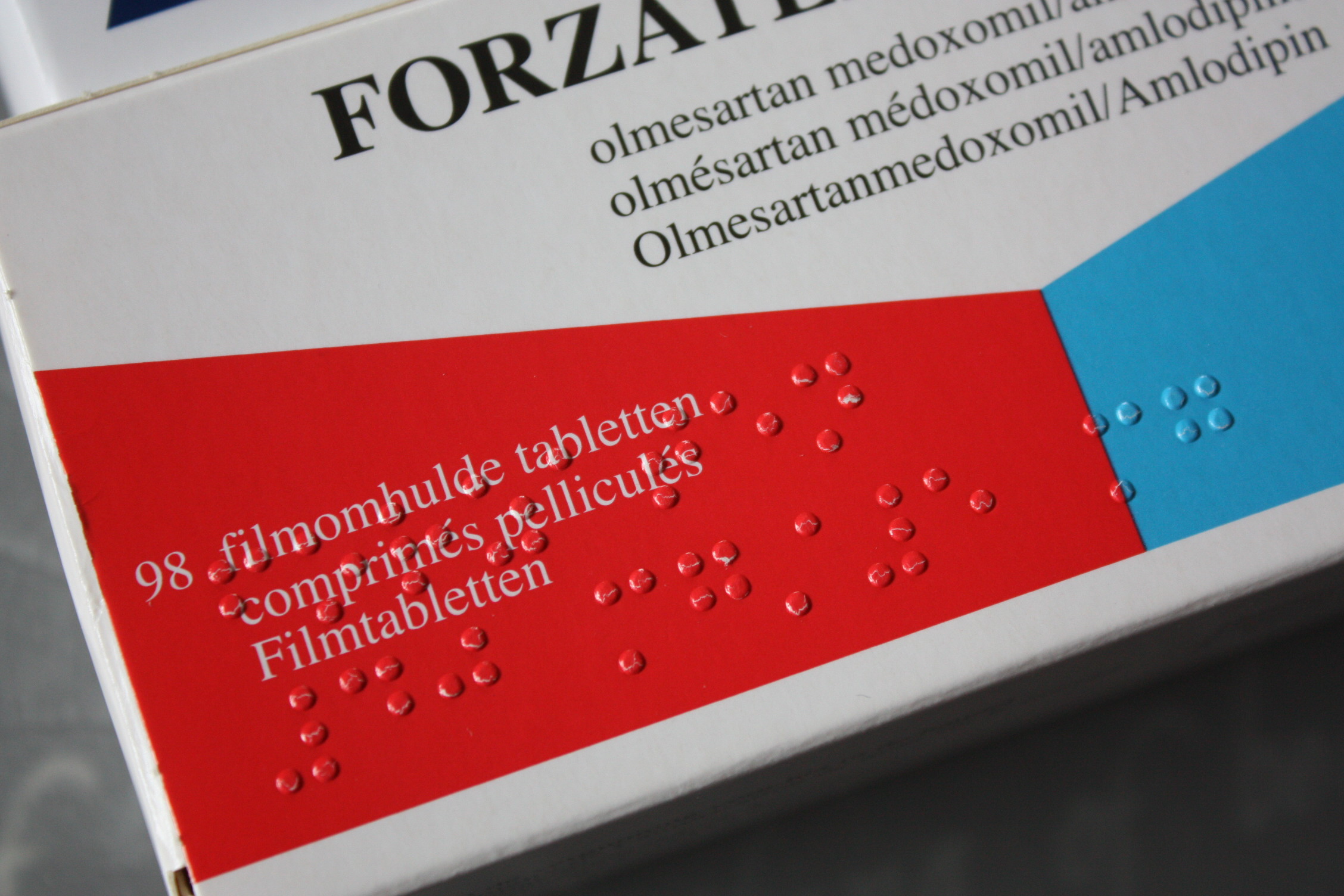
I was impressed to see that Europe uses braille on packaging for medications. What an amazing idea.
I have mixed feelings about the Travel Doctor. They do a useful service, but sometimes they overdo it.
Before we headed to Africa in 2009, Canberra’s Travel Doctor gave us a lot of excellent advice about malaria prophylactics and the medications to go with it (more about that soon*). They also gave us a whole raft injections (a couple of thousand dollars worth), and then some.
According to our yellow International Certificates of Vaccinations or Prophylaxis, Poor John and I are protected against yellow fever, hepatitis A and B, influenza, meningitis, typhoid (almost out-of-date), cholera, DTP (diphtheria, tetanus and pertussis, also called whooping cough), and rabies. I thought encephalitis was there too, but I can’t find it.
Regardless, I’m still annoyed about the rabies.
In 1986 in Burma, I was bitten by a dog that became rabid (long story). I had all the post-exposure injections, plus the serum. These were the new and improved French concoctions that came out about that time. These jabs are in the bum, not the stomach. Much better system.
Nowadays, the Travel Doctor gives a preventive jab, then tests your level of protection. If your level is still low, they give you a top-up poke. But preventive jabs only buy you time. If you are bitten by a rabid animal, you still need to go through the whole course of rabies injections, but you have a little extra time to get to help. This is especially useful when you are travelling in remote locations.
I told the Travel Doctor not to give me the first shot, but to jump straight to the test. Good grief, I’d had 15 rabies stabs in the bum and figured I was already well protected. But no, no! They argued that the French jabs were new in 1986 and not really tested when I had them, and I might not be protected.
I should have stood my ground. I paid $130 for the jab and then some additional outrageous sum for the test, only to be told that my immunity level was eight (8) times over the recommended level. Poor John’s was still low and he needed the second jab. My first jab would have paid for his second.
But their overdoing it doesn’t stop at rabies. The Travel Doctor recommends taking a slew of medications with you—a few general antibiotics, plus two or three for specific types of infections. Trying to be obedient travellers and in an effort to protect against the worst, we loaded up on double lots of everything, as well as malaria prophylactics. We’re talking $300-plus in meds (not including the stuff for malaria).
In the end, I never used any of them except the malaria prophylactics (which were essential). I gave most of the rest away, but ended up disposing of everything that was out-of-date when we got home. What a waste. Especially because almost everywhere you go, you can buy whatever meds you need at a fraction of the price you’d pay at home. Just be sure to check the expiry dates.
For that matter, check the expiry dates of any meds you take from home. The first malaria prophylactics we got from the Travel Doctor were going to expire halfway through our trip.* I’m so glad Poor John noticed that before we left. They replaced them all but, in my opinion, they weren’t nearly apologetic enough. It was their mistake because our paperwork specified our away-dates. Instead, they were annoyed that we’d discarded the packaging (which is how Poor John happened to notice).
And now for the meds we did use on the African trip.
We were lucky enough to have a doctor/nurse couple travelling with us for the first third of that trip. They freely shared advice, medical help and the meds they carried with them. They were so generous that when the wife/nurse got sick in Namibia, I was glad to be able to contribute some of my never-used supplies.
I got an ear infection in Mali, which didn’t really become a problem until a few countries later. Nothing in anyone’s medical kit would have helped. I needed ear-drops that I bought for next to nothing in a local chemist’s shop. And although there are genuine fears that meds in Africa might be fake, the ones I bought did the job.
I had one other problem—sort of secret women’s business. You don’t need to know the details because it wasn’t serious, but you should try to imagine me acting out where and what the problem was. Sometimes I have enough French to be dangerous, but not enough French to be understood.
We didn’t take many meds on the London to Sydney jaunt, but we still took too much. I took two courses of antibiotics (not the six or eight that went to Africa) and we didn’t use any. That said, these were for my teeth/gums and I’d have been damn glad to have them if I’d needed them. So no regrets there.
We also took ace bandages (someone else used one), water purifying tablets, Strepsils (used a few), paracetamol, plasters (band-aids), gauze and bandages.
Oh, and I took my blood pressure meds on both trips. If blood pressure is an issue for you, remember that you can get your blood pressure checked in most pharmacies/chemist shops around the world (not China). My blood pressure is great when I travel. So much so that my own local doctor says he now recommends overland travel to all his patients who suffer from high blood pressure.
Note: Comments on this post have some good tips about meds, so be sure to check them out.
Also don’t forget to pick a number before 29 February 2012.
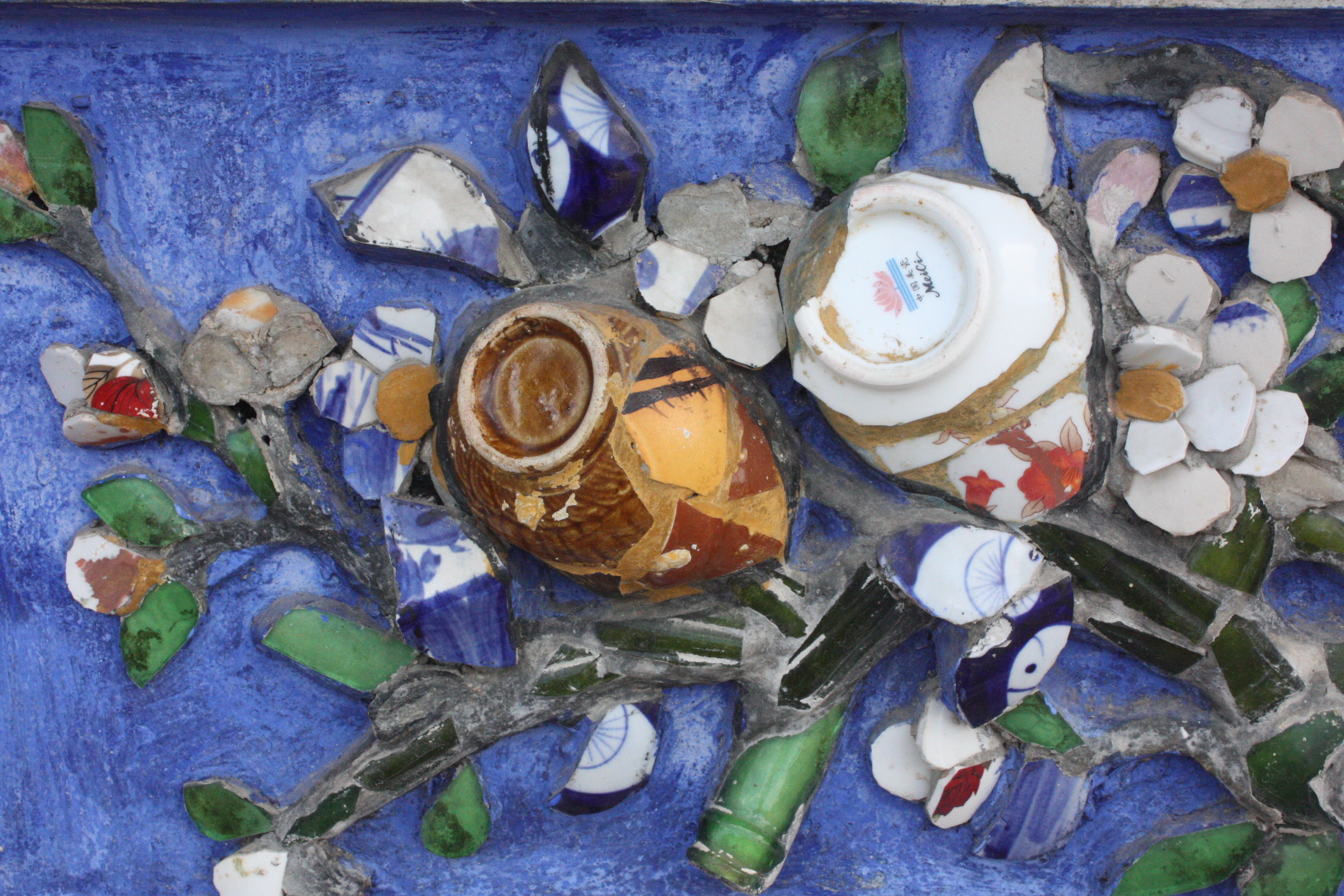
Broken pottery at the core of the designs
Hué, located in central Vietnam and on the Perfumes River, is considered to be one of country’s main cultural, religious and educational centres, and what an interesting and lovely city it is.
It hasn’t always been like that. As part of the Tet Offensive in 1968, Hué was the scene of one of the Vietnam War’s longest and bloodiest battles. Much of the area inside the Citadel (the imperial city) was devastated by bombs, artillery and brutal house-to-house fighting. About 10,000 people were killed, most of them civilians.
For the next 22 years, the Citadel’s old buildings were left to crumble and decay. They were viewed as politically incorrect relics from the times of the Nguyen emperors. But in 1990, local government officials recognised that these sites could be a boon for tourism and began to save them. A few years later, Unesco declared the monuments a World Heritage site, and restoration and preservation work began in earnest.
Built in the early 1800s, the Citadel is huge and still predominantly residential. It has a 10-kilometre perimeter and is surrounded by a moat. Within it’s walls is the Imperial Enclosure, also known as Dai Noi or Hoang Thanh. This citadel-within-a-citadel is where the emperor of the day carried out his official functions.
Poor John and I were keen to see the Imperial Enclosure, but it seemed to be closed. We met two Dutch tourists at a large gate and they told us their rickshaw driver had said the enclosure was closed on Sundays. He then offered to pedal them around town instead. They declined and it’s good they did. We walked around the corner to find the main gate open. We later learned that rickshaw drivers pull this scam in the hopes of extending the time you spend with them. Luckily we never encountered this problem because we always walked.
But I’m glad we started at the wrong gate. It’s covered in mosaics and when you get closer, you see that the designs are created from broken pottery.
The Imperial Enclosure has many parts, including the Thai Hoa Palace, Halls of the Mandarins, the Nine Dynastic Urns, the Forbidden Purple City, the Emperor’s Reading Room, the To Mieu Tmple, the Dien Tho Residence and two lakes. I hope they get around to posting explanatory signs on each of these, because the only thing I was sure that I was looking at was the palace and one of the urns.
We spent most of a day exploring the Citadel and its many parts.
Also don’t forget to pick a number before 29 February 2012.
This blog is long overdue for an overhaul. It needs to be better organised and more stylish.
I’ll be working on it over the next few weeks (with the help of one of my daughters). Don’t worry if you see it morph into something new and better. It’s not going to stop: it’s only going to get easier to use and easier to look at (I hope).
My plan is to organise our travels by continent, plus some other relevant categories.
Your suggestions, comments and criticisms are most welcome. Let me know what you think of any changes and how I might make the blog better.
Also don’t forget to pick a number before 29 February 2012.
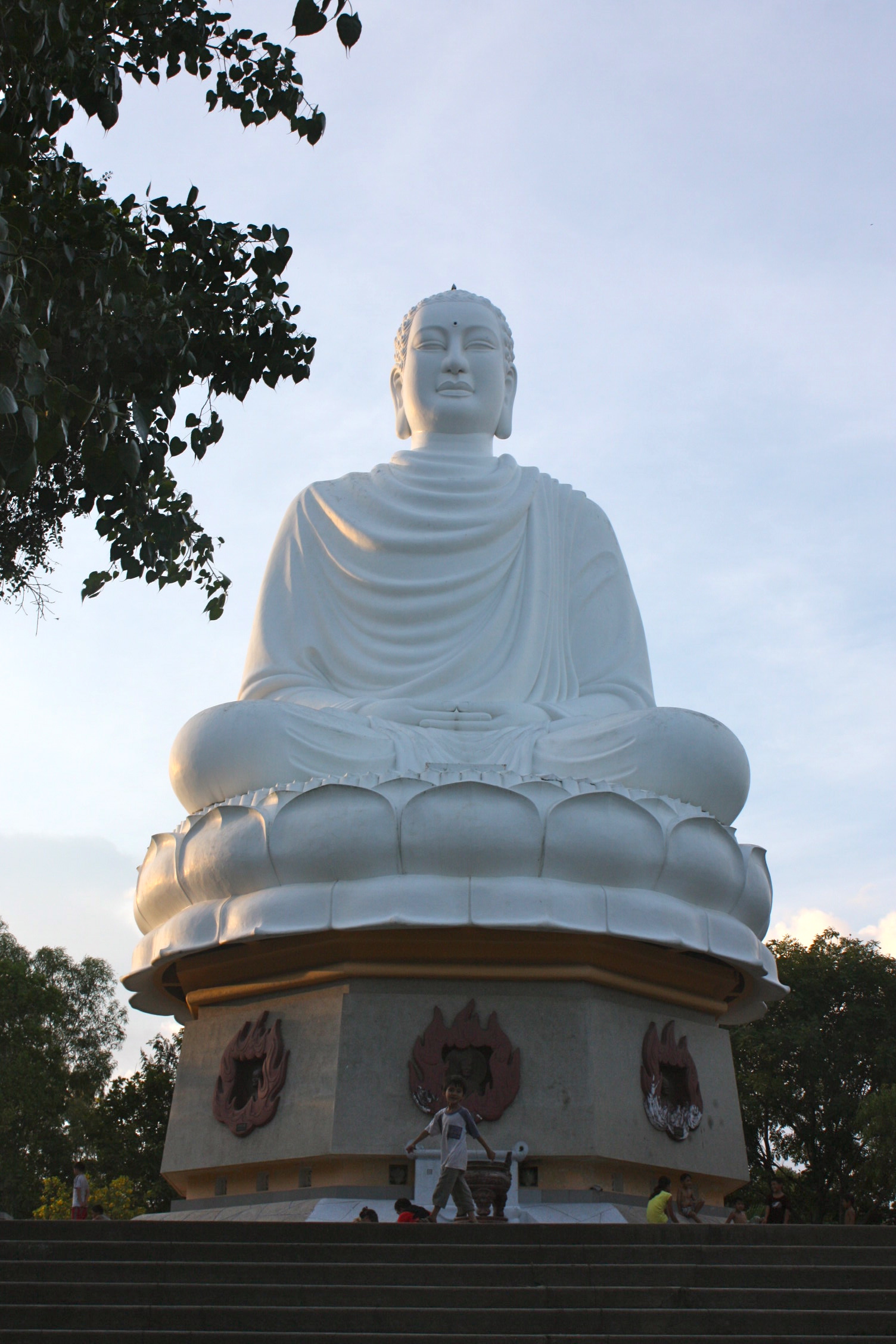
The Kim Than Phat To Buddha in Nha Trang.
After leaving Hanoi, Poor John and I had two days and a night in Nha Trang, a popular beach and party destination in the southeast of Vietnam. True to form, we walked along the beach but didn’t go to any parties—we just wanted to have a stop-off on the way to Saigon (Ho Chi Minh City).
In addition to being a popular holiday destination, Nha Trang is a big producer of cashews, coconuts, coffee, sesame seeds (one of my favourite flavours) and salt (another favourite). I’d like to think it’s also a big producer of bug repellent, but they only sell it. I wandered into a supermarket and bought five bottles of cheap (less than $1 each), but effective, repellent that lasted for the rest of the trip.
The best touristic stop we made in Nha Trang was at the Long Son Pagoda (also known as Tinh Hoi Khanh Hoa Pagoda or Am Nam Phat Hoc Hoi Pagoda). The original pagoda was founded in the late 19th century, but it has been rebuilt and/or relocated several times. In 1890, it was destroyed by a cyclone and later rebuilt on its current location. The Vietnam War resulted in new and extensive damage, but it’s all looking very orderly now.
We visited because—from a long way away—we could see the pagoda’s magnificent 14-metre-tall, white buddha, called Kim Than Phat To. We figured you can’t see something so impressive from afar, and not track it down.

The buddha's view of Nha Trang
It was only a couple of kilometres to the pagoda (we walked, and that walk included the supermarket/repellent stop), and it was interesting to see that the pagoda still functions as a monastery. We arrived in late afternoon and there were still a lot of monks (especially females) wandering around. Wish I’d taken a photo, but sometimes you know it would be too intrusive to take one.
We climbed up to the buddha, which sits on an enormous lotus blossom. There are fewer than 200 easy stairs up, and a very quick trip down, especially if you go by the road.
There was a group of gorgeous kids near the pagoda. While one appeared to be the ‘ringleader’, no one followed us down the hill, and no one begged us for money or our phone number. That was an unexpected, but refreshing deviation from the norm.
Also don’t forget to pick a number before 29 February 2012.
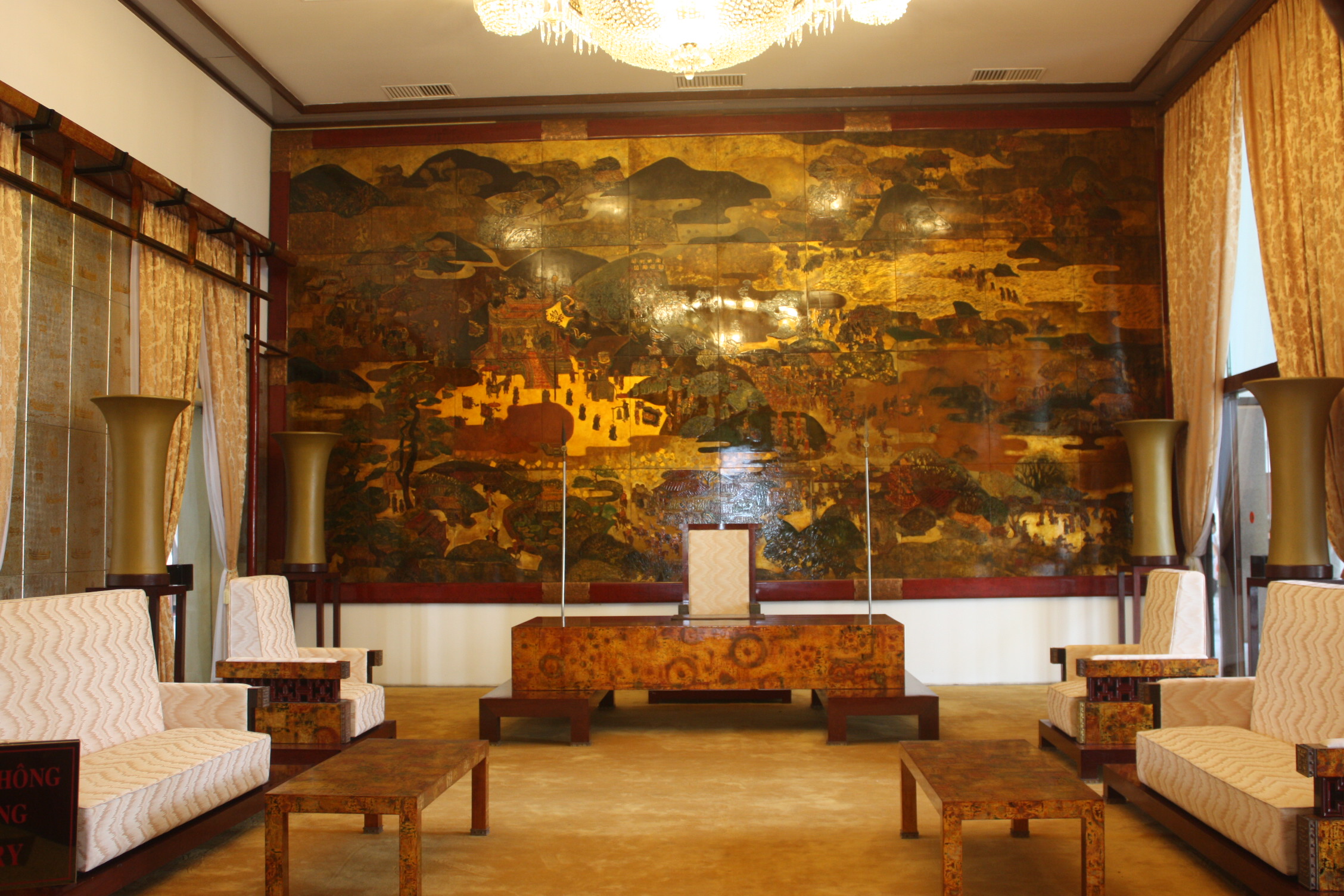
My favourite room—the Vice President's reception room.
The Vietnam War was huge in my life in the 1960s and 70s.
Indeed, it was part of everyone’s life. Horrifying television coverage, the daily death count, shocking photographs and television footage, student moratoriums and protest marches. Friends enlisted, friends enrolled in university to avoid be drafted, friends studying for a second uni degree had their birthday ‘come up’ and got drafted, friends went to war and came home scarred, both physically and mentally.
In the 70s, I worked for the Kearney Daily Hub in Nebraska, and the war was regularly front page news. I remember when Saigon fell on 30 April 1975. I remember seeing newspaper photos of a North Vietnamese tank crashing through the wrought-iron gates at the then Independence Palace (also called the Presidential Palace). A soldier ran into the building and up the stairs to raise a Viet Cong flag from a top floor balcony. It brought an end to the Vietnam War.
Just recently, I was in front at that palace in person. And it was like stepping back in time.
Now called the Reunification Palace,* the building is preserved almost exactly as it was on the day the city fell (or was liberated, depending on your point of view).
Furniture and décor remain unchanged, although the papers in the basement war room are gone. Reception rooms are in perfect order, ready to receive dignitaries and other guests. Dining tables are set for a meal, although only some of the drink glasses match. There’s also a bar, theatre, dance hall and casino. A helicopter is parked on the roof, and tanks, like the ones that crashed through the gates, are on display in the front yard.
The palace is spacious, bright and airy, and not sickeningly grand. It was designed by a French-trained Vietnamese architect, Ngo Viet Thu.
Guided tours are available, but we chose to wander through on our own. There’s plenty of signage. We also walked all the way around the building and saw several couples toward the end of their day of wedding photos.
* I think it is also referred to as Reconciliation Palace.
Also don’t forget to pick a number before 29 February 2012.
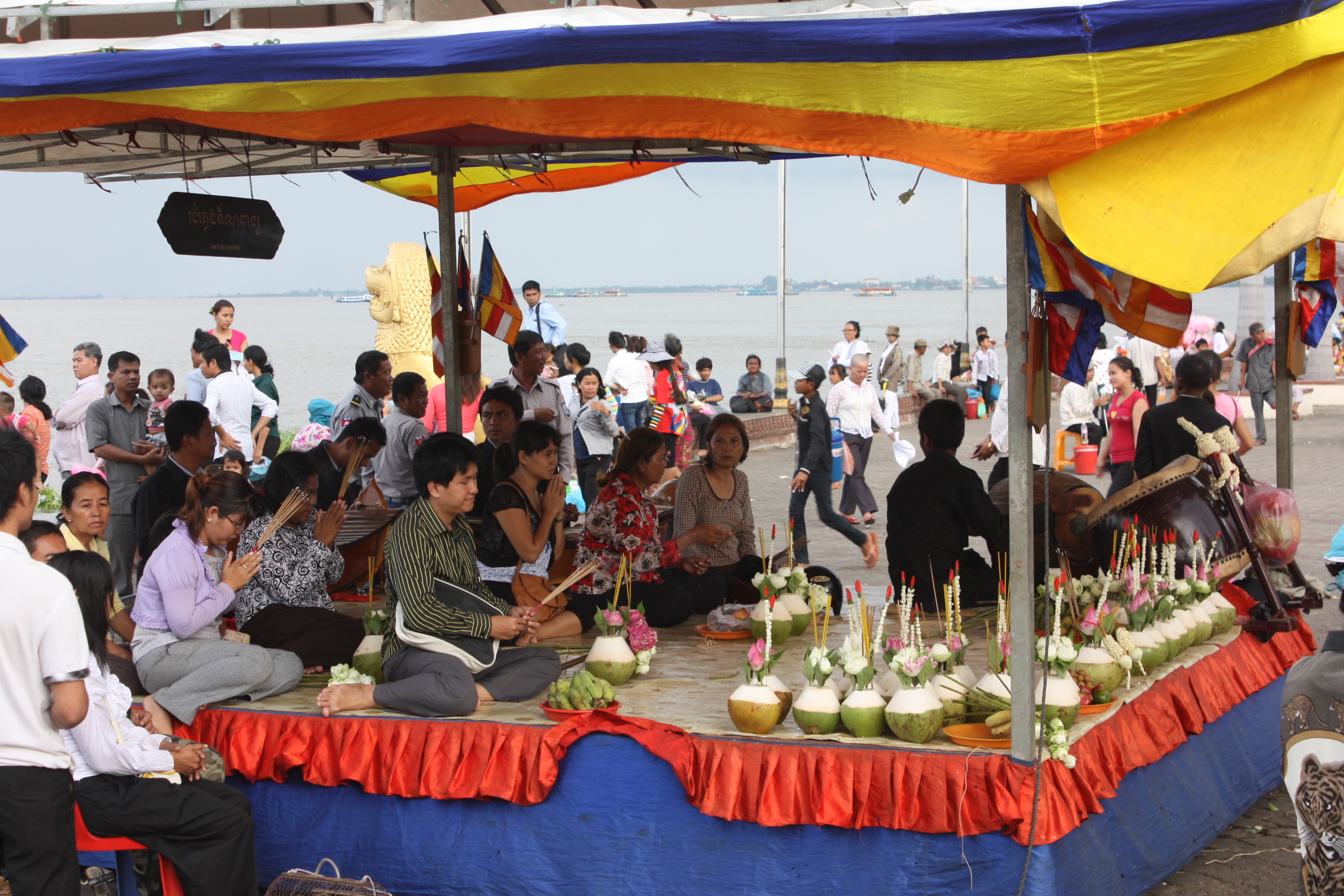
A solemn ceremony in Phnom Penh
Something special was going on the day we arrived in Phnom Penh, Cambodia.
Lots of people were gathered in and around a colourful stand near the river. In addition to the crowds, there were speeches, flags, banners, flowers, incense, prayers, coconuts, offerings and plenty of music. It didn’t appear to be a particularly happy or a sad occasion—just solemn and respectful.
At the time I didn’t know it was special, but the next day all signs of the event were gone. I’m guessing it was a local Buddhist ceremony because I can’t find anything on the net that links to the relevant date.
But the day was just getting going. After leaving the ‘ceremonial’ stand, we walked quite far down the corniche (if that’s what they call their riverside walkway) and came upon an unexpected traffic jam—an elephant being walked home from his day’s work—and an important toilet, funded by the World Toilet Association, Republic of South Korea. Who knew there was an international toilet organisation.
Anyway, the toilet is downstairs from the local tourist information centre. It started to rain about the time we arrived at the tourist centre, so we ordered some lunch (delicious, but no photo) and I whipped out the laptop and checked email on their free WiFi.
Before we resumed our foot tour of Phnom Penh, Poor John and I had ceremonial pees in ‘Mr Toilet Public’ and probably pilfered a generous supply of toilet paper, if there was any (can’t remember now). A few days later, we stopped in for another pee. Not because the toilet was that great, but because we were already in the neighbourhood.
As an aside, the tourist info centre and its accompanying Mr Toilet Public are quite a long way from the centre of town. Bad planning.
And as another aside, Poor John and I are really glad we set out to explore this city from the minute we arrived. Good planning.
Also don’t forget to pick a number before 29 February 2012.
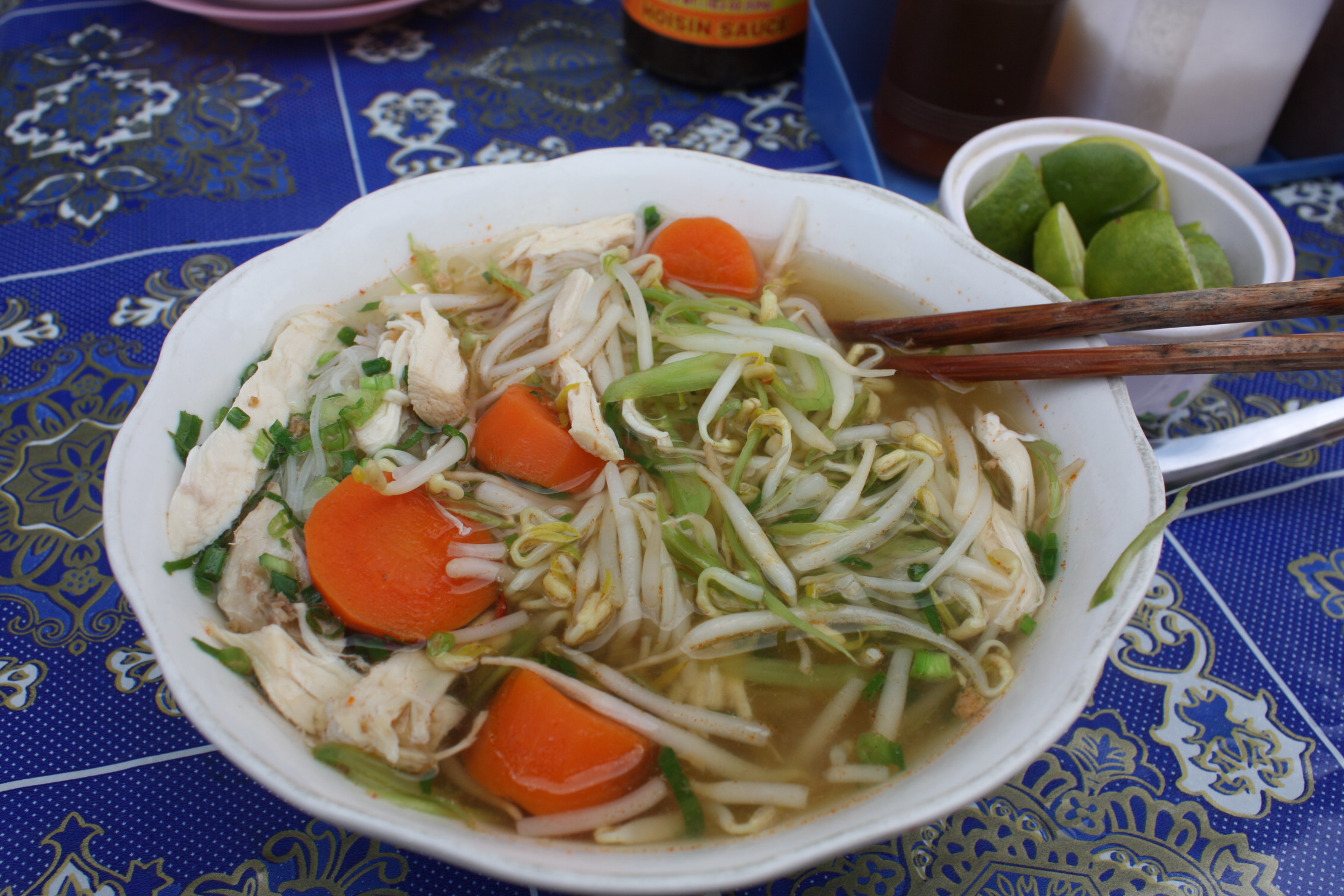
Chicken soup in Phnom Penh.
The other day I wrote about the Cambodian street food that got away. It didn’t actually get away, but we had already eaten so we were just too full to sample and enjoy any.
But the first day we were in Phnom Penh, we had dinner at a nifty all-in-one stall on wheels. By all-in-one, I mean it has the ingredients, cooker and dining table in a single unit. Only the plastic seating is separate. These stalls appear each day on most street corners and are around from breakfast through lunch.
It’s amazing how such lovely food can be produced on a lone burner and in a space not much bigger than a tea trolley. We ordered two soups—one with chicken and the other beef. You can spice up a dish to your liking. At least half the stall’s ‘table’ is devoted to an incredible array of condiments.
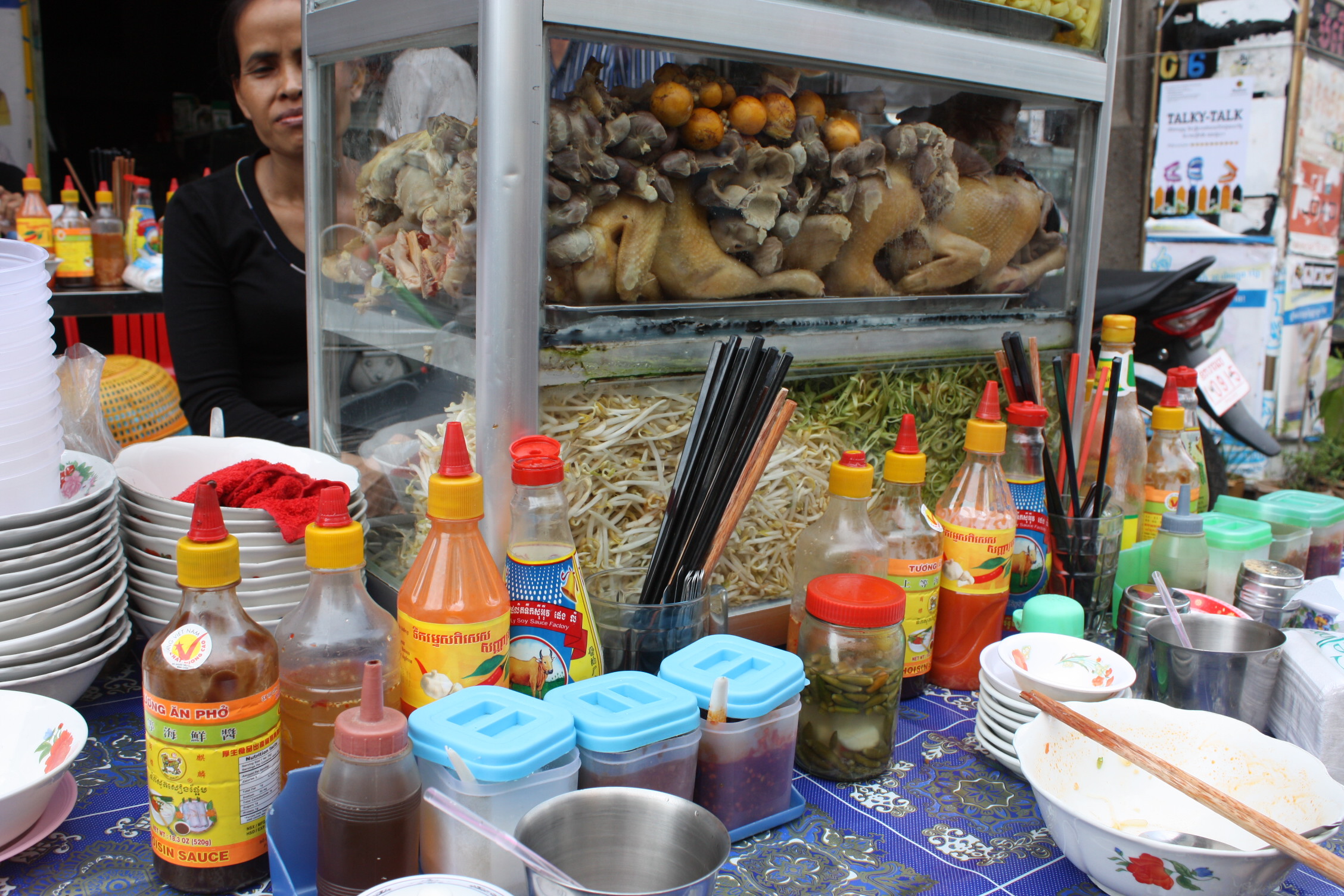
An all-in-one food stall in Cambodia. Complete with cook, ingredients and heaps of condiments.
The city is full of baguette stalls, too, most likely a hangover from the days of the French. I adore these sandwiches. They’re sensational and packed with healthy goodies. I bet that’s where Subway got its inspiration. Pity I never got a photo.
We tried to buy baguettes on the last morning we were in Phnom Penh, but no stalls were open at 6 am. Darn.
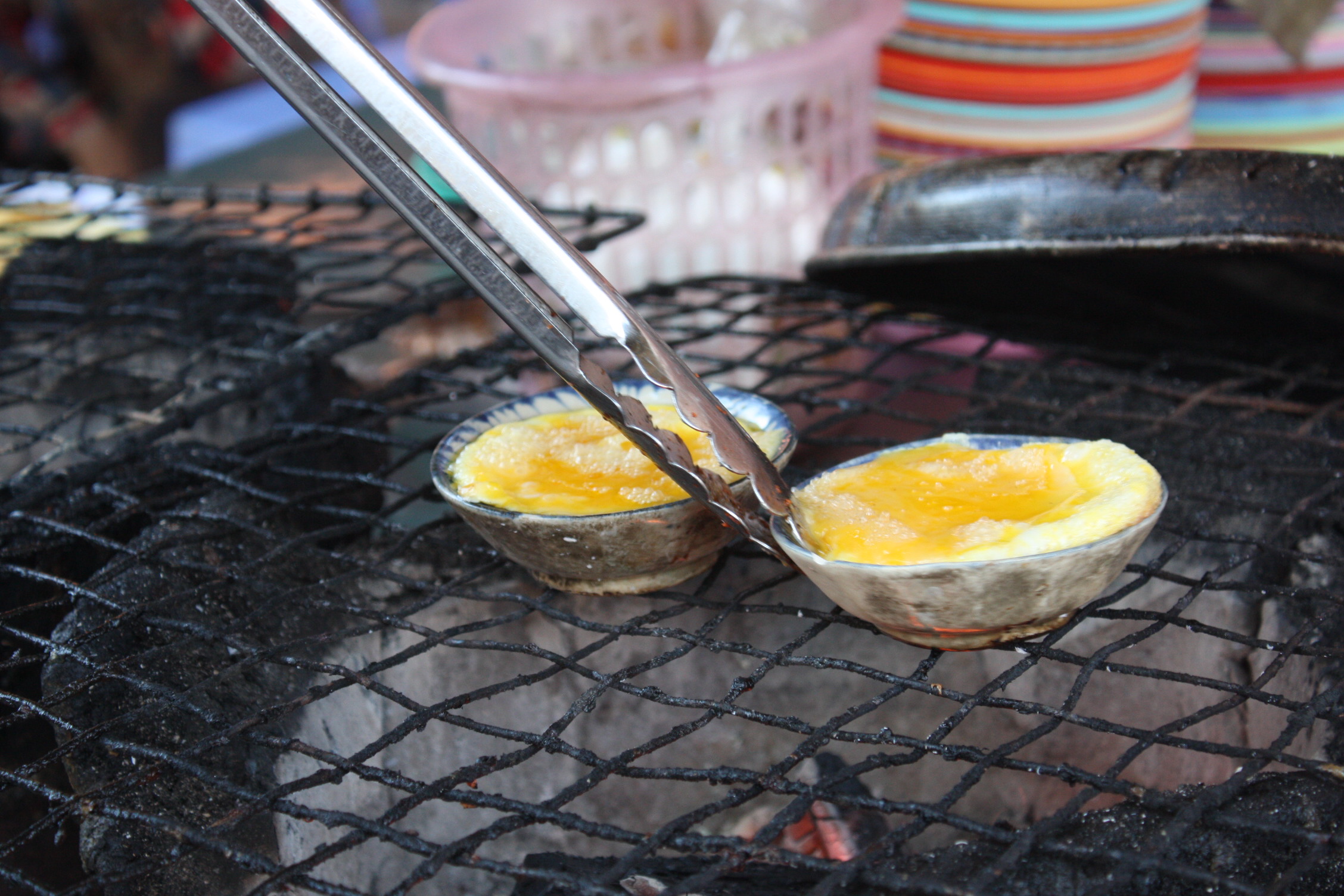
A custardy egg dish.
I hate it when we eat dinner early. Too often, it means we miss out on sampling lots of tempting street food.
On our second day in Phnom Penh (capital of Cambodia), we’d already had dinner before we headed back to our hostel on foot. Why didn’t someone tell me that we’d walk home past an entire street of delectable food goodies. The array was amazing—clams, snails, egg dishes, prawns, salads and so much more.
Fortunately I was able to enjoy someone else’s meal—visually. The vendor let me take some snaps. Plus, a lovely young Cambodian couple (they had no English), who had ordered their treats, were kind enough (through hand signals) to let me know that it was okay to photograph their choices. They invited us to join them, but I figured that was going too far.
Nevertheless, I was hungry all over again.
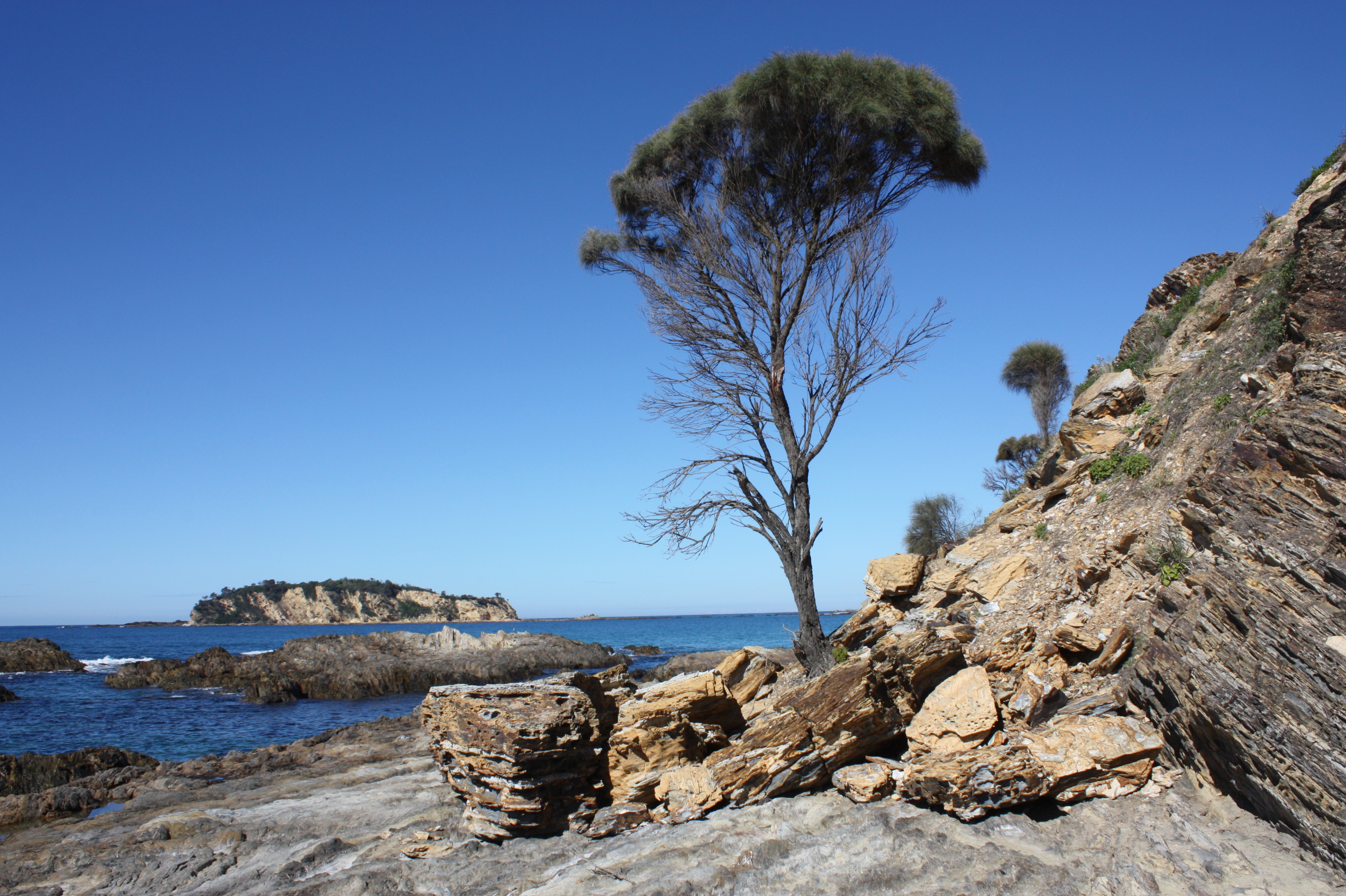
A small, but scenic, slice of Rosedale Beach.
We’re in Rosedale, at Australia’s South Coast, to see in 2012. Rosedale is a little remote and quite laid-back. We are lucky enough to have a beach shack here, but we try to keep it a secret. Hope you like the view.
A few minutes ago, we watched the kiddie’s version of the Sydney Harbour fireworks (shown three hours before midnight). Poor John wants to go to bed soon, so we’ve accommodated his early-to-bed preference. 🙂
I hope to stay up for the grown-up version of the fireworks at midnight, but you never know.
The blog will continue in 2012 with a vengeance. Thanks for your support throughout 2011. I’ll be back. 🙂
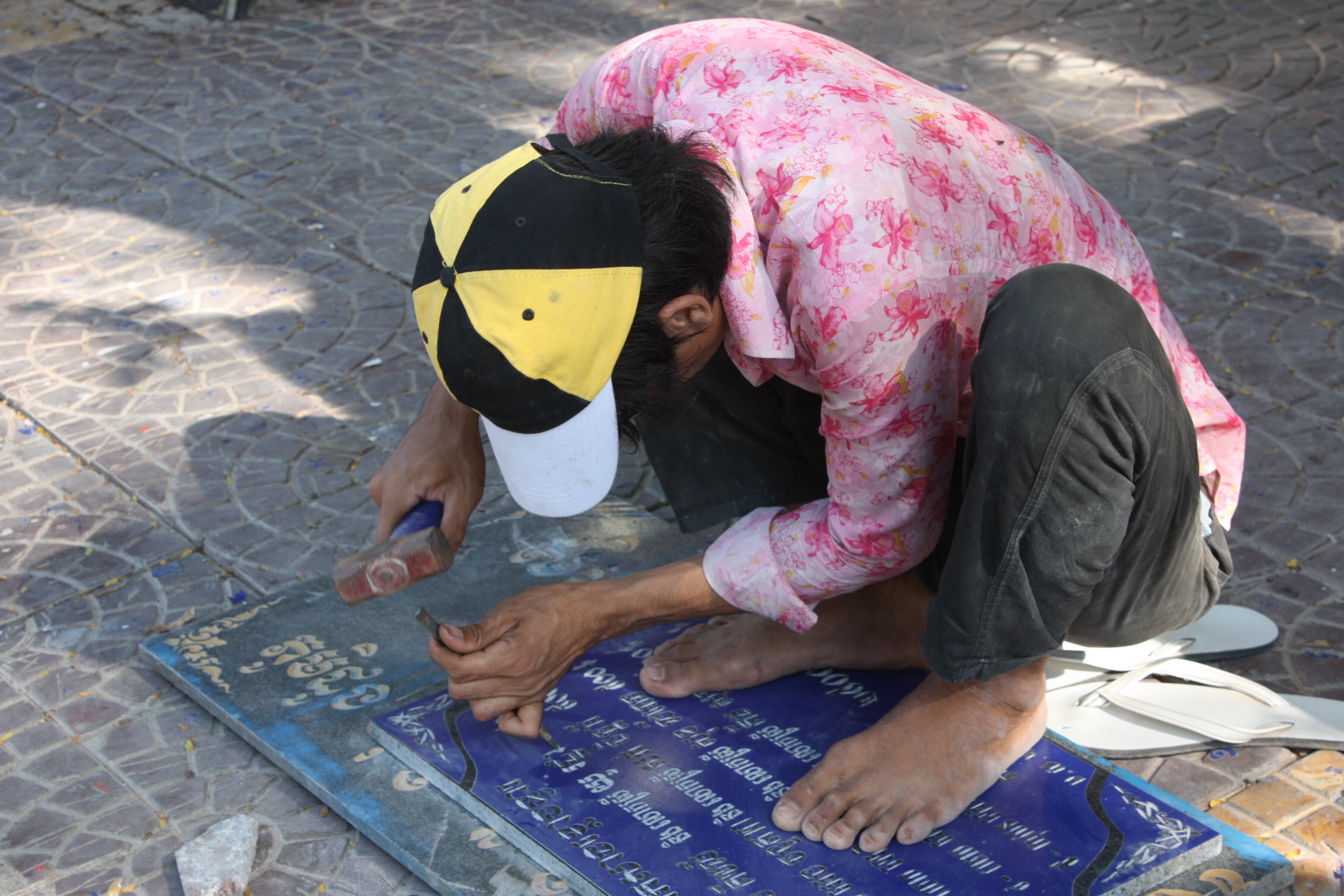
Amazing stance
I still can’t get over the ease with which people of the developing world squat on their haunches. It’s second nature.
Their feet stay flat on the ground and their bums hover just a few centimetres from their heels. They can sit this way for hours. They can even work this way.
I watched this fellow, and a couple of other guys, etching and painting letters on plaques, posters and possibly tombstones. It makes my legs hurt to think about it.
I can squat like this comfortably for about 20 seconds. Obviously, I need lots more practice, but I don’t plan on taking up the art of tombstone carving.

