

A huge range of nuts from Persia.
Poor John is a creature of habit. He loves his books and he loves his peanuts. So far, he’s bought nuts in every country we’ve visited on this trip, and while most have been pretty good, he still fondly remembers the dry-roasted nuts he could buy in Africa—especially in Angola.
Today in Yerevan, the capital of Armenia, we came upon Shahinans, an upmarket shop specialising in nuts and dried fruits. After a thorough sampling, Poor John declared the nuts to be just okay, but we both agreed the dried fruits were amazing. The saleswoman said the nuts all come from Persia, but the dried fruits are Armenian. We bought a half kilo of apricots, that surely would have been cheaper in the Central Bazaar we visited later. But I can’t imagine they could have been any more delicious. We bought from the dish on the left in the centre row.
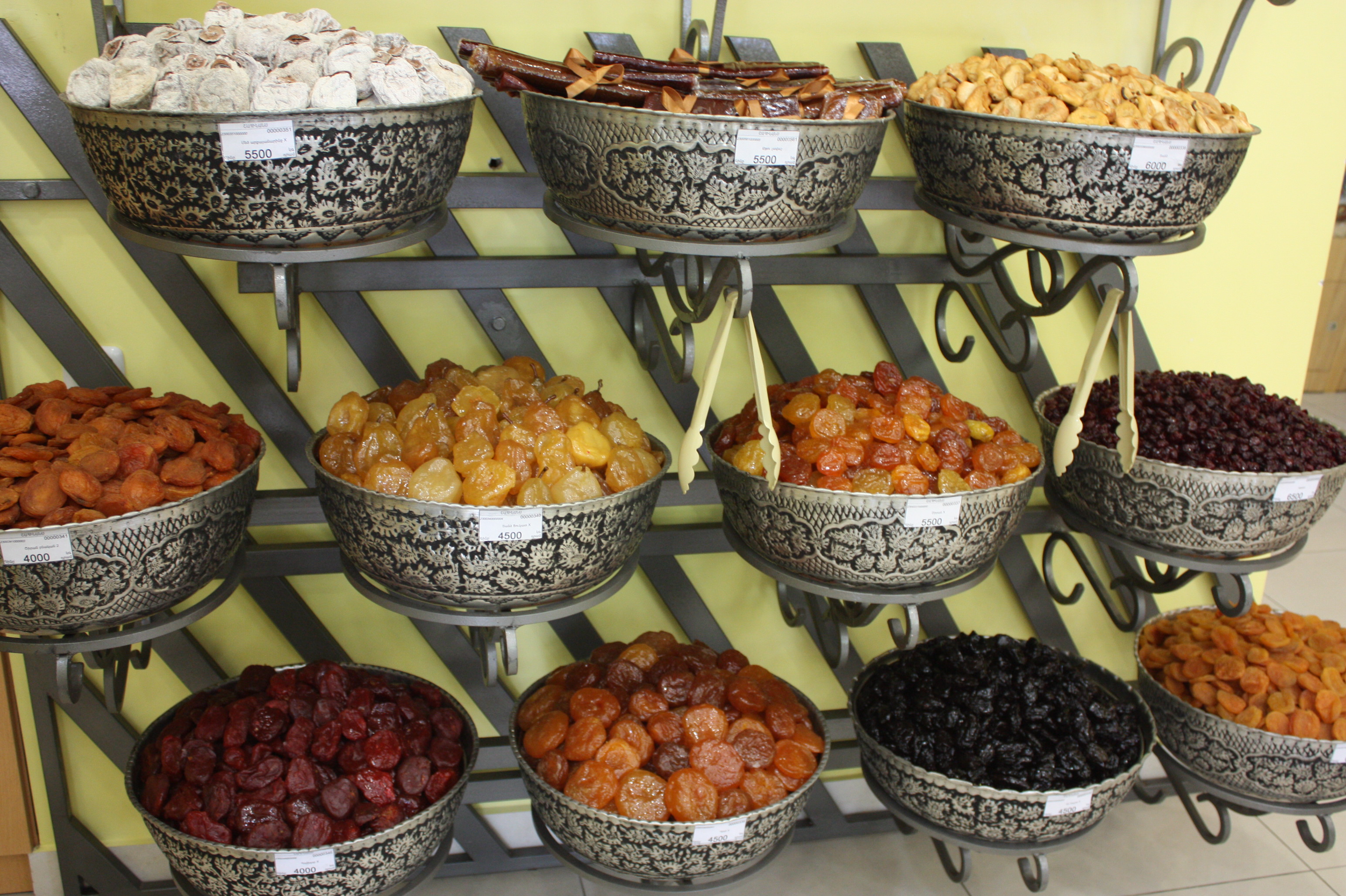
The range of Armenian dried fruits.
If you ever get to Yerevan, check out Shahinans at 40 Mashtots Avenue. The shop is fabulous inside and I could have spent a bomb on the many herbs and spices they had, so bring your wallet.
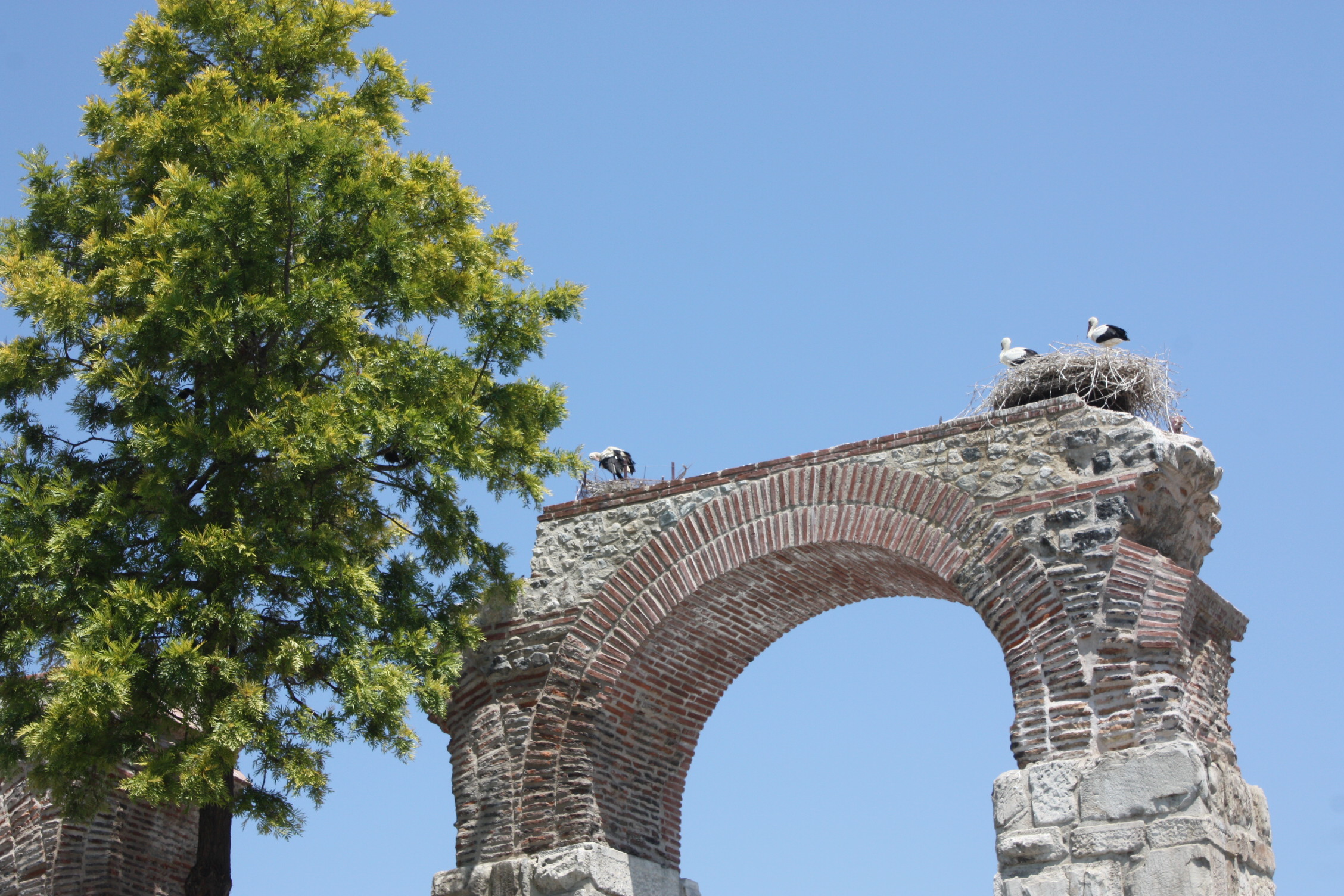
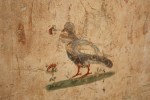
Mostly we have had good weather. Here are the storks of Ephesus enjoying a fine day.
Petra is our second daughter. She has a definite attitude regarding Crocs—you can wear them at the beach and that’s about it. I’ve tried to honour this quirk of hers, but I caved in last month in Austria. We were having a very wet and chilly start to the overland trip. My runners/sneakers were getting too muddy and my thongs/flip flops/jandals weren’t warm enough. So I bought some Crocs—the real thing—at an outlet store in Salzburg.
Then I wore them—with sport socks—and I was plenty pleased with myself. Petra, however, is probably groaning by now.
As the weather got nicer, I decided to wear the Crocs without socks. Stupid idea. I got a blister that took two weeks to dry up and heal. I can hear Petra saying ‘you had this coming’. So now I’m alternating between Crocs and runners, especially when it’s raining. When it gets really hot, I’ll move on to flip-flops, or thongs as we call them in Australia.
Methinks that laundry, shoes and the weather may be my main challenges on this trip, which reminds me of a little ditty I learned ages ago. Sorry, but I don’t know who wrote it.
Whether the weather be cold
Or whether the weather be hot
Whatever the weather, we’ll weather the weather
Whether we like it or not.
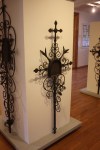
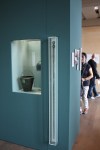
Our daughter, Libby, is our museum nut—she works at the National Museum of Australia. So I wanted her to know that all through Europe I have been impressed by the care and flair shown by the curators in even the smallest museums. A lot of thought and effort has been put into creating displays that are stylish, clear, varied, interesting and meaningful.
Every now and then in Germany, I wondered fleetingly why there weren’t more explanations in English as well as German, but then I’d remind myself that Australian museums only ever have explanations in English, except for an occasional usage of an Aboriginal language.
As we’ve moved through countries without main stream languages—places such as Czech, Hungary, Romania, Bulgaria, Turkey and now Georgia—I’ve noticed that the touristic sites almost always have placards in English as well as the local language. This has been interesting and fun for me because it reduces the need for guide and also highlights the similarities and differences between languages. You also get some hilarious examples of fractured English, but I have to give them credit for trying.
See also https://leggypeggy.wordpress.com/2011/07/28/the-unsung-museum-of-gori/
These photos show some of the many diverse approaches to displays.


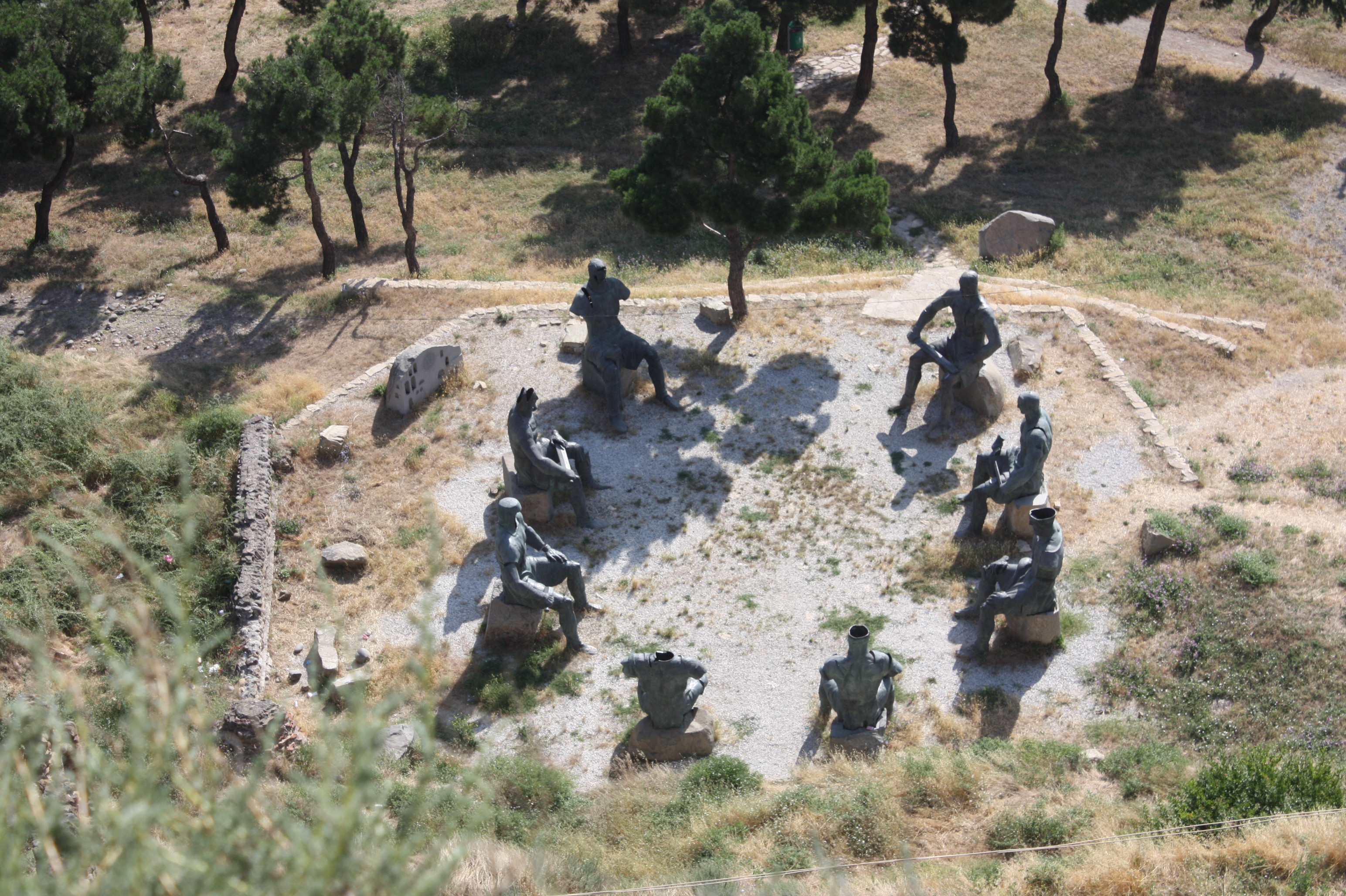
The knights of Gori seen from the fortress.
We spent part of a day in Gori, Georgia. For our morning exercise, we climbed to the ancient fortress in the centre of town. Admission was free, the views were great and the giant binoculars worked.
Apparently a fortification has been located on this hill since ancient times and an early one is believed to have been besieged by Pompey in 65 BC. Most of the current building dates from the Middle Ages.
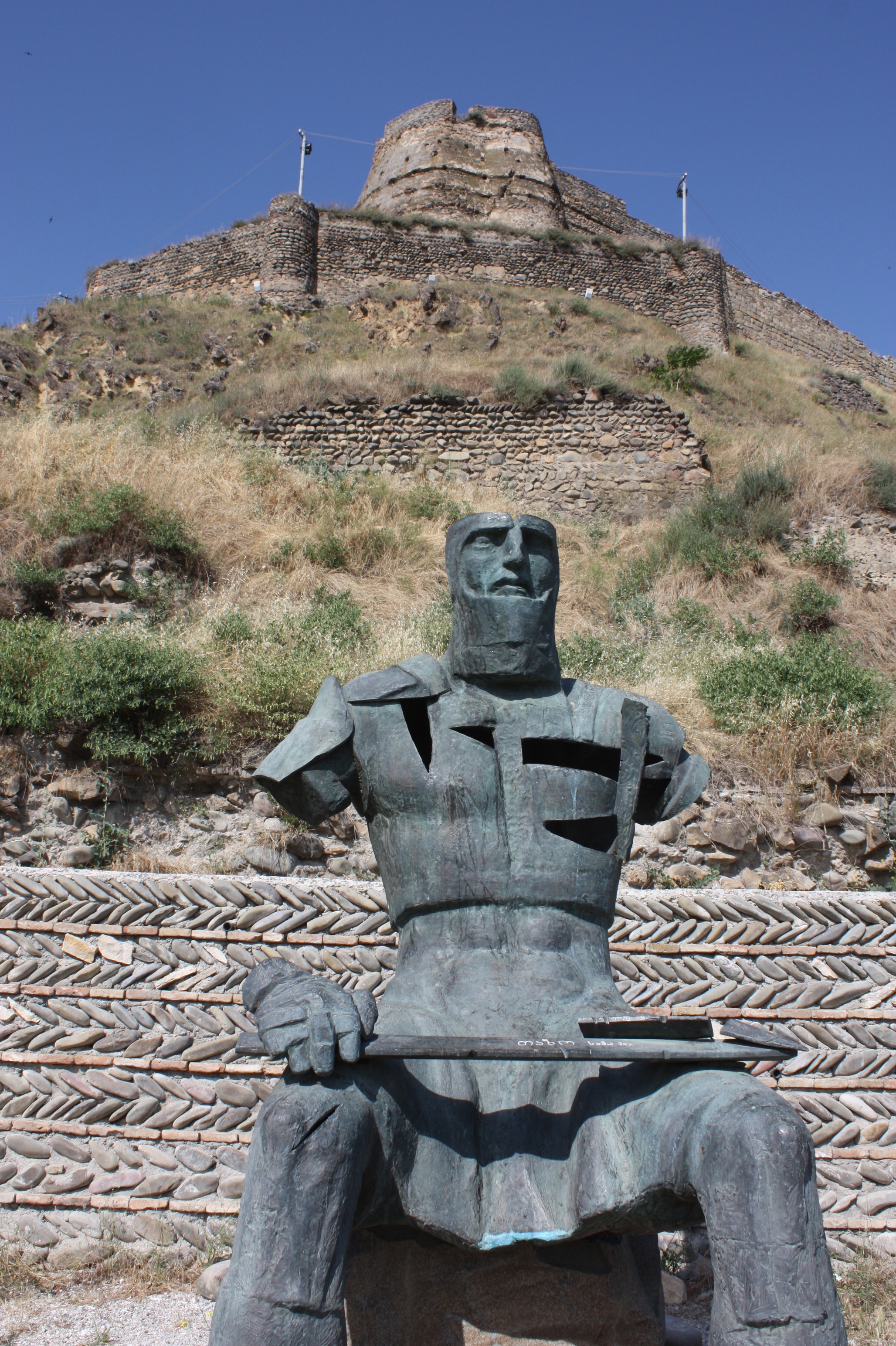
A knight up close.
From above we saw a circle of eight statues—all knights, all seated, some missing heads and limbs. Initially we assumed they had been vandalised, but when we reached them we realised the absence of body parts was intentional. That’s the way the sculptures were made.
Then we did what the Lonely Planet says everyone should do—visit the Stalin Museum. Iosif Jughashvili—later Joseph Stalin—was born and attended school in Gori. The museum was built soon after his death and covers his life, but in only glowing terms. Admission was almost A$10 a head with an English-speaking guide thrown in.
There are three darkened galleries of photos, photos and more photos of Stalin, his parents, his buddies and various world leaders. There are plenty of documents, too, and some of the many gifts presented to him. His death mask lies eerily in state in a room by itself. Another room is a reconstruction of his first office in the Kremlin and, finally, his childhood home and his private, bulletproof railway carriage are in the garden. He had an intense fear of flying.
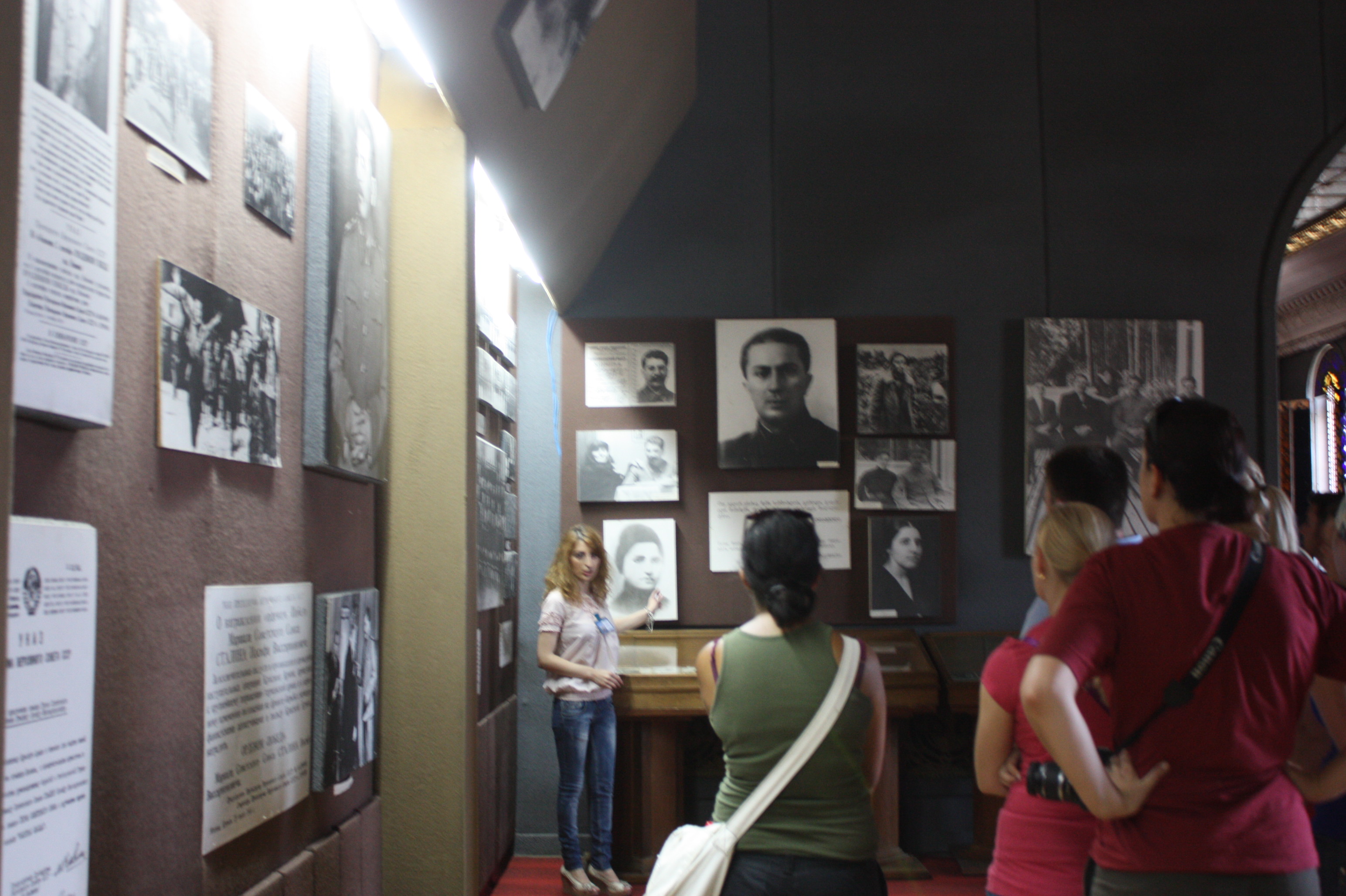
The guide shows us plenty of photos and tells us only the rosy aspects of Stalin's life.
Throughout the museum, there were virtually no explanations in any language other than Georgian. And the guide could/should have been better. She was knowledgeable about many aspects of his life, but she was completely silent on the atrocities that stemmed from his psychopathic behaviour. That fact that she spoke through her teeth was another downside because it made her especially hard to understand. We left a little disappointed and feeling rather ripped off.
Fortunately the best was to come. As we walked back toward the truck, a bustling Tamila accosted us in the street. Had we been to her museum? Yes, we’ve been to the Stalin Museum. No, no, not that one, she said.
Tamila then led us to where she works as a historian—the Sergi Makalatia Historical and Ethnographical Museum of Gori, hidden away on a side street with absolutely nothing to identify it. But the staff were most welcoming and ‘could you please wait a moment until our English-speaking guide is available’.
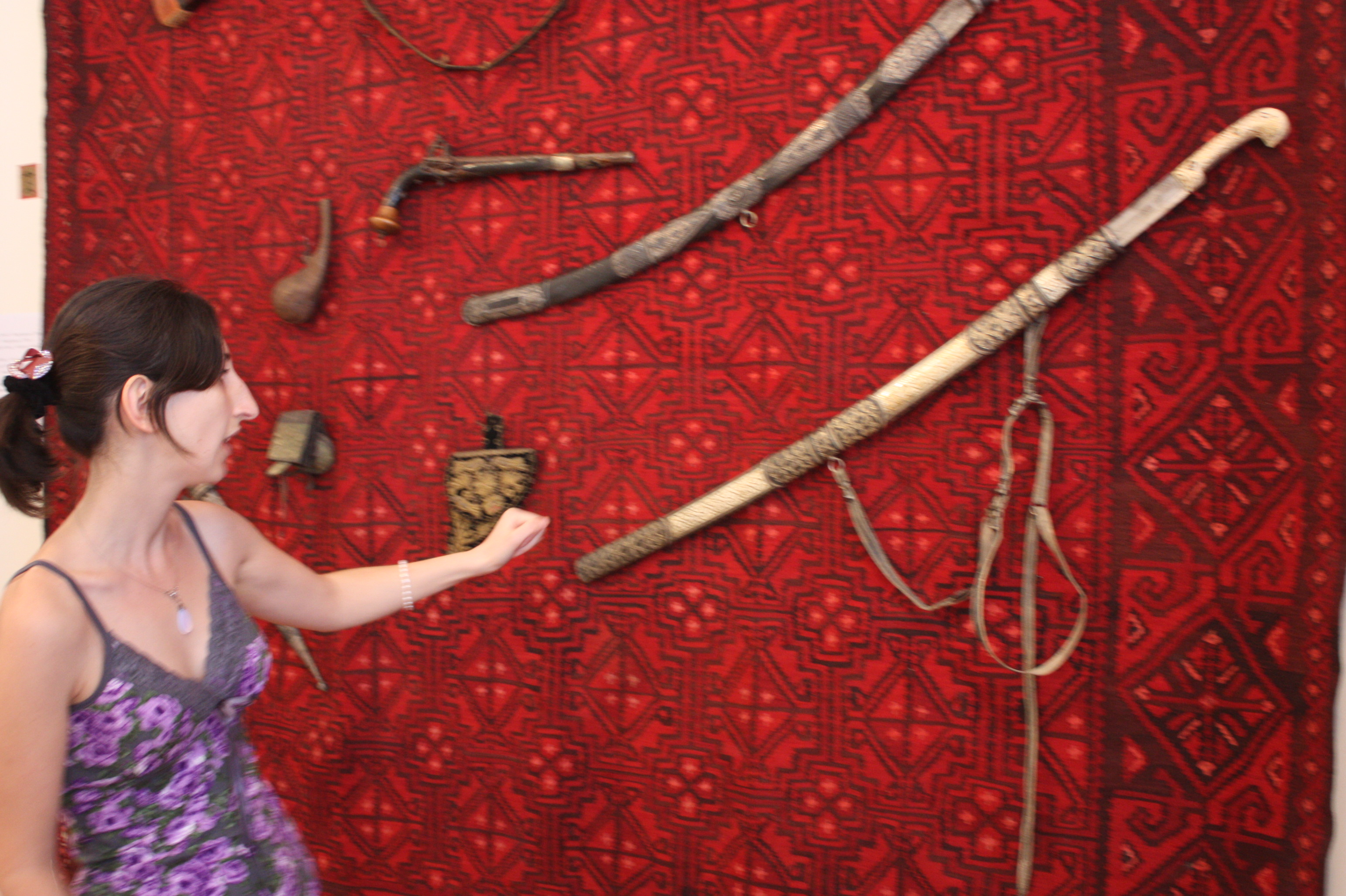
Nino explains the different weapons and the weaving they are hanging on.
What a gem of a museum. It was small, intimate, well laid out and almost everything was explained in both Georgian and English. Nino, our guide, proudly told us that she had done all the translations. She asked us to let her know if we spotted any mistakes, but she’d done a great job.
The price was great too. Normal admission is about A$3 a head, but we got a group rate so only paid about A$2.
I’m going to tell Lonely Planet to add them to their guidebook. If you’re ever in Gori, you’ll find the museum at 12 Kirion II Street, tel (+995) 8 370 72867. It’s open daily from 10am to 6pm.
See also https://leggypeggy.wordpress.com/2011/07/28/for-libby-and-other-museum-nuts-2/.
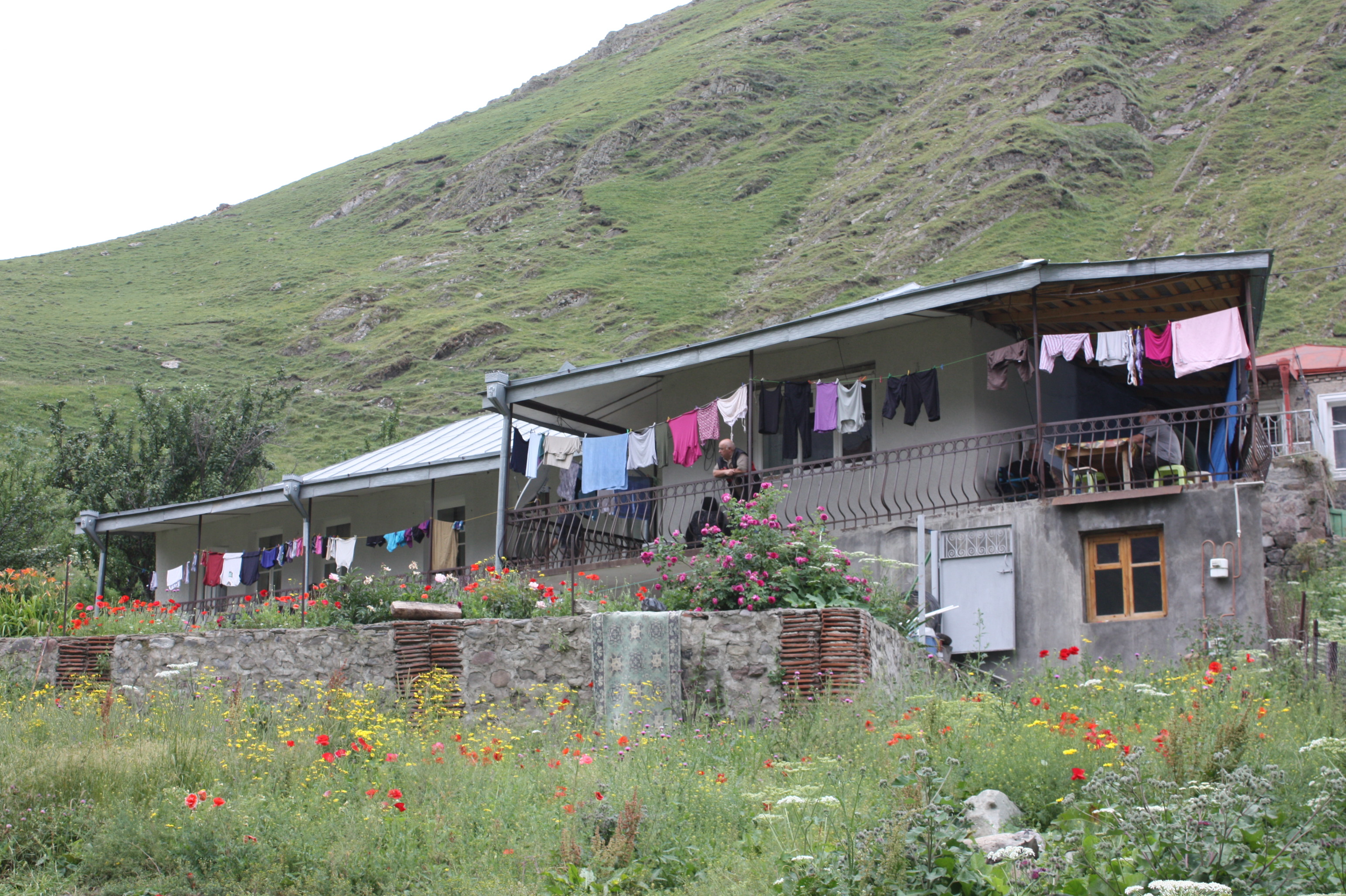
Nazi (pronounced Nazee) Homestay in Kazbegi.
After a very rugged drive along the tail end of the Georgian Military Highway, we arrived in the mountain village, Kazbegi, for a few days. We’d had quite a few bush camps in a row, so were thrilled to learn that Lu, our tour leader, hoped to organise homestay places for us.
Imagine turning up unannounced in a sleepy mountain village with a truckload of people and expecting to find more than 20 empty beds! Well. Lu did it.
We’re all in the Nazi (pronounced NA-zee) Chkareuli Homestay—and they have room for even more. I think there were almost 40 there on our last night, but about 10 were in tent. Nazi’s is top of the list in the Lonely Planet and it’s easy to see why. Good prices, great food, fantastic scenery and lots to do.
Our small room is in the centre of the house. We go through a dorm room for nine to get to it, and there are no outside windows. That said, it is comfy and very easy to sleep late because it is so dark. Poor John and I were lucky to get this room for two which we refer to as the library (sounds like a good spot for a murder).
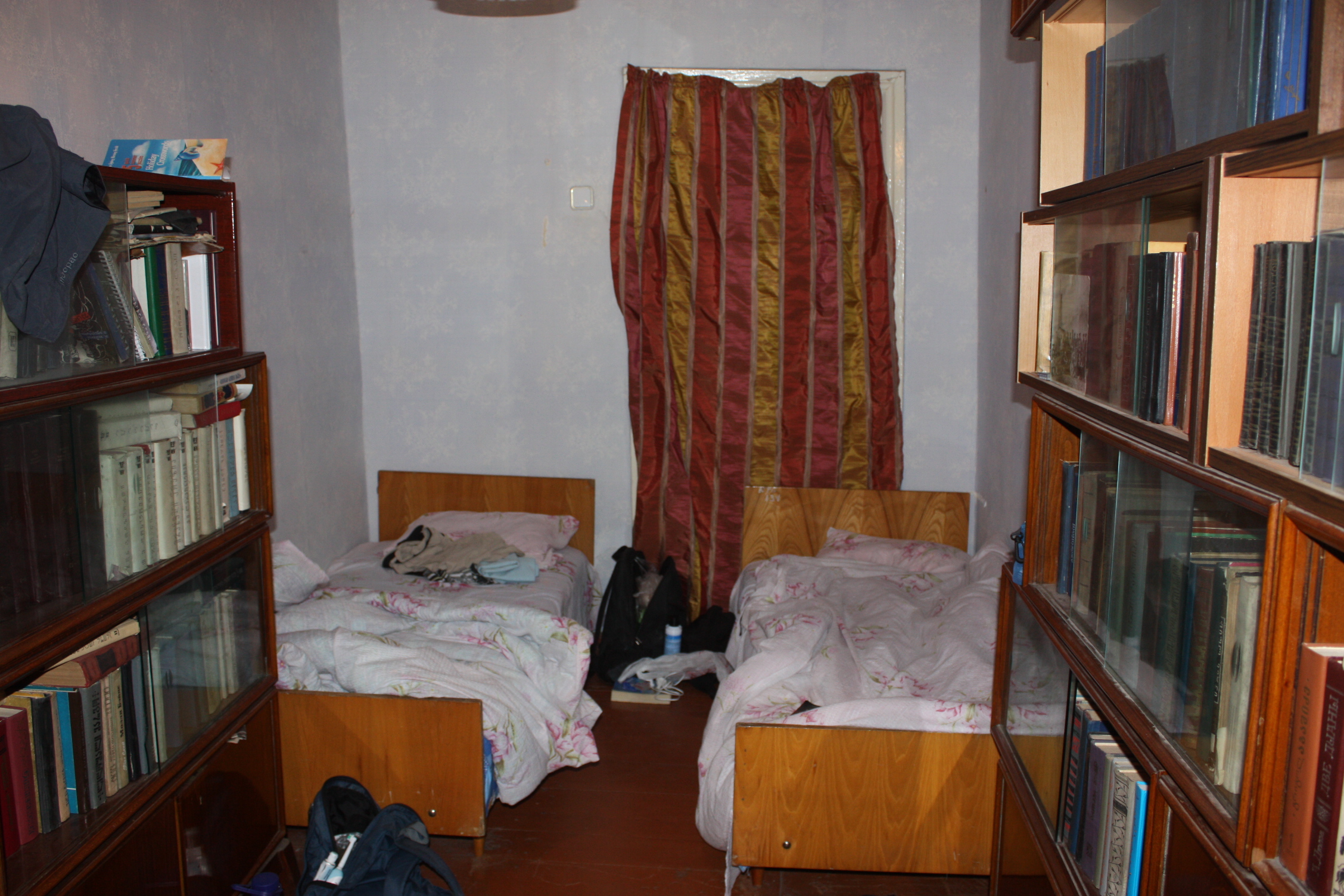
Our little library room—so appropriate for Poor John’s love of reading.
The truck pays for our accommodation in these circumstances, but we buy our own food. We’re getting three meals a day here for less than A$10 a person—and the food is delicious and plentiful. What a bargain and what a treat.
Dinner the first night was tomato and rice soup, garlic chicken, salad and bread. The soup and chicken were authentic Georgian recipes and both were superb. Our hostess, Nazi, shared her recipe for the soup with me, but recreating it at home will be nigh on impossible. It calls for a special spice mixture, known in Georgia as harchoos sunelli (or something like that). It’s sold pre-packaged and she’s not even sure what’s in it. I guess I’ll have fun trying to track it down or figure it out.
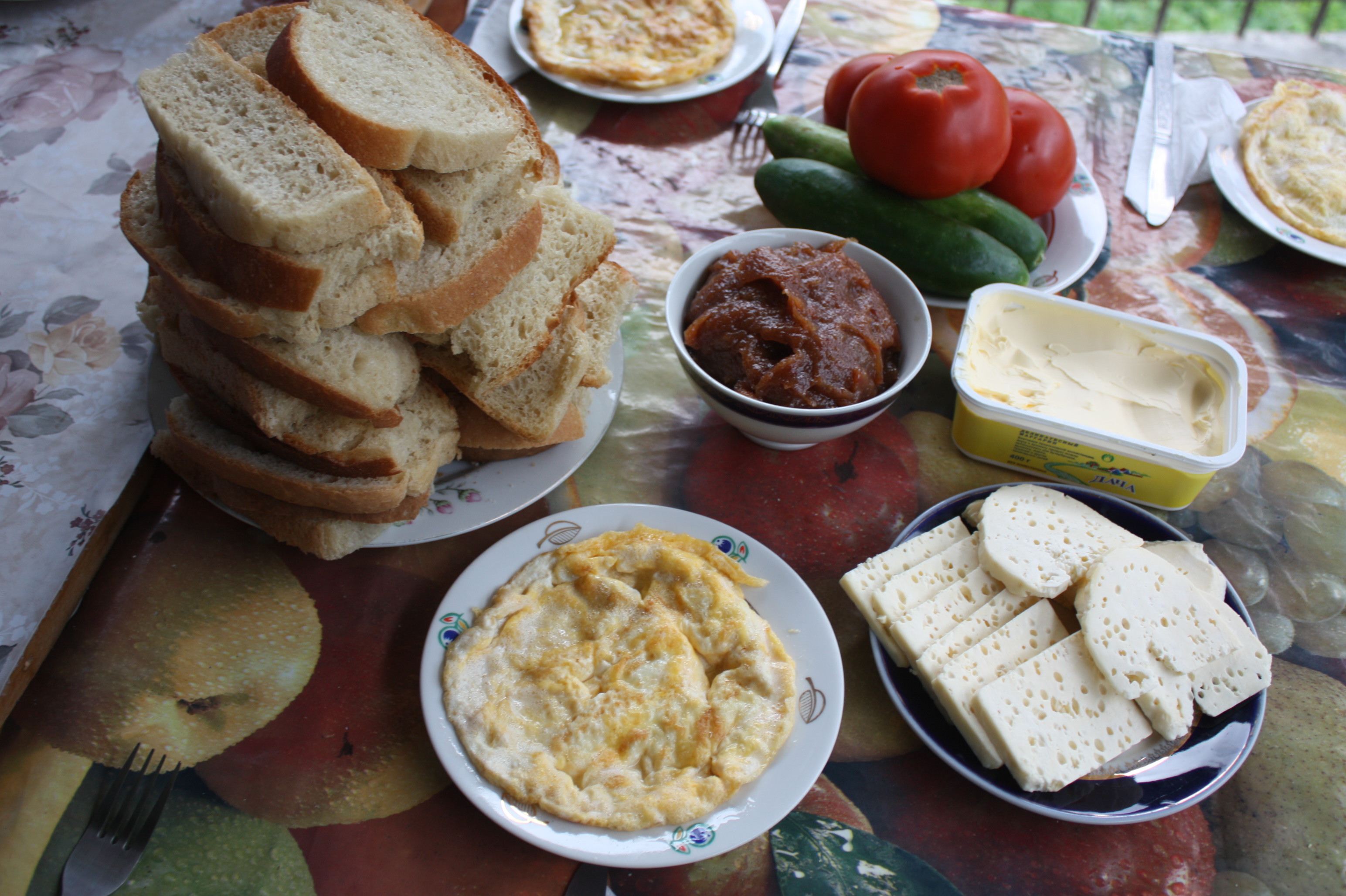
Breakfast at Nazi Homestay.
Breakfast is just my kind of food—one day a small omelet accompanied by tomatoes, cheese, salami, cucumbers, bread, jam (I was sure it was quince, but our hostess says it is a mix of apple and plum). This morning we had pasta with egg and cheese in place of the omelet. I ate mine and a bit of someone else’s. Can’t wait to see what we get tomorrow before we set out again.
Lunch is a make-it-yourself affair from the breakfast table.
There’s a 6-kilo washing machine too, and I sent a load through this morning. Only cost A$3 including the soap powder. I hung everything on the balcony and with the most-welcome sun and warm breeze we had today, it was all dry within a few hours.
Oh, and there is internet, but plug-in only, which doesn’t work with my little laptop,. So I need to save files and pics to a thumb drive and transfer to their computer. It’s working—sort of. I can’t get my photos to load. If you see pics with this, I’ve cracked the conundrum or finally reached a WiFi outlet.
If you ever want to book this homestay—and I highly recommend it—you can call on (+955) 598 382700 or (+995) 345 252480, or email Nazi’s daughter Shorena on ssujashvili@yahoo.co.uk (the phone numbers changed recently so if you can’t get through, use the email address). Nazi is serious about running a great homestay. The night before we left, she received five new mattress. She told me some of the current ones needed to be replaced.
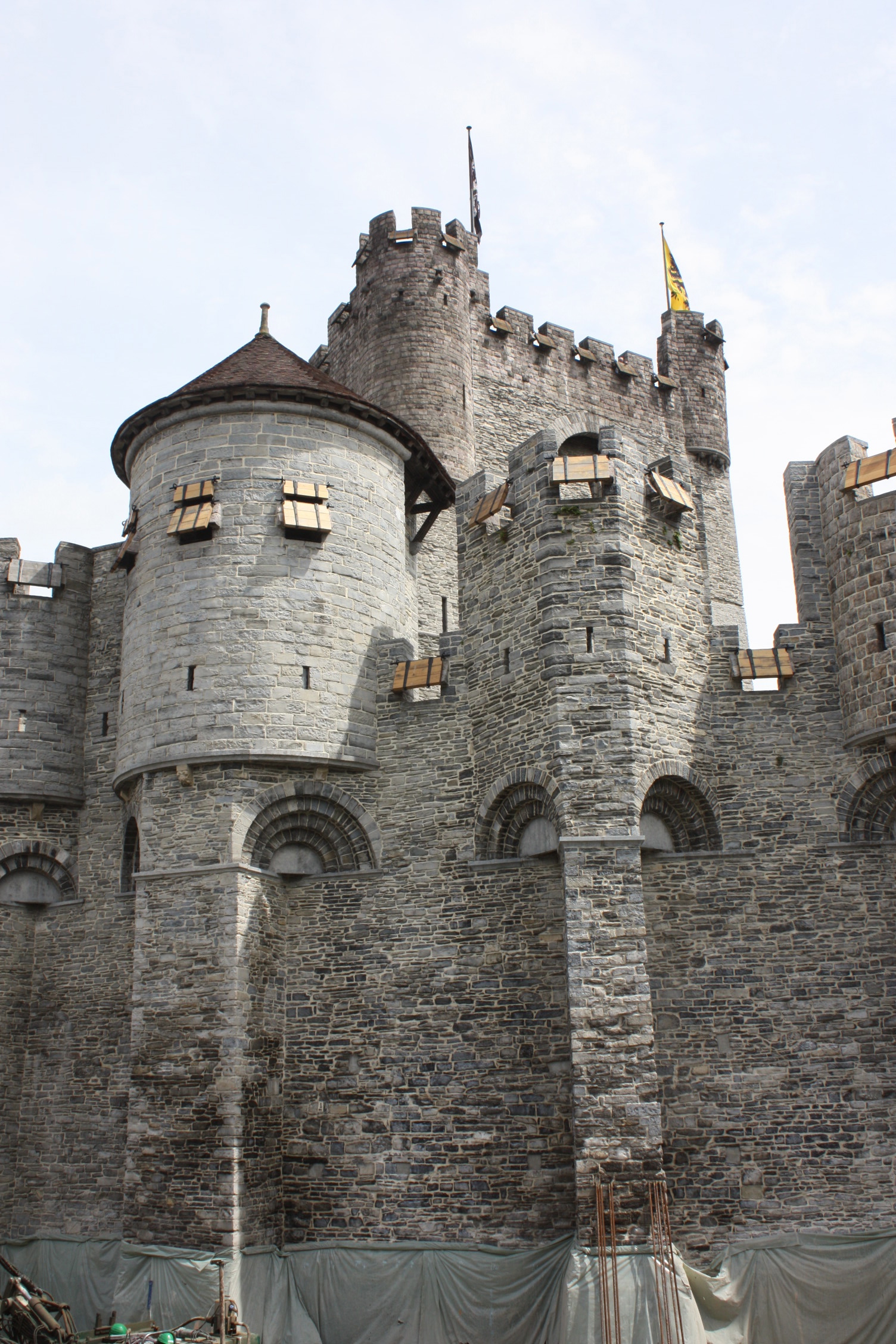
I’ve been meaning to mention our visit to the local castle in Ghent, Belgium. We didn’t actually visit, so much as sit out the front and drink beer while we enjoyed the view.
It was the first castle our daughter, Petra, ever visited. That was in 2000, when she spent a year as an exchange student in Belgium. Our friends, Malou and Rudy, who live in Ghent escorted her there and take great delight in recalling how gobsmacked she was to learn that the toilets extended out over the moat—meaning everyone’s business fell into said moat.
But that’s not the only mischief Malou has carried out in the castle. My dear friend, Maggie, and I travelled around the world together in 2003. Maggie decided her main trip souvenirs would be a small stone from each place she visited. She thought it would be easy to find a stone lying around Ghent castle, but everything had been so well swept. In the end, Malou went to work surreptitiously and chipped a small bit off a wall.
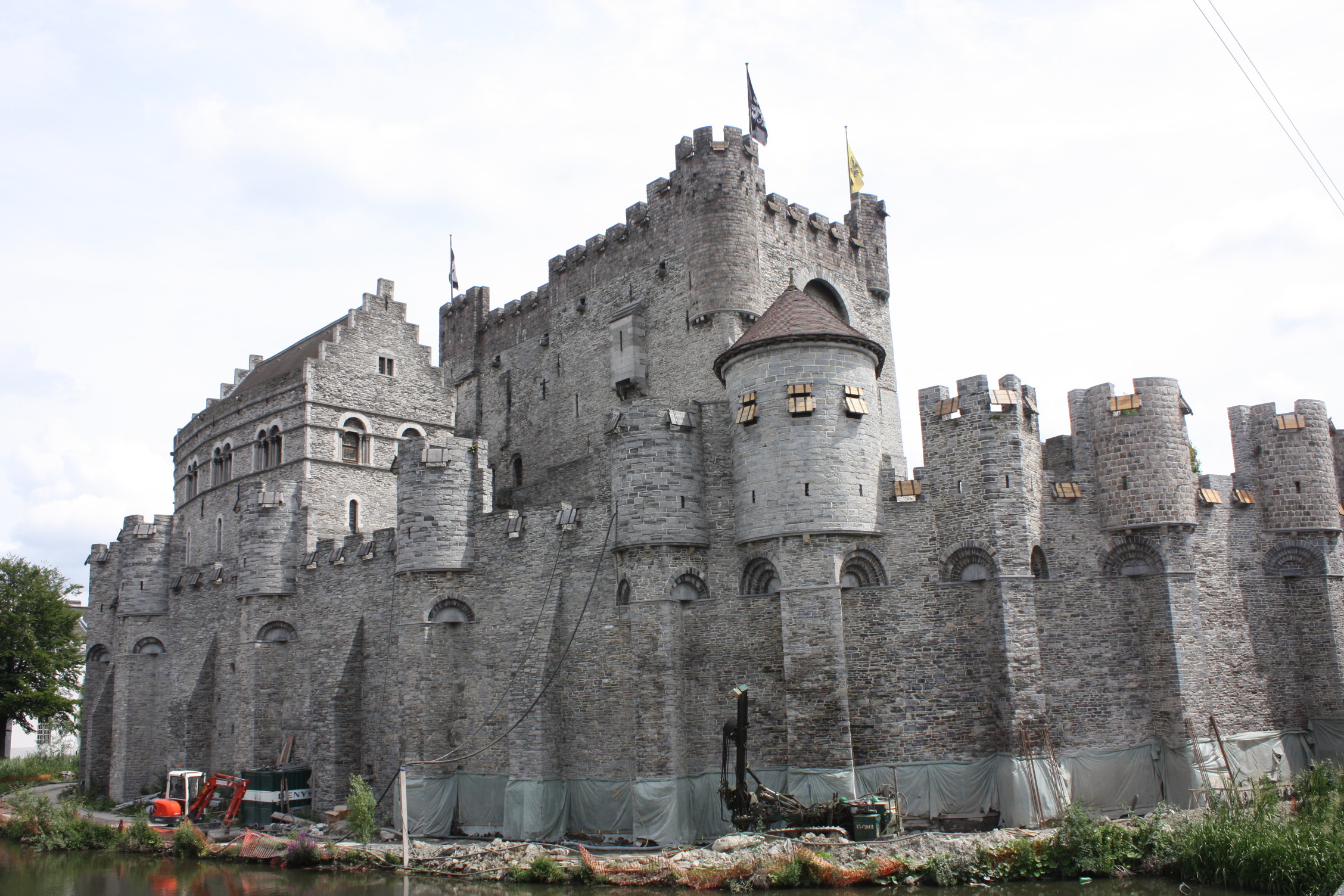
By the way, the castle is fascinating and well worth a trip inside. Last time I visited there was a fascinating and sobering exhibition of armour, weapons, instruments of torture and the like.
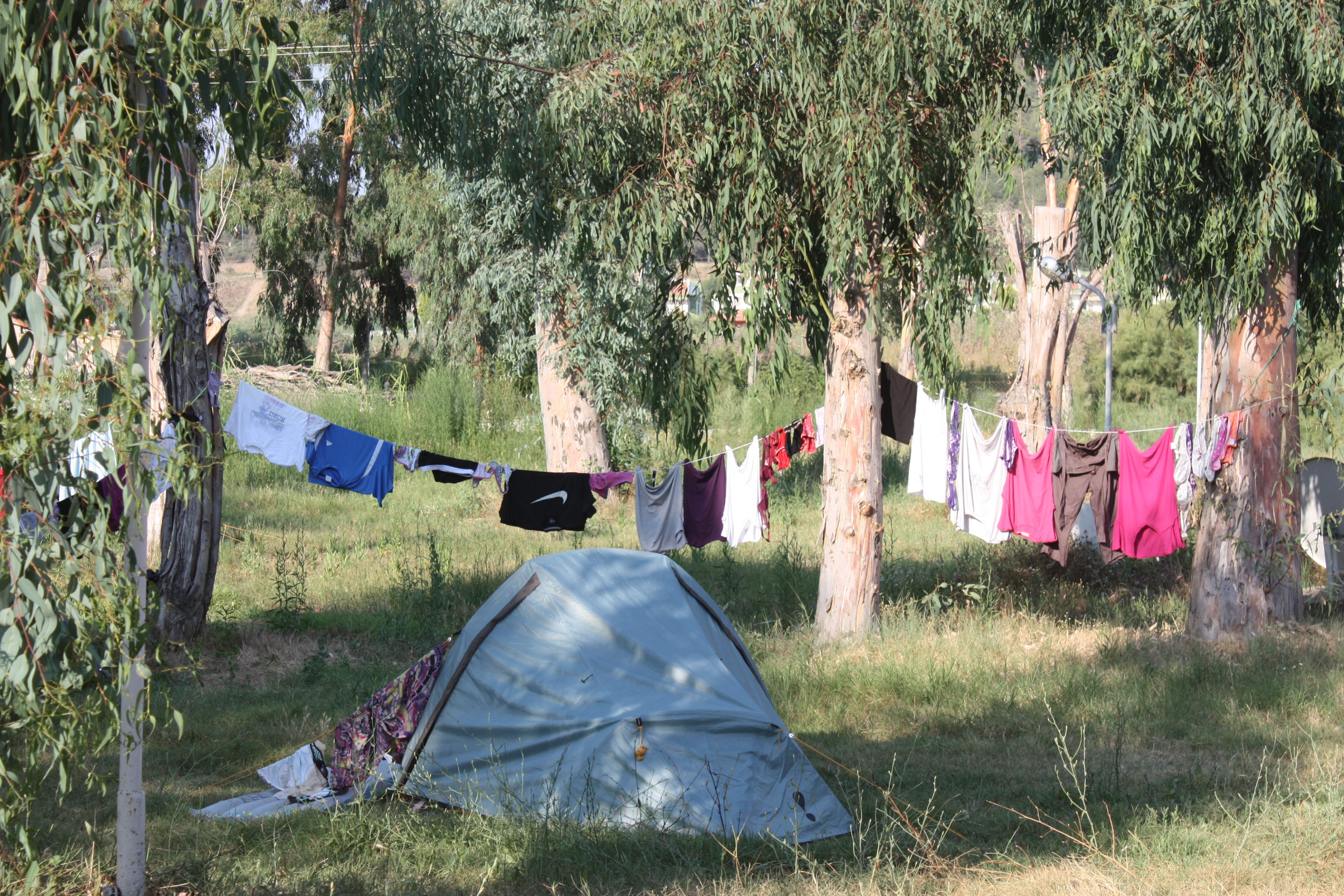
You can bush camp AND do laundry.
Georgia—the country, not the state—hasn’t been a great place for internet. We’ve spotted a few internet cafes, but there’s been no WiFi. I couldn’t make use of them because I hadn’t transferred any writing or photos to a thumb drive.
Plus, we’ve been bush camping, so there hasn’t been electricity or any of the other comforts of home. Still I don’t mind bush camps. The tent is spacious, the sleep mats are good quality and the travel pillows are big enough. But we’re in a homestay for a few nights and they have internet. There are almost 30 people sharing it, so I’m waiting my turn. I hope to post a lot before we leave.
Oops! Just posted the first entry and find that the photos aren’t coming through. Stay tuned while I figure out what’s going on.
Problem identified by no solution: It turns out that the version of Explorer here is so out-of-date, it can’t support the uploading of photos. My plan is to post some blog entries and add photos later. Thanks for understanding.
One of the downsides of camping in civilisation—my towel disappeared yesterday. Gosh that irks me because I know it isn’t lost. Oh no, it’s gone to live in someone else’s house/tent/caravan. I handed in a bag of laundry—yes I cheated and let it have a run through an actual washing machine. The towel was on top of the bag. Poor John was there when the clothes came out of the machine, but the towel wasn’t there.
We know it wasn’t stuck in the drum of the front loader because Marina and Phil did the next load and it didn’t come out in theirs.
SO…
the towel either fell out of the bag or was lifted out of the bag. Someone picked it up, but no one turned it in to lost-and-found. The most irritating aspect is that it was a damn good camping towel. A MacPac towel—quick-drying, fluorescent green, small and with a travel bag—that probably cost me A$20 unless I got it on special.
I’ve checked lost-and-fund, spoken to management, done a circuit of the campground, asked the French teacher to see if any of her busload of students had picked it up by mistake. Mistakes happen. But no luck and no towel.
Fortunately, Lin and Norman have come to the rescue. For some philanthropic reason they brought three chamois towels on the trip. So they have given one to me. Oh joy! I had a shower this morning and now I’m dry and the towel is too. So a huge thank you to Lin and Norm, my heroes.
Must go get on the truck now—time to leave. Life rolls on.
Cluedo Update: Marina and John (not Poor John) have joined me in the morgue. Martin got Marina, near the baggage compartment with a coin. Vanessa got John, in the kitchen area with a plate. That was too easy for her. She was on cook group and handed him his plate of dinner.
Sorry folks, but there’s going to be a brief intermission.
We are heading east tomorrow—after three great nights in Göreme, Cappadocia, Turkey. Breakfast is at 6:00 and we leave at 7:00. Unlikely I will be able to fit in a message before departure. It’s Rakhee’s birthday tomorrow and we’re going to gather outside her tent at 5:30 and surprise her with a rendition of Happy Birthday to You. She’ll love that!
It will probably take us two days to get to Trabzon on the Black Sea. We’ll have bush camps on the way, and most likely no internet for several days. If the roads aren’t too bumpy, I’ll get lots of posts typed up so you’ll have plenty to read about and look at in a few days time.
So stay tuned—back soon with regular programming.
Tip: If you subscribe to the blog, you’ll get a notice whenever I post.
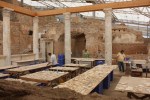
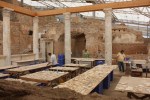
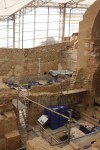
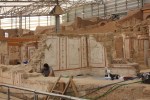
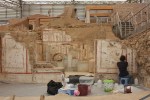
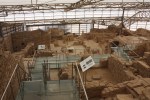
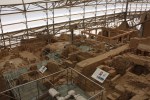
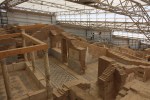
The Terrace House 2 is probably my favourite part of Ephesus. This huge area—4000 square metres—has been completely covered, which means it is well protected from the elements and archaeologists are able to work year-round.
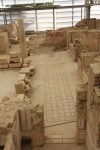
It’s a residential area, built during the early Roman Imperial period (about 20AD), with three terraces with six separate residences. Each home has a peristyle courtyard, surrounded by living and work spaces. Water supply and drainage were provided by wells and a ramified canal system.
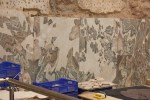
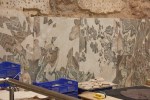
The reception rooms (which still exist) are richly decorated, while domestic areas such as toilet and kitchens would have been simply furnished. The upper floors (which no longer exist) would have been especially luxurious and probably used only for banquets and receptions.
A series of earthquakes in the 3rd century AD destroyed these dwellings. An unexpected benefit from this sudden disaster meant that a large collection of domestics utensils were preserved in the earthquake strata.
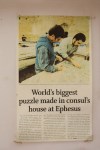
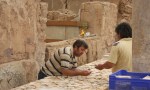
Of course, the earthquake left a huge mess too and archaeologists think of the site as one giant jigsaw puzzle. Imagine trying to figure out where all those little bits go?
I’ve posted quite a few pics and a map of the Terrace House to give you an idea of its size, detail and decoration.
 Where to next?